The Cheshire and Merseyside Integrated Care Board and the Winter Crisis
In this post, we will report on the winter crisis, and in another post, we will report on their plans for Liverpool Women’s Hospital (both an utter disgrace).
Humans have the “inalienable right to life liberty and the pursuit of happiness”. The right to life must include the right to medical treatment when we are ill.
The NHS must again become a great place to work. NHS staff are working hard in unreasonably difficult situations, overcrowded hospitals are just adding to the crisis. CIPs (cuts)that are being so rigorously imposed must impact on staffing, as 80% of the cost of the NHS is staffing
The Royal College of Nurses say “According to the NMC’s leavers survey, nursing staff cite poor physical and mental health, burnout or exhaustion, and changes in personal circumstances as key reasons for leaving nursing outside of retirement
“Our analysis of the latest regional data from the university admissions service, UCAS, shows the number of people accepted onto nursing courses fell in every region in England – up to 40% in some areas – between 2020 and 2023, also. .
The BMA say that staff must be supported in this crisis. They have produced a checklist that will help see staff through the winter, if it is all introduced.
1.Communicate honestly with patients about pressures
2 Retain staff and maximise workforce capacity
3.Cut red tape, stop unhelpful targets and barriers and reduce unnecessary bureaucratic workload
4 Taking additional measures to maximising workforce capacity
(This was not mentioned in the ICB response to our questions.)
Our analysis of the latest regional data from the university admissions service, UCAS, shows the number of people accepted onto nursing courses fell in every region in England – up to 40% in some areas – between 2020 and 2023, also.
The ICB is the ruling body of the NHS in Cheshire and Merseyside.
There was no research background to the introduction of these bodies, they are instruments of the privatisation agenda. For more information see here. It is our view that these institutions are not failing but succeeding in aims which are not conducive to good healthcare, aims like cutting services, denying care and remodelling on US corporation lines.
The NHS too often consults private corporations rather than the staff and the public, yet this institution belongs to the people. No one has ever won an election on a promise to privatise or starve the NHS of funds.
The state of our Accident and Emergency departments and the emergency care system in our health service is disgraceful, but the situation has been known about and discussed for many, many months. The years of austerity were supposed to change with the election and the trashing of the Conservative vote, but instead the situation this winter, (according to the CEO of the ICB) “will be slightly more austere than the previous two years”.
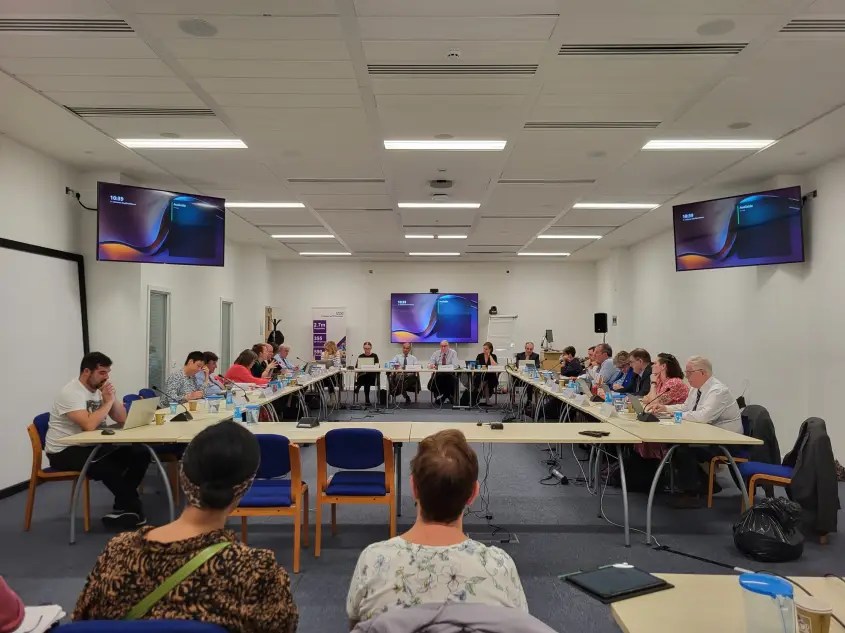
NHS Campaigners regularly sit in the public gallery of the ICB, read the papers before the meeting, and ask questions. We have been asking about preparing for and improving the response to the winter crisis for more than a year. We have asked written and oral questions at the ICB meetings. Again and again, the response means we will see once again awful patient, family and staff experiences this winter.
We sent in further questions to the November Board Meeting of the Cheshire and Merseyside ICB about;
- The winter crisis,
- The Future of Liverpool Women’s Hospital,
- Marie Curie Hospice,
At the start of the meeting, the questions are read out and answered. We get a chance to say a little.
Winter comes every single year without fail, so hospitals should not need special arrangements to cope. The preventable deaths, overcrowded hospitals, bursting A and E departments, and the long Ambulance waiting times were entirely predictable and undoubtedly preventable.
Long waits for elective (non-emergency care) are huge 7.5 million cases,(6,341,717 people).Flare ups for these patients send them too into the Accident and Emergency hospitals. Elective care has been funded separately from Acute and Emergency Care but the two kinds of care should never be put into competition with each other. Hopefully, Streeting’s instructions to hospitals to keep patients safe might signal a weakening of the strict demarcation of funding.
In 2023 The Royal College of Emergency Medicine reported that “RCEM estimates that there were almost 14,000 associated excess deaths related to waits of 12 hours or longer in 2023 – more than 268 a week.”
Mr Starmer, the Prime Minister, the person with the power to bring change, quoted those figures in a speech on 12th September 2024. He said “That’s not just a source of fear and anxiety, it’s leading to thousands of avoidable deaths. That phrase ‘avoidable deaths’ should always be chilling. That’s people’s loved ones who could’ve been saved”.
And yet we still face a worse prospect this winter, and it’s not just to do with the flu. By all means, get your flu jab but this situation was predicted at ICB meetings all year.
When we, as members of the public, go to the ICB meetings, we do not expect miracles. We go there to keep the original aims of the NHS alive if only as the voice of protest at what is happening to the NHS, happening this winter of 2024/2025, in our area and others.
The key issues at this meeting were the Liverpool Women’s Hospital, the Winter Crisis, Finance, (which is central to the situation and is hugely troubled), infection control, Celiac products on prescription (yes more cuts), and the shared committee with Lancs and South Cumbria ICB (about closing one of the A and Es in Southport or Ormskirk and meriting 82 mentions in the board papers), and discharge of patients.
For obscure reasons, the merger of 5 Liverpool Hospitals was not discussed.
What we want
We want a publicly owned, Government funded publicly delivered health service for all. Investment in healthcare makes the people, and hence the whole country, healthier wealthier, and happier. We want to return to the Bevan Model of healthcare. The Bevan model is cheaper and more equitable, more cost-efficient but it does not make big profit for the hated US health corporations.
The Bevan model comprises; A universal service, for every human in the country, government-funded, free at the point of need, publicly delivered,providing the best possible treatments.
“It was the first health system in any Western society to offer free medical care to the entire population. It was based on the national provision of services available to everyone.
Aneurin Bevan said “not only is it available to the whole population freely, but it is intended . . . to generalise the best health advice and treatment.”2 The intention was to make the same, high level of service available to all, according to need.”
So why is the NHS in our area, and in others, quite so bad this year?
The NHS today has been harmed by privatisation, the accountable care/ ICB model, and years of deliberate underfunding. When the ICB could not meet its financial targets, Price Waterhouse Cooper was brought in to give advice/ orders on how to reduce spending (make cuts). Price Waterhouse Cooper is a multi-national with significant interest in private health care and a player in the last decade of NHS history. PWC has regular and frequent meetings with the ICB and from the the references in the paperwork, appear to have a major influence.
The influence of PWC goes way beyond Cheshire and Merseyside ICB, they have national influence yet are a private, democratically unaccountable company.
At the start of the ICB meeting, the questions are read out and answered. Written answers are published later on their website. We get a chance to say a little, but enough for them to know the depth of our indignation about the cavalier way lives and dignity can be put at risk.
Our very lives, and the lives of our loved ones, depend on our healthcare, if not immediately then at some time in the future. We value immensely the work done by midwives, nurses, doctors, and all the other NHS workers.
However, in Winter 2024/2025 the damage done to our healthcare by years of austerity is costing lives and damaging our health. People must know what is happening, and how it can be improved.
When people organise together, we can make a difference, we can get change for the better and we can resist harmful change. This is a long-held tradition in Liverpool (but far wider too,) amongst working-class women’s organisations, trade unions and amongst socialists. It is this tradition that led to the founding of the NHS. But campaigners going to these ICB meetings only matter if a wider audience hears about what happens there. So please spread the news we share.
The CEO Graham Unwin opened the formal meeting by talking about the “dissonance” between what people believe the government has done in the budget and what gets to the NHS. “The prospects as we go into next year will be slightly more austere than the previous two years.. little extra money for service development” (9 mins into the video)
The NHS must be capable of coping with the winter surge in demand but the surge is not in itself caused by the NHS. Our homes are poorly insulated, our heating costs are sky high, many people have not had good healthcare for a long time and people are hard up, good food is expensive and food corporations are allowed to pump out food that overrides normal satiation levels, so its no surprise we get sick in the winter. It’s perfectly predictable and preventable. It is never a surprise. The ICB and the government should be making sure the hospitals can cope.
We have raised this with the ICB since before last winter. Our MPs must be telling the government to release funds to keep our people safe when they are ill.
Years of cuts in the number of beds, hospital closures, of poor workforce planning, have caused real damage. That is the problem, not the season.
These are our questions and their answers from the ICB
Re winter crisis in accident and emergency services
• What has been done to improve the situation from last year?
• Which hospitals face the greatest challenges this year?
The ICB response boils down to
- Get patients out of the hospitals as fast as possible.
- Stop people coming into the hospitals if there is anywhere else they can go.
- Things will be bad.
- Put managers into the worst situations (We would prefer that they put in more doctors, nurses, and healthcare assistants before the worst situations arise).
These are some parts of the reply. The full written reply can be seen here.
“It would be misleading to say that winter will pass without some real examples of where the service will fall short in terms of both public and service expectation.”
This is a cosy way of saying some patients and staff will come to harm, and some will die. The responsibility lies squarely with the government. The individuals from the ICB, responding to these questions, might or might not support the policies that lead to these preventable deaths.
“Like many other parts of the country. we have an urgent care system that is facing very real challenges on a daily basis and often falls short in terms of patient and staff experience, and winter only proves to exacerbate those challenges. In previous years additional monies have been provided nationally to provide further resilience but this year there is no expectation of that support. (Our emphasis)……….
“..there are robust improvement programmes which are wrapped around our main acute hospital footprints including primary care, community and mental health providers, and local authorities to tackle issues which manifest themselves within hospitals, most visibly at the emergency department and the ability for ambulance to respond in a timely manner. But we cannot ignore that each of these partner organisations also bear huge operational and clinical pressures……..”
“..during the year there has been significant investment in a new A&E at Arrowe Park, with further investment underway at Macclesfield and the Countess of Chester.”
“It would be misleading to say that winter will pass without some real examples of where the service will fall short in terms of both public and service expectation (our emphasis), and it is difficult to point to one or two hospitals that face the greatest pressure – the reality is that all parts of the system whether it be an acute hospital or other provider face extreme pressure at some time but we do have confidence that after many winters our staff and partners can and will provide the best response possible during this period of intensity”.
The Board is using a new term for corridor care, they call it “Temporary Escalation Spaces.” This is an attempt to normalise a terrible situation.
People who could have been saved will die, and others will suffer pain, discomfort, loss of dignity, and profound anxiety, because the “system” is not adequate for winter, which, after all, comes once a year.
In 2017 the Labour Party responded to a (then) threat to means-test winter fuel payments to pensioners
“Theresa May’s plans to introduce means testing for the winter fuel allowance will lead to 3,850 extra pensioner deaths this winter, according to new Labour Party analysis.”
So, after 5 years of further austerity, COVID-19, and huge waiting lists for treatment, most pensioners have now lost their winter fuel payment. We know it is not the same Labour Party as in 2017, but how can they consciously allow possibly even more than 3,500 people to die?
Governments can provide the funds for NHS improvements. Between 2009 and 2020 Governments spent five times the cost of the NHS on ‘Quantitative Easing’ which made the already rich, much richer. Investment in the NHS would help everyone and make the economy grow.
Huge return on Government spending on Healthcare.
Healthcare spending ,when it gets to staff patients and the premises, (not to PWC and the like) gives huge return on the investment, but spending on healthcare in real terms has fallen, including spending per person in the North West.
Our NHS was founded after many decades of campaigning by ordinary working-class women and men, by trade unions, and by socialists. A driving force of the campaigns was to protect our people from unnecessary deaths, and unnecessary pain. The NHS was built to provide healthcare for all, provided by a national, publicly owned, and publicly provided organisation, funded by the government. The successes of the early years of the NHS were stunning. In maternity care there was huge progress, babies survived, and so many more women survived, giving birth.

For more detail on infant mortality please see this.

It is no surprise, therefore, that the NHS is a cherished institution, but it has been very badly damaged for more than a decade by policies and politicians who admire the US system. The ICB system was set up to imitate the Accountable Care Organisations in the USA.
The ICB system was designed to cut services and deny some treatments,
This report describes the NHS contractual system for denial of care, via financial incentives to NHS staff to cut services, which is modelled on the highly profitable operations of UnitedHealth and other US health systems.
The response to the murder of Brian Thompson in New York shows the deep hatred of America’s health system in the states, yet the USA business model is emulated in the NHS (as yet without the public idea of people being charged, quietly though more and more people are paying for their own treatment). We need the people who support universal healthcare, not-for-profit, nationally funded and provided, to get organised.

The NHS is managed at a national level by people deeply intertwined with the US Health system, typified by Simon Stevens, now in the House of Lords, making laws! The NHS management and their financial and political backers are experts at propaganda and sweet talk to hide and make terrible situations sound better.
We say restore and repair the NHS. There is huge support for this across the country. In 2019, when Trump said he wanted the NHS to be part of trade deals, more than 1 million people signed a petition against it.
The “integrated” Care Board is not integrated with social care as it purports to be. Social care is largely privatised, and often charges eyewatering fees to patients and their families. There are some Local Authority reps on the ICB, but the Local Authorities these days are little more than commissioning bodies for social care. Most social care is delivered by privately owned companies, for profit. Initiated by Thatcher, but pushed relentlessly by subsequent Governments, this policy is a disaster for our most vulnerable people.
“In adult social care, 96% of residential services are now outsourced, primarily to for-profit providers”..”Similarly, more than 80% of children’s homes are now run by for-profit companies,“
There are quality issues around these private providers and Co-author, Dr Benjamin Goodair (Department of Social Policy and Intervention, Oxford University) said: ‘Early data suggests that outsourcing has failed to deliver the expected benefits of private sector efficiencies. Instead, the use of profit-driven providers risks worsening care services. As both adult and children’s care sectors face ongoing crises, there is an urgent need for increased scrutiny over the outsourcing of social care.’
For years, the policy has been to close A and E services and cluster them in big hospitals. Southport or Ormskirk look next for the chop as a joint committee of two ICBs has been delegated the decision about their future.
Under funding, cramped conditions and Hospital Acquired Infections
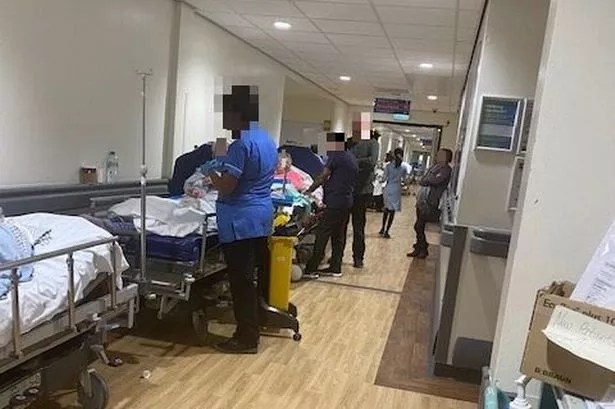
Our Acute and Emergency Hospitals are underfunded, understaffed and lack space and beds to treat patients safely. Staff, patients and family members know this from their own experience, but it is backed up by the rise in hospital-acquired infections (as reported on page 95 of the minutes of the Cheshire and Merseyside Integrated Care Board (November 2024).
NICE says ”The National Audit Office has suggested that hospitals with average bed occupancy levels above 85% can expect to have regular bed shortages, periodic bed crises and increased numbers of health care-acquired infections.57 Occupancy rates for acute beds have increased from 87.7% in 2010/11 to 89.5% in 2014/15 so few hospitals are achieving the 85% figure.57 High levels of bed occupancy may affect patient care as directing patients to the bed most suitable for their care is less likely to be possible.
The NHS has a shortage of hospital beds, with occupancy rates consistently exceeding safe levels.
Compared to other nations, the UK has a very low total number of hospital beds relative to its population. The average number of beds per 1,000 people in OECD EU nations is 5, but the UK has just 2.4. Germany, by contrast, has 7.8.
Our hospitals do not have enough beds or enough staff. Consequently patients are discharged as soon as possible but up to 26% can be readmitted within a month
The 2023/2024 NHS operational planning guidance recommends that hospital bed occupancy should not exceed 92%. Standards have slipped.
Finances
ICB funding from NHSE England comprises
- Core services,
- specialised services,
- primary care.,
- and pharmaceutical, ophthalmic and dental services.
The government and NHSE give the ICB various sums of money. It gives money for elective care, money for such specialist hospitals as have been devolved and money for the routine running of the providers (hospitals and out-of-hospital services, GPs, Dentistry.
Cheshire and Merseyside have the highest funding per head of population of any ICB. Nevertheless, they are in serious financial difficulties, as cuts are imposed Areas for savings/cuts include all age continuing care/complex care, mental health A and E/out of area placements.
The ICB provides the funding for the providers, i.e. the hospitals and organisations providing non-emergency medical care outside of hospitals (like Mersey Care Foundation Trust). The acute and emergency hospitals, and Liverpool Women’s Hospital too, are in financial difficulties. Foundation Trusts technically can go bankrupt which puts them under huge pressure to balance their books at any cost.
“In October, the average handover time for ambulances across England was 40 minutes and 21 seconds” The winter crisis is just one aspect of the damage to the NHS. Maternity, Gynaecology, Mental Health, the GP service, Dentistry all have problems and many are part-privatised.
Services, like audiology, are struggling to cope with the private sector taking the simple cases, leaving the NHS to deal with complex cases and training the next generation of doctors.
Bringing in PAs, and less qualified staff to do some doctors’ roles, is very unpopular and dangerous to life and limb.
It does not have to be this way. A better health service is possible and we need it. Our campaign demands the restoration and repair of our NHS, providing again the best health service in the world and making the NHS the best place to work in the world
 Save Liverpool Women's Hospital