Author: Mary

Encouraging and collating discussion about workers' struggles and struggles for socialism locally, nationally and internationally

Surveying the battleground in the fight for our healthcare.

Good health care makes a country richer, healthier and happier. It is an excellent investment. Good healthcare gives exceptionally good returns for each pound spent, both financially and socially. Good healthcare gives babies a great start in life, saves the lives of babies and the health of their mothers, and prevents long-term damage to health.

Universal healthcare free at the point of need, run as a not-for-profit, national system, and publicly delivered is by far the most economical and cost-effective way of delivering healthcare. This is the original NHS model.

Good pay for healthcare workers helps the health system work well, helps the economy grow, protects the physical and mental health of the workers, reduces the need for means-tested welfare and reduces poverty. It also says to those workers, your work is valuable, essential and complex requiring great skill and an abundance of care. Good pay should be a way of saying thank you to medical and healthcare workers.

Good healthcare grows the economy, helps sustainability. It is not a drain on the economy.

Market-based healthcare, as seen in the USA and as being sneaked into our NHS, makes corporations wealthier and happier and damages our health, our society, our communities and the economy.

“NHS will be just a memory!” one young woman said as she signed our petition.

Why is the health service starved of funds? Why is money haemorrhaging out of it into private companies?

There are intertwined issues making up the background to the threats to Liverpool Women’s Hospital. This list does not imply an order of priority; each issue is important in itself:

1.  The chronic  neglect of women’s health issues for many years, as well described in many reports, culminating in the Government’s Women’s Health Strategy which says:

The Women’s Health Strategy promises to address the poor experiences and worse health outcomes that women endure. The underlying cause of these issues is that the health system has historically been built by men for men. Consequently, women are often not listened to or believed by the health and care system. So, the crucial question is, will this strategy change the culture in the NHS of women not being listened to about their health and wellbeing?

2. The acute underfunding of healthcare which leaves hospitals struggling and their management focussed on balancing the books.

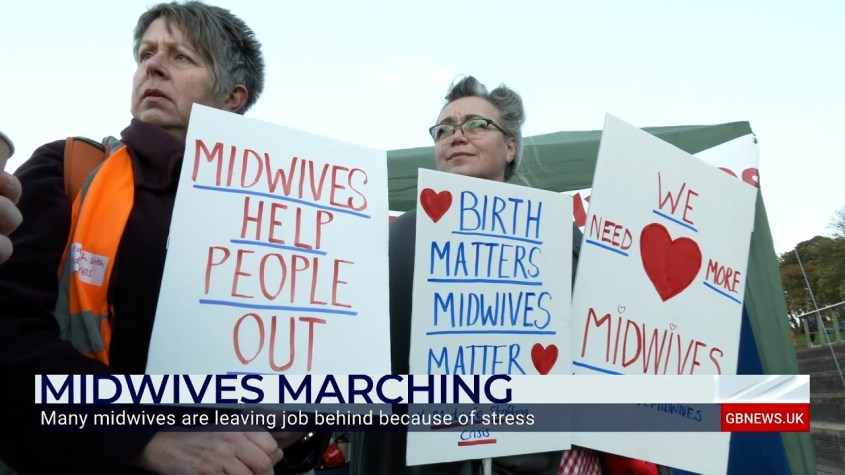
3.  The Maternity Crisis. The experience of giving birth is deteriorating as cuts bite. Our Midwives and other maternity staff strain every sinew to provide good maternity care but there are too few midwives, too few obstetricians and gynaecologists. They are overworked and underpaid. The country is short of midwivesMidwives are being driven out of the NHS by understaffing and fears they can’t deliver safe care to women in the current system, according to a new survey of its members by the Royal College of Midwives (RCM)”. Maternity is underfunded. The maternity tariff (the money the government allocates to maternity) is inadequate.

Infant mortality is worse in the UK than in 37 other advanced countries There has been a series of reports on the tragedies coming from the problems in maternity. We are worse than 39 other countries in maternal deaths.

Even this week there were further reports of problems in maternity care “Leaders of two maternity services have been told to take urgent action, after inspectors found understaffing and declining levels of care, despite safety warnings from midwives.

Maternity services at University Hospital North Durham and Darlington Memorial Hospital have been downgraded from “good” to “inadequate” in Care Quality Commission reports, published today. The CQC noted a “concerning deterioration” in the care the two services provided, despite midwives telling managers they felt the service was unsafe.”

There are severe problems with mental health services linked to maternity.

We can see the terrible maternity scandals. Our love and sympathies to all the babies, mothers, fathers and families involved and all the staff who did their best to challenge the situation. We honour you in our fight for a better health service and better care for maternity and women’s health.

4.  The pattern of concentrating resources in big hospitals which, until the Ockendon Report did not even have to have a Maternity Champion on their Trust board. A big hospital does not cause the deaths, nor does that model prevent these tragedies. Respecting women, respecting the working classpeople, respecting ethnic minorities, respecting patients and the public all would help prevent these deaths, and we see precious little of that in the situation in Liverpool, Cheshire and Merseyside.

5.  Money. Maternity care is nationally underfunded but no other hospital has such a large part of its income dependent on the maternity tariff so this affects particularly Liverpool Women’s Hospital.

6  Staffing problems, caused by poor pay, underfunding, using vacancies as a way of saving money and by staff leaving maternity nationally because of unmanageable work pressures and poor pay.

7. The cost of the Foundation Trust administration requirements.

8. Underfunding which denies the Liverpool Women’s Hospital the full range of intensive care services, requiring about eight women a year to be transferred one mile away to Liverpool Royal for intensive care. Many women are transferred into Liverpool Women’s Hospital as well. Transfers between hospitals are routine but complicated by the internal market in the NHS and of course years of underfunding.

9. The difficulties in cooperation between hospitals as imposed on the NHS by the 2012 Health and Care Act where hospitals were supposed to act like competing companies in a market, rather than components of an integrated and cooperative national service.

10. The huge waiting lists for treatment.

The British Medical Association (BMA) says “…around 7.68 million people waiting for treatment, an increase from the previous month; nearly 3.18 million of these patients waiting over 18 weeks; around 390,000 of these patients waiting over a year for treatment – which is around 308 times as many as in July 2019, before the pandemic began”. This is the equivalent of the whole population of the North West of England. There is also a hidden waiting list caused by non-referrals or difficulties in getting to see a GP.

11. Waiting in A & E is a big problem as seen in this Blackpool death.

 “Harold Pedley, known as Derek, attended his GP surgery during the late afternoon on 21.12.22 and after spending most of that day feeling unwell with symptoms including abdominal pain and vomiting. He was appropriately referred to the hospital and travelled there with his Friend after his GP had discussed his case with  doctors. Due to a lack of available beds in the assessment unit, Derek needed to remain in the emergency department. Following  his arrival at  20.07 hours, doctors were not notified of his attendance. He remained in the emergency department waiting area for almost two hours during which time due to significant pressures faced by the department he was not assessed or spoken to by a medical professional. At 21.59 hours a triage nurse called for him. By then, Derek had been unresponsive for some time and had died, his death confirmed at 22.26 hours. A subsequent post mortem examination revealed he died from the effects of non-survivable extensive small bowel ischaemia caused by a significantly narrowed mesenteric artery. His death was contributed to by heart disease.

At the time Derek arrived, as the Hospital Trust’s own internal review of this death explained, such were the pressures on the hospital Trust posed by patient numbers that it was operating at OPEL [Operations Pressure Escalation Level] 4. This is a method used by the NHS to measure the stress, demands, and pressure a hospital is under. OPEL 4 represents the highest level, when a hospital is “unable to deliver comprehensive care, and patient safety is at risk”. This is not a ‘one off’ event, and such pressures are becoming ever more common.

Liverpool Women’s Hospital reports that;

The urgent and emergency care (UEC) system continues to experience significant pressure across the whole of NHS Cheshire & Merseyside, with the majority of trusts across C&M consistently reporting at OPEL 3 in 2023 to date. The system has been escalated overall at OPEL 3, which is defined as ‘the local health and social care system is experiencing major pressures compromising patient flow‘. And this is in Summer.

12. Women are again faring badly on waiting lists. Health Watch reports that

  • Women are 28% more likely to wait over four months for NHS treatment than men (54% vs 42%).
  • More women are also likely to experience adverse impacts of long waits compared to men.
  • Most strikingly, women are 50% more likely to say that long waits impacted their ability to socialise than men (41% vs 28%).
  • Thirty-eight percent of respondents who identified as female said that waiting for treatment  impacted on their ability to work, compared to male respondents (29%).

“More than half a million women face prolonged waits for gynaecology care.”

“Women face extreme pain, heavy bleeding, and poor mental health as waiting lists reach record numbers” (From the Royal College of Obstetricians and   Gynaecologists. April 2022).

Poorer people and people from ethnic minorities also suffered worse than average. Women, poorer people, ethnic minorities and disabled people are part of the demographic of Liverpool and Liverpool Women’s Hospital, so this should be a factor in decision making.

13. Treatments, like dentistry, opticians, hearing aids, where now we must pay individually or do without.

14. Misogyny in the NHS. Seventy-seven per cent of the NHS workforce is female, but still there is a gender pay gap and men overall are paid more than women and are more likely to be in senior roles. The women in the NHS are amongst the most educated and dedicated in the county and yet are still subjected to sexual assault, bullying and discrimination.

15.  Disrespect towards Liverpool’s pattern of specialist hospitals, a pattern which is based on the history of the city and its role as one of the core cities of the region, and beyond. We have some wonderful specialist hospitals in Liverpool Including the Liverpool Women’s Hospital, the Heart and Chest Hospital, the Walton Centre for Neurology and Alder Hey Children’s Hospital. The Liverpool Echo reported on the threats to them here and we reported this in our posts about the Carnall Farrar report.

16. Mental Health. The privatisation of so much of our mental health services, coming alongside the pressures of years of Austerity, rising poverty, and the cost of living crisis, heaps ever more pressure onto working-class communities. We used to have good Child and adolescent mental health services, but now the service is a shadow of its former self and our children are suffering.

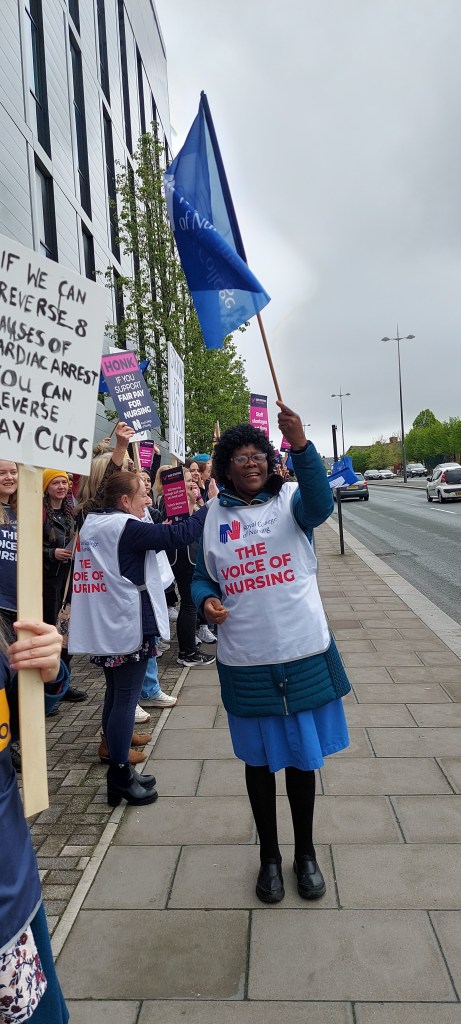
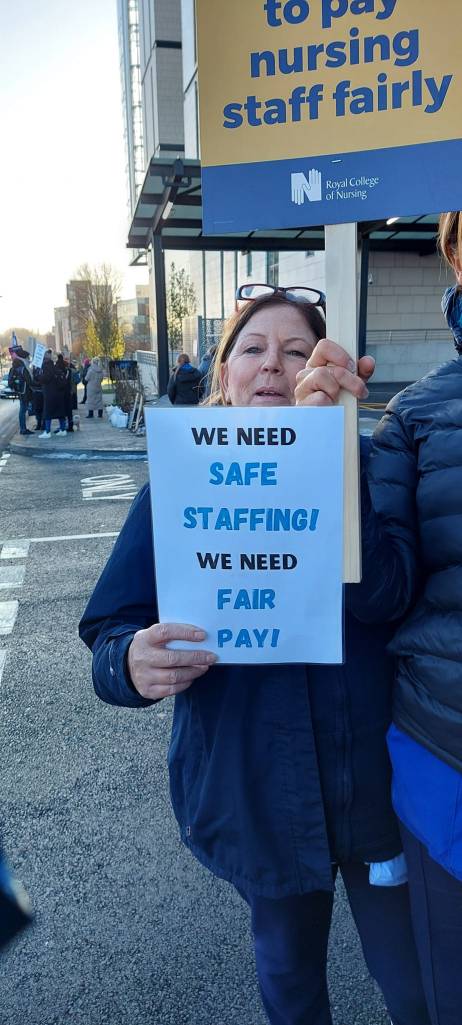
17. Staff shortages and staff pay. Staff have been on strike over pay and over working conditions and about restoring the NHS. We must heed their warnings about the state of the NHS. Consultants and Junior doctors are about to strike again. Industrial action has cost the government far more than if they had met the pay claims. This government is ideologically anti-union and anti-NHS.

18. And above all the long-term drive to privatisation, the introduction of the  American model of Accountable Care which envisages less care in hospitals, denying certain services, for example, breast reduction, which the NHS declared to be of no clinical worth(!)and outsourcing many other services to private companies. This culminated in the imposition of the Integrated Care System. In our view the ICS is not integrated, is not taking Care, breaks the national system, hands vast sums of money to the private sector, and makes huge cuts in finances. We listed local examples here.)

19. The austerity politics of healthcare. Political parties that support Austerity pretend that the country cannot afford healthcare. We say, as do many economists, that money spent on healthcare (if that money gets to patient care and to staffing), makes the country richer because it keeps workers working and makes recovery quicker. It happens to help more babies live as well. Deaths caused by Austerity rarely get a mention in NHS papers but it is referred to in the House of Lords Library, where it says “approximately 335,000 additional deaths had occurred between 2012 and 2019 compared with what had been previously been predicted. It also said the change in these trends was greater for people living in the 20% most deprived areas in England, Scotland and Wales.” Of the deliberately limited spend on health care since Austerity started, far too much of our tax pound goes to private companies and private medicine.

20. The impact of the privatisation lobby has been enormous, penetrating the thinking of political parties and even some who work in healthcare. Our Lobby for the NHS, for treatment free at the point of need, publicly delivered, publicly owned has got to be larger and louder., has to get deep into the unions, workplaces and communities.

Credit to the National Health Action Party

This blog is written from the standpoint of the campaigns in Cheshire and Merseyside but we love working with other campaigns for the NHS.

Please do sign our petition and please come on our demonstration

We can save Liverpool Women’s Hospital

We didn’t say it would be easy to do so but it’s definitely possible if people keep coming forward to help. 

This is a report on the immediate situation. Another blog will look in detail at the background factors

The board of Liverpool Women’s Hospital and, we presume the ICB, have agreed on the appointment of a joint Chief Executive Officer with Liverpool University Hospitals NHS Foundation Trust.  We believe this appointment is a first step towards a merger and the dispersal of services. It is normal for a merger to follow such an appointment.
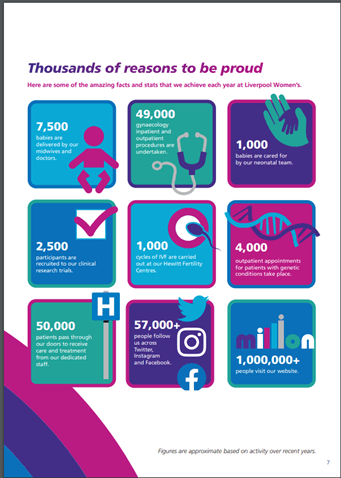
The original job advertisement for the new CEO of Liverpool Women’s Hospital said this and included the graphics shown here.

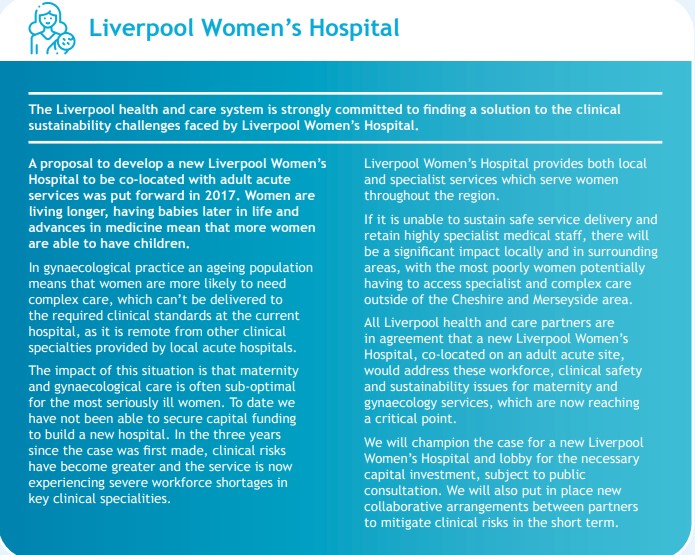
Liverpool Women’s NHS Foundation Trust delivers the highest standards of care for women, babies, and families. Each year we deliver over 7,500 babies, carry out over 49,000 gynaecological inpatient and outpatient procedures, care for over 1,000 poorly & preterm newborns, perform around 1,000 IVF cycles and have over 4,000 genetic appointments taking place. We believe that this along with a strong dedication to research & innovation makes us the specialist health provider of choice in Europe for women, babies and families.

We have some of the leading experts in their field, which has been showcased on national TV and news, making our teams famous across the world for professionalism, skill & compassion.”

“…..the only specialist trust for women and babies in the UK and the largest standalone women’s hospital of its kind”

We want to keep this hospital, for all our mothers, daughters, sisters, friends, lovers, and every baby born there.

Among the person specifications for the CEO role was:

Demonstrable and detailed understanding of current women’s health issues, national policy and standards, as well as best practice locally, nationally and internationally.”

We would love to know how the board considered that the CEO of Liverpool University Hospital Foundation Trust met these criteria. Maternity at his previous hospital Mid Cheshire Hospitals NHS Foundation Trust was evaluated by CQC as “requires improvement” though this may have happened before he got there. Over a number of years, there were eleven temporary closures of the Maternity Unit at Mid Cheshire. One woman in labour was turned away from the hospital due to a lack of beds. This is not reassuring. He might have dramatically improved maternity and women’s services there but we have not been able to find evidence of this.

Join us on the 7th of October in our demonstration. Act before the NHS is merely a memory.

More than seventy-three thousand people have signed our petition to Save Liverpool Women’s Hospital and to repair and restore the NHS. The petition is online here and on paper at our stalls. We get great support on the streets for our campaign. Our campaign, and similar campaigns across the country continue. We need to reach more and more people and organize people to speak up.

Even as the NHS is being stripped away, much great work is still being done, day after day, in our hospitals, clinics, and GP practices thanks to our healthcare workers. Our  NHS workers have kept the ship afloat throughout the years of cuts.

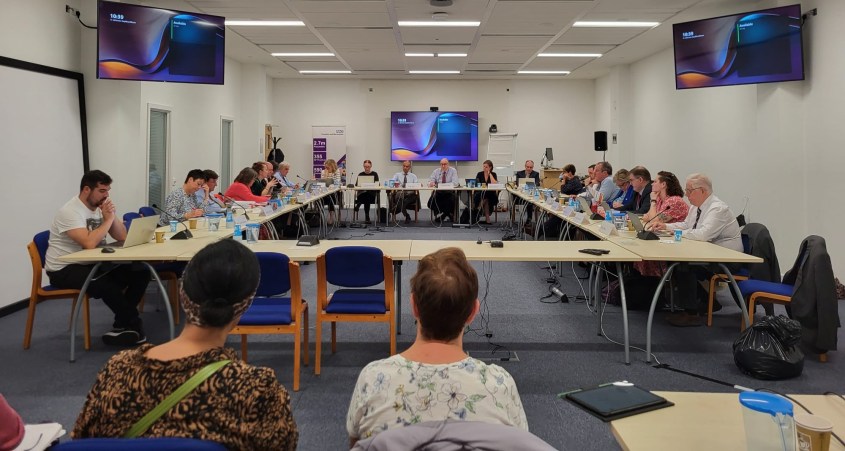
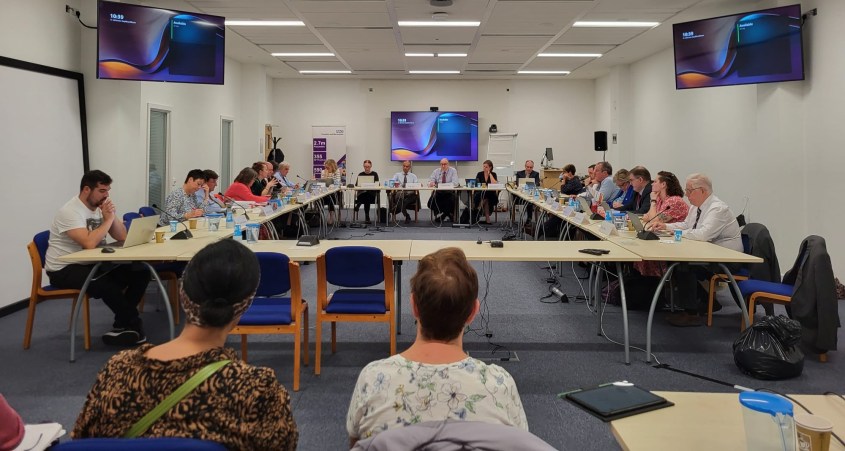
Recent local developments in the battle for the NHS, for safety in maternity, and for women’s and babies’ health. On the 14th of October, the Liverpool Women’s Hospital Board met. Members of the public attending heard of some great work, and of many problems.

The board considered developments in the role of Maternal Medicine Centres, a new development. Liverpool Women’s Hospital is one of three Maternal Medicine Centres in the Northwest.

The Maternal Medicine Centres will provide a regional service including pre-pregnancy, antenatal and postnatal care for women who have either pre-existing significant medical problems or medical problems arising in or shortly after pregnancy.  The MMCs will also provide advice and care for the most complex and highest risk women including those with respiratory, haematological, renal and cardiac problems and women diagnosed with cancer. “

The board also heard a patient’s story which has helped develop innovations in menopause care, including having some joint menopause and mental health clinics. The attention now being paid to menopause is a great step forward and is disclosing years when treatments were simply not available leading to women’s long-term ill health. The patient’s story showed how women staff, nurses and doctors, can work together and push through real change. Surely this cooperation and mutual respect is much easier in a women’s hospital rather than in a huge four-site hospital. Will the new CEO prioritize the forty-odd people waiting in A and E for a bed at the Royal site, or agree to these innovative clinics?

Delays in Induction of labour. The meeting also discussed problems at the hospital with women kept waiting for Induction of Labour. This was both a staffing and a space issue. Induction of Labour is used for safety reasons so delays are potentially dangerous.”Delay in the induction of labour (IOL) process is associated with poor patient experience and adverse perinatal outcome.” Studies have shown this happens more in planned Induction of Labour rather than when the induction is an emergency

The board also received a  brief report from the Letby case but could not discuss it in detail, because of ongoing police investigations.

As members of the public, some of our campaigners have attended board meetings for many years. We cannot contribute at these meetings but we can ask questions at the end of the meeting. On September 14th there was the first board meeting since the announcement of the intention to install a shared CEO between Liverpool University Hospital Foundation Trust and  Liverpool Women’s Hospital. This issue of a shared CEO had not been raised in the previous Board papers. The author asked if campaigners had missed some paperwork about this and we were told no, we had not. At the previous meeting, the discussion was about putting an advertisement out for a new CEO. 

Announcing a shared CEO is a fundamental change. We had been assured of public consultation on the future of the hospital but this critical decision happened without consultation and without being mentioned at previous board meetings. It happened after we were told in multiple meetings that decisions about the future of Liverpool Women’s Hospital were to be made via the Women’s Committee of the ICS.

In January 2023, following the Liverpool Clinical Services Review and at the request of the Cheshire and Merseyside Integrated Care Board (C&M ICB), the Trust paused its internal Future Generations programme, handing responsibility for the programme to the ICB’s newly established Women’s Services Committee.” (from the LWH board papers).

Confusion has deepened.

It seems, from the board meeting, that the advertising and recruitment were managed by the Remuneration Committee at Liverpool Women’s Hospital, for which minutes are not published. According to the Chair of the Board, in a verbal answer, they had approached the ICB and system partners about the possibility of a joint CEO  some time previously. (Again, we cannot find this in the public papers). They had been told that the time was not right so had gone on with the advertising for a new Chief Executive. Then they were told (It is not clear by whom) that the time for this joint CEO was now right, so they ceased the advertising process, closed the vacancy, and agreed to the joint appointment. Did the board, staff, and concerned patients at LUHFT know about this before it happened?

Who is making these decisions? Where is the clarity? Where is the candour? Where are the impact assessments? How can the public follow this?

We were told that the report from the chair of the Women’s Committee of the ICB had arrived too late for the Board papers but it has been on the ICB website since the beginning of the month. How moving to a shared CEO matches with this report from the chair of the ICB  Women’s Committee beats me. The report says, “This committee will oversee the development of a safe and sustainable future model for women’s health services in Liverpool” Did it oversee the idea of a joint CEO? If so, why were we specifically told otherwise?

There are serious money troubles at both Liverpool Women’s Hospital and Liverpool University Hospital Foundation Trust. In the minutes of the previous meeting, there was this statement

It was asserted that wider system support would be required to find solutions for the structural deficit that underpinned the Trust’s financial challenges”.

 This “wider system support” means that more money from the local ICB and the system of hospitals it controls will be needed.

At the board, the severe financial pressures of the hospital were partly discussed in the “in public”  section of the meeting and were due to be discussed in depth in the afternoon private session. The financial problems of Liverpool Women’s and Liverpool University Foundation Hospitals Trust are severe yet they are expected to make more than five per cent CIPs (cuts) plus making good non-recurrent savings made last year. There are money problems also in Mersey Care, and the Countess of Chester.  This is not spendthrift hospitals but structural underfunding and a government bent on cuts.

Finances at the Women’s

The core issues specific to Liverpool Women’s Hospital are.

Nationally inadequate NHS Funding.

Inadequate funding for maternity through the maternity tariff. This affects all maternity providers but the scale of maternity at LWH makes it a far greater problem.

The cost of running a Foundation Trust

The Insurance system which is based on market models and which nationally carries more claims from maternity than any other service.

The inclusion of nonrecurrent items in balancing last year’s books. The government has insisted this is made good across the country.

Making between five and six per cent CIPs(cuts).

Cuts in spending inevitably impact staff pay and recruitment because that is where most of the budget is spent

Winter is coming.

Each doctor or nurse with whom I have informally discussed this situation, says that the situation this coming winter fills them with fear. We must demand better funding, money directed exclusively to staff and patients, not to privatization.  

Our local hospitals are already under pressure in summer and early autumn. Most local hospitals even in the summer were reporting that they were on Opel 3. This is reported on page 23 of the board papers.  What does this mean? The NHS says

 At OPEL 1, there is a low level of pressure on NHS services, and the system is functioning normally.

  • At OPEL 2, there is moderate pressure, and healthcare facilities may need to take additional steps to manage demand and capacity.
  • At OPEL 3, there is a high level of pressure, and the system may need to implement additional measures such as canceling elective surgeries or diverting patients to other facilities.
  • At OPEL 4, there is severe pressure, and the system is at risk of breaking down.
  • At OPEL 5, there is a critical level of pressure, and the system is unable to deliver comprehensive care. 

We need action for the health service now and not one penny must be diverted from patient care, staff costs, and building and estate safety before the winter sets in.

In summary, we want to keep Liverpool Women’s Hospital as a standalone Hospital, cooperating and working in a  mutually respectful system across the whole NHS. We want to keep our specialist hospitals too. As our petition says “Save the Liverpool Women’s Hospital. No closure. No privatization. No cuts. No merger. Reorganise the funding structures, not the hospital. Our babies and mothers our sick women deserve the very best”.

Liverpool Women’s Hospital is much valued by the people of Liverpool. For many years now its future has been under threat. Nationally many hospitals are also under threat and many have closed. There is no evidence that closing swathes of hospitals improves healthcare. Our health has been declining in this time of closures. There is no evidence that huge reorganizations are more effective. Necessary reorganisations are damaged if implemented without resources. Everything we face at Liverpool Women’s is reflected in the rest of the country.

We must fight to save our healthcare. Fight for our rights, for our lives.

Every worthwhile right that we have ever won, had to be won, first, in the minds of the people. This includes the vote, equal pay, maternity leave, free and universal education, abortion rights,  race equality, effective sewers, trade union rights, and some level of environmental protection. LGBT rights, ending slavery, all of them. The idea of healthcare, universal, free at the point of need, as a public service, funded by the government was first won in the minds of the public, by working-class women and trade unionists (and, back in those days, the Labour Party), before the post-war Labour government introduced it 75 years ago.

The people of   Cheshire and Merseyside and beyond, the women and families in, the UK are entitled to world-class healthcare. Our communities have paid for the NHS for 75 years, and we continue to pay our taxes and our National Insurance, contributing far more as a percentage of our income than the rich do), but the government does not release the money or diverts it to the private sector.

We must protect what’s left of our healthcare, we support our healthcare workers, and demand the return of what has been taken from us to fill the coffers of big corporations.

The Government is implementing fundamental change to the NHS, change that no one voted for, change that was in no party’s manifesto, but change that makes the corporations and some of the ultra-rich even richer. This change is obscured by a smokescreen of propaganda coordinated by a lobby group that makes the tobacco and Oil lobbies look like amateurs.  They seem to have their tentacles into parts of the Labour Party too. These changes are costing lives and pain for ordinary people.

Leading trade unionists are showing their support

We are entitled to know what is happening to our healthcare. Who is making what decision? Where are they making these decisions? What is the reasoning behind decisions being made? What impact assessments have been done? How and when is the public allowed a say? Where is the candour??

No to merging Liverpool Women’s Hospital.

The Statue outside Liverpool Women’s Hospital

Women’s Hospital Foundation Trust Board has announced that it is to have a Joint Chief Executive Officer (CEO) with The Liverpool University Hospitals Foundation Trust. A joint CEO would often lead to a merger. They say this is an interim measure.

We have had a women’s hospital in Liverpool since 1796, but few remain in England. Most women’s care is provided in general/ acute hospitals.

There are serious issues for all NHS services in Cheshire and Merseyside and this attempt to fundamentally change Liverpool Women’s Hospital is part of the general attack on our services. It’s no surprise that the attack is aimed at Women’s Services and services for our thousands of babies born at Liverpool Women’s Hospital. We know that the site is very valuable to developers but its peaceful setting is also good for our health.

When we presented our petition to the Cheshire and Merseyside Integrated Care Board last February, we were told we would be kept informed and that there would be public consultation if significant changes were to take place. The move to a joint CEO seems to have bypassed consultation.

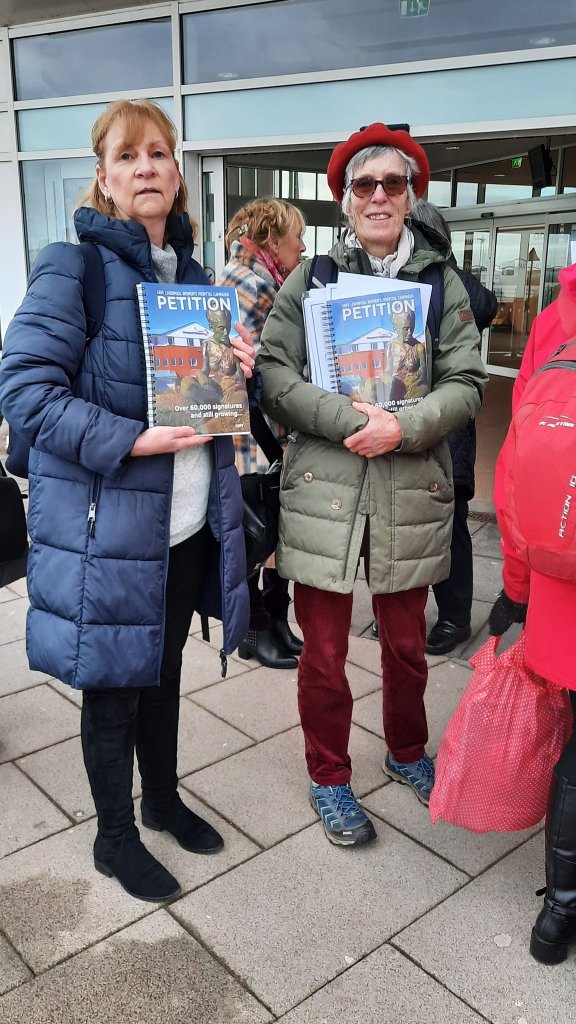
Campaigners with some of the petitions that were handed into the ICB in February

This move to a shared CEO (which normally leads to a merger) makes a mockery of all the promises of consultation with the public, with women and men who need the service. So, our campaign has become more urgent. Please talk to family friends, and workmates about what’s happening in our NHS. Those conversations are what change the world. We can and must win back the NHS and only popular pressure will do that. Please share this article, and sign our petition if you have not done so already. Please come to our demonstration.

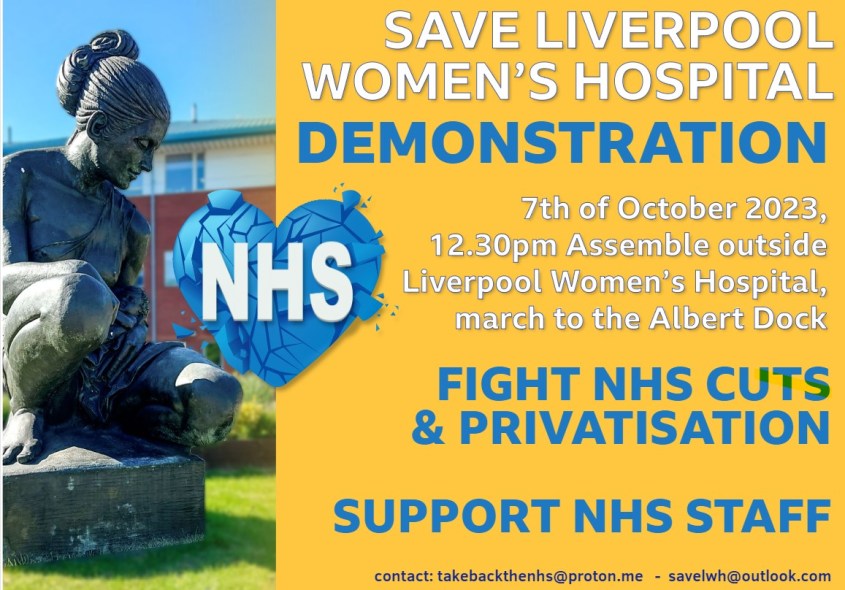
This move on the future of the Liverpool Women’s Hospital makes our demonstration on October 7th still more urgent. Please come, bring your family and friends and banners, and make your placards.

So what has gone on?

 “Liverpool Women’s has secured an agreement with NHS Cheshire & Merseyside on our ambition to move to a shared CEO model. The Trust and Liverpool University Hospitals NHS Foundation Trust (LUHFT) have reached agreement to appoint a shared Chief Executive.”

Instead of the promised public consultation on the future of the hospital, this pre-merger has been done by fiat.

The managers of the NHS forget that our healthcare is a public service and the public will have a say, whether they are invited to do so or not.

Our petition

Both our online and paper petitions say “Save the Liverpool Women’s Hospital. No closure. No privatisation. No cuts. No merger. Reorganise the funding structures, not the hospital. Our babies and mothers our sick women deserve the very best”.

There are more than 73,000 signatures on our petition, 43,700 online, and the remainder on paper (and the count is verified). To get an idea of the scale of this petition, the new, enlarged, Anfield stadium will hold 61,000 people, and Everton will hold 52,888. Our petition, online and on paper involves 73,00 and growing. This seems to matter nothing to the NHS managers.

We are not accepting this lying down. It is not too late to stop this. We will not sit by and see cuts to the services for women and babies. We have seen in report after report, not least the recent Nottingham report, the damage to our maternity services and how it costs tiny lives.

Why do we oppose this move to a shared CEO?

The hospitals and other aspects of healthcare are facing an appalling winter as cuts and staff shortages bite ever deeper. The damage done by the last two Health and Care Acts is becoming sickeningly clear. It appears that the purpose of the ICB system is to close hospitals and deny care. We have been told by those intent on cuts for many years that Liverpool has too many hospitals. It is not just happening in Cheshire and Merseyside.

Closing hospitals and reducing bed numbers is a standard response to financial problems imposed by the Government. Yet this costs lives

Maternity crisis

The use of a shared CEO will do nothing to address the maternity crisis. It will do nothing to solve the chronic underfunding of maternity services.

Day by day, night by night, in Liverpool Women’s Hospital and other maternity hospitals we have a shortage of midwives, obstetricians, and nurses. The CQC reports across the country show this. This government chooses not to fund maternity to the standards required to keep the service safe. Hence the many scandals and reports. We demand a change in funding for maternity, for all our mothers, sisters, daughters, friends, and lovers, and for all the babies. We know all too well the dangers of the situation in maternity but the recent report from Nottingham underlines this.

Infant Mortality

Neither a merger nor a joint CEO will do anything to address the infant mortality rates in the UK which are worse than 39 other advanced countries. These figures are dreadful and these figures have got worse in the years of Austerity.

 The Nuffield Trust said “The infant mortality rate fell from 6.3 deaths per 1,000 live births in 1993 to 3.9 in 2013 and the neonatal mortality rate fell from 4.2 deaths per 1,000 live births to 2.7 over the same time period. However, since then progress has stalled and even worsened slightly. In 2021, the infant mortality rate was 4 deaths per 1,000 live births, 0.1 more than what it was in 2013. Similarly, the neonatal mortality rate was 2.9 deaths per 1,000 live births, slightly higher than 2013’s record low. This corresponds to 2,374 infant deaths and 1,701 neonatal deaths in 2021.”

 The Bliss neo-natal charity said, “The data also highlights the continuing health inequalities in risk of neonatal mortality – with Black babies, babies born to mothers under the age of 20, and babies born in the most deprived areas being at significantly higher risk.”

It will do nothing to improve services for women in the health service in the area covered by LWH.   Liverpool Women’s Hospital is the area’s maternal medicine centre.

Liverpool Women’s Hospital is a Referral centre, a tertiary service for Cheshire and Merseyside. Patients come from North Wales and as far as the Isle of Man About 75% of patients come from the Liverpool region, the rest from further afield

Women are not prioritised in general hospitals. The standard emergency protocol for the use of operating theatres is “Life, Limb and Testicles” Think about it. Where are ovaries in this priority list?

Women’s Health

Even this dreadful government has recognized the issues for women’s health in a strategy reported last year. Women deserve better.

Discussing the NHS with Sharon Graham, Leader of Unite the Union

Sharing a CEO will not improve the financial position of either of the hospitals involved. The Liverpool Women’s Hospital is significantly underfunded and was in deficit last year (according to ICB papers) to the extent that consultant cover overnight is affected. LWH faces severe financial problems this year, all directly from Government policy. Maternity nationally is underfunded but this hits Liverpool Women’s Hospital particularly hard because maternity accounts for eighty per cent of its budget.

In fighting for Liverpool Women’s Hospital, we are also fighting for maternity nationally.

Liverpool University Hospitals Foundation Trust has even greater financial problems, the worst in the ICB area, it has been at the government’s top level for financial “difficulties”, level 4. There are very real reasons why LUHFT required more funds than the stingy government allocation, not least its single-room design and the problems in the build of the hospital. Nationally most trusts have financial problems, caused in the main by poor funding and the leakage of funds into for-profit companies. Somehow “working together with a view to a merger “ will solve these issues? There is no mention in the announcement of extra funding. Show us the money!!

 We stand in solidarity with everyone who works in LUHFT. We are not claiming one hospital is better than the other. We are saying that we need the Women’s Hospital.

Campaigners at the last Cheshire and Merseyside Integrated Care Board.

Liverpool University Hospital Foundation Trust has had a troubled start and many of the problems have still to be sorted out, including, we are told, the women’s toilets in the new Royal and the leaking of 14,000 people’s salary details, cancer waiting lists and more. We fight for better funding, staffing and organizational arrangements for every hospital, but lumping these two hospitals together is unacceptable.

How can one man be CEO of two complex hospitals? There are major issues at LUHFT. The current CEO is in position because of reports like this;

Ted Baker, chief inspector of hospitals, said “When we inspected services at Liverpool University Hospitals NHS Foundation Trust, we were concerned that the trust’s leadership team had a lack of oversight of what was happening on the frontline. “There were significant issues with patient access and flow through the emergency department and this was affecting the ability of staff to deliver safe care and treatment. We observed lengthy delays and poor monitoring putting patients at serious risk of harm. We were particularly concerned about how long people were waiting to be admitted onto medical wards and by the absence of effective processes to prioritize patients for treatment based on their conditions.”

This move towards merger ignores the responsibility and multiple promises to consult the public about major changes in health care.

If we want the NHS  to be restored and repaired we must build a  mass campaign. We are in the middle of a major assault on publicly funded, publicly provided, free at the point of need, well-funded healthcare in this country, and private profit is making a  fortune. The health privatization lobby makes the Tobacco and Oil lobbies look like amateurs. This lobby has its grip in parts of Labour as well as the Conservative and dominates the narrative in much of the media.

Layers of management and control.

There are two main layers of management in the local NHS, the Integrated Care Board and the Hospital Trust Boards. The ICB holds the purse strings and supposedly decides policy for the area. Before the 2022 Health and Care Act, hospitals were supposed to act like separate companies, competing with each other. They are now supposed to work as a system but the legal powers of the trusts remain. This is the power the Hospitals have used to leap over public consultation.

Our Save Liverpool Women’s Hospital Campaign presented a bound copy of some of our signed petitions to the ICB earlier this year. It was well reported in the local press. The meeting was held to consider the Carnall Farrar report on the future of specialist services in Liverpool but mainly to rehash the arguments about the future of Liverpool Women’s Hospital. please see our earlier posts on this.

In a meeting with the chair and chief executive, we were told we would be kept informed of what was happening. We were invited to one meeting with the leading medics in the project and then we heard nothing. We asked for minutes of the Women’s subcommittee and from One Liverpool (the Liverpool place).

 Last week we were invited to another meeting. The message inviting us that said

“We are really keen to ensure that you are kept up to date and are therefore offering this one-off meeting in order to provide you with an update as to where we are and to provide you with information as to our plans for setting up the formal groups, including the group by which we will be engaging patients and the public. Moving forwards it will then be via the formal group that we will be engaging and providing updates, and we will be looking to identify our patient and public representatives to sit on the engagement group with the support of Healthwatch.”

Five of our campaigners attended this meeting.

We raised issues about the staffing and financial problems at Liverpool Women’s and how the poor situation had meant that vital improvements had been shelved. We spoke about how nonrecurrent savings in 2022-23 have to be made good in 2023-24 from recurrent items and further CIPs (cuts in this year’s budget ). The hospital had lost funding it had previously received. We expressed our grave concerns that this was far more of a clinical risk than transferring about 8 women a year to Liverpool Royal for Intensive Care. Of course, intensive care must be improved, but other dangers were clear and present and seen in the CQC report.

The message we got in response was that things were moving through the Women’s Committee and the individuals that we were talking to were involved. We were given a paper copy of a letter from the Chair of the Integrated Care Board  which said:

“It’s important to stress that at this stage no proposals have been made for how services might look in the future –” 

In response to our query about mergers, (which was common talk amongst staff), this was denied.  We asked about the item scheduled in Liverpool City Council  Health and Adult Social Care Committee. The item was to decide if the issue of the future of Liverpool Women’s Hospital needed scrutiny.  They claimed not to know about it.

The very next day the announcement was made about the shared CEO  and specifically said it had been agreed by the ICB, whose deputy medical director was at this meeting with us. To say the least, this sham appeared to lack candour

Please support our campaign.

Who are we? Save Liverpool Women’s Hospital campaign is a group of campaigners who came together to protect Liverpool Women’s Hospital and to fight for a return to the original model of the NHS. We have attended Liverpool Women’s Hospital board meetings for many years. We have worked with other campaign groups in Cheshire and Merseyside and have attended the ICB meetings and read their papers. We run street stalls and attend events, lobby councillors and MPs. We link with trade unions and other campaigns for the NHS and women’s rights

What do we want?

A government-funded, national, universal, comprehensive, health service, publicly delivered, not for profit, free at the point of need as a coherent national service, with decently paid staff with a better focus on women’s health and babies’ health.

Rage, rage against the dying of the light.

What happened at the meeting of the Cheshire and Merseyside ICS on the 27th July 2023? What were the plans made in the context of 7 million people waiting for care, corridor care, maternity crisis and staff discontent?

Our healthcare is badly damaged and still more damage is planned in plain sight. The NHS, last great social achievement of the generation who defeated fascism, is being broken and plundered, and, they plan this in meetings held in public. It is obscene that the administrators of the ICB plan these cuts in the same meeting that they describe the intense poverty of the people whose health they exist to care for.

One quarter of their spending goes to profit for private companies – and that’s just what we can track.

The July 2023 meeting of the Cheshire and Merseyside Integrated Care Board.

Please read our earlier post for the detailed background. For those readers who might want to see the full text of the documents for the meeting, see here.

All of the agenda items which we listed in the last post went through including, crucially, the finance items. In this crisis situation, the chair of the meeting announced that the ICB meetings would only be held in public every two months rather than monthly. He rudely refused to answer questions about public access to the minutes of the meetings not held in public.

Woven through the agenda are descriptions of intense poverty, and the illness and early deaths this poverty causes. Poverty makes us ill, and poor healthcare makes us poor. The Cheshire and Merseyside Healthcare system is already struggling with long waiting lists (even for cancer care), corridor care, trolley waits, staff shortages, staff overwork, serious maternity issues in most of its hospitals, justified industrial action by staff, worsening life expectancy, and chronic shortage of hospital beds and care home beds.

The cuts in spending this year which were announced at the meeting – Words in italics are from the board papers.

7.1 The ICB submitted a deficit plan, in line with the level discussed with NHS
England. NHS England still expects the ICB to work to mitigate this in-year and
strive to deliver a break-even out-turn.

7.2 NHS England has stipulated that all ICBs and Providers continue to apply the
following conditions:
Recurrent delivery of efficiency schemes from Q3 to achieve full year effect in 2024/25 to compensate for any non-recurrent measures required to achieve
23/24 plans
(Non recurrent measures are those items where saving made last year will not be available this year, for whatever reason; our comment).

Full engagement in national pay and non-pay savings initiatives.

Monitoring of agency usage by providers, compliance with usage and rate
limits.

Revenue consultancy spend above £50,000 and non-clinical agency usage
continue to require prior approval from NHS England.


7.3 By the end of quarter 2, the ICB is required to prepare a medium-term financial plan, demonstrating how recurrent financial sustainability will be delivered.


7.4 In addition, for ICBs with a deficit plan, further conditions apply as follows:

The ICB is to review current pay controls.

Vacancy control panel to be in place for all recruitment.

Apply agency staffing and additional payment controls as stipulated.

Ensure an investment oversight panel is in place to oversee all non-pay
expenditure. Non-funded revenue or capital business cases should not be
approved.

Where revenue or capital cash support is required, additional conditions will apply.

The attempt to cut spending on pay makes a mockery of the staff strikes. The vacancy control makes a mockery of staff shortages and difficulty in recruiting and retaining staff.

BMA Consultants on strike in Liverpool

See also the letter from NHS England on page 199 showing that these cuts must also be implemented by the Trusts/ Hospitals.

Liverpool Women’s Hospital cannot possibly make these cuts (please see the previous article). We suspect that other hospitals cannot make them either but we have the detail on Liverpool Women’s Hospital.

The clarity of the reporting of the poverty in our area made this decision all the more callous.

Other important Items:

The Partnership Board, where councillors are represented, presented a report which was approved (see Page 327 ). In this report the Partnership Board describes itself as “including independent healthcare providers”. Who are these organisation involved with the partnership board? What will their role be? Will they have voting rights? How much money will they be gifted?

Remember that the ICB covers all of Cheshire and Merseyside. Each local authority area is supposed to have a Place Board covering the health and social care issues in their area. We emailed Liverpool Place, and were told access to minutes would only be through the Freedom Of Information Act request route. Yet the latest news about proposalls for the future of Liverpool Women’s Hospital will come through Liverpool Place. How is it right the public will only be able to access this information through the lengthy and complex FOI procedures?

Other items from the meeting:

The closure of Park View Medical Centre in Tuebrook

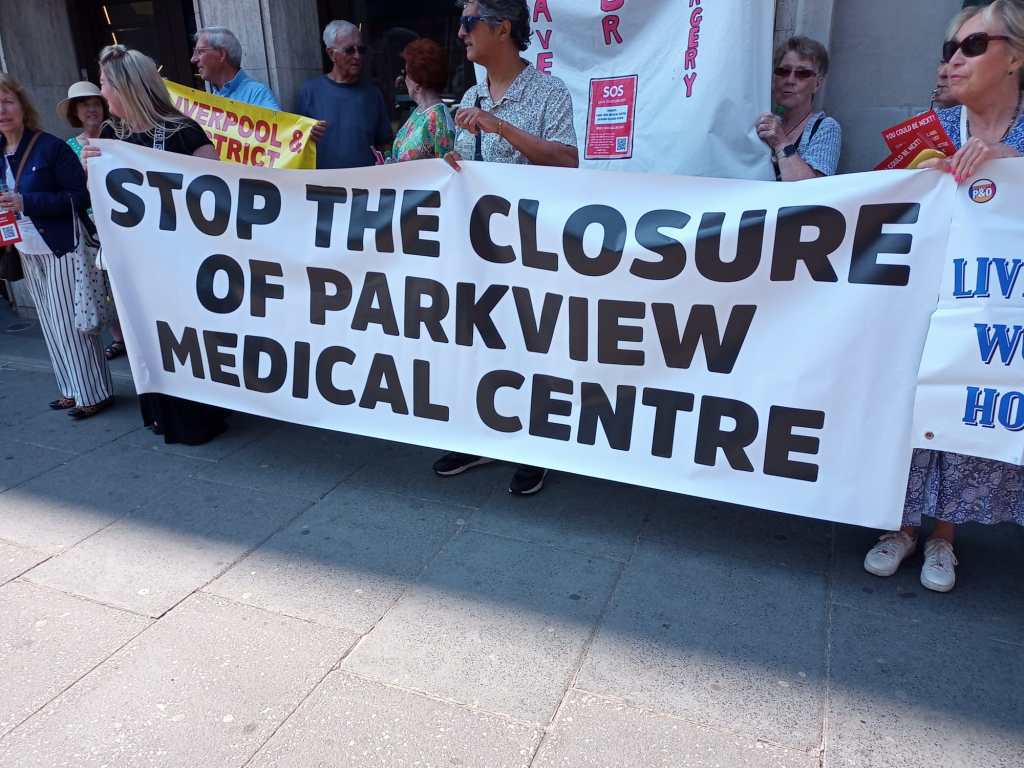
Before the official start of the ICB meeting, protestors from the Park View Medical Centre in Tuebrook Liverpool spoke about the closure of their medical centre and GP practice against their wishes, and against the needs of the community. Patients have now been allocated to other practices including 900 to Green Lane, where existing patients report having difficulty in getting appointments. The way the decision was arrived at, the patients spokesperson said, was wrong and gave too much power to one person. The protestors handed in their petition but accepted that they had lost this battle, and would form a new patients committee at their new practices.

Park View Medical Centre protestors. Photo credit to the Echo.

This was a very sad day for health care and democracy. We fund the NHS, it is ours, but the public has little say. That must change.

The Women’s Committee

There was no report from the Women’s Committee set up to discuss the Carnall Farrar report on the future of Liverpool Women’s Hospital. The report on Liverpool Women’s Hospital’s future is due to go to Liverpool Council’s subcommittee in November, so when will anyone see what is being planned for the place most of the city’s babies are born in? No meeting in August. None in October, so no time at all for the ICB to listen to the women.

There was no strategy put forward to address the maternity issues present across the ICB area and nationally. The issue was scarcely mentioned. The CQC is inspecting all maternity units following the Ockendon report. Birth is important! Everyone has to be born yet it is the Cinderella service, understaffed, under funded and scarcely mentioned in these reports. The future of the largest and most prestigious Women’s Hospital and Maternity Hospital in the Country hangs in the balance here.

What you can do to help the fight for world class healthcare for all, and a return to the original model of the NHS:

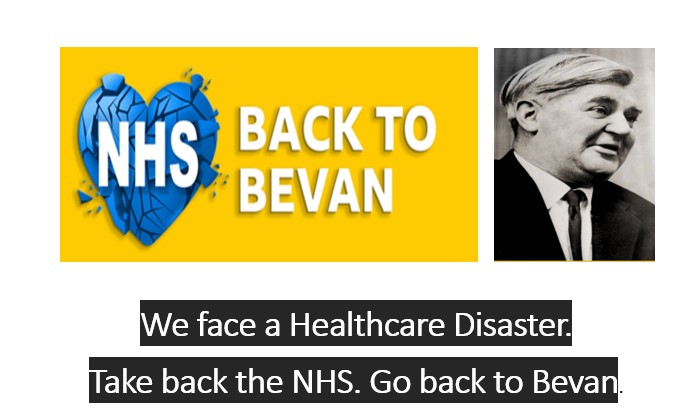
We cannot find the originator of this image but we thank them for it.

Ask your union or community group to join our campaign and invite a speaker.

Ask for a meeting with your MP and Councillors (we can help and support you in this). Email your MP and councillors demanding a big campaign to bring back the proper NHS. Power conceded nothing without a demand. To get something you have to ask for it!

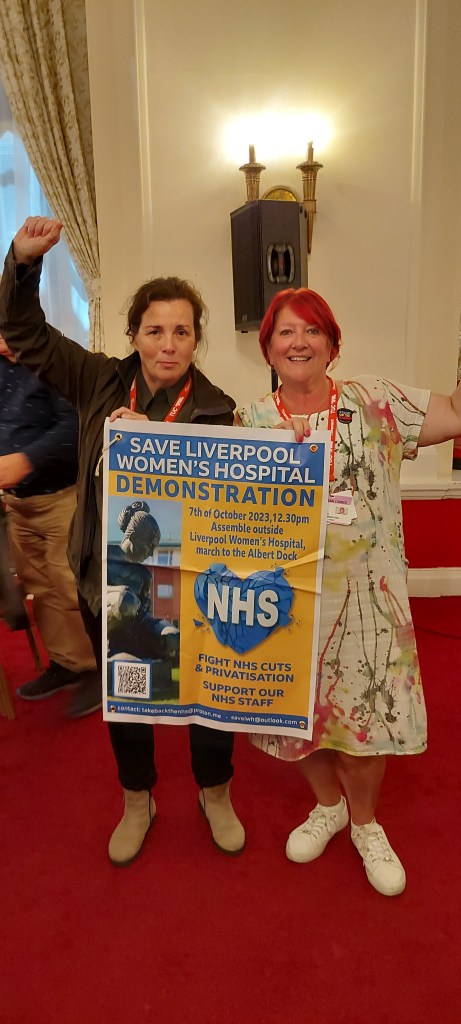
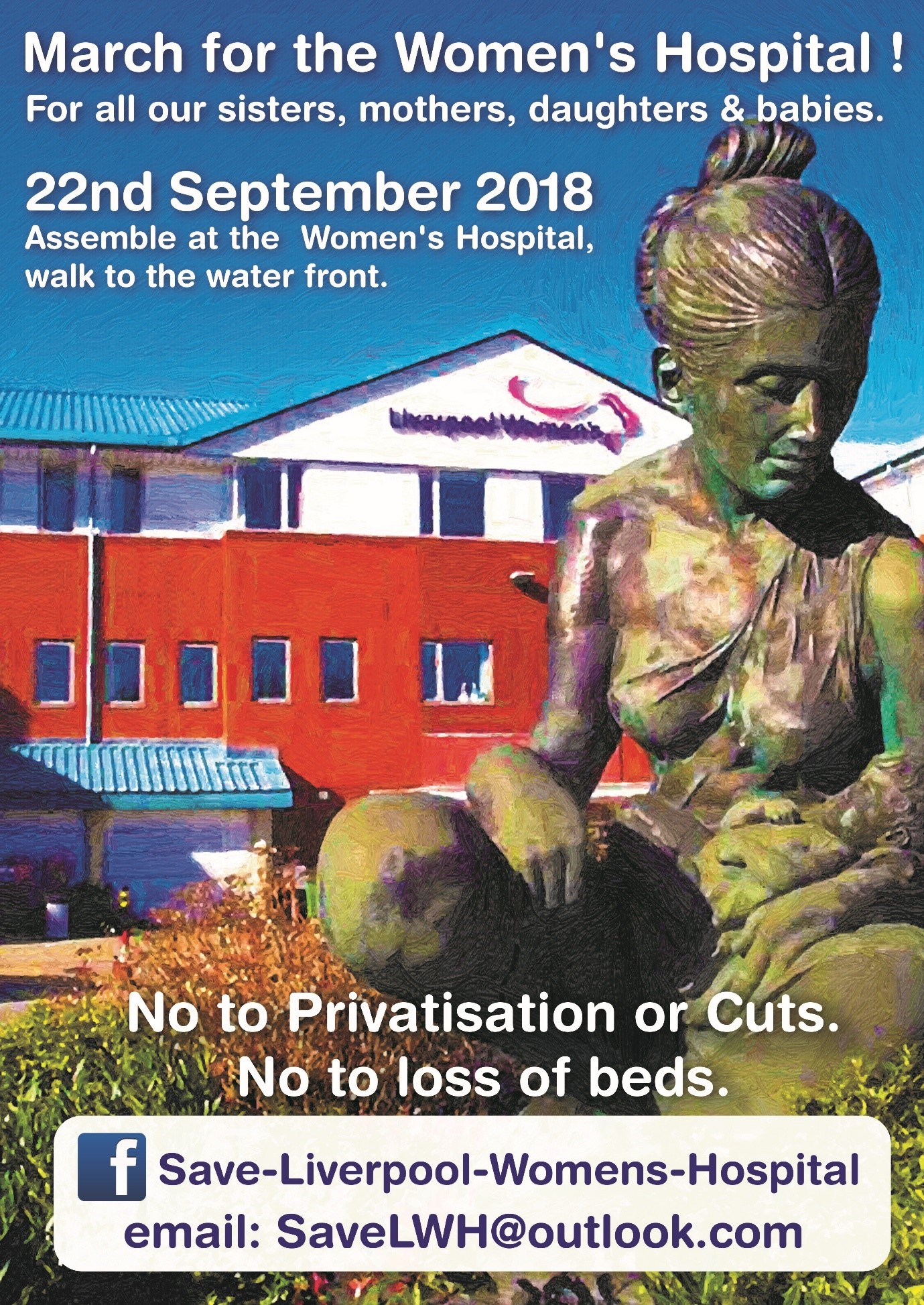
Join our demonstration for the NHS and Liverpool Women’s Hospital at 12.30, on Saturday 7th October, 2023, assembling outside the Liverpool Women’s Hospital.

Donate to our funds for leaflets and our other work.

What’s the July news about the Liverpool Women’s Hospital?

Decisions about Liverpool Women’s Hospital are in the hands of the Cheshire and Merseyside Integrated Care Board. The Integrated Care Board for Cheshire and Merseyside meets on Thursday, 27 July 2023.

(We have written a detailed report on the paperwork for this meeting here, covering the wider Health service issues.) The meeting papers we refer to can be found here

Liverpool Adult Social Care and Health Scrutiny Committee expect to receive a report on the future of Liverpool Women’s Hospital for their November meeting ( Adult Social Care & Health Scrutiny Committee 2023/24 Draft Work Plan ). However, there are only a few references to Liverpool Women’s Hospital in this month’s paperwork. There is no report from the Women’s Committee that is supposed to be working on the future of Liverpool Women’s Hospital. If a report is to be ready for November, work must be progressing on the future of Liverpool Women’s Hospital. Where is this happening?

We presented some of our petition signatures to the Board earlier this year when the Carnall Farrar report was discussed at the ICB board. Given the scale of the support for saving the Hospital, we hoped that the decision-making would be open and transparent, yet there are no minutes of the Women’s Committee on these or any earlier meetings. There are some passing mentions (see below). We have written to the board asking about this. Such serious issues cannot be prepared for November if there has been no previous discussion. Do the people having these discussions think local people, local women, and local families have no contribution to make? This is our hospital, paid for by our taxes, owned by our health service. It is not a private decision. This is where most young people, born in Liverpool, were born. It is part of the fabric of our lives. Given the state of the NHS after years of cuts and privatisation, we are right to be worried. We emailed the Liverpool Place address asking for the link to the minutes of their meetings and were told these were only available to the public via a Freedom of Information procedure. Hospital minutes and ICB minutes are open to the public so this is strange.

In the past, we have had promises of support for our campaign to Save Liverpool Women’s Hospital from Liverpool City Council. Many councillors do still support us, but the Council is part of the One Liverpool Strategy along with local NHS bodies. A statement appears in this document. It is a reiteration of the previous CCG’s position. It does not mention the key financial situation, nor the maternity crisis, and perpetuates the myth that huge finance for re-build on the Royal site is possible. If you live anywhere in Cheshire or Merseyside, please contact your councillors.

This statement in One Liverpool does not seem to reflect promises made by Liverpool City Council.

The future of Liverpool Women’s Hospital affects the whole region

For Liverpool, the hospital is the local maternity and women’s health hospital. For the region, it is the maternal medicine centre, the hospital where complex cases are referred. Any reduction in scale at the hospital will severely affect the region. The original plans for the rebuild were in a smaller unit, with fewer beds and less space. We know that Boris Johnson’s 40 new hospitals are not reality, and Liverpool Women’s Hospital does not even feature on that list. The minimum cost would be £150 million and probably much more. We fear the same fate as Leeds Children’s Hospital which was dispersed and demolished on the promise of a rebuild. That promise has not been kept, although there is a further promise of a new wing!

Liverpool Women’s Hospital should be improved onsite. Staffing must be improved. The fundamental funding of the national maternity tariff should be addressed. The expensive governance structures involved in the Foundation Trust System should be addressed, and the expensive insurance model should be reformed. The Hospital must have a clear future. Above all the staffing must be funded to ensure safety, as must all Maternity Units.

Liverpool Women’s Hospital does have significant problems based on the national maternity tariff and other financial issues arising from national underfunding, understaffing and staff shortages. This is not mentioned in the papers for the meeting either. Yet multiple authoritative reports have been published on these national maternity problems. Liverpool Women’s Hospital is the largest maternity hospital in England, possibly in Europe.

The Carnall Farrar Report (also referred to as LCSR) was very expensive. This company have been paid £386K by the ICB. The average pay scale for a midwife is £34 to £38 thousand. If we add 50% on-costs, employing one midwife costs £57,000, so the report cost the equivalent of 6 midwives for one year. Those six midwives would have made a huge difference at Liverpool Women’s Hospital, perhaps averting the recent poor CQC report

Staff did not consistently assess risks to women and birthing people nor act on them. Frequent staff shortages increased risks to women and birthing people across the maternity service.” (our emphasis)

The service did not always have enough maternity staff to keep women safe from avoidable harm and to provide the right care and treatment. Staffing levels did not always match the planned numbers.”

Carnall Farrar reiterated earlier plans for the future of Liverpool Women’s Hospital. We believe it did not reflect the current maternity position, the recent reports on the state of women’s health in the UK, or the long Gynaecology waiting lists.

We searched through the papers for progress on the future of Liverpool Women’s Hospital and on the state of maternity across Merseyside and Cheshire and have listed such as we can find here.

There is a reference to Liverpool Women’s Hospital on page 170 in the Board Assurance Framework.

The Liverpool Clinical Services Review (LCSR)( the Carnall Farrar Review) identified significant clinical risks for Women’s, Maternity and Neonatal Services both locally in secondary care services provided to the population of Liverpool and North Mersey and for specialist tertiary services provided to the whole C&M population, due to the configuration of hospital services in Liverpool. (our emphasis)

There is no new information here and we have written before that we do not accept that there are significant clinical risks due to the configuration of hospital services in Liverpool. There are significant financial risks and risks (and lived experience) of understaffing because of financial pressures. There are organisational pressures from LWH being a relatively small hospital, because of pressures to marketise hospitals and make them compete with each other. There are not however “major clinical pressures” arising from being a mile from the Royal. Other parts of Liverpool University Hospital Trust, like Aintree and Broadgreen, are many more miles away, and some sites of some hospitals are in different towns. These minutes mention that “The committee discussed the impending transaction of Southport & Ormskirk Trust to St. Helens & Knowsley Trust” (Page 269). There are 20 miles between these hospitals.

The future of all hospitals lies in cooperation not competition and, fortunately, there is some tiny progress in that direction with hospitals now working to some extent as part of a local system (We are aware that system working has its own problems for some staff and can reduce essential spare capacity).

So why, in the context of multiple reports of failings in maternity services nationally, a well-reported shortage of midwives and obstetricians and obstetric anaesthetists, the number of poor CGC reports on maternity units, including local ones, does this matter not gather more attention from the ICB? It is as though the Ockendon reports had never been written!

Why when more than 60,000 people have signed petitions to Save Liverpool Women’s Hospital is the matter not publicly and coherently reported? Given the promises we had of consultation on this matter, why have we heard nothing?

We are left to gather snippets.

On page 33 in the Decision log 22-24, it says”27 April Briefing on the national maternity and neonatal services delivery plan. The Integrated Care Board noted the report and endorsed the terms of reference for the Women’s Committee

We could find no other mention of the Women’s Committee. These are the mentions of LWH we could find:

1. The start of an electronic patient record (EPR) is mentioned on page 44.

2. The Hospital is copied into a letter from NHS England about how cuts must be implemented (page 195).

3. It is mentioned in a table about Elective Recovery Fund -Value weighted activity (page 226).

4. There is a chart about key performance indicators with waiting lists probably the worst issue (on page 251).

5. There is a report that the hospital is at level 3 in the Oversight Framework Segmentation (this is its financial state, in this system 1 is the top and 4 the worst). This financial trouble is based on the inadequacy of the national maternity tariff.

Our campaign has long said that the main issue with Liverpool Women’s Hospital is financial, caused by national underfunding of maternity.

6. There were many sad mentions of women’s health inequalities which we have discussed in the sister post to this one.

7. In the Board Assurance framework (on page 135), there is an indirect reference. Amongst various risks facing the ICB “The ICB is unable to resolve current provider service sustainability issues resulting in poorer outcomes for the population due to loss of services. Mitigated from high (12) to high (8) through the transformation programmes in Liverpool, East Cheshire, and Sefton and for women’s services and clinical pathways” We wait to hear what this means.

8. A further cryptic statement says (on page 144), “ICB Women’s Services Committee oversight of LCSR -Planned”

9. On page 172 in a list again of risks

There are significant service sustainability challenges across the Cheshire and Merseyside System.

10. A further mention of Liverpool Women’s Hospital is on page 284″4 Trusts have requested cash support from the ICS: LWH, COCH, Southport and Ormskirk and Mid Cheshire”.

11. There is a missed target in providing services for women accessing specialist community perinatal mental healthcare.

The exceptions are the Access Target for Perinatal Mental Health (PMH), (Target
2729: Plan 2357 (85%)) and Zero Inappropriate Out of Area Placements Bed
Days (Plan 900). The ICB is however planning for improvement in both
measu
res.” (page 186), and “Operational plans for 2023/24 have focused on maintaining contact with people with severe mental illness (SMI), the reduction of out of area (OOA) placement bed days, improving access to NHS Talking Therapies (IAPT), community perinatal mental health (PNMH) and dementia diagnosis.

and

No. of women accessing specialist community perinatal mental health services

Organisation Feb-23 Mar-23 Apr-23
Cheshire and Merseyside 2,235 2,265 2,345
North West 6,190 6,080 6,050
England 47,805 48,085 48,150

Note: Data is a 12 month rolling position

12. In a section called Maternity Report (page 268) , it was reported that;

Maternity Report
The committee received its monthly assurance report from the Local Maternity and Neonatal Services (LMNS) lead. The committee received assurance as to how the monitoring of triage and risk assessment was taking place across the seven maternity providers in C&M and how greater standardisation of monitoring performance was aiding oversight.
The committee received an update that Maternity services at Wirral University Teaching Hospital (WUTH) were still awaiting the formal outcome of the inspection of their maternity services in April 2023, and once known, the committee would receive a fuller update.
The committee received assurance as to the work taking place to ensure there was an equitable and standardised approach for the commissioning of the Maternity Voices Partnerships across C&M that allows for the population’s voice to be better heard. The committee received an update following an NHSE convened visit to the maternity unit at East Cheshire Trust and the positive assurances received as to the Trust’spreparation and planning for the re-opening of services on the 26th June 2023. The Trust received advice as to how they could better strengthen their plans which were being implemented prior to opening
.”

So our campaign will continue. Please sign our petitions, write to your councillors and MPs, deliver leaflets for us, raise the issue in your union branch or other group and come to our demonstration on October 7th.

Pomp versus Poverty in Healthcare

On Thursday 27th August the Cheshire and Merseyside Integrated Care Board which manages healthcare in Cheshire and Merseyside is meeting. It will meet in a nice set of offices in the Old Lewis’s building, the one with a statue that is, like healthcare funding, exceedingly bare.

Many well-paid people will sit around a table to discuss an agenda whose paperwork is three hundred and thirty-one pages long, full of jargon and sweet words. These people are not elected, not answerable to the people about whom they make decisions. There are some reports of good work on dentistry and anti-racism and news of more funding for ambulances. When the public does lobby them, as the campaign for Parkview Medical Centre did last month, there is no mention in the minutes. However, even the briefest reading of this paperwork tells a tale of poverty, ill health and inadequate healthcare

The NHS is battered and damaged. The rash of red in the charts describes the highest levels of risk to our healthcare. Resources are inadequate and leached out to private contractors. Greg Dropkin wrote “Most ICB money goes to NHS Trusts and Foundation Trusts. While Cheshire & Merseyside ICB spent at least £155m on private suppliers, Trusts funded by the ICB spent another £568m. Taken together, this means at least 24.4% of the ICB budget ends up with private firms. Liverpool University Hospitals, St Helens and Knowsley, and Countess of Chester were the biggest spenders.” He also wrote “Cheshire & Merseyside funds a clutch of consultancies. US-owned PA Consulting advised on long-term financial planning. US-owned Public Consulting Group advises on personal health budgets. The ICB paid the UK consultancy PricewaterhouseCoopers £150k to help Liverpool University Hospitals comply with the £75m budget cuts imposed by the ICB.”

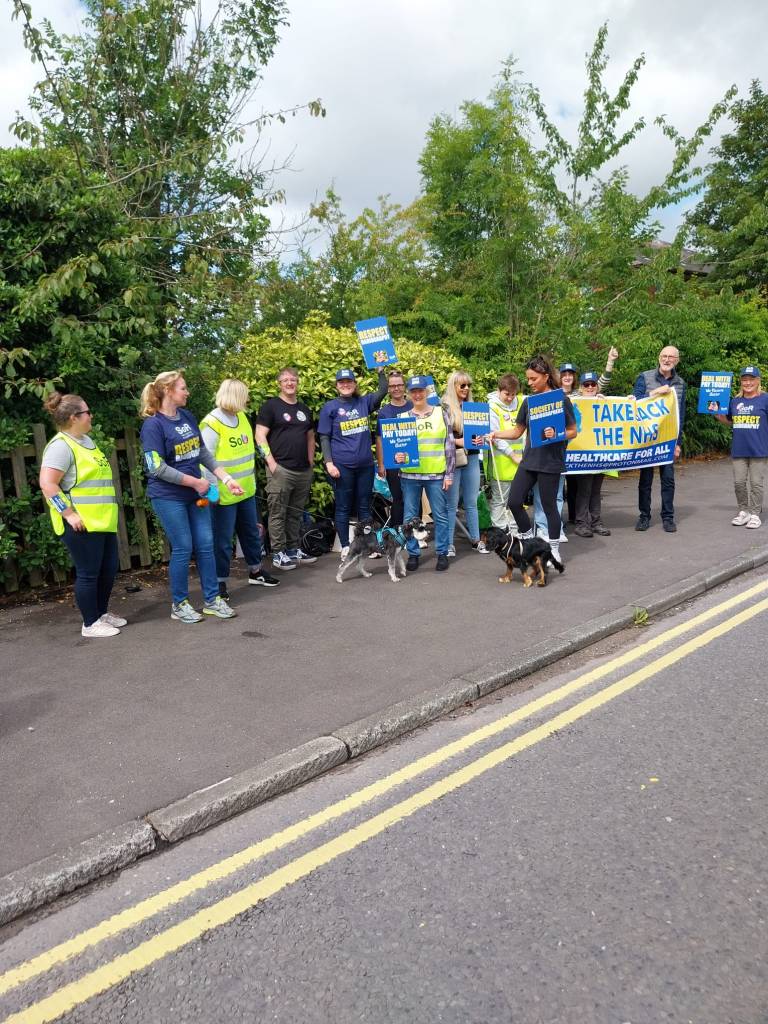
The radiography workforce on picket at Clatterbridge Hospital

Staff are underpaid, understaffed and overworked. We thank the healthcare staff in Cheshire and Merseyside for coming out in public about the state of the NHS. pay and working conditions. We thank them for the vital work they do day in and day out, keeping healthcare going as well as they do in this awful situation.

We cannot sit by and let the health service continue in this way. The damage will threaten still more of our lives and we in Cheshire and Merseyside are already suffering grievously from planned, deliberate and easily avoidable poverty. There is considerable evidence that Austerity causes deaths, and especially cuts in healthcare spending and social care spending.

Poor healthcare makes us poor. If we have to wait for healthcare we often cannot work, or if our family has to wait for healthcare, and needs help at home, a carer cannot get a paid job.”1 in 3 of our economically inactive residents are long term sick” (Page 55).

Poverty in childhood makes for poor health in later life – 24,300 (29.9%) children live in poverty – 1 in 3 ( page 53). We know early childhood poverty makes for chronic lower respiratory disease in later life.

We are building up health problems for the future by having children go cold, hungry, or badly housed. Describing poverty without a plan to end it is cruel. Poverty has increased significantly since Austerity began and is intensifying now.

Sadly these statistics do not give due weight to poverty in pregnancy and early childhood. Such statistics do not find their way into these reports.

There are big differences in wealth and health across Cheshire and Merseyside, with Cheshire East being the most well-off, though Crewe and Winsford have significant deprivation and limited access to GP services. People in Liverpool and Knowsley have the lowest wealth, and shortest lives (page 83).

We will describe the situation for Maternity, Women’s Health and Liverpool Women’s Hospital in a separate post. The issues in both posts are linked, but for clarity, two posts are needed.

Poverty

In the minutes of the previous meeting, we are told about Poverty in and within Halton;

Fans supporting Food Banks photo from the Liverpool Echo

48.7% of its population lived in the top 20% most deprived areas in England. In addition to this 19.6% of children 0-15 lived in relative low-income households.”

At Halton electoral ward level there was an 8.6-year difference (in life expectancy between the wealthiest and poorest wards) for men and 11.1-year difference for women.

On Page 15 we were reminded that Black women were 3 times more likely to die from pregnancy-related causes.

On page 54 we are told that there is a 15-year life expectancy gap between most and least deprived Liverpool wards.

On page 56 we are told about how long (in Liverpool) we live and how many of those years are in poor health. Remember that women who get ill earlier in life than men are now expected to work, as are men until they are 68. Working full time in your late 60s, especially in manual work is not good for you, is often impossible, but to stop work leaves people without a pension or wages.

Growth in life expectancy has stagnated over the last decade. The gap with England is 3.3 years. Healthy Life Expectancy is lower than at the turn of the decade and the gap with England has widened from 5.5 years to 6 years for women and 4.8 years for men.
61% of people aged 15+ with physical-mental health comorbidity are under 65
1 in 3 of our economically inactive residents are long-term sick compared to 1 in 4 nationally
“(Page 55).

On page 21 we are told;

A third of the Cheshire and Merseyside population live in the most deprived 20% of neighbourhoods in England, with significant negative implications for health.
Women living in the most deprived C&M
[Cheshire and Merseyside] areas live 12 years fewer than those in the least deprived areas, and for men, the difference is 13 years. There are even greater inequalities in life expectancy (LE) within local authorities, closely related to deprivation levels (Appendix One). Medical conditions contributing the largest amount to the LE ‘gap’ between the most and least deprived Cheshire and Merseyside quintiles are, for males; heart disease, chronic lower respiratory disease, and lung cancer, and for females; chronic lower respiratory disease, lung, and other cancers (2021, excludes COVID-19).” (Our emphasis).

Picture from Delores Lee on Twitter

Describing poverty is not enough. We have to change the situation. We don’t want pity, we want change.

The Scale of the Problems.

Cutting through the language though, what is described in these documents is a weight of problems in healthcare caused by this government’s policies. That is not how it is posed in these papers. There is not enough money to deliver frontline services well or in some cases safely. We need more money and less of it drained out to private contractors. In bitter contradiction of these facts, this ICB is instructed to make more cuts and impose these cuts on the Hospitals and other providers. Will we see a press conference saying this? Will they call up the MPs? Probably not, they will continue with the meeting, ‘rubber stamping’ the documents, knowing it means still more healthcare cuts, suffering and death.

This is not good enough for the people of Cheshire and Merseyside. The statistics on poverty in this report are brutally honest. Our people die early because of poverty, and live many years in ill health because of poverty, but more cuts are coming folks so buckle up and either prepare to die earlier or fight back. Even those who are better off suffer from poor ambulance response time, long waits in A&E, corridor care, the shortage of midwives and huge waiting lists for treatment. More than seven million people are waiting for NHS treatment. The neglect and privatisation of mental health and the dreadful state of children and adolescent mental health is also storing up grief and ill health in the future.

The ICB “system” (the ICB, the Hospitals, Primary Care, and all the services) is reporting a deficit of £ 75.4 million (page 276). Liverpool University Hospitals Trust is reporting a £69.7 million deficit, Countess of Chester £25 million, and Wirral £18 million (Page 280). Other hospitals are reporting that they cannot meet the planned expenditure this year (page 281). The list of hospitals’ financial positions is on Page 291.

On page 190 there is a letter to the ICB from NHS England, who make the final decisions on funding for the ICB on behalf of the government. Behind all of this is government policy. The letter is a response to the Cheshire and Merseyside ICB final system operating plan for 2023/24. On Finance it says;

Delivering system-level financial balance remains a key requirement for all ICBs. We note that you have submitted a deficit plan and that this deficit is in line with the level discussed in the recent meeting with Amanda Pritchard and Julian Kelly. Given that the level of deficit is in-line with expectations the additional inflationary funding we communicated has been added to your allocation.
Although the level of deficit in your plan is in line with our expectations at this stage, we still expect you to work to mitigate this in-year and strive to deliver a break-even out-turn position. Regional teams will continue to monitor progress.”

The letter goes on to say,

We expect all systems and providers to continue to apply the following conditions stipulated in 2022/23:

  • Commit to recurrent delivery of efficiency schemes from quarter 3 to achieve a full-year effect in 2024/25 to compensate for any non-recurrent measures required to achieve 23/24 plans (in English this means you have to make permanent the temporary savings you made last year in order to balance the books) Within this we expect all systems to be able to describe how this will be achieved by the end of quarter 1.
  • Fully engage in national pay and non-pay savings initiatives, in particular around national agreements for medicines and other non-pay purchasing. (Make cuts and save money on wages and other things).
  • Monitoring of agency usage by providers, and compliance with usage and rate limits (We agree that agency spending is wasteful, but only if there are employed staff instead).
  • Any revenue consultancy spend above £50,000 and non-clinical agency usage continue to require prior approval from the NHS England regional team based on agreed regional process. (The Department of Health spent £ 400 million on Management Consultants according to the Daily Telegraph. Just how many midwives would even half of that give us? The BMJ British Medical Journal also published concerns about trusts and Government spending on this. We have no idea what revenue consulting is but if it is wasting money on management consultants like Carnall Farrar’s £386K report on Liverpool Women’s Hospital, it should stop.)
  • The papers describe long waiting lists for cancer treatment. Cancer is mentioned 85 times in the papers. We say “Cancer can’t wait.” It also describes long waits for ambulances, long turnarounds for ambulances, and more. page 22
  • The Chief Executive reports on Page 39 that Levels of ‘corridor care’ decreased slightly last week with an average of 38 people per day, with the highest number (15) being reported by Aintree, on both Monday and Thursday.
  • Bed occupancy has remained above 90% every day this week for all our Acute providers.
  • On average over the week (17th – 21st July) there have been 12 people awaiting a mental health placement in Emergency Departments every day. At least one mental health trust has been reported as a trust of concern every day this week with both Cheshire and Wirral Partnership and Merseycare consistently reporting 100% occupancy, high numbers of people who are clinically ready for discharge, and very little movement out of their bed-base.
  • The report (page 128) says there are many significant risks including
  • “P5 – Lack of Urgent and Emergency Care capacity and restricted flow across all sectors (primary care, community, mental health, acute hospitals and social care) results in patient harm and poor patient experience, currently rated as extreme (20). (This is rated at 25, the highest risk, on page 138 and described as catastrophic on the heat map on page 141)
  • P6 – Demand continues to exceed available capacity in primary care,
    exacerbating health inequalities and equity of access for our population,
    currently rated as extreme
    (16).
  • P7 – The Integrated Care System is unable to achieve its statutory
    financial duties, currently rated as extreme
    (16).
  • P3 – Service recovery plans for Planned Care are ineffective in reducing
    backlogs and meeting increased demand which results in poor access to
    services, increased inequity of access, and poor clinical outcomes,
    currently rated as extreme
    (15)”
  • “P9 – Unable to retain, develop and recruit staff to the ICS workforce reflective of our population and with the skills and experience required to deliver the strategic objectives.” (Page 135).
  • Page 39 describes problems with bed occupancy, and on page 225 this is described as 95.3%, way over safety levels (our comment).
  • Individual hospitals in our area have significant financial problems. The SOF [System Oversight Framework] has four Segments with 1 being the most likely to balance their books, and 4 the least. Countess of Chester, East Cheshire, Liverpool Women’s Hospital, and Wirral University Teaching Hospital are all in Segment 3 and Liverpool University Hospital is in Segment 4 (Page 263)

When faced with dire information like this, privatisation supporters jump in to say the NHS model is out of date and impracticable. Or they talk of virtual wards and how good it is to close hospital beds. Far from these privatisers’ dreams. the NHS model is more efficient, more effective, and more equitable than any privatised model of healthcare. Government policy has been to run the NHS down and break it up so private companies can make a lot of money from it.

Even the management consultant Carnall Farrar report that one pound spent in the NHS returns £4 to the UK economy. Money that gets to patient care improves the economy as well as improving our lives.

Campaigners from across Cheshire and Merseyside are coordinating their actions to spread the word that we can restore and repair the NHS. Ordinary people built the NHS more than 75 years ago and ordinary people can rebuild it, (for more information see this) There is enormous support for the NHS and NHS workers from the public. We need a huge campaign like the ones run for healthcare by our grandparents and great-grandparents. We have to make the government afraid of us again. “When government fears the people, there is liberty. When the people fear the government, there is tyranny.” Thomas Jefferson.

Mary Whitby, one of our campaigners commented, “What we need is more hospitals, more family GPs, not more people in the emperors new clothes of “virtual wards” with an army of unpaid slave labour/volunteers caring for them, doing shopping, washing etc. Or, for the slightly better off, a menu from which they can buy-in those services which used to be provided free when you were admitted to hospital or you didn’t need to bother about whilst in the hospital such as cleaning your house, shopping, cooking, changing beds, doing the washing, collecting prescriptions etc

We need a public response to this situation. We have seen terrible times in the NHS. We demand a fully funded, fully staffed, publicly delivered health service, free at the point of need, for everyone. A fightback is badly needed from ordinary people and our organisations.

Please spread the word. If you have a good MP or Councillor please share this with them too. Share it in your union or community organisation.

Please join our demonstration on October 7th 2023

Join the Demonstration on 7th October 2023 at 12.30pm

 Save Liverpool Women’s Hospital.

 7th October 2023 12.30 pm.

 Fight NHS privatisation and cuts.

Support NHS staff.

Stop all Hospital closures.

Reinstate full mental health care.

For a national care and independent living service.

Healthcare for all, free at the point of need.

 Assemble outside Liverpool Women’s Hospital 12 .30 7th October 2023

 Speakers to be announced.

 Corner of Upper Parliament Street /Grove Street /Mulgrave Street

 March to the stone arch by Albert Dock

 Buses from Lime Street 86Q,86A. 699

 From Speke 86A 86k

 Please don’t use Hospital Car Park; park in town and get the bus up to the Hospital.

 Route of the Demonstration

Upper Parliament Street

Grove Street

Falkner Square

Canning Street

Upper Duke Street

Berry Street

Renshaw Street

Turn at Lewis’s

Ranelagh Street

Church Street

James Street

The Strand

The Olds Stonewall arch

Bring your banners and make your placards.

 The NHS is being vandalised to make profit. Maternity is grossly underfunded and is losing staff. Safety is at risk. Report after report says so. Women’s lives, and babies’ lives are put at unnecessary risk.

 For all our mothers, sisters, daughters, friends, lovers, and for all the babies Save Liverpool Women’s Hospital. Reinstate the NHS. Support the NHS staff.

The NHS is ours. Our grandparents fought for it and 75 years ago won the establishment of the NHS, Government funded, free at the point of need, publicly provided for everyone. For over a decade, the NHS has been remodelled for profit to deny us care and make big corporations rich at the expense of our services. Enough is enough. We will fight to win the NHS back and to restore it to a fully functioning public service.

While we are working to build up this demonstration, we need to spread the word about what’s happening to maternity care across the UK, what’s happening to the NHS, and we are supporting the NHS staff. Send us your news about what is happening with you, your workplace or your family.

We invite other hospital and NHS service campaigns to contact us so we can amplify each others’ struggles. We invite you to sponsor the demonstration, and include your campaign in this work Come if you can but if that’s not possible a message of support would be great! Write to save lwh@outlook.com

Ways to help

Please sign and share our petition. We have more than 40,000 signatures on the internet petition and more than 20,000 on the paper petition. We need still more. If we are to get the powers that be to listen we must persist.

Please follow us on Facebook and Twitter and Instagram. Please read our blog as we post more information.

You can email us on savelwh@outlook.com

You can donate on Paypal to help pay for the expenses of the demonstration.

Leaflet your street or workplace. Message us for leaflets on here, by messenger or by email.

Please email your MP, of whatever party, asking them to demand the reinstatement of Aneurin Bevan’s NHS model and to renationalise health. Our lives and our access to healthcare depend on it.

Invite us to speak at a meeting or at your group. Help us translate our leaflets so everyone can understand.

This page will be regularly updated with information about the demonstration.

Fighting for the Maternity Service.

Every single human gets born. Maternity is the universal service.

This is the text of a speech about the state of maternity care and the campaign to improve it, delivered at a Keep Our NHS Public Meeting, called “NHS Crisis, Who Profits?” held in Liverpool on July 12th. The meeting was part of the Anniversary of the NHS. Other speeches included ICBs and Privatization, what the Labour Party should do, The current state of the NHS here and the Hewitt Review. Further links, including an excellent contribution from Patients not Passports, will be provided shortly.

The NHS is being radically damaged. I am going to speak about how ;

Maternity was key to the founding of the NHS and is key to its future.

How the state of Maternity is part of the attack on women and our communities.

What’s happening to the NHS?

The fight back nationally for maternity.

The arrogance of NHS planners:

Liverpool Women’s Hospital and our campaign

Fighting for the NHS

Maternity is the only service where two humans are routinely treated in tandem.

Birth is a fundamental part of human societies.

How is it that this vital service is in such a state in the NHS, following years of austerity and yet the movement in defence of this service is sadly lacking?

Let us welcome the industrial action from the staff and the earlier activity around midwives. Yes, there are charities doing excellent work on maternity. But we need a mass movement on this, one that does not have the same constraints imposed on charities.

The same dominating ideas that let women carry 86 % of the burden of austerity and have let our children suffer poverty on a scale unseen since the start of the welfare state. So that even the very stature of our children is suffering, they will carry a burden of ill health throughout their lives,

“Inequalities have changed little, and the difference in stillbirth rates between those living in the least and most deprived areas have increased since 2010, the reports says. In 2020, there were 4.3 stillbirths for every 1,000 births in the most deprived parts of the UK compared with 2.6 in the least deprived areas. The report notes that around five hundred babies would survive if stillbirth rates in deprived areas fell to match wealthy areas. Black babies are still more than twice as likely to be stillborn as white babies.” https://www.theguardian.com/lifeandstyle/2023/may/14/babies-dying-nhs-failings-poverty-inequality-charities-warn

Those ideas which hide and minimise the damage to women and to children must be challenged by the organised labour movement and by the feminist movements and by all who fight for a better world.

History

Maternity campaigns were some of the drivers towards establishing the NHS. Cooperative Women’s Guild. Working Class Wives, campaigns for baby clinics and for access to contraception, here in Liverpool.

The introduction of the NHS dramatically improved infant mortality.

In 1929 76.3 babies in every thousand live births died in the first year of life.

In 1948 when the NHS was founded 36 babies in every thousand live births died in the first year of life.

In 1956 23 in every thousand live births died in the first year of life.

In 2020 3.8 in every thousand live births died in the first year of life.

NHS has been significant in providing fundamental changes to women’s lives and children’s lives, and to their liberties.

We need to remember that the NHS was not gifted to us by great ladies or lords but by the campaigning of women and of Trade Unions.

Women hold up half the sky but 80%  (77.7%) of NHS. Don’t underestimate us.

However, this government is getting away scott-free with what it is doing to our mothers and babies. Even the big  NHS campaigns forget to mention the issue. Labour did some good work on it, in the last General Elections.

Polly Toynbee wrote about the poverty of children and their families this week.

Our Maternity Health System is suffering sustained and cruel attacks.

The poor, migrants, people of colour,  Gypsy Roma and Traveller mothers, and mothers who have illnesses, mental and physical, are getting the worst of it.

Women’s reported experience of childbirth is getting worse. This matters to the women and their loved ones and to the long-term well-being of their children.

Many high-profile reports have described the problem and prescribed solutions. The Government issues only platitudes. The problems are getting worse. The more that we let the government and the managers of the NHS get away with damaging our very babies, the more they will continue to wreak their damage.

Major reports include

Morecambe Bay

Shrewsbury ( Ockendon 1 and 2)

Essex

Nottingham ( full report still pending)

The Parliamentary Committee

The Women’s Health Commission

 The reports are researched, evidence taken, they are written up, they are published, they are discussed in the media, task lists sent out to the hospitals but they are not respected, not implemented by the government. They are serving, despite the good intentions of their respected authors, to normalise failure, to normalise unnecessary baby deaths, maternal deaths and injuries to mothers. This process also normalises the poor conditions of work and professional practice that midwives face day in and day out.

Since Ockendon 1 report on the Shrewsbury baby deaths, the Care Quality Commission has inspected many maternity Units, but many of them are failing that inspection. The wake-up call was not heeded, because the resources are not there.

21 Maternity Units are substandard; inadequate, needing improvement or shut over safety concerns, two-thirds of those inspected had insufficient staffing, including some units labelled as good.

failure to engage with and listen to the needs of the women“.

Report after report has made a direct connection between staffing levels and safety, yet the midwife shortage is worsening. Midwives are desperately trying to plug the gaps – in England alone we estimate that midwives work around 100,000 extra unpaid hours a week to keep maternity services safe. This is clearly unsustainable and now is the time for the chancellor to put his hand in the Treasury pocket and give maternity services the funding that is so desperately needed.” RCN

(Since the meeting when this speech was delivered this incident has come to light. The East Kent Hospital, the centre of one of the  Kirkup Report, in 2022, less than a year ago, has just been reported for failing safety standards. A visit this March by the then Health Education England – now part of NHS England –  found senior doctors in training were covering both obstetrics and the PPCI lab and could receive trauma, paediatric emergency and cardiac arrest calls.

Even the prestigious St Mary’ Manchester hospital has been criticised for failings in Maternity.

Reports mean nothing without resources and goodwill to implement them. The government grant neither.

The Nuffield Department of Population Health reported.

As in earlier reports ethnic origin continues to have a significant impact on mortality rates:

Stillbirth rates for Black and Black British babies were over twice those for White babies, whilst neonatal death rates were 45% higher.

For babies of Asian and Asian British ethnicity, stillbirth and neonatal death rates were both around 60% higher than for babies of White ethnicity.

The stillbirth rate was 1 in 295 for White babies; 1 in 188 for Asian babies and 1 in 136 for Black babies.

“…the neonatal mortality rate increases according to the level of deprivation in the area the mother lives in, with almost twice as many babies dying in the most deprived areas compared with the least deprived areas (12 compared with 22 per 10,000).” https://www.bliss.org.uk/research-campaigns/neonatal-care-statistics/neonatal-mortality-in-the-uk-how-many-babies-die-in-their-first-28-days-of-life

Liverpool Women’s Hospital is in one of the poorest areas of Liverpool and in one of the most ethnically mixed areas. We have more mothers in the bottom 10% of deprivation than other maternity units. Yet the powers that be dare to threaten this hospital.

Poverty racism and privatisation are a deadly mix. Eighty-six per cent of the burden of austerity has fallen on women. Poverty, austerity and cuts in health spending make this a triple whammy against the poor.

The analysis suggests that a 1% decrease in healthcare spend will generate 2484 additional deaths.  So, the ‘loss’ of 13.64% in healthcare spend between 2010-11 and 2014-15 will have caused 33,888 extra deaths, calculate the researchers.”

There can be long-term damage to those babies who are born preterm or low weight or deprived of warmth food and shelter in infancy.

“Each year, 35 million newborns worldwide are born preterm (<37 weeks of gestation) or small-for-gestational-age, and may be low birthweight (<2500 g). These small vulnerable newborns (SVNs) have markedly reduced survival chances, with more than half (55·3%) of the 2·4 million neonatal deaths in 2020 attributed to being an SVN. The survivors are vulnerable to health problems throughout their life course, including poor neurodevelopmental outcomes, low educational achievement, and increased risks of adulthood non-communicable diseases, such as hypertension, ischaemic heart disease, and stroke. Indeed, this effect is also intergenerational. For society, there are important human capital, economic, and productivity losses as well as costs such as health-care related costs.“

(One of the audience, in the meeting raised with he the longitudinal study of the babies born in 1944 during the terrible Dutch Winter of Hunger which confirms the long-term damage of poor maternal nutrition)

The attack on maternity is linked to the neo liberal attacks on the welfare state and to Austerity. Maternity was one of the worst hit services following the Lansley Acts and Austerity.

There are too few midwives, too few obstetricians, and too few anaesthetists.

Hospital budgets are under too much stress. The budgets are inadequate and then they are expected to make cuts

The Maternity Tariff is far too low.

Birthrate plus ( the safe staffing ratio) is too low.

The Insurance System for medical damage in maternity costs more than the service itself.

NHS England spends £3 billion annually on maternity and neonatal services, a board paper published in March confirmed. Times reportedWe spend more on the cost of harm when we could be spending more on prevention,” said James Titcombe, a bereaved father and campaigner at the Baby Lifeline charity.  ( Quote from the Times article above)

The total cost of harm from clinical negligence was £13.6 billion in the 2021-22 reporting year, according to an annual report from NHS Resolution, the arm of the Department of Health and Social Care that handles litigation. Sixty per cent of the cost of harm was for maternity claims, amounting to £8.2 billion for the year. NHS England spends £3 billion annually on maternity and neonatal services, a board paper published in March confirmed.

Statistics are showing declining safety.

Staff are keeping the system afloat with unpaid overtime and high-pressure working.

Those controlling health care money are deliberately underfunding and denying us access to services.

Maternity units, like A & Es and hospital beds, have been closed since 2010. This means longer journeys and more babies born en route. Women in huge pain are expected to make long journeys.

Privatisation

 There have been failed attempts at privatisation but the direction of travel is still there.

One to One; We were told they had direct links to the Cabinet There was a policy of “Encouraging Ninja privatisers

Other preparations for privatisation, denial of service and reduced provision includes personal budgets, the push for home births and the use of tatty birthing centres, and financially penalising hospitals for birth interventions.

Other speakers tonight have shown the depth of the privatisation in the NHS and the huge wealth that can be taken from our NHS by the big corporations.

There are no shortcuts. The NHS maternity service needs

Finance

Staffing

Goodwill and refusal to compromise from hospital and system management.

and

Greater respect for women.

Regulations are no substitute for staff.

The Government responds not by implementing these multiple reports but by issuing page after page of regulations for maternity. In the introduction to the All-Parliamentary Group on Baby Loss, there are weasel words, a get out, in the statement:

“While there is no escaping the fact that maternity and neonatal services require substantial and sustained investment, a view echoed by most respondents, many of the measures advocated by respondents could be implemented quickly and with little additional expense.” This contradicts the weight of evidence from their own report and gives them a get out for not providing the “substantial and sustainable funding” that is needed.

Similarly, the government, by relying on lengthy new regulations, attempts to present system failure as staff failures.

These regulations will improve matters only if midwives have time for

in-service education,

good unpressured induction into the profession,( and freedom from student debt)

a decent work-life balance

and

fully staffed, fully qualified and experienced staff in the delivery suite, on the wards, in the clinics and in the community.

For these regulations to work we also need sufficient obstetricians and anaesthetists. LWH is not able to provide 24 /7 on site consultant care because of cost-cutting imposed on them. In a maternal medicine centre, this is scandalous. Underfunding maternity does not work for the population.

Threat to Liverpool Women’s Hospital

Liverpool Women’s Hospital is a 1990s building in good grounds, in good condition, close to an acute hospital. It is the maternal medicine centre and a tertiary hospital serving not just local women and babies but the wider region for complex cases.

 In 2015 there was a Panorama programme about Liverpool Hospitals “One hospital has to go” one of the strategists for the NHS said on that programme. Very shortly afterwards it was named as Liverpool Women’s Hospital.

It is the largest maternity hospital in Europe. There is no existing alternative capacity to provide LWH’s maternity services, let alone other services such as gynaecology, genetics, fertility and terminations. Please see our blog for details on Carnall Farrar report.

We are fighting back. Our earlier campaigns made some difference. The chaos at Liverpool Royal hindered the earlier plans to close or disperse the services. The pandemic put much on hold but the plans are Live again now following the commissioning and publication of the Carnall Farrar report

By raising the campaign issues in the community, we build defence for the NHS. We build understanding. We must take people with us. By involving tens of thousands of people we strengthen the whole case for the NHS, for the  Liverpool Women’s Hospital and for maternity care in the NHS.

Our petition now has more than 60,000 signatures, 43,675 online and the rest on paper.

Our street campaigning, our leaflets, our close monitoring of the trust and the ICB, our lobbying, are all part of the campaign.

Working in the communities, at street stalls and at big events where women gather we have taken the fight to the communities. We are taking the community with us in this fight. Our next big push is building up to our demonstration on October 7th. 12.30  pm starting outside Liverpool Women’s Hospital, Crown Street Liverpool L8 7SS

We need your help, as a supporter of the NHS, as a supporter of women’s rights and children’s rights, as a Trade Unionist or as a campaigner, or crucially as an ordinary woman or man,  in an ordinary job, in an ordinary street. We can fight as our grandparents did for the founding of the NHS and like them, we can win. It is not going to be easy but it is possible.

“you’re doing it wrong, if you’re not allowing space for people to go on their own journey of seeing and making the connections,” because “you can’t just tell people, [they] have to feel it in their gut”. James Skinner Patients Not Passports

We offer our respect to the staff of the NHS who, as we speak, are working with women who want to get pregnant, who are delivering babies, helping mothers and babies after birth. They are working in really tough conditions. Respect to the midwives, respect to the Obstetricians and Gynaecologists, the neo-natal nurses and all the staff in our once great maternity services. The fight for the future of the NHS lies with the people.

For all our mothers, sisters, daughters, friends and lovers and for all our babies, fight for the NHS, fight for maternity services nationally and fight for Liverpool Women’s Hospital.

Building the NHS Resistance on the 75th Anniversary of the NHS. Fighting for our right to excellent healthcare with fully trained, well-paid staff.

We can see the damage to our health care. What can we do about it?

We can

  1. Understand what is happening. Check any information carefully as sections of the press are untrustworthy. Record our own experiences
  2. Talk to other people. The value of one-to-one conversations with trusted friends cannot be underestimated. Such talk is the basis of all campaigns.
  3. Know what we want for the health service instead of today’s chaos. We want the NHS without privatisation, fully staffed, fully funded with decent wages and working conditions. We do not want private companies, we do not want CIPs and closures, not long multi-million waiting lists or denial of treatment.
  4. Organise to restore the NHS. How do we do this?

Conversations.

Organising together with other local or workplace campaigners producing and distributing leaflets, social media, meetings, demonstrations, pressure on politicians, industrial action, and popular education. We know what campaigns look like. We know such campaigns take work and effort but nothing worthwhile was ever won without one.
Shout out to the Suffragettes, the Tolpuddle martyrs, Equal Pay, the
Hillsborough Justice Campaign, the Abortion Rights Campaign, Equal Pay Campaign, the Shrewsbury parents, the Covid Bereaved Families, Anti-Apartheid, the Right to Food and Fans supporting Foodbanks and all the trade unions
They all fought and are still fighting long and loud. Sadly, that is what we must do now.

We know the health privatisation lobby funds politicians in all parties but some Conservatives have even written books about how the NHS should be privatised. They cannot deny it. Others are more shamefaced and should be shamed some more.

75 years ago a war-wrecked country started the NHS. It is time to win it back!
Restore and Repair the NHS on its 75th Anniversary!

75 years ago, the post-war government founded the NHS. For the first time every person, rich or poor, had access to world-class healthcare, free at the point of need. The government had responsibility for the health care of the entire population. The NHS helped the people and the whole country recover from the war and helped its children to grow up well and strong.
It will provide you with all medical, dental and nursing care. Everyone – rich or poor, man, woman or child-can use it or any part of it. There are no charges, except for a few special items. There are no insurance qualifications. But it is not a “charity”. You are all paying for it, mainly as taxpayers, and it will relieve your money worries in time of illness.”

Campaigners supporting the nurses at Alderhey Hospital

Who fought to set up the NHS? It was ordinary people. there were campaigns for healthcare through the early twentieth century. It was not given to us by the rich and powerful. Who fought for the NHS to be founded? Trade Unions, working-class Women, Socialists, The Socialist Medical Association, returning armed forces, and the Labour Party.

The first nurses picket line outside Liverpool Women’s Hospital

Let us go back to that tradition and once again fight for our NHS. Talk to your friends, family and workmates about this.

Who opposed the founding of the NHS? The Conservatives. 75 years later they are wrecking the NHS

We deserve better. We have the right to world-class speedy treatment and this government is taking it from us.
Greedy Conservative ministers say the economy cannot afford the NHS. On the contrary if the NHS crashes, the economy suffers. A poorer health system means lower life expectancy over time (and that is happening in the US) and more sickness in the workforce. That means fewer people are able to produce value and the productivity of those able workers not rising much. So, it means an economic slowdown.

How did the NHS develop once it was founded?

The NHS worked like this; the government was responsible in law for providing healthcare for its citizens.

  • Healthcare was a national, publicly provided system.
  • The NHS was for everyone, rich or poor young or old, citizen or visitor.
  • All treatment was free at the point of need.
  • The best available treatment was available to all.
  • Staff were reasonably well paid and qualified.
  • The NHS was a research institution so treatments could be evaluated.
  • The  NHS was the world’s largest purchaser of drugs so could negotiate with the drug companies for better prices and safer drugs.


Everyone paid taxes and the Government funded healthcare and the NHS grew. Right from the start there were sniping attacks on the NHS but it was so popular politicians did not dare attack it openly. Bevan the founder of the NHS resigned as the Minister when prescription charges were introduced.
It remained, despite cuts, the best health service in the world until 2017, largely living on earlier investments. Then cuts and privatisation ramped up.

Privatisation began under Thatcher who privatised hospital cleaning, which lead to hospital-acquired infections like MRSA.

MRSA; the pictures of the infection are too gross to share. Thanks, MrsThatcher for giving us this.

Her cabinet discussed full-scale privatisation, including bringing in health insurance to make people in work pay but did not dare implement it. She also started the privatisation of much of our elder care. Most care homes are now owned by big companies. Then Tony Blair introduced PFI . PFI remains a huge weight on many hospitals’ budgets. Blair and his government started propaganda for involving the private for-profit sector in the health service. Far from being more efficient, the for-profit sector has been damaging.

Carillion is just one example. The scandal of Carillion and the building of the Liverpool Royal Hospital will never be forgotten Privatisation has grown, especially under Coalition and Conservative governments who oppose the whole idea of the NHS and are privatising and breaking it to further open the way for big companies to profit at our expense.

The Royal Liverpool Hospital during its disaterous construction.

What does NHS privatisation mean so far? ( Each of these initiatives means greater pain for patients.)

Before the pandemic, in 2019 privatisation was already eating into NHS resources, leaving it open to the catastrophe that followed
PFI – PrivateFinance Initiative – meaning that building new hospitals made a fortune for finance companies and huge debts for hospitals.
Outsourcing workers on lower pay and worse conditions
Contracts have been given to private companies to deliver some treatments, often at a lower quality than the NHS.
Hundreds of thousands of pounds are given to management consultants.
Services contracted out.
Government legal responsibility for healthcare has been removed.
There has been restructuring of the NHS into ICS so more of our tax money for health goes to private companies.
Patient data is included in trade deals.
Patients are being sent to private hospitals.
Migrants are being charged 150% of the cost of their NHS treatment meaning many people go without treatment or live in terrible debt.This policy has caused maternal deaths

The deaths of three pregnant women were directly linked to the Conservative government’s charging system in a major report that came out in December. The women died after delays in seeking help due to wrongly thinking they would have to pay for care.
Big Companies like Centene are taking over GP practices often reducing the level of care available.
Privatisation and cuts led to restricting treatments and creating waiting lists.
Hospitals, GP surgeries and maternity units were closed.
Mental health care is a tattered shadow of its former self.
Social care for people with disabilities and for our elders is privatised and charges service users.
Few NHS dental practices still function.
GPs are overworked and understaffed. Patients and staff are having to fight for their care.

The UK spent around a fifth (18%) less on average than the EU14 on day-to-day health care costs” (the Health Foundation). The Government has decided not to adequately fund our NHS services. Seven million people are waiting for care and thousand are dying of preventable or treatable illnesses.
Staff in the NHS have seen their real terms pay decline for more than ten years, yet are overworked. The NHS is understaffed. We have fewer hospital beds than in similar countries and fewer doctors per head of population.

A system with fewer resources

The Kings Fund, a thinktank that has supported some recent “reforms”( and is certainly not left-wing) reported recently;

The UK has below-average health spending per person compared to peer countries. Health spending as a share of GDP (gross domestic product) was just below average in 2019 but rose to just above average in 2020 (the first year of the Covid-19 pandemic, which of course had a significant impact on the UK’s economic performance and spending on health services). The UK lags behind other countries in its capital investment, and has substantially fewer key physical resources than many of its peers, including CT and MRI scanners and hospital beds. The UK has strikingly low levels of key clinical staff, including doctors and nurses, and is heavily reliant on foreign-trained staff. Remuneration for some clinical staff groups also appears to be less competitive in the UK than in peer countries. 


The NHS is broken up into 40+ ICS boards. Our ICS area is Cheshire and Merseyside. That is why the coordinated campaigns against NHS cuts and privatisation operates across Cheshire and Merseyside. We are all the local trade union councils, Defend our NHS, Keep our NHS Public, Save Liverpool Women’s Hospital, Merseyside Socialist Health Association and more.
You can join any of these groups or just the local group close to you. Email us at TakebacktheNHS@proton.me
Even now the government is imposing further cuts on the NHS. This is madness.
We invite you to join the Resistance:
to NHS privatisation
to poor pay, to denial of care, to underfunding, to endless waiting lists, to being forced to pay twice, to hospital and GP closures

Park View GP campaign picket of the ICB


Every tax pound that goes directly to health care repays itself many times over in the health of the economy as well as through the health and happiness of the people. Underfunding healthcare causes harm to the economy.

The campaign to save Liverpool Women’s Hospital and for better funding and better staffing of maternity services nationally and locally is crucial in Cheshire and Merseyside.

Liverpool Women’s Hospital serves women across Merseyside and Cheshire and beyond. 8,000 babies a year are born there. The hospital is the regional maternal medicine centre
Save Liverpool Women’s Hospital March

October 7th,2023, 12.30
Join the March for the NHS!
From Liverpool Women’s Hospital to Labour Party Conference at Liverpool’s waterfront.
Save Liverpool Women’s Hospital!
Save all the Hospitals under threat!
Restore and Repair the NHS!
Back to Bevan!
Support NHS staff!
Improve women’s healthcare.
Improve maternity care nationally

Talk to people about the NHS. Answer the Government’s lies. Spread the resistance. Demand restoration of the NHS.

Give us the tools to do the job

Save Liverpool Women’s Hospital Campaign has been campaigning since 2015. The threat to the Liverpool Women’s Hospital is now at its most dangerous. The ICB has a whole subcommittee considering its future. For more details see this article

Please donate to our campaign so we can produce leaflets, briefings, press releases, and organise events. Or you can donate through pay pal this way.

If your organisation wants to send a cheque please make it out to Save Liverpool Women’s Hospital and send it to Save Liverpool Women’s Hospital CampaignC?o news from Nowhere 96 Bold Street Liverpool L1 4HY .

The whole NHS must be repaired and restored and our hospital’s future is bound up in the future of the NHS.

Government Investment in healthcare repays the investment many times over. This country cannot afford to let healthcare worsen. Our mothers and babies can’t wait. We need government funding to repair and restore the NHS and we need to kick out the privatisers who leech on our healthcare.

We work with all the local and national health campaigns and with trade unions. We produce leaflets and this blog. We produce posters and banners. We research and we lobby the ICB and elected representatives. All our leaflets are paid for by donations mostly small ones but we like large ones too.

We campaign for babies’ health, maternity services, women’s health, and the whole NHS.

We support the NHS unions and all who fight for decent pay because babies cannot grow up strong on poverty pay.

Every penny of our funds comes from donations.

Please invite us to your organisations to speak about this.

In June 2023 we are focussing on

  1. Getting the facts out to the public
  2. Lobbying the ICB and trust meetings
  3. Working to commemorate the founding of the NHS 75 years ago in a wartorn country, but a country that valued the lives of ordinary people.
  4. Building a march from the Liverpool Women’s Hospital to the Labour Party Conference in Liverpool on October 7th 2023