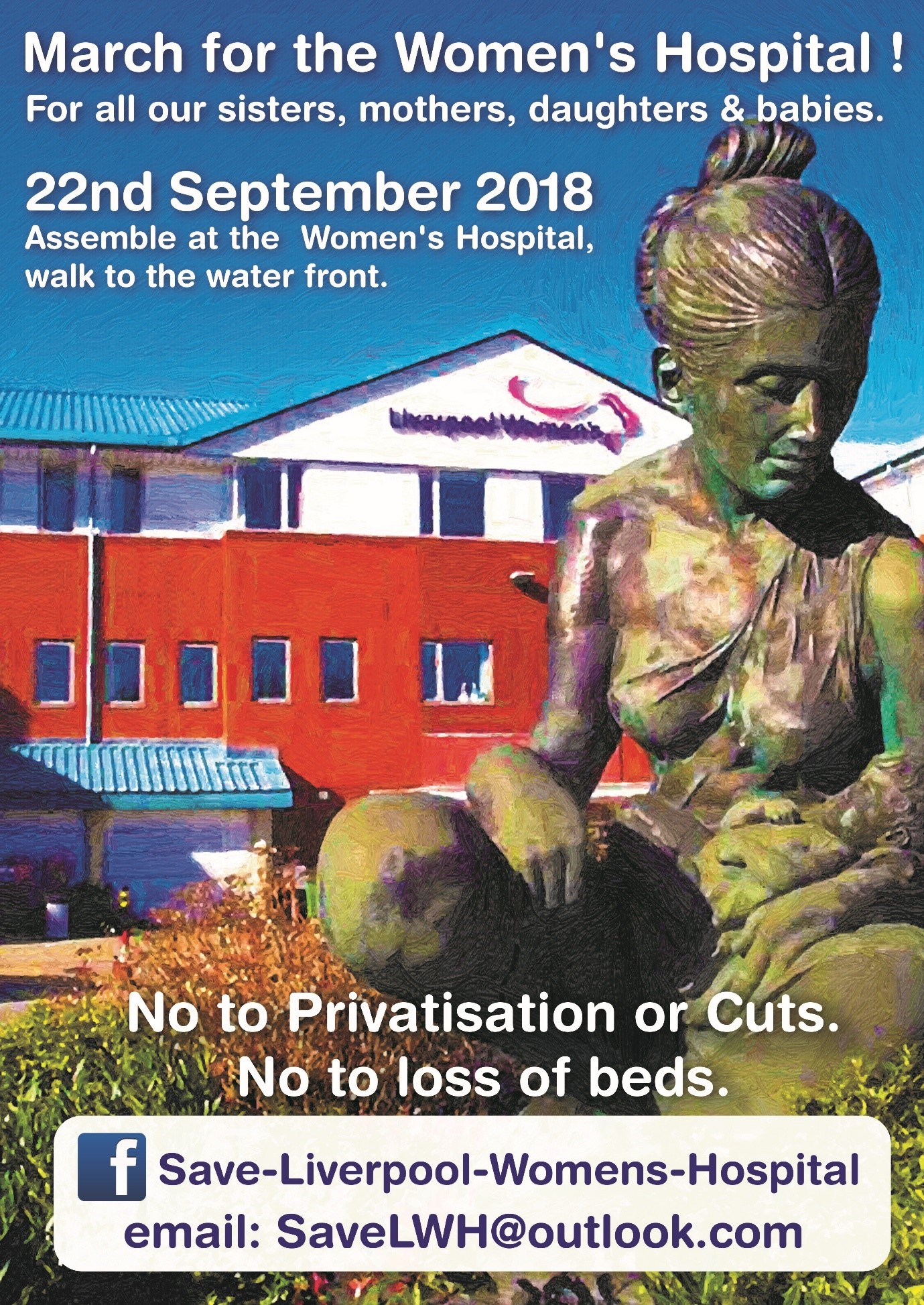
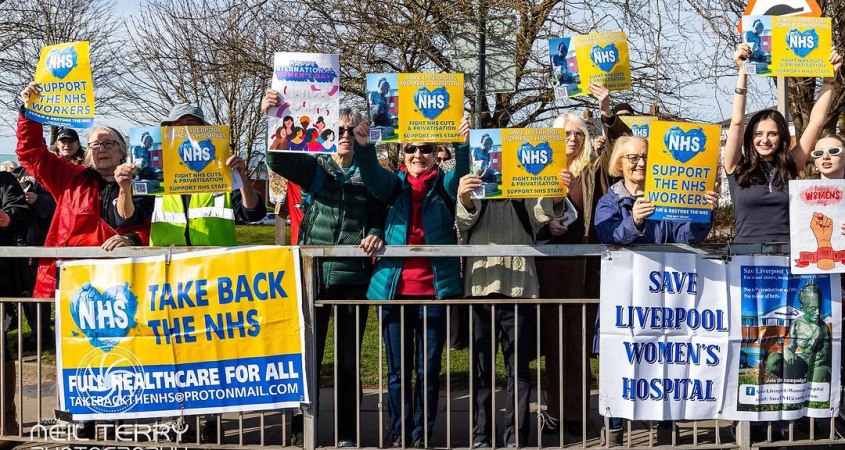

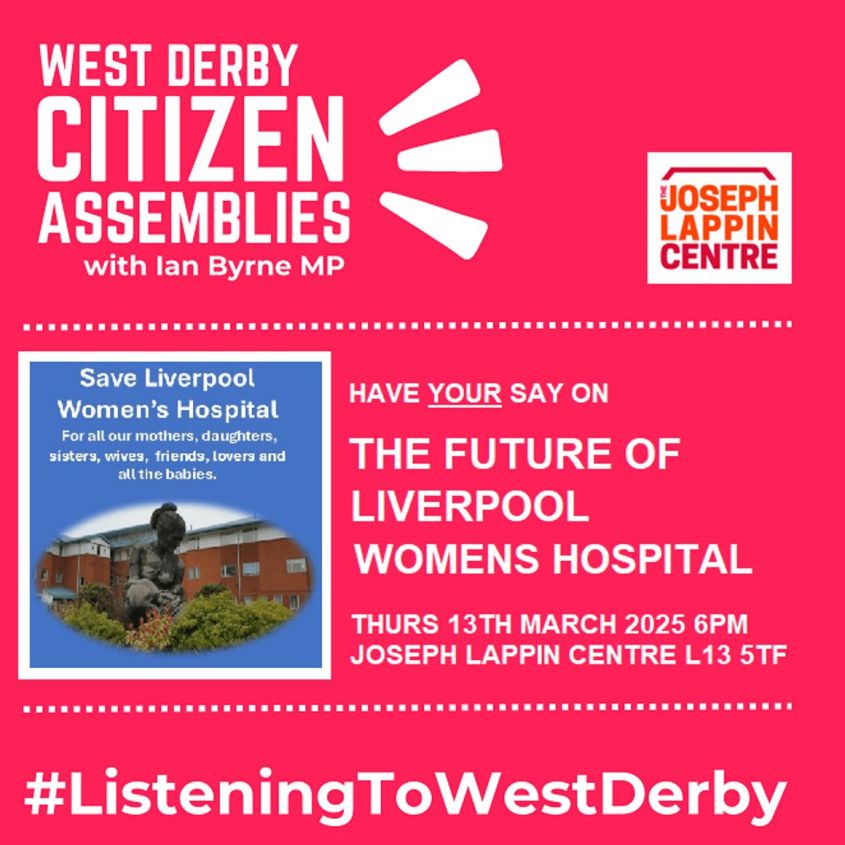
We want to save Liverpool Women’s Hospital. We ask for your help in saving it. We call on the tradition of women struggling for our rights for our families and our communities. We have seen how women can mobilise and make their voices heard. We call on men to support us.

( This blog post has many links as evidence, but the reader does not need to read each to understand the post.)
The Cheshire and Merseyside ICB (the body that currently controls the NHS in Cheshire and Merseyside) has published its report on the engagement process for the future of Liverpool Women’s Hospital. This report has no proposals but says further work will be done. The report does not accurately reflect what we saw happen in the engagement meetings nor the number of responses we know went into the engagement from those who want to keep Liverpool Women’s Hospital, nor does it adequately recognise our 77,000 petition signatures, giving it just a passing mention, nor does it recognise our detailed and referenced response. It ignores public meetings hosted by MPS. It’s as though this campaign doesn’t exist, as though no one has objected. We will post a detailed reply shortly.
Meanwhile, the severe issues with our NHS and the Maternity service continue. Austerity continues and continues to cost the lives of women and babies. The Labour Government is continuing with Austerity and cuts. It is not repairing the NHS, but rather further embedding US for-profit health companies and data companies, like Palantir, into the service.

Whisper, chat, or shout about it – whichever way – we need to talk about the NHS. Our NHS is underfunded and understaffed, and its wealth is diverted to private profit by decision, not by accident. Women and babies are at risk. Gynaecology services are inadequate. The UK has the second-highest maternal death rate among eight major European nations, with only Slovakia performing worse, according to an analysis published in the BMJ last year.
This blog focuses on women’s health, Maternity, and children’s health and well-being, and, because it’s unavoidable, the situation in Accident and Emergency services. There are many other areas of concern about what’s happening in the different parts of the NHS. All these issues touch on and affect each other. Stand up and speak out for the NHS. We send solidarity to all the NHS campaign groups.
Understaffing is caused by underfunding and unnecessary pressures at work, leading to staff resigning and even leaving the profession. In 2024, despite staff shortages, hospitals were expected to make 6% cuts. (CIPS). Liverpool Women’s Hospital has had too little funding for over a decade. There have been times when the Care Quality Commission have criticised the hospital. In 2023, the CQC said, “Not all staff felt respected, supported, and valued. However, they remained focused on the needs of patients receiving care. Some staff had raised concerns several times regarding safety and staffing directly to senior leaders; however, they saw no quick action or improvement. The CQC also said that “the trust must ensure they deploy sufficient, suitably qualified midwifery staff across all areas of the service. Regulation 18 (1).” The latest CQC report is much better. The rating is now good. We have been told that Liverpool Women’s is now fully staffed with midwives. We will follow up on this with the hospital to see how this tallies with the Channel 4 report on staffing.

We want the Maternity, Gynaecology, fertility, genetics and neonatal services to remain as a whole with the full team at Crown Street.

We want enough funding and staffing to improve the experience of birth and treatment at the hospital for women, babies, and staff. Seventy-seven thousand people have signed our petition, on paper and online. The petition is still growing. We campaign for improved Maternity services across the country. We say that Birthrate+ is not enough. We demand much better NHS staffing, especially in midwifery and neonatal care. Channel 4 has revealed the state of nurse and midwife staffing in the NHS and LS; staff are diverted for daily emergencies, breaking the minimum even within tight essential staffing levels.
The national picture for Maternity is cause for serious concern and should be cause for action from any serious politician, any concerned woman. The BMJ said, “The number of women dying in the UK during or soon after pregnancy has increased to levels not seen since 2003-05, latest figures show“
MBRRACE reported in 2024, “There was a statistically significant increase in the overall maternal death rate in the UK between 2017-19 and 2020-22. This increase remained statistically significant when deaths due to COVID-19 were excluded, which suggests a concerning trend independent of COVID-19 specific deaths.“

In 2020-22 there were 13.41 deaths in every 100 000 maternities,1 significantly higher than the maternal death rate of 8.79 deaths per 100 000 in 2017-19 and similar to 2003-05 (13.95 per 100 000). The CQC inspected all the Maternity services across the country.
“The safety of Maternity services remains a key concern, with no services inspected as part of our inspection programme rated as outstanding for being safe. Almost half (47%) were rated as requires improvement for the safe key question, while 35% were rated as good and 18% were rated as inadequate. Where we had the most concerns, we used our enforcement powers to require trusts to make significant improvements to protect people from risk of harm.
Channel 4 figures show that while the Liverpool Royal is short of 4% of nurses in all wards and 17% in Critical Care, Liverpool Women’s is short of 20%, which is equivalent to being short one nurse in every five. and 17% of midwives. Aintree is short 18% of nurses and 10% in critical care. Alder Hey Hospital is short 30% of neonatal nurses. The trust must ensure that it deploys sufficient, suitably qualified midwifery staff across all areas of the service.
Regulation 18 (1)
As members of the public, campaigners attended board meetings and have never seen this staffing problem made clear in the papers. However, until the merger with the Royal Aintree and Broadgreen, fill rates for the different wards were reported in the board papers. This item of reporting must be reinstated in the new board papers. We have been told that Liverpool Women’s is fully staffed with midwives. We will follow up with the hospital.
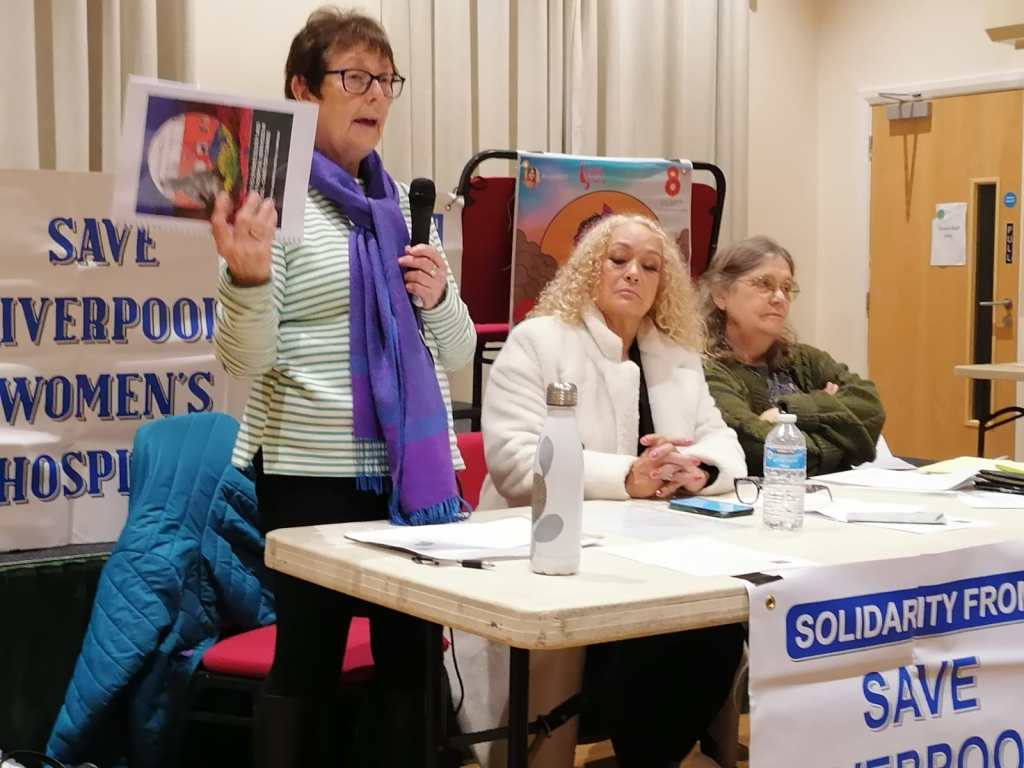
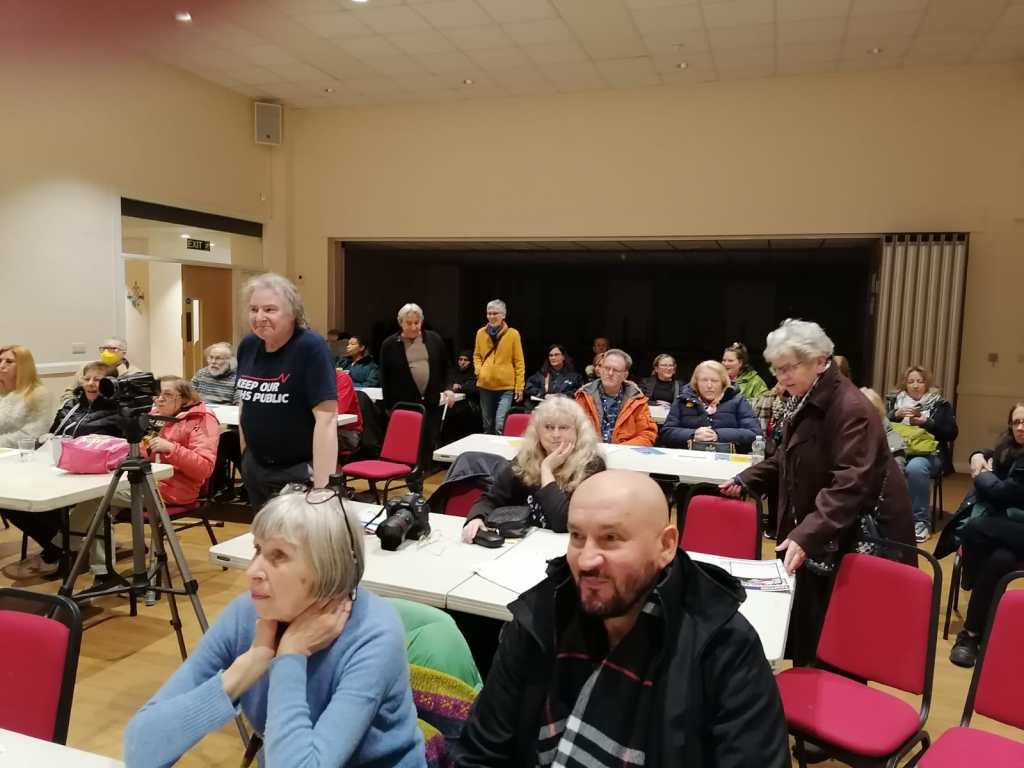
The process underway to decide what happens to Maternity, Gynaecology, Neonatal services, fertility and genetics in Liverpool formally started in 2024 with “engagement” with the public. When the NHS makes significant changes to NHS services, the Integrated Care Board ( the current decision makers for the NHS in Cheshire and Merseyside) have to go through an engagement process, which they have done, then report on the engagement process and get permission from the board to proceed to put their plans to the public in a Consultation process. This engagement report will be received at the next ICB. The next ICB meeting is due to happen on March 27th, 2025, at the Events Hall, The Heath Business and Technical Park, Runcorn, WA7 4QX, from 9 am. The first half hour is to answer public questions.
Women and Children
Let’s build a movement to defend and improve Maternity services, fertility services, control over our fertility, and demand better healthcare for women.
Why? In the 20th century, women fought long and hard for safety in giving birth for mothers and babies, but now things are going backwards. Maternity units have been closed, and are being closed. There is a severe shortage of midwives, and no effective workforce plan is in place to address the problem. There are thousands of women out there who have midwifery training and have given up, either too broke, too tired, too fed up or outraged at the conditions for the women they care for. Both Infant and maternal mortality have risen significantly during Austerity, while governments have been cutting services, starving the NHS of vital resources and letting poverty soar. But never mind the women and kids; the rich have been doing very well.
Build a movement demanding better health and healthcare for our children, whose health is suffering.
“the rise in infant mortality means that UK is now ranked 30 out of 49 OECD countries – well behind other European countries except Bulgaria, Romania and Slovakia.”
Research shows that about 4-5% of women develop post-traumatic stress disorder (PTSD) after giving birth – equivalent to approximately 25,000-30,000 women every year in the UK. Studies have also found that a much larger number of women – as many as one in three – find some aspects of their birth experience traumatic.
“Investing in the early years is one of the most important things we can do as a society to build a better future and promote the nation’s health, well-being and prosperity. There is clear evidence that such investment will be cost-effective in enabling future adults to live long and productive lives.”
People Power can save the NHS if we make the politicians listen. Things start to change when ordinary people make time to speak to each other, including their unions, workmates and colleagues, other mothers at the school gates, families, their organisations, clubs, and elected representatives. Women have fought back since the Suffragettes, the Match Girls, the women of Fords in Speke, when they fought for equal pay, since the fight for abortion rights, and the many, many times women have fought for good Maternity care.
 Save Liverpool Women's Hospital