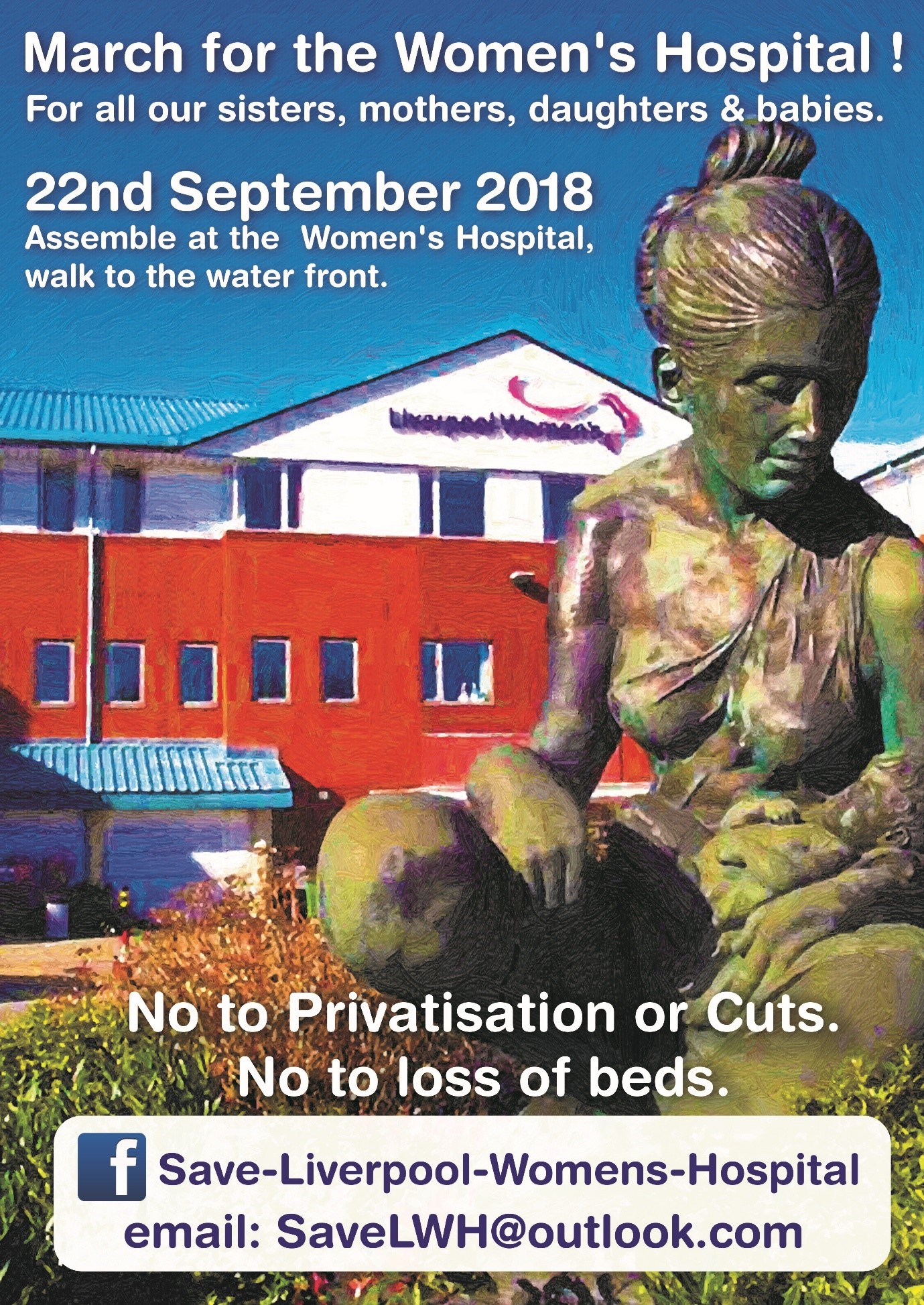
Winter comes relentlessly every single year. Yet somehow, UK governments in the last decade have failed to prepare. What is the point of government if not to protect our lives?
A clarion call to action. We appeal to the readers to take action on this; it is pointless to report the details of the horror stories of avoidable baby and maternal deaths, long waits for treatment, and corridor care, without saying how it can be changed. That change requires thousands of us to take action, like the Poll tax campaign, like the suffragettes, like the Hillsborough campaign. It is within this government’s power to make fundamental change, but our voices have to be louder than those of the big US corporations advising this government and funding the politicians.
Last winter’s NHS crisis never fully ended, and corridor care and long waits in A&E continued into July and August. Current figures for waits and corridor care are worse than during the pandemic! This winter, 2025-2026, looks bad already. This is unnecessary and entirely avoidable. In countries with more severe weather pressures, they do not experience the same problems. Norway does not have a winter crisis on this lethal scale. The human race would not have survived if we had not learned to prepare for winter. This chaos is policy -entirely unacceptable policy. It is based on the dogma that government spending on health should be reduced. This policy is nonsense and benefits those whose giant corporations want to replace the NHS with the hated American system.
“Investing in health reduhttps://www.ageuk.org.uk/latest-press/articles/shocking-new-corridor-care-analysis-reveals-exponential-increase-in-people-aged-65-experiencing-a-wait-of-between-one-and-three-days-in-ae/#:~:text=Sadly%2C%20Age%20UK%20has%20already,(53%25%20or%2053%2C870).ces A&E use and long-term sickness, and both are associated with an increase in the employment rate. When it comes to quantifying the return on investment, our analysis reveals that every pound invested in the NHS results in around £4 back to the economy through increased productivity and workforce participation.“
Investing in healthcare makes the country healthier, wealthier, and happier. This was made crystal clear when the NHS was founded in the aftermath of World War II.
Our NHS staff are skilled, work hard, and perform daily miracles of care – saving lives, reducing pain, and providing kind, well-researched care -but they too suffer from the intolerable conditions in our hospitals.
The blame lies squarely with governments, and this government must change course, drop the many-headed hydra of privatisation and return the NHS to its fully public service model. The USA can teach us nothing about healthcare for all. The US system is more expensive for both ordinary people and the government. Many are left without care, and key indicators like life expectancy and infant mortality are worse than in the UK. So why do we have advisers from the big US health corporations deep in the NHS and government?
“The U.S. has the lowest life expectancy at birth, the highest death rates for avoidable or treatable conditions, the highest maternal and infant mortality, and among the highest suicide rates [of high-income countries].”
The following are US Health Corporations that are working for profit within the NHS: UnitedHealth Group/Optum, Operose Health (owned by Centene Corporation – now divested), Acadia Healthcare, Palantir Technologies, Johnson & Johnson, Medtronic, Abbott, Pfizer, Baxter Healthcare, Fresenius, DaVita, IBM, Oracle, Apple, Alphabet, and Amazon.
The winter crises reflect the general underfunding, understaffing, and disorganisation of the NHS by this and previous governments. Lord Darzi described the Health and Social Care Act 2012 as a “calamity without international precedent” and “disastrous”. But those policies continue and are extended. That it is simply unacceptable.
We let the government close hospitals, reduce the number of hospital beds as the population aged. Perhaps we believed the government knew better? We can see now that they did not know better, but that their cronies in the big health corporations wanted to exploit our NHS. We need as many people as humanly possible to understand what is happening and to build a campaign bigger than the Poll Tax.
There are two huge assets in the NHS that the corporations want to get hold of. One is the NHS’s market power as the world’s largest single purchaser of medicines and medical equipment. As such, the NHS could bargain to get the best possible prices. Then other countries would bargain with the NHS as the baseline. They would have to pay more than the NHS but not ridiculously so. Starmer is likely to agree to pay 25% more for drugs to appease Trump and his trade wars. Yet, according to Rachel Reeves, the Chancellor of the Exchequer, the NHS will not get more funding. Tax Research website says “it is a transfer of wealth from the UK public purse to the shareholders of multinational corporations. ” Medicines account for about 10% of NHS spending, so a 25% rise in costs will be significant.
The second major asset of the NHS that the American corporations want is our data. Seventy-seven years’ worth of the health records of tens of millions of people in the UK, with all the different treatments and outcomes they have received – this is worth billions to drugs, insurance companies and the AI industries. Many of us refused to allow our data to be used, but the government is not only ploughing ahead, but it is also giving our data to Palantir, which will harvest still more data from future treatments.
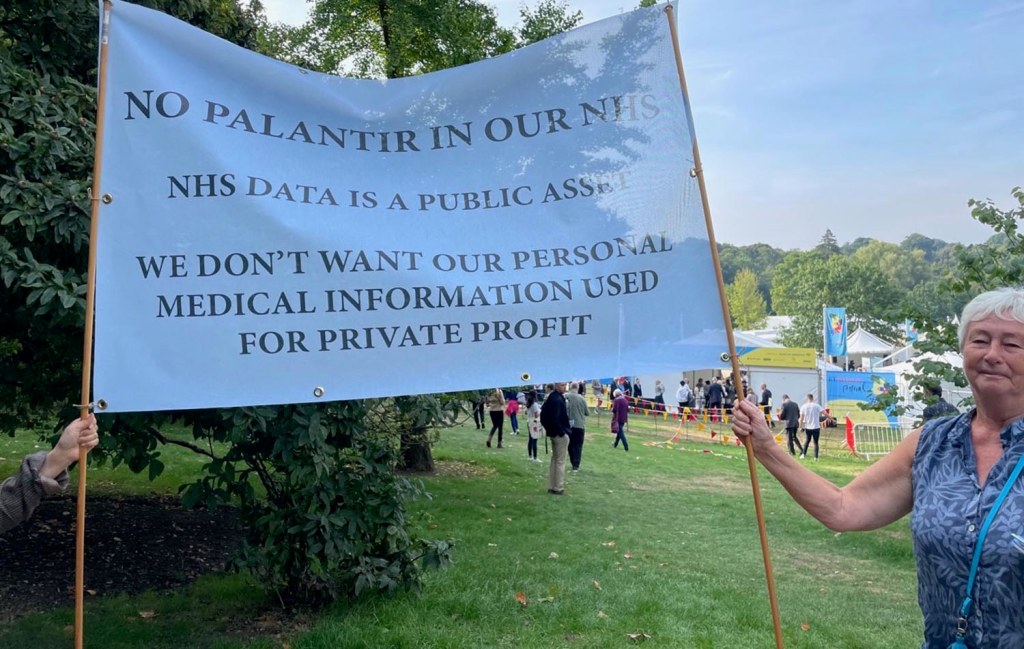
“Palantir is a US tech company that works with the Israeli Defence Force, British and American militaries, the US Immigration and Customs Enforcement Agency (ICE) and, since 2020, the NHS.” You can sign a petition about this here.
Last year’s winter crisis ran through the year.
In October 2025, the Royal College of Emergency Medicine and the Royal College of Physicians both reported that corridor care has continued through the year; “Put simply, the situation is shameful. Patients are being failed. It’s time to act.”
All the other NHS problems contribute to the winter crisis and, if not tackled, will make each year worse.
Meanwhile, more than six million people are waiting for elective treatment, and more than half a million women are waiting for gynaecology treatment. This is the most significant number of patients waiting for any specialism. These figures are not improving. Our hospitals are understaffed, and some doctors’ shifts are being cancelled because of financial constraints. People have difficulties in finding GP appointments, especially in less well-off areas, so their health concerns get worse before treatment.
“Honour thy father and thy mother.”
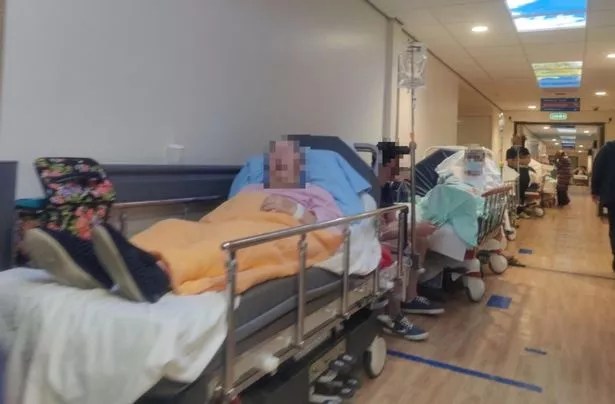
Age Concern has just produced a heartbreaking report of the experience of older people, experiences of corridor care, left without access to toileting, left to die with no privacy. We have had stories like this brought to our campaign stalls.
Poverty is increasing in the United Kingdom. This means that more people are ill, again, especially in areas of high poverty. Heating and fuel prices will make life still harder this winter, especially for children.
So, we are facing a very difficult winter, and the NHS is not ready for it. Corridor care is already increasing, and we are seeing ambulance queues again. This is not just uncomfortable and humiliating for patients; it costs lives, about 250 per week, according to the Royal College of Emergency Medicine. The BMA have published a list of what can and should be done but we want more, we want immediate Government action on finance, on filling vacancies, and a return to the Bevan model of healthcare, as the NHS was founded to be, not to a milk cow for huge corporations.
At the core of the problem is the remodelling of the NHS on the appalling American model. The government can change that immediately.
Right now, the government could
1. Improve staffing and employ fully qualified professionals. There are 100,000 nurses who are qualified and registered but not working as nurses in the UK. More nurses, who have left the NHS, will have dropped their registration . Many resident doctors and GPs are unemployed.
2. Increase the number of hospital beds and intensive care provision (the intensive care might take a little more time)
3. Prioritise the NHS, not the private sector. All government health spending should go to patient care and staff conditions in the NHS. During the pandemic, Spain nationalised all private health facilities as a public health emergency. Here in the UK, the private sector is very small compared to the NHS, though the government seems keen to grow it.
4. Improve workforce planning as a matter of urgency.
5. Improve pay and working conditions for staff.
6. Improve the buildings.
7. Improve GP services, employ the unemployed GPs.
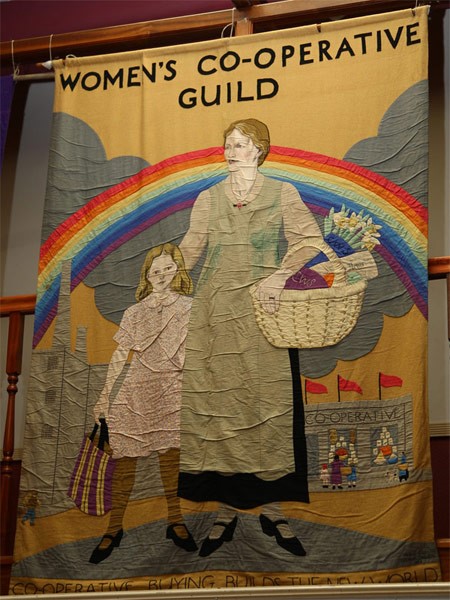
The NHS came from the people, not from the rich or famous, but from ordinary people demanding proper healthcare for all, rich or poor, man or woman, child or pensioner, black, white or brown. Trade unions, especially the National Union of Mineworkers, and women’s groups such as the Women’s Cooperative Guild, led the way. Our grandparents and great-grandparents fought for it in the early 20th century, and when the soldiers returned after defeating fascism, the NHS was established 77 years ago. The country was still smouldering from bombing and massively in debt, but we invested in the NHS, and it profoundly changed lives, especially women’s lives. Fewer women died in childbirth, and more babies survived. For many years, life expectancy rose, and we lived longer, healthier lives. We too can fight for the NHS like our grandmothers, great grandmothers and grandfathers , and we can win, making it safe for another 77 years.
There are actions you can take:
- Talk to friends, family and workmates about the need to restore the NHS.
- Raise it at work, in your union if you have one, and in the community organisations
- Share this post. Post your own comments on social media.
- Contact your local councillor. Many councillors don’t understand that Councils do have a say in the NHS. Each council has a representative on the Integrated Care Board. The changes the Government has been making increase the importance of that scrutiny function. The Council has a scrutiny system over health decisions that affect the locality. Liverpool has a Health and Well-being Board and a Children and Young People’s Well-being Scrutiny Committee. Wirral and Cheshire West have a Joint Health Scrutiny Committee.
- Help us with our campaign. Leafleting your street would be a great help. Come to our meetings or set up a meeting about the NHS inyour area.
- If you are active in an organisation, ask the organisation to join the Cheshire and Merseyside NHS Campaigns. Email takebackthenhs@proton.me
- Write to your MP either with a detailed letter or a short one. Use our letter draft or write your own. Find the name of your MP here. Maybe try to get an appointment with them. Urgent government action would make an immediate difference. Right now, in these unpredictable times electorally, MPs are very sensitive to the possibility of losing votes if they ignore their electorate’s opinion!
Below, you can down load draft letters/emails to your MP, to use as they are or put into your own words – make sure though, that you put your own address on the letter so MPs are in no doubt you are one of their constituents.
We will be continuing our coverage of this issue. We will hold meetings to discuss the winter crisis and plan the campaign. We need your help. Please send us your thoughts and experiences of using the NHS this winter, as well as your successes in getting the word out to the public. Please invite us to speak at meetings, large and small.

We sent this question to Cheshire and Merseyside ICB meeting on the 27th November 2025 about the Winter Crisis
“
“The winter crisis, as seen in corridor care in A and E and in very long waits for beds once a decision to admit was made, spread throughout the year.
The Winter Planning report, page 279, does not appear to reflect the experience of patients in this area, nor does it reflect the Royal College of Physicians’ report this autumn.Cheshire and Merseyside ICS – Urgent Emergency Care strategy for 2025/26 also does not seem to reflect the situation from the public’s point of view.
We recognise the dedication and hard work of staff in challenging situations, but they too seem angry about the problem, apologising to patients for having to treat them without privacy.
We note the focus on particular critical incidents, but the wear and tear on patients in the routine winter crisis must also be addressed. A five-hour wait is seen to be a feature in patients who have poor outcomes, including deaths.
The deep sadness and anger from older people at being treated in corridors must be heard and responded to.
What will be done to help staff navigate the tough times ahead?
What research has been done to find out why staff distrust the vaccines?
How do NHS staff who want the Covid vaccine get one?
What are the plans in case of a qualitatively higher level of illness than you currently expect (given the experience of the southern hemisphere this year)? What lee way is there for such an escalation?
“The winter crisis, as seen in corridor care in A and E and in very long waits for beds once a decision to admit was made, spread throughout the year.
The Winter Planning report, page 279, does not appear to reflect the experience of patients in this area, nor does it reflect the Royal College of Physicians’ report this autumn.Cheshire and Merseyside ICS – Urgent Emergency Care strategy for 2025/26 also does not seem to reflect the situation from the public’s point of view.
We recognise the dedication and hard work of staff in challenging situations, but they too seem angry about the problem, apologising to patients for having to treat them without privacy.
We note the focus on particular critical incidents, but the wear and tear on patients in the routine winter crisis must also be addressed. A five-hour wait is seen to be a feature in patients who have poor outcomes, including deaths.
The deep sadness and anger from older people at being treated in corridors must be heard and responded to.
What will be done to help staff navigate the tough times ahead?
What research has been done to find out why staff distrust the vaccines?
How do NHS staff who want the Covid vaccine get one?
What are the plans in case of a qualitatively higher level of illness than you currently expect (given the experience of the southern hemisphere this year)? What lee way is there for such an escalation?”
We will publish their reply
 Save Liverpool Women's Hospital
After reading this article you will understand ALL the issues NHS is facing, ALL man-made. Join KONP (keep our NHS public); SLWH ( save Liverpool Women’s hospital). Spread the word! Let us not go the way of America where they check for insurance before they check your pulse. 🤔 😔
LikeLike