 We asked friends and family from the USA for information on how the US system worked for them, this is just a sample of their replies.
From John R;
“The money is a major issue, but so is the stress and insecurity in the US system.
This is just off the top of my head. The main point is this: Yes, if you have unlimited resources you can get better health care in the US than anywhere else. That is probably what’s pointed to when they talk in Britain about the “wonderful” health care system here. But, that’s strictly for those with the money, and I’m talking about many millions. For the rest, wait times, everything else is rotten”.
From another friend, this time in the UK;
“I’m diabetic and my diabetic friends in the US have to pay up to $3,000 a month for insulin and blood testing equipment. Insurance doesn’t always cover all the costs and they are often denied insurance for blood glucose monitoring, insulin pumps and insulin itself.”
Another UK friend wrote;
The bill for that was £12,000.
“My son spent last summer in the US, coaching football. One drunken evening he stuck a knife through his palm. The care was good; they stitched him up, dressed the wound and gave him some antibiotics. A few days later, he went back and they re-dressed the wound. The bill for that was £12,000. Luckily, he was insured. There’s a lot of money to be made from private healthcare.”
Sonja, in the US, sent me this;
“I pay almost $400 a month for private insurance.
That is almost 25% of my monthly net income. Still, I had knee surgery just recently and am stuck now with a bill of $7,500. I knew my deductable was $ 2,500, but apparently, I have another co-payment of 30% (for outpatient surgery?), I am not sure. Anyway, a high amount of money to pay (almost 1/3 of my annual income) for somebody who pays already a lot for insurance. The private insurance system in the US sucks. I can’t believe anybody in Europe would see it as a good example (for anything)…”
My sister in law wrote;
The stress
“It’s not only the costs. Last year a friend became very unwell and I took her to the after-hours medical centre. After waiting her turn she was informed that she would have to go to another similar after-hours medical centre across town, because the two centres accepted different types of insurance. The paperwork she had to complete before being seen was quite a few pages long. It did not help matters that she was from another state. I couldn’t believe how convoluted the system has become”.
Yet another friend wrote;
“In addition to the paperwork, there is also the stress. My cousin in New York had a hip operation at the same time as my Dad was in ICU in London. The former had to worry about how she was going to pay the bill when she got out, while my Dad had only to worry about getting better and the inconvenience of the tubes and wires that were attached to him. No bills, means less stress, means better health outcomes! Duh!”
Another family member commented;
“Healthcare access in the United States is a disgrace. I am a provider as well as a patient like everyone else. For providers, it’s stupidly complex. We have to waste so much time worrying about the different insurance companies, different policies, stupid amounts of paperwork, instead of taking care of our patients. When it comes to accessing medical care, Obamacare allowed many of us who couldn’t get an affordable policy because of our age and/or pre-existing conditions to get into the “market”. But, compared to the rest of the developed world, our system is cruel and horribly expensive. I could go on and on. It’s an embarrassment that we don’t have universal coverage. A little known fact about the US: there is no cap on how much a person on Medicare (the universal coverage system we have for people over 65, thanks to President Lyndon B. Johnson) will have to pay for a catastrophic injury or illness. By definition, getting older means higher medical costs for most people. Many people who reach the last part of their lives end up spending every penny of their savings on illness–because even though we have Medicare, there are still “co-pays” and ‘deductibles’. Healthcare is never free in the United States. Once they have exhausted all of that, if they need skilled nursing care, they will be covered by the safety net program called Medicaid. But, you only get that if you are basically bankrupt. Donald Trump wants to drastically cut Medicaid. Many ignorant people think that Medicaid is for lazy young people who don’t want to work. The truth is nearly all of it goes toward elderly people who are in poverty and only have Medicaid to rely on for a nursing home. Without Medicaid, our elderly would literally be thrown into the streets.
If you’re over 65 years of age,
If you’re over 65 years of age, Medicare will help pay the cost. As mentioned above, Medicaid will pay for nursing home care for people who are destitute. Medicare covers up to 90 days in a nursing home. If under age 65 and no insurance, all medical costs are the responsibility of the patient. They are totally exposed.”
A friend of my sister in law commented;
Many doctors in the state won’t accept Medi-Cal patients
“Here’s one example: There are 13.5 million people in California who are on Medi-Cal, which is the government sponsored health insurance program for those who don’t earn enough to be able to afford private health insurance. This program is a step in the direction towards what Britain has, not a step away from it. One problem is that many doctors in the state won’t accept Medi-Cal patients because the payments are so low. There is a similar issue for private insurance: Except for the premium insurance plans, which cost an arm and a leg, the lower cost plans often limit the coverage so that it’s difficult to find a doctor in your area, especially specialist doctors.”
Another friend of the family wrote;
When I had no healthcare
“….. asked me to relay my experience many years ago, when I had no health care coverage. I had just been dumped off my parents’ coverage, at age 22 I think, and my position at the time didn’t provide me with any health care coverage. I ended up in the local hospital with a bout of kidney stones. I was in the hospital for almost a week, when they realized that I needed to go over to a hospital in Eugene, Oregon, to have a stone removed. I was in that hospital for about 3 days after the stone removal. With around 10 days in the hospital, the doctors’ fees from the first hospital, the surgeons fees from Sacred Heart Hospital, and fees for consulting physicians, I ended up with about $5,000-$6,000 in medical bills. Doesn’t sound like much in today’s climate, but in 1984 it was a lot of money for a graduate student. It took us just shy of 10 years to pay that off, a little bit at a time. We even had some issues with the IRS about why we were unable to pay some taxes and once they added up all our monthly bills, they figured out that we were maxed out on our monthly income pretty much due to my medical bills and my husband’s student loan debt! Today that amount would probably be closer to about $15,000. But I would venture to guess that the medical costs today would probably be closer to $30,000. Our health care system here in the US is atrocious and will only be made worse by the AHCA!”
Suzanne commented
it’s still not anything like “free at the point of need”
“And when you do have private insurance coverage, it’s still not anything like “free at the point of need”. My mother paid for an “enhanced” health insurance policy over the course of her entire working life, right up to the time of her death at 95. She still had co-pay for medicines, and would ask me to help her put eye drops in when I visited, as each “drop” cost $25 and her hand wasn’t steady! In the last 6 months of her life she was still at home, but needed more care than the 10 hours a week she was paying for from her insurance. When I tried to help her put more in place, she was anxious that she’d run out of money before she would die if she had to spend more — a worry I thought was irrational, until I looked at the policy details. It was, indeed, as she had said: a finite sum of money. And when it was used up, tough bananas. In addition, the insurance company would pay for her to be in residential care, but limited how many hours of help she could have in her home. And if she required specialist help of any kind, it was assessed ATOS-style, i.e., when she had an eye operation and had to lie face-down for several days, the question asked was “if food is put before you, can you feed yourself?”, not, “are you able to prepare food for yourself and then feed yourself?” And so, she was denied the help she really needed then.
And she specifically took out cover so that someone might be able to live with her to give her full-time help, but it was so stringent that she never got to use that aspect.”
John reported that;
As somebody on Medicare, I’ve called some specialists for an appointment and have been told I’d have to wait over a month for my appointment. But my wife, who isn’t on Medicare, was able to get an appointment with the same doctor for herself within a week!
“There’s a similar problem for Medicare, which is the government sponsored health insurance for people over 67. Most doctors accept Medicare, but I think the payments must be lower than what private insurance pays. The reason I suspect that is this: As somebody on Medicare, I’ve called some specialists for an appointment and have been told I’d have to wait over a month for my appointment. But my wife, who isn’t on Medicare, was able to get an appointment with the same doctor for herself within a week! What I suspect happens is that the doctors limit the number of Medicare patients they accept.
ALL doctors and ALL hospitals charge the uninsured over double what they charge the insurance companies.
“And then there’s those who choose to go uninsured. This is very risky because ALL doctors and ALL hospitals charge the uninsured over double what they charge the insurance companies. I’ve heard of people from out of the US who stayed in the hospital overnight for some relatively minor problem and were charged over $10,000.”
Compare all of this to Britain: A few years ago I had a medical emergency while I was visiting London. I went to an emergency room, was seen in an hour (which is a short waiting time in a hospital here) was given the drugs I needed and was out of there. Total cost: My taxi ride to and from the hospital. The same here would have been probably a couple of thousand dollars.
The Manchester tragedy
A comment on how families in the Manchester tragedy would have fared in the US went viral. It came from Hannah Middlebrook (a warrior for social justice in Tulsa, Oklahoma, ) Hannah said
“I’ve neglected to give you any US healthcare information these last few days. Sorry about that. But after reading this morning’s terrible news, it struck me my friends in the UK need to hear something many Brits may not have considered.
If the Manchester Arena bombing had happened in the US, every family with a dead or injured member would begin receiving bills in the coming days. Parents who lost their children would get a detailed and unadorned list of services provided by the medics that tried to save their relations’ lives. And they would be expected to start making payments immediately.
While they mourned heart-breaking losses, American families would be billed for the ambulance rides, morphine, CPR, anesthesia. They would be expected to pony up for surgeries that were unsuccessful, medication that didn’t work, and the time the anesthesiologist spent trying to keep their children comfortable during major procedures. They would continue to receive those bills for month upon month after the death of their children.
Many families would set up GoFundMe accounts to pay for the medical expenses of their deceased child. The bills would run in to the hundreds of thousands, so even the best-funded account would only pay a fraction. The parents might have to sell their homes while trying to wrap their minds around the needless loss of their children. Ultimately, many would declare bankruptcy: who has time to pore over bills, fight the constant inaccuracies, totalling hundreds or thousands of dollars, when they’re battling depression and anger?
“Think about that. It’s the kind of society you’re really signing up for when you vote for a party that wants to privatise your healthcare. Please don’t make that mistake.”
I checked this out with friends who commented;
“…the National Student post about health and the Manchester Arena bombing. She is correct except for those government funded programs that are similar to Medicare for all. These are Medicaid and the Veterans Admin. Health program where all costs are born by the government. Note Medicare is NOT Medicaid. Medicare has premiums, co-pays and deductibles.
Obama care expanded the number eligible for Medicaid, which is for low income people, while ‘Trumpcare’ proposes to remove 14 million people from Medicaid. By the way, my eldest step daughter passed away on May 16 after three weeks in hospital, and yesterday we received a letter saying she will not owe anything because she is on Medicaid and if she does get billed to contact the hospital. Ps in California Medicare is called Medi-Cal.”
There was much more.
A friend sent me this
The untreatable conditions of the past become the untreated tragedies of the present.
“But here’s an unfortunate rule in medical history, at least in the United States: The untreatable conditions of the past become the untreated tragedies of the present. Mary Otto’s heartrending and incisive book, Teeth, builds on her Washington Post story on Deamonte Driver, a black twelve-year-old from Maryland who “died of a toothache” in 2007. His life could have been saved, she wrote, if his family had insurance, or if they had not been stripped of Medicaid for a time when they were homeless, or if Maryland’s underfunded Medicaid program had provided adequate access to dentists. “By the time Deamonte’s own aching tooth got any at tention,” Otto reported, “the bacteria from the abscess had spread to his brain.” Surgeries and no doubt much suffering followed, but it was too late.”
We know many UK health institutions, including the Liverpool Women’s Hospital, have been in contact with Kaiser Permanente a huge US provider.
We know the NHS has imposed an Accountable Care Organisations model similar to the US system in some areas, including parts of Merseyside and Cheshire.
We should export the NHS model to the USA and fight with all our might to stop the USA model of health care coming here.

There is a long-established technique for privatisation. The service is run down to the point where any suggested change is welcome.The Conservatives are not fools They are not making a mistake by running down the NHS and starving it of funds. This is a part of the strategy to remodel the NHS to fit the needs of the international health care insurance companies and for profit health care providers
The creation of Accountable Care Systems rearranges the structure of the NHS to mimic the structure in the USA. There a city or region is organised as a heath care system then put out to the private heath insurers who bid to run it. If the UK signs a free trade deal with the US, US companies will be able to bid to run chunks of our NHS. This is not bidding to run some services as Virgin does now, its bidding to run the whole shebang.
The Government may still pay the Accountable Care System from taxation to keep it free at the point of need but it would be organised to make profit not to give care. Think of the rail privatisation. The government still pays for the railways, companies run the franchises ans take a profit but the main cost is to the government. On the railways our taxes subsidise the profits for the companies and we have an inefficient expensive service. In the same way the Government could be paying for health care but a big chunk of the cost would go in profit.
The Accountable Care System is one where the whole health system can be measures by an accountant. It is a money measure. To keep within that money limit, some services are rationed and not provided to patients. This is already happening here with limits on treatments say for IVF in some areas and some restrictions on IVF based on weight of mother or father. In the Chester area this is accompanied by an increase in the private provision of IVF for those who can pay.
Some times the health insurance companies will put in a sweetener to make sure they get the bid, perhaps to pay for a new hospital.
The NHS is the largest integrated health care system in the western world. It spends a huge amount each year. In 2014 before this governments policies really took hold it was the most efficient in the western world
 Many companies would pay up front money for even a slice of that cake. The long-term prospect of running the whole NHS is Christmas come early to the big companies
But running a health care system is not the only prize. The NHS has an enormous bank of data on patients and treatments which is priceless to the big pharmaceutical companies
Liverpool and Merseyside are especially valuable to the private health sector because our people are more likely to suffer illness arising from poverty and so have multiple illness. This is potentially hugely valuable data for companies that want to produce drugs people will need to take for the rest of their lives. Cures have less financial benefit to the pharmaceutical companies.
So beware the big companies bearing gifts. Our health is not their purpose.
 Their purpose is profit.
The Royal College of Midwives is making a considered change to the way it presents its advice on childbirth.
The RCM are still advising mothers to give birth without surgical intervention, if possible. The wording and emphasis though is changing.
The immediate, prompt for this is a scandal at Morecambe Bay where midwives are accused of being “over zealous” in advocating non surgical births. This caused babies to die. A major enquiry is underway.
There is more to this though. Government policy follows the old RCM line and we think it has used this to excuse closures of obstetrics (Specialist Child Birth Doctors) based facilities.
Response to the CCG’s Review of Women’s and Neonatal Services regarding the “Clinical Case for Change”
Lack of adult critical care on site
Number of patients requiring adult critical care is very small and their needs are safely managed
Patient transfers between hospitals
Transfers of patients are a common occurrence and protocols are in place to ensure safety
Inability to support women with complex health needs
Clinics and care pathways provide specialist support in all areas of healthcare for women
Inadequate space for current neonatal facility
Present neonatal facility can be expanded
Availability of haematology/pathology services
Services can be increased to meet demand
Save the Women’s Hospital Campaign/Merseyside Keep Our NHS Public April 2017
Available at http://www.labournet.net/other/1612/clinical1.pdf
in response to appendix 16 in
www.liverpoolccg.nhs.uk/…/review-of-services-at-lwh-update-january-2017-backgro…
Contents
Forward………………………………………………………………………………………
Lack of adult critical care on site………………………………………………………..
Patient transfers between hospitals……………………………………………………
Inability to support women with complex health needs…………………………
Inadequate space for current neonatal facility……………………………………..
Availability of haematology/pathology services…………………………………..
Conclusions…………………………………………………………………………………
Summary…………………………………………………………………………………….
References………………………………………………………………………………….
Forward
Numerous statements from NHS “bosses” have confirmed their plans to move the Liverpool Women’s Hospital to the site of the Royal Liverpool Hospital, with the claim that this will result in better health outcomes for women.
Most notably the CCG have published their “Review of Services Provided by Liverpool Women’s NHS Foundation Trust Pre-Consultation Business Case” with four options for the future of the Women’s Hospital. It goes on to indicate their preferred option is to “Relocate women’s and neonatal services to a new hospital building on the same site as the new Royal Liverpool Hospital.”
Unfortunately, the clinical case on which this option is based and which has been widely accepted by health workers throughout the city, is deeply flawed. A close examination of the arguments – which many of those endorsing the case for closure have not done – shows the arguments are based on misinformation and misunderstanding of the current situation.
Indeed the clinical arguments for the option to “Make major improvements to Liverpool Women’s Hospital on the current Crown Street site” along with the added advantages of its current location far outweigh the “preferred option”.
One would expect the medics to look for the evidence that the preferred option would result in better health outcomes and then proceed accordingly. However, as can be seen in the following pages, it would appear they have decided that the hospital should close and a new one be built, and then produced “evidence” to support this contention.
Lack of adult critical care (ICU) on site
According to the Liverpool CCG, the Trust currently provides a Level 2 High Dependency Unit (HDU) facility on site at Liverpool Women’s Hospital (LWH), which National Standards require should be located with a Level 3 Critical Care Unit. As LWH does not have a Level 3 unit, women who require this level of care have to be “blue-lighted” to the Royal Liverpool University Hospital (RLUH).
This statement is not altogether accurate. Guidelines for the Provision of Intensive Care Services (Edition1, 2015) state:
“All acute hospitals carrying out elective surgery must be able to provide Level 2 care. Patients with a predicted surgical mortality in excess of 10% should have access to facilities for Level 3 dependency on site. Hospitals admitting emergencies should normally have all levels of care on site. Analysis of the delivery of Critical Care is complicated by the term itself, incorporating as it does a mix of Level 2 and Level 3 care, and hence encompassing specialty-specific high dependency care which may lie partially outside the remit of general Intensive Care units.”
- There is a speciality-specific high dependency unit at LWH.
The Core Standards for Intensive Care Units (2013) which apply to all units capable of looking after Level 2 or Level 3 critically ill patients go on to state:
“If a unit usually provides Level 2 care, it must be capable of the immediate provision of short term Level 3 care without calling in extra staff members in order to provide optimal care. The unit should be capable of providing up to 24 hours of Level 3 care prior to a patient being safely transferred to a more suitable unit. The staff of a Level 2 unit should have the competencies required to provide this level of care.”
Access to Level 3 Critical Care (ICU) must be suitable for all obstetric patients and preferably on site. Units without such provision on site must have an arrangement with a nominated Level 3 critical care unit (ICU) and an agreed policy for the stabilisation and safe transfer of patients to this unit when required. Portable monitoring with the facility of invasive monitoring must be available to facilitate the safe transfer of obstetric patients to the Intensive Care Unit. (Guidance on the Provision of Obstetric Anesthesia Services 2015).
- While the Standards state it is preferable to have a Level 3 care unit on site, it recognises that not all obstetric units do have such a unit and so should have an appropriate policy in place for the safe transfer of patients. The RLUH is the nominated Level 3 unit for LWH as part of local critical care arrangements, therefore adhering to the Standards for Intensive Care Units.
The Pre-Consultation Business Case (PCBC), recently published by the CCG, maintains that the lack of a level 3 Intensive Care Unit at LWH means that clinical standards are not being met and if services were to remain at the Crown Street site then the four bedded High Dependency Unit would need to be upgraded to a six bedded Intensive Care Unit.
Appendix 17 of the PCBC states that this would not meet the approval of the Cheshire and Merseyside Critical Care Network (CMCCN). They claim that national standards would not be met due to the geographical and specialist nature of LWH Crown Street site.
The Care Standards for Intensive Care (2015) apply to all units capable of looking after level 2 or level 3 critically ill patients, whether they are called Intensive Care Units (ITU) Critical Care Units (CCU) or High Dependency Units (HDU) and no distinction is made between them. LWH has a HDU on site and complies with these standards.
Appendix 17 goes on to state the disadvantages of small CCUs which include the education and training requirements for medical and nursing staff and the clinical governance processes required to deliver high quality critical care. As LWH has a level 2 Critical Care Unit, these processes will already be in place.
They also cite the cost effectiveness of developing a small CCU at LWH, but upgrading the present 4 bed HDU to a 6 bed ITU would be more economically viable than building a new hospital, given that they already have staff trained in the necessary competencies to deliver critical care.
Neo Natal Critical Care. The proposal of a two-site, level 3 neonatal critical care service cited in the PCBC, could be applied to an intensive care service governed over two sites between RLUH and LWH. The development of the Advanced Critical Care Practitioner (ACCP) role would attract staff. Furthermore, ACCPs are now forming part of the trainee medical rota (Faculty of Intensive Care Medicine2017).
A two-site critical care service would enhance skills in maternity care and allow staff to be managed more effectively. Attachment to general critical care would enhance Midwives’ knowledge, and outreach critical care nurses would benefit from time spent in a specialty specific unit. This proposal would involve clinicians working across different locations and would be in line with proposals outlined in the Healthy Liverpool Programme (HLP), creating a collaborative service delivery and ensuring patients receive the highest standard of care. A strong partnership already exists between RLUH and LWH, several consultant anaesthetists work between the two trusts in close collaboration (Surgery, theatres and operations. RLH).
Patient transfers between hospitals
The CCG clinical case for change states: “in 2014/15 over 550 women were transferred to or from LWH during their care predominantly from or to RLUH”. They also state that in the same time period over 250 babies were transferred between LWH and Alder Hey Hospital. They state that patient transfers were mainly due to lack of availability of diagnostics, surgical and critical care.
In response to a FOI (Freedom of Information Act) request submitted 31/08/16 regarding the women transferred to RLUH their records show that;
- 3 women went directly to Level 3 ITU and 1 woman went to Level 2.
- 2 patients were transferred to Aintree Level 3 ICU and 1 woman transferred to Level 2 at Aintree because the Level 2 care at LWH was not sufficient to meet their
- 1 patient was transferred to Wirral University Hospital
- 1 to Whiston.
- Of the 550 transfers, only 7 needed Level 3 ICU.
The transfers to hospitals other than the RLUH or Aintree were because of a lack of Critical Care beds locally. If LWH is re located to RLUH site transfers would still take place if critical care beds were not available at the Royal.
The same FOI response stated that in the same time period there were a total of 138 women with a severity of illness requiring an ambulance transfer to RLUH and a further 10 women with a severity of illness requiring transfer to Aintree Hospital. These, added to the 2 women transferred to other hospitals (one to Arrowe Park and one to Whiston) make a total of 150 women with a sufficient level of acuity of illness to require an ambulance transfer. The Trust states that 550 women were transferred in total which leaves 400 transfers to or from LWH, which it is presumed were for diagnostic or surgical purposes. A transfer of one mile from one hospital to another could take as much time as across the RLUH site to another building.
Some of these transfers were to the LWH, but this is to be expected, as it is a regional centre for high-risk maternity care. Some of these may have been taken to the wrong hospital in the first place, as initially the situation may have been unclear. This however is not a problem caused by a lack of facilities or staff at LWH.
While transfers of patients occur routinely in many hospitals, they are relatively uncommon at the Women’s Hospital. Furthermore Standards and Guidance for Intra and Inter Hospital Critical Care Transfers (2012) are in place to assist organisations to develop formal policies for the safe transfer of patients. It is recognised that the transfer of patients may be necessary to access clinical and specialist treatment and should not be taken lightly.
Cheshire and Mersey Adult Critical Care Operational Delivery Network has produced comprehensive pathways to deal with acutely unwell pregnant or recently pregnant women to ensure the optimal site for their care (Cheshire and Merseyside Strategic Clinical Networks).
LWH carries out a range of diagnostic and investigative procedures, which include x-ray, ultrasound, hysterosalpingograms, bone densitometry mammography and NT scans. They do not have a CT/MRI scan or a PET scanner, so a patient needing one of these procedures would be transferred to RLUH. LWH carried out 9,479 gynaecological procedures last year. Even if 400 women per year needed transfer to RLUH for diagnostic or surgical purposes – and the reality is far less given the transfers into LWH – this would represent 4.2% of gynaecology patients.
The Pre Consultation Business Case outlines the details for the option to relocate LWH to RLUH and which is the “preferred option” of the CCG. This “preferred option” for a new build would be significantly smaller than the Crown Street site. The rationale is that activity would be reduced at LWH by establishing a Free-standing Midwife Led Unit (FMLU) for low risk mothers. It has been reported that 22 percent of mothers admitted to a FMLU have had to be transferred to consultant led units (BBC News). This would increase the overall number of transfers.
Another option of the PCBP details enhancement of LWH at the Crown Street site. These plans include improving the availability of diagnostic services which would significantly reduce the numbers of transfers and allow key standards to be met. This would involve a high level of investment but according to their financial analysis the capital cost would be low compared to the cost of a new-build.
Inability to support women with complex health needs
Pregnancy over 35 comes with “more risks”, but this is not the same as “high risk”. As long as the mother-to-be is in good health, then pregnancy should be straightforward. They are likely to have more ante-natal scans and monitoring. Older mothers tend to be better educated, more financially stable, confident and settled in themselves. Older women do conceive (whether naturally or via medical treatment) and enjoy healthy pregnancies.
The age in which women are having their first baby has increased over the past few decades, due to a variety of social, professional and financial factors and this trend is unlikely to be reversed dramatically. Although having a baby at very advanced maternal age (48+) is uncommon in the UK, the advances in assisted reproductive technologies are contributing to increasing numbers of women giving birth outside “normal” reproductive years.
There are increasing numbers of women giving birth who have health problems. It is therefore more important than ever for women to have access to safe, high quality maternity services regardless of age (Knight 2016). The LWH provides such services and is recognised as one of the best maternity service providers in the country.
Many women, young or older, have more complex needs. At the LWH there are specialist clinics held either weekly or monthly where a consultant obstetrician and consultant in the relevant specialism will plan the treatment necessary to ensure optimal care. These include:
- Renal clinic
- Hypertension clinic
- Cardiac clinic
- Neurology clinic
- Haematology / Thrombophilia clinic
- *Bariatric clinic
- Medical/Endocrine clinic
- Young Women’s clinic
- Pregnancy Support clinic
- Pre Term clinic
- Mental Health Clinics
- Links clinics – provide support to women who have experienced domestic violence, homelessness or female genital mutilation. They also support women who do not have English as a first language and provide interpreters.
- Gynaecology specialist clinics provide a service for urogynaecology
- bladder and prolapse conditions.
- LWH are the specialist regional centre for cancer services known as gynaecology oncology within the Merseyside and Cheshire Cancer Network.
They also have a 24 hour gynaecology Emergency Room and Early Pregnancy Assessment Unit, giving rapid access to medical treatment and ultra sound scanning for women who experience a gynaecology emergency especially in the early stages of pregnancy.
Enhancement of LWH at the Crown Street site would ensure that these clinics remain on site but no specific mention is made of the whereabouts of these clinics in the PCBC if the “preferred option” of a new build is chosen.
Relocation to RLUH would reduce and fragment services. LWH is the largest hospital in Europe to exclusively care for the health of women. It is the recognised provider in Cheshire and Merseyside of high-risk maternity care, including foetal medicine, the highest level of neonatal care, complex surgery for gynaecology cancer, reproductive medicine and laboratory and medical genetics. Relocation to RLUH would reduce and fragment these services. The CCG in their review of Women’s Services have focused on a minority of patients who have needed transfer but have failed to take into account the remaining 50 thousand plus patients who use services at LWH and have failed to evaluate the environmental issues in relocation.
This view is echoed by Professor Wendy Savage:
“Birth is a major psychosocial transition for a woman and her family and the setting in which this takes place is very important in providing a good experience which enables her to take on the important task of becoming a mother”.
Inadequate space for current neonatal facility
The CCG state the current facility is under size for current and future needs. Expansion is needed, requiring an interim and a long term solution for the necessary space to provide safe, optimum care.
At present, there are 54 cots, 16 are for intensive care of the newborn, 12 are for high dependency, 20 for low dependency and 6 cots for transitional care. LWH state they need to increase in size from 1,257m2 to 2,331m2 to meet demand. They also wish to reduce transfers to other hospitals. This could be achieved by enlarging the present unit rather than moving all services to RLUH.
It is agreed that newborns should not be separated from mothers but all babies needing surgery would be transferred to Alder Hey. This is the regional centre for neonatal surgery, one of only 5 in the country, providing care to neonates requiring surgery born in Liverpool, and from wider areas in the Northwest and North Wales. Citing the number of neonates transferred as an excuse for relocation adjacent to the Royal is irrelevant. Separation from the mother would only occur if the mother was too ill to be discharged following the birth otherwise the mother would be transferred with her baby to Alder Hey. LWH have close links with Alder Hey, a midwife regularly visits for post delivery assessments, promotion of breast feeding and supporting new parents.
The review of questions and answers from public meetings on the review of women’s and babies’ services stated that LWH were not meeting certain National Standards including Principle 6 of the Toolkit for Neonatal Services. Principle 6 (DOH 2013) states:
“Babies requiring surgical care receive the same level of care, support resources and specialist input as they would receive in a medical neonatal service.”
Principle 6 goes on to recommend that in the future neonatal surgery services should be located in the same hospital site as specialist paediatric ( including surgery and anaesthesia), maternity and neonatal intensive care services.
The “preferred option” of building a new hospital outlined in the PCBC would not meet this standard as neonates needing surgical intervention would still need to be transferred.
The vision of a two site Neonatal Intensive Care Unit, governed jointly by LWH and Alder Hey Hospital (AH), was proposed in the PCBC. This would support obstetric and neonatal services at LWH and surgical care of neonates at AH. It would reduce transfers of neonates following a surgical intervention who still require intensive care. Maintaining LWH at the Crown Street site would be more cost effective than building a new hospital.
Availability of haematology/pathology services
In the review of Women’s and Neonatal Services the CCG states the Trust does not have 24/7 pathology services for processing blood samples, meaning support is required by the RLUH. If a solution is not found there is a concern that LWH will not provide high risk maternity and gynaecology services.
LWH does have an on-site laboratory facility providing a range of testing and blood transfusion support, which is available from 8:45 am to 9:00 pm. Outside of these hours the service is covered by RLUH. There is a Transfusion laboratory situated on the site at LWH. Routine ante-natal blood grouping and antibody testing is carried out at the laboratory at RLUH on samples sent from LWH. The labs supply several blood components such as fresh frozen plasma, platelets, albumin solutions, prophylactic anti-D and clotting factor concentrates.
The Guidance on the provision of Obstetric Anaesthesia Services (2016), states that a supply of O-rhesus negative blood should be available to the delivery suite at all times for emergency use, and that the transfusion laboratory should be situated on the same site as maternity, which it is. Blood gas analysis (with the facility to measure serum lactase) and the facility for rapid estimation of haemoglobin and blood sugar, should be available to the delivery suite. The Guidance also states that haematology and biochemistry services must be available to provide rapid analysis of blood and other bodily fluids. The RLUH is in close proximity to LWH to provide these services out of hours.
If the demand becomes too great for RLUH laboratories to deal with, then another solution must be found. Rather than using this as an excuse to build a new hospital – upgrading the facilities on site and staffing them accordingly would be far cheaper than building a new hospital.
Conclusions
The CCG‘s Review of Women’s and Neonatal Services insinuates that safety is maintained through the mitigating actions of clinicians. However, their Annual Accounts and Quality report 2015/2016 states that they received an overall rating of “good” by the CQC and were described as “caring, effective and well- led”. They were ranked amongst the very best maternity service providers in the country and were particularly praised for their focus on supporting mothers with breast-feeding, ranked 2nd best in the country. LWH was ranked the safest in the UK by patients for providing safe and high quality care, and were second best hospital overall in the national inpatient survey conducted by the CQC. Indeed the clinical case for change is weak and lacking any consideration of the needs of women of Liverpool and beyond.
The CCG, in their review of Women’s and Neonatal Services, state that LWH is not fit for purpose and does not adhere to clinical standards. However, none of the four options determined in the PCBC would be compliant with all clinical standards, although they recognise that it is not unusual for trusts not to comply fully with all standards.
The CCG review highlighted an increase of women with complex needs giving birth and needing high risk obstetric care. It therefore makes more sense to expand the existing Crown Street site rather than building a more expensive, smaller hospital on the site of the Royal and establishing a FMLU.
The LWH Trust commenced a review of services in 2014, which continued through a ‘Summer of Listening’ in 2015 with the people of Merseyside to gain their views. The main feedback was:
*People value our staff and feeling safe the most;
*People feel that LWH is a special place because of the way care is provided and because of our staff;
*Having all services under one roof and a range of specialist clinics are important to people in any future developments.
It appears that the Trust’s Board have not done much listening. If the suggestions of relocating the LWH were to be met, the services will fragment and Liverpool Women’s Hospital would no longer be a special place.
* Total capital costs for full refurbishment of the Women’s hospital on site £42.6m; to close the hospital and build a new one – £104.3m. No monies have as yet been identified to meet the costs.
Summary
Liverpool has six acute hospital trusts*, four of which are specialist and two of those have been rated “outstanding” by the CQC. However the emergence of austerity as the driving political ideology along with the cutbacks in funding for the NHS means that one of these has to close. The Liverpool Women’s Hospital, although less than twenty years old, but being deeply in debt and occupying a valuable site, becomes the obvious candidate.
Thus began construction of the case for closure. However the excellent care provided by the Women’s Hospital was evident in the 2014 refurbishment according to their own website:
“Liverpool has announced that the £10m transformation of its maternity service has now been completed… Liverpool Women’s facilities match any in the UK”
Hence, senior medics in Liverpool, including those in the Women’s Hospital, began talking of the need to “co-locate” next to an acute facility that provided a range of services and that the Women’s Hospital was no longer “fit for purpose”. The alternative, as put forth in the preferred option in the Pre- Consultation Business Case, was the closing of the Women’s Hospital and building of a new hospital next to the new Royal. A range of evidence from various sources was then interpreted and phrased in such a way as to support the arguments for this option.
The most complex and contentious of the arguments concerns the lack of a critical care or intensive care level three on site. The number of patients needing level three critical care is small and their needs are safely managed. However the Cheshire and Merseyside Critical Care Network deem the situation for seriously ill mothers to be “precarious”. Upgrading the High Dependency at the Women’s Hospital to a Level 3 critical care unit would resolve the situation at a fraction of the cost of building a new hospital.
*Liverpool Heart and Chest Hospital NHS Foundation Trust (rated outstanding); The Walton Centre NHS Foundation Trust (rated outstanding); Liverpool Women’s NHS Foundation Trust; Alder Hey Children’s Hospital NHS Foundation Trust; Aintree University Hospital NHS Foundation Trust; Royal Liverpool and Broadgreen University Hospital NHS Trust.”
Another issue used to justify the movement of the Women’s Hospital is transfers. However, the development of an Intensive Care Level 3 unit and improving the availability of diagnostic services, currently carried out at the Royal, would significantly reduce the number of transfers.
Women with complex needs are seen as a reason for the move. Yet the wide range of clinics currently available at the Women’s Hospital ensures that women with complex needs have appropriate treatment plans in place to provide optimal care.
Neonatal facilities are another issue with a shortage of space in existing facilities which in addition to providing routine care provide specialised care for babies from throughout the Northwest and North Wales. All of these needs can be met by expanding the existing facilities.
Finally there is the lack of haematology/pathology services 24/7. Many of the analytical procedures are done at the Royal as a matter of routine. Procedures needed outside regular hours, or requiring specialised equipment, can be accommodated through increasing capacity, or sending to the Royal, which is only minutes away. Similar solutions can be found to provide for blood supplies.
However, with each of the areas above, a close examination of the arguments shows they lack credibility and in no way justify the need to close the Women’s Hospital and build a new one on the site of the Royal Liverpool Hospital.
References
Association of Anaesthetists of Great Britain and Ireland (AAGBI). 2010 Blood transfusion and the anaesthetist: Management of massive haemorrhage, London.
BBC News 8/12/16
Midwife led units see 1 in four women transferred to consultant led units. www.bbc.co.uk
Cheshire and Merseyside Strategic Clinical Networks2015
Acutely Unwell/ Critically Ill Pregnant or recently pregnant Woman.
Faculty of Intensive Care Medicine 2017. www.ficm.ac.uk
Liverpool Clinical Commissioning Group 2015 Healthy Liverpool
Guidelines for the Provision of Anaesthesia Services. 2016 Royal College of Anaesthetists, London.
Inter Hospital Transfer. 2009 AAGBI. London
Knight, Marion. 2016
Cited in: British Journal of Obstetricians and Gynaecologists release: Pregnancy complications in older women.
Liverpool Clinical Commissioning Group 2017
Review of Services Provided by Liverpool Women’s NHS Foundation Trust
Pre-Consultation Business Case www.liverpoolccg.nhs.uk/
Liverpool Women’s Hospital Annual Report of Quality and Accounts 2015-2016 www.liverpoolwomen.nhs.uk
National Health Service Liverpool CCG Governing Body. 2016
Review of Women’s and Neonatal Services. Report no GB 17-16
North West Critical Care Networks. 2012
Standards and Guidance for Intra and Inter Hospital Critical Care Transfers. Version1.1
Professor Wendy Savage Personal Communication
Royal College of Anaesthetists. 2015 Chapter 9
Guidance for the Provision of Obstetric Anaesthesia Services, London
Royal Liverpool Hospital Surgery, theatres and operations www.ribuht.nhs.uk
The Faculty of Intensive Care Medicine. 2003 Core standards for intensive care units. Edition 1 www.ficm.ac.uk
Toolkit for high quality neonatal services (Principle 6) Dept of Health. 2013
——————————————————————————————————–
http://www.liverpoolccg.nhs.uk/…/review-of-services-at-lwh-update-january-2017-backgro…
see appendix 16
Save the Women’s Hospital Campaign/Merseyside Keep Our NHS Public c/o News for Nowhere, 96 Bold Street, Liverpool L1 4HY (Postal Address Only) email: KeepOurNHSPublicMerseyside@yahoo.com
Chose your fancy hat folks. These are the hats. “Choice“, “natural childbirth without Caesarian Sections or epidural“, “birth outside of hospital“,” birth at home“, and fanciest and flimsiest of all the “other providers”.
The fancy hats have been thrown into the ring by a number of different groups who have the ear of this government.Pressure groups have a legitimate role in society, but they cannot claim to speak for a whole section of society, they cannot speak for all women giving birth.
In Liverpool the plan involves setting up a pop up midwife maternity unit outside of the Hospital to see if people want one? Think about that.
In Liverpool we have three of the 4 options advocated by the maternity review. There is the biggest maternity provision in Europe, there is a midwife based unit at the hospital, there is a home birth service. However the maternity review says women should have all these choices. The waste of resources involved in a “pop up” maternity unit is enormous, if it is to be safe. This crazy hat experiment would be from within the existing numbers of midwives.We need more midwives not less.
Many of the pressure groups who are quoted in the maternity review, like the NCT and the Women’s Institute do not directly advocate privatisation or for the use of for profit providers.They do stress the need for more resources. They contributed to the review and agree with recommendations like continuity of care, greater choice, more facilities for mental health and for post natal care.. They have done well in pointing out the impact of poverty.
It is the privatisers, the multi national heath insurance groups, their think tanks and management consultants, who are driving the maternity review. The charities are just useful cover.
Where did the honest bits of this idea come from? (The dishonest bit is to do with cost cutting and privatisation)
Well, in many areas of the country,there is no Women’s Hospital. Women give birth in a unit in a General/ Acute Hospital. Some women want something less clinical, more respectful of women.
Liverpool has this already. Liverpool Women’s Hospital is far from perfect but it is one of the best places in the country to give birth. Fancy a natural childbirth with a pool and aroma therapy? Fancy going home in 4 hours? Fancy having the best obstetrician available if things go off plan? All available at the Liverpool Women’s Hospital. Fancy an elective C section? That is avaialble too.
Another strand in this push for change, is that hospitals, it is said, insist on costly interventions that do not seem to be needed quite as often in midwife led units.
Now some of these interventions are quite common and are chosen by some women; choosing to have a Caesarian or to have an epidural is not reckless or stupid .
It’s hard to tell from reading the research if it is true or not that it is the hospital situations that drives interventions.
It certainly was true in the past, where enemas were given to all mothers arriving at hospital in labour (and yes, it was a foul experience), where women were shaved when they came into hospital in labour and when every woman giving birth was given an episiotomy.These days, thank goodness have gone. Are hospitals more cautious, do they intervene too early? If the intervention is to save the baby’s life or to save the woman pain, whats wrong with the intervention?
A woman who is pretty sure all is well and that birth will probably be straight forward might be more likely to choose a midwife led unit, and might be advised to do so. So they will have fewer interventions. A mother who has an idea that things might be complicated might decide to go to a hospital, and be advised to do so.In this case the interventions will be available close at hand Interventions will be expected. So the figures are not clear. Do hospitals drive the number of interventions up or do those most likely to need interventions go to hospital? For those reader who want to read more here and here.
Choose your fancy hat, but you need shoes and clothes too. The clothes and the shoes here are representing the strong structure of universal, world class, maternity provision.
Judging maternity provision on the basis of numbers of interventions is fundamentally flawed.Survival rates and levels of injury should be the criteria. There is a need to respect all the choices made by women, including those who want a Caesarian, who want epidural and who want natural childbirth. And the choices of those who want a quiet natural birth but to have interventions if things go wrong or if they are worn out by an over long and painful labour.
Women who feel in control of their own life, in control of their own body, are well-informed and confident in the support around them, are likely to have happier deliveries. Life in Austerity Britain does not help make this most women’s experience. Poverty wrecks self-confidence.
Many women from every background still fear giving birth, many have been traumatized by giving birth.
The after effects of natural childbirth are not well supported in this country with incontinence being the least of the problems
We have a shortage of obstetrician and pediatricians, we have a shortage of midwives. The service cannot be improved without significant additional funding. The Junior Doctors contract will penalize young women doctors who are a majority of obstetrician, so we will have more problems in the future.
We support fully funded training for midwives, both as they start their careers and during their career.There should be a career structure not just involving management. We think obstetrician and midwives should share at least some of their training and share good practice. Conflict between to the two professions would be counter productive.
Midwives tend to come from working class back grounds and often train after some life experience. This will be ruled out by the Bursary withdrawal.Being from the community gives them a special positive link with mums.
We do not though think obstetrics should only be available at regional centres, that the role of obstetrician should be restricted and most women be delivered by midwives, simply as a way of saving money
Then, the truly fancy hat, that of private providers: it appears that they the private providers might try to get in on the provision of the maternity review in Liverpool. Please be alert.
Health care in the USA is expensive and not universally available. Maternity care is appalling. Rates for deaths of babies are appalling. Yet it is US firms that are circling our provision like vultures. In the US there is a group of midwives who do home delivery who are not university educated and who have no hospital experience and who are not linked to obstetrician. They do not publish their Maternal of baby survival stats. We want none of that.
Then we have the problem that the Maternity Review is now linked to the Sustainability and Transformation Plans for the 44 areas of the country.They are commonly referred to as Slash Trash and Privatise plans.The care of women and babies is a crucial role for the NHS. We must defend it.
For all our mothers, sisters, daughters, friends and lovers,and for our babies,Save Liverpool Women’s hospital and save the NHS.
On the 4th November 2016, Liverpool Women’s Hospital board heard a report on how the Maternity Review is to be implemented in Liverpool and Merseyside. It was not a pretty picture. Little reference to the background reality, of shortages, cuts and privatization, but the proposals open up a real risk to the hospital services.
Senior staff at the meeting indicated real concerns, the first time we have seen this.
Maternity care needs more resources from central government. There is nothing more important than the safe birth of babies, nothing at all.
First, the Reality Check. before we look at the detail of the Maternity Review.
The government itself said “NHS England has estimated that the total NHS cost for delivering maternity services in 2013/14 was £4.7bn. This does not capture some costs, such as expenditure on perinatal mental health, which was taken into account as part of the work by the Mental Health Taskforce. It also does not include costs incurred by the private and voluntary sectors.
Save Liverpool women’s Hospital Campaign says
- We are short of 3,500 midwives; there are not enough midwives to support women when giving birth
- The Maternity Tariff, the money that is given by the government to hospitals and midwife units, to provide care in pregnancy and birth. The money is insufficient to employ the midwives we need.
- Many women report being alone in labour, and receiving inadequate care after birth.
- The figures for safety in giving birth in this country are not amongst the best. Our stillbirth rate is poor.
- Many women, who would like to breast feed for longer, give up, for lack of support
- Many women want more help after the birth.
- Midwife recruitment has been damaged by the removal of the Bursary for training midwives
- Midwives work long hours under difficult conditions.
- The National Health service is massively underfunded
- The market model of the NHS has caused administration costs in the NHS to soar. Once the NHS had the lowest admin costs globally and now admin eats into the money available because of the internal market and commissioning
- Cathy Warwick from the Royal College of Midwives voiced concerns about the ability of maternity services to fully implement the plans and achieve the ambitious targets in the current climate.“With a shortage of 3500 midwives in England, a historically high birthrate and increasingly complex births, she said there is a lot of strain on services.
‘It is essential that staffing numbers are optimal if safety is not to be compromised,’ Cathy said.
‘If we are truly to become a country with world class maternity services, the government has to ensure that the longer term resourcing of maternity services is addressed”
The Maternity Review was not intended to point out the need for more resources. In all the 90 plus pages it does not discuss the crisis in funding. Accompanying documents talk about the cost of ceasarian sections, the cost of women going into hsopital and the need to cut these costs.
Its a bit like bringing in a posh interior designer to address the problem of a house with structural problems. The house would look lovely with those changes but it would still fall down.
That is the background for the Maternity Review. On first reading, virtually every woman (and man) would support it. The document is written in sugary prose, which with a repeated mantra of choice.
However a second look shows very real problems.
First amongst these problems is the idea of a giving women a personal budget to spend on maternity care. It sounds harmless, but is it?
It suggests giving women a £3000 persoanal budget to spend on maternity care.
The danger of the personal budget is best shown in the example of personal payments given to some parents of children with disabilities. The idea was sold to parents on the promise that it could be used it to buy in the services they wanted. But because the money that went to the parents was cut from providers like the local authorities and voluntary organisations, those services had to close from lack of money, So there were very few quality services left for the parents to buy. Any quality independent services were often too expensive.
The model given at the Liverpool Women’s hospital was that there would be no more resources but what we have, would be divided between NHS hospitals, local hubs, “pop up” midwife led units (don’t ask!), and the private provider. Each would create a menu of services.
The money each woman had to spend could be used on pre natal support, support in labour, post natal, breast-feeding support, each in the proportion the woman choses.
Over this, there would be an “independent” organisation ensuring the women’s choices were independent and fair to all providers. This organisation would have to be “fair” to the private providers too. Note fair to the providers, not fair to the woman.
“The need to ensure that the money follows the woman and her baby as far as possible, so as to ensure women’s choices drive the flow of money, whilst supporting organisations to work together.
“The woman will enter into a commitment to her chosen provider through an agreed process which will also trigger the necessary payments for the provider.” Report to theboard on November 4th 2016
The Maternity Review uses the same phrase
• Nevertheless, there is a need to ensure that the money follows the woman as far as possible, so as to ensure women’s choices drive the flow of money. used to buy her care. Maternity review
This would create yet another layer of expensive bureaucracy and the hospital and other services would be reduced to pay the extra bureaucracy. The hospital would lose still more, because each time a woman chose an out of hospital service the hospital income would fall. Yet the hospital would still need to provide top quality specialist and emergency services.
(There are many examples of damage done in this way since commissioning began. Specialist high quality care was subsidised by lower cost routine care. Then the lower cost routine care was farmed out to a private provider, and the specialist care was left with much higher unit costs and its future is put at risk).
Now if we were dealing with shops or restaurants, it would not matter n the same way. That is the way the market works. If one shop goes out of business, it’s not a catastrophe. But the market system is not a safe way to treat our maternity services.
Liverpool Women’s Hospital, the largest Maternity Hospital in Europe, represents many tens of millions of pounds of investment in the buildings and grounds, in the fabric and in technology. Very many more millions have been and are being invested in the skills, education and research of the hospital and university staff. Our taxes have paid for this over the twenty years of its existence and in the earlier Women’s hospitals in Liverpool and Merseyside. It is part of the common wealth of Merseyside and beyond. The impact of this hospital is world wide. Changes to this huge asset must be resourced, planned and monitored with full risk and equality assessments in place well ahead of changes, not what is happenning now.
Liverpool Women’s hospital was not created by the market, it was created by public service and by charities in the 18th and 19th centuries.
So without huge additional investment, distributing funds to individual mothers risks the existence of the hospital.
Giving ADDITIONAL money to mothers to support choice is a different matter. That would be really good, so long as the hospital and community funding were adequate. Women need to feel that they are respected and that their choices matter, in childbirth and in life as a whole.
What will happen to the mother who makes a budget that runs out? This is the second major objection to the Maternity Review Personal Budget concept.
A woman might sensibly decide to pay for prenatal checks and scans, support in delivering the baby, support with establishing feeding and perhaps extended support in the weeks after birth.
But the pregnancy gets complicated; she needs extra scans, and blood tests. Then she needs bed rest, then specialist advice over unexplained issues with the scans or blood results , then she needs a cesarean section and the baby needs intensive care. By then £3000 is spent many times over.
Who is supposed to pick up the extra? The hospital has been made even more short of money and many services will have been cut. Will the help be there? Or will it be a hundred miles away?
Then perhaps someone in the excitement of pregnancy spends a lot on the elaborate scans to send pictures to friends and family, and then has no money to pay for post natal support?
“This report envisages more births taking place in the community, i.e. in midwifery care and at home. Commissioners will need to ensure there are services available to support this additional community-based demand. As a result, there may be lower demand for obstetric services, which must nevertheless remain easily accessible to those who need them. Obstetric units will require appropriate local configuration to satisfy demands for safety as well as access.” Maternity Review
Save Liverpool Women’s Hospital view on this is widely shared. Read more here.
There are other objections to the maternity review and to the implementation plans in Liverpool, whichwe will cover in subsequent posts.First amongst these is that another provider, possibly a private one, will bid to run these devolved services. More in alater post.

” The intrauterine, perinatal and early childhood periods, during which the lungs are developing and maturing, are very vulnerable times. These are periods when the lungs are susceptible to injury by air pollutants.”
(more from this article below.)
Liverpool Women’s Hospital is a set of modern low-rise building with major landscaping features. Across the Upper Parliament Street side there is a raised grassy mound with trees that effectively blocks traffic pollution. It is a substantial piece of landscaping. (We were told, when planning our demonstration on Sept 25th, that there is space for 3000 people to stand on that mound).On the other side of the road there is more landscaping, helping to absorb traffic pollution
The traffic on Upper Parliament Street is significantly less than in the town centre. The other two roads around Liverpool Women’s Hospital are smaller and, again, blocked from impacting on the Hospital.
Trees, grass and bushes across the site also help filter the air.
The preferred site for any move is still not announced, but we are told one site is favoured and that would be high-rise block on the site of the old Liverpool Royal Hospital. This is an area with all the traffic and pollution that currently surrounds the area around the Royal. That site is in no way equal to the current site.
Moving the Liverpool Women’s Hospital to that site would add 60,000 extra patients and more than 1300 staff, increasing traffic significantly and increasing the pollutants caused by traffic.
The area has the heavy traffic on Low Hill but often standing traffic on Prescott Street, featuring the buses coming to the hospital and on into town. They often crawl along there, pumping out pollution into the air. Diesel cars are as bad, in traffic queues.Perhaps our planners should travel by bus
Buses also use Pembroke Place and West Derby Place. The standing traffic, especially from diesel engines, pump out pollutants into the air.
Air quality and traffic based pollution are significant problems. We are told 12,000 people die in each from this pollution in London alone.. We need an environmental impact assessment of any such move, and this impact assessment must be done now, not after decisions are made.
Traffic pollution for the new Royal needs a full impact assessment and serious intervention to reduce pollution for that hospital alone.

Babies and children are vulnerable to traffic pollution. This is backed up by scientific studies commissioned in Liverpool about Liverpool Traffic.
Why would we move the birth of 8000 babies into major traffic hotspot?
” The intrauterine, perinatal and early childhood periods, during which the lungs are developing and maturing, are very vulnerable times. These are periods when the lungs are susceptible to injury by air pollutants.
There is now substantial evidence on the adverse effects of air pollution on different pregnancy outcomes and infant health. The evidence shows that air pollution, with concentrations typical of many European cities, increases the risk of death from respiratory causes in the post neonatal period.
The evidence also shows a relationship between exposure to ambient air pollutants and adverse effects on the development of lung function. Reversible lung function deficits, chronically reduced lung growth rates and lower lung function levels are associated with exposure to air pollution. Moreover, the evidence shows clearer relationships for particulate matter and traffic-related air pollution (indicated by nitrogen dioxide) than for other pollutants. Based on current knowledge, air pollutants seem to interact with other environmental factors, such as allergens, viruses and diet, that influence the overall impact of air pollutants on children’s health
Air quality is recognised as the UK’s second biggest public health concern after smoking, with the Environmental Audit Commission estimating it annually costs the nation £20bn and can cut life expectancy by years (Henderson, 2012). A Defra briefing paper summarised the health impacts of poor air quality in the UK as follows:
The burden of particulate air pollution in the UK in 2008 was estimated to be equivalent to nearly 29,000 deaths at typical ages and an associated loss of population life of 340,000 life years lost.
It has been estimated that removing all fine particulate air pollution would have a bigger impact on life expectancy in England and Wales than eliminating passive smoking or road traffic accidents. The economic cost from the impacts of air pollution in the UK is estimated at £9-19 billion every year. This is comparable to the economic cost of obesity (over £10 billion)
Local interventions to tackle outdoor air pollution with demonstrable impacts on health and health service use. LPHO Report Series, number 101 Rapid Evidence Review Series, number 4 Produced on behalf of the Merseyside Directors of Public Health
January 2015
There is more in another article http://www.dailymail.co.uk/health/article-2460092/Air-pollution-danger-unborn-baby.html
A more recent report is relevant also.
https://www.medact.org/2017/resources/videos/dr-jonathan-grigg-interview-reuters-tv/
Officially there is no preferred case for the future of the Liverpool Women’s Hospital.
However a preferred solution is being spoken about. This is merging (or in some other way being associated and co-located) with an acute trust, probably the Royal Liverpool Hospital. These proposals, we are told, are nothing to do with money, entirely separate from the huge crisis of the NHS.
Background
Liverpool Women’s hospital has a financial problem. So have most other hospitals. The trusts with least financial problems are in mental health and we all can see the impact of such money savings in the appalling situation for mental health provision.
Liverpool Women’s Hospital has a financial problem based on the national scandal of a totally inadequate maternity tariff. The government does not pay hospitals enough to employ sufficient midwives. There are specific recommendations for safety and the tarrif does not allow this to be met. Nationally Maternity is under funded, under staffed and under resourced. Maternity units are being closed across the country.
Maternity is the most common reason for admission to hospital and there is a determination from Government to reduce this. In other sections of the blog we have discussed why we do not agree with the Maternity Review. These are serious objections and we will come back to them in another post.
All the NHS is at risk from shortage of money, from ideologically, and profit driven privatisation and from attempts to blame the population for being old, fat and otherwise at fault. The number of hospital beds in the UK does not match other advanced countries yet the idea of cutting bed numbers is still being touted.The idea of closing one hospital in Liverpool was floated back in 2015.
http://www.bbc.co.uk/programmes/b05y3fcb
Liverpool Women’s Hospital is the last Women’s Hospital in the country (Birmingham Women’s hospital seems to have become part of the nearby acute hospital). We have made a more detailed case for a women’s hospital elsewhere in this blog. We are not men. Our needs are distinct and worthy of full support.
In April 2015 the case against the hospital emphasised the financial problems. It was said that by joining another larger hospital the deficit caused by the maternity tariff could be subsidised by another hospital. The NHS funding crisis now means that no hospital in the Merseyside area can subsidise the maternity tarrif.
There is a major move in the NHS towards specialist hospitals rather than general hospitals. A general hospital treats all conditions. Specialist hospitals concentrate on particular conditions. Broadgreen is the Heart and Chest specialism, the Walton centre is a major neurology hospital, the Royal and Fazackerley do major trauma. Specialist hospitals deal with patients from quite a wide area. Patients are moved between hospitals for different treatments. Movement of patients between hospitals is part and parcel of the move towards specialism. Acute trusts, just to be confusing, operate major specialisms.
“NHS hospital trusts in Merseyside
- General acute trusts: Aintree University Hospital; Arrowe Park Hospital; The Royal Liverpool and Broadgreen University Hospitals; Southport and Ormskirk Hospital; and St Helens Hospital
- Specialist trusts: Alder Hey Children’s Hospital; The Clatterbridge Cancer Centre; Liverpool Heart and Chest Hospital; Liverpool Women’s Hospital; and The Walton Centre”
http://www.bbc.co.uk/news/uk-england-merseyside-37499238
The case for change has portrayed moving some very sick women from the LWH to other hospitals for different treatment as something to fear. Roger Phillips described it as dangerous. Yet where ever patients are moved to, they might need moving to another hospital. Angela Eagle MP queried Roger Phillips comments with the LWH. Both to Angela Eagle, and to other complainants, the idea of the hospital being dangerous was rebutted. It is not dangerous.
We were told of a great problem of the lack of a level 3 Intensive care unit. When Freedom of Information unpicked this, the numbers involved are low. At first the Hospital said two women were involved. Later versions said it was five,in a year. As we know more, we will publish this.
Unpicking this scaremongering, typified by Roger Phillips comments, lead to focussing on the need for the hospital to be nearer other specialisms, situated at different hospitals.
We are told of the need of the hospital to be associated with an acute hospital, yet any acute hospital it associated with would still have the maternity tariff issues, and would still have to move women between hospitals.
The emphasis has been on the “risks” to women of moving to a hospital a mile down the road. The empahasis in on the small minority of women with unusual and serious conditions.
The issues around maternity provision.
There is much to be improved in maternity care in the UK. Yet Liverpool Women’s Hospital is one of the very best maternity centres, despite the huge poverty of the city.
Merseyside and Cheshire are a vanguard area for the maternity review. Private providers have been commissioned in this area. Home births are the preferred option for developing private providers. Private providers don’t do the huge investment required to build expensive hospitals.
Private providers use a model of care called case load maternity. It has not worked well. If enough money were available case load maternity would be a good idea for NHS maternity services. Home births on the cheap are not a good idea.
More than half of women giving birth to their first child at home have to be transferred to hospital and for lower but still large numbers of second and subsequent babies. Having a baby at home is great but it is not a cheap option. We still need obstetric services within easy reach. A baby in difficulty at birth has a finite time to reach the hospital. We are told it’s ok for a women in Speke to have to be taken by ambulance to the centre of Liverpool, despite the crucial time constraints for the baby, yet it is dangerous for a woman, fully supported by the hospital staff, to move one mile?
In the “engagement” meetings recently, the needs of the more than 8,000 women per year giving birth in Europe’s largest maternity hospital were given very little mention; we were to focus on the exceptional cases.
Moving the birth of 8000 babies to the very centre of Liverpool traffic is a risk to their health, as covered in another post.
In recent statements about Sustainability and Transformation Plans, it was stated that there would be no capital monies available. Each of the new builds in the area have been built on PFI which is the equivalent of a mortgage to be paid addition to all other expenses.
It is also clear, that for the USA model to be imported here, large groups of hospitals must be created. Each of the informed campaign groups warn of this. How in this context could the need to provide a safe and respectful place for women and babies be protected?
Liverpool Women’s Hospital on another site would still have the maternity tariff and shortages of midwives to worry about, still have the overall NHS financial issues to worry about, still have privatisers snapping at its heels, still have the problems of the maternity review. These make a veritable mountain of difficulties
Still more important is the danger that the focus on the needs of women and babies would be subsumed in other  dangers.
Save Liverpool Women’s Hopsital for all our mothers, sisters, daughters, friends, lovers and of course for the babies.
Health care when giving birth is a human right. The NHS is one of the better systems of health care for recognising this right.On our facebook page we posted a story of a US mother being charged to hold her baby, and we commented that we should export out model of health care to the US and got this reply
“Yes please export it to the US! It cost me $8,000 to have my son at the hospital, no drugs involved!”
Another post from th USA said “You should concentrate on the quality and cost of United States healthcare. Here, straight out of our paycheck, we pay $7000 per year for healthcare with the employer paying another $7000 for a total of $14000 out of the paycheck directly.
After that, you have to pay each time you see a doctor ($10-$50 per time), have a test done (depends on the test, a ct. Scan is about $250), or go to the emergency room ($100 immediately and inflated costs … Cost me $20000 for one night).
Then focus on quality and access. The access is much worse than in the UK. If I leave my state (like Merseyside) the costs go up and the insurance will only pay 50% of the regular amount they would pay, I have to pay the rest.
The quality is poor.”
Although the US family pay a lot they don’t get better care. The for profit system is not efficient in delivering health care, just efficient in making profit for the very rich
The NHS in this chart has the highest ranking, far better than the US system.

http://www.commonwealthfund.org/publications/fund-reports/2014/jun/mirror-mirror
The threat to the future of Liverpool Women’s Hospital is tied into the push towards the US model through both the Maternity Review and the Sustainability and Transformation Plans. We have written before about the issues in the Maternity Review. Today, we have first sight of the Sustainability and Transformation plans for this area. The move towards the US model is striking.
We really do not want to move towards the US health care model. Yet the head of the NHS comes from this system, from one of the biggest US Health Care companies, and is pushing through changes in the NHS towards such a system. The Conservative Health Secretary is a fan of the US system.The Sustainability and Transformation Plans are part of preparing the NHS for the US system.
The US have a for profit health care system.
They have a personal insurance based system, so if your insurance fails, no health care. They have a very unequal system without comprehensive coverage. No insurance, no treatment. Poor area, poor health care.
Liverpool is one of the UK’s poorest cities, yet we have one of the best maternity hospitals.
This is because we have human need based system of health care, a not for profit system, the best available service for all. A Merseyside mum will get the best available care regardless of the cost; her insurance will not run out.
When we compare health systems, we need to be aware of the deaths of mothers and those of babies at the time of childbirth.
The UK has a way to go before it is world beating, but its much better than the US model. We don’t want a for profit system because it leads to emphasis on and investment in the treatments and patients that make the greatest profit. Unprofitable services don’t get priority. Unlike most countries, the US system has not improved in health care arounf birth in recent years.
The for profit Health Care system is very bad for babies and mothers.
The US though the richest country on planet earth does not have the best outcomes for mothers
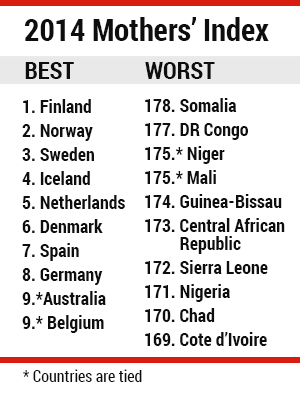
Chart from Save the Children.org.
The babies in the US system have bad time, in comparison to other rich counties. Poor or black babies suffer most in this system.
“U.S. infant mortality rates appear to be about 42 percent higher than the comparable country average.”
” the U.S. has about 66 per cent more neonatal deaths (deaths which occur less than 28 days after birth) than the comparable country average. In 2013, the neonatal death rate for blacks was more than twice the rate for whites”.
This is not just the opinion of this blog.
“A recent study by the well-respected U.S. Congressional Research Service (CRS) reports that the U.S. infant mortality rate remains among the highest of the 34 Organization for Economic Co-operation and Development nations. With a rate of almost seven deaths per thousand, the U.S. is 31st, according to the latest data, behind every European country, including some of the newest members of the European Union — Slovenia, the Czech Republic, Estonia, Hungary, Poland and Slovakia.
Thirty developed countries, all of which spend much less on health care than the United States, have lower infant mortality rates than we do. And the disparity within our nation is alarming.
……. The states of Mississippi and Alabama share a rate of 10 deaths per 1,000, compared to five deaths per 1,000 in Washington and Massachusetts. …..a huge and shameful gap remains between whites and blacks. In the United States, African-American women are more than twice as likely to lose their babies than are non-Hispanic white women.”
http://www.huffingtonpost.com/deborah-klein-walker/we-should-be-ashamed-why-_b_1473900.html
So it is very important that we are very wary of the US model.We want the NHS.
Many thanks to Carl Sanderson.
More in another post.
 Save Liverpool Women's Hospital