How the national NHS crisis affects Liverpool Women’s hospital

front-of-the-march All hospitals are suffering in this regime but Liverpool Women’s Hospital is a small trust. It is an efficient trust. There is no waste to cut out. Liverpool Women’s hospital could be a target for the “ninja” privatisers for some of its services including some of maternity services.

“Levels of efficiency – the Trust is recognised as an efficient provider of services and cannot continue to make the required levels of efficiency as a small specialist Trust”.http://www.liverpoolccg.nhs.uk/media/1245/lccg-governing-body-tuesday-8th-marc

The NHS  is facing a deliberately created shortage of funds.It faces a financial crisis and is heading  politically  towards a health insurance system.Such schemes leave many without care and offer an overall lower quality of care.Both finances and services are being run down to make full-scale privatisation acceptable to the public. It is far easier to get the public to accept losing a rundown, struggling service.

There are many quotes from different campaigners and organisations in the rest of this posting but please bear with us. It’s important to get the whole picture.

There is a proposed £22bn cut in NHS funding by 2020

https://www.hsj.co.uk/topics/finance-and-efficiency/nhs-england-reveals-breakdown-of-22bn-savings-plan/7004629.article

Virgin now has over 300 NHS contracts, and an active litigation department.

They have successfully prevented commissioners in Hull from allowing local GPs to run primary care services, and are facing a legal challenge from the local trust in Kent to their £128 million contract because of concerns about patient and staff safety. Meanwhile Monitor the regulator has now issued 114 private provider licences. The amount spent by local commissioners and trusts on non-NHS providers went up from £6.6 billion in 2009 to £10 billion in 2014. Industry analysts estimate the community services market to be worth £10bn-to £20bn annually. Trade unions have described “a surge in privatisation “. http://www.allysonpollock.com/?page_id=22

 Shortage of funds for the NHS is a major problem

 The Kings Fund is a think tank normally supporting right of centre politics. They said “Unaudited figures indicate that NHS commissioners (clinical commissioning groups and NHS England) and providers in aggregate ended 2015/16 in deficit for the second year running.”

“NHS providers and commissioners ended 2015/16 with a deficit of £1.85 billion – the largest aggregate deficit in NHS history.

Evidence suggests that, in recent years, mental health and community services providers have delivered relatively strong financial performance, which may have come at the expense of cuts in staff and risks to patient care.

Over the past two years the financial position of local commissioners has deteriorated sharply.

The scale of the deficit signifies a system buckling under the strain of huge financial and operational pressures.”

http://www.kingsfund.org.uk/publications/deficits-nhs-2016?utm_source=facebook&utm_medium=social&utm_term=socialshare

“Since 2010 the NHS budget has been almost static, while the UK population has increased by two and a half million and is predicted to grow by 440,000 a year over the next ten years, with a growing proportion living longer and having more  illnesses.I will not be deniedl

 So it is no surprise that NHS hospitals in England look likely to have overspent their 2015-16 budgets by £2.5bn and that even so care quality is now seriously declining.

There is also an acute shortage of GPs; CCGs are announcing cuts in the range of treatments they will pay for; waiting times for treatments, including for cancer, are rising; hospital wards are understaffed; beds are also unavailable because too many are occupied by patients who can’t be discharged because of cuts to social care provision. And Monitor has told seriously overspent trusts to ‘reduce their headcount’.

“The Kings Fund normally gives cautious support to government policy but on 7 April its Chief Executive, Chris Ham, finally broke with precedent and in effect told the government it was in denial in maintaining that services can be maintained and even improved when funding per patient is already too low and is planned to drop fairly rapidly over the next five years:

“NHS leaders have never felt this target was credible and are now wondering when the emperor will be seen to have no clothes. Many feel as if they are living in a parallel universe in which they are striving to sustain existing services in conditions of adversity while politicians promise improvements in care that cannot be delivered with available resources”. http://www.sochealth.co.uk/2016/05/16/cansimon-stevens-sustainability-transformation-plans-save-nhs/

Click to access CHPI-STP-Analysis.pdf

 The NHS needs much more money; Women’s health needs more money. Maternity needs more money.

 “the latest figures for 2015/16 show that nearly two-thirds of all trusts ended the year in deficit. Nearly three-quarters of trusts in deficit were acute hospitals”. (King’s Fund)http://www.kingsfund.org.uk/publications/deficits-nhs-2016?utm_source=facebook&utm_medium=social&utm_term=socialshare

If NHS spending simply level-pegged with our GDP, it would have £16bn more. We have fallen to 13th out of the original 15 EU states. But had we stayed at their average level, the NHS would be getting £43bn more, according to the King’s Fund’s chief economist, Professor John Appleby. Once sums get that big, it can be hard to grasp how transformative that would be.

https://www.theguardian.com/commentisfree/2016/jan/21/nhs-funding-guardian-kings-fund

As one of our face book comments put it “This is ridiculous. If the odd few had deficits, you could argue management of budget but when barely any trusts are operating within their budget you have to look at the budget. Clearly they are not getting enough money!!

Hit the NHS once with ongoing privatisation, then slap it with lack of essential money, then hit it with the Sustainability and Transformational plans

Nationally the scale of the pressure on the NHS is enormous

The first tension that becomes apparent on reading the Mandate, planning guidance

and other documents is the sheer enormity of the task facing the NHS and the

timescales within which it is expected to achieve it, a consequence in part of

the late publication of the Spending Review.” http://www.kingsfund.org.uk/sites/files/kf/field/field_publication_file/Planning-guidance-briefing-Kings-Fund-February-2016.pdf

The Liverpool  Clinical Commissioning Group

has posed the idea that the deficit at the Liverpool Women’s Hospital could be absorbed by one of the other trusts if the Liverpool Women’s Hospital became part of another hospital. But none of them have enough money.

Liverpool Women’s hospital has a deficit  mainly because the government does not pay enough for maternity care. The  maternity tariff is not enough to pay for sufficient  midwives to provide safe care, so the hospital will always have to run a deficit until that is solved.

Birmingham Women’s Hospital  is paid an enhanced tariff by its local Clinical commissioning Group because the hospital deals with complex cases, as does Liverpool Women’s Hospital  but without the additional tariff.

The women of England need to be campaigning for a much enhanced Maternity Tariff and the protection of our maternity services. This is not just a Liverpool issue it affects hospitals and midwife lead units across the country. In another post we will publish all the maternity hospitals and units under threat or already closed.


The NHS, starved of funds and damaged by privatisation

The National Health Service was founded to be

  • Free at the point of use

  • Paid for from general taxation

  • The best available medical and surgical service

  • Not for profit

  • A universal service, so virtually everyone used the same service.

  • Publicly provided. not provided for profit

  • Publicly accountable to us the taxpayers and patients

  • Comprehensive care: all the care we have come to expect.

As such for many years it was a huge success. In comparison with the healthcare systems of ten other countries (Australia, Canada, France, Germany, Netherlands, New Zealand, Norway, Sweden, Switzerland and USA) the NHS was found to be the most impressive overall by the Commonwealth Fund in 2014. 

The NHS was rated as the best system in terms of efficiency, effective care, safe care, coordinated care, patient-centred care and cost-related problems. It was also ranked second for equity. In 2014 the NHS was the worlds’ most efficient and most effective health service.

Adding to the problem, there are major cuts in social care budgets for Local Authorities, which have helped create a shortage of hospital beds. Convalescent hospitals and cottage hospitals which could have eased the strain were closed down.

There is a huge shortage of money in the NHS because of government policy.

An investigation by the Guardian and the campaign group 38 Degrees has revealed that the NHS at local level could be facing a financial shortfall of about £20bn by 2020-21 if no action is taken.

In an attempt to head off the crisis, NHS England has divided the country into 44 “footprint” areas, with each asked to submit a cost-cutting “sustainability and transformation plan” (STP).

https://www.theguardian.com/society/2016/aug/26/alarm-at-nhs-plans-for-closures-and-cuts-to-tackle-growing-deficit

Privatisation, restricting funds, and marketization are each different aspects of the Government’s project.

Under marketization (which started before the Health and Social Care Act), each hospital has to be financially independent and balance their own books. As different hospitals have to work together this means that hospitals have to reach legal and financial agreements with each other over shared services. This is not necessary unless the marketization model is used. This is itself a money waster.

These are troubled times for the NHS.

The NHS is being starved of Money, being subject to privatisation, to the break-up of services, to constant reorganisation and relentless political intervention from the government.

Current health expenditure in the UK is lower than many major economies. It was 8.46 per cent of GDP in 2013. This compares to 16.43 per cent in the USA, 11.12 per cent in the Netherlands, 10.98 per cent in Germany, 10.95 per cent in France, 10.40 per cent in Denmark, 10.16 per cent in Canada and 8.77 per cent in Italy.

The NHS now faces significant threats from privatisation, lack of funding and constant organisational changes.

The government believes in privatisation.

Jeremy Hunt, now the Health Secretary wrote a pamphlet called “Direct Democracy” advocating the privatisation of the NHS in 2005. Nick Seddon, health adviser to David Cameron and continuing in that role for Mrs May is an advocate of privatisation. Simon Stevens who is the senior executive officer in the NHS comes from the biggest private health provider in the USA and was previously an adviser to Tony Blair.

Marketization means getting the service ready for the market. so bits of it can be chunked up and put out to tender. This is now well advanced in the NHS. For example, if you live in Birkenhead or Chester and want an ambulance to take you to hospital you have to get an ambulance provided by West Midlands NHS. Other services across the country have been out sourced to G4S, subsidiaries of Virgin, and similar companies.

They all take a profit from the NHS. Nearly 40% of contracts have gone to ‘for profit’ contractors

vulturesPrivatisation is well under way

 Since 2010 the NHS is being offered to private, for profit, companies, to make money.

What are the problems of having private, for profit, providers in the NHS?

  • They take a lot of money out of the NHS by making a profit. They generally are able to do this by cutting wages or cutting corners or not having the expensive back up services the NHS has to provide
  • The private provider does not have to ensure continuity of provision. One private provider just gave up on running a hospital when it suited them “On the day inspectors gave the hospital they were running, the worst rating for ‘caring’ of any hospital in the country, the firm announced they were giving up and walking away, three years into the ten-year contract.” http://www.parliament.uk/business/committees/committees-a-z/commons-select/public-accounts-committee/news/report-circle-withdrawal-from-hinchingbrooke-hospital/
  • They take resources away from core providers and cherry pick less complicated cases. If a company bids to do 10,000 operations but only does the straight forward ones, the unit cost of the complicated ones is much higher to the remaining NHS cases. Recruiting staff to support only the very complicated cases gets harder
  • There are teams of talent scouts looking out for chances of privatisation and the NHS pays them to do it!

“Change is a combat sport.’ So said Strategic Project Team co-founder, Stephen Dunn, at SPT anniversary celebration. A “ninja” team of privatisers advise on how next to extend private involvement. This team is employed by different NHS bodies.

For six years, these ‘change-makers’ have been, in their words, ‘supporting the brave’ and ‘encouraging the timid’ to reform health services and hand them over to the private sector.

http://www.spinwatch.org/index.php/issues/lobbying/item/5756-the-ninja-nhs-privatisers-you-ve-never-heard-ofhttps://www.theguardian.com/society/2016/jan/26/nhs-watchdog-signed-off-doomed-750m-contract-despite-doubts

  • Training suffers in Privatisation.

  • Privatisers won’t match the training provided by the NHS. Initial and ongoing Training and supervision of staff can only match NHS standards with considerable investment, which will hit the profit levels.

  • Standards of care can slip because making a profit is core to the business
  • These companies lack the long developed monitoring procedures of the NHS so mistakes happen.
  • The government is now suggesting that private providers have access to all the NHS backup services including it appears the NHS insurance systems, yet be expected to charge only their upfront costs plus profit to the NHS.
  • Privatisation helps develop a two tier system; one treatment for the rich and one for the poor.
  • Private hospitals rely on the NHS for back up. Patients in the UK are frequently transferred from the small number of private hospitals to the NHS.

Privatisation began with the contracting out of ancillary services (the cleaners and others) under  the Thatcher government in the 1980s. This is blamed for major hospital infections.

She split the NHS into sections which bought services from other parts of the NHS who were called providers (purchaser-provider split). Then private companies could bid to provide the services instead of the NHS.

Then Tony Blair started a wave of PFI hospitals and private provision of clinical services. Major private companies were brought in to advise on the “commissioning” of NHS services. Commissioning means parceling services up so private, for profit, providers can bid for them

Trusts Each Hospital became a “Trust” and as such supposed to be financially independent. Trust are monitored, measured, judged and cut so a whole industry has grown up disciplining them. Many trusts have been starved of funds by the government.

Private, “voluntary” and community services, hived off from the big trusts are not treated in the same way at all.They are not measured in the same way and it is far easier to close a service once it has been hived off to a different provider.Private providers are treated much more easily, especially outside of hospitals general practice and mental health. There is less data collected, less oversight of the workforce and they do not have to meet the same rigorous targets. http://www.kingsfund.org.uk/blog/2016/08/community-based-care-elusive-strategy

In 2010 the Coalition Government’s Health & Social Care Act dismantled the underlying principles of the NHS, including “the duty of the Secretary of State to provide or secure the provision of health services” which has been a common and critical feature of all previous NHS legislation since 1946. http://www.38degrees.org.uk/page/content/NHS-legal-advice/

kings-fund

This diagram from the Kings Fund shows how  services are put up for tender.

So the proposals for the Liverpool Women’s hospital arein this vortex of change.

How the NHS started in Liverpool

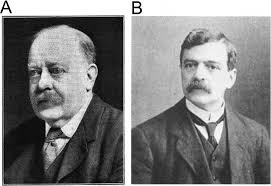
benjamin-mooreA Liverpool doctor first proposed a national health service and set up an organisation to work towards it being set up.

“Health in Liverpool was infamous and the hospitals for the poor were of a low standard. People either paid the bill for the doctors or they went without unless they went in the workhouse

A Liverpool doctor, Dr Benjamin Moore 1877-1922 first proposed the idea of a National Health Service “During his stay in Liverpool Moore became acutely aware of how badly the Poor Law Hospitals, which catered for the overcrowded slums of an industrial city, compared with the Teaching Hospitals; this applied particularly to staff to patient ratios.

 Appalled by the dire social conditions of poverty and destitution both locally and nationally, Moore wrote a 204-page book on the subject. 7 In it he made some practical suggestions for improvements in public health, many of which were well ahead of his time. He was particularly concerned with the high mortality for the United Kingdom of pulmonary tuberculosis (TB), which he called the ‘Great White Plague’, quoting figures of 56,080 for ‘the three kingdoms’ for the year 1908. 10 Moore concluded that, with the foundation of a new ‘National Health Service’ (his words) and the provision of segregation for infectious cases in sanatoria, the disease could be eradicated” 

Moore First proposed the idea of a National Health Service in 1910, in ‘The Dawn of the Health Age’.

Moore’s reforming instincts were characterised by his foundation, together with other radical colleagues, of the State Medical Association (SMSA) in 1912. The first meeting took place in Liverpool on 26 July: its aims embodied many of the founding principles of the National Health Service established by the Labour government on 1 July 1948″

 http://www.ncbi.nlm.nih.gov/pmc/articles/PMC3632847/

https://www.ncbi.nlm.nih.gov/pmc/articles/PMC3632847/

Many Liverpool Women, from Kitty Wilkinson on wards, have fought for health care in this city.

mary-bamber

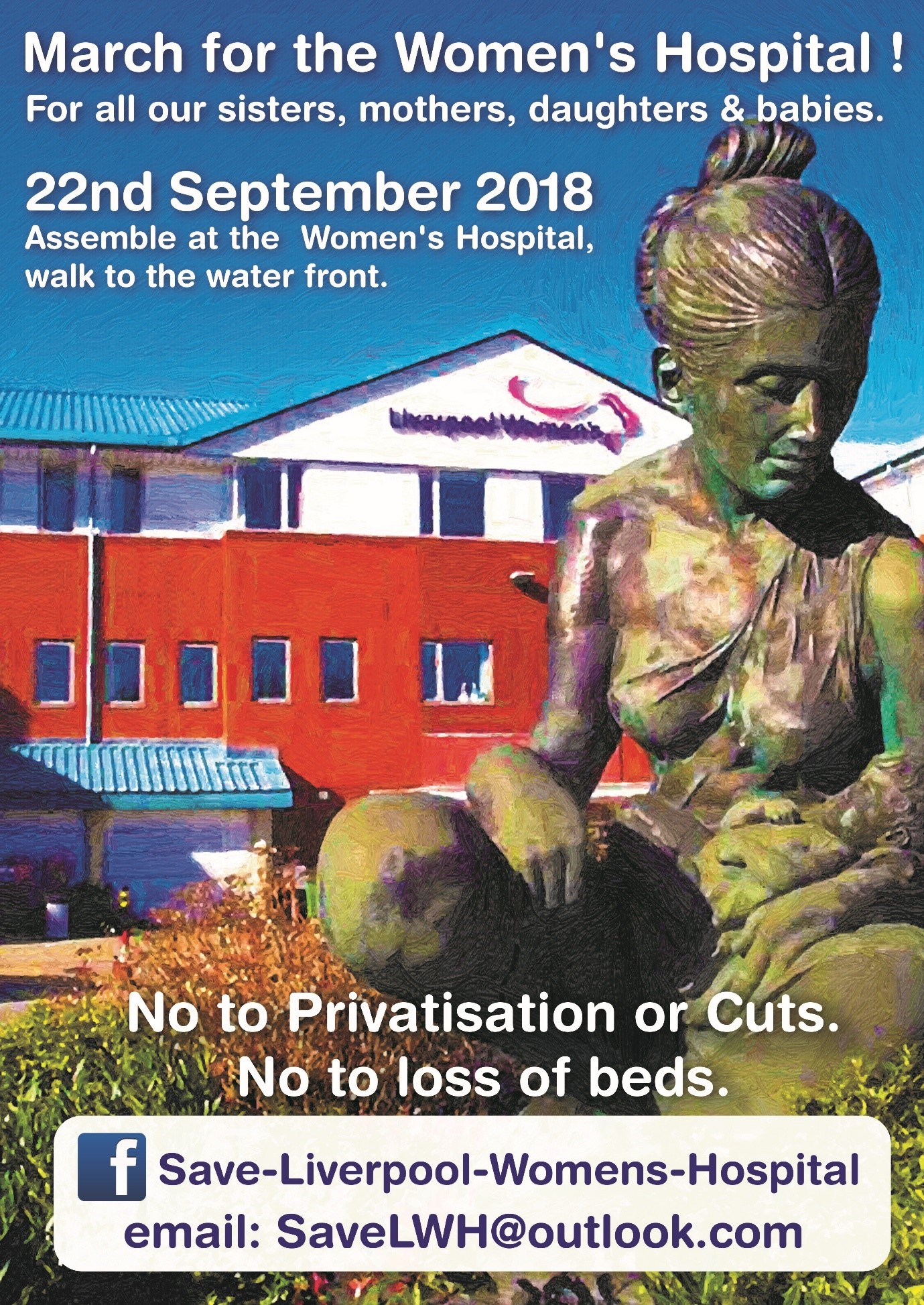
Mary Bamber (in the statue) 1874- 1938 was just one such campaigner. Mary was an organizer of trade unions amongst women in Liverpool, a Labour councillor for a while, she promoted the dissemination of contraceptive advice as a mechanism to empower women. Many other Merseyside women campaigned for baby clinics, maternity care and family planning. Thousands of women in organisations like the Cooperative Women’s Guild campaigned for universal health care. banner


It took until 1948 for the National Health service to open. We on Merseyside know how to endure and how to campaign. Join us and we can save this hospital and turn the tide of the attacks on the NHS.


Save the neo natal services. Keep the babies near their mums.

Neo natal services

A dad pointed to his well-beloved son and said.” He would not be here if it were not for that hospital”.

Liverpool Women’s Hospital is held in the hearts of many families, similarly grateful for the care of the neo natal unit. The public fund raising for it shows how much it is respected.  Liverpool Women’s Hospital cared for 1,091 babies in the neo natal unit.

The report to Liverpool CCG said

“• Current neonatal facility was under size for current and future needs.”

There are problems faced by the neo natal unit

  1. There is a dire national shortage of neo natal nurses such that not all the beds can be used at present
  2. New policies mean when each bed is replaced each bed needs more space. There is though no lack of space in Liverpool Women’s hospital. The investment to upgrade this unit is required.

For the health of baby and mother, physical and mental, babies and mothers need to be together when the baby is poorly.When babies need surgery to save their lives, they are transferred quickly back to the Liverpool Women’s hospital so they are close to their mums

Babies born at the Liverpool Women’s Hospital, and those born at other hospitals around the region, are transferred to Alder Hey Hospital for specialist neonatal surgery. We have been told that there is not enough room at the new Alder Hey to  take on all Neo natal beds at Liverpool Women’s Hospital.

Wherever maternity is located, seriously ill babies will need to be transferred to Alder Hey. Even if maternity was located at Alder Hey, then women would still, in emergency, need to be transferred to adult acute hospitals

Moving the neo natal unit to Alder Hey without the mums would be unacceptable

Why neo natal babies need their mums

Bonding between baby and mother is intensely important for long term mental health and well being of both Mother and Baby. Bonding with other care giving family members matters too.

We use the evidence in this article around mother’s milk to illustrate how mum’s and babies are a linked immediately after birth. There are also hormonal exchanges and stimuli between mother and baby that mirror the more easily measured link to differences in mother’s milk.

New born babies needing support from the neo natal unit need to be near their mums for both the short and long term well being of both. The intense relationship between a new baby and the mum, in whose body the baby grew, is fundamental.

Premature babes need their own mothers milk if possible. Mothers milk for premature babies is different from mother’s milk for full term babies.

The NHS advises “breast milk will help their vulnerable tummy to mature and fight infection. Breast milk is easier for their stomachs to digest than infant formula. It also contains hormones and growth factors that help your baby grow and become stronger.”

La leche league says “The milk produced by the mother of a pre-term infant is higher in protein and other nutrients than the milk produced by the mother of a full term infant. Human milk also contains lipase, an enzyme that allows the baby to digest fat more efficiently

“Mothers of premature babies produce breast milk that is slightly different in composition, at least for the first several weeks, and this difference is designed to meet your baby’s particular needs. The premature milk is higher in protein and minerals, such as salt, and contains different types of fat that she can more easily digest and absorb. The fat in human milk helps to enhance the development of the baby’s brain and neurologic tissues, which is especially important for premature infants. Human milk is easier for her to digest than formula and avoids exposing her immature intestinal lining to the cow’s milk proteins found in premature infant formula. Premature babies who are breastfed are less likely to develop intestinal infections than are babies who are formula-fed. The milk you produce in the first few days contains high concentrations of antibodies to help your baby fight infection. Even if your baby cannot breastfeed yet, expressing breast milk from the beginning will ensure that your milk supply is maintained until your baby is able to nurse.” https://www.healthychildren.org/English/ages-stages/baby/breastfeeding/Pages/Providing-Breastmilk-for-Premature-and-Ill-Newborns.aspx

This is the quote from the engagement documents..

“Staff would need to be used differently i.e. Level 2 High Dependency Units should be co-located with Level 3 Intensive Care Units” from report to CCG

There is though already a high dependency level 3 intensive care for babies in the Hospital. It is already co-located

We call for an upgrade on the neo natal unit at the Liverpool Women’s Hospital, and for improvements nationally and locally in recruitment and training nationally of neo natal nurses.

baby-foot
new born needing care

Support for mums and dads. It would be helpful if there was more accommodation for mums and dads at the neo natal unit.

Sharing services between hospitals

The NHS now has many specialised hospitals. On Merseyside, in the North West and nationally there are hospitals that provide specialist services and patients transfer between them. For example, the Walton Centre provides care and treatment for a range of conditions affecting the brain or spine, Broadgreen Hospital provides “the best cardio thoracic care” The Royal Liverpool provides trauma and orthopaedic. Clatterbridge traditionally supported cancer care.

Having  specialised Hospitals presumes patients will transfer between hospitals.

This sharing of resources seems sane and sensible.

There is a point though, when a specialised Accident and Emergency service an hour away is less use than a less specialised one nearer to the patient. This is equally true for maternity hospitals. Accessibility balances against specialism. There is a time limit on effective emergency intervention in childbirth.  Women are finding this across the country  when local maternity hospitals and units close.

However, this tension between accessibility and specialism has become knotted into the marketization and privatisation policies of recent governments. Each hospital has been expected to balance its own books and to be a separate entity.

Services such as blood and imaging can well be provided jointly by a group of hospitals, so long as there is a service adequate to the needs of all the hospitals involved. But this is complicated by commissioning and pricing policies. In reports on the Liverpool Women’s Hospital we are told that bloods and imaging are  a problem.

To what extent is the problem caused by the location and to what extent by delays within the Haem /Path service? Moving closer would not solve the problem if there is a problem in the service at the base hospital. (We care also for our families treated at Liverpool Royal, so this matters)

We have asked why is this a problem? If it is a matter of a service level agreement between the hospitals? If it is not, what is it? We have been assured that the service as it is, is safe and adequate

We believe this needs sorting out both for Liverpool Women’s and for the Royal Liverpool Hospital;

“• Haematology /Pathology are not available on the Liverpool Women’s site. The hospital uses services a mile away at the Royal.”

  • Complex Health Conditions – lack of diagnostics i.e. no CT scanner or MRI on Liverpool Women’s site.

 There are mobile CT and MRI scanners. It would be cheaper to rent those than to move a whole hospital. Permanent services should be added if required.

What is the turnaround time for diagnostics at the Royal? Would they improve with 50,000 or 62,000 more patients if the Liverpool Women’s moves there?

We are all in favour of increased resources where necessary. We are not in favour of breaking up a good hospital.


Our hospital, as it is, is very good for babies and nationally and internationally recognised as such.

baby-friendly-picturebaby-friendly-icon

Liverpool Women’s Hospital gained the prestigious Baby friendly level 3 award from UNICEF.This is an international award for the care of babies.

“The UNICEF UK Baby Friendly Initiative provides a framework for the implementation of best practice by NHS trusts, other health care facilities and higher education institutions, with the aim of ensuring that all parents make informed decisions about feeding their babies and are supported in their chosen feeding method. Facilities and institutions that meet the required standards can be assessed and accredited as Baby Friendly..”

It is important to remember this when suggestions are made that other, for profit or voluntary organisations are better placed to provide post natal and early days care

We know that many women feel they do not get enough support in the key early days and weeks. We know many  mothers reluctantly give up breast-feeding for lack of support in the difficult early  days and weeks of breast-feeding.

We support greater care for women after giving birth and in the early days of babies lives but this will require significantly more midwives to be employed and to be fully funded by the Government.

LIVERPOOL WOMEN’S NHS FOUNDATION TRUST ANNUAL REPORT & ACCOUNTS 2015 /16 says

“CQC {Care Quality Commission} Maternity Survey: we were ranked amongst the very best maternity service providers in the country by our healthcare regulators, the Care Quality Commission, receiving one of the best scores in the country in a national survey of maternity services. The survey particularly praised the Trust’s focus on supporting mothers with breast-feeding, ranking Liverpool Women’s 2nd in the country.”

https://www.gov.uk/government/uploads/system/uploads/attachment_data/file/541943/LIVERPOOLWOMEN_Annual_Report_and_Accounts_2015-16.pdf

We reject suggestions in the Maternity Review that post  natal care should be diverted from the NHS. We want care from fully trained professionals linking into peer support from experienced breast-feeding mums ans from those who have good reason to bottle feed

Liverpool Women’s Hospital hosts a peer support group for breast feeding which is popular.

These photos were posted to Facebook after facebook banned a breast feeding photo.

breastfeeding_mums.

Neo Natal Care at Liverpool Women’s hospital

Neo natal services

A dad pointed to his well-beloved son and said.

baby-foot
new born needing care

“He would not be here if it were not for that hospital”.

Liverpool Women’s Hospital is held in the hearts of many families, similarly grateful for the care of the neo natal unit. The public fund raising for it shows how much it is respected.  Liverpool Women’s Hospital cared for 1,091 babies in the neo natal unit.

The report to Liverpool CCG said

“• Current neonatal facility was under size for current and future needs.”

There are problems faced by the neo natal unit

  1. There is a dire national shortage of neo natal nurses such that not all the beds can be used at present
  2. New policies mean when each bed is replaced each bed needs more space. There is though no lack of space in Liverpool Women’s hospital. The investment to upgrade this unit is required.

For the health of baby and mother, physical and mental, babies and mothers need to be together. They need to be back together as soon as possible when babies need surgery to save their lives.

Babies born at the Liverpool Women’s Hospital, and those born at other hospitals around the region, are transferred to Alder Hey Hospital for specialist neonatal surgery.

Wherever maternity is located, seriously ill babies will need to be transferred to Alder Hey. Even if maternity was located at Alder Hey, then women would still, in emergency, need to be transferred to adult acute hospitals

Moving the neo natal unit to Alder Hey without the mums would be unacceptable

Why neo natal babies need their mums

Bonding between baby and mother is intensely important for long term mental health and wellbeing of both Mother and Baby. Bonding with other care giving family members matters too.

We use the evidence around mother’s milk to illustrate how mum’s and babies are a linked immediately after birth. There are also hormonal exchanges and stimuli between mother and baby that mirror the more easily measured link to differences in mother’s milk.

New born babies needing support from the neo natal unit need to be near their mums for both the short and long term well being of both. The intense relationship between a new baby and the mum, in whose body the baby grew, is fundamental.

Premature babes need their own mothers milk if possible. Mothers milk for premature babies is different from mother’s milk for full term babies.

The NHS advises “breast milk will help their vulnerable tummy to mature and fight infection. Breast milk is easier for their stomachs to digest than infant formula. It also contains hormones and growth factors that help your baby grow and become stronger.”

La leche league says “The milk produced by the mother of a pre-term infant is higher in protein and other nutrients than the milk produced by the mother of a full term infant. Human milk also contains lipase, an enzyme that allows the baby to digest fat more efficiently

“Mothers of premature babies produce breast milk that is slightly different in composition, at least for the first several weeks, and this difference is designed to meet your baby’s particular needs. The premature milk is higher in protein and minerals, such as salt, and contains different types of fat that she can more easily digest and absorb. The fat in human milk helps to enhance the development of the baby’s brain and neurologic tissues, which is especially important for premature infants. Human milk is easier for her to digest than formula and avoids exposing her immature intestinal lining to the cow’s milk proteins found in premature infant formula. Premature babies who are breastfed are less likely to develop intestinal infections than are babies who are formula-fed. The milk you produce in the first few days contains high concentrations of antibodies to help your baby fight infection. Even if your baby cannot breastfeed yet, expressing breast milk from the beginning will ensure that your milk supply is maintained until your baby is able to nurse.” https://www.healthychildren.org/English/ages-stages/baby/breastfeeding/Pages/Providing-Breastmilk-for-Premature-and-Ill-Newborns.aspx

This is the quote from the engagement documents..

“Staff would need to be used differently i.e. Level 2 High

Dependency Units should be co-located with Level 3 Intensive

Care Units” from report to CCG

There is though already a high dependency level 3 intensive care for babies in the Hospital. It is already co-located

We call for an upgrade on the neo natal unit at the Liverpool Women’s Hospital, and for improvements nationally and locally in recruitment and training nationally of neo natal nurses.


Support for mums and dads. It would be helpful if there was more accommodation for mums and dads at the neo natal unit.

Liverpool Women’s Hospital is a Safe Hospital

Liverpool Women’s Hospital is a safe place.

This is critically important. Reports in 2015 said that 2 out of 3 hospitals did not reach this target. Liverpool Women’s hospital did.

How are hospitals monitored for safety? Each hospital has a nationally approved system for recording how safe it is. Every hospital is monitored nationally. “We look at more than 150 different sets of data to help us to monitor NHS acute trusts.”

http://www.cqc.org.uk/content/monitoring-nhs-acute-hospitals

“As stated by the CQC, (Care Quality Commission) services provided by Liverpool Women’s are safe and of good quality” http://www.liverpoolccg.nhs.uk/media/1245/lccg-governing-body-tuesday-8th-march-2016-papers-pack-website-version.pdf

Liverpool Women’s Hospital trust report from May 2015 is here. The major concern recorded was about problems in whistle blowing procedures.

http://www.cqc.org.uk/sites/default/files/REP_105v3_WV.pdf

Never Events

‘Never Events’ are serious incidents that are wholly preventable, as guidance or safety recommendations that provide strong systemic protective barriers are available at a national level, and should have been implemented by all healthcare providers. Each ‘Never Event’ type has the potential to cause serious patient harm or death. However, serious harm or death is not required to have happened as a result of a specific incident for that incident to be categorized as a ‘Never Event’.

‘Never Events’ have to be reported to the board of the trust, to the Clinical Commissioning Group and nationally

‘Never Events’ include incidents such as:

  • wrong site surgery
  • retained instrument post operation (leaving something inside a patient during an operation)
  • wrong route administration of chemotherapy

https://www.england.nhs.uk/patientsafety/never-events/

Each ‘Never Event’ is studied in detail. The last one we have been able to find for Liverpool Women’s Hospital was this one (which in the end was not classed as a ‘Never Event’), a surgery error and administering insulin in error);

“The Never Event reported by Liverpool Women’s (as detailed in the March 2016 Performance Report) has since been reclassified/re-graded as a Serious Incident. After reviewing the Never Event guidance Liverpool Clinical commissioning Group reached agreement with Liverpool Women’s Hospital that the incident did not meet Never Event criteria and should therefore not be subject to the counting process”

We cannot find, in the records we have studied, a “Never” event linked to transporting women from the Liverpool Women’s Hospital to the local acute hospital.

http://www.liverpoolccg.nhs.uk/media/1353/lccg-governing-body-12-april-2016-agenda.pdf

https://www.england.nhs.uk/patientsafety/wp-content/uploads/sites/32/2013/12/provisional-ne-data-jan16.pdf

However, hospitals can have one-off or incipient problems

There have previously been incidents at Liverpool Women’s hospital, one of which may well still be impacting on the women concerned, arising from the work of a particular surgeon. This certainly is affecting the premium for insurance that the hospital faces. We do not ignore or excuse such mistakes, but wish to make it clear that when incidents happen they are recorded and investigated.

There are also national procedures for reporting Serious Incidents, the next most serious event after a ‘Never Event’. When a serious incident is reported a Root Cause Analysis is undertaken.

It would be extremely serious not to report a Serious Incident.

Campaigners have raised the issue of the hospital being described as being unsafe directly with the board and had it confirmed that the hospital is safe and good. this is also asserted in many publications.

crowd-on-the-grass
The start of the September 25th Demonstration to save Liverpool Women’s Hospital

Dark propaganda about the hospital not being safe is untrue