Tag: Women’s health

A broken engagement.

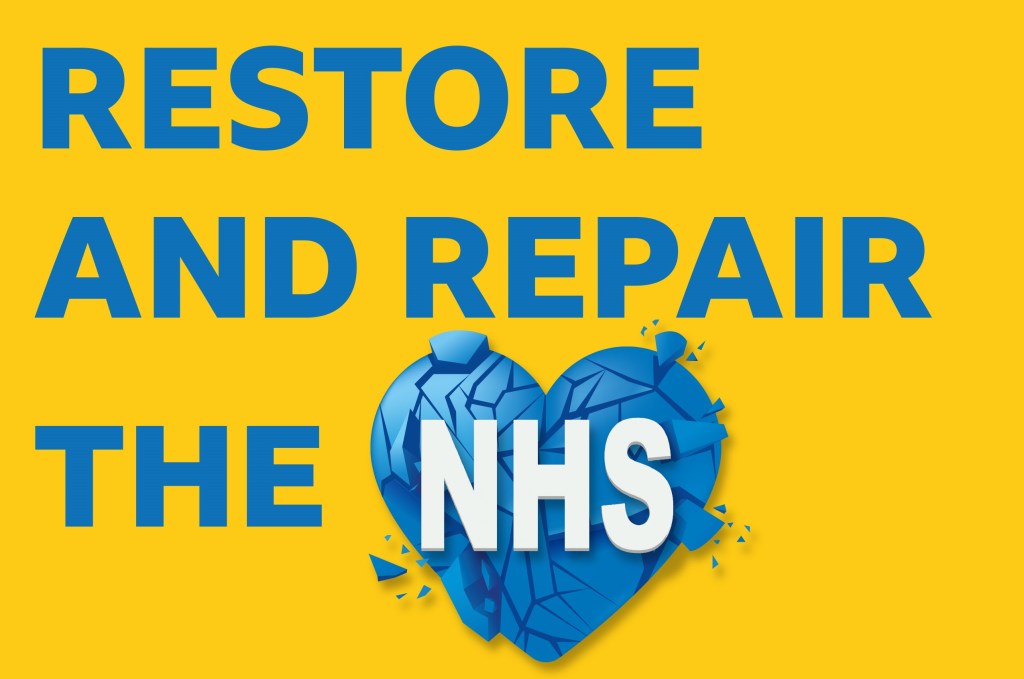
We fight for Liverpool Women’s Hospital and to Restore and Repair the NHS.

Day by day, the NHS provides services for patients often with great skill and good humour. Despite years of cuts, the NHS survives but it cannot provide all services we need because of austerity and the privatisation agenda.

We are in grim times, but the fightback is growing. Our petition has reached 76,000 signatures. We have had support to pay for our leaflets and meetings. People who spoke at the engagement meetings unanimously supported keeping Liverpool Women’s Hospital. Not a single member of the public spoke in favour of closing it, or dispersing its services. We have great support from the public, and two Liverpool MPs, Kim Johnson and Ian Byrne, have helped this week. The same day as the ICB meeting and the first joint board meeting of LUHFT and Liverpool Women’s Hospital, Kim Johnson raised the issue in Parliament. Ian Byrne sent a great letter to the Engagement Team, saying “NO!”.

However, the process decided by NHS bureaucrats rolls on. We can stop it if we organise.

The many people who have said “that will never happen” should join the fight back.

Two quotes show the seriousness of the threat we face

At the October 9th meeting of the ICB Fiona Lemens, leading the process said, introducing the engagement, “It’s too early in the process to speculate about how services might look, in the future at the Crown St. site and across the city, because we’ve not started that design work yet, but what we can say is that we need that hospital at Crown St. The things that we could consider that we currently need space for would be out patients, day case procedures. We’ve invested in a CDC, we need that diagnostic capacity for the patients in Liverpool, and this is an excellent building to provide that from and we are absolutely committed to NHS delivered services being delivered from that site, and there are no plans to discuss any other forms of services going in there.

So, Fiona, where will our babies be born? Where will the women of Liverpool receive their gynaecology care? Where will fertility go? Where will genetics go?Where will the Bradford clinic go?

The website for Liverpool Women’s Hospital says about the second strand in this threat to the integrity of the Women’s Hospital, the largest maternity facility in the country :

From 1 November 2024, Liverpool Women’s NHS Foundation Trust became part of NHS University Hospitals of Liverpool Group (UHLG). UHLG has been created through the coming together of Liverpool University Hospitals NHS Foundation Trust (LUHFT) and Liverpool Women’s NHS Foundation Trust (LWH).

Please note, Liverpool Women’s Hospital is now represented on the Group Board of Directors of NHS University Hospitals of Liverpool Group (UHLG). Details of past Liverpool Women’s NHS Foundation Trust public board meetings can still be accessed via the links below.

On Thursday 28th November 2024, two crucial meetings happened. These meetings were:

1) The ICB meeting which received the first report of the Engagement process to decide the future of the Liverpool Women’s Hospital, discussed the winter crisis, and how to handle their lack of adequate funds. We, as members of the public, asked questions. We were told that the first response to the engagement would be reported in February or March. They are paying £24,000 to a company called Hood and Woolf to produce the report on the engagement.

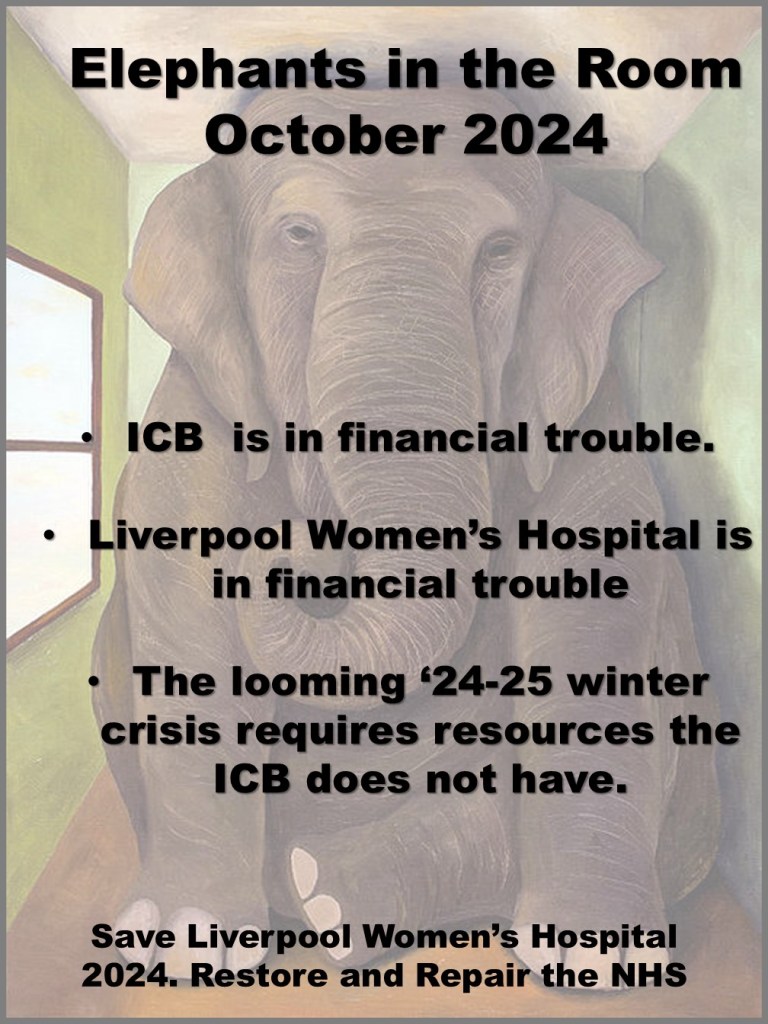
We also learned of the grim financial position, and the situation regarding the terrible winter crisis, likely to be worse than last year. There will be a full report on this in a later post.

2) The inaugural meeting of a new joint committee, which has the delegated powers of the boards of Liverpool Women’s Hospital and the Liverpool University Hospital Foundation Trust (which covers the Royal, Aintree and Broadgreen). We fear that maternity will be treated as badly as maternity has been treated in so many other big acute hospitals, leading to major problems and major enquiries.

This joint committee of LUHT and LWH, also reported that the winter crisis is starting (staff tell us it started a while ago). They also discussed services that might be moved to, or from, the Crown Street site although such moves were already a fait acomplis, and the integrity of a Women’s Hospital seemed to be already lost.

We think it’s wrong that while the ICB follows a protocol to consult on service changes, the merging of the hospitals had no consultation whatsoever, and precious little discussion at the Liverpool Women’s Hospital Board. We were told at the engagement meetings, that merging hospitals does not need public consultation. This huge change was just ‘steamrollered’ through. Merging the Women’s is just the start. The intention is that the specialist hospitals in Liverpool, the Clatterbridge Centre, the Walton Centre and Broadgreen Heart and Chest, will be pulled into an even bigger merger. In contrast to LUHFT, the specialist hospitals have been funded nationally and do not share the financial crises facing LUHFT. It seems odd to us that such major reconfigurations are not considered to require public consultation, while (albeit cruel) changes to such things as celiac prescriptions do. At the ICB it was announced that they are going out to public consultation on whether prescriptions should still be available for gluten-free products for celiacs (A Gluten-free loaf can cost as much as £3.99.) We think this cut is terribly wrong for people already hard up, and struggling for enough food. Many celiacs don’t ask for prescriptions but the damage of this policy will hit the poorest hardest. The Celiac prescriptions cut is yet another cut amongst many – but surely, if this merits consultation, so must merging hospitals?).

Our campaign wants a well-staffed, well-funded Women’s Hospital on the Crown Street site. We want maternity to be funded and staffed well across the UK. We say enough of maternity scandals, enough of birth trauma, and enough of closures and cuts. We say this for all our mothers, daughters, sisters, friends, lovers, and babies. So many other countries do so much better than the UK in maternity and infant mortality. Once we were up with the best but austerity has damaged the service costing many of our babies’ and mothers’ lives, and women’s health.

We have 76,000 signatures on our petition to save Liverpool Women’s Hospital. People sent in many postcards opposing the idea of closure, or dispersal of services as set out in the engagement.

You can read more about the “engagement” process here from Greg Dropkin of Keep Our NHS Public.

We want to restore and repair the whole NHS, and to stop the relentless”Winter Crises”.

The NHS was founded to provide:

A national public service providing healthcare for all, free at the point of need, government-funded, publicly run, and publicly delivered, with well-qualified staff. For decades it worked very well, being declared the best health service in the world. Now it is seriously damaged and must be repaired.

The NHS came from decades of campaigning by working-class women, like the Cooperative Women’s Guild, and the Trade Unions, not from the rich and powerful. If we want to keep it we too fight for it.

The NHS has seen reorganisation after reorganisation in favour of the American model, most recently the Integrated Care Model. The ICB for our area is called Merseyside and Cheshire ICB. This body controls the allocation of money to the hospitals and policy over cuts. Cheshire and Merseyside ICB, and other ICBs simply do not have enough money to function properly. They were conceived as part of a hospital closure project, to reduce the costs of the service and make it more acceptable to US health corporations take-overs. There are other hospital closure plans still going on, as well as the threat to Liverpool Women’s Hospital.

The ICB conducted an “engagement” with the public about the future of Liverpool Women’s Hospital. It was not well publicised but did include four in-person meetings for which they asked people to register. In all four meetings, their proposals were roundly rejected, but the attendance was small, very little effort was put into getting real engagement. We will write more about this in another post. None of the meetings were at a time suitable for working mothers to attend.

What you can do to help

Help with the campaign distribute leaflets and help getting the petition signed.
Raise it with your trade union, or other organisation

Tell your MP and councillor Liverpool Women’s Hospital must stay at Crown Street as a full women’s service run by experts in women’s health, in maternity and related services. Tell your MP that hospitals must cooperate not compete or merge.

Tell them that the winter crisis is unacceptable. Tell them that problems including finance, staffing, buildings and equipment must be sorted and the drain into private companies must stop.

Above all talk to people about this issue

We don’t deserve 34 years of ill health.

Women’s Health matters.

Liverpool and Merseyside need a Women’s hospital, focussing on improving the lifetime health of women from the womb to the grave. We need a health service that recognizes the needs of women. We must improve the lives and health of women in this city. A well funded hospital with a committment to the health of women could lead the way for other hospitals. This hospital could link up others with the aim of improving women’s health across the nation. Women spend more of their life in ill health than men do.

This is not, in any way, acting against men

As we come marching, marching, we battle too, for men,
For they are women’s children and we mother them again
Our days shall not be sweated from birth until life closes, 
Hearts starve as well as bodies, give us bread, but give us rose
s”.

 It doesn’t have to be this way.

Women tend to look after their health more than men do, so the difference is not from risk taking or deliberately unhealthy lives, even if some do take risks. Though women live longer than men do, they live in worse health for more of their lives. Women from poorer areas, like Liverpool, endure 34 years more ill health (You would get less for murder!) than women from more affluent areas. Women from poorer areas have shorter lives, with more illness and this is getting worse. Within Liverpool, life expectancy is 10.2 years lower for men and 8.3 years lower for women in the most deprived areas of Liverpool than in the least deprived areas of the city. That’s just within the city. The differences with wealthy areas of the country is even greater

 ‘The gap in life expectancy between women living in the most and least deprived areas has also widened, falling for women in the most deprived areas and continuing to rise for those in the least deprived areas.”  Professor Danny Dorling

It does not have to be this way, This is a long term Governmental choice to make the poor pay for their policies. Even the UN has described it with horror Each person who speaks out against this impoverishment begins to turn this terrible tide.

In 2015 a World Health Organisation Report showed that Life Expectancy of women in the UK was is the second lowest in western Europe. The UK is ranked 14 out of 15 nations; we need a focus on women’s health.

Healthcare is just one way we can help women’s health. We have also to fight low pay ( especially for mothers ) poverty, expensive and poor quality childcare. bad housing, pollution, stress and abuse. But in this storm what we have, we hold; we will not surrender the benefits earlier genserations have won for us.

There are many aspects of health treatment that are specific to women.

Teenagers still have major problems with periods and acne, some very serious problems. No contraception is perfect and some have side effects.

Mesh, breast implants have been the source of many scandals caused by profit seeking at the expense of women’s health.

Mental health is a major health issue for women. The same numbers of women and men experience mental health problems overall, but some problems are more common in women than men, and vice versa. Twice the percentage of women in work suffer (or admit to) mental health issues than men do. Some mental health issues are related to hormones and reproduction, some to poverty

Endometriosis1.5 million women suffer from endometriosis but it takes 7 years on average to get a diagnosis. That’s one in ten women in debilitating pain.

Heart disease is a major killer of women, more so even than the horrible breast cancer that ends the lives of so many of our sisters.

Heart Disease, Cancer and Stroke are all diseases with distinct female issues.

We need research and focussed treatment. We need the research done at Liverpool Women’s hospital to be expanded. This hospital would give a great case for significant increases in investemnt if we can win the battle to get a government that respects its people.

We are in a politically driven storm of cuts, privatisation and destruction in the NHS. Full details can be found here. Having established the Internal market the privateers have now decided to privatise the service at the regional level. To garner the greatest profits for the large companies operating at this large scale, the NHS are bringing some services back in-house, so it will be more profitable from the very big US health care companies.

We are short of beds, short of doctors, nurses, midwives, and the myriad of professionals working in the NHS and the devoted ancillary staff. Poverty wages makes women ill, yet outsourced companies pay these wages to women and men who work in the NHS. Let’s hope the ancillary workers keep on fighting for better pay and conditions. They will have healthier lives and use the NHS less.

What we have we hold!

We must defend Liverpool Women’s Hospital and fight for more, much more investment in health. This is the sixth richest country on planet earth. There is wealth aplenty to fund the NHS.

What causes this extended ill health in women?

Poverty plays a part. Drug research based on men not women plays a part, the level of importance given to women’s health and unthinking sexism, also play a part. So do the physical facts of women’s hormones and of childbearing capacity, whether or not we have children.

We have specialist hospitals for many conditions; a hospital for women is deeply needed.

For all our mothers, sisters, daughters, friends, and lovers, we need a women’s hospital!

It’s for the babies too!

For each and  every one of our precious babies, we need an excellent world-class maternity hospital  In Liverpool. We must defend what we have and insist on improving it.

Liverpool’s infant mortality rate is at its highest level since 2010. ”Some 5.2 infants died per 1,000 live births between 2014 and 2016, significantly higher than the national average of 3.9 deaths per 1,000 births.”

IMR ( Infant Mortality Rate ) is used internationally as an indicator of the comparative wellbeing of nations. It is sensitive both to the socio-economic conditions affecting women of childbearing age and children; and the quality and accessibility of services for families. IMR continues to improve in most rich countries, with recent data showing that in countries such as Japan and Finland the IMR has dipped to only 2 per thousand.(3) In Liverpool, where some of us work, the infant mortality rate is now an unacceptable 6.8 – more than twice as high as London’s average.

In 2017 1 in every 225 births ended in a stillbirth. For every 1,000 babies born, 4.2 were stillborn, according to the Charity Tommy. Other babies die shortly after birth and still more have significant birth injuries.

 …mortality for the poorest infants in the UK is rising ( getting worse) every year since 2011. This is despite mortality continuing to improve in all other European countries, which often still benefit from very rapid improvements in health no longer seen in the UK.  The most recent rise in premature deaths is now leading to a situation where overall life expectancy could begin to fall for all groups. It is already falling in the poorest areas and for the poorest groups.

The Nuffield trust says “The UK has made less progress in reducing stillbirths and neonatal and infant deaths over the last two decades than many other developed countries”.

Sadly Liverpool Women’s Hospital has made saving on maternity this year despite this death rate “Maternity activity has reduced as anticipated and is expected to have deliveries in the region of 8,200 (2017/18 8,600). The service has reduced costs in terms of pay and non-pay and has also reviewed service income and costs as part of the “right size project” .

Is this the response we want to the news of increased deaths of babies? Surely the extra capacity could support women after birth far more effectively than they are supported now.

The NHS is not a democracy, nor is it socially or communally responsible. The NHS answers to Simon Stephens and to the requirements of their grand plans and privatisation. But camapigning does make some difference.

The big companies involved in the NHS have more and more say. Their purpose is profit.

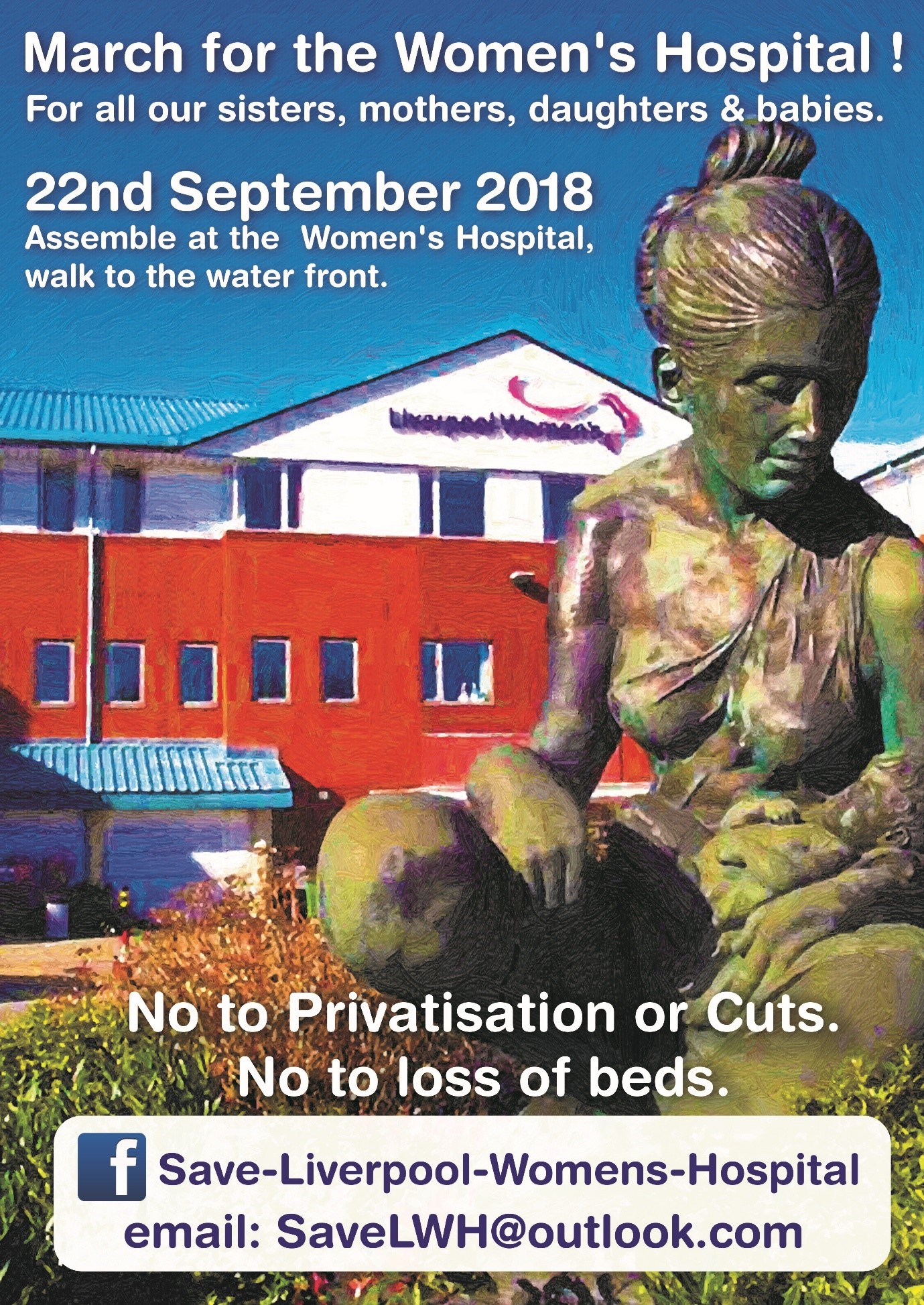
The future of the  Liverpool Women’s Hospital is still unclear.Save Liverpool Women’s Hospital  campaigns for a fully funded NHS and for Liverpool Women’s Hospital to be upgraded on the Crown Street site.

The current management still favours a move that would cost at least £100 million. The April Board meeting said they were going to hold a clinical summit on this issue this summer. We call for a community summit too. The wishes of more than 50,000 petitioners cannot be ignored.

Liverpool Women’s hospital is inadequately funded by the NHS, as are many hospitals. Aintree, for example has major financial problems. There are underlying additional problems at Liverpool Women’s.

  1. The maternity tariff is still inadequate.
  2. The funding does not reflect the very specialist work that the hospital does. Birmingham CCG does recognize this for their women’s hospital, but not Liverpool.
  3. The NHS insurance system is difficult for all obstetric providers but Liverpool has a historic (and disgraceful) case, significantly inflating premiums.
  4. Most of these problems stem not just from inadequate funding, real though that is, but from the “Internal market” imposed on the NHS by wave 2 privatization.

The Liverpool Women’s Hospital makes decisions within the policies of the  Merseyside and Cheshire Sustainability and Transformation Plan (STP). This plan describes extreme reductions in spending.

It is our understanding that the budget of Liverpool Women’s Hospital is kept in balance by a subsidy from Transformation funding,“The control total now assumes receipt of £6.8m Provider Sustainability Funding (PSF) (including a £3.2m of bonus and incentive).which is dependent on the plan to move. Somehow we are meant to believe that the move will save money.

LWH also has to cope with damaging decisions like the withdrawal of bursaries from midwives and nurses training, and an inadequate number of training places for doctors in the whole country. Staff are consequently overworked and underpaid.

Women in the UK as elsewhere have a right to a long healthy life. But we are going to have to fight for it.