Tag: healthcare

Liverpool Women’s Hospital Update

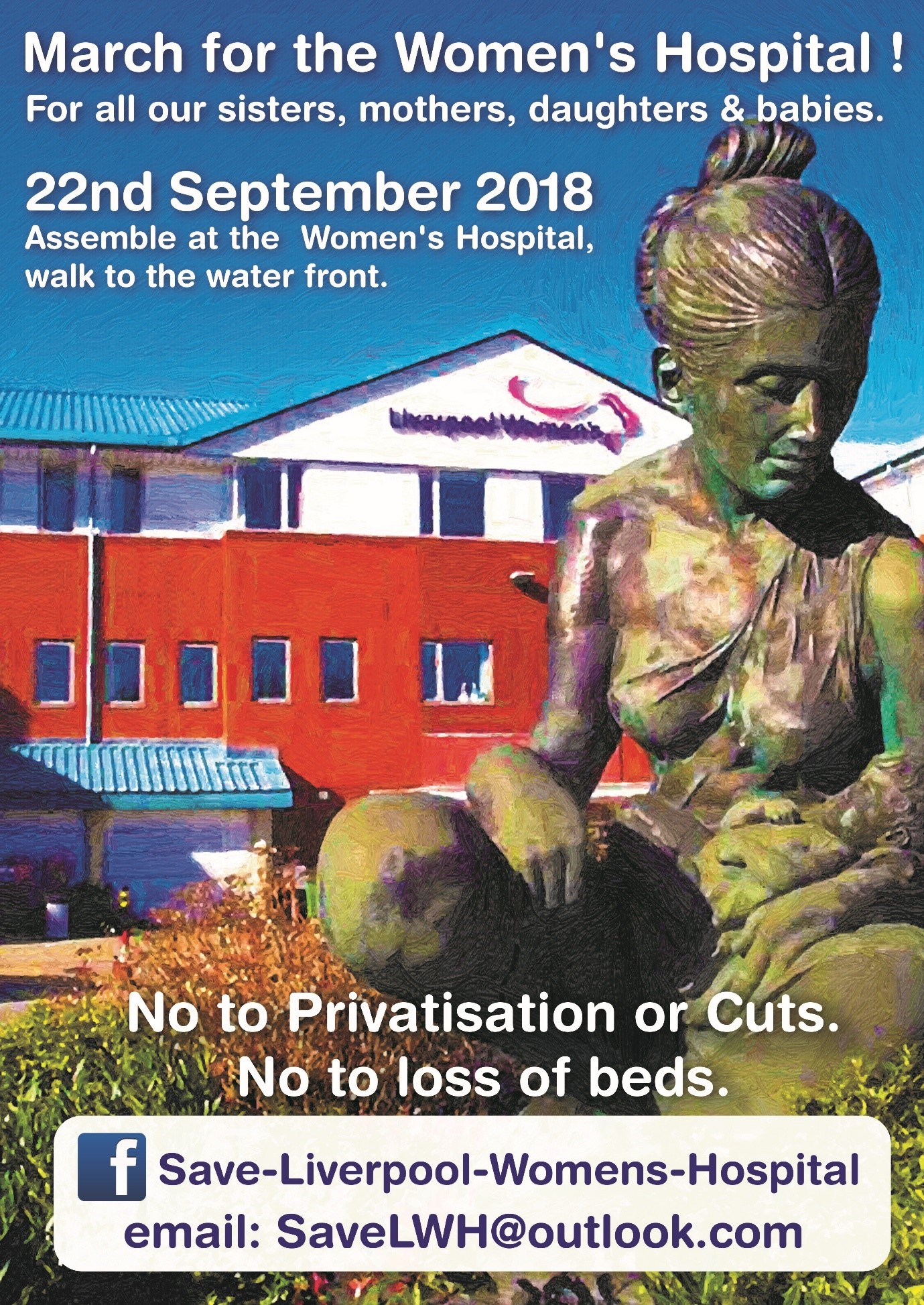
The Mother Statue at Liverpool Women’s Hospital

What’s happening now, in December 2025, with the plans for Liverpool Women’s Hospital? What is happening at Liverpool Women’s Hospital is part of a great set of problems in the NHS. Battered and damaged as the NHS is, it is still very necessary and much worth saving, for all our mothers, daughters, sisters, friends and lovers and every baby. “As we go marching, marching, we battle too for men, for they are women’s children, and we mother them again

We stand with NHS workers and thank them for keeping the service going despite the appalling policies from this and recent governments.

Investing in healthcare gives great returns to any country in terms of health and wealth. We ask every reader to help us fight to repair, restore, and rebuild the NHS and Liverpool Women’s Hospital.

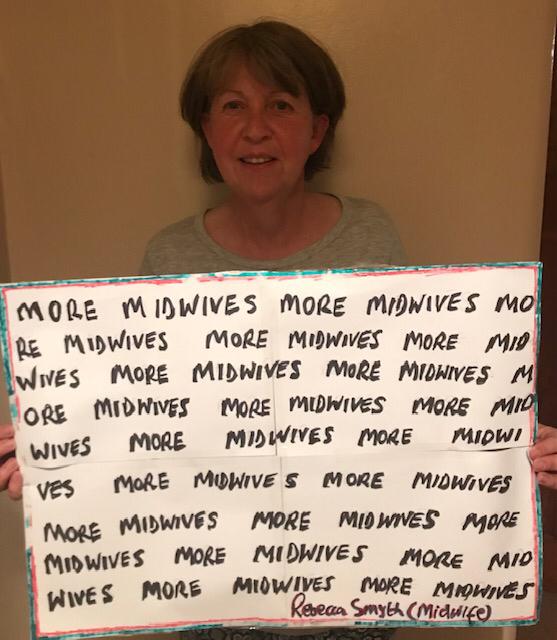
Grow our petition! It’s got 84,000+ signatures online and on paper. More will help – it gives the campaign a louder voice with the decision makers. No more Maternity cuts! We need more midwives! Fund Maternity and Gynaecology well across the nation.

For all our mothers, daughters, sisters, friends and lovers and every baby!

We campaign in Cheshire and Merseyside, and many other campaigns are working in different areas. The voices for the NHS and Maternity are growing louder and louder. Please amplify these voices.

Latest news

The ICB (Integrated Care Board ) is the governing body of the NHS in each area. Ours is the Cheshire and Merseyside ICB.

Waiting outside the ICB meeting

At the ICB meeting on November 27th, 2025, which campaigners attended (as members of the public), we were told that the item was not to be discussed, neither publicly nor privately. We had sent written questions. They replied:

Unfortunately, due to a number of other urgent items which require immediate discussion, the Women’s Hospital Services in Liverpool item will now not be
included on the agenda for this month’s private Board meeting, and will instead be rescheduled.

When it takes place, the private Board discussion will be focussed on how we move forward with the programme, taking into account the extensive options
work that took place over the summer, and will not involve making final decisions about how services might look in the future
.”

We had asked in a written question whether the ICB would be discussing the costs for relocation versus staying at Crown Street, as seen in the hospital papers. The additional cost of keeping the dedicated services on Crown Street was described as approximately £6million extra per year. The cost of a rebuild was defined as“up to £336 m- £ 549m“. We pointed out that it would take up to 91 years for rebuilding to be cheaper than providing safe care at Crown Street.

This campaign would like to know what was involved in “the extensive options work that took place over the summer.” We would like to know who was involved in these options and where they were reported, because we cannot find them reported in either the ICB or the hospital board meetings. Why the need for secrecy? Why not involve concerned members of the public? We wrote and asked to be involved in these discussions and were refused. The NHS is not a private corporation; much as some rich companies would like to acquire it, it is still a public body founded by the people, paid for by the people and staffed by the people.

The ICB also said they would still discuss it in private when the item returned to the agenda. We were told there would be some news in the new year. We have also been promised meetings with the ICB chair and the Hospital Group CEO, so we might find out more.

The future of Liverpool Women’s Hospital remains uncertain. What is certain is that Maternity, nationally and locally, must be better funded. It is summed up in a simple fact that we need more midwives.

There is a reluctance in the NHS to say that underfunding and understaffing, too few midwives, and too few hospital beds are core problems. Well, we will say it for them.

Since the 2016 discussion about the future of Liverpool Women’s Hospital, there have been suggestions that it would be rebuilt near the new Royal. Many people still believe this. We neither believe that it will be rebuilt nor support rebuilding it. The Crown Street site is a good building. The staff are a good team with a global reputation. The women and babies of Liverpool need and love that hospital.

Many other Maternity services nationally operate in appalling buildings. The Health Service Journal reported that” Many Maternity and newborn units are at ‘serious risk of imminent breakdown’, regularly hit by leaks and floods, and too cramped to provide the necessary care, an official NHS England report admits. There was a detailed report published by the NHS about this last year. The poor buildings should be rebuilt, not Liverpool Women’s Hospital. Many other hospitals urgently need a rebuild, but the plans for that are delayed.

Improvements at Liverpool Women’s Hospital

There were reports last year that a deteriorating patient’s team was being developed at Liverpool Women’s Hospital, and we hope that this is now in place. This is much needed. Other improvements are in place, including bringing the “soft facilities management services” (cleaners, porters, etc.) back in-house. The Case for Change states that “As part of elective recovery funding, £5m has been provided to establish the Liverpool Women’s Hospital site as a centre for gynaecology procedures. This includes four state-of-the-art procedure rooms developed to free up capacity in theatres and create additional clinic space for more minor operations, and will enable up to 4,200 additional gynaecology procedures every year. In addition, Crown Street now hosts a community diagnostics centre with CT (computed tomography) and MRI (magnetic resonance imaging) from 8am to 8pm, and urgent access to CT 24/7, which has delivered improved access to scans and reduced transfers for these diagnostic tests.

From an exhibition at the celebration of 30years at Crown Street, (Our Photograph)

The CQC report in August 2025 stated that Liverpool Women’s Hospital has improved.

Karen Knapton, CQC deputy director of operations in the north west, said:  “We were pleased to see that leaders and staff working in Maternity services at Liverpool Women’s Hospital had acted on our feedback from the previous inspection and worked hard to make improvements. Women and people using this service now had a much safer and improved experience of their care and treatment. Behind this was an improvement in how well-led the service was, which in turn supported staff to provide better care.

For example, it was positive to hear that leaders had improved staffing levels. Women using the service told us there were enough staff to meet their needs, and they were treated with compassion and kindness. It was great to see this reflected in a recent people experience survey, which found 94% of women felt they were treated with respect and dignity.

Overall, the Maternity team at Liverpool Women’s Hospital should be proud of the improvements our inspection found. They should use them as a foundation to keep building on.”

We applaud these improvements. Nowhere does the CQC mention relocation, nor have earlier, less complimentary CQC reports mentioned this.

Underfunding and understaffing have caused severe damage to mothers, babies and staff. More has been paid in damages from the service than has been spent on the whole national Maternity service.

Scandalously, “the potential cost of Maternity negligence claims in England since 2019 has reached £27.4 billion, which significantly exceeds the estimated £18 billion budget allocated to Maternity care over the same period“. We say improve the services and reduce the damage! When will the government focus on the needs of mothers and babies?? The voices of women and their families must be even louder on these issues.

Co-location has not been a success for maternity. It is not the only problem, far from it. Cuts and underfunding have been a disaster.

The “Case for Change” also says, “All other specialist centres for gynaecology and Maternity services in England have co-located acute and emergency hospital services.” We say that this co-location of Maternity in general hospitals has not proved to be a cure-all for Maternity crises, far from it. Maternity, despite being based in acute and general hospitals, is in crisis.

Although a standalone site, Liverpool is not one of the 14 Maternity providers involved in the so-called “rapid” national investigation of Maternity and newborn baby care across England. The Labour Government promised a rapid enquiry, but this enquiry is now not reporting before Christmas and might report sometime in the new year, and will not hear from bereaved parents.

Fourteen general hospitals ARE included in the national Maternity crisis, and others have been the site of some of the Maternity scandals. The Shropshire Okendon enquiry indicated that the management did not give Maternity due attention, nor did the Morecombe Bay hospital management give Maternity due attention, even after the big report.

It’s not just Maternity that is suffering in the NHS.

The women’s hospital reflects the many problems besetting our healthcare system. Books have been, and will be, written about this. We are trying to change the situation. These are the core issues.

  1. For many years now, the NHS has been underfunded and understaffed compared to other countries, and this has been a clear government policy.
  2. The organisation of the NHS has been damaged by pro-market legislation, especially the 2012 and 2022 Acts, which set hospitals up to compete against each other and allow for-profit interests to have a much greater say. Lord Darzi, in his report for the incoming Labour Government, described the 2012 Act as acalamity without international precedent” that “proved disastrous”. For Liverpool Women’s Hospital, it meant that cooperation between hospitals proved very difficult, and the high cost of the foundation trust system was too much to bear. Not keeping to an impossible budget made them constantly under pressure.
  3. Maternity and gynaecology, across the country, suffered badly, with one in six Maternity units closing, and standards deteriorating. A major Maternity crisis developed with standards and staffing suffering, resulting in damage to mothers and babies.
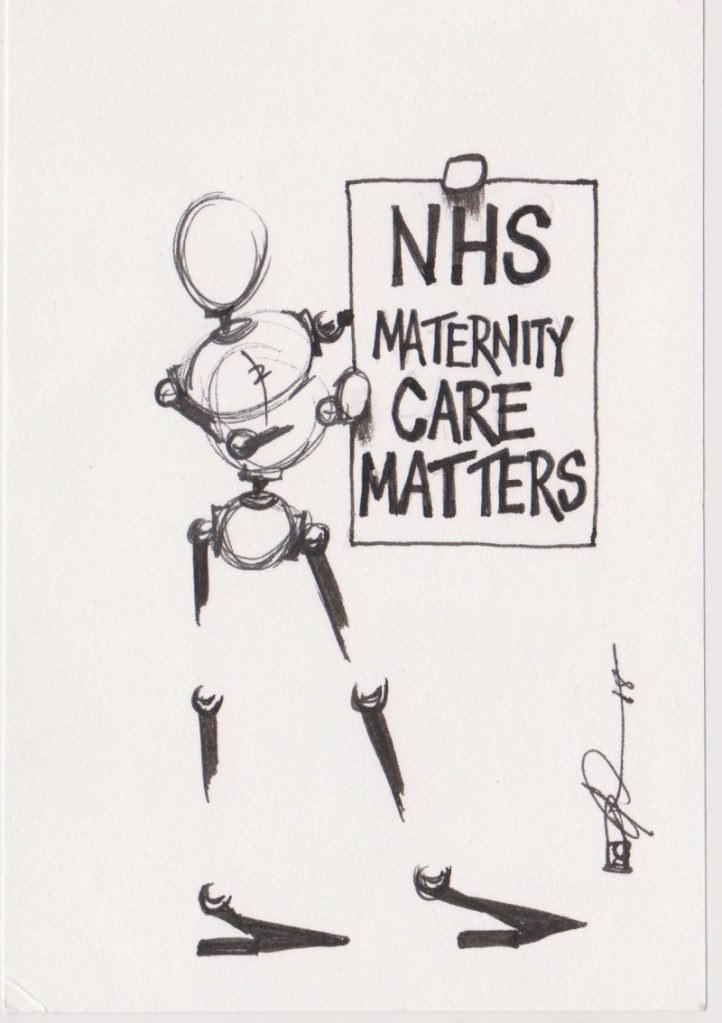
You get one chance to deliver a baby safely. There are no reruns or repeats. The accoucher must get it right every time. To do so, the midwife must be supported by her colleagues, midwifery management and work within a fully safe environment. Alas, with the fragmentation of our NHS, top-down draconian management, our mothers, their babies and our midwives are given short shift, and they become the victims of often tragic circumstances. There is a woeful shortage of skilled midwives. Anyone can deliver a baby, but it takes a skilled midwife to do so day in day out safely and with professional accountability,” from our campaigner Stephanie (below)

Campaigner Stephanie, one of the generation of midwives who say they worked in the golden age of the NHS. We fight for another golden age. Join us

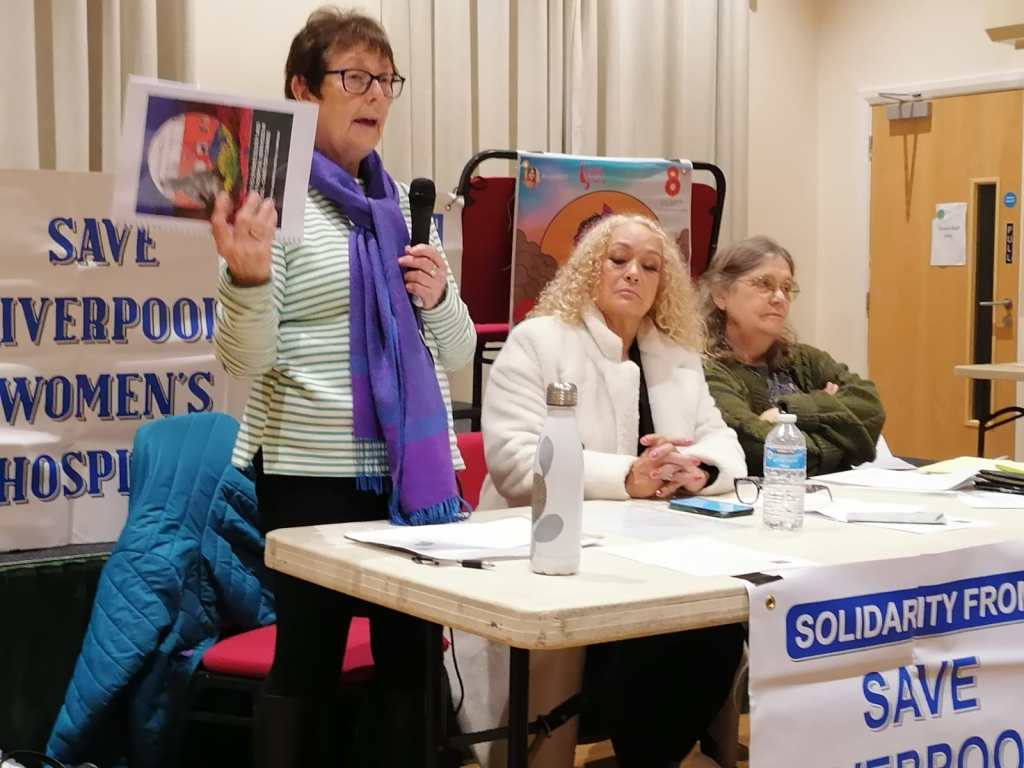
Campaigning to save Liverpool Women’s Hospital Autumn 2025

This article is a work in progress and is being amended and added to as events progress

25 October 2025, update.

The report on the future of Liverpool Women’s Hospital (Women’s Hospital Services in Liverpool programme) has been postponed again; this is their statement:

Save Liverpool Women’s  Hospital

To support options development, work to understand what each potential option would mean for estates (buildings), finance and workforce (staffing) has been taking place. This has been a complex process, and the level of detail required has meant that it has taken slightly longer to finish than had originally been planned. This means that the Women’s Services Committee will now consider the outputs of the work on potential options in November 2025 rather than October 2025. Following this, the Board of NHS Cheshire and Merseyside will discuss the potential options, and next steps, at a private meeting, which will also take place in November 2025.

The intention is that following the Board meeting, from December 2025 onwards, discussions will be held with partners, including local NHS trust boards and local authorities, about how the programme moves forward. At this point, if required, planning would also begin for an external review by clinicians from a different part of the country.

It is therefore likely that we will publish a further update about the programme during the first half of 2026. We know that many members of the public, NHS staff and wider stakeholders have a strong interest in women’s hospital services in Liverpool, and are keen to understand what will happen next. “

Our response

The “Women’s Hospital Services in Liverpool programme” is a working party of the Cheshire and Merseyside Integrated Care Board, the governing body of the NHS in Cheshire and Merseyside.

Liverpool Women’s Hospital’s future remains under threat, despite being one of the best buildings in the country and having an excellent reputation. The “options” mentioned in this statement have not been published.

This is at a time of enormous public concern about the state of Maternity services nationally, when we have yet another national report on Maternity scandals, plus police enquiries into deaths at two trusts. There have, of course, been many other detailed and complex enquiries whose recommendations were not implemented by the last government and are not being implemented by this government. It is no surprise, therefore, that campaign groups are forming across the country. For a decade, the future of Liverpool Women’s Hospital has been uncertain, with all the anxiety that has brought for pregnant women and families, for women needing gynaecology care, fetility care, for parents with babies in the Neonatal unit, and all the other services, for staff, both current staff and those who might have wanted to work at Liverpool Women’s but needed a secure future to commit to a move, and of course, the public vocifeously wanted to know that the hospital would be safe.

Liverpool Women’s Hospital’s future is under threat, despite the urgent need to retain and improve it, despite good work having been done in the last year to enhance its resources and services. Even before the Integrated Care Board was invented, plans to close it were underway. It was one of the first items on the ICB agenda when it opened.

Staff at Liverpool Women’s Hospital have worked so hard against the odds. The difficulties caused by privatisation, austerity, cuts, understaffing, and the disorganisation of the NHS over the last decade have been immense. Lord Darzi, in a report commissioned early in this government, described the 2012 Health and Care Act as “calamity without international precedent”. We say that the 2022 Act made things worse. The business model still pursued by this government has been a disaster for Maternity care nationwide.

Professor Marian Knight, Director of the National Perinatal Epidemiology Unit and MBRRACE-UK maternal reporting lead, said: ‘These data show that the UK maternal death rate has returned to levels that we have not seen for the past 20 years.

Liverpool Women’s Hospital has retained an excellent reputation. It is a much-loved, much-needed hospital that provides for the birth of approximately eight thousand babies a year and more than ten thousand gynaecology procedures. It is a maternal medicine centre and a tertiary hospital.

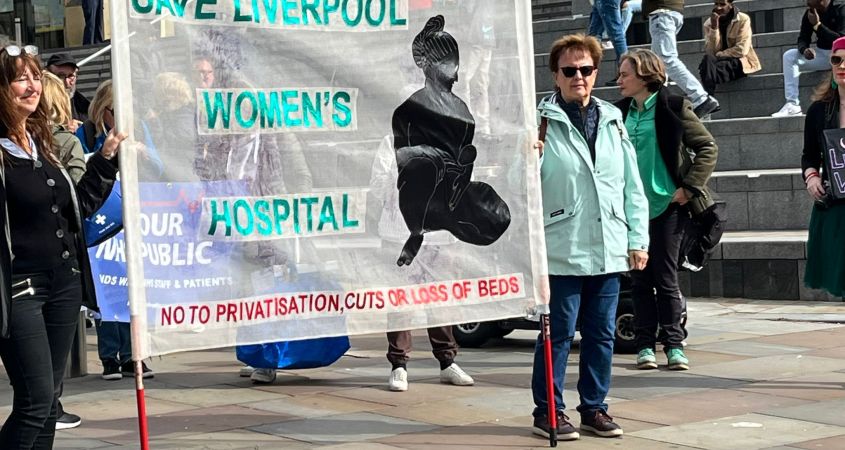
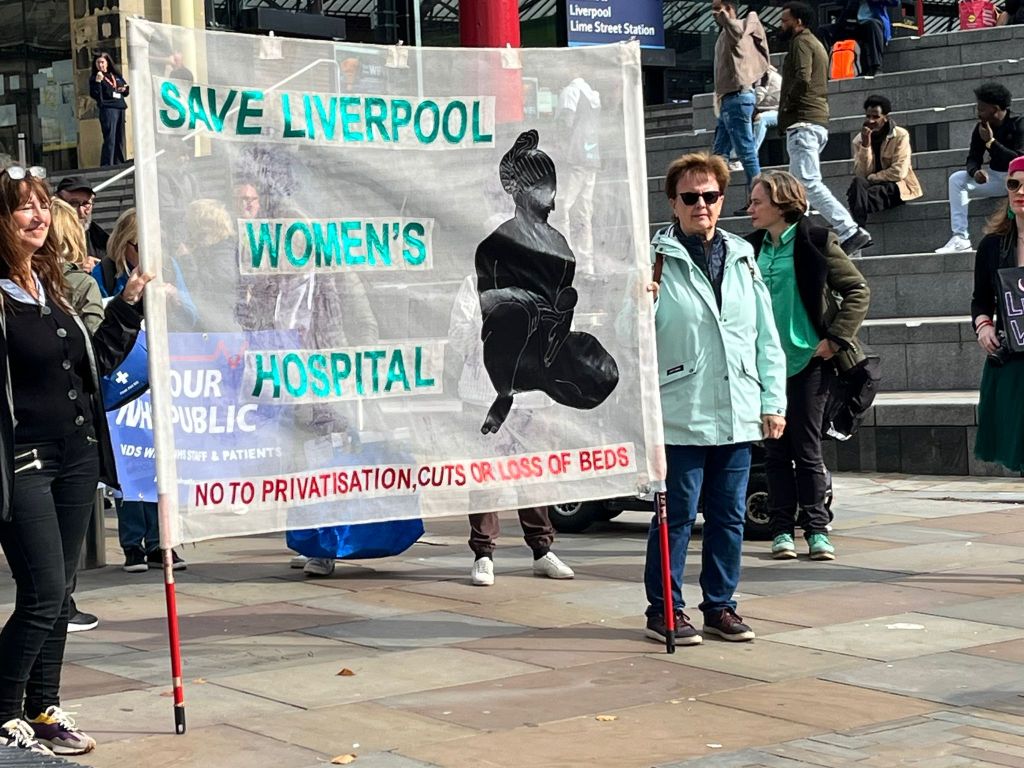
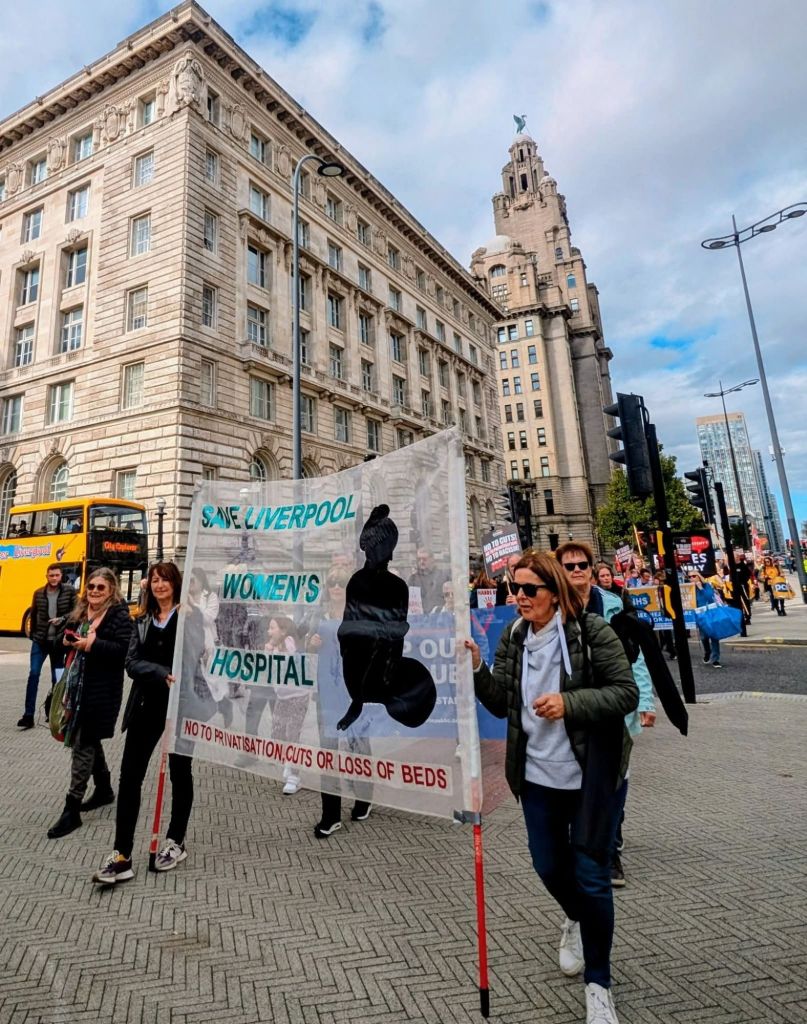
Protest on 28th September 2025

The future of Liverpool Women’s Hospital was one of the first issues raised by the Integrated Care Board (ICB), the governing body of the NHS in Cheshire and Merseyside, when it was established in 2022. We believed then and still believe that finances are at the root of the plans to move, merge, or close Liverpool Women’s Hospital.

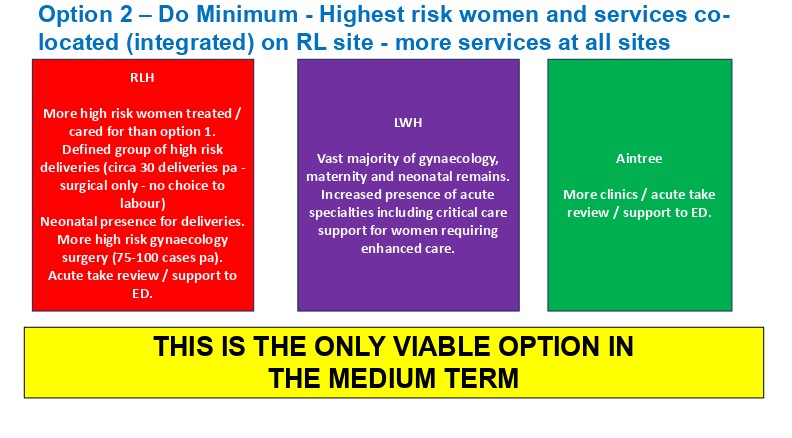
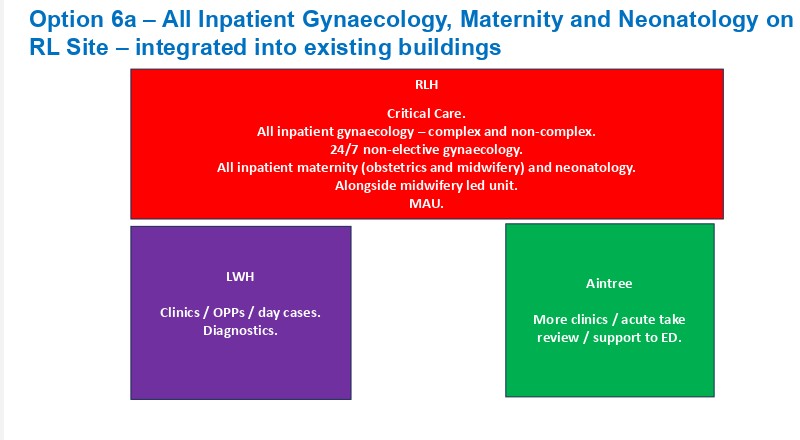
The Women’s Hospital Services in Liverpool  Committee says that their process includes ”October to November 2025: Discussions with partners, including local NHS trust boards and local authorities, about the draft business case”

 Annexe A to the reports fromLiverpool Women’s Hospital Prevention and

Equity Population Profile 2023-24 Date: 4 April 2025

(Author: Dr Clare Baker, Public Health Registrar) says, “There is a significant difference between demographics and experiences common among senior decision-makers and common among our patients” In other words, the people making the decisions do not live the same lives as the patients, yet they will not consult with the public before drawing up their plans.

(We have been challenged for the source of this quotation. It can be found on page 151 of the PDF for the cm-icb-board 240725-agenda and papers.)

Our campaign has significantly less access to information about what is happening at Liverpool Women’s Hospital since the semi-merger with the other hospitals in Liverpool, forming the University Hospitals of Liverpool group. Previously, some of our campaigners were able to attend the board meetings in person, read the public board meeting papers, hear the patient stories presented at each meeting, and ask questions. We could follow in detail issues such as infant and maternal mortality, staffing levels in Maternity and Gynaecology, and the hospital’s financial situation. We could, at times, bring home the reality for mothers and families. There was once a report on how they intended to spread the service across the city to clinics in “pram pushing” distance. When we saw the maps, we burst out laughing. Knowing the city, we assured the board that it would take some Olympic-level athletes to cover those distances! The relationships at those board meetings were generally friendly. Now, all we are allowed to do is attend the meeting of the combined group covering the Royal, Aintree, Boardbgreen, and the Women’s. This is soon to be expanded to include specialist hospitals. Such a meeting focuses primarily on finance and staffing issues. There is no midwife or obstetrician on that board.

We will refer to all papers from the Integrated Care Board (the governing body of the NHS in Cheshire and Merseyside) since its founding in 2022. What follows is from the papers for the first meeting of Cheshire and Merseyside ICB, pages 6 -9

JGR noted that the clinical case for change is strong but felt that the public perception is that this is linked to the need to make cost savings. JGR asked what steps will be taken to counteract this view. FLE confirmed that there is a financial driver in that Liverpool Women’s Trust have been in a deficit position for some time and they are not in a position to rectify this. FLE highlighted that this is not the primary reason but agreed that there is a need for a careful public engagement process before it goes out to consultation” There is more discussion in these papers including saying tht Ormskirk maternity is also not co-located with a general hospital.

Had the time, energy, and resources wasted on this cost-cutting drive been devoted to improving services at Liverpool Women’s Hospital, we would have seen the day-to-day experiences of patients and staff significantly improved.

Throughout the ICB papers, it has been made clear that there is no likelihood of the capital (money) for rebuilding Liverpool Women’s on the Royal site, yet this rumour persists. It is, of course, within the power of the government, at the stroke of a pen, to create the resources needed for a rebuild or to adequately fund the hospital on Crown Street. Still, it seems highly unlikely that such a policy change will occur. If it were to happen, we would still say that the Liverpool Women’s Hospital should remain on Crown Street, as a women’s hospital, albeit with improvements. Of course, we also call for close collaboration on necessary medical matters with other hospitals. It was the damaging 2012 Health and Care Act, described by Lord Dazi in his report to the new Government as a “Calamity without precedent“, that made hospitals compete rather than cooperate

Why we say Liverpool Women’s Hospital should stay at Crown Street

  1. It is a much-needed hospital. The experience of other Maternity hospitals closing and merging has not been successful; Maternity standards nationally have deteriorated.
  2. Women’s needs have been neglected in the NHS for more than ten years. The creation of huge general hospitals has not helped.
  3. Other Maternity hospitals are in a dire situation and need financial infrastructure support much more than Liverpool Women’s does. Please see this heartbreaking report.”There is a clear link between the condition of service infrastructure, the experience of service users and staff, and safety. In the last 3 years, there have been 14,519 formally reported instances in the Maternity and neonatal estate where clinical services have been interrupted or service delivery has been impacted as a direct result of poor physical conditions. Significant clinical time has been lost to estate-related issues, such as power outages, water leaks and faulty nurse call systems. This puts additional pressure on already stretched staff to provide high-quality and safe care and can directly lead to procedures delays, such as planned caesarean sections.
  4. The green site at Crown Street is a positive benefit to mothers in difficult times. The physical environment helps birth.
  5. The Royal is located in one of the most densely trafficked areas in the city, with a 6-lane road running adjacent to it. This would be dangerous  for babies’ lungs.

The argument that  Maternity would be safer on the same site as the acute hospital is not borne out by the scandals in Maternity care in large hospitals. We cite Leeds Teaching Hospital as an example, but we support campaigners and staff in Leeds who are working to improve the situation. Current financing of Maternity care makes it difficult to provide safe care.

This is a national emergency. The government has called yet another Maternity Enquiry and is conducting a deep dive into 14 Maternity hospitals. Liverpool Women’s Hospital is not on that list. Yet another enquiry will not solve this. A serious consultation with mothers, families, staff, especially midwives, and concerned members of the public is required for all our mothers, sisters, daughters, friends, and loved ones, as well as every baby.

( For the list of other Maternity enquiries, see this.)

Baroness Amos is chairing the enquiry. The baroness, whilst having much government and academic experience, is not an expert in Maternity. It will be very challenging for her to reach a conclusion about important Maternity issues in a matter of weeks. Some bereaved parent groups have welcomed her appointment, others say this method of enquiry tries to place the blame on the Hospitals when it’s the system that’s caused the terrible problems.

We object to the government commissioning yet another enquiry when the recommendations of other detailed enquiries have not been financed or implemented. We agree with the parents’ groups that the investigation should cover the wider service, not just the hospitals, but also the NHS central organisation.

Liverpool Women’s Hospital is not in this list of hospitals to be investigated. Had the doom talk of the engagement meetings, organised by the ICB, been believed, it surely would have been.

Maternity outcomes have worsened in the years when Maternity hospitals and units have been closed or merged into the acute hospitals.”Professor Marian Knight, Director of the National Perinatal Epidemiology Unit and MBRRACE-UK maternal reporting lead, said: ‘These data show that the UK maternal death rate has returned to levels that we have not seen for the past 20 years. The 2023 MBRRACE-UK maternal confidential enquiry report identified clear examples of maternity systems under pressure and this increase in maternal mortality raises further concern. Ensuring pre-pregnancy health, including tackling conditions such as overweight and obesity, as well as critical actions to work towards more inclusive and personalised care, need to be prioritised as a matter of urgency now more than ever.

Liverpool Women’s Hospital provides more than Maternity care. The CQC report says, “The Liverpool Women’s NHS Foundation Trust gynaecology division is a tertiary referral centre for gynaecology, performing approximately 10,000 procedures per year.”

Most Gynaecology services in most of the country are provided in general hospitals, and this has not alleviated the disproportionate waiting times for gynaecology treatment. Misogyny runs deep as this report from the London School of Economics shows. The resources have not been invested in the service for over a decade.

https://committees.parliament.uk/committee/328/women-and-equalities-committee/news/204316/medical-misogyny-is-leaving-women-in-unnecessary-pain-and-undiagnose

 In 2022, the Royal College of Obstetricians and Gynaecologists  described the service as “a speciality which had been disproportionately impacted by a lack of capacity in the NHS long before the start of the COVID-19 pandemic

 In our area, gynaecology has the longest wait for any speciality. Nationally,  for people of working age, the waiting lists for gynaecology are the largest.

Include the Public. Plans for the future of Liverpool Women’s Hospital are being drawn up, but without public input. The committee drawing up the plans says it will present its plans to a private meeting of the ICB (the governing body of the NHS in Cheshire and Merseyside) in November. Once all the planning is complete, they will conduct a public consultation. Yet, the real lives of patients are not the same as those of the people drawing up the plans. Their own papers say this. Our campaign has written to request inclusion in these discussions, but we have been refused. Previously, the ICB said we would be included.”The principle of Section 242 is that, by law, NHS Commissioners and Trusts must ensure that patients and / or the public are involved in certain decisions that affect the planning and delivery of NHS services

The threats to  the  future  of Liverpool Women’s Hospital are continuing despite

  • The improvements in infrastructure and safety made at he hospital in recent years
  • The national Maternity crisis
  • The national problems ( and associated pain and suffering) with the Gynaecology waiting lists for treatment, and neglect of this service nationally.
  • Liverpool’s well-publicised issues with declining health among women (State of Health in the City: Liverpool 2040) and the hospital’s excellent reputation.
  • The distortion of NHS structures to suit the many facets of privatisation brought in by the 2012 and 2022 Health and Care Acts,
  • This government is increasing privatisation and bringing back advisers who led up to the 2012 Act and who are linked to the hated American health corporations.
  • The government is entrusting our most intimate data to companies like Palantir.
  • The decline in women’s health over the years of austerity.

More than 80,000 people have signed our petition, combining an online and a paper petition. We have held public meetings, produced leaflets, lobbied MPs, and spoken to union branches, community groups, churches, and mosques. We attend board meetings of the hospital (now a group of hospitals) and the Integrated Care Board. Our campaigners include people who have used the hospital, intend to use it when they have babies, whose families have used or are likely to use the hospital, people who work in the NHS and those who work elsewhere, academics, and manual workers. We include people who care deeply about the NHS but whose only expertise is as patients or carers, and we also have experts. We are part of a long tradition of Liverpool women fighting for better healthcare for women and babies. We welcome newcomers.
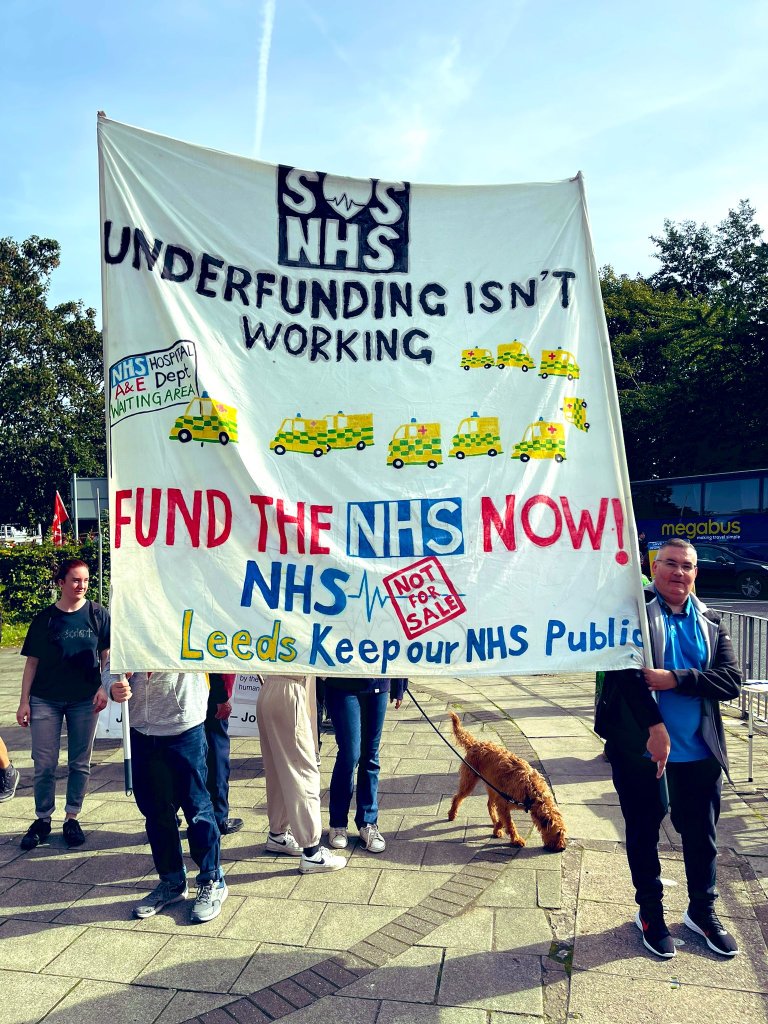
We say “No closure. No privatisation. No cuts. No merger. Reorganise the funding structures, not the hospital. Our babies and mothers, our sick women, deserve the very best.  

We need more midwives. Hospitals should cooperate, not compete.

We say improve national  Maternity  Outcomes.  These are deteriorating and are worse than many poorer countries. Mothers’ experience of birth is increasingly traumatic. (Source MBRRACE report 2025.)

National Funding for maternity is still inadequate. We say improve the Maternity tariff, the funding formula the government uses to fund maternity.

The maternity tariff is insufficient to cover costs of delivering the current maternity service in Liverpool, as is the case in many areas across the country.” says Liverpool Women’s Hospital Board

We need more midwives and need to improve maternity staffing and working conditions. Newly qualified midwives need jobs. It’s not rocket science.

Compensation.  We are in the obscene situation where compensation for errors in the maternity service costs more than the whole service. Fund the service to stop the injuries that are so costly in pain and in finances.

Approximately 630,000 women nationwide are waiting for Gynaecology treatment. Improve Gynaecology services. No to cuts.

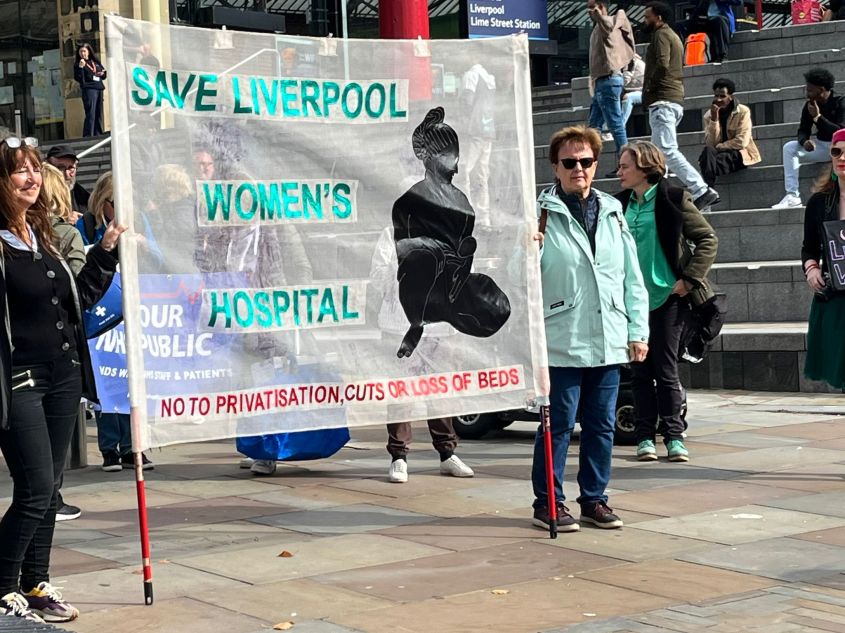
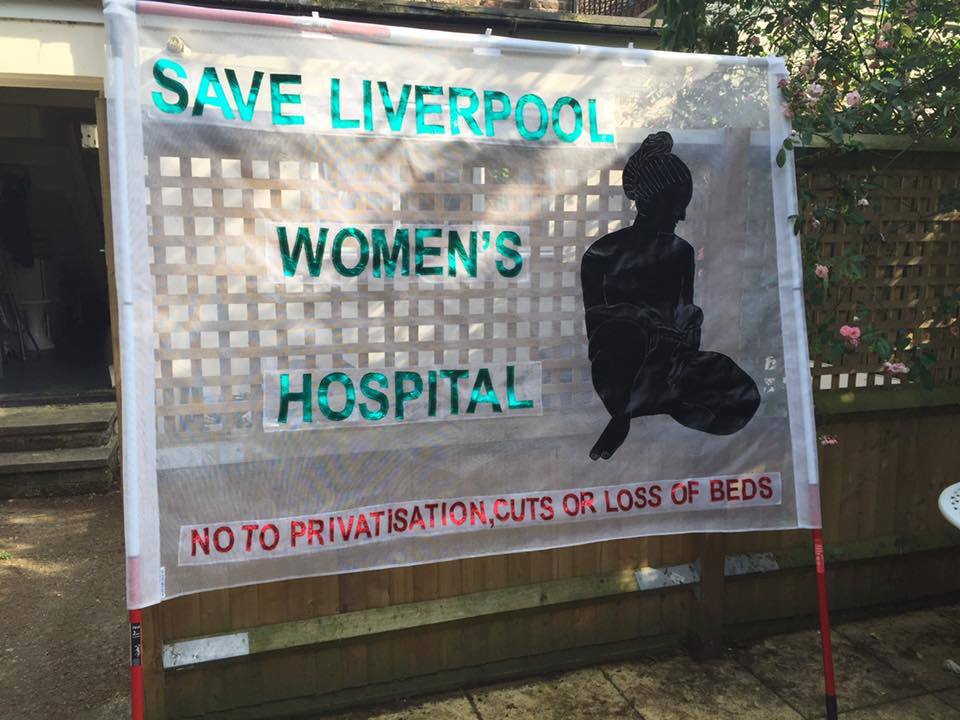
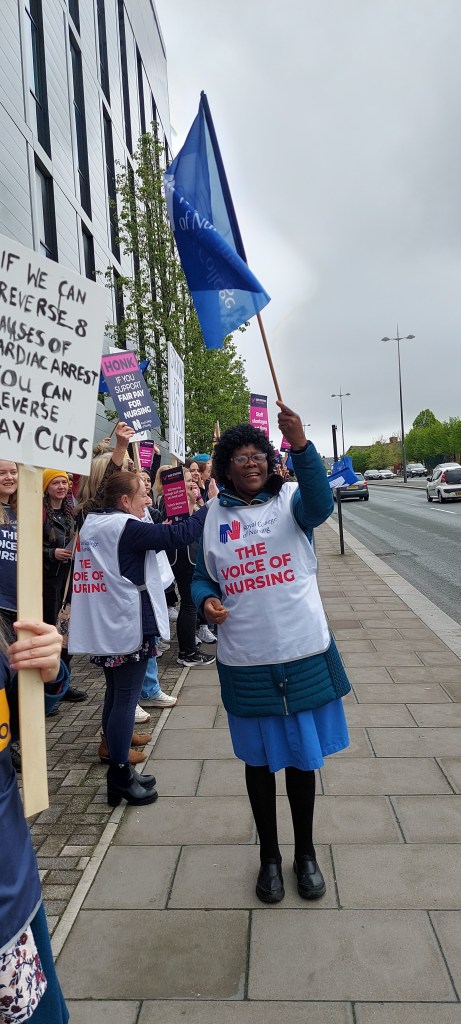
The crowd assembled behind our banner.

Thank you to everyone who turned out on September 28th for the protest at Labour’s Conference. Our campaign goes from strength to strength.

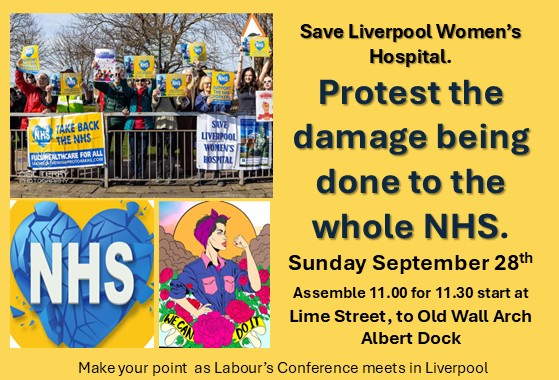
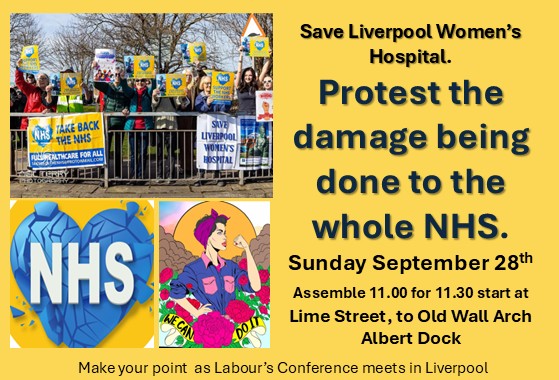
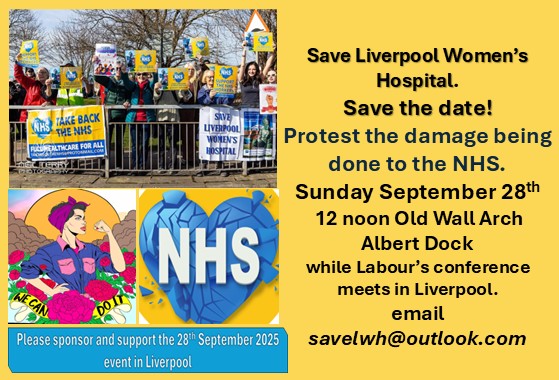
Protest the damage being done to the NHS on September 28th In Liverpool!

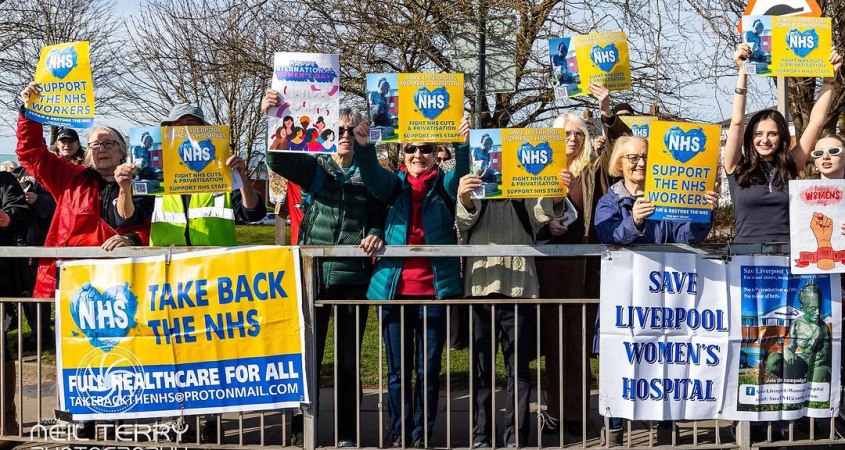
Protest the damage done to the NHS. The NHS belongs to the people. It should be a public service, not used for private profit. The NHS should be well-staffed and well-funded, with all government NHS funds allocated to patient care, staff, and resources.

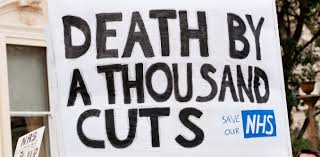
Protest that the NHS should be fully restored and repaired. No more cuts, redundancies or long waiting lists! Improve Maternity services, restore the GP and dental services.No cuts or hospital closures. We protest the damage done to the NHS and demand complete restoration and improvements in the NHS, for all our mothers, daughters, sisters, friends, lovers and every baby.

The threats to Liverpool Women’s Hospital are part of the general NHS cuts.

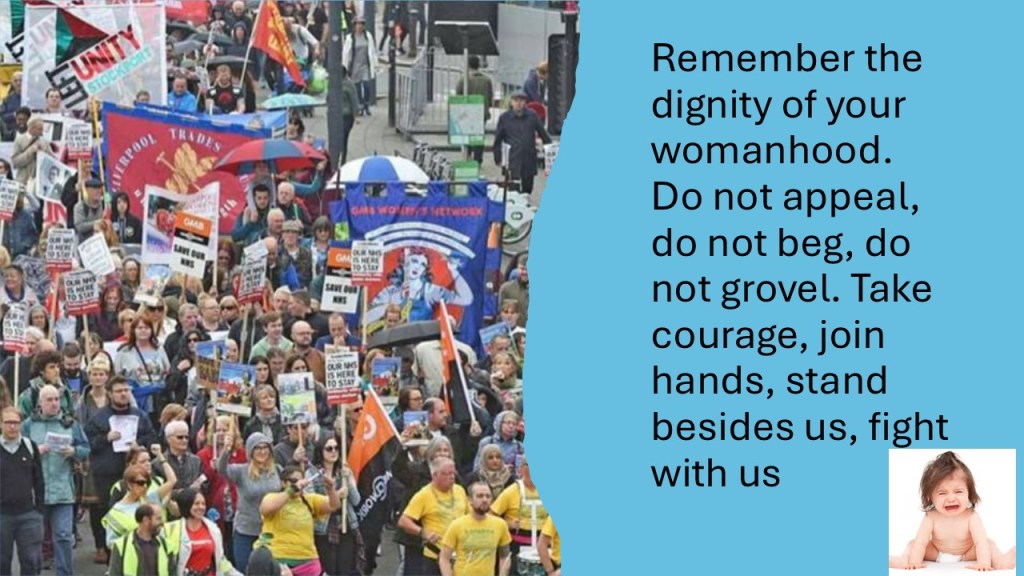
Please join us in this protest on 28th September in Liverpool. As the suffragettes said

Do not appeal, do not beg, do not grovel. Take courage, join hands, stand besides us, fight with us.”

We are protesting on 28th September when the Labour Party comes to Liverpool for its party conference.

Dr Tony O’Sullivan, Co-Chair of Keep Our NHS Public and retired Consultant Paediatrician, said:

“We’re on the brink of disaster. Everyone knows the NHS urgently needs rebuilding—from staff morale and workforce numbers to crumbling buildings and outdated equipment. Everyone, it seems, except the Labour government.”

It is not just Maternity and Gynaecology care that we fight for; we fight for the whole NHS. Excellent life-saving and life-improving care is delivered day in, day out, by the NHS. Some of it is groundbreaking care, and some of it is more routine. NHS staff work hard with great skill and good humour. Pay the staff well. NHS staff should not need food pantries.

Mary Bamber One of Liverpool’s Campaigning women from a century ago.

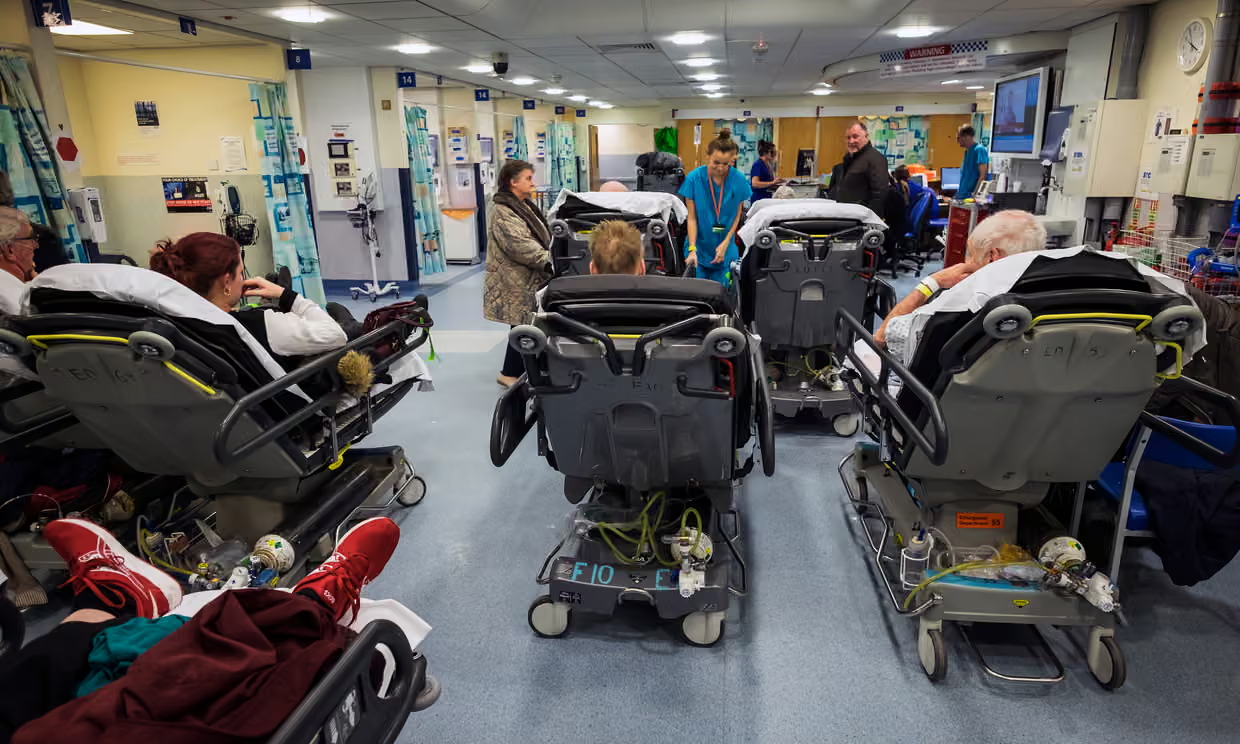
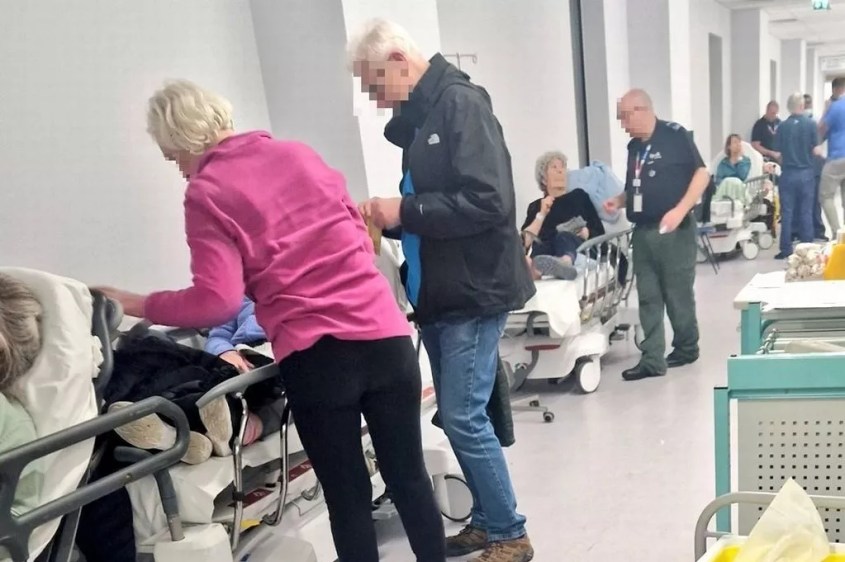
We say “No! to another winter crisis in our hospitals!” Prepare properly, organise the staff resources and the space now! The Government must provide the funds.

picture credit The Guardian (Nottingham Hospital)

The NHS is ours; it belongs to the people.

The NHS  is a legacy from the generation that defeated fascism. A legacy from the women who fought for healthcare for mothers and babies throughout the early 20th Century, often while they also fought for women to have the vote, and it’s a legacy all the women who have fought for our rights since then.

The NHS is a legacy of the trade unions that had set up mini-healthcare systems in mining villages, as well as the unions that demanded universal healthcare. The RMT union has helped publish accounts of how railway workers suffered before the NHS was established. The socialist doctors, some from Liverpool, helped shape early Labour Party policy on health. What would they say about the situation we are facing now with a Labour Government doing such damage?

The NHS is a legacy from those who elected the 1945 Labour Government that set up the NHS, while the country was in staggering debt from World War 2. That Government answered to working-class people, improving their lives, not worsening them.

The NHS is a testament to the countless hours of work that doctors, midwives, nurses, and all NHS workers have dedicated to the service, far exceeding their paid hours in both good times and challenging times.

Yes! We can afford the NHS.

This Government’s excuse is the level of national debt. When the NHS was founded, the UK national debt (from war expenses) was 230% of GDP. Today, it is 95%. It is bad for people and bad for the economy to deprive us of good healthcare.

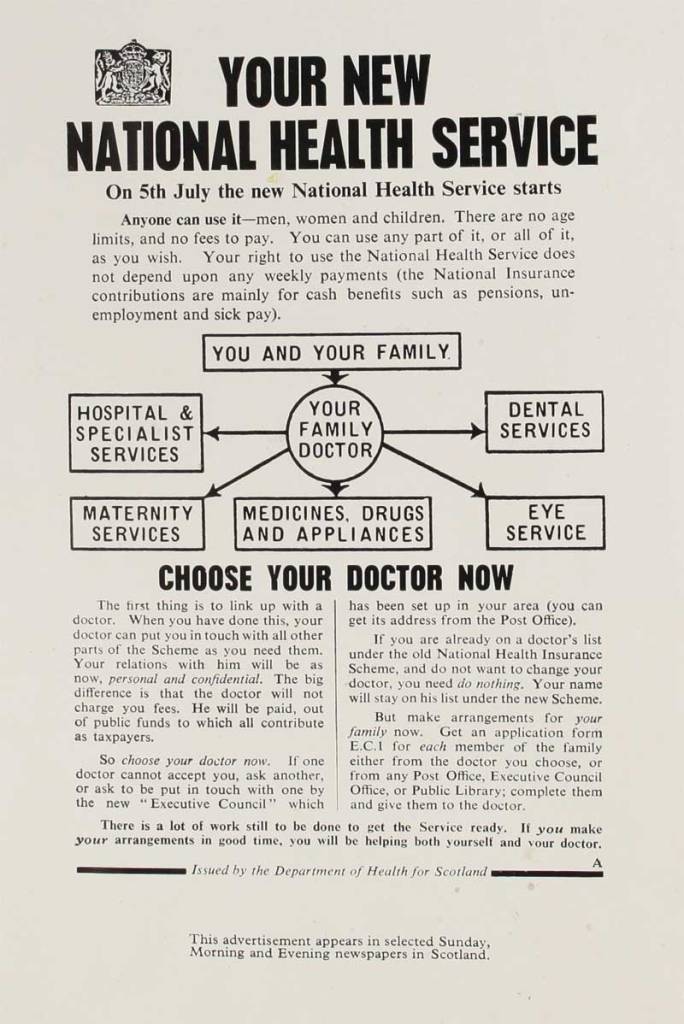
The NHS was founded to be a universal public service, publicly provided and not for profit. The National Health Service provides healthcare to (most) people in the UK, free at the point of need. It is funded by the Government, like other major services.

The NHS faces major cuts and a long process of privatisation, and the use of NHS funding for private profit. Despite facing understaffing, staff redundancies, underfunding, and crumbling buildings, resources are being diverted to profit private companies, including some very unpleasant ones like Palantir.

No one using the NHS faced bankruptcy or denial of services because of medical bills or lack of medical insurance.

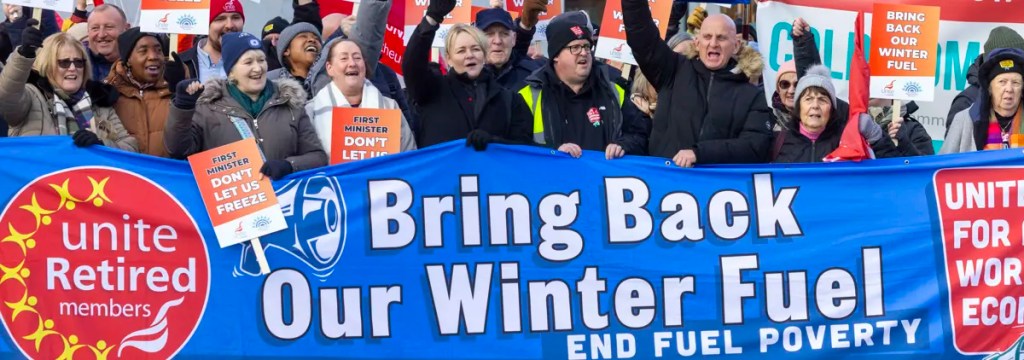
There are many ways to reduce the cost of healthcare, starting with better housing, food, access to heating, insulation, and air quality, all of which contribute to keeping people healthy. However, in 2025, we also need investment in healthcare.

We demand an end to poverty. Maternity Action reported from a survey of women on Maternity leave (with a little baby in the house) that:

  • One in 10 (10%) of mothers who were using infant formula struggled to afford it. One in four (27%) had cut down on food for the rest of the family in order to buy formula milk.
  • Nearly three in five (57%) had reduced the number of hours they heated their home.
  •  Nearly two in five (39%) had reduced use of electrical appliances.”

Yet most of these mothers had occupational Maternity pay, not just the very minimum the state provides.

UK Maternity services are suffering.

Black Asian and women in the worst off areas re more likely to die in childbirth, or to lose their babies. Liverpool women’s health is set to deteriorate until 2040.

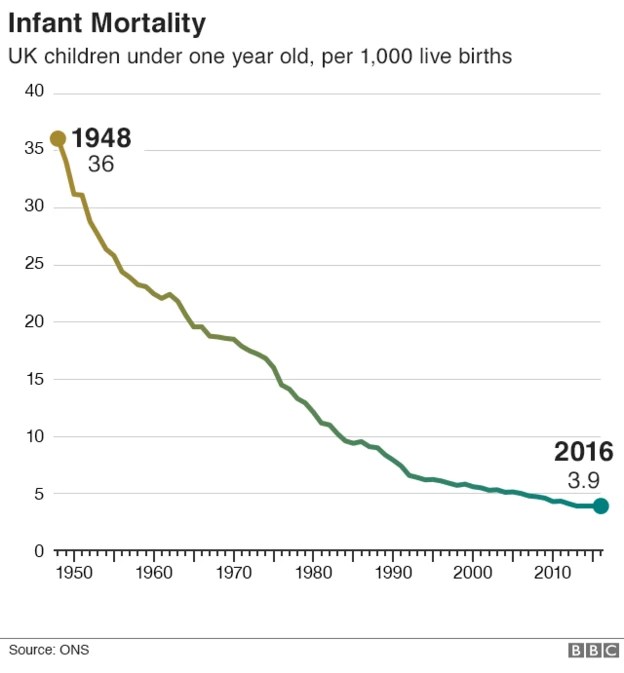
In the 21st Century, the world has made great improvements to Maternity care. In the UK, our maternal and infant mortality rates have worsened while those in other countries have improved.

NHS Maternity is 17th out of 19 comparable countries in infant mortality.

Maternal Mortality is rising, despite fewer births.

The North of England and Black and Asian communities are suffering the worst in infant mortality. In 2022, the UK ranked 19th out of 22 comparable countries, and that has not improved since.

Years of austerity and government cuts have done massive damage to maternity care. Women’s health, life expectancy, and life in good health have all suffered and more so in the UK than in other European countries

What does the NHS do in 2025?

In July 2025, it was reported that each day the NHS provided:

  • Over 1.3 million people attend a GP appointment.
  • Outpatient Appointments: Over 304,000 people attend an outpatient appointment.
  • Emergency Services: Nearly 35,000 people call 999 for an ambulance.
  • Major A&E: Nearly 46,000 people attend a major A&E department, with about a third of these patients admitted to hospital.
  • Community Healthcare: Over 288,000 people receive community health care services.
  • About 1,688 babies are born in England each day,

The NHS is cost-effective and available free at the point of need (to all but migrants, which is cruel and not cost-effective). However, the NHS lags behind other countries’ health systems in the following ways.

  • A lack of key resources, including the number of doctors per head of population, the number of hospital beds, and the waiting times for treatment.
  • Important health outcomes, such as certain cancers and life expectancy, are worse in the UK.” By 2023, the UK female mortality rate was 14% higher than the median of peer countries, and the UK male mortality rate was 9% higher.”
  • Public health issues include housing and food poverty, as well as cutbacks in Public Health Services that work to prevent and control disease. “A report from the UK charity the Health Foundation reveals that public health grant allocations in England have been cut by 24% in real terms per capita between 2015–16 and 2021–22.” 

Founded 77 years ago, the NHS fundamentally changed the lives of women, children, and the poor for the better. NHS care outstripped the care previously provided in private hospitals, and the NHS was used by rich and poor, young and old, black, white and brown alike.

Why should we put up with cuts, underfunding, understaffing, and the service being asset-stripped by privatisers?

Every family is affected by the NHS from before conception to the grave. It is with us at our happiest, our most anxious and our saddest times. NHS care affects how long and how well we live.

Grim times for the NHS.

After decades of cuts, privatisation, and money-wasting schemes, such as PFI and Sub Cos, we were promised change for the better, but it has not happened. Could this have to do with the huge donations ministers have received from private health corporations?

We say.

  • Restore the NHS as a fully funded universal public service, publicly delivered and government-funded.
  • Kick out the privatisers and profiteers.
  • Fund patient care to equal the best in Europe.
  • Provide the necessary staff. Improve staff pay and conditions. The NHS should be a good place to work, offering good pay, manageable workloads, and time for staff to think.
  • Fund the repairs and replacement of the necessary buildings to ensure good, timely care.
  • Don’t fund private healthcare or dubious global corporations that are there to make money and make donations to politicians. Pumping money into the private sector damages patient healthcare.

Our findings show that the private sector is now substituting for, not adding to, NHS capacity.”

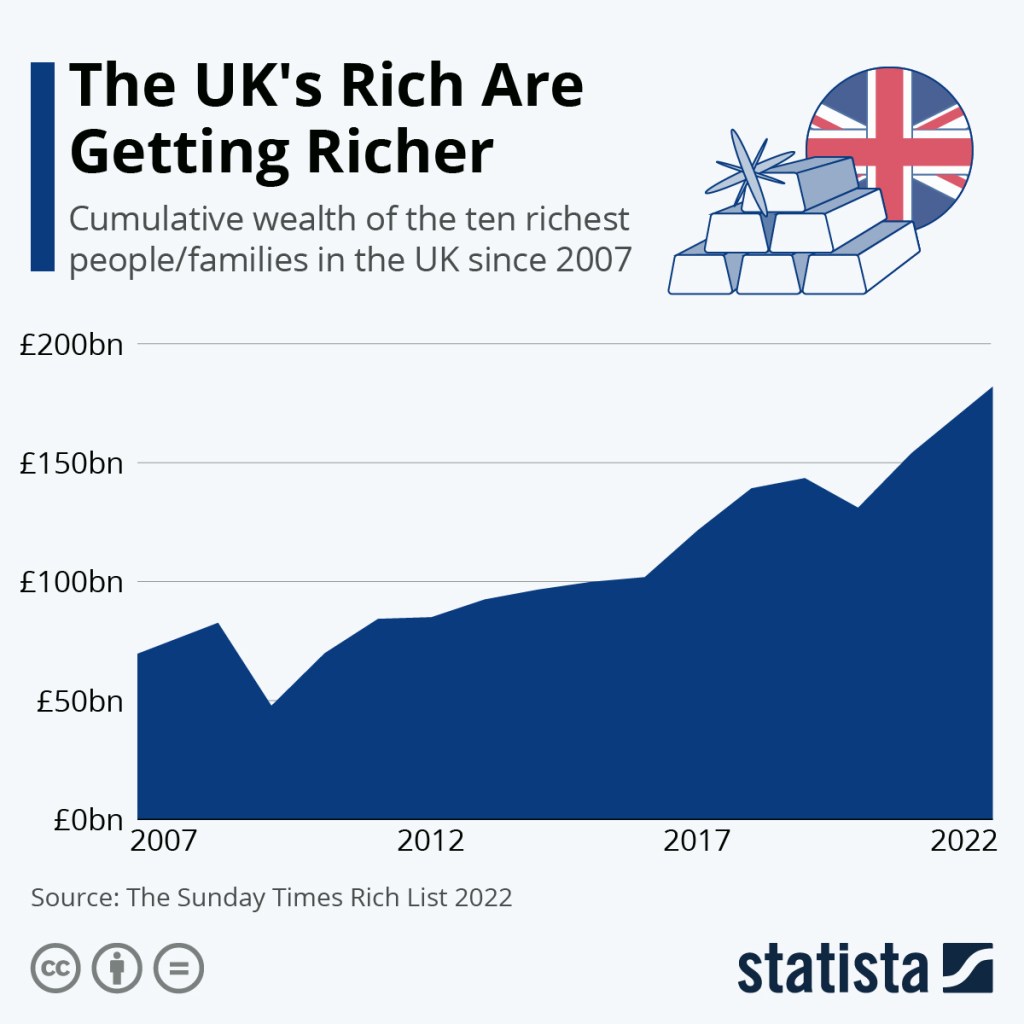
The UK is a very rich country and the rich are getting richer while poverty spreads. It can afford healthcare for all. Indeed, providing universal healthcare is a major investment in the country’s health, wealth and well-being.

image from Statista

The damage done to the NHS over the last few governments is massive. This Government is causing ongoing harm by reintroducing some of the most costly and wasteful (yet profitable for big companies) ideas, such as PFI and Sub Cos.

The (near) universal, free-at-the-point-of-need system in the NHS is an excellent national investment. It gives a good return on the money invested. The cost of collecting fees for health care from migrant workers often exceeds the amount collected.

No solution exists in the US model, regardless of how many government advisers come from that sector. There is a much pushed argument that we can’t afford the NHS, and we should move towards the US health system.US health system corporations are definitely getting claws into our NHS, and they only do that for profit.

In the USA, the Government pays twice as much per person for healthcare. Yet this leaves millions without treatment if they cannot afford the additional insurance. When families can afford health insurance, that insurance can cost as much as their mortgage. Most healthcare plans cover 80% of the cost of care, with the patient paying the rest. What if the 20% is 20% of a very costly treatment like cancer care? One hundred million US citizens owe $220 billion in medical debt. Medical debt can wreck their credit rating and stop them from being able to rent or buy a car on credit.

The USA’s health outcomes are among the worst in the Western world. Maternity and infant mortality are shameful. “The U.S. has the lowest life expectancy at birth, the highest death rates for avoidable or treatable conditions, the highest maternal and infant mortality, and among the highest suicide rates.”

In the UK, we need the Government to;

Reverse privatisation of the NHS in all its  many forms

Provide much better funding and staffing in Maternity.

Provide safer, respectful,  personalised care for all mothers and babies at every stage of Maternity care.

Bring back quality postnatal care in the hospitals and in the community.

Tackle maternal poverty and food poverty.

End the contract with Palantir,  one of the most notorious companies in the USA.

Ban UK politicians from accepting funds from private health corporations or individuals connected to private health or private health insurance.

Fund the NHS to at least good European levels, with all that funding going to the NHS  patients, staff, equipment and buildings, not to private companies.

Provide more hospital beds.

 “The NHS has a shortage of hospital beds, with occupancy rates consistently exceeding safe levels. The UK has 2.4 beds per 1,000 people; Germany has 7.8 beds per 1000 people. This shortage of beds leads to corridor care”.

Develop a proper workforce planning system, make sure doctors, midwives, nurses and other health professionals have jobs to go to when they qualify. Provide a fully qualified workforce.

Repair our GP service. High-quality healthcare at the GP level should be easily available to all. It is the foundation of good healthcare.

Employ the unemployed GPs. End the power of private companies to buy and run GP practices.

Repair the fabric of our hospitals, clinics and GP surgeries

Bring mental health fully back into the NHS.

Bring dentistry back into the NHS. British Dental Association (BDA) analysis of the data found that nearly 14 million UK adults are unable to access NHS dentistry. 

Tackle the waiting lists; don’t fund second-class care in the for-profit sector.

We all need the NHS

From assisted fertility (where needed), to antenatal care, maternity care at birth through postnatal and early years support, through childhood and adolescence, through until old age, the NHS is there to support us. We can all use NHS services, whether in accident and emergency, planned (elective) care, the GP service, mental health services, public health or care in the community. Few are lucky enough still to use NHS dentistry.

If you are younger than 78, you should never have needed to pay for hospital or GP services.

Charges crept in even before austerity for teeth, spectacles, prescriptions and social care. Margaret Thatcher started privatisation in 1982. Her Central Policy Review Staff (CPRS) plan would dismantle the welfare state, scrapping free universal healthcare, forcing people to take out private insurance and charging for education. The CPRS report said, “for the majority the change would represent the abolition of the NHS.” She backtracked when she saw the opposition. She outsourced hospital cleaning, which led to a rise in hospital-acquired infections. Yet even she hesitated to touch the NHS, but later governments have done significant damage.

Social care for our elders was privatised and has become very expensive for individuals and families, unless the NHS pays for it under continuing care. If Social care had been fully nationalised, such payments, either by individuals, families, or the NHS, would not be needed. We would not have been subsidising the profit of hedge funds. Most care homes are private, and many are owned by big business and are very profitable. Much of this profit comes from fees paid by the NHS, local authorities and families. These huge profits are not reflected in the wages paid to staff.

The care provided in our NHS is, many times, excellent, life-preserving, innovative and respectful. NHS staff work hard and often very cheerfully.

Sadly, decades of austerity, privatisation, and mismanagement have caused severe damage to our service.

The 1945 Labour Government founded the NHS. There was hope that it would be improved when Labour won the last election, but we see ongoing damage. Don’t let the damage continue. Save lives—protest for the NHS.

Protest to build a movement like the suffragettes so big the governments are obliged to take action. If enough of us do something about the NHS we can build an unstoppable movement

Fighting for another seventy seven years of the NHS.

Restore the NHS

It is seventy-seven years since the NHS was founded. It was a gift to the generations that followed them from those who fought all-out war and defeated fascism in World War 2. It made a dramatic difference to the lives of babies and mothers.

Before the NHS, if you did not have the money, you did not get healthcare. The number of babies that died at birth was horrific. In the 1930s, more women died in childbirth than men died working in the dangerous mines.

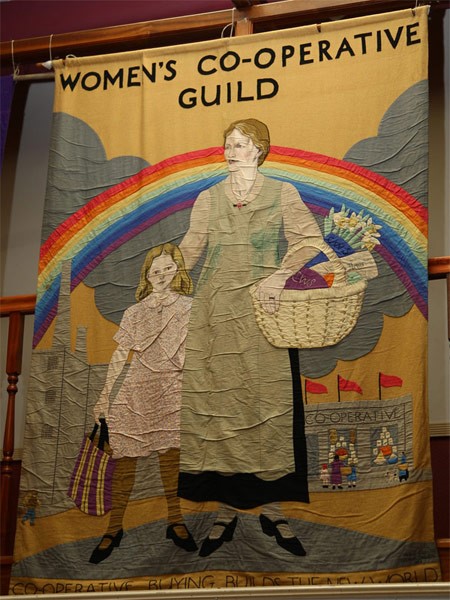
There were multiple campaigns for a universal health system since the early 20th Century from working-class women’s groups, notably the Cooperative Women’s Guild, and from the trade unions, especially the National Union of Miners, and from socialist doctors. One of these socialist doctors, Dr Benjamin Moore was from Liverpool. He started his campaign in 1910, so thirty long years before the NHS was established. Let’s learn from history and demand a return to the original model of the NHS.

Join our campaigns so you can see better healthcare in your life time and leave such just a legacy for your grandchildren and great-grandchildren. We need a people powered campaign to Restore and Repair the NHS.

Ordinary women led the fight for the NHS. Fight like your great Grandmothers to get better health care.

The NHS is badly damaged at present, and we take little comfort from the government’s liking for giving NHS money to the private providers, nor from the Ten-year Plan announced in early July 2025 https://www.england.nhs.uk/long-term-plan/

We will print a detailed review of this plan shortly.

We are especially disappointed by how little is said about the state of maternity care in this report. We and other maternity and women’s health campaigns submitted reports to this plan, but we see nothing from it except the promise of yet another report. We need action now on birth trauma, the maternity tariff, staffing levels, recruitment and retention of staff, peace and respect in the whole process of fertility, pregnancy, giving birth and postnatal care. We need action on the neglect of Gynaecology treatment and on women’s lifelong health and healthcare,

Governments since Thatcher have moved against the founding NHS model of universal health care in favour of allowing companies to use it for profit; yet the American system which they base their case on, is plain wrong, cruel, and widely hated.

In one stark example, a Facebook post by UnitedHealth Group expressing sadness about UnitedHealthcare CEO Brian Thompson’s death received 62,000 reactions – 57,000 of them laughing emojis. UnitedHealth Group is the parent company of UnitedHealthcare, the division that Thompson ran“.

Let’s ensure that people in the UK now and those yet to come have good and timely healthcare, free at the point of need, as a public service, funded by the state. It should be a national organisation available to all humans, young and old, black, white and brown, rich and poor alike. It should be designed for human good, not profit. There should be well-qualified staff with good education and training, with bursaries and good salaries. The hospitals and community health services should work together and not be in competition. The service should be reasonably close to home with good transport links. Privatisation should become a thing of the past, as it is a waste of public resources. Report after report describes the damage done by outsourcing and privatisation.

The NHS system of health care is cost efficient, and effective, far cheaper for the government than the US system despite the health insurance people pay, and gives far better outcomes, health, and life expectancy. We live longer than people in the US and in less fear of getting ill. US maternal mortality and infant mortality is far higher than that of other rich nations. 

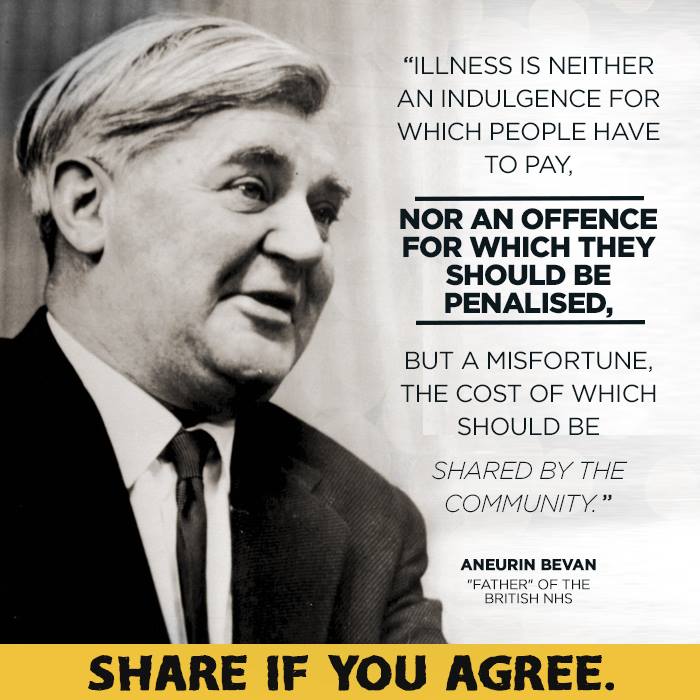
Let’s fight to restore and repair the NHS so the generations that follow us are also free from fear. Bevan’s book “In Place of Fear” wrote of the fear ordinary families had of getting ill, of their children or family members falling ill, before health care was a right, when it was a commodity they could not afford and often did without, in pain and fear. Memories of life before the NHS are fading as the generation that created the NHS has passed.

The founding of the NHS was bitterly opposed by the Conservatives but welcomed by ordinary people and many GPs.

For seventy-seven years, the people of Britain have had the right to healthcare free at the point of need. If you are younger than 77 years old you need never have paid for healthcare, except through your normal contributions to the country. There are now sadly a long list of charges you might now face for dentisty, for prescriptions, for earwax removal, fertilty treatment and more but still not for hugely expensive life saving operations or chemo. Battered and damaged, the NHS is still alive and kicking, and worth us demanding its restoration and repair.

A free health service is a triumphant example of the superiority of collective action and public initiative applied to a segment of society where commercial principles are seen at their worst.”

People in the UK can still go to the doctors or to the hospital without a credit card or health insurance. No one in the UK needs to go bankrupt from medical bills. life saving and life improving work is delivered day by day.

That’s not the way it works in the USA; the model that governments refer to when they want to make changes to the NHS.The model that has trained the advisers the government appoints and the model liked by many who have made donations to Government ministers.

For sixty of those years, the NHS  was the best health service in the world. However, we have had to fight to defend it again and again. That popular defence is needed now more than ever.

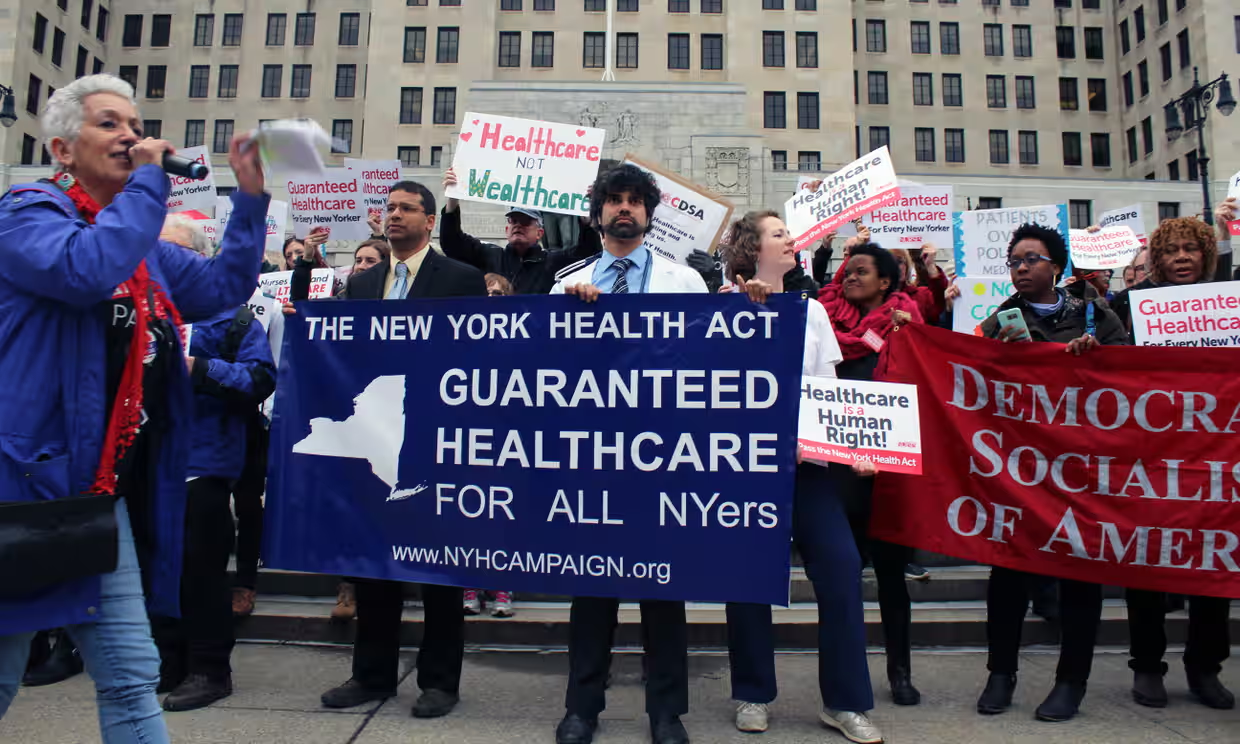
Americans camapigning for full health care

Real damage has been done to the NHS since the time of Margaret Thatcher, by her and and subsequent Governments. Although Blair put money into the NHS, he also laid the groundwork for many forms of privatisation. This article gives a timeline of privatisation in our NHS.

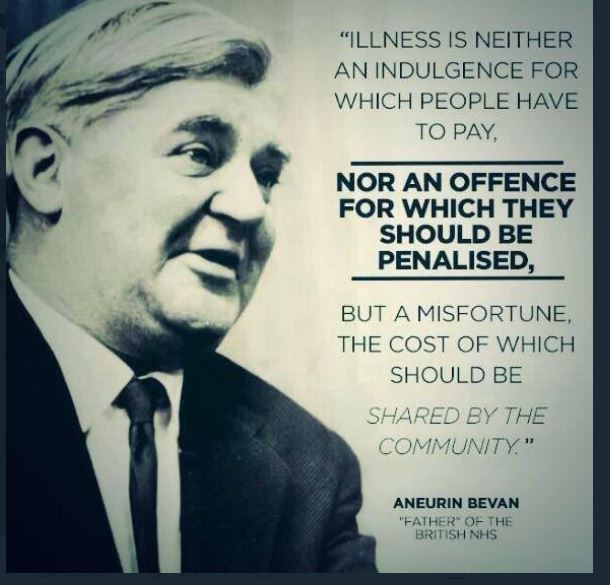
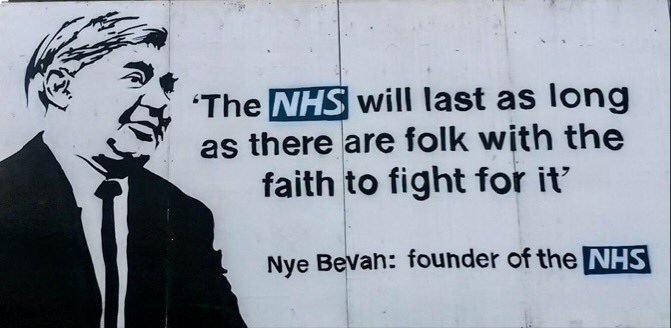
5th July 1948, The National Health Service NHS was founded. It was designed to provide healthcare free at the point of need for everyone in Britain. It was to be a national, publicly funded, publicly delivered, comprehensive, not-for-profit health service, with fully qualified staff. This project was led by the Left-Wing Labour MP and Minister for Labour, Nye Bevan, a former miner.

The NHS Model was the most cost-effective, efficient, and equitable system, with the bulk of the money provided by the government going directly to patients, staff, and buildings. In the US system, the government pays twice as much per person as in Britain, and then patients have to pay large insurance premiums and copays.

The NHS  has been badly damaged by years of privatisation and underfunding, from the early days of the NHS. On April 23rd 1951 Bevan resigned when the first charges in the NHS, for prescriptions, were introduced to pay for armaments.

It is likely that governments thought that privatising, disorganising, cutting, outsourcing understaffing and underfunding the NHS would finish it off, that it would fall apart much more than it has done. What stood in their way was the huge and relentless efforts made by the staff to keep the service going, sometimes at the cost of their own health and wealth.We thank the NHS staff .

The cost of the corporate profit model of healthcare is huge, but the damage is not just to people’s money, but also to access to healthcare and to the quality of care. The financial cost to the people of the USA of this privatised for-profit model of healthcare is estimated at $2 trillion per year. In 2023 25.3million people in the USA had no health insurance and are liable for the full cost of their treatment which can lead to bankruptcy. Sixty percent of all bankruptcy is caused by medical bills and Trumps Big Beautiful Bill which just went through the senate is likely to increase the numbers without health insurance and funding for hospitals.

Our campaign to Save Liverpool Hospital is one of many across the country, and we work together. We have won more than 81,000 signatures between our on line and on paper petitions, and gained much public support. Please join in.

Funding refusal hits Cheshire and Merseyside NHS Hospitals.

June 5th 2025

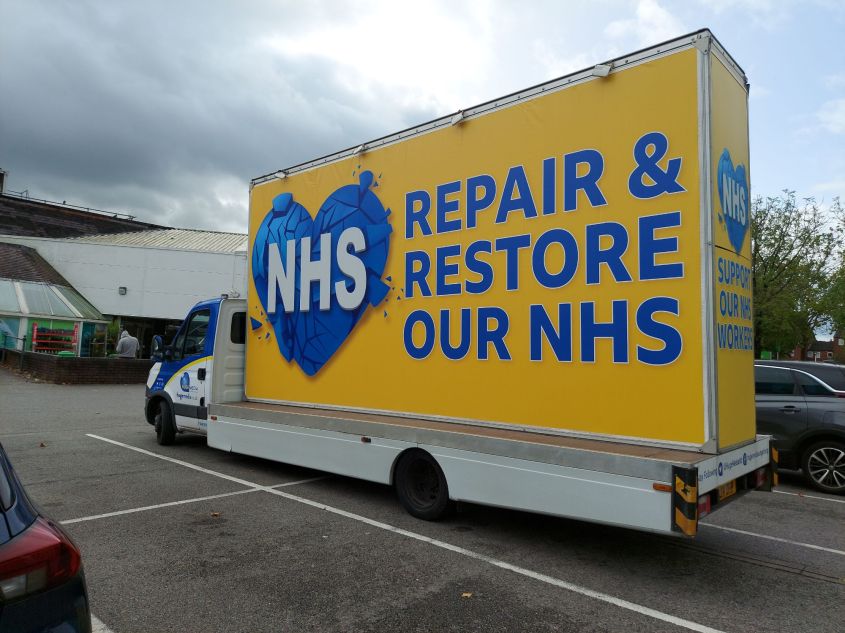
The campaign wagon that we use when we can collect enough donations.

NHS University Hospitals of Liverpool Group Board meeting.

As members of the public, we have attended the ICB and the Liverpool Women’s Hospital Board meetings for some years and attended the NHS University Hospitals of Liverpool Group Board meeting on June 5th, 2025.

We heard that because the ICB was refused the funding it requested, all Cheshire and Merseyside Hospitals and many other services must change their financial plans for the worse. However, the Trusts are not allowed to reduce their planned services! This must increase pressure on the frontline NHS workforce. Staffing is a large part of all NHS spending and is crucial to patient care.

Note: “Cost Improvement Plans” are cuts. Yes, a large organisation like the NHS must be on the watch for potential savings, but the system is used to enforce cuts.

The ICB reported that “On April 30th 2025 the ICB submitted a compliant plan ( which has resulted in both the ICB and every Cheshire and Merseyside Trust provider taking on additional cost improvement requirements (resulting in an aggregate deficit across the 16 NHS providers of c£228m offset by a surplus for the ICB of £50m). This compliant plan will enable us to spend our allocation, plus the additional £178m of deficit support funding (equivalent of 2.2% of our allocation) during the 2025/26 financial period. Whilst agreeing a plan was essential to securing the deficit support and cash to underpin this, our attention must turn now to the effective delivery of the plan and effectively mitigating the risks“.

Like Oliver in the workhouse, the ICB asked for more Picture credit

See our commentary on the May 2025 ICB board here.

We have always opposed the ICB system imposed by the 2022 Health and Social Care Act. Streeting is giving us more of the same.

We have observed how trusts negotiate their funding with the ICB. They agree on a plan for services, treatments, and the required money. It is a complex operation with oversight from outside bodies. The ICB takes all the plans for all the services in the area to NHS England and agrees on funding levels. Negotiations continue during the year for next year’s funding. The NHSE rewards trusts that do well in certain areas and has just announced some capital funding for buildings and extra services, including mental health in the acute hospitals. This, though, we are told, is not additional money. This carrot-and-stick funding is inappropriate and wasteful; it just lets a few positive headlines help some MPs.

The ICBs ( separate and distinct from the Hospitals and provider services) face significant cuts in their functions and funding as Wes Streeting implements his peculiar plans for the NHS.

The Government spends less on healthcare than other advanced countries.

 Wes Streeting, the Labour Secretary of  State for Health and Social Care, has proclaimed that the NHS will get no extra funding without “major surgery” and reform, including more use of the private sector.

The Health Service Journal reports that his year, “Integrated care boards and trusts are collectively aiming to make efficiency savings of 7.1 per cent or £11bn.”

These cuts are imposed while the winter crisis in our hospitals lives on through the summer in some places and is unlikely to improve next winter. At the same time, we have unemployed GPs, people needing GP care, and more than six million people waiting for treatment.

Women’s health sees some of the longest waiting lists, and our Maternity outcomes urgently need to be improved. Women hold up half the sky and make up nearly 80% of the NHS workforce. They are more likely to think of the NHS when voting. Yet our healthcare is disrespected in so many ways. The country has a Maternity crisis, and mental health care is severely damaged. Social care is a disgrace.

Liverpool Women’s Hospital is now part of the NHS University Hospitals of Liverpool Group, which comprises The Royal, Aintree, Broadgreen, and Liverpool Women’s Hospital. Other Liverpool Hospitals will also join the Group soon. “Liverpool Heart and Chest will join by September this year, the Walton Centre by December, and the Clatterbridge Cancer Centre by March 2026.”

Liverpool Women’s Hospital is still technically a separate Trust; however, the final say now rests with this group board, none of whom, as far as we can tell, have obstetric or midwifery expertise.

Hospitals receive funding via the ICB. They also agree on their planned treatments and urgent and emergency care Plans with the ICB. The Trusts are paid for what they plan to deliver.

 The Trusts and the ICB had drawn up these plans in detail. NHSE had appointed outside bodies, like Price Waterhouse Coopers,  to work with the  Liverpool boards and the ICB to oversee their finances and to reduce spending. It was just such a worked-out package that NHSE  declined. Further,  NHSE  would withdraw previous deficit funding of over £176m to Cheshire and Merseyside if the books were not balanced. Each Trust was given far less money than they expected.

The CEO of the Liverpool Group explained that, having received less funding, they had to decide which services to cut. But, they were then told they still had to meet the original service targets with less money.

So, Liverpool Women’s Hospital is facing more financial problems. It is a small hospital whose funding is determined by the Maternity tariff, and the Maternity tariff( funding) is inadequate across the country.

These national cuts are a policy decision distinct from previous years. They come after years of Austerity, privatisation, and underfunding in the NHS. Sadly, this Government’s policies are little different from the last.

Campaigns do make a difference. If you fight, you might just win.The more people involved, the more likely we are to win. So, we have to campaign harder and draw more people into the campaigns to Restore and Repair the NHS.

The NHS came from ordinary people, unions, women’s organisations and community groups. That is to whom we must turn again. Please join the campaigns to restore and repair the NHS. Contact us for details on how you can help.

There may well be some waste and overspending in the NHS. These cuts happen while more than six million people are waiting for treatment. Some treatments, like those for endometriosis and young people’s mental health, need to improve. We need democracy and community oversight in the NHS.

When our campaigners go to meetings and read their papers, we still have limited sight of what’s going on and only retired people really have the time to attend these meetings.

On June 5th, we could not even hear crucial sections of the meeting where significant changes in the funding and delivery of services were being discussed. We were “told off “for asking them to speak up in what is supposed to be “a meeting held in public.” They have promised to use microphones at the next meeting. There is no effective democratic scrutiny of the NHS.

This new board format shows less detail of Liverpool Women’s Hospital matters. We do not, for example, see the staffing fill rates for different services as an issue that matters very much to women giving birth. From the reports that we did see, we learned that Liverpool Women’s Hospital has a significant waiting list for Gynaecology treatment:

Gynaecology remains a challenged speciality nationally in terms of long waits and capacity constraints. At LWH, referrals into the Gynaecology suspected cancer pathway have significantly increased over the last 3 years, increasing from 3,500 per year in 2021/22 to 6,000 per year in 2024/25 – a 71% increase. Demand has been exacerbated by changes in the Post Menopausal Bleeding pathway as well as significant long waits for General Gynaecology services. LWH is also the Tertiary provider for Gynaecological Cancer across Cheshire & Merseyside.” Page 239 in the Board papers

The hospital is opening three new “ambulatory” (daytime) treatment rooms. However, increased demand has already shown a need for still more capacity and money to fund that capacity. We were told that close work with other cancer teams across the Group and support from across Cheshire and Merseyside are helping to develop an effective plan to drive down this waiting list.

Gynaecology has one of the longest waiting lists across the country.

In March 2025, Endometriosis UK wrote New data shows the non-cancer gynaecology lists continuing to stand at over 580,000 women in England alone, with women waiting months and even years with serious, progressive conditions, including endometriosis.

 In December 2024, The Guardian wrote that waiting lists for gynaecology appointments across the UK had more than doubled since February 2020. Records show around three-quarters of a million (755,046) women’s health appointments are waiting to happen – up from 360,400 just before the pandemic..

Unsurprisingly, pressure is being put on the workforce to work harder. All kinds of stunts are coming in, like outsourcing, insourcing (not the same as bringing services back in-house), changing how bank nurses are paid, not filling vacancies and more privatisation. Privatisation is not more cost-effective, nor does it deliver better patient outcomes. Services, too, will be cut.

It is unacceptable that the Government is imposing such a scale of cuts while we wait for treatment.

We learned little of the plans currently being drawn up for the future of “Women’s Hospital Services in Liverpool”. We questioned whether staff at LWH had been told that one option was a new build on the Royal site. It seems it was mentioned at a staff briefing, but only as a reference to the options years ago. The ICB had categorically ruled out a new build for Liverpool Women’s Hospital on the old Royal site, and the site has been agreed upon as a new building for the university. The Echo reported on June 5th about more details for the site of the old Royal, including an improved entrance to the Royal Hospital. There is no mention of a rebuild for Liverpool Women’s Hospital, although plans can change until construction starts.

We want the Liverpool Women’s Hospital to be properly funded and staffed and to remain on the Crown Street site in cooperation with other hospitals.

Our huge petitiononline and on paper, says

Save the Liverpool Women’s Hospital. No closure. No privatisation. No cuts. No merger. Reorganise the funding structures, not the hospital. Our babies and mothers, our sick women deserve the very best.”

Why is this important?

All the maternity and women’s health provision of Liverpool was pulled into this one site. It’s a much loved hospital. It provides crucial specialised care and the daily joy of new babies. #one born. The driving force for closure is a clumsy funding structure not the needs of women and babies. The alternative of wards in the new Royal is not an equivalent.
This is a modern hospital on a good site. Our taxes built it for our babies and for our women.

We campaign to save Liverpool Women’s Hospital, to Restore, Repair the NHS, and to make the NHS a great place to work. Please help. Combining our paper and online petitions, we have 81,470 signatures. Please help us get even more. Our work includes petitions, leaflets, stalls, rallies, working with other Maternity campaigns and with community groups, unions, Keep Our NHS Public, and other NHS campaign groups, our Facebook page, and this blog aims to provide information and help campaign organisation.

Proposals for the future of Liverpool Women’s Hospital seem likely to be published before the end of the year. They will then have to go to a public consultation.

We heard on our stalls that staff at Liverpool Women’s Hospital had been told that the hospital would be rebuilt on the site of the demolished old Royal. We asked the ICB, “There is mention of a meeting with the LWH staff to reassure them about the process. Was there mention of the likelihood of funding for a new building on the Royal Site? We have been told that this happened, but this contradicts earlier statements from this board. ”

We asked the Hospitals Group board,” Regarding Women’s services in Liverpool, has the suggestion of a new Liverpool Women’s Hospital at the Royal site been raised with staff either at the Royal or LWH?

The ICB answered. “There was a staff engagement event in February 2025. This event was to update staff on the progress and next steps of the programme i.e. the development of an options appraisal process. Consideration of the funding requirements are a part of that process for developing potential options to address the risks identified; this will be both capital and revenue costs. This was discussed in general and hypothetical terms only, as no funding decisions have been made at this point.”

We need clarity on this. If staff are being reassured by ideas of a significant new build, an idea that contradicts what the public has been told repeatedly, there is a lack of clarity.

Meanwhile, the fight to protect and improve healthcare for all our mothers, sisters, daughters, friends, lovers, and every baby continues in these grim circumstances.

Our grandparents and great-grandparents fought for and won the NHS as healthcare for all, free at the point of care, publicly provided, funded by the government, providing the best available treatment in a timely fashion. The impact of the NHS on women’s lives was profound. The NHS was won at a time of hardship in the British economy, when Liverpool and other cities were still full of bomb sites. Our current period of cuts and closures, of declining outcomes and greater birth trauma, is robbing us of the legacy left to us by the generation that defeated fascism. Fight for our healthcare like your grandparents, great-grandparents, and even great-great-grandparents. In the early 20th Century, the working-class women of Liverpool fought long and hard for better healthcare and won it. We can do that too.

Build Resistance to NHS cuts

Restore and Repair the NHS: June 2025; It does not have to be this way!

Last Thursday, May 29th, 2025, campaigners from Save Liverpool Women’s Hospital and Restore and Repair the NHS attended the Cheshire and Merseyside Integrated Care Board meeting. It was a truly grim meeting. The significant cuts that the ICB faces to its funding at a time of great stress to the services and our communities are a disgrace, and this lies at this Government’s feet. The blame for what this body did lies squarely with the Government, but the personal responsibility cannot be shirked.

Do not give up!

We are angry but far from giving up: “Do not appeal, do not beg, do not grovel. Take courage, join hands, stand beside us, fight with us.” (Christabel Pankhurst). Please join us and all who fight to restore and repair the NHS.

Great work goes on day after day in our NHS, but a lack of staff, resources, beds, and funding puts huge strain on the staff and damages the experience and outcomes for patients.

Problems at the ICB

The ICB system nationally is facing huge changes, financial cuts, and staff redundancies. yes the last govenment caused terrible harm. The Government has not done a risk assessment on these changes, and the impact of the Government’s financial decisions has been severe.

ICB Funding.

Hospitals are funded via the ICB. During the pandemic, hospitals were funded according to the treatments they provided. Now they must tailor their work to the money provided.

Let us be clear: This country can afford better health care. Healthcare is a great investment and provides a return on money invested financially, socially, and in creating a healthier workforce.

In 2024/25, the Cheshire and Merseyside ICB told NHSE it could not match the sum allocated to its planned spending. Seven other ICBs were in the same position. The Cheshire and Merseyside NHS budgets include all sixteen hospitals and primary care. Earlier in the year, they were given £178 million ‘deficit support’ ( a loan that must be paid back over several years). This was, however, still not enough to balance the books.. The ICB board met with the NHSE board, who said that if they did not balance the books/make cuts, then the £178m would be withdrawn and they would have to make £178m further cuts. The ICB must now work with each hospital to see where these cuts can be made. “On April 30th 2025 the ICB submitted a compliant plan which has resulted in both the ICB and every Cheshire and Merseyside Trust provider taking on additional cost improvement requirements (resulting in an aggregate deficit across the 16 NHS providers of c£228m offset by a surplus for the ICB of £50m.)This can be seen on page 8 of the board papers.

The ICB must also reduce its spending to meet national averages, as the area started with higher funding. Cheshire and Merseyside have the highest per-person funding, representing greater need here. But it is to be reduced over a number of years.

Wouldn’t it be good if the Government reduced poverty and ill health, too? They could start by responding to the Medact campaign for homes for all.

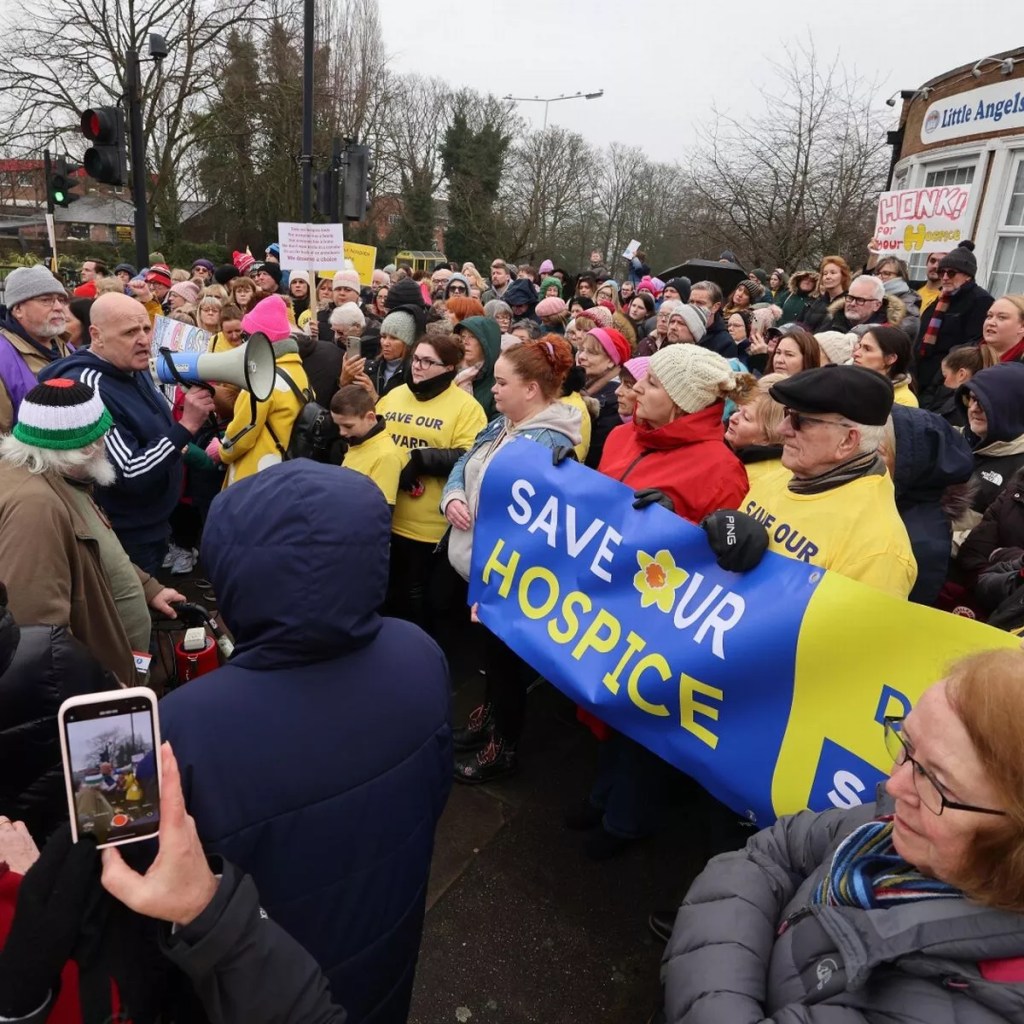
an Echo Photo of a protest to keep the inpatient ward in Marie Curie

The Marie Curie campaigners to keep the Woolton hospice inpatient ward open, spoke in the public questions session at the start of the ICB meeting. They spoke movingly about the need for end-of-life care, but no concrete proposals were made to save it. The responsibility is shared between the ICB and the charity.

The hospice campaign is doing such a good job,we give them our full support.

Isues at the ICB meeting

  • The NHS is facing harm nationally and locally. The Government and the NHS bodies are aware of this. The ICB’s finances come from the Government.
  • The highest risks shown in the May ICB papers are “Lack of Urgent and Emergency Care capacity and restricted flow across all sectors (primary care, community, mental health, acute hospitals and social care) results in patient harm and poor patient experience.”
  • Too few hospital beds and the chaos of the privatised social care system are behind the “lack of flow.”
  • Maternity. There have been many prestigious reports on the crisis in Maternity., many parent groups are fighting for answers. The UK has poor infant mortality rates. In England, the mortality rate for infants living in the 10% most deprived areas was over twice the mortality rate for infants living in the 10% least deprived areas. Maternal Mortality has risenThe maternal death rate increased to 13.41 deaths per 100,000 pregnancies between 2020 and 2022, according to figures published by the MBRRACE-UK investigation into maternal deaths in the UK. The figure was 8.79 in the period 2017 to 2019.” It is the highest death toll since 2003-05, when the maternal death rate stood at 13.95 deaths per 100,000.
  • Liverpool Women’s Hospital is featured twice in the ICB  register of risks, once because it is”not compliant” financially. Although Liverpool Women’s Hospital is the centre of attention as the largest Maternity service, financial and staffing problems are shared nationwide. There is a national Maternity crisis, with Nottingham currently in the spotlight. Leeds has also reported problems following parental complaints. Wes Streeting, Secretary of State for Health and Social Care,  has apologised to bereaved parents (as reported in the Health Service Journal). £100m was invested into improving Maternity safety annually following the publication of an interim report into poor care at the Shrewsbury and Telford NHS trust. However, the Royal College of Midwives reported that this national Service Development Funding (SDF) for Maternity services will drop from £95m in 2024-25 to just £2m in 2025-26. The Royal College of Midwives said, “These budget cuts are more than shocking; they will rip the heart out of any moves to improve Maternity safety. The Government has taken a wrecking ball to work that’s being done up and down the country to improve Maternity safety, something which is desperately needed.” When questioned, the ICB did not share Gill Walton’s concern. Yet Ormskirk Hospital Maternity service, one of the ICB’s Maternity providers, receives a requires improvement rating from the CQC, Liverpool Women’s Hospital requires more funding.
  • Our campaign to Save Liverpool Women’s Hospital is inextricably linked to the need to fully restore the NHS as a national, publicly owned, publicly provided, democratically accountable service, well-funded and well-staffed. There is a national Maternity crisis due to understaffing and underfunding. The situation for the Liverpool Women’s Hospital was not directly addressed, however, the path the ICB started on with the Engagement process last year is carrying on and that Liverpool Women’s Hospital cannot function without additional funding, but that is true of Maternity nationally. It is unclear when we will hear more of the plans for Liverpool Women’s Hospital.
  •  Poverty and ill health. The problems in poverty, ill health  and life expectancy
The Mother Statue at Liverpool Women’s Hospital

The fundamental problems are understaffing, inadequate resources, privatisation and underfunding. Few people expected the situation to continue and the issues to deepen after the Conservatives were booted out of Government. For an assessment of what the Labour Government has done, see here. We started this new Government with fewer beds and doctors per head of population than other advanced countries like France, Germany and Spain.

Labour MPs are publicising the Repairs funding the Government are giving to our hospitals but the underlying situation is a disgrace. It is a bit like an abusive husband deigning to repair the roof. The cuts to main services outweigh this, but do some MPs even know, or bother to find out?

The ICB model imposed on the NHS in 2022 is fundamentally flawed. It uses commercial rather than public service systems . Privatised public services do not work well, and mixed public and privatised health care, as we now have it in the NHS, is wasteful and damaging.

The level of funding for healthcare in the UK is inadequate and below the level provided in other advanced economies.”Among the G7, the group of advanced economies to which the UK is most commonly compared, the UK is the joint lowest spender, regardless of how we measure spend. A 2022 table puts us 37th in the international spend per head of population. Another study shows the US as the highest spender with the worst outcomes. The UK is 11th out of twelve in expenditure, but it still has better outcomes for the money spent. Our outcomes, though, are worse in cancer survival than in any country except the US. Yet they want us to emulate the US system! The Government defers to the big US companies from whom advisers and senior posts are appointed. Simon Stevens, the previous boss of the NHS under the Conservatives, came from UnitedHealth.

The ICB gives the providers (mainly hospitals) about £2,500 per annum per head of population. The level of cuts demanded by NHSE and the Government is unacceptable and will cost lives, pain and suffering.

What we learned from the ICB meeting on May 29th 2025.

“On April 30th 2025 the ICB submitted a compliant plan which has resulted in both the ICB and every Cheshire and Merseyside Trust provider taking on additional cost improvement requirements (cuts to you and me, our edit) resulting in an aggregate deficit across the 16 NHS providers of c£228m, offset by a surplus for the ICB of £50m.

Whilst agreeing a plan was essential to securing the deficit support and cash to underpin this, our attention must turn now to the effective delivery of the plan and effectively mitigating the risks.”

Risks

On Page 507, the most critical risk was “Lack of Urgent and Emergency Care capacity and restricted flow across all sectors (primary care, community, mental health, acute hospitals and social care) results in patient harm and poor patient experience, currently rated as critical,” mentioned above.

Two other risks had the highest score of 25: Elective Care and financial duties (page 550).

The ICB receives an “allocation” of money from the Government. They then must distribute that money amongst the “Providers” (the hospitals, primary care, and other services) and pay for some aspects of social care, prescriptions, services outsourced to private contractors, and private sector financial advisers like Price Waterhouse Cooper.

The NHS staff work long hours for inadequate pay and deserve much better. We thank the NHS staff and will campaign to make the NHS a great place to work once more.

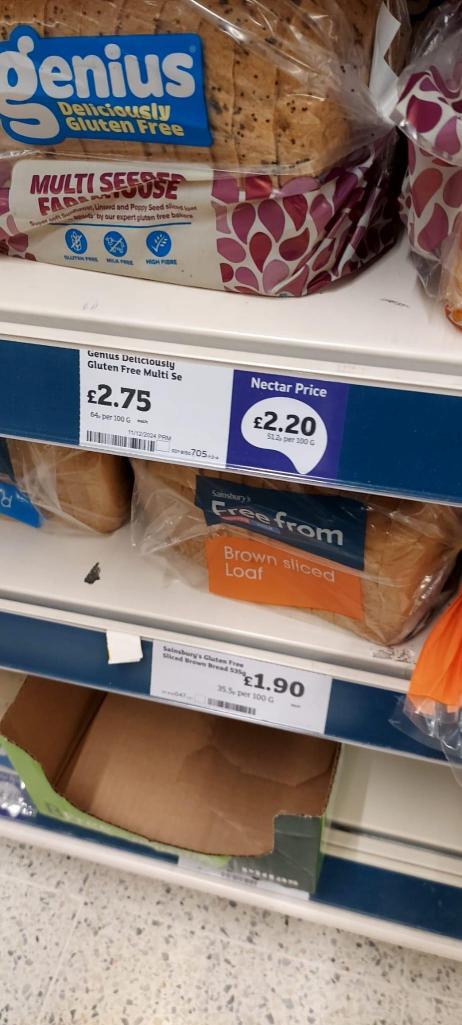
Not even the poorest celiac children will now get products on prescription.

Marie Antoinette comes to Liverpool in 2025

Professional people making cuts that will make the poorest of families struggle to feed their families still more difficult is always disgusting, but when they ignorantly suggest people can get their essential products (such as gluten-free products for celiacs) from food banks, then the blood boils. Coeliac is a serious illness, especially for children, if not tackled by avoiding gluten foods which are up till now available on prescription. No one will use a prescription if they have to pay for prescriptions, so it’s children and less well-off people who need this. Hear our response at about one hour 37 minutes in.

Why don’t they hit the rich with their cuts? The cuts that the ICB had a choice in were cruel. They coldly and deliberately made cuts that would hurt some of the poorest in our communities, cuts that would make a slight difference to the overall budget problems. The people of Cheshire and Merseyside deserve much better. Will our area’s people passively accept this or organise to gain proper funding and an open democratic organisation of our healthcare? We say organise!

They also cut the number of fertility treatment cycles available in Cheshire and Merseyside to one. On average, it takes more than one treatment to conceive. Of course, you can have more if you pay!

Provision for long COVID was sent back to the GPs.

The scheme to take gynaecology into the GPs’ practices has been defunded.

This system of cuts is facing the ICB for the foreseeable future unless we fight like our grandmothers and great-grandmothers fought for health care.

The “winter” crisis

Cheshire and Merseyside ICB do not have enough staffing or funding to stop the winter crisis continuing into summer and through next winter. Indeed, they are expected to make further cuts. The Royal College of Emergency Medicine recently published their estimate of the number of extra deaths caused by this situation last winter; “New analysis by the Royal College of Emergency Medicine reveals that there were more than 16,600 deaths associated with long A&E waits before admission in England last year”” That is an increase of 20% (2,725) compared to 2023.

These are the issues in the “Winter crisis”. Be clear, the staff work hard and we thank them for all they do, but we do not help if we keep silent and let an unacceptable situation continue:

Liverpool Echo Photo of Corridor care
  • Using temporary escalation spaces to accommodate patients (corridors or even bathrooms for you and me). This is when you are acutely ill.
  • Waiting on trollies, rather than beds, for many hours in corridors.
  • Waiting “Fit it to sit” those not so sick that they are put on trollies, or if trollies are not available, being treated in chairs.
  • Having no access to toilets, showers, or changes of clothes.
  • “Boarding-in” in wards. This is where patients are put in a ward not linked to their illness and not in one of the regular beds in this ward, so not within the normal staffing levels.
  • Long waits to be seen by a doctor in the A&E.
  • Long waits for a bed once the Doctors decide to admit a patient.
  • Long waits for social care once treatment has been completed in the hospital.
  • Ambulance response times are slowed by Ambulances being stuck queuing outside the hospital.
  • Last winter, the situation was grim, and Liverpool Hospitals A and E had to close its doors despite the following steps: In order to free up beds, the Liverpool hospitals paid for patients who no longer needed hospital treatment to go to care homes, which provided a higher level of care than the patient needed. Arrangements were made to divert some people to walk-in centres. The public responded by not using A&E unless their condition became too severe (this can cause problems later, as treating patients at the start of their illness, rather than waiting for it to progress, is the better option). The ICB reported a dramatic drop in low acuity (less ill) cases during the highest demand period. Northwest Ambulance put on extra staff.
    This is emergency planning being used routinely. Yet hospitals are expected to make cuts year on year.

All of this is unacceptable, and with resources, it is avoidable.

The original model of the NHS was a national public service, publicly owned and publicly delivered, providing the best available treatment for everyone. The NHS should return to being a fully publicly provided service. We should not pay big US and UK corporations that do not improve our healthcare but leech resources from it.

Ordinary women in 1916 fought to get good Maternity care. We can fight for it too

The Dark Side of American Health Insurance

Insurance is often proposed, most famously by right-wing parties, as a solution to the NHS’s recovery. Yet, the American healthcare system is roundly disliked by ordinary people in the USA. It also has the worst health system in the developed world, according to research conducted over many years by the American Commonwealth Fund.

We have lots of links to give more information, but the post can be read without following them.

In this blog post, we are focusing on the insurance aspect of US healthcare.

US Healthcare Insurance premiums alone cost about half of a starting salary to insure a family. (Many people pay insurance through their wages.)

Salaries in the USAIn ££   Cost of health insurance per year for a familySingle person health insurance family health private
insurance per month
Teacher
(starting salary)
$50,000£38,000$25,000$8,951$2,084
Bus driver
(starting salary)
$41,000£31,000 Approx$25,000$8,951$2,084

UK teachers start on £31,605 in 2025

The following are the most hated parts of that system:

Bankruptcy: Medical bills cause more bankruptcies than any other event.

Decide. The insurance company decides if you need the treatment, not you or your doctor.

Deductibles: This is the amount you have to pay before your insurance starts covering your costs. There are many payments patients have to make after they pay for the insurance premiums. “Deductibles are amounts patients pay before insurance starts covering expenses. Co-payments are fixed amounts paid for specific services, and co-insurance is a percentage of the cost the patient pays.” 

Co-pays: This is like an excess on your car insurance. It’s what you have to pay in addition to the insurance for each different incidence of illness or health protection event (check-ups etc.)

Denial. You can be denied care by your insurance.

Defend. The insurance companies fight you in court if you contest their decision. They have big legal teams and it can be cripplingly expensive fight them in court.

Debt. 100 million Americans have medical debt.

Die early. Americans die earlier than in other wealthy countries

Disrespect. Giving birth costs a fortune, and more women and babies die at birth than in the UK. “25% of all stillbirths in the US are preventable today.  47% of all stillbirths in the US at 37+ weeks are preventable today.” 

Fragmentation and complexity: There are many different kinds of health insurance, depending on how much you can pay. The more you pay, the better the service.

Medicines, even with insurance, cost too much, including essentials like  Insulin and EpiPens.

No Cover.Some people can’t afford insurance at all.These people pay for healthcare from their own savings if they have any, from go fund me appeals, charity or go without.

Waste. Healthcare costs the US government twice as much per person as the NHS costs in the UK, despite insurance, yet it has worse outcomes for patients.

The system makes billions for the big corporations and is designed for profit.

AI, artificial intelligence data is used by insurers to say when patients should be discharged, causing real hardship.

The average cost of childbirth in the USA in 2020 was  $13,383, with patients paying about $2,300 out of pocket in addition to the insurance

  •  Infant mortality in the US is a disgrace. The UK isn’t even in the top ten, but the US is worse again.”America’s infant mortality rate of six [per 1,000 live births] is nearly 70 per cent higher than the average rate of about three for the European Union countries. And a baby born in the United States is nearly three times as likely to die during their first year of life as a baby born in Iceland, Japan or Sweden
  • 2022 Infant Mortality Rate: 5.547 deaths per 1,000 live births. 
  • 2022 Maternal Mortality Rate: 22 deaths per 100,000 live births. 
  • Factors contributing to higher rates: The US has higher rates of infant mortality compared to other developed countries, with factors such as racial disparities and lack of access to healthcare.

The complexity of the US system is staggering and difficult for people to navigate. Healthcare calculations take a lot of people’s time and effort. This quote from a report to Congress shows some of the complexity.

Private health insurance is the predominant source of health insurance coverage in the United States and includes both group coverage (largely made up of employer-sponsored insurance) and direct-purchase coverage (which includes plans directly purchased from an insurer, both on the health insurance exchanges and outside of them). In 2023, an estimated 180 million individuals (54.7% of the U.S. population) and 46 million individuals (13.9% of the U.S population)were covered by group coverage and direct purchase coverage, respectively.

On top of the price paid by  ordinary people in the USA, the government then spends twice as much per person on healthcare as the UK government spends, so insurance is no answer to  those  who say, “We can’t afford the NHS”.

In 2023, the seven big for-profit U.S. health insurers’ revenues reached $1.39 trillion, with profits totalling $70 billion.Health insurance is run to make profit not provide care. The profits are enormous. United  Health reported net earnings of $420 billion per year.

The US system costs the US government more per person than the NHS costs the UK government, even though ordinary people pay a lot for their healthcare.

  • The federal government spent $1.9 trillion on health care programs and services in fiscal year (FY) 2024, 27% of all federal outlays in that year, and collectively the largest category of federal spending.
  • Forgone tax revenues to the federal government resulting from tax subsidies for employer-sponsored insurance coverage (ESI) and a portion of the Affordable Care Act (ACA) premium tax credits, together totalled $398 billion in FY 2024.
  • Over 80% of all federal support for health programs and services, including spending and tax subsidies, goes to programs that provide or subsidize health insurance coverage, with 36% going to Medicare, 25% going to Medicaid and CHIP, 17% going to employment-based health coverage, and 5% going to subsidies for Affordable Care Act (ACA) coverage.
  • In 2023, U.S. citizens collectively spent $4.9 trillion on healthcare, which is equivalent to $14,570 per person. Some of this money will be paid for patient care, some for profits, and 85% will be held in trust and invested by the insurance companies, which gives them even more financial clout than their published profits indicate .

Many in the USA call for a single-payer system. “Single-payer” describes the mechanism by which healthcare is paid for by a single public authority, not a private authority, nor a mix of both. In the USA, this would mean that the government paid everyone’s premiums, and it would be an improvement, but it is not the same as the NHS, which is more than a single-payer system.

The NHS, as it was founded, is much more than a single-payer system. The government, acting on behalf of all of us, pays for healthcare and provides it through a coordinated and integrated national system of hospitals, general practitioners (GPS), and primary care. Social care was once part of Government provision, but it was privatised under Thatcher.

From the Good Law Project

The same huge corporations that have inflicicted this damage on the health and well being of people of the United States, have been invited into the NHS including those who have been penalised in the US for their behaviours.

Centene began moving into the UK healthcare sector in 2017. In 2020 it acquired Circle Health and later AT Medics becoming the largest private provider of UK GP surgeries.

Corporate Watch uncovered that Centene and its subsidiaries have received at least £970 million in NHS contracts since 2013; £346m of this was part of a £1.57 billion COVID contract issued in 2020.

In the US, Centene is in the top ten companies with the highest penalties for government contract related offences, having paid over $1 billion dollars in fines for filing false claims.

This old cartoon from the very founding of the NHS shows that the original ideas are very strong.

The miners who organised their own health service in some of the mining towns, the women’s organisations like the Cooperative Women’s Guild, and the socialist doctors in the 1930s who fought for health care for women and babies, all built the campaign for the NHS. It was Nye bevan who as the minister in the 1945 Government brought it into being and sustained it in its early years. It is well worth reading Bevan’s own thoughts on this matter reproduced here courtesy of Public Matters.

NHS was founded to provide:

Healthcare for all, free at the point of need (the previous government changed it to be no longer free for migrants).

A comprehensive, well coordinated national service (but the ICB system breaks that up).

Publicly provided, not for profit (Lots of profits are being taken now).

Education and long-term plans for the workforce (well, it did so some time ago, now, workforce issues are chaotic).

National terms and conditions of employment (unless it’s outsourced or in-sourced).

Focus on preventative medicine and public health. Public health has been cut by 26% since 2015/16, yet in this time of climate and environment crises, pandemic and, gross poverty and poor housing we need it more than ever.

Bevan said, “The essence of a satisfactory health service is that the rich and the poor are treated alike, that poverty is not a disability, and wealth is not an advantage.”

This national system has been damaged by recent governments and is still being damaged by the current one. It has been damaged by bringing in huge for-profit corporations and small-scale privatisations, and by massive cuts and underfunding and understaffing. That’s why we are fighting to restore and repair the NHS. The campaigners decades ago succeeded in establishing the NHS. If we build a big enough movement, we can do the same again; no-one else will do it for us.

At the Save Liverpool Women’s Hospital demonstration in 2023

Defend Our NHS writes”The biggest US health insurance outfit is the notorious United Health of Minneapolis[i]. Simon Stevens, a previous vice-president of this monster (now with a seat in the House of Lords), designed and introduced the destructive ICS changes with the connivance of Jeremy Hunt and without parliamentary approval

Wes Streeting has made Samantha Jones, (a key member of the American health privatisers’ boss class), the head of the Department of Health and Social Care. Under Streeting, the NHS has told the different Integrated Care Boards to hand over the foundations of our health information to Palantir and Peter Thiel, a Trumpcontroller“.

We want to restore and repair the NHS on its founding principles. In that form, it was the best in the world. Cuts and austerity have severely damaged the NHS, but it is still better than the US insurance system. We need to go back to Bevan. Our campaigns fight to Restore and Repair the NHS. Please join us.

Runcorn: Repair and Restore the NHS.

Picture Credit Steve Wright Flickr

Repair and Restore the NHS for Runcorn, Frodsham, Helsby, Elton and Guilden Sutton. (This is NHS campaigners’ contribution to the debate in the Runcorn By-election and wil be upated during the campaign).

The Runcorn By-election comes at a time of anger over the state of public services including health and education, anger at the Government leaving the NHS with inadequate resouces and thereby causing deaths and making cuts at the expense of the poorest in society and those who literally need most help.

Keep our NHS Public expresses the anger (here) of most who campaign to restore and repair the NHS.

We are calling for a movement to demand the restoration and repair of the NHS. Privatisation has been a disaster for patients, staff, and the government’s spending. (Privatisation, in this sense, is the NHS paying for-profit companies to do medical work that the NHS previously provided.It’s not just charging patients)

We want, and demand this, of all the parties.

A fully funded national NHS, a fully staffed NHS, maternity care that respects and keeps women and babies safe, with no more hospital closures, a full GP service, dentistry for everyone, healthcare that manages winter well without corridor care and “boarding in“, mental health care brought back into the NHS. We want an NHS that is a good place to work. We need a good universal social care system. We want rid of privatisation and want a retun to the orginal model of the NHS without the big corporations.

Good healthcare is an excellent investment in the nation, repaying the cost in health, wealth and happiness, and financially with at least £3 return for each £1 invested. Even the world bank says “Investing in a country’s healthcare system is a strategic move that yields significant economic and social benefits, fostering a healthier, more productive workforce and contributing to overall national development and prosperity.”

The NHS was founded in July 1948 to be a national universal public service, providing the best available health care to all UK people. It was not designed to make money for big health corporations but to improve the health of the people, which it did for decades.

This model of healthcare once made the NHS the best health service in the world, in 2014 and in 2017.

The NHS was far more economical and effective than the US model.The ICB’s brought in in 2022 Act are modelled on the US Accountable Care Organisations.

The US model of healthcare is unacceptable; never mind what right wing parties say.

The average annual health insurance premiums in 2024 are $8,951 for single coverage and $25,572 for family coverage. The average single coverage premium increased 6% in 2024 while the average family premium increased 7%. The average family premium has increased 24% since 2019 and 52% since 2014“.

In additon to what people in the USA pay for insurance and the many co-pays, the US government pays more per head of population than the UK does, with far worse outcomes, particularly for women and babies. Yet the US health corporations are influential in the semi-privatised NHS.
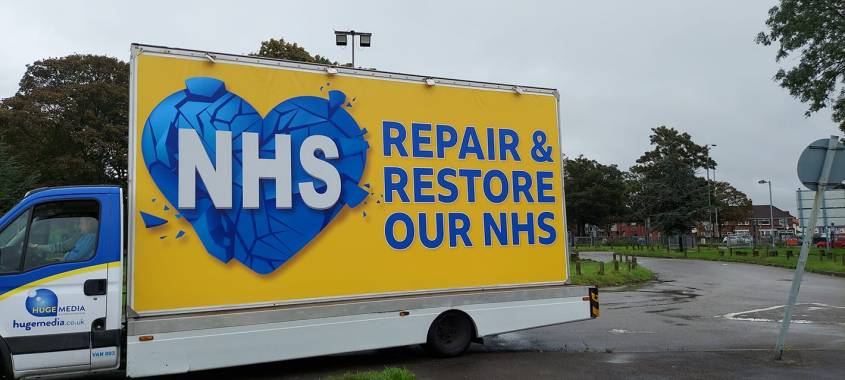
Over the last  15 years, this service has been damaged by  

  • Real-terms funding cuts,
  • privatisation,
  • enforced competition between hospital trusts,
  • damaging legislation (in 2012 and 2022), and reorganisation on the US model, all the time the governments are “advised” by big health corporations that preside over the worst healthcare in the advanced world in the USA.
  • The increasing poverty and ill health of the people.
  • The fabric of the hospital buildings has been neglected and we saw broken promises of new build hospitals.
  • Cuts in the number of  hospital beds
  • Poor workforce planning so we have fewer doctors per head of population than other advanced countries, yet we have unemployed GPs and hundreds of doctors facing unemployment in August.
  • Outsourcing of services,  
  • Services such as NHS dentistry are disappearing from many areas, and complex audiology is in severe trouble.
  • Commissioning medical services from private companies. 

We have 6.24 million individual patients waiting to be treated, yet doctors are out of work, there is corridor care in A & E, locally we have the longest waits for admission to a ward in the country after being admitted through the A&E, and long ambulance waiting times. All this with staff overworked and underpaid. Billions are paid to outsourced for profit providers especially in mental health  

We can win back the NHS

The NHS came from the people. They fought long and hard for it. From the miners of Tredegar, to the Women’s Cooperative Guild and many more, the fight for universal health care, was a long struggle. We must fight to win it back. Working class women played a big role in demanding healthcare and won some clinics but the demand was for care for everyone, from before birth to the grave and they did not stop till they won that health care. Our healthcare was never given to us by the rich. We had to fight for it.

Britain had appalling health care before World War 2. Trade Unions, especially in the mining towns, fought for healthcare for all in their areas. In some areas men were covered by workplace insurance (the panel), but not women or children. Even if a woman was employed and covered by insurance, maternity care was not included. The number of babies dying at birth was appalling, and women were more likely to die in childbirth than miners to die down the pit. Women’s groups fought for the right to health care for babies and women.

 On 5th July 1948, the NHS was founded and people could see the doctor even if they had no money; there was universal access to healthcare for the first time in the UK. The health of the nation, especially children and women giving birth, improved steadily until the governments brought in austerity.

This cartoon Charley your very good health, from the founding of the NHS is interesting even today.

Attribution-NonCommercial 4.0 International (CC BY-NC 4.0). Source: Wellcome Collection.

The National  Health Service linked all the different kinds of treatments, all the hospitals, all the  GPs and clinics into a single organisation that allowed information and research to be shared freely.

 Cheshire and Merseyside NHS coordinated campaigns are formed by Keep Our NHS Public, Defend Our NHS, Save Liverpool Women’s Hospital, local Trade Union Councils and some union branches. We call on the government to ditch their pro-privatisation policies, to fund the NHS to European levels,and to move legislation to reinstate the fully public NHS.

 Please tell candidates you want to see the NHS restored and repaired. We saw the damage the conservatives did.  Reform’s leader has called for an insurance model for years, and the new government has failed miserably in averting the terrible winter crisis and the Maternity crises.

Save Liverpool Women’s Hospital: A Call to Action

We want to save Liverpool Women’s Hospital. We ask for your help in saving it. We call on the tradition of women struggling for our rights for our families and our communities. We have seen how women can mobilise and make their voices heard. We call on men to support us.

( This blog post has many links as evidence, but the reader does not need to read each to understand the post.)

The Cheshire and Merseyside ICB (the body that currently controls the NHS in Cheshire and Merseyside) has published its report on the engagement process for the future of Liverpool Women’s Hospital. This report has no proposals but says further work will be done. The report does not accurately reflect what we saw happen in the engagement meetings nor the number of responses we know went into the engagement from those who want to keep  Liverpool Women’s Hospital,  nor does it adequately recognise our 77,000 petition signatures, giving it just a passing mention, nor does it recognise our detailed and referenced response. It ignores public meetings hosted by MPS. It’s as though this campaign doesn’t exist, as though no one has objected. We will post a detailed reply shortly.

Meanwhile, the severe issues with our NHS and the Maternity service continue. Austerity continues and continues to cost the lives of women and babies. The Labour Government is continuing with Austerity and cuts. It is not repairing the NHS, but rather further embedding US for-profit health companies and data companies, like Palantir, into the service.
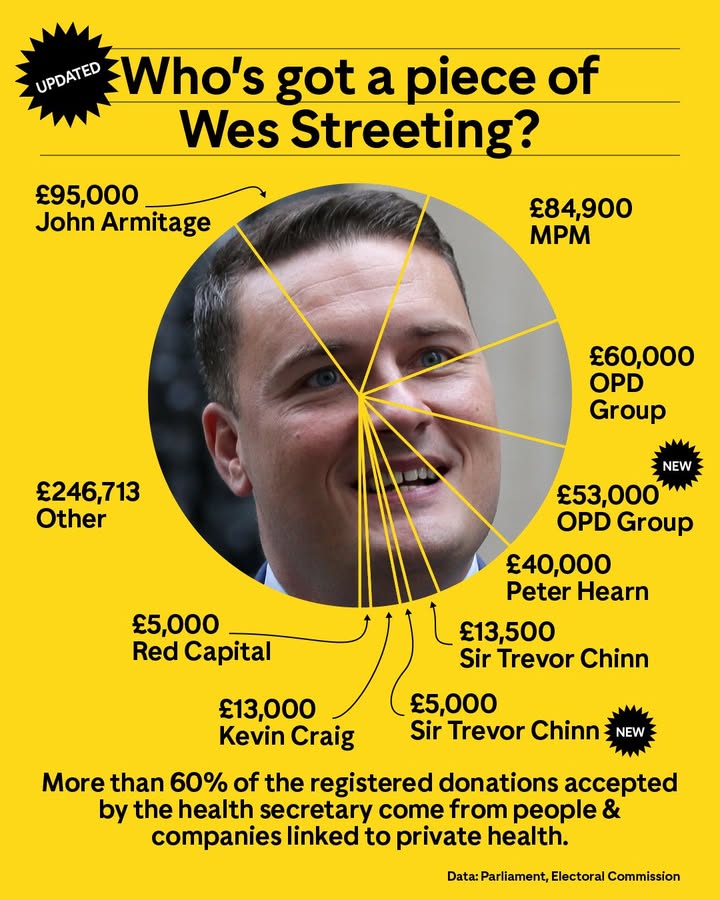
Whisper, chat, or shout about it – whichever way – we need to talk about the NHS. Our NHS is underfunded and understaffed, and its wealth is diverted to private profit by decision, not by accident. Women and babies are at risk. Gynaecology services are inadequate. The UK has the second-highest maternal death rate among eight major European nations, with only Slovakia performing worse, according to an analysis published in the BMJ last year.

This blog focuses on women’s health, Maternity, and children’s health and well-being, and, because it’s unavoidable, the situation in Accident and Emergency services. There are many other areas of concern about what’s happening in the different parts of the NHS. All these issues touch on and affect each other. Stand up and speak out for the NHS. We send solidarity to all the NHS campaign groups.

Understaffing is caused by underfunding and unnecessary pressures at work, leading to staff resigning and even leaving the profession. In 2024, despite staff shortages, hospitals were expected to make 6% cuts. (CIPS). Liverpool Women’s Hospital has had too little funding for over a decade. There have been times when the Care Quality Commission have criticised the hospital. In 2023, the CQC said, “Not all staff felt respected, supported, and valued. However, they remained focused on the needs of patients receiving care. Some staff had raised concerns several times regarding safety and staffing directly to senior leaders; however, they saw no quick action or improvement. The CQC also said that “the trust must ensure they deploy sufficient, suitably qualified midwifery staff across all areas of the service. Regulation 18 (1).” The latest CQC report is much better. The rating is now good. We have been told that Liverpool Women’s is now fully staffed with midwives. We will follow up on this with the hospital to see how this tallies with the Channel 4 report on staffing.

Young women have mobilised in the past and will mobilise again.

We want the Maternity, Gynaecology, fertility, genetics and neonatal services to remain as a whole with the full team at Crown Street.

We want enough funding and staffing to improve the experience of birth and treatment at the hospital for women, babies, and staff. Seventy-seven thousand people have signed our petition, on paper and online. The petition is still growing. We campaign for improved Maternity services across the country. We say that Birthrate+ is not enough. We demand much better NHS staffing, especially in midwifery and neonatal care. Channel 4 has revealed the state of nurse and midwife staffing in the NHS and LS; staff are diverted for daily emergencies, breaking the minimum even within tight essential staffing levels.

The national picture for Maternity is cause for serious concern and should be cause for action from any serious politician, any concerned woman. The BMJ said, “The number of women dying in the UK during or soon after pregnancy has increased to levels not seen since 2003-05, latest figures show

MBRRACE reported in 2024, “There was a statistically significant increase in the overall maternal death rate in the UK between 2017-19 and 2020-22. This increase remained statistically significant when deaths due to COVID-19 were excluded, which suggests a concerning trend independent of COVID-19 specific deaths.

In 2020-22 there were 13.41 deaths in every 100 000 maternities,1 significantly higher than the maternal death rate of 8.79 deaths per 100 000 in 2017-19 and similar to 2003-05 (13.95 per 100 000). The CQC inspected all the Maternity services across the country.

The safety of Maternity services remains a key concern, with no services inspected as part of our inspection programme rated as outstanding for being safe. Almost half (47%) were rated as requires improvement for the safe key question, while 35% were rated as good and 18% were rated as inadequate. Where we had the most concerns, we used our enforcement powers to require trusts to make significant improvements to protect people from risk of harm.

Channel 4 figures show that while the Liverpool Royal is short of 4% of nurses in all wards and 17% in Critical Care, Liverpool Women’s is short of 20%, which is equivalent to being short one nurse in every five. and 17% of midwives. Aintree is short 18% of nurses and 10% in critical care. Alder Hey Hospital is short 30% of neonatal nurses. The trust must ensure that it deploys sufficient, suitably qualified midwifery staff across all areas of the service.
Regulation 18 (1)

As members of the public, campaigners attended board meetings and have never seen this staffing problem made clear in the papers. However, until the merger with the Royal Aintree and Broadgreen, fill rates for the different wards were reported in the board papers. This item of reporting must be reinstated in the new board papers. We have been told that Liverpool Women’s is fully staffed with midwives. We will follow up with the hospital.

The meeting about the hospital’s future.

The process underway to decide what happens to Maternity, Gynaecology, Neonatal services, fertility and genetics in Liverpool formally started in 2024 with “engagement” with the public. When the NHS makes significant changes to NHS services, the Integrated Care Board ( the current decision makers for the NHS in Cheshire and Merseyside) have to go through an engagement process, which they have done, then report on the engagement process and get permission from the board to proceed to put their plans to the public in a Consultation process. This engagement report will be received at the next ICB. The next ICB meeting is due to happen on March 27th, 2025, at the Events Hall, The Heath Business and Technical Park, Runcorn, WA7 4QX, from 9 am. The first half hour is to answer public questions.

This meeting with Ian Byrne MP voted 100% to save Liverpool Women’s Hospital.

Women and Children

Let’s build a movement to defend and improve Maternity services, fertility services, control over our fertility, and demand better healthcare for women.

Why? In the 20th century, women fought long and hard for safety in giving birth for mothers and babies, but now things are going backwards. Maternity units have been closed, and are being closed. There is a severe shortage of midwives, and no effective workforce plan is in place to address the problem. There are thousands of women out there who have midwifery training and have given up, either too broke, too tired, too fed up or outraged at the conditions for the women they care for. Both Infant and maternal mortality have risen significantly during Austerity, while governments have been cutting services, starving the NHS of vital resources and letting poverty soar. But never mind the women and kids; the rich have been doing very well.

Build a movement demanding better health and healthcare for our children, whose health is suffering.

the rise in infant mortality means that UK is now ranked 30 out of 49 OECD countries – well behind other European countries except Bulgaria, Romania and Slovakia.”

Research shows that about 4-5% of women develop post-traumatic stress disorder (PTSD) after giving birth – equivalent to approximately 25,000-30,000 women every year in the UK. Studies have also found that a much larger number of women – as many as one in three – find some aspects of their birth experience traumatic.

“Investing in the early years is one of the most important things we can do as a society to build a better future and promote the nation’s health, well-being and prosperity. There is clear evidence that such investment will be cost-effective in enabling future adults to live long and productive lives.” 

People Power can save the NHS if we make the politicians listen. Things start to change when ordinary people make time to speak to each other, including their unions, workmates and colleagues, other mothers at the school gates, families, their organisations, clubs, and elected representatives. Women have fought back since the Suffragettes, the Match Girls, the women of Fords in Speke, when they fought for equal pay, since the fight for abortion rights, and the many, many times women have fought for good Maternity care.

Bleak midwinter 2025! Another reason to fight to restore the NHS.

Please help the struggle to restore the NHS. ‘People power’ can change government policies, and the current neoliberal, pro-privatisation, pro-business policies are at the root of the problems in our hospitals, in our GP practices and in social care. Write to your MPs, write to your councillors, raise it in your union branch, make the NHS the talk of the town, of the  streets, of the communities, of the workforces.

Look out for the public meeting that will be held.

Stay safe and keep warm. Put the heating on.

Restore the NHS as a fully public service, funded and staffed for all our mothers, daughters, sisters, friends, lovers, and every baby.

Restore the NHS as a fully public service, funded and staffed for all people.

We are the Save Liverpool Women’s Hospital Campaign. In this post, we are asking our supporters to also support the urgent initiatives from other organisations. The damage to Liverpool Women’s Hospital is symptomatic of all the problems of our NHS, and we fight for the whole NHS.

As we go marching, marching we battle too for men for they are women’s children and we mother them again”.

The staff and patients are feeling the harm done.

Our local hospitals are in the crisis which we warned about repeatedly, which was predicted, and anticipated. And all the while there were multiple meetings about how to make financial cuts (CIPs),and implement unprecedented (and we think, harmful) financial restrictions and huge reorganisation plans, not to deal with the winter crisis, nor the infant mortality issues, or the gynaecology waiting times, nor birth trauma, but to close services.

The winter crisis was and is avoidable. Capacity should have been built into the system. If Covid taught us one thing it was that we must have emergency capacity. Building capacity means planning well in advance in areas like staffing, in space and equipment, in funding, involving  both hospital and community health provision, in action to employ more GPs,in making schools healthier, in  mobilising all public services, and if necessary taking over private hospital capacity. Health campaigners have raised this in written and oral questions repeatedly since 2023, more than a year ago. The response was that this winter would be (according to the CEO of the ICB) “…slightly more austere than the previous two years.” The managers of the NHS, nationally and locally, knew what was coming this winter.

The future of Liverpool Women’s Hospital is in grave danger. Please sign our petition here if you have not already done so. Thankfully, LWH is still there and not (yet) fully merged with the other hospitals. Imagine pregnant women in 50 hour waits in A and E, as is happening today in Cheshire and Merseyside.

We raised all this repeatedly with the ICB, but the government made them follow Price Waterhouse Cooper’s cuts agenda, and didn’t that work well ? Fifty damn hours in the A and E!

Do not blame the flu! Do not blame the elders for staying too long in hospital. Privatising social care was a huge blunder. Impoverishing local authorities was a huge blunder.

lobbying the ICB, last winter!!

Save Liverpool Women’s Hospital is one of many organisations fighting to win the NHS back to its true potential, back to being the best in the world.

It is our NHS . Our great grandmothers, and grandfathers fought long and hard for it and won it. For seven decades, we paid for it, invested in it, grew it. For years people voted Labour because of the NHS.

Women hold up half the sky, but 76% of the NHS. The NHS patient facing workforce is massively female, and we thank them for their skill, dedication, humour, and sheer hard graft. The NHS must become a better place to work. Enough is Enough with workplace stress in the NHS. We need more staff and we need to retain those we have. We need education for our NHS to be free.

Women’s health is damaged by more than a decade of neglect.

A Parliamentary report last month spoke of “Medical Misogyny”. The report said women were being left in pain and discomfort that “interferes with every aspect of their daily lives, including their education, careers, relationships and fertility, while their conditions worsen.

We need another mass movement for the NHS to make this government listen.

Privatisation causes pain and harm in healthcare as it has in the railways, in water, in the post office, in royal mail, in telecoms, on the buses, in the power industry, in power, wherever it has touched public services. Private health care in the USA is a cruel, heartless scandal, but it costs the US government twice as much per head as the NHS costs the UK.

We need the billions Streeting is giving to the private sector in our hospitals.

Please sign this petition from “We Own it”. No to billions to the private sector while the NHS struggles.

Private hospitals use the same staff pool as does the NHS. We need more doctors midwives, nurses and other ( fully qualified!) medical professionals in the NHS, not in private hospitals. Private hospitals are not better, not safer, not well regulated, not actually the employers of their surgeons who need private insurance which can randomly be denied.

We oppose privatisation through the new ‘Big Data’ industries. See this shocking post from Keep our NHS Public research about Data.
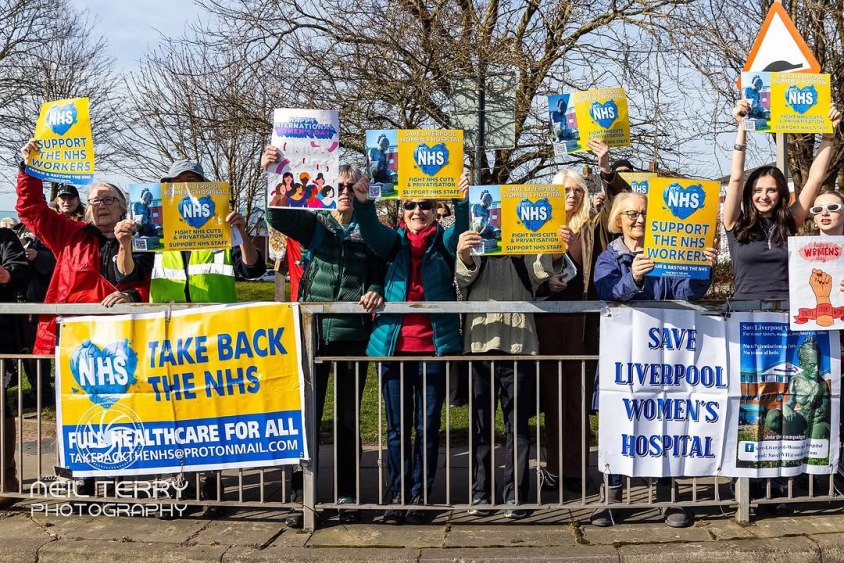
We say no to privatisation in the NHS, no to the government giving billions to private hospitals. Buy the damn hospitals and put them into proper public service.
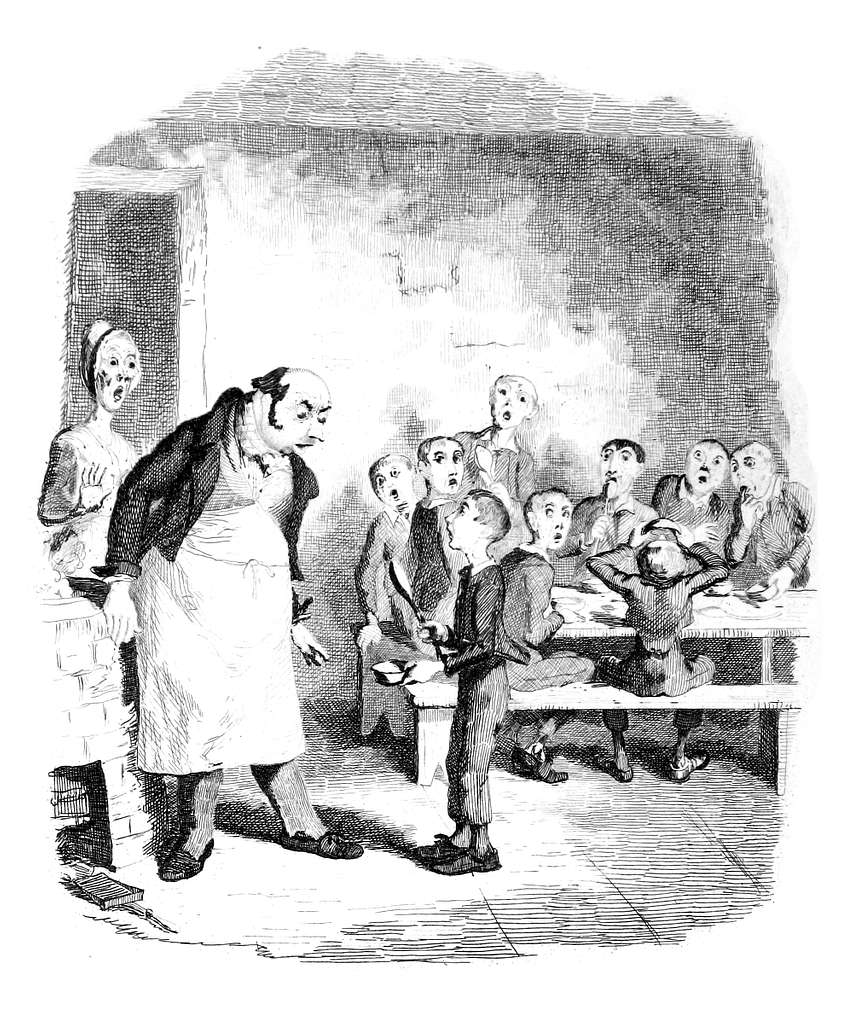
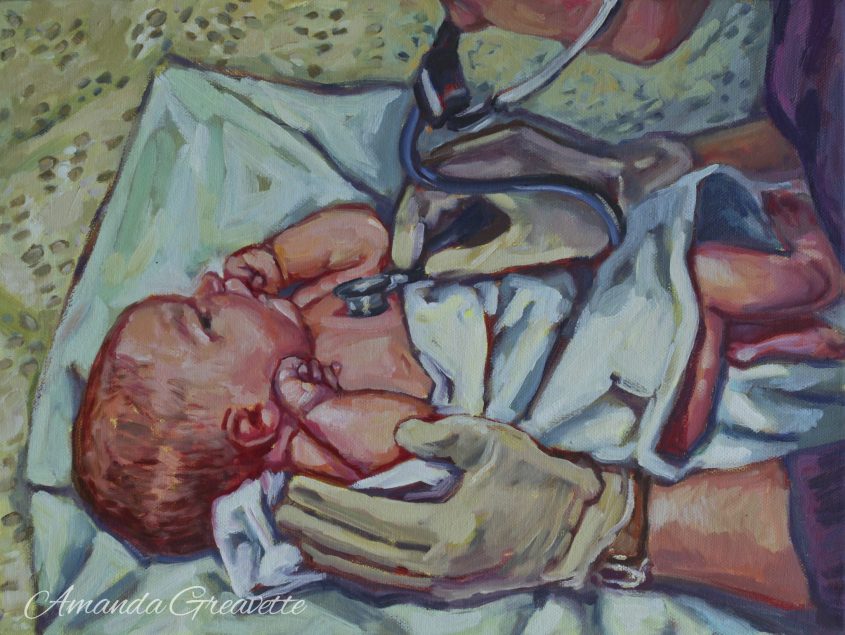
We say No to more PFI in our NHS. Sign a petition here