Tag: pregnancy

There is more to this “engagement ” than meets the eye!

We are campaigning for the best possible healthcare for Women and babies in Liverpool and beyond.The whole of the NHS has been damaged by under funding and privatization. There has been deep disrespect for the people’s health and especially the health of women and babies.The maternity service nationally is scandalously underfunded, understaffed, and under-resourced. Liverpool Women’s Hospital has been under threat all of this time. Our Campaign has fought hard for the NHS and especially for the Women’s Hospital. More than ninety thousand people have signed our petition, both online and on paper. We are still collecting signatures The petition says:

Save the Liverpool Women’s Hospital. No closure. No privatisation. No cuts. No merger. Reorganise the funding structures, not the hospital. Our babies and mothers, our sick women, deserve the very best.

Why is this important? All the maternity and women’s health provision of Liverpool was pulled into this one site. It’s a much-loved hospital. It provides crucial specialised care and the daily joy of new babies. It has a £20 million new neonatal unit and a new diagnostics centre being built. The driving force for closure is a clumsy funding structure, not the needs of women and babies. This is a modern hospital on a good site. and for our mothers, sisters, daughters, wives, lovers, and friends. The alternative wards in the new Royal are not equivalent.

This is a modern hospital on a good site. Our taxes built it for our babies and for our women.

You can see campaigners handing in 20,000 signatures  from the petition here.

Sign online here

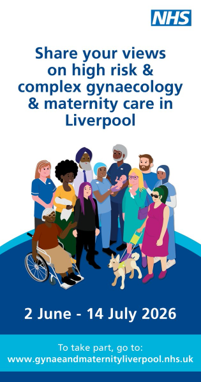
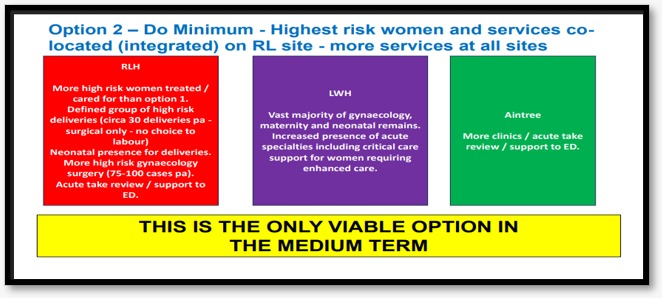
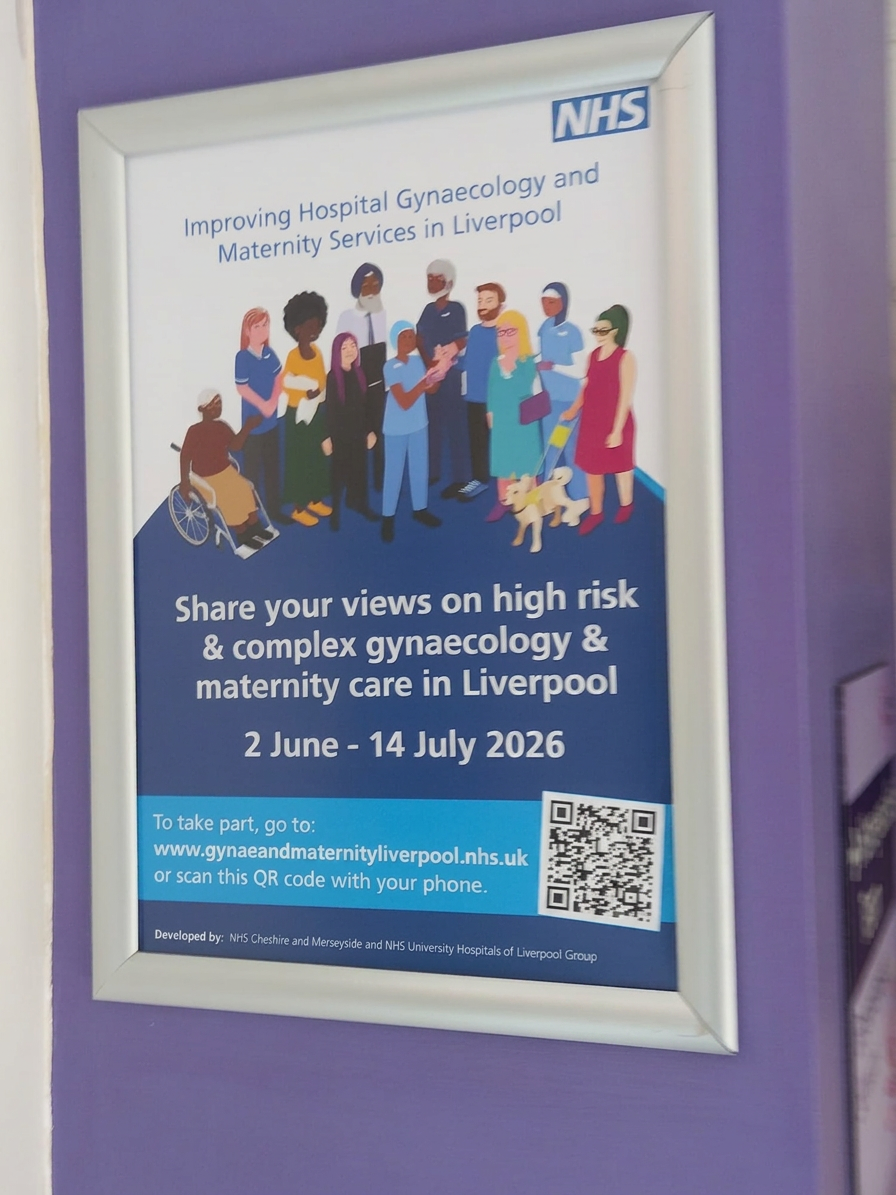
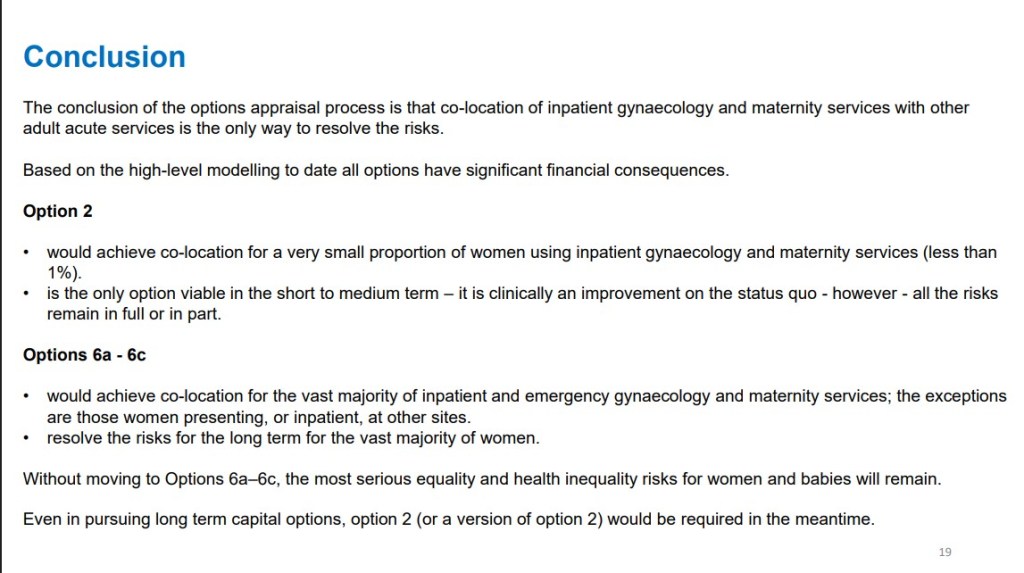
In June and July 2026, the plans for the future of Liverpool Women’s Hospital are out for a public ‘engagement’ exercise. We believe the information being given to the public is inadequate. The process will feature just  Option 2. Although a relatively small change, Option 2 is intended to be the forerunner of moving the whole service to the Royal.We say this is unacceptable. These decisions were as plain as the nose on your face at the Cheshire and Merseyside NHS Integrated care Board meeting in January.( The public can attend) These intentions should be made plain to everyone attending the engagement meetings.

This exercise is part of an intention to, over time, move treatment for women from Crown Street. As we understand it from board papers and attending the ICB, the initial group of women to have treatment under this scheme will be the most complex elective surgical cases in obstetrics and gynecology, who need either immediate access to the highest level of long-term intensive care or joint care from doctors with specialism not included in the Women’s.

Emergency patients are not included and cannot be included. They will still need the specialist doctors. We believe short-term intensive care is available at Liverpool Women’s Hospital. Occasionally, a very ill woman might be best served by ambulance transfer  to the Royal or another hospital. The Women’s  Hospital reported that they are developing a team for deteriorating patients. We hope this is in place quickly because it is much needed. Meanwhile Option 2 does not address the real issues at Liverpool Women’s Hospital.

How to take part in the Engagement about the future of Liverpool Women’s Hospital

Details of how to take part in this very limited public engagement can be found below, but please read our information on the process too. We believe there are significant omissions in the published case.

If you would like to attend the engagement meetings, they are on.

•Monday 15 June, 2.00pm at Merseyside Fire & Rescue Conference Centre, Bridle Road, Bootle, Sefton, L30 4YD

•Monday 29 June, 11.00am at The Old School House, St John’s Road, Huyton, Knowsley, L36 0UX

• Tuesday 30 June, 5.00pm at Blair Bell Room, Liverpool Women’s Hospital, Crown Street, Toxteth, Liverpool, L8 7SS

This is the registration page link for three public meetings.

Information Sessions – Improving hospital gynaecology and maternity services in Liverpool.

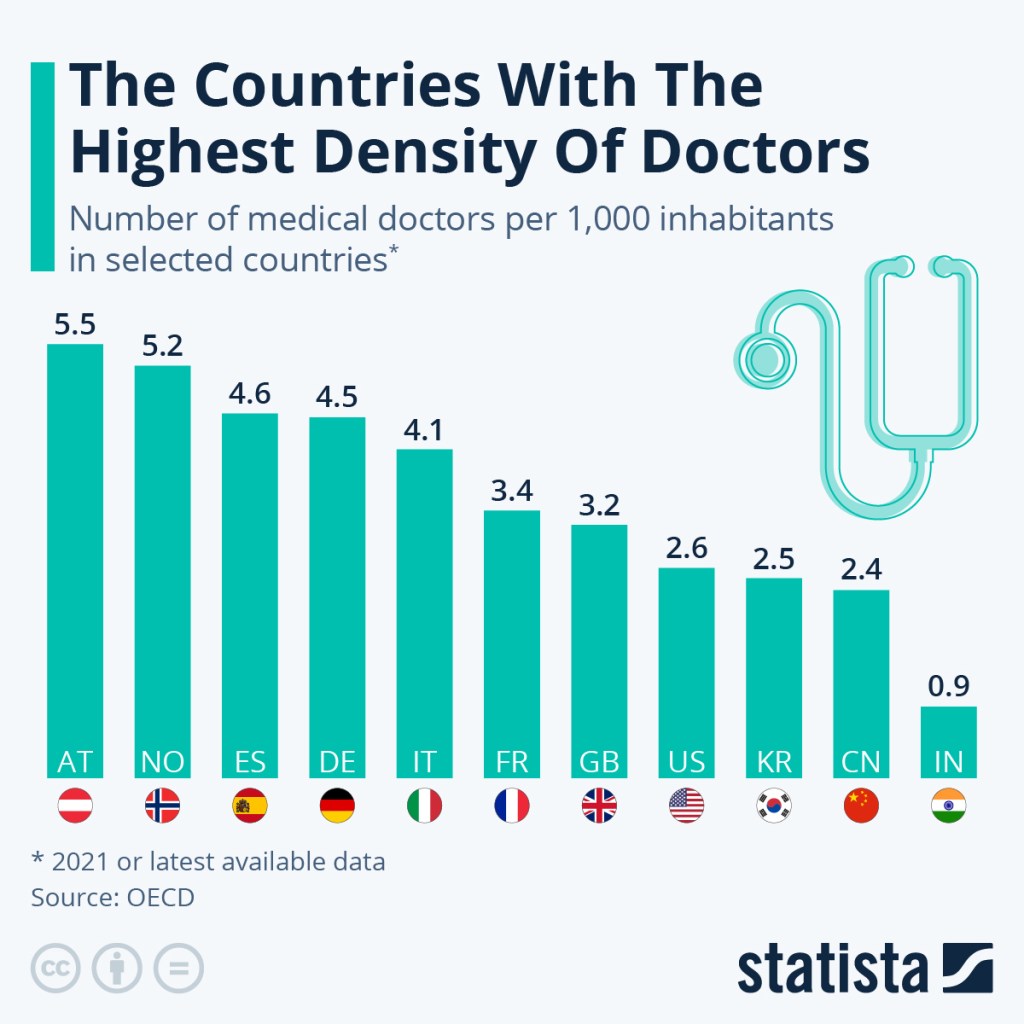
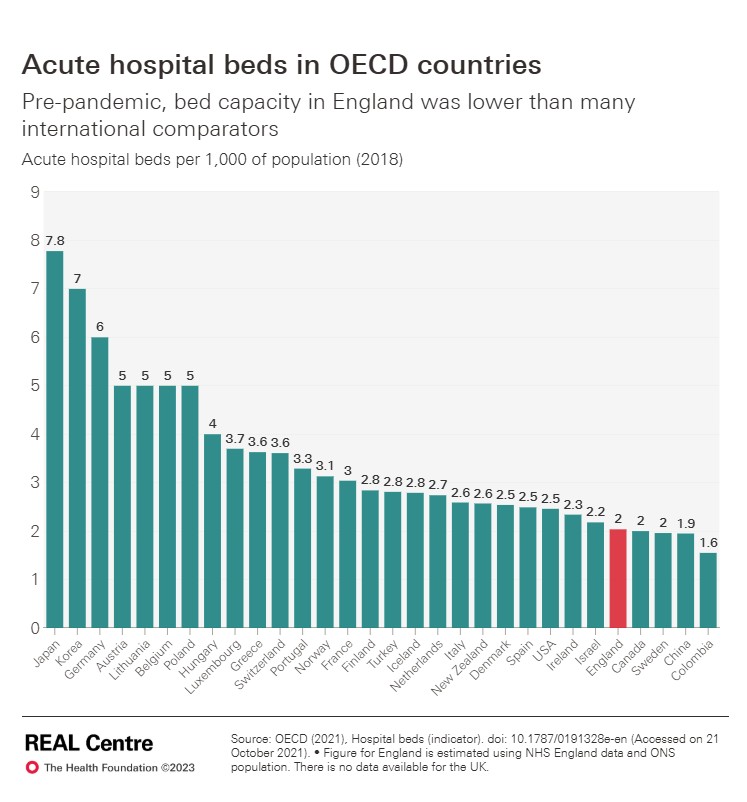
We believe  hospitals should work cooperatively, together. The  healthcare legislation from Thatcher onward, including the disastrous 2012 Health and Care Act, damaged the natural cooperation between hospitals. Our healthcare has fewer hospital beds per head of population than other advanced countries, fewer doctors per head of population than other countries. To match other countries we would have to hire thousands more doctors. But we have unemployed doctors, The Royal College of General Practice described how qualified G.P.s cannot find posts and the Resident doctors cannot find training posts. This while we need doctors. One in 3 newly qualified midwives cannot find work and other have only part time work. The Independent reported on 4th June 2026 about midwives being told to work double shift with no sleep.

UK needs more doctors!

It does not have to be like this. Such madness must stop. Women say No to this nonsense!

Liverpool Royal Hospital, though new and shiny, and with a great staff, has fewer beds than the hospital it replaced. The Royal is overcrowded, as can clearly be seen in the  scandalous long trolley waits in A and E, and in the boarding system, not just during the winter.

Liverpool Royal Hospital photo credit Wikki Commons

Some Women’s Hospital services will be dispersed to other places, including some to Aintree. This will mean reduced services Liverpool Women’s Hospital on Crown Street, and considerable extra management requirements to keep track of all the staff and patients in different places.

This will not improve the issues driving the complaints we hear, nor the ones described at the board, which come from lack of staff and resources, failure to heed women and staff raising concerns, and from disrespect for women or medical misogyny, as the government prefer to call it.

The board of Liverpool Women’s Hospital has  given its functions to the NHS University Hospitals of Liverpool Group. That is where board decisions are now taken. There was no public consultation on this. It was driven in part by the acute financial problems at Liverpool Women’s  Hospital and at the Royal. That board did not mention maternity in its long term plans at the last board meeting. Maternity should be a high priority in any hospital providing that service.

At a recent NHS University Hospitals of Liverpool Board, the figures for building a new hospital for Liverpool Women’s were given as between £350m and £ 500m, and the cost of making the Crown Street site safer was £6 million a year. So it would take 90 years to be cheaper to build.

We believe the information being  given to the public in this engagement  is inadequate.

This is not just about some small subset of operations happening at Liverpool Royal Hospital. This is a part of a  much larger plan to move Liverpool Women’s services into the Royal.The decisions were made at the January  Cheshire and Merseyside NHS Integrated Care Board, the ICB.

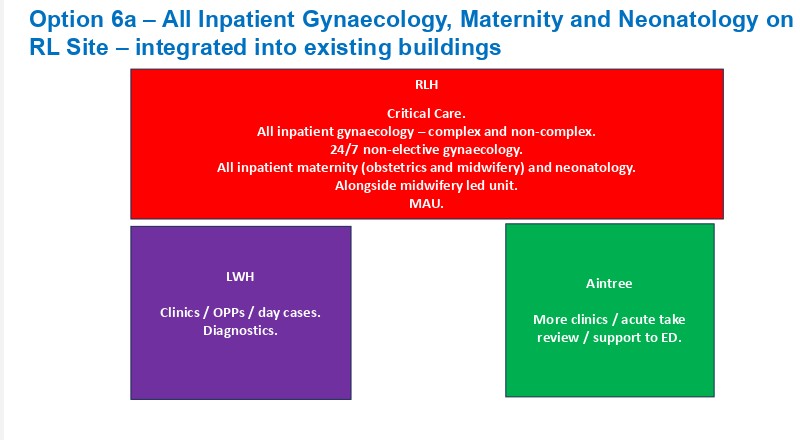
Option 2 is what is being discussed in the engagement process, and bad though that is, Option 6 is the longer-term plan.

The January ICB meeting made it clear (on video 21 minutes  -44 minutes in), “…there is no stepping back from the long-term solving of this issue [meaning Option 6] and the need to press the centre and the region for the resource availability and a big capital spend on this…’ ( Sir David Henshaw, the chair of the ICB. This” big capital spend” will  compete with  other claims on NHS maternity spending.

The public information can be found here: https://www.gynaeandmaternityliverpool.nhs.uk/archives/

The options

We published our thoughts here after the January 2026 meeting of the ICB agreed its plans for the future of Liverpool Women’s Hospital, plans we think are fundamentally wrong and impractical. There is no room at the Royal. We need better funding for Liverpool Women’s and better systems of cross-hospital cooperation.

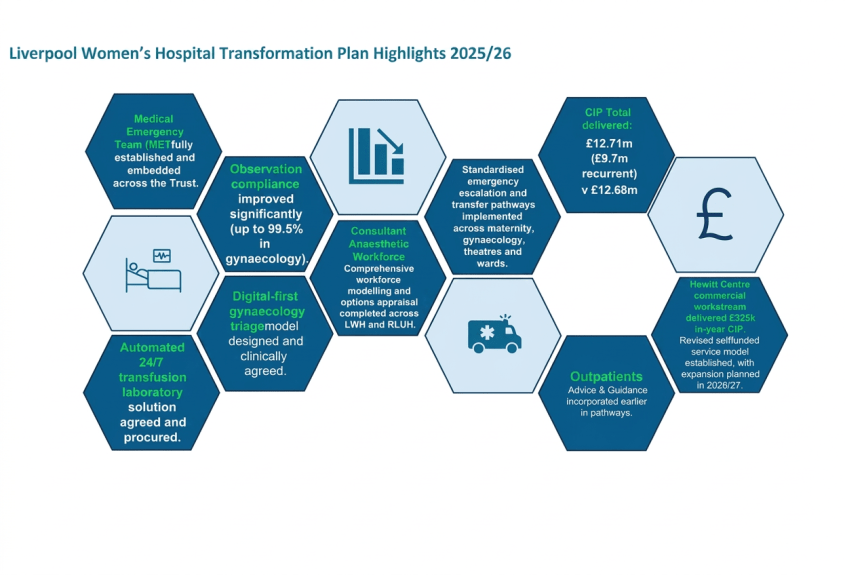
There have been improvements at Liverpool Women’s Hospital,as reported at the last Group board meeting

https://www.uhliverpool.nhs.uk/about-us/events/details?occurrenceID=382&returnID=423

There are also a set of problems at Liverpool Women’ reported at the last Group Board meeting.

” Risk: LWH does not offer the full range of clinical support services required for delivery of complex and tertiary maternity and gynecology services.Cause: Lack of access to clinical support services at Crown Street”

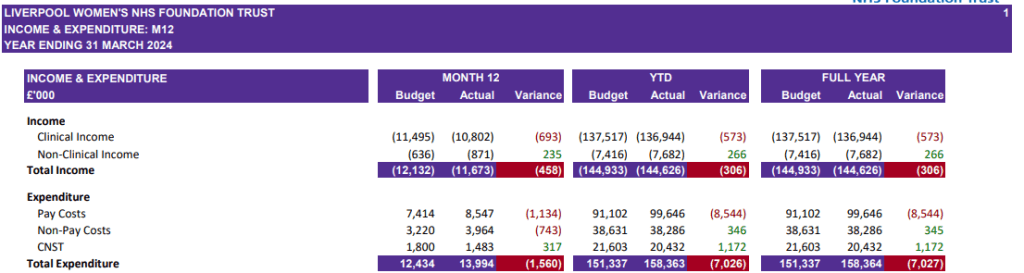
These posts include dietetics, stoma care, occupational therapy, respiratory physiotherapy, dietetics, SALT, pain services and psychology.These are posts that could and should be created. it is not clear exactly why they are not provided at the Women’s but they can and should be so provided. The hospital is in deep financial trouble caused by Government under funding and the particular pressures on Cheshire and Merseyside funding. Other issues have been tackled recently. CIP means Cost Improvement Plans:Cuts to you and me. £12.71 million of them while the hospital lacks some services. The world of NHS cuts is utterly unacceptable

The major maternity crisis in England.

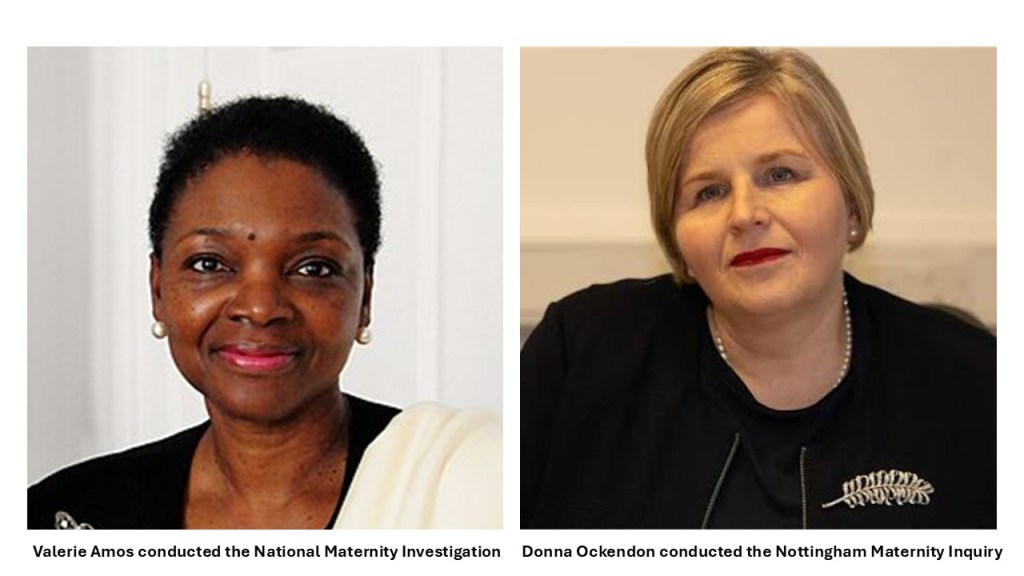
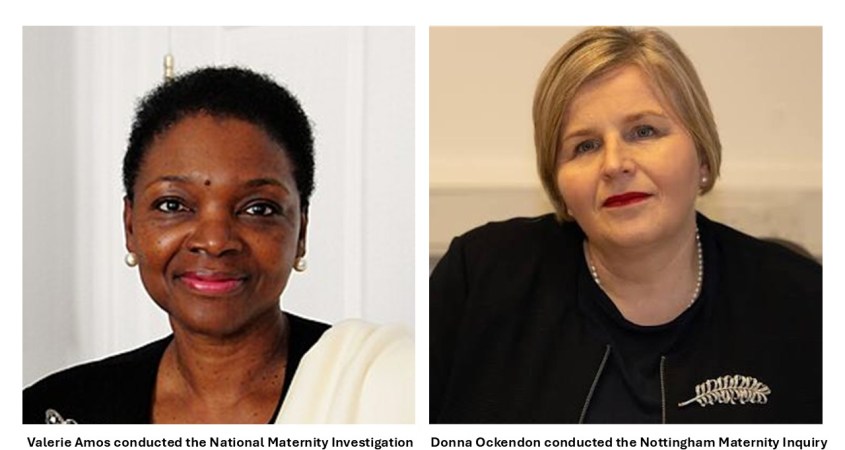
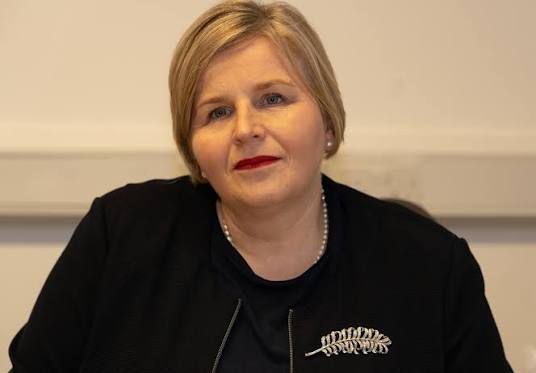
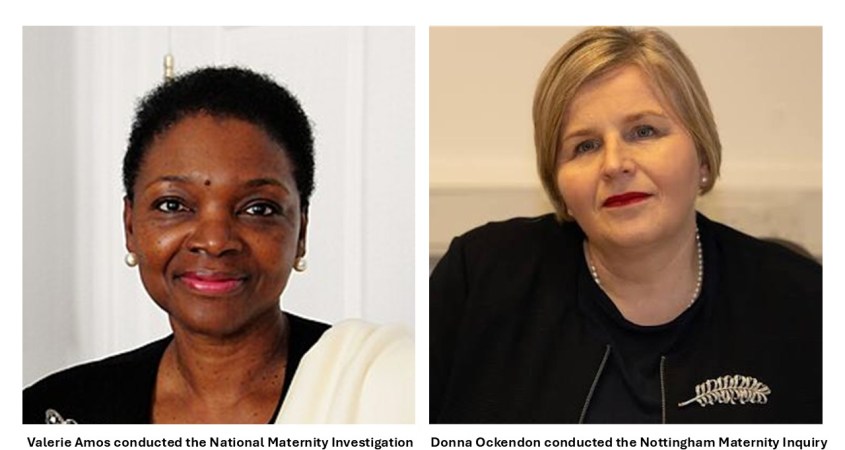
We await two huge reports on the state of maternity care in the UK, one from the redoubtable Donna Ockendon, who has spent two years working on a report from Nottingham. And one from Valerie Amos, who is writing a report for the government. Her interim report was damning. Women want respect in maternity care. The mainstream press is finally picking up what social media and our experiences  have been telling us for years. Don’t think for a minute that the  politicians and the top NHS bureaucrats didn’t know years ago about the damage going on.

Such is the fear of the state of maternity care that many women are very worried, even avoiding hospital care.

Maternity Buildings are in a poor state.We have a very  good building on a good site at Liverpool Women’s Hospital, the Royal is new but not without problems, the Cancer centre is quite new, as is Alder Hey. However the situation in some maternity hospitals is  scandalous. Years of Austerity have caused huge damage to the buildings in the NHS.

“Against a backdrop of a £13.8 billion maintenance backlog across the entire NHS estate, over half of organisations reported the formal condition of their maternity and neonatal estate as unsatisfactory, with 42% in need a major repair or replacement and 7% running a serious risk of imminent breakdown.” The Maternity and Neonatal Infrastructure Review Findings report 11th September 2025

Liverpool Women’s Hospital has been affected in the Maternity crisis, with some women, including some of our campaigners, furious over the treatment they received. We are not a fan club for Liverpool Women’s Hospital, nor do we speak for them. We speak for the campaign to Save Liverpool Women’s Hospital. We also have huge admiration for the work of the staff at Liverpool Women’s Hospital, who, despite the difficulties, deliver some excellent service.

Staff have held the service together despite the cuts

We understand they often work with one hand tied behind them due to a lack of resources and management tactics. We are happy to have supported health workers’ picket lines and protests, including the March with Midwives in 2022.

Our Campaign wants Liverpool Women’s Hospital to stay on Crown Street, to be much better funded and much better staffed. We call for it to keep all its services together, on one site (with a better bus service to make the site even more accessible). We want it managed to maximise the health of women and babies. We want all the hospitals to work  in cooperation as one health service. But we want to keep the focus on women’s health, and of course, the health of all the dearly loved babies. Splitting the services will cause damage to those services and grief and annoying inconvenience for years to come. Imagine some clinics being at Crown Street, some at Aintree, some at the Royal, and some, God knows where. Imagine navigating that with a baby and a toddler.

Far Worse than inconvenience and thereby missed appointments, there is a very real danger of women’s health issues being further minimised and ignored. That is what has been happening in the NHS (and in other countries that have adopted austerity as policy) for the last twenty years, and these problems have been centred in the big, merged hospitals. The reports of major scandals being investigated by Valarie Amos are in the big hospitals. Leeds and Shrewsbury were removed from the list because of other ongoing enquiries. The 14 NHS trusts are:

  • Barking, Havering and Redbridge University Hospitals NHS Trust
  • Blackpool Teaching Hospitals NHS Foundation Trust
  • Bradford Teaching Hospitals Foundation NHS Trust
  • East Kent Hospitals Foundation NHS Trust
  • Gloucestershire Hospitals Foundation NHS Trust
  • Leeds Teaching Hospitals NHS Trust
  • Oxford University Hospital NHS Foundation Trust
  • Sandwell and West Birmingham Hospitals NHS Trust
  • The Shrewsbury and Telford Hospital NHS Trust
  • The Queen Elizabeth Hospital, King’s Lynn NHS Foundation Trust
  • University Hospitals of Leicester NHS Trust
  • University Hospitals of Morecambe Bay NHS Foundation Trust
  • University Hospitals Sussex NHS Foundation Trust
  • Somerset NHS Foundation Trust

The worst-off women, and those from Black, Asian, Gypsy-Romany and Traveller backgrounds, have been most damaged in this Maternity crisis. Please see our earlier posts.

Liverpool Women’s Hospital is at the heart of Liverpool 8 and much loved there. It seems very bad to be damaging Liverpool Women’s Hospital just as these reports are due to be published. A large public meeting chaired by Kim Johnson MP made the opinions of local people very clear.

Liverpool Women’s Hospital is well-loved.

The women of Liverpool have loved the Liverpool Women’s Hospital since it opened, and they loved the previous women’s spaces like Catherine Street and Mill Road. Far too many women experience domestic and sexual violence and are aware, in brain and instinct, of the need for a safe space, organised by and for women, when they are at their most vulnerable. But it’s not just violence – medical misogyny plays a role too.

This love of the Women’s Hospital has a scientific base. The NHS has truly ignored women’s health.

Women’s bodies have been treated as medical mysteries, not because they are complex, but because they have been excluded. From research funding to clinical trials, a gender data gap runs deep through modern medicine, shaping who gets believed, who gets diagnosed, and who gets left behind.

Less than 2.5% of medical research funding goes to women’s reproductive health – despite women and girls making up more than half the world’s population 1 .

This imbalance is not an accident; it reflects a pattern of medical misogyny, a system that undervalues, underfunds, and misunderstands women’s health.

The consequences are devastating. Women are being dismissed, misdiagnosed, or left in pain for years before receiving answers. Many turn to online communities for help after being told by doctors that their symptoms are “normal”, that they are “making a fuss about nothing”. For people with endometriosis, the average diagnosis time is nearly nine years. Nine years of pain, endless appointments, and disbelief.”

It’s vitally important to keep a women’s space. Not just a physical space, but a place of science and care devoted to women and their babies. A space with a well-qualified and well-treated workforce focusing on women’s health, where women are heeded as women and not dismissed. There is a quiet but fierce rage behind the demands for a woman’s place in healthcare.

No one can deny that the fashion for huge hospitals has at least coincided with real drops in the quality of maternity care and long waiting lists for Gynaecology.  These mergers started in the 1990s with the policy of making hospitals work like competing businesses, and then a second wave in 2010 with the Foundation Trust era, as smaller hospitals were pushed into mergers by a financing model that favoured the big hospitals This at least coincided with  the deterioration of Women’s health care. Women’s health has indeed deteriorated.

Parliament’s Women’s Equality Committee ( these are MPs, not the government) has twice described the situation for women in great detail but has not been able to secure the necessary funding to improve matters. The first WEC report stated that ‘Medical misogyny’ is leaving women in unnecessary pain and undiagnosed for years”.

We also recognise the importance of the physical environment, and Liverpool Women’s is one of the best hospitals in that respect.

Austerity and political misogyny have a lot to do with the neglect of, and damage to, women’s health. The NHS has been underfunded and consequently understaffed for the years of Austerity, and the future is looking grim too. In 2025-6 and 2026-7, the cuts imposed in Cheshire and Merseyside NHS and through them to the Hospitals and out-of-hospital care are awful. For more details, see this.

Hospitals are under huge financial and political pressure. See Liverpool Women’s Hospital in the Eye, The NHS Storms, written earlier this year.

Women’s health and healthcare in the NHS

Women in England have a life expectancy of about 83 years, but their Healthy Life Expectancy (HLE) is roughly 61.9 years. This means women live upwards of 20 years in ill health.

This is worse in areas where people are struggling with the cost of living, and worse for women with high caring responsibilities, like much of Liverpool, especially where the cost of living is hitting hardest.

And;

“One key point is how females and males differ in many biological and social factors that fluctuate and, sometimes, accumulate over time, resulting in them experiencing health and disease differently at each stage of life and across world regions. The challenge now is to design, implement and evaluate sex- and gender-informed ways of preventing and treating the major causes of morbidity and premature mortality from an early age and across diverse populations.”

The NHS has not done such a good job in the big general hospitals in achieving that understanding, nor in establishing good practice, so there remains a good case for a women’s hospital.

What happens in pregnancy and early childhood impacts on physical and emotional health all the way through to adulthood the UK dropped from 20th to 26th place (out of 38) in the Organisation for Economic Cooperation and Development (OECD) on female life expectancy between 2000 and 2022. This compares with a drop from 14th to 19th place for male life expectancy during the same period healthy life expectancy among women fell by 2.5 years between 2019 to 2021 and 2022 to 2024”.

Heart and Cancer, too, have neglected women.

It’s not just in the exclusively female aspects of medicine that we see neglect of women. It is true in heart and cancer, too.

There is much written and studied about women and heart disease.

Recent data published by Professor Chris Gale from the University of Leeds, funded by the British Heart Foundation, found that more than 8,200 women in England and Wales could have survived their heart attacks had they simply been given the same quality of treatment as men, according to their paper in the journal Heart. The researchers found that women in the UK had more than double the rate of death in the 30 days following their heart attack than men. The researchers suggest that this may be, in part, explained by women being less likely to receive guideline-recommended care.”

Some heart/cardiovascular diseases are exclusive to women and linked to their reproductive health. The improvements must come from all sectors of the NHS.

Women have different heart attack symptoms from men, and it helps if we know these symptoms. It helps if the NHS remembers them too!

Cancer

Several years of National Cancer Patient Experience Survey data shows that women are less likely to be treated with dignity and respect and less able to discuss their worries when receiving hospital care than men – an indictment of NHS culture. The NHS’s inability to listen, itsreluctance to give patients meaningfulpower and choice, and its tendency to disempower patients despite them being the real experts in their own health conditions, is ‘by design’.

They also say, “That is to say, it is a feature of a care model that is:

• one size fits all

• too focused on provider interests, rather than patient interests

• highly paternalistic, centralised and bureaucratic”

The NHS gets a pasting in these reports, but we think something big is missing from the reports.

NHS staff have faced obstacles in getting the resources they need to treat people as they should be treated . Years of cuts, privatisation, and meddling with NHS structure have caused huge damage, and the staff carry no blame for that. Rather, they have worked against the odds to maintain the service.

Lord Darzi, who produced a report about the NHS immediately after the General Election, said, “The Health and Social Care Act of 2012 was a calamity without international precedent. It proved disastrous.” We think the Health and Social Care Act 2022 was another disaster, and Wes Streeting’s sweeping attacks on NHSE and the ICBs have caused another wave of disruption.

We support the original NHS model. This was a universal healthcare service, free at the point of need and paid for by the government. It was a national service with all parts cooperating, but with strong local involvement. Investing in health care makes the economy stronger, not weaker, and helps the population’s health and happiness. Even the right-wing World Bank says so. The wave of privatisation and for-profit companies being involved in the NHS has been an utter failure for patients and staff.

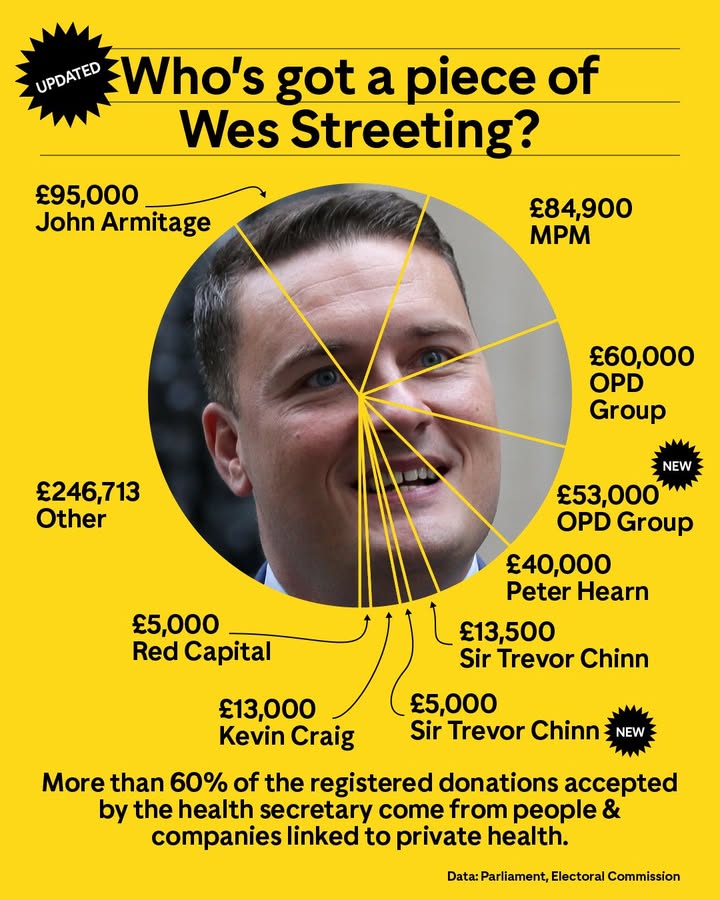
It is a crying shame that Labour politicians, including the not lamented Health Secretary Streeting, have taken money from those who make big profits from healthcare.

The situation in Liverpool is especially serious. In the document Health in Liverpool 2040, it was made clear that the health of women in Liverpool is declining.

In Liverpool, women can expect to live 57.9 years in good health, and men up to 58.3 years-this means on average women will spend 28% of their lives in poor health, whilst men will spend 23% poorly.

For women, healthy life expectancy is lower than at the turn of the decade, and the gap with England has widened from 5.5 years to 6 years, while for men, the gap continues to be 4.8 years.

“The infant mortality rate has long been regarded as a key indicator of population health that is sensitive to the prevailing socioeconomic circumstances affecting children. In Liverpool, around 26 infants every year do not reach their first birthday.”

“What happens in pregnancy and early childhood impacts on physical and emotional health all the way through to adulthood”

All of this supports a focus on women’s and children’s health, needs currently not being met nationally or locally. This in not to the detriment of men, but because women have different needs

As we go marching, marching, we battle too for men, for they are women’s children and we mother them again.

Women also experience sexual and domestic violence, poverty through low wages and inadequate childcare. It takes two incomes to raise a family. Hospitals can only contribute about one-third of what is needed for good health for women. Good affordable food, good housing, clean air, low stress, well-paid jobs, confidence in the future, freedom from assault all help our health outside  hospital. But when we as women come into the hospital, it is because we need help. That help must be skilled, respectful, compassionate and well funded.

Too Many Hospitals in Liverpool ?

The NHS seems to believe that there are too many hospitals in Liverpool; they have done for years. The history of this was covered in a Post article called “https://www.livpost.co.uk/a-fucking-feudal-baron-the-long-legacy-of-liverpools-most-feared-nhs-boss/ The article says that a fan of Mrs Thatcher running the local NHS in the 1980s pushed through all the hospitals in Liverpool becoming Foundation Trusts. Liverpool has a different pattern of hospital care from many other cities, and the government wants to change that. It is pushing the ICBs and Hospitals to make drastic cuts.

In 2014, there was a Panorama programme saying that Liverpool has too many hospitals.  The next day, it was announced in the Echo that Liverpool Women’s was the hospital that would close.

We started our petition, at first online and then on paper, and we have fought for many years to keep the hospital open.

The process of merging the hospital is underway.

The board-level management of Liverpool Women’s Hospital has been handed, without public consultation, to the University Hospitals of Liverpool Group. However, the Chief Executive of that group has resigned. This coincided with plans to take all Liverpool Hospitals into that group being knocked back nationally. The public now has much less chance to monitor what goes on in Liverpool Women’s Hospital. Board papers cover all the hospitals, There have been major changes in the senior staff. There is no one on the board with a record of work in maternity, nor in Gynecology. The recent long-term plan, discussed in the May meeting of the hospital group, did not even mention maternity or women’s health.

We all have good  reasons to be concerned.

Improve Black Maternal Health, drive racism out of maternity care. November 2025

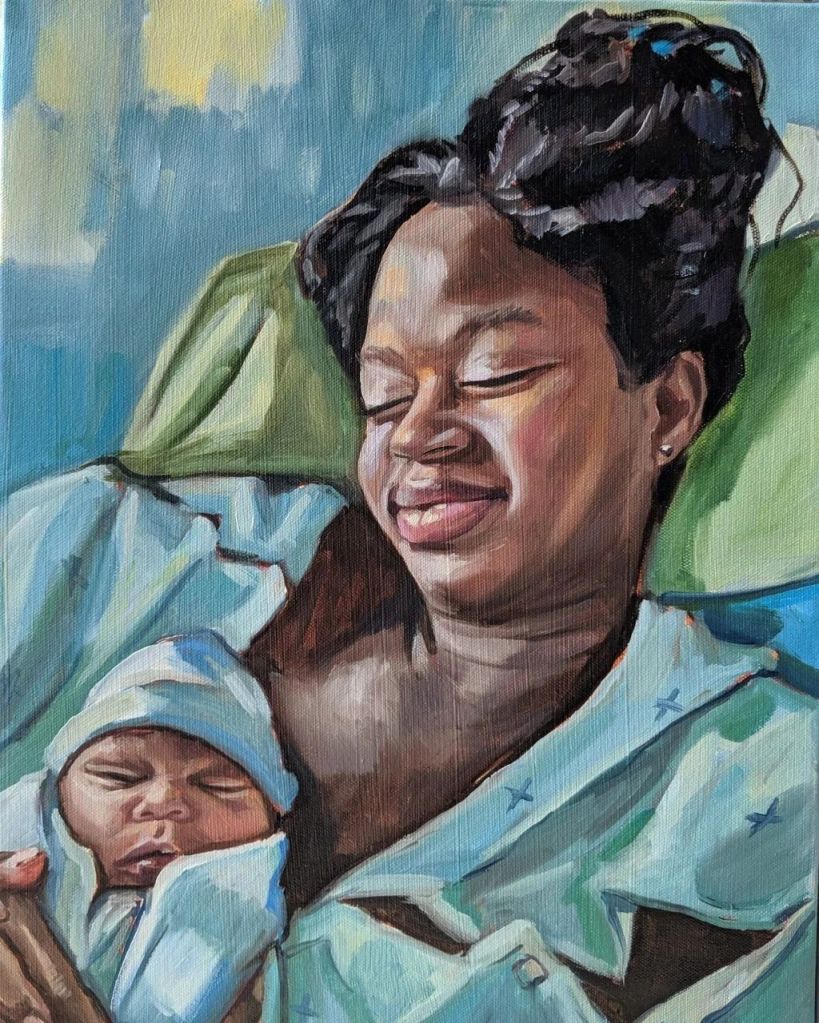
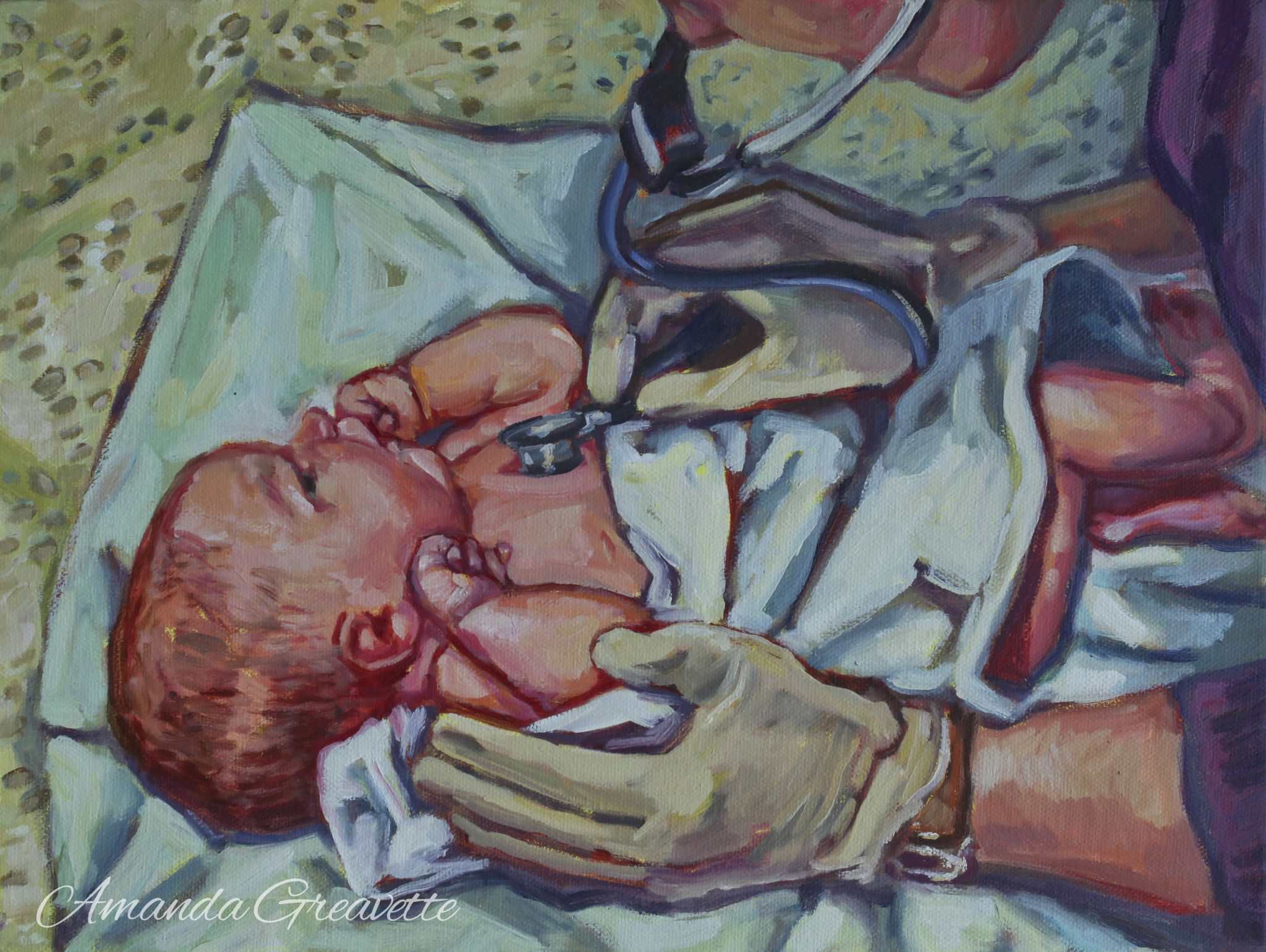
Picture https://amandagreavette.com/

Black Maternal Health and Anti-racism Action in the NHS: Issues for Liverpool and beyond.

We honour the women in Liverpool who have suffered or died because their treatment was affected by conscious or unconscious racism. The best way to honour these sisters is to campaign ever more strongly against both inadequate Maternity care, nationally and locally, and against the insidious rise in racism in this country. Anti-racism education in the NHS can save lives.

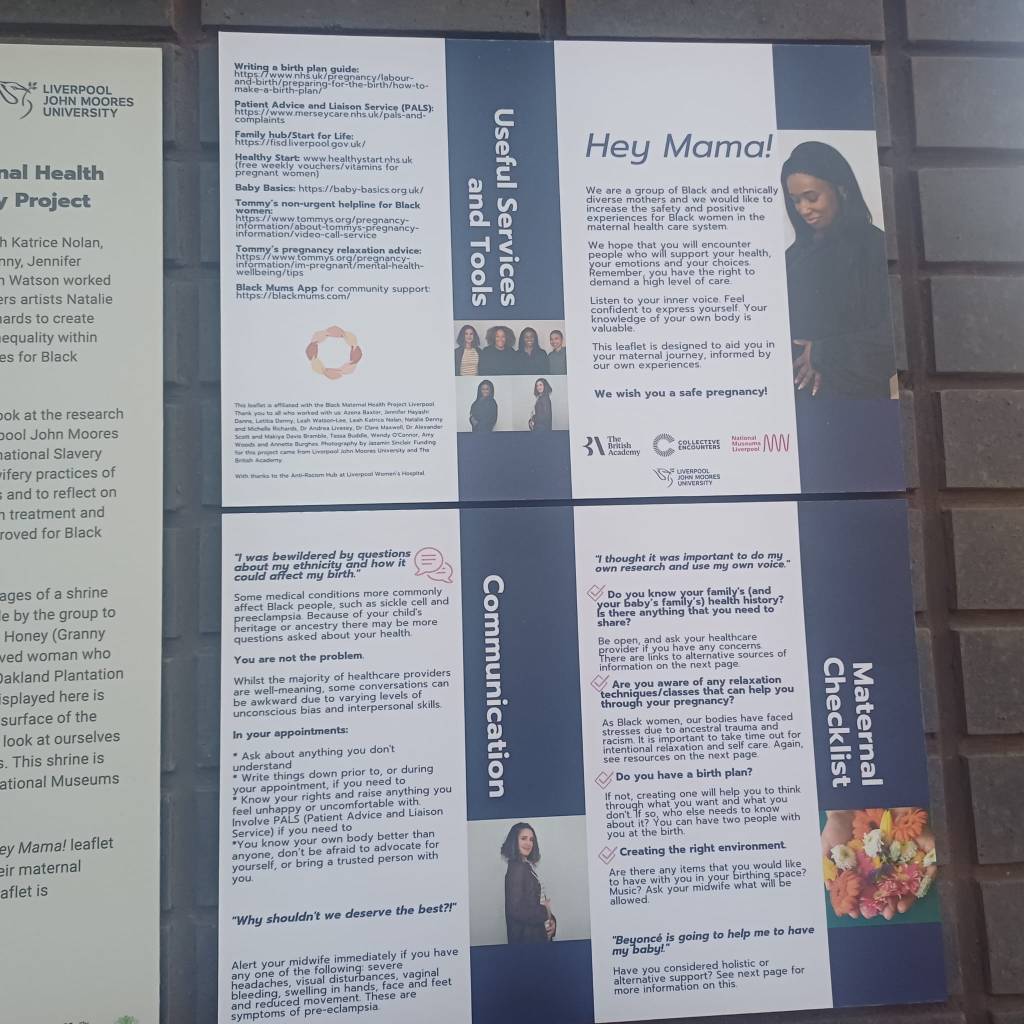
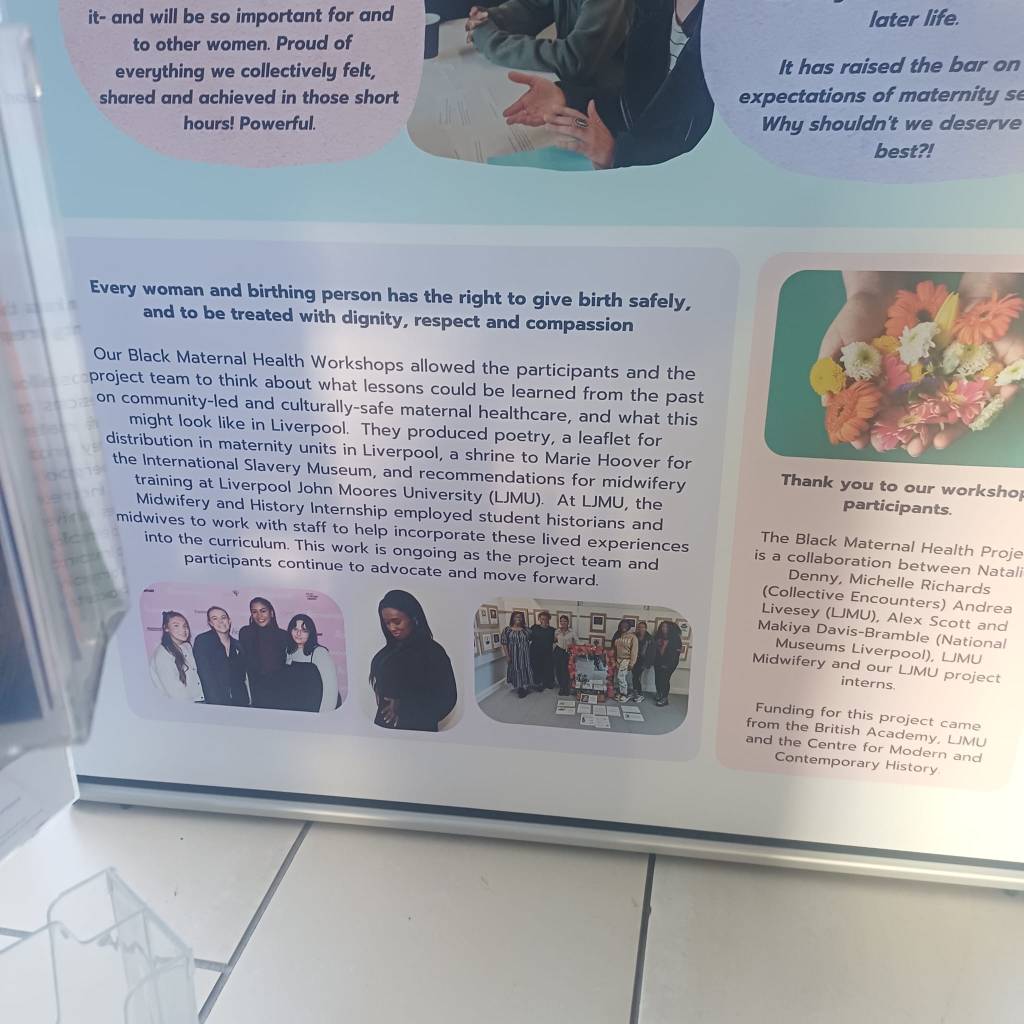
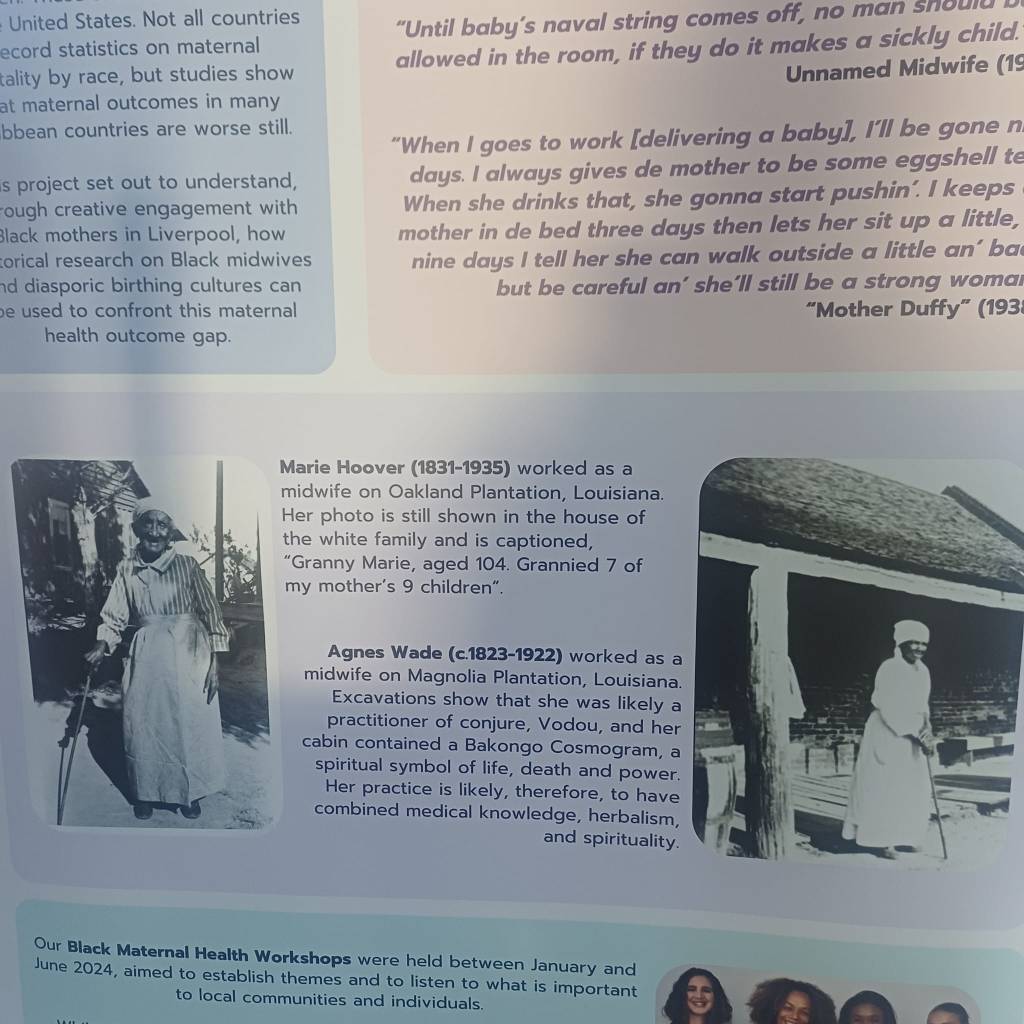
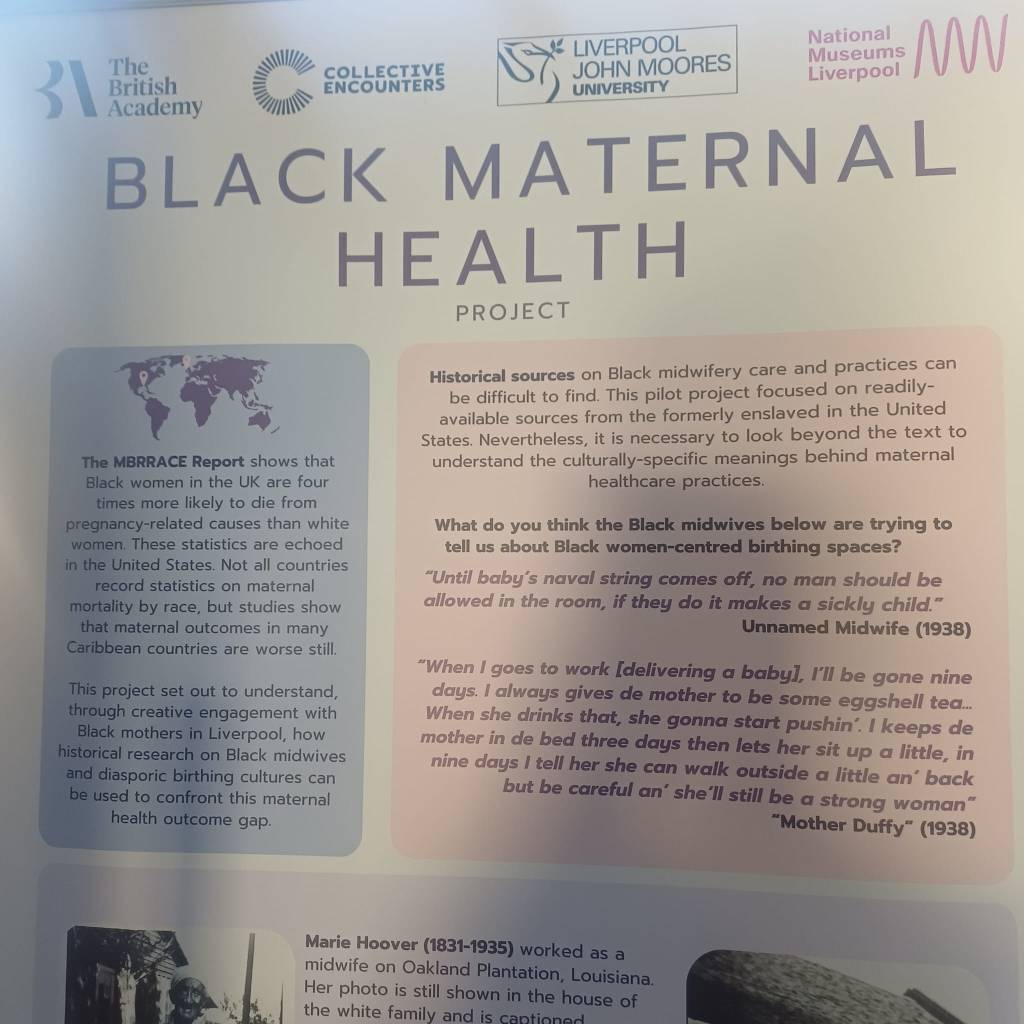
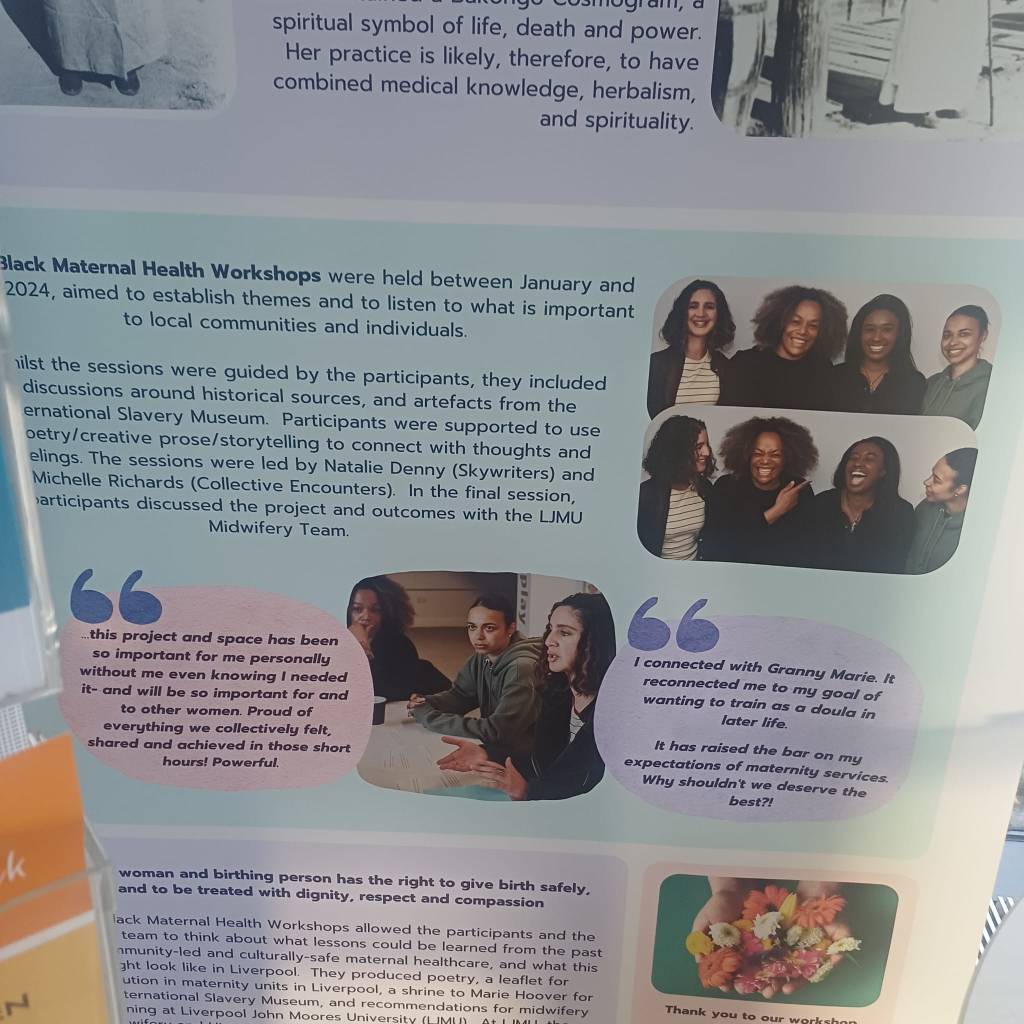
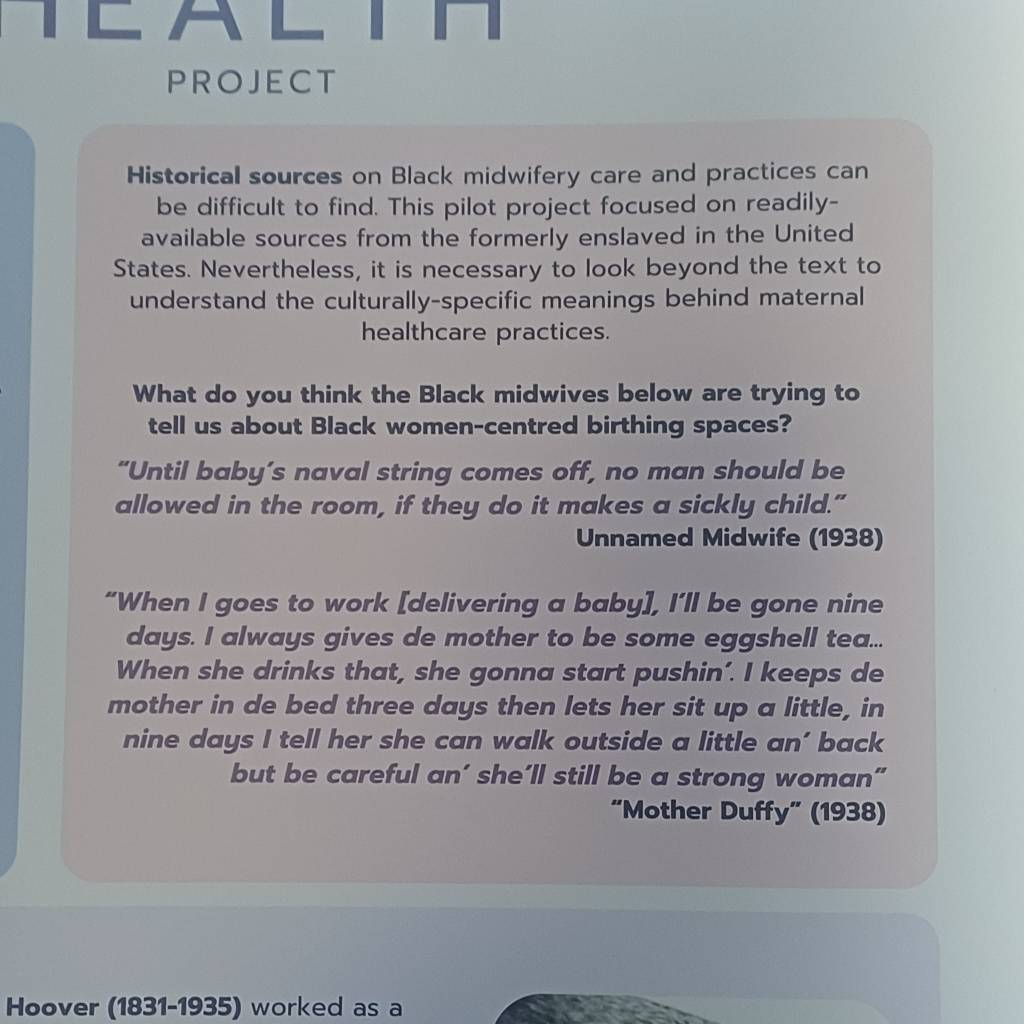
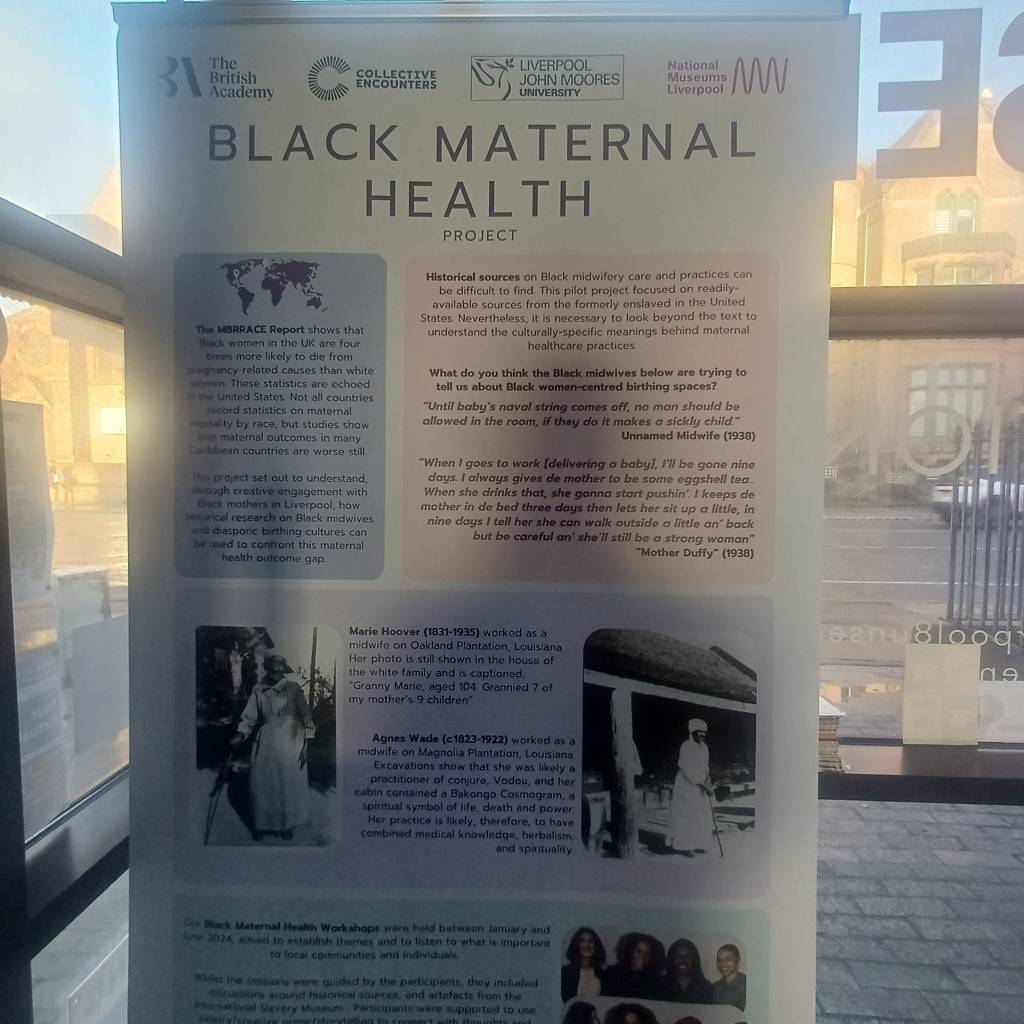
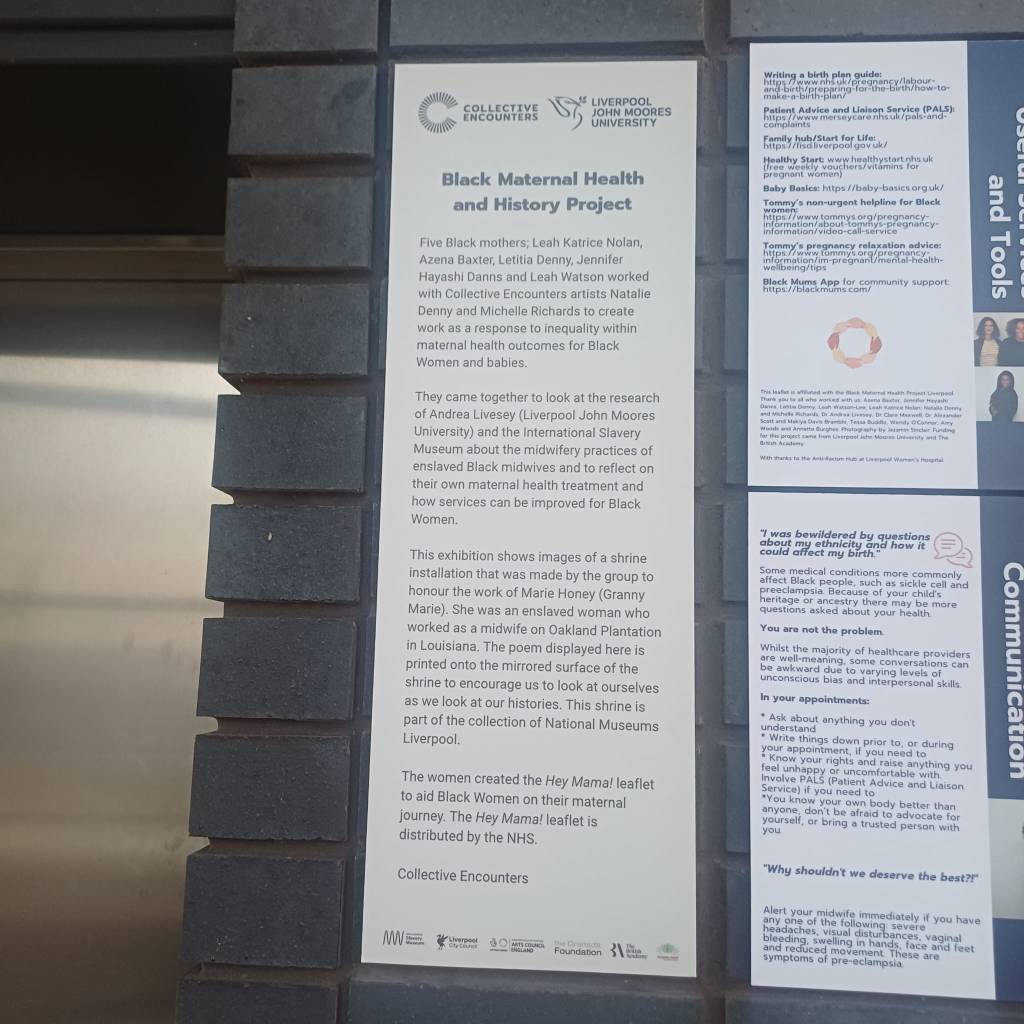
There has been excellent work done in the community about Black Maternal Health, not least the recent exhibition at Kuumba Imani Millennium Centre. Thanks to Creative Encounters for the work shown here. Photos by Teresa Williamson. There is more on this at the end of this post.

This week, a memorial, “a quiet reflective remembrance space to recognise the lives of women lost in care at the hospital”, is being opened in Liverpool Women’s Hospital. We are therefore devoting a post to this issue.

Our campaign to Save Liverpool Women’s Hospital received this message from the Hospital.

” When we last met, we discussed the development of a quiet reflective remembrance space to recognise the lives of women lost in care at the Hospital. We are delighted that this has now been completed, and we are planning to open the garden on Thursday, 6 November at 1.30 pm. There is a wider event planned with some reflective presentation from 12.30, with refreshments also in the Blair Bell, it would be lovely to see you and your other colleagues at the event.

Outcomes in Maternity have worsened nationally, and there has been no improvement for Black and Asian women, as all services have suffered.

Black women in England face disproportionately poor outcomes in Maternity care, shaped by systemic failings in leadership, training, data collection and accountability, according to a new report from the Health and Social Care Committee, Black Maternal Health. The inquiry heard repeatedly that racism is ‘one of the core drivers’ of poor maternal outcomes for Black women, as MPs heard from clinical experts and women about cases where racist assumptions had directly harmed Black women’s care. Black women are 2.3 times more likely to die in pregnancy, childbirth, or the postnatal period than White women, according to recent figures. 

The report (from Parliament) “acknowledges that failings in care for Black women are taking place in the context of a Maternity system that is failing women more broadly, with the NHS in England having paid £27.4 billion in Maternity negligence since 2019, estimated at a figure greater than the total Maternity budget for the same period. 

The most hard-up women also suffer significantly; the women using Liverpool Women’s Hospital come from some of the most deprived areas in the UK.”Women from deprived areas of the UK are more likely than those in less deprived areas to die during or shortly after pregnancy, and this disparity has increased in recent years.

This country has disrespected birth and women’s health to such an extent that we have lost twenty years of progress. Women have had enough. Join the fightback.

Charging migrant women for Maternity care at 150% of the NHS costs is cruel, harmful, and does not recoup the costs of the system.

Asylum-seeking women can be moved around the country on the whim of the Home Office, disrupting antenatal care and costing the lives of babies and mothers.

MBBRACE-UK 2019 report “that women born outside the UK represent nearly a quarter of maternal deaths. Refugee and asylum-seeking women, despite contributing 0.29% of the population, make up 6% of this group.”

Women as a whole have seen worsening conditions.

Professor Marian Knight, Director of the National Perinatal Epidemiology Unit and MBRRACE-UK maternal reporting lead, said: data show that the UK maternal death rate has returned to levels that we have not seen for the past 20 years.”

Maternal deaths are not common, but still too high. Over the last century, the death rate has fallen dramatically, especially since the NHS was introduced. It is because of years of campaigning by staff and the public that maternal deaths have been reduced, but we need to do much better. The UK still has four times the maternal death rate of Norway and Denmark.

“Overall, 284 women died in 2021-23 during pregnancy or within 42 days of the end of pregnancy in the UK. The deaths of 27 women were classified as coincidental. Thus in this triennium 257 women died from direct and indirect causes, classified using ICD-MM (World Health Organisation 2012), among 2,004,184 maternities, a maternal death rate of 12.82 per 100,000 maternities (95% CI 11.30-14.49).”

In 2021, we campaigned about how babies born to Black mothers were twice as likely to suffer a stillbirth. The situation for Black mothers came into awful focus in 2024 with a terrible death at Liverpool Women’s Hospital. We wrote;

“We join with others in demanding action to make it safer for all mothers to give birth and demand action to reduce the particular risk to Black, Asian, and poor women of all races. In the UK, the rates of baby death and stillbirth among Black and Asian mothers are double those for white women. We have written about the higher number of deaths among Black babies.”

In one of these maternal deaths, investigators from the national body, Maternity and Newborn Safety Investigations (MSNI), were called in after the woman died. They reported that “The investigation into her death found hospital staff had not taken some observations because the patient was ‘being difficult'( our emphasis), according to comments in her medical notes.”…ethnicity and health inequalities impacted the care provided to the patient, suggesting that an unconscious cultural bias delayed the timing of diagnosis and response to her clinical deterioration.

Another black woman died shortly after, and we have not seen the final report, which will have been covered in the MBRRACE report this year. Such reports are confidential and focus on system issues, not on individual hospital issues

Each death is reviewed by assessors in four main areas: pathology, obstetrics, midwifery and anaesthetics. Where appropriate, care is also examined by speciality assessors such as psychiatrists, general practitioners and emergency medicine specialists. All reviews have a primary assessor from each speciality and, if specific issues are identified, a second assessor may also review the woman’s care.

Hospitals report each death to the Maternity and Newborn Safety Investigations programme, which reports to the families and hospitals.

Between January 2014 and November 2023, 17 maternal deaths were recorded for patients who received care at Liverpool Women’s Hospital. We do not know the ethnic breakdown. There will have been about 70,000 births in that time, with a mortality rate of about 0.02 per cent. So deaths are quite rare.

Our campaigners were able to comment at the board meeting when the first death was announced, because the public could, at that time, attend the full board meetings of Liverpool Women’s Hospital. We knew in advance because we had read the board papers. We could then make this situation well-known. Public attendance is no longer allowed. Many times, in the early years, our campaigner, Teresa Williamson, was the only Black person in the room at these meetings, and she was not always treated with respect.

In a recent webinar about migrant women giving birth, Liverpool was highly praised for the support midwives gave to one of the speakers, who gave her experience of giving birth in total poverty. This contrasted with other women’s experiences in different parts of the country. The specialist teams at Liverpool Women’s Hospital, supporting vulnerable women in the community, do great work.

The Hospital has run a comprehensive anti-racism in service training for all staff since these deaths, together with the Anthony Walker Foundation. There is a detailed newspaper report here.

Anti-racism action, though, is like housework. It must be done again, and again, and again- even more so because there has been a rise of public racism in the politics of both the UK and the USA. This is against the decades-long trend of racism receding. Crazy ideas that Black women suffer less pain than white women are still commonly believed. One study (in the USA) found that 50% of healthcare professionals believed this. This is why anti-racism must be included in professional education.

Together with Refugee Women Connect, we met with senior members of the board of Liverpool Women’s Hospital to express our concerns. We asked for a memorial in the gardens and a pamphlet that could be reproduced in each woman’s language with illustrations, each page being available to the midwife in English to aid communication and discussion when a full translator was not available.

The memorial garden is being opened for all women who have died, and we were told that an online version of the multi-language information is being developed.

Giving birth far from home is hard for every woman. Children suffer when their mum dies. Many of the women who die in childbirth, or in the year after giving birth, would not have died had the Maternity service been appropriately staffed.

The blame for the state of Maternity lies squarely with the politicians. They have made the decisions on funding and staffing. They brought in austerity. Midwives are overworked. Obstetricians are overworked, as are other linked professionals and the ancillary staff. They are too overworked to give the quality of healthcare women need. This harms midwives and mothers. Staff need time to think, reflect, and discuss. We will continue to demand fundamental improvements in funding, staffing, and NHS management.

Maternity staff carry huge responsibilities and deliver an excellent service when they can, but no one can be perfect when there are too few staff and poor organisation. Neither can they be expected to fight for improvements alone. The public must take a major part.

The management systems of the NHS (especially since 2012, and then 2022, with the appalling Health and Care Acts that treated the NHS as a business, not a public service) have made staff feel they cannot raise concerns or that those concerns will be ignored. This has been reflected in many of the Maternity enquiries, including the Kirkup enquiry into the Maternity tragedies in Morecombe Bay.

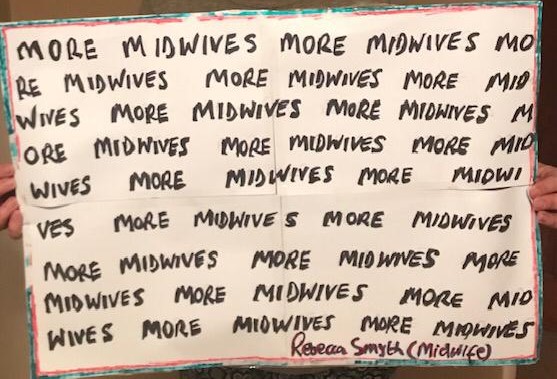
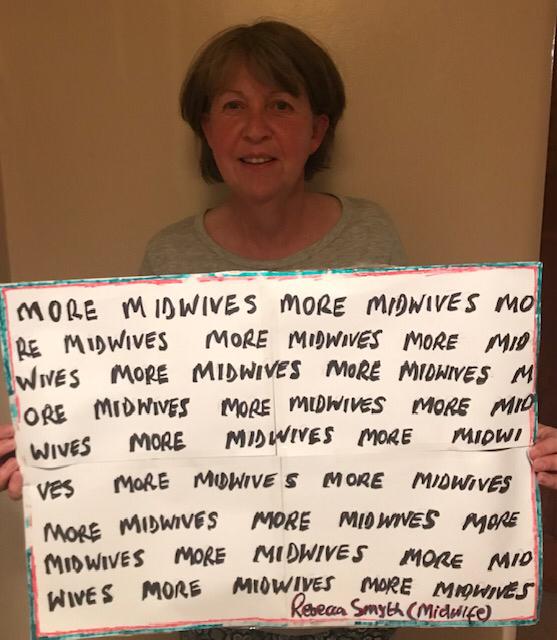
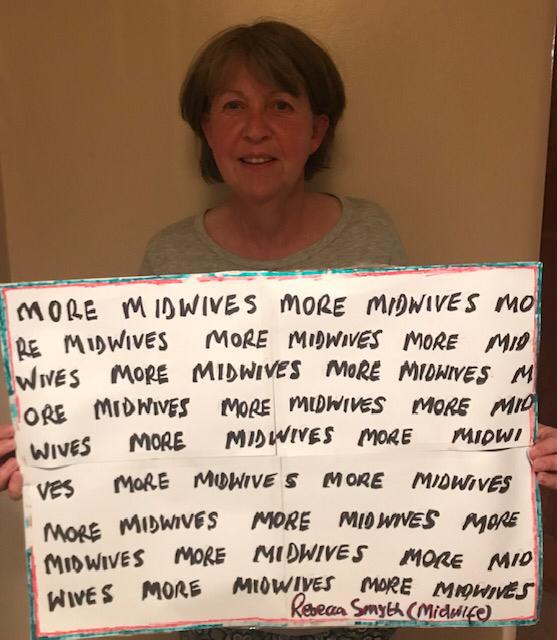
This country can and must afford a good Maternity service; we currently rank 17th out of 19 wealthy countries for the safety of our Maternity services. In the first twenty years of this century, everywhere but the UK and the USA improved their Maternity care. We need more midwives. We need more midwives.

Please keep fighting for all our mothers, sisters, daughters, friends, lovers, and every precious baby.

Campaigning to save Liverpool Women’s Hospital Autumn 2025

This article is a work in progress and is being amended and added to as events progress

25 October 2025, update.

The report on the future of Liverpool Women’s Hospital (Women’s Hospital Services in Liverpool programme) has been postponed again; this is their statement:

Save Liverpool Women’s  Hospital

To support options development, work to understand what each potential option would mean for estates (buildings), finance and workforce (staffing) has been taking place. This has been a complex process, and the level of detail required has meant that it has taken slightly longer to finish than had originally been planned. This means that the Women’s Services Committee will now consider the outputs of the work on potential options in November 2025 rather than October 2025. Following this, the Board of NHS Cheshire and Merseyside will discuss the potential options, and next steps, at a private meeting, which will also take place in November 2025.

The intention is that following the Board meeting, from December 2025 onwards, discussions will be held with partners, including local NHS trust boards and local authorities, about how the programme moves forward. At this point, if required, planning would also begin for an external review by clinicians from a different part of the country.

It is therefore likely that we will publish a further update about the programme during the first half of 2026. We know that many members of the public, NHS staff and wider stakeholders have a strong interest in women’s hospital services in Liverpool, and are keen to understand what will happen next. “

Our response

The “Women’s Hospital Services in Liverpool programme” is a working party of the Cheshire and Merseyside Integrated Care Board, the governing body of the NHS in Cheshire and Merseyside.

Liverpool Women’s Hospital’s future remains under threat, despite being one of the best buildings in the country and having an excellent reputation. The “options” mentioned in this statement have not been published.

This is at a time of enormous public concern about the state of Maternity services nationally, when we have yet another national report on Maternity scandals, plus police enquiries into deaths at two trusts. There have, of course, been many other detailed and complex enquiries whose recommendations were not implemented by the last government and are not being implemented by this government. It is no surprise, therefore, that campaign groups are forming across the country. For a decade, the future of Liverpool Women’s Hospital has been uncertain, with all the anxiety that has brought for pregnant women and families, for women needing gynaecology care, fetility care, for parents with babies in the Neonatal unit, and all the other services, for staff, both current staff and those who might have wanted to work at Liverpool Women’s but needed a secure future to commit to a move, and of course, the public vocifeously wanted to know that the hospital would be safe.

Liverpool Women’s Hospital’s future is under threat, despite the urgent need to retain and improve it, despite good work having been done in the last year to enhance its resources and services. Even before the Integrated Care Board was invented, plans to close it were underway. It was one of the first items on the ICB agenda when it opened.

Staff at Liverpool Women’s Hospital have worked so hard against the odds. The difficulties caused by privatisation, austerity, cuts, understaffing, and the disorganisation of the NHS over the last decade have been immense. Lord Darzi, in a report commissioned early in this government, described the 2012 Health and Care Act as “calamity without international precedent”. We say that the 2022 Act made things worse. The business model still pursued by this government has been a disaster for Maternity care nationwide.

Professor Marian Knight, Director of the National Perinatal Epidemiology Unit and MBRRACE-UK maternal reporting lead, said: ‘These data show that the UK maternal death rate has returned to levels that we have not seen for the past 20 years.

Liverpool Women’s Hospital has retained an excellent reputation. It is a much-loved, much-needed hospital that provides for the birth of approximately eight thousand babies a year and more than ten thousand gynaecology procedures. It is a maternal medicine centre and a tertiary hospital.

Protest on 28th September 2025

The future of Liverpool Women’s Hospital was one of the first issues raised by the Integrated Care Board (ICB), the governing body of the NHS in Cheshire and Merseyside, when it was established in 2022. We believed then and still believe that finances are at the root of the plans to move, merge, or close Liverpool Women’s Hospital.

The Women’s Hospital Services in Liverpool  Committee says that their process includes ”October to November 2025: Discussions with partners, including local NHS trust boards and local authorities, about the draft business case”

 Annexe A to the reports fromLiverpool Women’s Hospital Prevention and

Equity Population Profile 2023-24 Date: 4 April 2025

(Author: Dr Clare Baker, Public Health Registrar) says, “There is a significant difference between demographics and experiences common among senior decision-makers and common among our patients” In other words, the people making the decisions do not live the same lives as the patients, yet they will not consult with the public before drawing up their plans.

(We have been challenged for the source of this quotation. It can be found on page 151 of the PDF for the cm-icb-board 240725-agenda and papers.)

Our campaign has significantly less access to information about what is happening at Liverpool Women’s Hospital since the semi-merger with the other hospitals in Liverpool, forming the University Hospitals of Liverpool group. Previously, some of our campaigners were able to attend the board meetings in person, read the public board meeting papers, hear the patient stories presented at each meeting, and ask questions. We could follow in detail issues such as infant and maternal mortality, staffing levels in Maternity and Gynaecology, and the hospital’s financial situation. We could, at times, bring home the reality for mothers and families. There was once a report on how they intended to spread the service across the city to clinics in “pram pushing” distance. When we saw the maps, we burst out laughing. Knowing the city, we assured the board that it would take some Olympic-level athletes to cover those distances! The relationships at those board meetings were generally friendly. Now, all we are allowed to do is attend the meeting of the combined group covering the Royal, Aintree, Boardbgreen, and the Women’s. This is soon to be expanded to include specialist hospitals. Such a meeting focuses primarily on finance and staffing issues. There is no midwife or obstetrician on that board.

We will refer to all papers from the Integrated Care Board (the governing body of the NHS in Cheshire and Merseyside) since its founding in 2022. What follows is from the papers for the first meeting of Cheshire and Merseyside ICB, pages 6 -9

JGR noted that the clinical case for change is strong but felt that the public perception is that this is linked to the need to make cost savings. JGR asked what steps will be taken to counteract this view. FLE confirmed that there is a financial driver in that Liverpool Women’s Trust have been in a deficit position for some time and they are not in a position to rectify this. FLE highlighted that this is not the primary reason but agreed that there is a need for a careful public engagement process before it goes out to consultation” There is more discussion in these papers including saying tht Ormskirk maternity is also not co-located with a general hospital.

Had the time, energy, and resources wasted on this cost-cutting drive been devoted to improving services at Liverpool Women’s Hospital, we would have seen the day-to-day experiences of patients and staff significantly improved.

Throughout the ICB papers, it has been made clear that there is no likelihood of the capital (money) for rebuilding Liverpool Women’s on the Royal site, yet this rumour persists. It is, of course, within the power of the government, at the stroke of a pen, to create the resources needed for a rebuild or to adequately fund the hospital on Crown Street. Still, it seems highly unlikely that such a policy change will occur. If it were to happen, we would still say that the Liverpool Women’s Hospital should remain on Crown Street, as a women’s hospital, albeit with improvements. Of course, we also call for close collaboration on necessary medical matters with other hospitals. It was the damaging 2012 Health and Care Act, described by Lord Dazi in his report to the new Government as a “Calamity without precedent“, that made hospitals compete rather than cooperate

Why we say Liverpool Women’s Hospital should stay at Crown Street

  1. It is a much-needed hospital. The experience of other Maternity hospitals closing and merging has not been successful; Maternity standards nationally have deteriorated.
  2. Women’s needs have been neglected in the NHS for more than ten years. The creation of huge general hospitals has not helped.
  3. Other Maternity hospitals are in a dire situation and need financial infrastructure support much more than Liverpool Women’s does. Please see this heartbreaking report.”There is a clear link between the condition of service infrastructure, the experience of service users and staff, and safety. In the last 3 years, there have been 14,519 formally reported instances in the Maternity and neonatal estate where clinical services have been interrupted or service delivery has been impacted as a direct result of poor physical conditions. Significant clinical time has been lost to estate-related issues, such as power outages, water leaks and faulty nurse call systems. This puts additional pressure on already stretched staff to provide high-quality and safe care and can directly lead to procedures delays, such as planned caesarean sections.
  4. The green site at Crown Street is a positive benefit to mothers in difficult times. The physical environment helps birth.
  5. The Royal is located in one of the most densely trafficked areas in the city, with a 6-lane road running adjacent to it. This would be dangerous  for babies’ lungs.

The argument that  Maternity would be safer on the same site as the acute hospital is not borne out by the scandals in Maternity care in large hospitals. We cite Leeds Teaching Hospital as an example, but we support campaigners and staff in Leeds who are working to improve the situation. Current financing of Maternity care makes it difficult to provide safe care.
This is a national emergency. The government has called yet another Maternity Enquiry and is conducting a deep dive into 14 Maternity hospitals. Liverpool Women’s Hospital is not on that list. Yet another enquiry will not solve this. A serious consultation with mothers, families, staff, especially midwives, and concerned members of the public is required for all our mothers, sisters, daughters, friends, and loved ones, as well as every baby.

( For the list of other Maternity enquiries, see this.)

Baroness Amos is chairing the enquiry. The baroness, whilst having much government and academic experience, is not an expert in Maternity. It will be very challenging for her to reach a conclusion about important Maternity issues in a matter of weeks. Some bereaved parent groups have welcomed her appointment, others say this method of enquiry tries to place the blame on the Hospitals when it’s the system that’s caused the terrible problems.

We object to the government commissioning yet another enquiry when the recommendations of other detailed enquiries have not been financed or implemented. We agree with the parents’ groups that the investigation should cover the wider service, not just the hospitals, but also the NHS central organisation.

Liverpool Women’s Hospital is not in this list of hospitals to be investigated. Had the doom talk of the engagement meetings, organised by the ICB, been believed, it surely would have been.

Maternity outcomes have worsened in the years when Maternity hospitals and units have been closed or merged into the acute hospitals.”Professor Marian Knight, Director of the National Perinatal Epidemiology Unit and MBRRACE-UK maternal reporting lead, said: ‘These data show that the UK maternal death rate has returned to levels that we have not seen for the past 20 years. The 2023 MBRRACE-UK maternal confidential enquiry report identified clear examples of maternity systems under pressure and this increase in maternal mortality raises further concern. Ensuring pre-pregnancy health, including tackling conditions such as overweight and obesity, as well as critical actions to work towards more inclusive and personalised care, need to be prioritised as a matter of urgency now more than ever.

Liverpool Women’s Hospital provides more than Maternity care. The CQC report says, “The Liverpool Women’s NHS Foundation Trust gynaecology division is a tertiary referral centre for gynaecology, performing approximately 10,000 procedures per year.”
Most Gynaecology services in most of the country are provided in general hospitals, and this has not alleviated the disproportionate waiting times for gynaecology treatment. Misogyny runs deep as this report from the London School of Economics shows. The resources have not been invested in the service for over a decade.

https://committees.parliament.uk/committee/328/women-and-equalities-committee/news/204316/medical-misogyny-is-leaving-women-in-unnecessary-pain-and-undiagnose

 In 2022, the Royal College of Obstetricians and Gynaecologists  described the service as “a speciality which had been disproportionately impacted by a lack of capacity in the NHS long before the start of the COVID-19 pandemic

 In our area, gynaecology has the longest wait for any speciality. Nationally,  for people of working age, the waiting lists for gynaecology are the largest.

Include the Public. Plans for the future of Liverpool Women’s Hospital are being drawn up, but without public input. The committee drawing up the plans says it will present its plans to a private meeting of the ICB (the governing body of the NHS in Cheshire and Merseyside) in November. Once all the planning is complete, they will conduct a public consultation. Yet, the real lives of patients are not the same as those of the people drawing up the plans. Their own papers say this. Our campaign has written to request inclusion in these discussions, but we have been refused. Previously, the ICB said we would be included.”The principle of Section 242 is that, by law, NHS Commissioners and Trusts must ensure that patients and / or the public are involved in certain decisions that affect the planning and delivery of NHS services

The threats to  the  future  of Liverpool Women’s Hospital are continuing despite

  • The improvements in infrastructure and safety made at he hospital in recent years
  • The national Maternity crisis
  • The national problems ( and associated pain and suffering) with the Gynaecology waiting lists for treatment, and neglect of this service nationally.
  • Liverpool’s well-publicised issues with declining health among women (State of Health in the City: Liverpool 2040) and the hospital’s excellent reputation.
  • The distortion of NHS structures to suit the many facets of privatisation brought in by the 2012 and 2022 Health and Care Acts,
  • This government is increasing privatisation and bringing back advisers who led up to the 2012 Act and who are linked to the hated American health corporations.
  • The government is entrusting our most intimate data to companies like Palantir.
  • The decline in women’s health over the years of austerity.

More than 80,000 people have signed our petition, combining an online and a paper petition. We have held public meetings, produced leaflets, lobbied MPs, and spoken to union branches, community groups, churches, and mosques. We attend board meetings of the hospital (now a group of hospitals) and the Integrated Care Board. Our campaigners include people who have used the hospital, intend to use it when they have babies, whose families have used or are likely to use the hospital, people who work in the NHS and those who work elsewhere, academics, and manual workers. We include people who care deeply about the NHS but whose only expertise is as patients or carers, and we also have experts. We are part of a long tradition of Liverpool women fighting for better healthcare for women and babies. We welcome newcomers.

We say “No closure. No privatisation. No cuts. No merger. Reorganise the funding structures, not the hospital. Our babies and mothers, our sick women, deserve the very best.  

We need more midwives. Hospitals should cooperate, not compete.

We say improve national  Maternity  Outcomes.  These are deteriorating and are worse than many poorer countries. Mothers’ experience of birth is increasingly traumatic. (Source MBRRACE report 2025.)

National Funding for maternity is still inadequate. We say improve the Maternity tariff, the funding formula the government uses to fund maternity.

The maternity tariff is insufficient to cover costs of delivering the current maternity service in Liverpool, as is the case in many areas across the country.” says Liverpool Women’s Hospital Board

We need more midwives and need to improve maternity staffing and working conditions. Newly qualified midwives need jobs. It’s not rocket science.

Compensation.  We are in the obscene situation where compensation for errors in the maternity service costs more than the whole service. Fund the service to stop the injuries that are so costly in pain and in finances.

Approximately 630,000 women nationwide are waiting for Gynaecology treatment. Improve Gynaecology services. No to cuts.

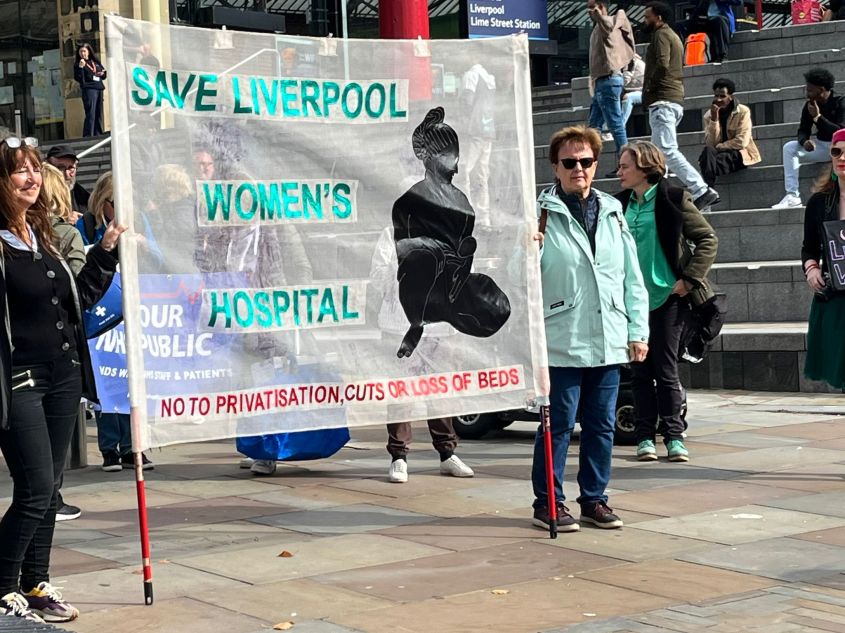
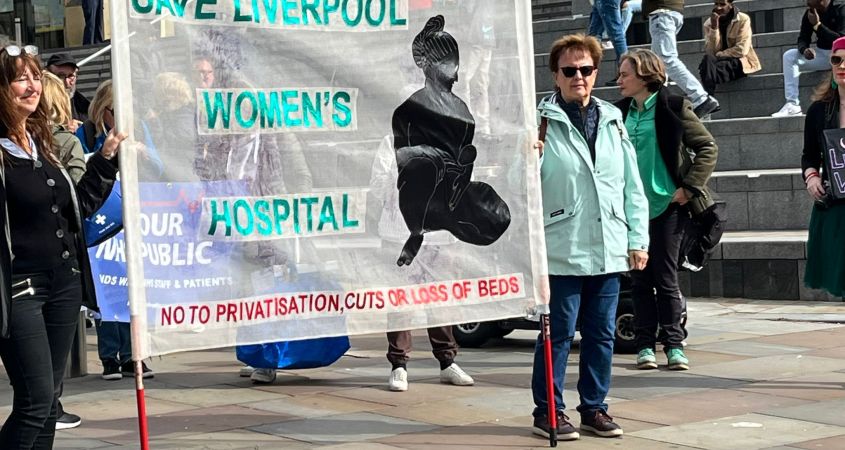
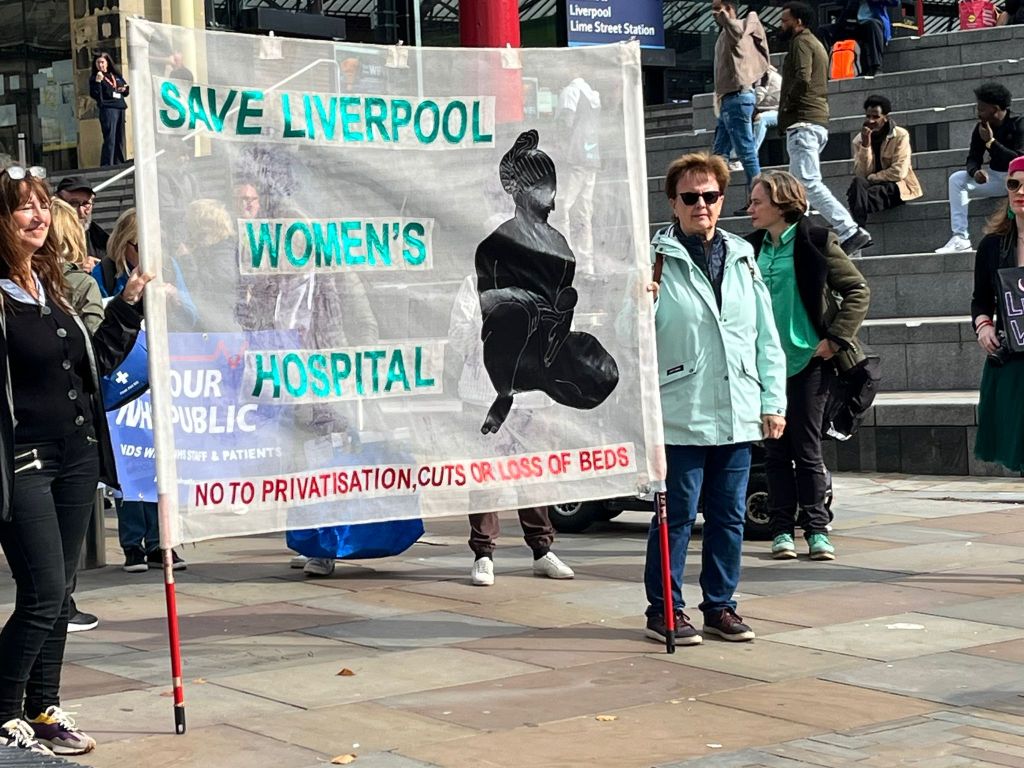
The crowd assembled behind our banner.

Thank you to everyone who turned out on September 28th for the protest at Labour’s Conference. Our campaign goes from strength to strength.

Press Statement on plans for Liverpool Women’s hospital and healthcare for women and babies in our region.

Save Liverpool Women’s Hospital 2024 for all our mothers, sisters, daughters, friends, and lovers and for all the babies.

The ICB meets on Wednesday, October 9th, to discuss its latest attempt to close Liverpool Women’s Hospital.

Without the long and publicly promised consultation, the ICB has gone ahead, determined to close our much-needed hospital.

Our campaign rejects any attempts to close, merge, disperse or cut services for the women and babies of the whole area.  None of the half-suggestions in the papers will improve anything for women or babies.

Papers such as those published for the meeting on October 9th are impossible to evaluate without a financial statement, research background, and impact assessment, all missing from the proposals.

The financial background for the whole NHS is grim. The last government’s financial plans and policies are still in place. The ICB in Liverpool is in serious financial trouble. There is a looming winter crisis. NHS England has said that the trusts must squeeze staff costs, and there is no chance to surge extra beds and social care resources as they did last year. We have consistently challenged the ICB on this.

Liverpool Women’s has structural financial problems. The largest maternity service in the country is most impacted by the inadequate Maternity tariff. Financial problems are not mentioned in the paperwork. No other hospital can improve on the Liverpool Women’s Hospital maternity service without improved funding.

Liverpool Women’s Hospital needs a level 3 high dependency unit added to its  Intensive Care provisions, and it needs some more specialist staff, all of which would be more efficient and equitable than the current semi-proposals.

We will not stand by and see women’s services sacrificed again.

In 2015, plans were set out to close one Hospital in Liverpool, and they chose to damage services to women.

Liverpool Women’s Hospital’s financial problems are caused by the poor funding of maternity nationally, and the cost of the foundation trust system.

Maternity and women’s health need urgent changes, but these don’t include dispersing services and absorbing Liverpool Women’s Hospital into one giant conglomerate. Should we leave structural issues in our health care to “the professionals”? No way. The big managers of the NHS have caused havoc in the last ten years, implementing austerity, privatisation, the chaos of the building of the new Royal, and the move towards an American healthcare model. We have seen more than a decade of damage.

The priority must be the health and well-being of the women and babies of Liverpool. For too long, women and babies have paid the brutal price of austerity and poverty.

The ICB say they think it will help poor and black women to move a hospital from Crown Street, in one of the most hard-up areas of the city, and the traditional Black centre of the city! This within weeks of the most serious organised racist attacks in the city in decades.

We have always said hospitals should work cooperatively, rejecting the 2012 Health and Social Care Act competition model.

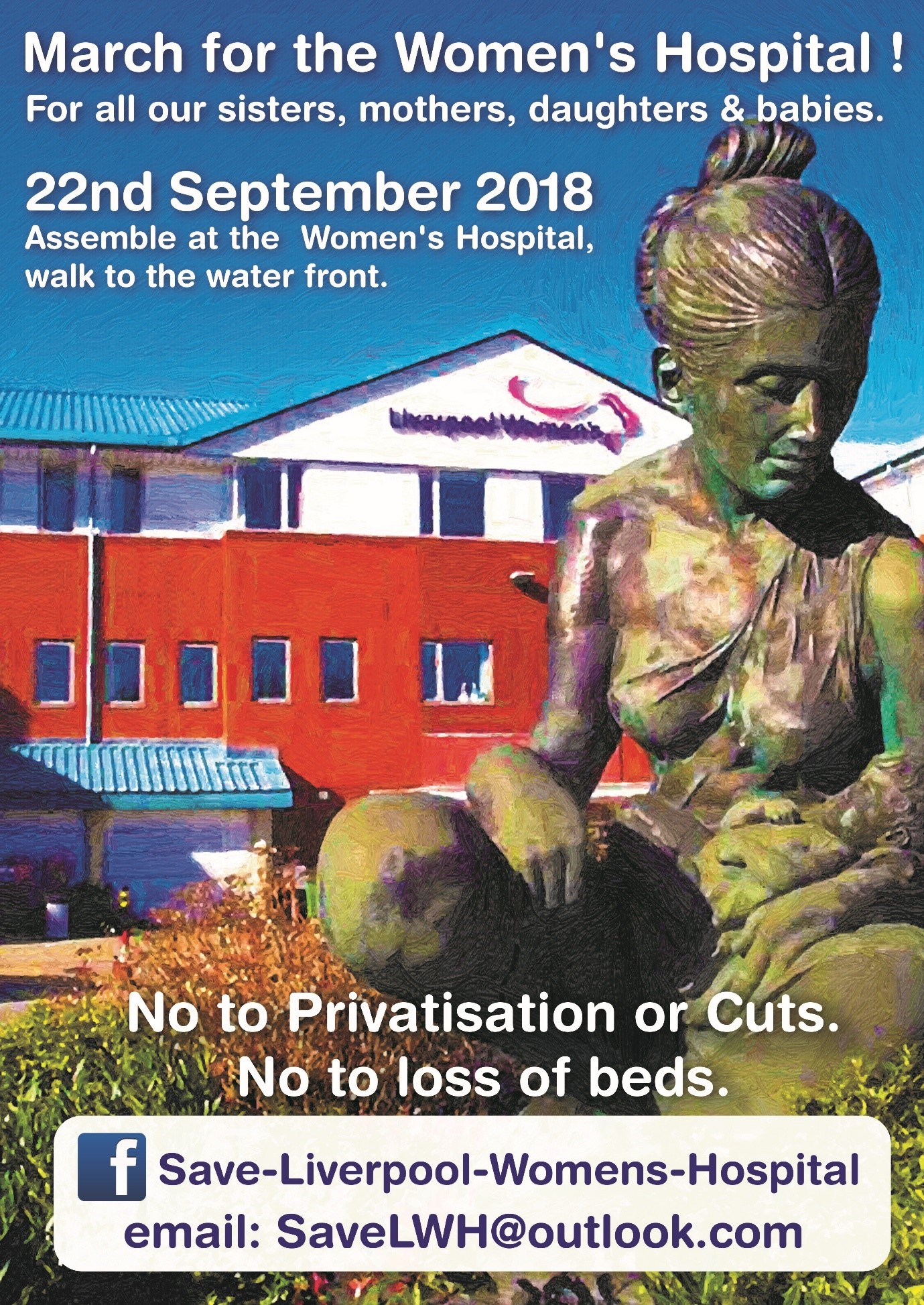
75,000 people have signed the petition to save Liverpool Women’s Hospital. There have been  three large rallies, and countless meetings and street stalls on this issue.

Only the hard and skilled work of NHS workers and in this case especially, midwives, have kept a service afloat.

Restore and repair the NHS! Save Liverpool Women’s Hospital!

Liverpool Women’s Hospital is a much valued service for women and babies.  The history of the building and the site are important, especially as racism has reared it head in Liverpool in a way unseen for decades.  It is a modern low-rise building in good condition. No wonder the private sector lusts after it.  The Crown Street site is, importantly, a green site, which helps sick women and babies heal, which is good for babies’ lungs, and is a good place to be born.

Nationally, Maternity is badly funded and badly organised. The Government spend more on payouts from the insurance than for the whole service. There has been a flight of older, more experienced midwives from the service, making the work of our much-valued younger midwives harder. Midwives nationally have been clear about the dangers, and a slew of reports have shown the damage done to women and babies. All these cases have been in co-located maternity systems.

NHS workforce planning has been appalling in the last decade. Blaming a standalone site for workforce shortage is ridiculous. The situation for anaesthetist training is a national scandal.

We call on the city of Liverpool, Merseyside, and beyond to defend what we have in the NHS, and to fight to improve the rest. No closures, no loss of services, no more mergers, no more outsourcing, no more overworked staff.

No to closure or merger of Liverpool Women’s Hospital.

What has Liverpool’s “Place” NHS and Cheshire and Merseyside ICB done whilst maternity care nationally is in a well-publicised crisis and thousands of women are furious about the level of care they and their babies received? While the public enquiry into baby deaths at Countess of Chester has just opened? While Alderhey is at the centre of the Physician Associates scandal? While they can’t stop the next winter crisis, already upon our hospitals?

They announce the intention to fundamentally change Liverpool Women’s Hospital. This was without even a meeting with the organisations that have campaigned for a decade to keep the hospital and collected 75,000 signatures to keep the hospital on the Crown Street site as a women’s hospital for all our mothers, daughters, friends, lovers and for every precious baby.

The whole ICB is facing huge problems and does not have the resources to deliver safe A and E in the coming months. Yet, they think launching a discussion about merging Liverpool Women’s Hospital into one conglomerate of hospitals is sane and responsible.

This is the state of the Integrated Care Board, which is the controlling body for the NHS in Cheshire and Merseyside. It is from page 110 in the Board papers. A score of 20 in black means it is at the highest risk possible. They also said:

There are currently no known plans for any additional funding to be allocated ahead of winter to support additional capacity and the expectation is that maintaining system flow through winter will need to be achieved through the delivery of these improvement plans.

The document about Liverpool Women’s Hospital’s future can be found here. We will produce a detailed critique next week.

Maternity and women’s health need urgent changes, but they don’t include dispersing services and absorbing Liverpool Women’s Hospital into one giant conglomerate. We want to see the following changes nationally and locally.

  1. Far better funding and staffing for maternity and an end to birth traumas.
  2. More respect must be given to women giving birth and the women tending them in giving birth.
  3. The funding currently given to insurance for maternity damages should be invested in the service to reduce those damages.
  4. Women who need induction of labour should get that intervention in a safe and timely manner.
  5. Fertility services must be fully available on the NHS, not the prerogative of the well-off.
  6. Gynaecology services must be drastically improved, nationally and locally.
  7. The NHS workforce must be given more respect, their workload improved, and the service must once more become a good place to work.
  8. The whole NHS must be returned to being a national, fully publicly provided service, fully funded, repaired, and restored after all the damages of more than ten years of austerity and many forms of privatisation.
  9. The public’s views must be respected – most women likely to use the hospital will be at work when this first meeting happens.
  10. The research conducted at Liverpool Women’s Hospital must continue into key areas like endometriosis, menopause, and working to ensure our prem babies live and thrive despite being born very early.
  11. Midwifery training must be made available to all without incurring huge debts.
  12. Women’s health and healthcare must be given far more resources and respect.

Our petition, which is available on-line is at 44,656 signatures and more than 30,000 signatures on paper, says “Save the Liverpool Women’s Hospital. No closure. No privatisation. No cuts. No merger. Reorganise the funding structures not the hospital. Our babies and mothers, our sick women, deserve the very best”

It has over seventy-five thousand signatures. The people of Liverpool have attended three big demonstrations to save the hospital. Campaigners have attended every board meeting of Liverpool Women’s Hospital since the petition was launched and every ICB meeting since that was formed. Yet we have never been invited to present our views. Promises of consultation made in public clearly meant nothing.

Twenty thousand signatures were presented to the ICB in January 2023

Liverpool Women’s Hospital is a tertiary centre, which means patients are referred there from other hospitals from the rest of Merseyside and Cheshire, the Isle of Man and parts of Wales. Keeping that provision and the reputation that goes with it is important. The provision for the babies in the neonatal unit, near their mums, matters too.

We have said for years that the NHS must change the maternity tariff, the amount of money paid to hospitals for delivering maternity care. Liverpool Women’s Hospital is the largest provider of maternity care and is badly hit by how low the tariff is. Liverpool Women’s Hospital runs a deficit because of this, and over the years appears to have made some bad decisions on staffing because of the financial problems. Many midwives left. Yet somehow,the document from the ICB says:
The case for change is focussed solely on the clinical risks, issues and outcomes for people using hospital-based gynaecology and maternity services. It does not consider productivity or value for money.”

The ICB is in serious financial trouble yet it claims not to be considering money in this situation.

We say that right from the beginning, it has been about money. It was about the decision made nearly a decade ago to close one of the Liverpool Hospitals to save money at the cost of our health. It is also about disrespecting women’s health and women’s opinions.

“We’ve known for some time that the poorest households and women have shouldered the greatest burden of austerity measures.” Women’s health has suffered particularly in this time. Liverpool has seen some of the worst overall loss of healthcare. Yet we still kept Liverpool Women’s as a treasured service, where most of Liverpool’s babies are born and where great steps have been made in research. We said before and say it again “In these hard times. what we have we hold.”
Should we leave structural issues in our health care to “the professionals”? No way. The big managers of the NHS have caused havoc in the last ten years, implementing austerity, privatisation, and the move towards an American model. We have seen more than a decade of damage.

Remember the chaos of the building of Liverpool Royal, with fewer beds than the old one and now needing more, with chaos in the financing, construction, and demolition?

We call on the city of Liverpool to defend what we have in the NHS and to fight to improve the rest. No closures, no loss of services, no more mergers, no more outsourcing, no more overworked staff.

Please sign our petition here

Please attend any of the public meetings that you can get to. The first is this one:

When: 9th October 2024, 9.00am to 11.30am.

Where: Liverpool 1 Suite, Holiday Inn, Lime Street, Liverpool, L1 1NQ

Still Saying It. Save the NHS, Save Liverpool Women’s Hospital.

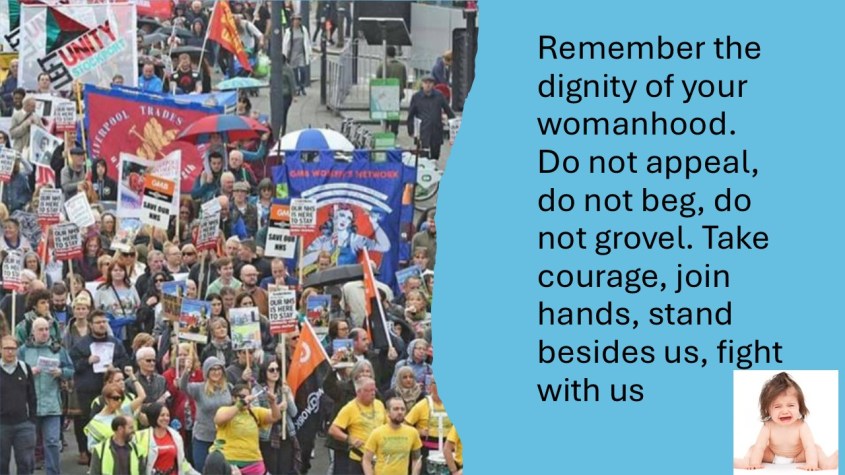
“Do not appeal, do not beg, do not grovel. Take courage, join hands, stand beside us, fight with us”!

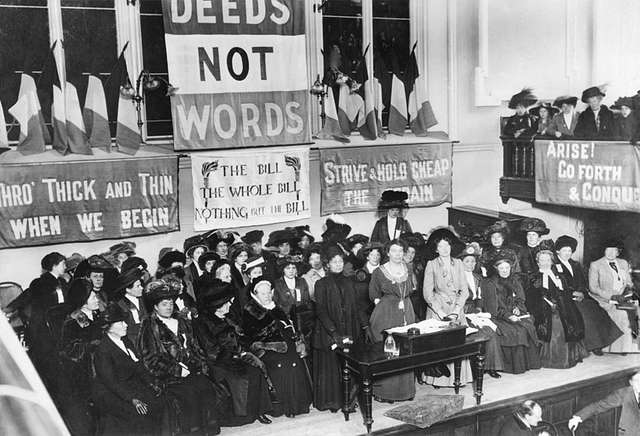
The Suffragettes knew how to campaign and so do we.

This post is being written just two weeks after the General Election which saw the Conservatives, who had so very severely damaged our healthcare, thrown out. (Hurray!)The new Labour Government has a massive majority but lacks a clear plan to restore and repair the NHS, and talks of more privatisation. They also have form in bringing in privatisation in earlier governments. So, we need to review the situation and renew our campaign.

We are far from alone. There are campaigns like ours dotted around the country. The NHS is immensely important to people in the UK.

We fight too for the whole NHS; the issues are inseparable. Maternity is one of many issues, including the overall reduction in healthcare capacity in this country as seen in the many hospital closures, shortage of doctors, multiple kinds of privatisation, the use of the business model, and the influence of big US “health” corporations. We, though, focus on maternity and our local issues (as well as the big national and international healthcare, women’s rights and children’s rights issues.)

From the start we said

For all our mothers, sisters, daughters, friends, lovers and every precious baby save Liverpool Women’s Hospital and the NHS.

In the years we have been campaigning we have seen severe damage to maternity care nationally, and to the whole NHS. Mothers and precious babies have paid a heavy price. Highly qualified people have conducted report after report into the situation and the last government gave lip service and let the situation deteriorate. These are heartbreaking and infuriating descriptions of some maternity in the UK.

The recent All Parliamentary report on Birth Trauma has been followed by the Birth Trauma report from Beth Hopper and the Keep Horton General Hospital campaign.

The most useful definition of birth trauma we have found is this.

A traumatic childbirth experience refers to a woman’s experience of interactions and/or events directly related to childbirth that caused overwhelming distressing emotions and reactions; leading to short and/ or long-term negative impacts on a woman’s health and wellbeing.”

There is support in issues around Birth if you contact the Birth Trauma Association, and sometimes through the maternity hospital. Liverpool Women’s Hospital has a service called the Rainbow Clinic for women having a baby after an earlier traumatic experience, normally involving the death of a baby but it is not advertised on their website.

Some mothers thankfully do have great experiences of birth but the numbers reporting far from good experiences is heartbreaking. The racial and class divides in Maternity outcomes are scandalous. Maternity is grossly underfunded and understaffed. The staff are overworked.

Continuity of Carer where pregnant women are cared for by a known small team of midwives from the pregnancy through birth and the post-natal period would help if it were fully staffed and funded would help. Without funding and staffing, the attempt to introduce continuity of care caused chaos. Donna Ockendon’s report called for it to be halted until full funding and resources.

We are concerned about women’s experience of delayed induction of labour and its link to emergency caesarean sections.

Staff in our hospitals and community teams work hard with inadequate resources and inadequate staffing. We will shout from the rooftops”We need more midwives.”

We have seen NHS managers looking for all kinds of magical thinking solutions to the problem but Liverpool Women’s Hospital does not need a new building, we do not need new fashions in childbirth, we need women’s choices to be heeded, we need more midwives, more obstetricians, more anaesthetists, more natal nurses, more health visitors, more infant feeding specialists. We need better blood services, well-maintained buildings, better food for staff at night, we need bursaries and we need to retain the staff we have. Above all, we need more midwives.

It would be nice if NHS managers were prepared to speak truth to power but we know that bullying is endemic in the NHS.

Many reports, especially in the right-wing press criticise “NHS Maternity Care”. However, the US model of maternity care is the worst in the developed world so no lectures from American Health Corporations or their UK offshoots or employees or political servants, please.

We must make the politicians listen. Our campaign must become deafening.

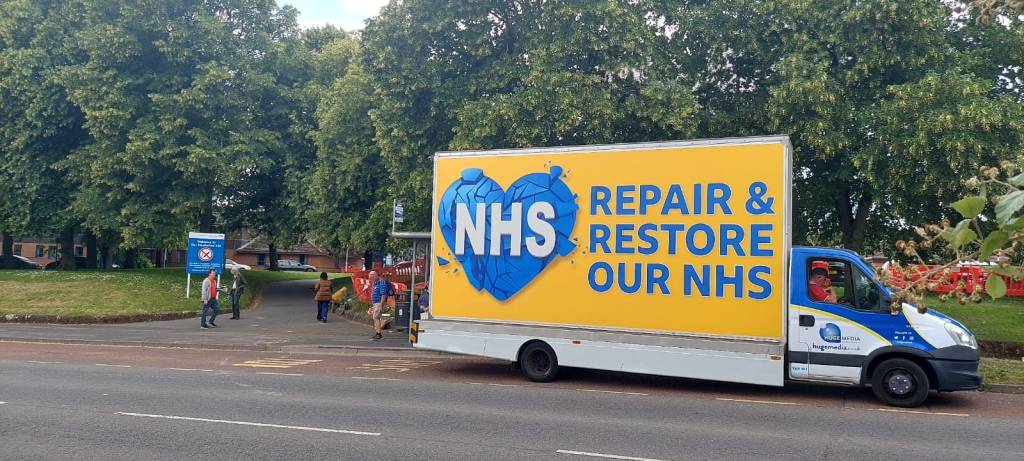
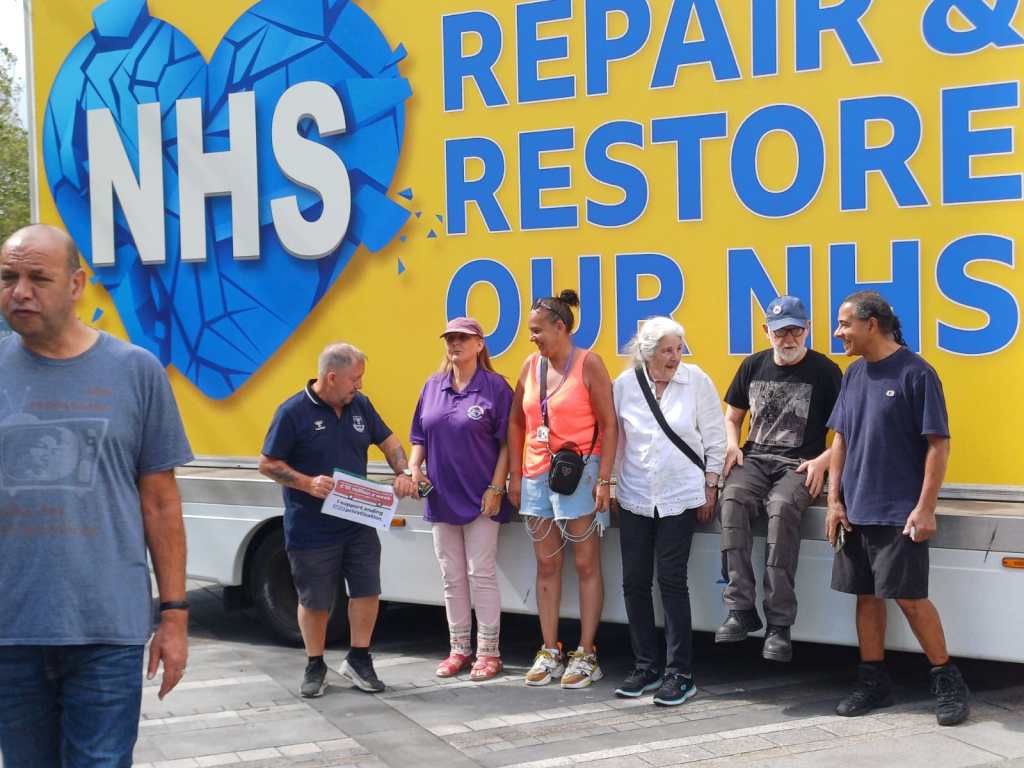
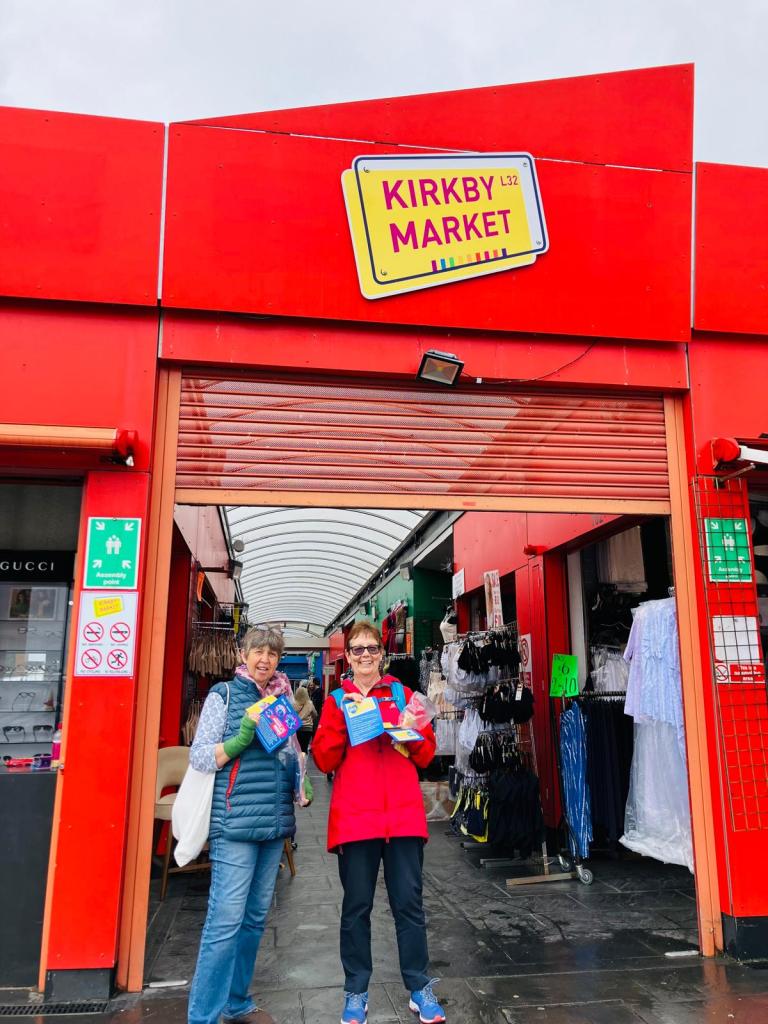
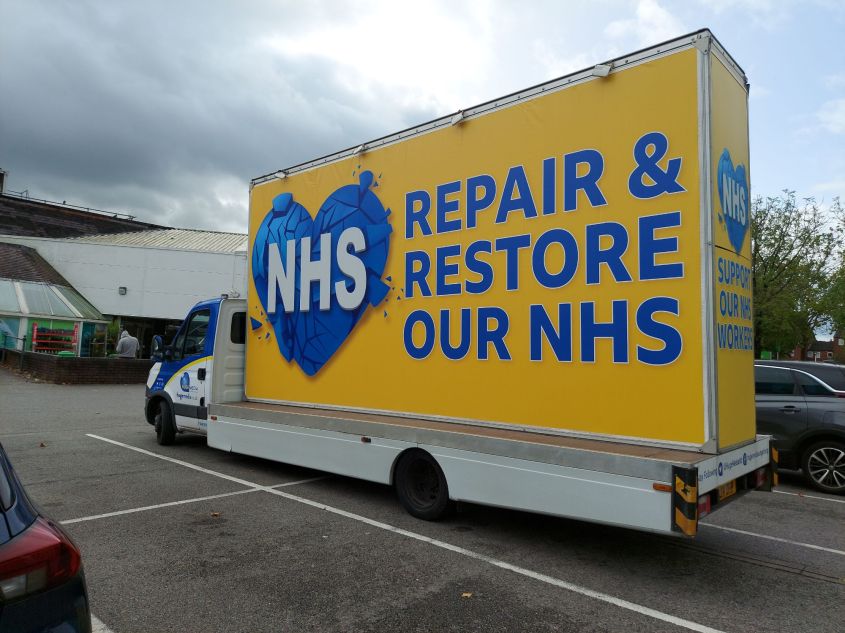
We took a big Restore and Repair the NHS campaign van around Cheshire and Merseyside in the week before the election. We went to Leighton Hospital near Crewe and up to Southport, to Ellesmere Port, to Chester, to Neston, to Warrington, to Kirkby, Whiston, Birkenhead, West Kirby and Liverpool. The van was met by campaigners in many places and had good support from the public. We heard stories of gratitude to the NHS and stories of long waits and being unable to access treatment.

We were not supporting a particular political party but we were opposing the last government and all the previous ones that had damaged our healthcare in the name of austerity or the discredited idea that private companies could run public services better than public services.

The NHS was one of the biggest issues in that election but too many people felt there was nothing they could do about it. We saw the lowest turnout in the election, the lowest since ordinary people had the vote.

One conversation comes to mind, one in Ellesmere Port Market(a great place!). A woman said there was nothing they could do about it however bad it was. We said that the suffragettes managed to change things, without even having the vote, that slaves got slavery abolished, that we do not send kids up the chimney anymore, and that the fight for the NHS was from the people not from political parties.

We also want to do a shout-out to the Lodge Lane food pantry, a great crowd of people who gave our van a real welcome.

Keep our NHS Public commented after the election;

The NHS must be set back on its feet once more. For this to happen, health services must be restored in line with the founding principles of the NHS and social care needs radical transformation. However, it is of great concern that this does not appear to be the vision for the NHS put forward by Starmer and Streeting throughout the election, and we call on the new Labour Government to declare an immediate national emergency in health and care, as have the BMA and the RCN.
It would be so much better if Repairing and Restoring the NHS was once again a serious commitment from one of the political parties but it still is not. We must make the issue of restoring and repairing the NHS such a big campaign that politicians must listen.

 The NHS needs proper investment NOT “reform” and privatisation. This campaign joins with NHS workers Say No in saying #Wes change your plans #no to NHS privatisation.

Our campaign is part of a wider campaign in Cheshire and Merseyside to restore and repair the NHS. The local ICB we know is short of funds but now has been told to bring in a private company to look at how it can reduce costs. This is ridiculous. Liverpool Women’s Hospital requires additional funding to keep safe. Funding comes through the ICB. We are far from the only hospital or service in that situation. It is an intolerable situation and we call for public support to stop this dangerous nonsense. The lives and health of our precious babies and the health and at times lives of their mothers depend on improving the healthcare.
We warned the ICB that last winter would be dreadful in the NHS and dreadful it was. We need urgent action now to prevent another set of winter problems in this area.

Our hearts go out to the women and children of Gaza, especially to the pregnant and new mums. Cry justice for the dead and injured. We weep and rage with the patients whose doctors and health workers who have been willfully killed by Israel or tortured in Israeli prisons in this terrible onslaught. We mourn too the dead of Ukraine and those in all the other conflict zones.#CeasefireNow#StopGenocide#SavetheChildren.

With your help, in person or through donations, we will grow our NHS maternity campaign so it cannot be missed. Remember every campaign requires people to talk to their friends about the issue. These little conversations are the seeds of success.

What can you do?

1 Talk to your friends and workmates about the need for a fully funded publicly owned NHS.

2. Get involved with the campaign personally.

3. Tell us about your experiences and suggestions

4. Make formal complaints about poor service to the hospital and to your MPs and councillors. We can help.

4. Get your union branch or other organisation involved in the campaign. Ask us to send a speaker.

5 Give out leaflets in your street.

6 Put up posters.

7 Come to our events. Look out for events when the Labour Conference comes to Liverpool at the end of September.

 It is a hard struggle but we can do it.

Liverpool Women’s Hospital. Great work and great problems.

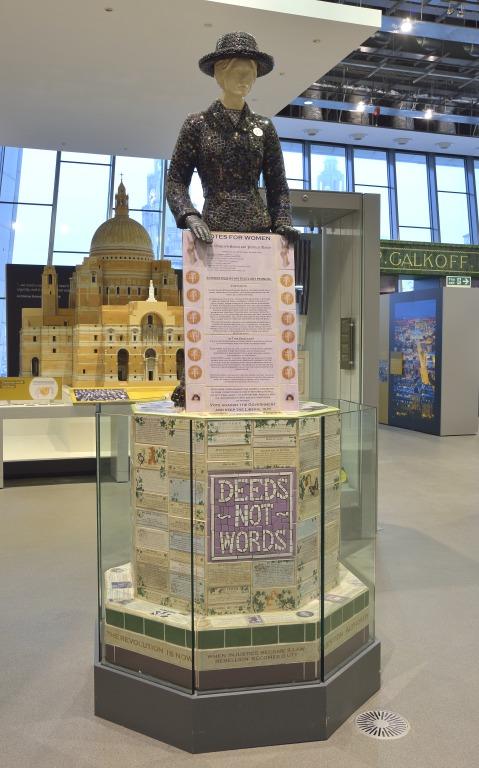
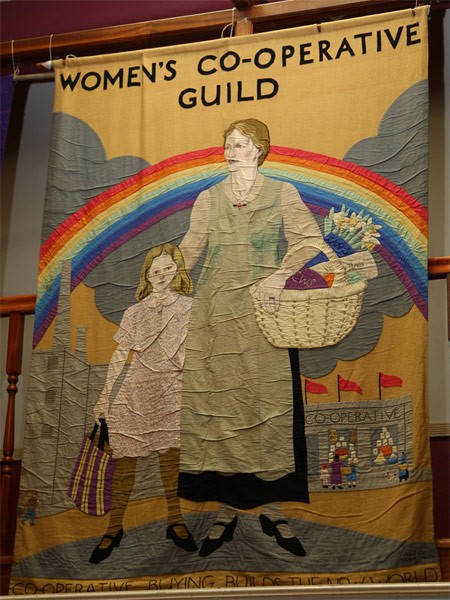
This banner in Liverpool Life museum is from one of the campaign groups for women’s health in the early twentieth century

Women and babies in Liverpool are entitled to the highest standard of healthcare. Our grandparents and great grandparents fought to found the NHS and left us this as their legacy. The NHS was a national service providing excellent healthcare, publicly provided and government funded. The new NHS did magnificent work for infant and maternal mortality.

In the last twenty years though, there have been years of cuts and privatisation in healthcare and years of poverty and subsequent ill health in Liverpool. A report to Liverpool city council this year said that, without change, “The life expectancy of women will fall by one year, and they will be in good health for 4.1 fewer years than they are currently.”

It is time to demand better.

Campaigning for the whole NHS

We are campaigning to Save Liverpool Women’s Hospital and to restore and repair the NHS. We want to see improved funding and staffing and to see the whole NHS move back to its original model of a national public service, publicly provided, providing universal comprehensive and timely care for everyone free at the point of need and funded by Government. If you have not yet signed our petition please do so.

Healthcare staff have worked way beyond what should have been needed to keep some good services going. Every day people are grateful for their work, their kindness and humour but sheer human effort cannot compensate for inadequate funding and too few staff.

Liverpool Women’s Hospital provides some excellent services but it has some serious difficulties too.

The Liverpool Women’s Hospital board meeting on 9/05/2024 reported some excellent staff work, including improved methods of helping premature and very premature babies survive and thrive. It also reported the success of moving early pregnancy loss to its own area, a development much valued by the mothers involved. Previous meetings have seen patients reporting their experiences too. In April there was a very positive report from a patient about her experience of the care she received from the Rainbow Clinic as a previously bereaved mum. We have also seen excellent presentations about the pioneering work on endometriosis and menopause at different meetings. The Hospital website says Every day on average, 24 babies are born in Liverpool Women’s Maternity Unit and another three babies are born prematurely and cared for in our Neonatal Unit Most of Liverpool’s babies are born at Liverpool Women’s Hospital and sick and tiny babies are cared for in the beautiful new NICU ( Neo Natal Intensive Care Unit)

Entrance to the NICU

The Liverpool Women’s Hospital is undertaking a major anti-racism drive to improve outcomes for patients and staff. We very much welcome this initiative. It is essential to save lives.

The core problem for Liverpool Women’s Hospital is under funding. This underfunding stems from the national underfunding of maternity as well as the general under funding of the NHS. This longterm underfunding has meant years of cuts. The NHS organisational changes from 2012 to create Trusts and Foundation Trusts also wasted many resources that should have gone to patient care.

Liverpool Women’s Hospital also has a long waiting list for cancer patients and waiting lists for gynaecology appointments. Some more staff have been appointed and hopefully the list will be dramatically reduced.These waits cost lives and health. The Chief executive reported that

NHS England’s tiering process for cancer performance is designed to provide accountability and additional central support for trusts that are most at risk of missing national cancer targets. Trusts are categorised into tiers based on their performance, with Tier 1 being the most challenged and requiring the most support. Trusts may move between tiers based on their performance improvements or deteriorations.
In a letter received on 26 April 2024 from NHS England, it was confirmed that following a review of cancer performance, and in agreement with the regional team, the Trust will be in Tier 1 for Cancer from the week commencing 29 April 2024. The move to Tier 1 will involve regular meetings to discuss delivery progress and any required support from the relevant parts of NHS England.

Last year the hospital had a poor Care Quality Commission report for maternity and it has taken work to improve on this.New management is in place and they have plans to ensure that improvements are happening.

Our babies, our mothers, deserve much more.Every mother every baby treated at Liverpool women’s deserves the very best. Poverty from low wages, low benefits and poor housing is costing lives, and causing long term ill health. Inadequate health services are part of this.The Care Quality Commision report last year showed how much harm has been done by this underfunding and under staffing. The management must also be responsible for some of the damage mentioned in the Care Quality Commission reports.

The funding issues at Liverpool Women’s means that to meet the current level of service it needs twenty five percent more funding. Money is spent very carefully but for basic safety to be met, that extra spending is essential. At present the required money is being spent and temporary support funding has been made available, by the ICB or national NHS. However this situation puts the hospital into whats called Level 3 of the National Oversight Framework which could bring in management decisions not based on the needs of staff and patients, as the government clamps down on public spending.

Many studies show that money spent on good healthcare repays for itself many times over. At birth this is especially so as bth injuries can last a lifetime.

Neither merging the hospital nor dispersing its services will change that fundamental financial situation. Only an improvement of maternity funding will make a real difference.

Screen shot from page 52 of the LWH Board meeting 9 05 24

The underfunding of maternity leads to staff overwork and reduced services. Government safety figures for staffing are met but we say these safety figures are inadequate. The Government funding does not provide sufficient staff to deliver the kind of service patients and staff require. yet money is squandered on private companies and financial consultants.

There are national problems with maternity services described in many prestigious reports, as well as the Ockendon and Kirkup reports. No report has yet managed to shift the Government’s policies. We believe we need a huge campaign to win back the NHS.

A large part of Liverpool Women’s Hospital Maternity spend is on the maternity Incentive scheme, a government owned insurance system, run on a business model. Liverpool Women’s Hospital meets all the requirements of this scheme and so gets a refund from hospitals that do not meet all the safety requirements. This is an unbelievable situation..

Payouts from the fund are higher than the funding for maternity.If maternity were well funded fewer babies would be damaged and have to claim through the courts from this insurance fund.

In this crazy situation the hospital is still expected to make cuts (CIPs).

Our demonstration last October.

We have written before about how planned Cheshire and Merseyside ICB funding will not repair the situation patients experienced last winter. This poor experience was seen in many aspects, including A and E, care in corridors, access to GPs, access to NHS dentistry, and inadequate mental health provision. It will be worse next winter.

It was no surprise to hear there will be no new Hospital built in the next decade, nor does Liverpool Women’s require a new building. we believe that the new building idea was floated to make the idea of merging Liverpool Women’s Hospital into the big acute hospital more palatable. The existing building is less than thirty years old.However the drive to make fundamental changes remains, with merger or dispersal being the most likely recommendations. WE want to keep a distinct women’s hospital.

In the April Board meeting of Liverpool Women’s Hospital it was reported that work is in progress for major changes.

the Women’s Hospital Services in Liverpool Programme. As part of the roadmap, the initial phase of the programme had been outlined, with an emphasis on the importance of openness, transparency, and continuous engagement with the public.
The development of a clinical case for change was scheduled for the spring and summer of 2024, with publication expected later in the same year. Feedback from this engagement phase, gathered during the winter of 2024/25, would then inform the approach to designing future services, with further development of potential options anticipated to commence in early 2025.” So the threats to Liverpool Women’s Hospital are still very real.

A meeting has been held with other Liverpool hospitals about the future for Liverpool Women’s Hospital and women’s health in the other hospitals in Liverpool.We have not yet been able to see which issues the other hospitals raised. Public consultation is promised this year.

No hospital can exist in a vacuum. Every hospital should be working in a mutually supportive system. The NHS was founded to be a national service, not a collection of competing hospitals. System working was damaged by the 2012 Act and the drive to privatisation. Cooperation and system working is required for the future of the other specialist hospitals in Liverpool, like the Heart and Chest and the Walton Centre.

Our campaign to Save Liverpool Women’s Hospital and to restore and repair the NHS has huge public support and is growing steadily.

The future of Liverpool Women’s Hospital is no safer this week.

Save Liverpool Women’s Hospital News May 2024.

Liverpool Women’s Hospital will not get a new building on the Royal Site. This announcement has been expected for some time. The BBC covered the story this week. On Radio Merseyside our campaign was asked to comment. We said that we were not surprised . The Hospital should stay on the Crown Street site and that what matters is proper funding, staffing, and resources because our babies deserve the best.

Our huge petition says.

Save the Liverpool Women’s Hospital.

No closure. No privatisation. No cuts. No merger.

Reorganise the funding structures, not the hospital.

Our babies and mothers, our sick women, deserve the best.

What’s happening with the  Liverpool Women’s Hospital?

There has been a press announcement that there will be no new women’s hospital built on the Royal site in the near future.

This announcement does not mean the future of Liverpool Women’s Hospital is safe, far from it. Public consultation about its future will be launched shortly.

The announcement is not a surprise to anyone who has followed the story of Liverpool Women’s Hospital or the story of broken promises from the Government about building new hospitals, even those in dire physical conditions.

For example in Leeds, the people were promised a new Children’s Hospital. In the meantime, services were dispersed to different hospitals to allow demolition. Now the new Hospital is not going to happen.

Nationally, maternity is underfunded and understaffed and has seen terrible scandals. We have written much about this in other posts.  Just this week there was a report about delayed induction of labour across the country (and this also has been seen in Liverpool Women’s Hospital). The Care Quality Commission reported “The quality of maternity, mental health and ambulance services has seen a “notable decline” over the last year, which is contributing to “unfair care” and worsening health inequalities,”

The Neonatal Unit at Liverpool Women’s Hospital

The Health Service Journal  also reported that

families whose babies died and whose mothers were harmed – in some cases dying – in the East Kent maternity scandal were still having to prove legal liability to get any compensation. This is despite Bill Kirkup’s report, published around 18 months ago, having already looked at their cases in detail and reached conclusions on whether better care could have led to different outcomes.

But NHS Resolution, which handles the NHS’s clinical negligence claims, says causation and a breach of duty of care will need to be proved in each case. This may mean families have to engage not just lawyers but also experts in midwifery, obstetrics, and neonatal care.”

In such a national maternity crisis we must protect the services we have in the area. We say women and babies will be harmed if the Liverpool Women’s Hospital is forced into a merger with the huge general hospital. The focus on women and babies will be lost. The great maternity scandals of our age have happened where there was no real focus on women and babies.

The government and the NHS bureaucracy have wanted to close one hospital in Liverpool since 2015. Liverpool Women’s Hospital was chosen. This is to do with saving money not patient care.

Liverpool Women’s Hospital sits on a great site on Crown Street. The official opening was on 7th November 1995 and the building is in good condition. A £20million pound neonatal unit was recently added to the hospital. It does not need a rebuild.

Liverpool Women’s Hospital does need more staff and additional resources like a proper blood service, an improved emergency medicine service, a 24/7 consultant obstetric presence. It needs to tackle the long waiting list for Gynaecology treatment,  and improved intensive care. All of this requires funding and support from the national health service and government funding but without that funding our babies and mothers will suffer. The money must be provided.

Our Saturday stall n Bold Street

All hospitals should be run in a cooperative system with other hospitals but specialisms should be protected.

Liverpool Women’s Hospital, along with the whole of the UK, needs to improve infant mortality, maternal mortality and injuries to women and babies and to tackle gross inequalities.

Serious damage has been done to our health care. We see it in the terrible waiting times in Accident and Emergency, in the 14,000 preventable deaths caused by those A and E problems, we see it in dentistry, in the GP service, in mental health and in maternity. We see it in the eight million people on waiting lists. We see it in the exhausted staff.

The experience women have giving birth is getting worse because of these underlying, national problems and the day-to-day stress this brings into the hospital.

Liverpool Women’s Hospital is damaged too by the business model imposed on the hospitals. The drive to privatise and to move away from a service model in the NHS has caused problems all this century.

The new Chief Executive (James Sumner) and Chair of Liverpool Women’s Hospital (David Flory) are also the Chief Executive and Chair of the Royal, Aintree and Broadgreen Hospitals (Liverpool University  Hospitals Foundation Trust). Neither man is a specialist in maternal or infant health. The Health Service Journal has said these joint appointments are likely to lead to a merger of Liverpool Women’s with the big hospital. We say no to a merger, and a big yes to cooperation between all the hospitals in the area. Such cooperation is anathema to the privatisers. We need continued support from the people of Liverpool to win this fight and we need to link up with other maternity campaigners.

Please help Save Liverpool Women’s Hospital. Sign the petition, talk to friends family and workplaces about this, join the discussion, and help with leafleting and social media.

Invite us to speak to your organisation.

 Send us a donation.

 For all our mothers, sisters, daughters, friends, and lovers and for every baby

The Future of Liverpool Women’s Hospital, Spring 2024

Save Liverpool Women’s Hospital.

The future of Liverpool Women’s Hospital has been under threat for nine years now. The petition which is at the heart of the Save Liverpool Women’s Hospital Campaign says “No closure. No privatisation. No cuts. No merger. Reorganise the funding structures not the hospital. Our babies and mothers our sick women deserve the very best.

In the Liverpool Women’s Hospital Board papers 11.04. 2024, it was announced that “An indicative programme plan had been developed and this reflected the unlikelihood that a new hospital building, co-located with an adult acute site, would be built within a five-to-ten-year timescale.

( In plain English this means they will not get a new Hospital)

 And that

 “… discussions were held on alternative solutions for citywide women’s healthcare.

Our opponents promised the public that a new smaller hospital on the Royal site would improve services. We always said that such a plan was magical thinking and that even if they got the money for a new building the existing problems would still be there. We said moving the Liverpool Women’s Hospital from the Crown Street site would be bad for women and babies.

Now we are in the horrible position that the bribe of a new hospital has evaporated but the core financial and organisational problems remain. We well remember the Panorama programme many years ago when it was announced that they wanted to close one hospital in Liverpool, and that clearly was Liverpool Women’s Hospital.

There are serious problems for Liverpool Women’s Hospital not to do with the Hospital site.

The Board of Liverpool Women’s Hospital has made it clear that safe services require extra funding. We demand that this money be provided.

Liverpool Women’s Hospital has a grave shortage of funds for crucial services. The fault for this lies with the last four governments but especially the current government who are very much aware of the damage they are doing to maternity care. There have been numerous high-profile reports on this, not least of these reports, being the work of Donna Ockendon. Donna Ockendon is now working on another maternity report, this time from Nottingham.

There are five reasons this national problem impacts on Liverpool Women’s Hospital

  1. Healthcare in the UK is badly funded and badly organised, wasting money and resources on privatisation.
  2. Eighty per cent of Liverpool Women’s Hospital’s budget comes through maternity funding, mainly the Maternity Tariff. The maternity tariff nationally is inadequate. No other hospital relies quite as much on maternity funding as the Liverpool Women’s Hospital does.
  3. The costs of the Clinical Negligence Scheme weigh particularly hard on this, the largest maternity hospital. The Government scandalously spends more on compensation than it does for the whole maternity service.
  4. The hospital is a Foundation Trust, which is an expensive management model for a small hospital.
  5. The model of healthcare from this, and some earlier governments, saw hospitals as competing businesses rather than a cooperating system. A small hospital could not thrive in such a scenario. This model is changing but the new ICB model also poses serious problems. We call for a return to the original Bevan model of the NHS, where a fully funded national, publicly owned and delivered health system based on cooperation not competition, sees ongoing improvement in maternity services.

Liverpool Women’s Hospital lacks crucial services because of these funding issues.

Our petition, now with more than 40,000 signatures online and more than 20,000 on paper, says “Save the Liverpool Women’s Hospital. No closure. No privatisation. No cuts. No merger. Reorganise the funding structures not the hospital. Our babies and mothers our sick women deserve the very best.”

Our campaign wants to improve the whole maternity journey for women and babies, every aspect of it, safety, respect and celebration of birth. We campaign for maternity everywhere in the UK. It is not possible to solve the fundamental problems of Liverpool Women’s Hospital without solving national funding and staffing issues but we can stop projects that make things worse. There are many and detailed reports about how the experience of maternity has worsened in recent years.

Our campaign wants midwives, nurses, obstetricians, CSWs and other staff to feel safe, and respected at work, free from undue stress, with access to ongoing education and training and with the opportunity to eat well, go to the toilet and have proper breaks at work, both day and night.

Our campaign wants to see maternity well-funded and protected from privatisation and protected from trendy, untried innovations.

We want those running maternity services to remember that as medics they have a duty of candour, to tell the truth about funding and staffing issues.

Since 2010 there has been damage done to all maternity and women’s health services nationally, and Liverpool Women’s Hospital has not escaped that damage. Underfunding, understaffing, and lack of key equipment and services have all had an effect.

We campaign for the whole of the NHS, not just maternity

Why do we want a women’s hospital?

We want excellent healthcare for women and babies. Our babies, our mothers, deserve the best. It is that simple.

However, that is not what this and previous governments have provided. We want to keep the focus on the needs of women and their babies. The scale and depth of the maternity scandals in other big multi-site, multi-specialism hospitals is a testament to how important this is. There have been many prestigious reports published about how bad the damage has been to Maternity and to women’s health. One in seven maternity units have closed during the period of cuts and this wave of closures has not stopped.

Cuts in NHS funding are part of the Austerity project. Austerity cuts have hit women and children and the working class very badly whilst the rich get ever richer. In this situation, we must protect what we have and not let it go. Maternity in England has suffered grievously under austerity. Maternal deaths are the highest in 20 years.

Ockendon’s reports have painted a grim picture of the failings of the system. Our campaign has fought hard for national as well as local funding and held two conferences on this matter. None of these hospitals involved in the big maternity scandals were standalone  Women’s Hospitals like Liverpool Women’s Hospital and their failings were not blamed on being a standalone Women’s Hospital. Yet the standalone character of Liverpool Women’s Hospital was what all the case for change was based on.

When Donna Ockendon did her first report on the Shrewsbury baby deaths it was revealed that many hospitals providing maternity care did not even have a member of their board charged with Maternity care, so board papers could go with nary a mention of maternity. Bad Care Quality reports were not given due consideration by the Shrewsbury board.

  • The Trust board did not have oversight or a full understanding of issues and concerns within the maternity service, resulting in neither strategic direction and effective change, nor the development of accountable implementation plans.

Most of Liverpool’s babies are delivered at Liverpool Women’s Hospital. The hospital delivers roughly 8,000 births per year. The Hospital also provides maternity care from a wider region for complex pregnancies and very premature or very sick newborn babies. It is a Maternal Medicine Centre, one of three within the Northwest Maternal Medicine Network. The Hospital also provides Gynaecological treatments,  Fertility services, Genetics services, Cancer care and termination of pregnancy, when that requires surgical intervention. The hospital also has a reputation as being a safe and caring place for women (though that has faltered a little in recent years). For all these reasons,  Liverpool Women’s Hospital is considered to be especially important by the people of Liverpool and beyond, but not considered so important by the Government or NHS England. For the last nine years, the future of Liverpool Women’s Hospital has been under ongoing threat.

We ask the people of Liverpool to continue to support our campaign for a fully funded, fully staffed, fully equipped hospital on the Liverpool Women’s Hospital Crown Street Site and for a fully funded, fully staffed, publicly owned and delivered national health service.

“I incite this meeting to rebellion!”

This blog post comes from a speech at a meeting held at the Quaker Meeting House Liverpool on Monday 11th March, 2024, for International Women’s Day. Other speeches were about child poverty, NHS privatisation, the situation in the big hospitals in Liverpool, and the situation for Hospitals in Gaza. We will publish those speeches too.

Mrs Pankhurst ended a famous meeting with the words “I incite this meeting to Rebellion!”. We follow in the footsteps of campaigning women over the years as we fight for maternity care, for the NHS, for women’s rights and against poverty.

We are campaigning for safe, respectful healthcare and maternity care for all women and babies. Giving birth can be a truly wonderful experience.

The wonderful artist amandagreavette shows us how wonderful birth can be.

“We meet here in Liverpool to mark International Working Women’s Day 2024. We meet to salute the women who have fought and won much in the past, to send sisterly greetings to all women around the world especially to those in struggle, those in war, and those damaged by the climate crises.

I want to talk about women’s health and maternity, locally, nationally and internationally. No one is safe until we all are safe. Change is possible. In living memory, we have seen huge improvements nationally and globally. In more recent memory we have seen significant damage done to these services again both nationally and globally, but the damage is most severe where government policies of Austerity or “Restructuring” have been imposed. Restructuring is what  Austerity is called in the Global South when countries are forced by the IMF to cut services because economic problems drive them to turn to it for aid.

Between 2014-18 resources spent on public services dropped by more than 18 per cent in Latin America and the Caribbean, and by 15 per cent in Sub-Saharan Africa. Looking ahead, the International Monetary Fund (IMF) predicts that this trend will continue in all regions.”

It is always the women who carry the weight of such cuts and this is reflected in maternal deaths and infant mortality. Sadly, for the UK, we have experienced some of the worst damage amongst the richest countries. But as Governments imposed that damage, governments could repair and restore that damage. Meanwhile, it is our babies, our women who pay the price.

I will look in a minute at the most damning figures, those showing the deaths of mothers and of babies. We mark these deaths with respect and will both mourn and organise to improve this situation.

Our World in Data says “For most of human history, around 1 in 2 newborns died before reaching the age of fifteen. By 1950, that figure had declined to around one-quarter globally. By 2020, it had fallen to 4%. But while humanity has made much progress, there is still a lot of work to do.”

Look at the figures for infant mortality at birth. Twenty-seven other countries have better figures than ours, yet ours is one of the richest countries globally.

The UK is fifth from the bottom among 27 European countries for infant mortality. The rate stalled in the UK between 2013 and 2018 at 3.9 per one thousand live births. In England and Wales, the rate is more than twice as high in the most deprived areas (5 per one thousand) compared with the least deprived areas (2.7 per one thousand).” (4 Mar 2020)

The latest figures from MBRRACE-UK (who report on maternal and baby deaths in the UK over time) show that the number of women dying in the UK during or soon after pregnancy has increased to levels not seen since 2003-05.

In 2020-22 there were 13.41 deaths in every 100 000 maternities, significantly higher than the maternal death rate of 8.79 deaths per 100 000 in 2017-19 and similar to 2003-05 (13.95 per 100 000).

We stop for a minute to mourn the death of two African women at Liverpool Women’s Hospital.

We do not accept the term “cultural bias.” It is racism and it must end. We recognise the increased risk for Black and Asian women in the maternity services as they are working today. We mourn these sisters and we will fight on to repair these terrible damages. We will be difficult to the government and to the NHS bosses in their names.

Internationally

Globally, every day in 2020, approximately eight hundred women died from preventable causes related to pregnancy and childbirth – meaning that a woman dies around every two minutes.

South Sudan had 1223 deaths per 100,000 women giving birth.

Belarus has 1.1 deaths per 100,000 women giving birth.

The UK has 13.41 deaths in every 100,000 women giving birth.

“In 2020-22 there were 13.41 deaths in every 100,000 maternities, significantly higher than the maternal death rate of 8.79 deaths per 100,000 in 2017-19 and similar to 2003-05 (13.95 per 100,000).”

Statistics released by MBRRACE-UK show that the maternal death rate in the UK has increased significantly over the past few years. Between January 2020 and December 2022, the rate was 13.41 per 100,000 maternities, up 53% from 8.79 per 100,000 in the previous three-year period from 2017-2019. This rate is the highest it has been in almost 20 years.

This is worse than Albania and Turkmenistan, yet this country has one of the largest economies in the world, and we used to have the best healthcare system in the world. The UK is fifth from the bottom among 27 European  Countries for infant mortality

The situation is so serious that parents of babies who died or who were injured in maternity care are demanding a public enquiry. There have been many detailed and authoritative reports, often commissioned by the Government or by Parliament, on maternity services, but the government response has been appalling.

Maternity safety matters; building national links.

We are working with other campaigns including Keep our NHS Public with whom we have produced this fact sheet. We would be delighted to hear from other campaigns with whom we have not yet made contact.

We say that this government does not care about maternity deaths, does not care about the poor experience of giving birth, that poor funding and poor staffing numbers inflict on women. The government does not care about, indeed prides itself, on women’s poverty. Let me emphasise that. This is not governmental ignorance. The government are not ignorant of the damage they have done and are doing. It is a conscious choice. The Government have all the reports, they commissioned some of the reports, they have the evidence and they choose not to act to ameliorate the situation. It prefers to serve the very rich. It would rather pay damages for babies damaged at birth than sort the situation out. The cost of compensating mothers and their families for harm caused by NHS maternity services is more than double what the health service spends on such care each year, analysis shows.

This situation is manageable, and it could be changed. Money invested in patient care and staffing leads to a richer economy, not a poorer economy.

Change is possible and change is necessary.

While we mourn our dead, it is also important to consider the lesser injuries, and the other bad experiences women and babies are enduring because of the state of the service and because of poverty inflicted by Austerity. These damages are real and important whether we are talking of physical or mental injury. This situation could be repaired. Neither deaths nor lesser injuries are inevitable.

Save Liverpool Women’s Hospital Camapign is far from alone in calling out the damage being done. There are a host of charities and the Royal College of Midwives making the same point.

The Royal College of Midwives (RCM) is calling out the Government’s record on maternity funding which leaves some NHS trusts and boards basing midwifery staffing levels on what they can afford, not on women and baby’s needs.

Birte Harlev-Lam, Executive Director, Midwife at the RCM said: “Women and their safety are still not being put at the centre of care. If this were the case, we would see significant amounts of additional funding and real efforts to support, retain and recruit staff, and we are not. There is a black hole in the centre of our maternity services where more money and staff should be. I have no doubt this is undermining maternity staff efforts to deliver the safest and best possible care for women and their babies.

Some avoidable maternal deaths and maternal injuries are due to NHS understaffing, under equipment and understaffing. There is another factor in these deaths. The extreme inequality in the UK, and the cruel impact of austerity on women and on women’s health, on children and on children’s health arising from government policies and priorities, also affect maternal and infant mortality. Poverty causes extreme stress, poor nutrition, poor housing and poor health. Poor mental health after birth leads to deaths, especially amongst the poor, and Black women, yet maternal mental health services are badly damaged, and health visitor numbers have not recovered from the pandemic.

The impact on staff wellbeing, on workload and staff retention is also important. Working under constant pressure is extremely damaging to the health of staff. Neither giving birth, nor having treatment for Gynaecological issues, is routine or ordinary. It is staff vigilance that leads to safety. How someone can be vigilant at the end of a very busy 13-hour shift is beyond me. Many people working in the NHS do not feel free to speak out, and those running the show, plod on making the cuts or CIPS without informing the public of the damage being done, nor describing the damage done in earlier years of austerity.

“This is all having an impact on the safety and quality of care for women and also means many women with more complex needs such as mental health problems are not getting the care they need and deserve. This is also leaving staff exhausted, overwhelmed, fragile and feeling massively undervalued” warns the Royal College of Midwives.

Maternity is underfunded and hospitals are not even spending what the government allocate to maternity (according to the RCN) because they can’t balance their books without using that money for other things.

There is an ongoing shortage of midwives. The BBC reports a shortage of about 2,500 midwives on the ratios that the Government describes as safe for maternity care. We would say that these Government figures for provision of midwives are themselves too low for what is required. So, 2,500 is the minimum extra required.

Our struggle is part of the campaign to restore the NHS, to renationalise it, to turn it once again into a publicly delivered, comprehensive, national service, to make it safer for women and babies. Our campaign is part of the campaign for safety in maternity, part of the campaign for better pay and conditions for staff. It is also part of the campaign for women’s rights, and intrinsic to the rights of women are the rights of the child.

Inequality and poverty affect women’s health and the health of their children.

Campaigning in the street

There are fourteen million children (aged up to 18) in the UK. Reports this week drew out the terrible extent of childhood poverty in the UK. Meghan Meek-O’Connor, senior child poverty policy adviser at Save the Children UK, said: “Today 4.3 million children are being failed. It is an outrage that 100,000 more children are in poverty – they are being forgotten.

Britain in the 1970s was one of the most equal of rich countries. Today, it is the second most unequal, after the US (27 Nov 2023).

Stewart Lansley, the author of The Richer, the Poorer and The Cost of Inequality, said it was “an acute paradox of contemporary capitalism that as societies get more prosperous, rising numbers are unable to afford the most basic of material and social needs.” He also said: “In Britain, child poverty has doubled in 40 years. Yet few modern tycoons go without private jets, luxury yachts, even private islands.”

In a meeting in Liverpool recently  it was reported that;

Inequality has no more powerful expression than in children’s health, and children in our region get a particularly bad deal,” before pointing out that Liverpool’s infant mortality rate remains above the national average and that, every year, around twenty-six infants in the city do not reach their first birthday.

They reveal how poor health in mothers of the next generation can lead to ingrained health inequalities, adding: “Babies born small or early because of poor maternal health have the worst possible start to life and a health trajectory which culminates in a shorter life expectancy and more years lived in ill health.”

For those babies who survive, there is an uncertain future ahead with current trends predicting that by 2040, Liverpudlians will live more than a quarter of their lives in ill health.”

Keeping kids in uniform and shoes is hard enough.

Our campaign will fight on about this as well as fighting for the restoration of the NHS.

Poverty amongst women.

Women living on low incomes in England are at increased risk of experiencing poor health during pregnancy. Our recent review of the evidence found that women and babies living with socioeconomic disadvantages had a 40% increased risk of worse pregnancy outcomes including stillbirth, low birth weight and babies being born early. Women may also experience mental health issues following pregnancy, birth or in the first year after birth. Women with lower access to financial, educational, social and health resources engage less in care during pregnancy – called antenatal or maternity care.”

Mersey Pensioners fighting for fully qualified staff for all.

Save Liverpool Women’s Hospital Campaign started in 2015 to try to stop the closure of Liverpool Women’s Hospital. The assault on the NHS and on working class living standards was well under way by 2015 and closing one more hospital was small beer to the bureaucrats of the NHS and our city council at the time. We had already seen the scandal of Prince’s Park Medical Centre (See this article or this book for the history) and the fight to stop PFI in this city, so we were able to mobilise for Liverpool Women’s Hospital and to build our petition and awareness in the city. 

The banner of women who fought for healthcare more than a century ago. Their banner is in the Museum of Liverpool Life. Solidarity to the staff who are now on strike.

 Liverpool Women’s Hospital is still here, still short of money and staff, and still threatened with merger, dispersal, and de facto closure. We will publish a more detailed report on the situation for Liverpool Women’s Hospital shortly.

We saw enormous improvements in infant mortality and maternal mortality following the introduction of the NHS. We can see such improvements once again if the NHS is reinstated.

So, we will persist, as women do.

We send special greetings to the Home Based Women Workers’ Trade Union of Pakistan with whom we have exchanged greetings each year of our campaign. They have built a powerful trade union amongst women who work at home in various trades. They inspire us to continue in our campaign. We send greetings to the women working to unionise the uranium mines in  Namibia. We send greetings to women around the world fighting for better maternity care.

As always we look to how women in the past have won gains  in rights and services, we remember the women who fought for the vote, the women who fought for baby clinics and maternity care and contraception here in Liverpool, the women of the sixties and seventies who fought for women’s rights in childbirth, for those who fought for  women to be able to choose contraception  without their husbands permission, for abortion rights, for equal pay, with a special shout out to the machinists in Fords In Speke,  for women’s economic independence, for the end to the marriage bar in teaching and other jobs for the fight for the Women’s Hospital in London and many more

We campaign, we organise, we agitate, we consult,  we build links, we challenge and we demand. We can win but only as we grow ever bigger.

Save Liverpool Women’s Hospital for all our mothers, sisters, daughters, friends, and lovers and for every baby.

Please support our campaign Please sign our petition ( unless you have already signed)

lobbying the Integrated Care Board