Tag: motherhood

“Deeds not Words” for women giving birth!

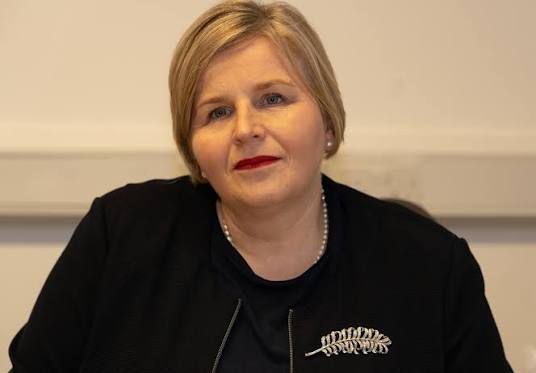
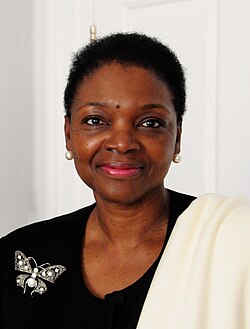
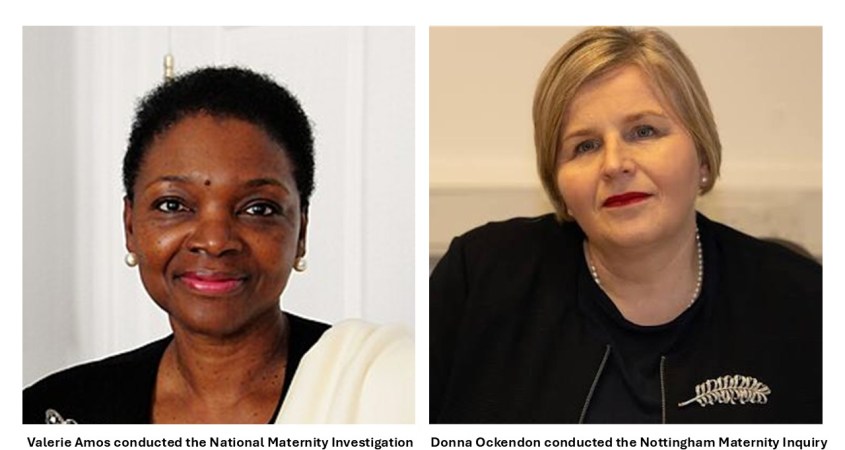
In the last week of June, 2026, we saw two hugely significant reports on the damage to NHS maternity services. One report was from Donna Ockendon about long term harm done at Nottingham Hospitals. The other, the Independent National Maternity and Neonatal Investigation, was from Valerie Amos about the situation in ten other major hospitals. The reports describe brutal harm to so many women and babies.

Our love and solidarity go out to all whose pregnancy journey ended in achingly empty arms. Our hearts go out to families who lost their mothers and to the mothers so badly injured physically, emotionally or in their mental health. The additional pain when such an outcome could have been prevented is unspeakable.We send solidarity to those damaged by racism and to those women who were worst off financially and worst served by the Maternity service.

Save Liverpool Women’s Hospital Campaign says;
We demand immediate, significant and lasting improvements in the National Health Service maternity services across the country, in Cheshire and Merseyside and crucially in Liverpool. What we have known from women’s personal experiences has now been presented as formal reports. But many other reports raised the alarm before June 2026. Governments, NHS top bosses and the media knew what was happening long before recent reports and they clearly thought it acceptable, because they let the situation fester.
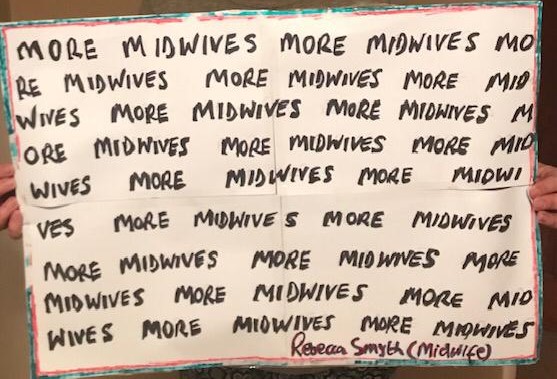
No ifs, no buts, no whining excuses. Things must change! Invest don’t cut! Babies not Bombs!

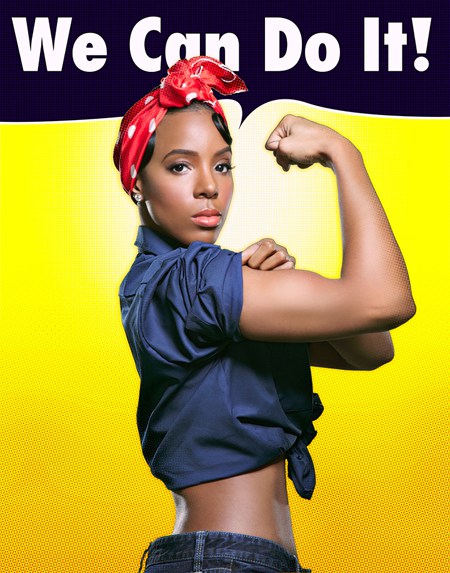
Deeds not words are required. We need the spirit of the suffragettes.
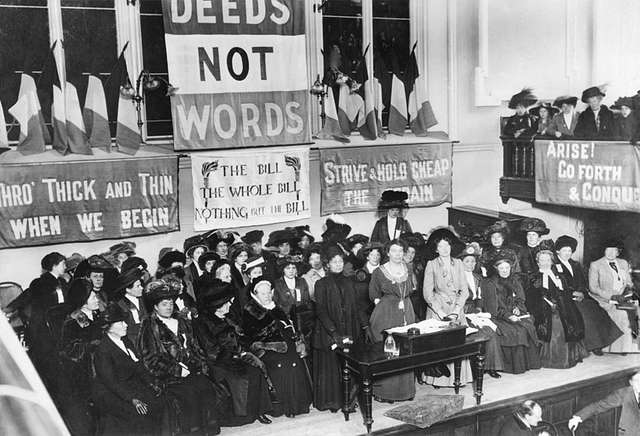
The New York Times photo archive via Picryl.com

For all our mothers, sisters, daughters, friends and lovers and for all the babies save Liverpool Women’s Hospital and every maternity hospital and service in the UK!

If these reports are brushed under the carpet as the twenty or more previous reports have been, this harm will be further normalized and the damage extended to ever more women and babies.

There must be immediate,and sustained improvements in the respect given to women, improvements in staffing, in resources, in buildings and equipment, and in management. No more cuts, no more bullying management!
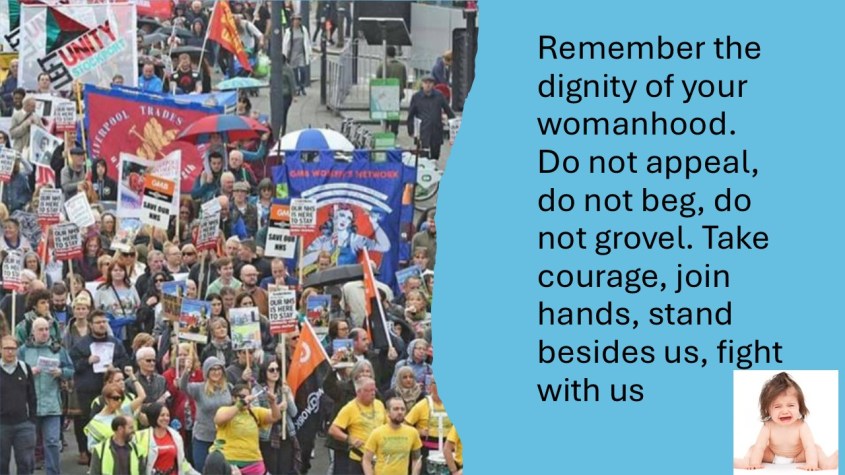
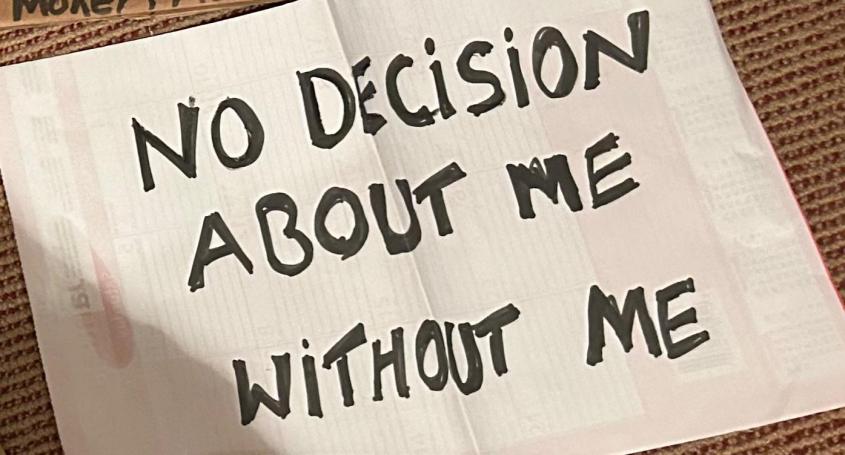
Pregnant women, the communities, and the front-line staff must be included in decisions made about how these these improvements must look and feel.
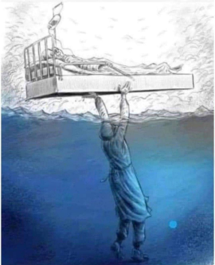
We stand with the staff who kept the service afloat under terrible conditions. We acknowledge the Midwives who marched in 2022 and who are organising protests this year. We recognise that so many midwives left the profession in protest at the conditions in which women and babies were treated. We demand consequences for the government ministers, the senior managers and senior staff in the higher echelons of the NHS, and in Government, who saw the damage and ignored midwives’ and doctors’ complaints.

To women thinking of having a baby we say that even now most women have good outcomes. Some of the maternity services in the UK provide wonderful service. Do not assume the horrible conditions described in the reports from Donna Ockendon and Valarie Amos represent every birth.If you can, if you have the headspace, we welcome your involvement in this campaign.
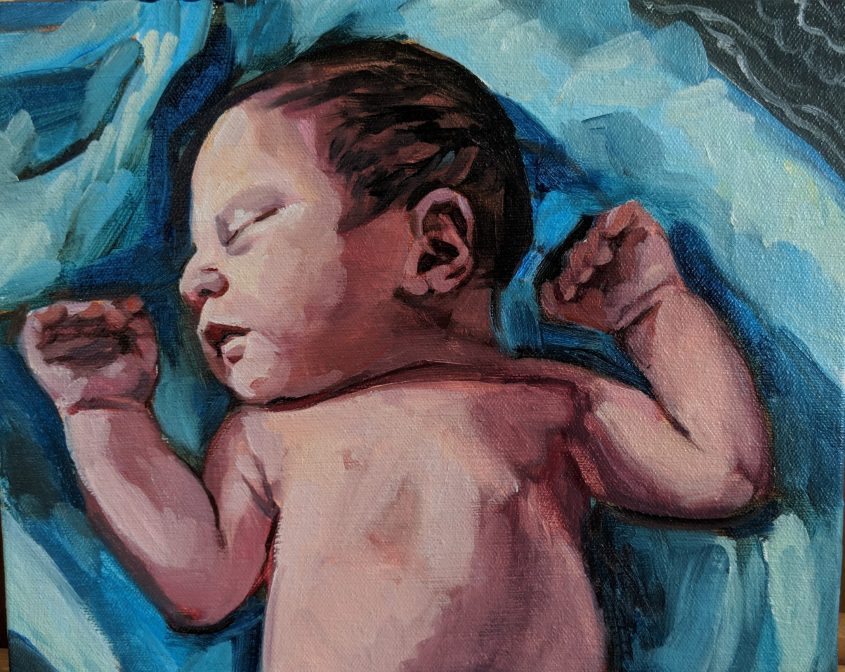
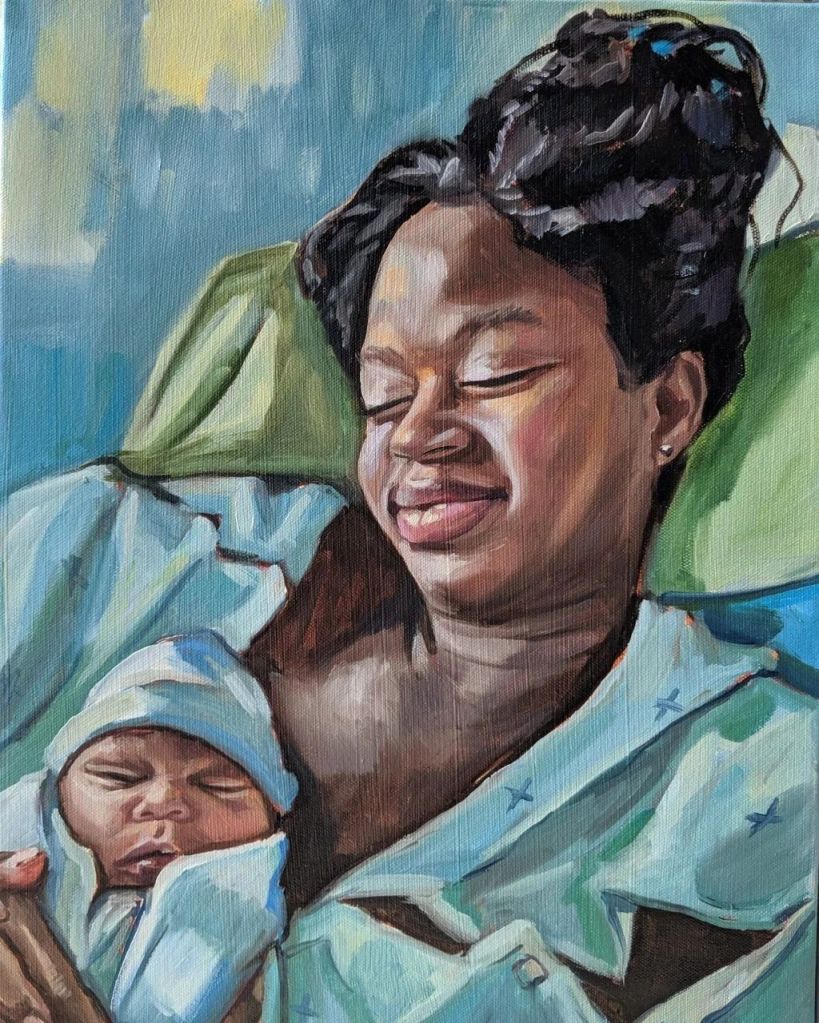
picture credit Amanda Greavette

We demand safer working conditions and improved staffing for midwives, obstetricians, anesthetists and all the related workforce. The NHS needs more midwives, more obstetricians, and related professions, not as a one off but consistently over a decade.

All those involved in individual acts of cruelty, malice or neglect must be held accountable, but so must the senior administrators and politicians who knowingly allowed this situation to develop and continue.

Britain can afford a good maternity service. Not having good maternity services is far more expensive. Yet in July 2026 maternity hospitals including Liverpool Women’s Hospital are expected to make cuts. How is this justifiable?

The NHS began seventy-eight years ago when the country was far poorer and reeling from the damage – emotionally, physical, and financial, done by World War Two. Our city was one of the worst affected. Liverpool’s children were still playing in bombsites, as the NHS was founded. It is obscene for the government to pretend that today we can’t afford safe care. In 1948 the country decided it was important and invested in the NHS. In turn, this dramatically improved the lives of women and babies.

Women need a greater voice in the service. Women giving birth must be heeded and treated as adults. Women have had to fight for their rights before and will fight now.

The damage to maternity is echoed in so many other aspects of the NHS. We see the overcrowded hospitals and corridor care, the long waiting lists and the over worked staff, the neglected buildings and the money wasted on huge privatisation projects. We see the unfilled vacancies and unsafe cuts. We see the billions handed to big corporations from NHS funds and the unsafe care as treatments are outsourced to for profit companies. Demand that the NHS is restored, repaired and rebuilt!
Join us in campaigning for respect for women’s right to choose their own birth options, more respect for women giving birth, better staffing, and an immediate end to cuts. Every woman and man involved in this campaign helps make the future of maternity better.

Even as Donna Ockendon was conducting her harrowing review into Nottingham’s maternity failings, the local ICB closed the infant bereavement services at the hospital as a cost cutting measure. They knew what Donna Ockendon was doing and still went ahead with brutal cuts.

Don’t think that public indignation alone will make the government take lasting action. Long after the Grenfell fire no one has been punished, nor have other high rise blocks with cladding all been made safe.

Every woman who helps in any little way helps make the NHS safer, makes a difference. We have to build a large movement, deep in all our communities to secure the safety of mothers and babies, and that needs lots of women getting involved.

Fight like your nanas and great nanas did when they fought for and won universal healthcare, free at the point of need.
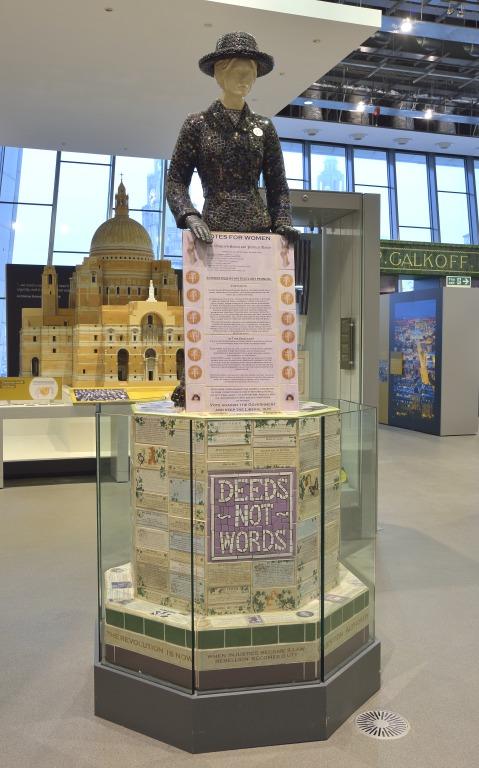
Mary Bamber, a working class woman fought in Liverpool a century ago for women’s rights and for healthcare for women.

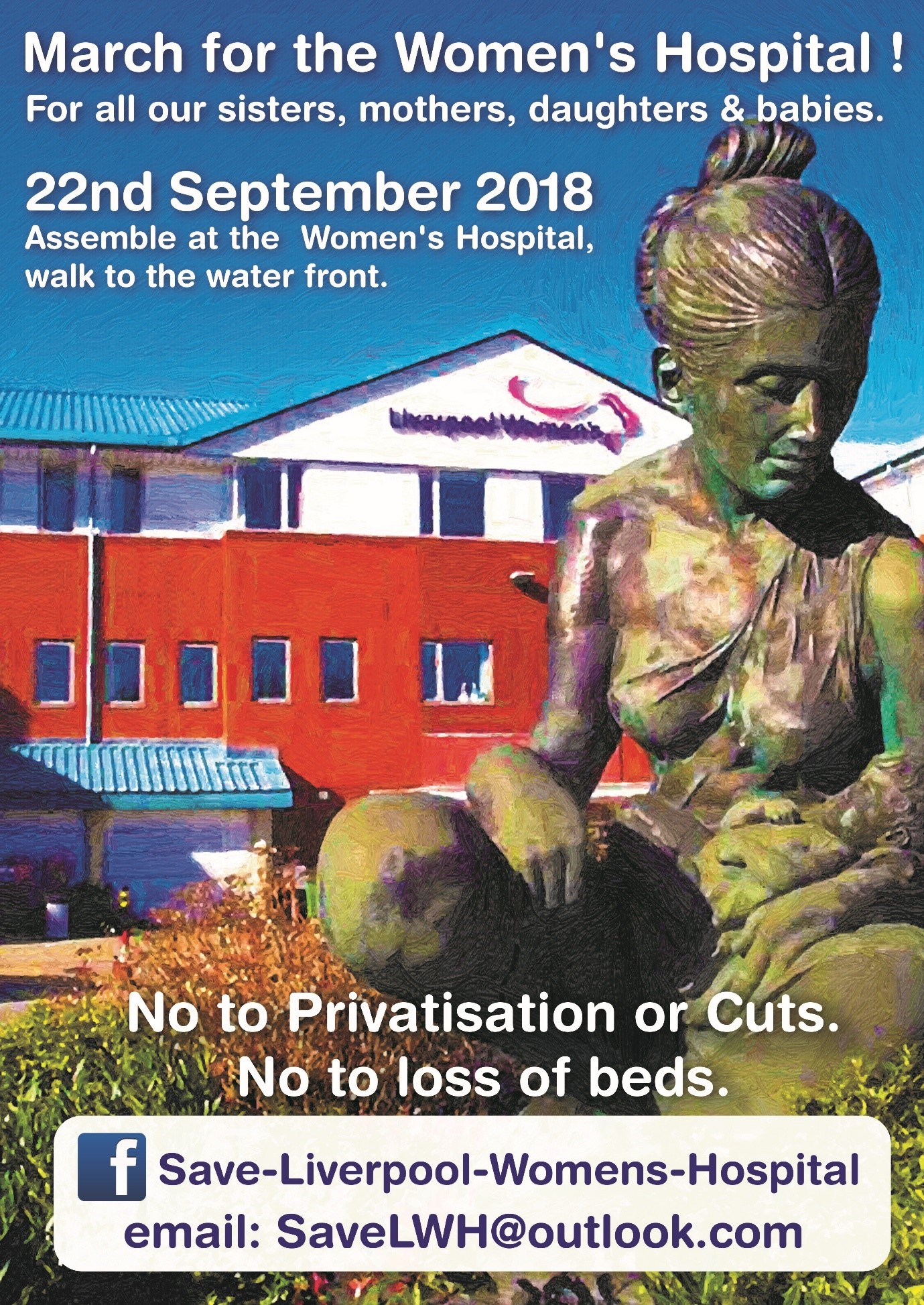
Join us too in fighting for the future of Liverpool Women’s Hospital, the largest maternity hospital in the country. Sign our petition here. At least now the ICB can no longer keep saying integration into a main hospital is always safer. We know of many problems at Liverpool Women’s Hospital, it is far from perfect. However, Liverpool Women’s did not have the bad outcomes described in these reports. We thank the staff for that.

More than ten years ago Save Liverpool Women’s Hospital Campaign was founded to stop Liverpool Women’s Hospital being forced into Liverpool Royal, and to defend maternity services in Liverpool. We have fought on and on. Liverpool Women’s Hospital still on site. The fight goes on to get all the staff and funding it needs but more than 90,000 people have supported us. If you fight you might just win, but if you don’t you will always loose. The struggle for safe and respectful maternity care is a life and death struggle we need to win.

In the 1970s women fought for better maternity care, including letting partners into the Labour Ward, giving women a say in their treatment. That campaign reached many women. We did see change for the better. The charity Aims(Association for Improvements in the Maternity Services) is one of the organisations that was set up in the 1970s during that time of successful campaigning.

Please invite our campaign to come and speak at your organisation, however small. We will publish a more detailed comment on these reports when we as a group have had a chance to discuss them in detail. If you would like to be involved in such discussions please contact us on savelwh@outlook.com or by commenting on the comments section of the blog. For detailed background information see this article from Keep our NHS Public website.
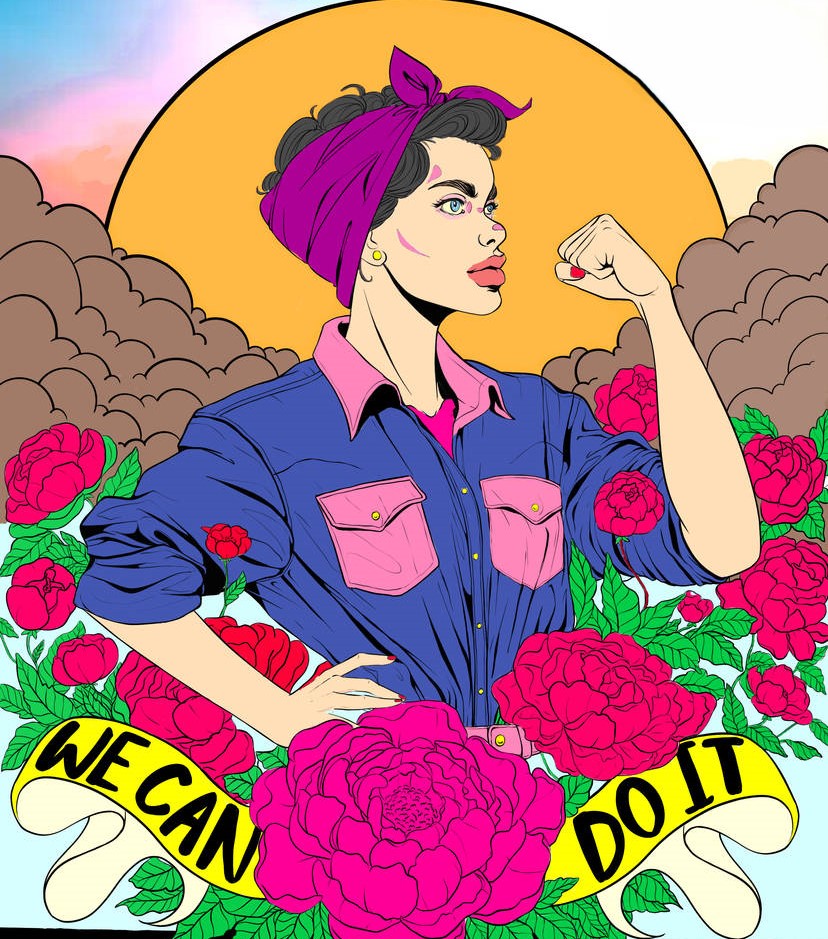
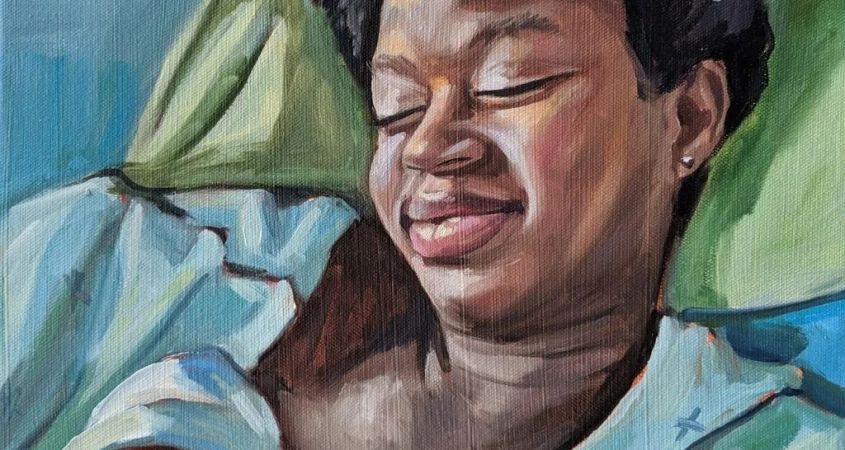
Improve Black Maternal Health, drive racism out of maternity care. November 2025

Picture https://amandagreavette.com/

Black Maternal Health and Anti-racism Action in the NHS: Issues for Liverpool and beyond.

We honour the women in Liverpool who have suffered or died because their treatment was affected by conscious or unconscious racism. The best way to honour these sisters is to campaign ever more strongly against both inadequate Maternity care, nationally and locally, and against the insidious rise in racism in this country. Anti-racism education in the NHS can save lives.

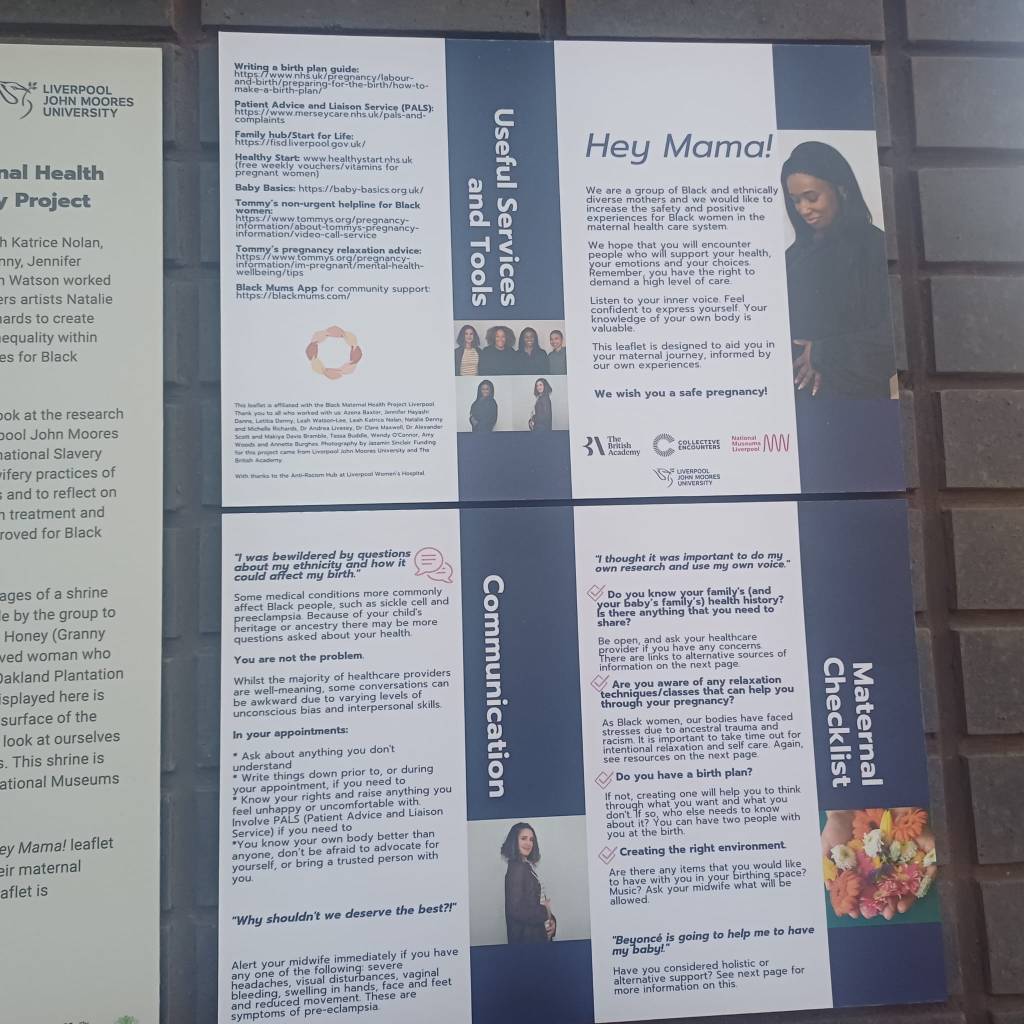
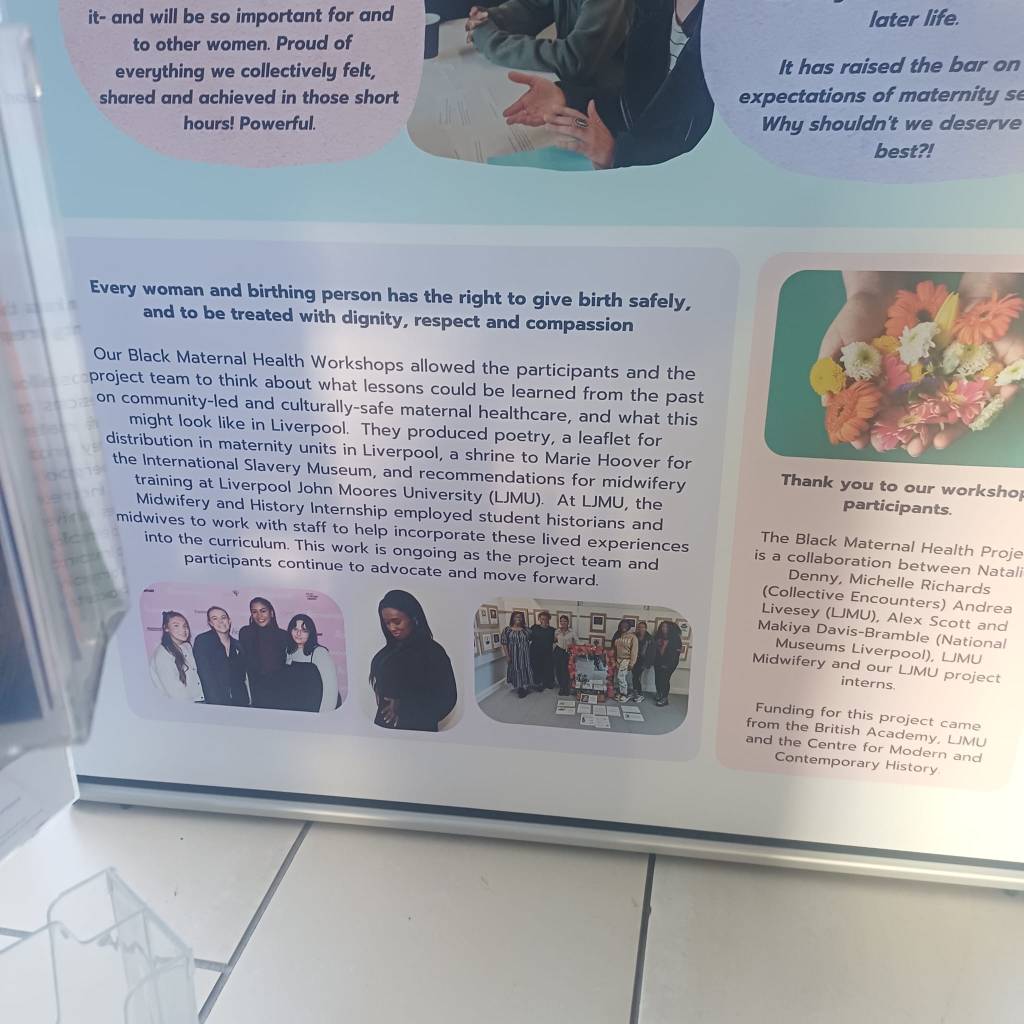
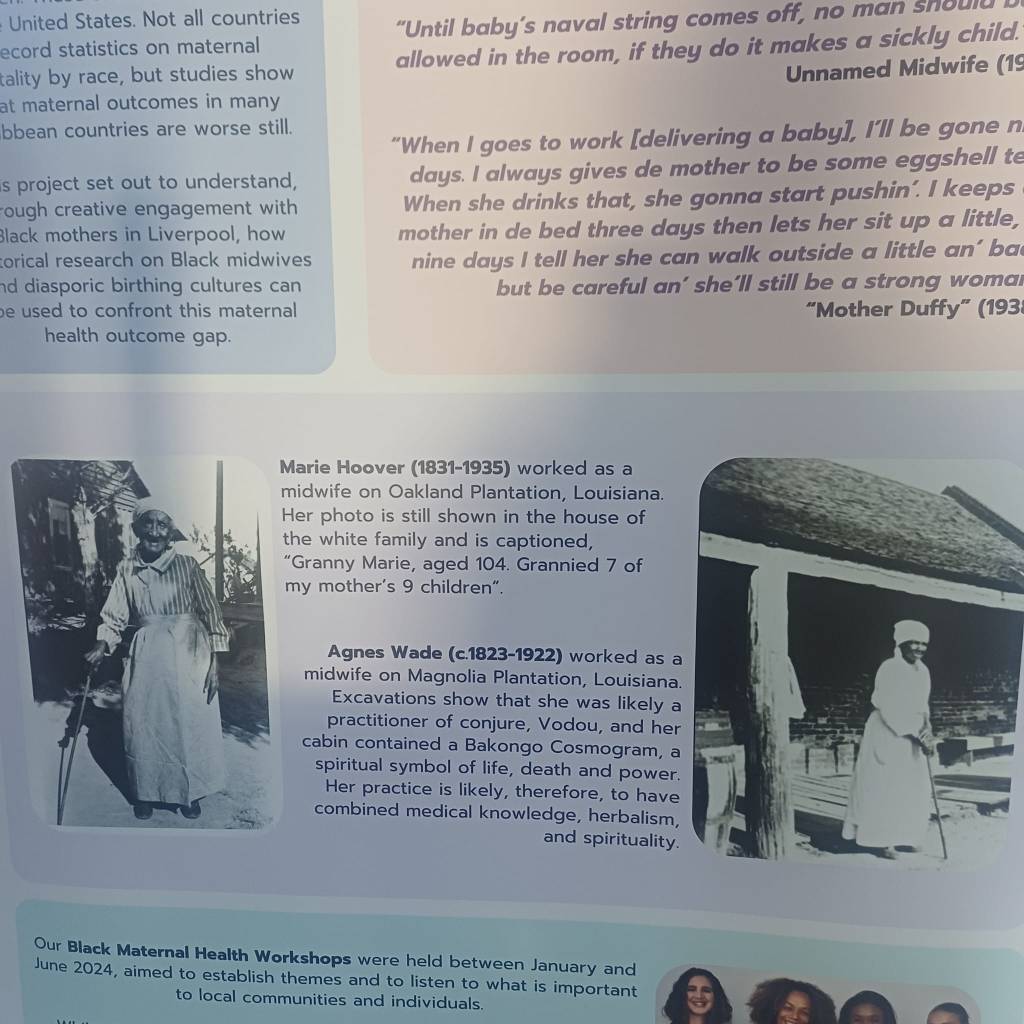
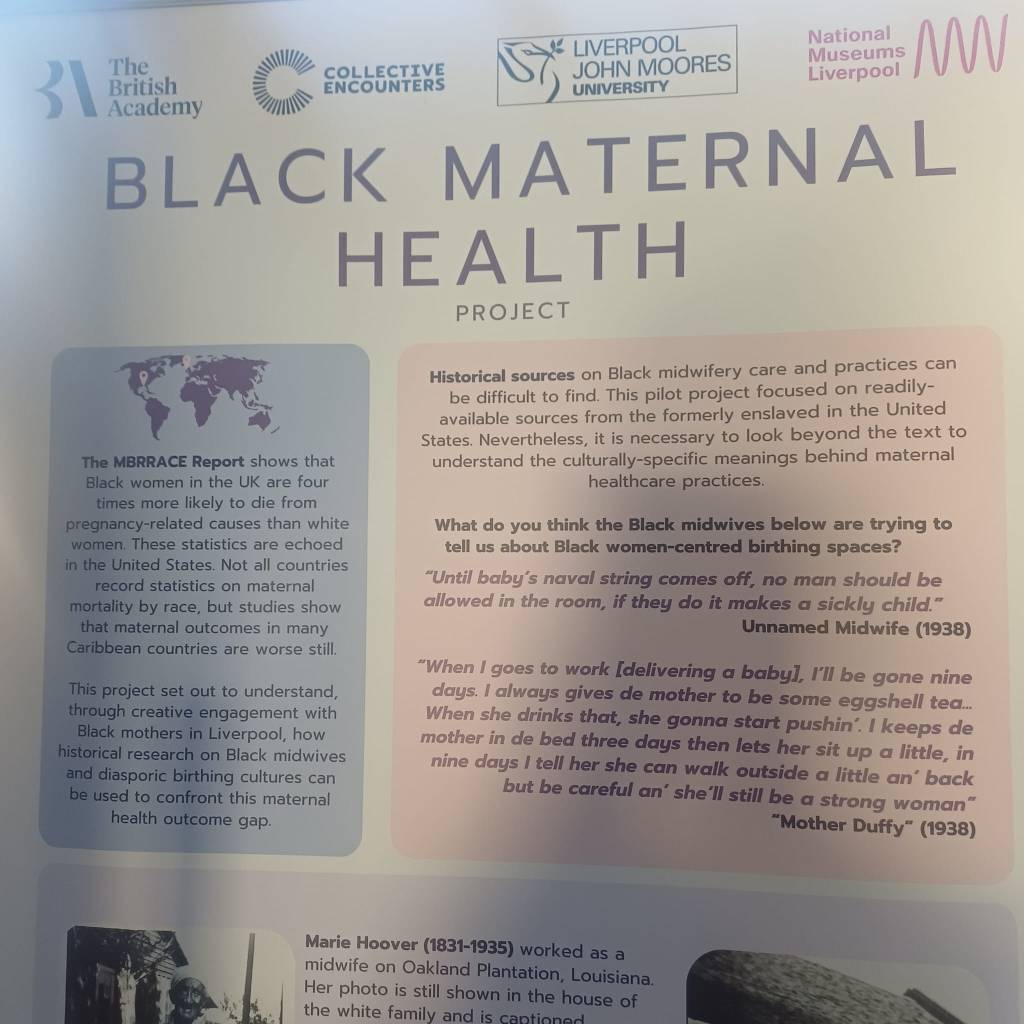
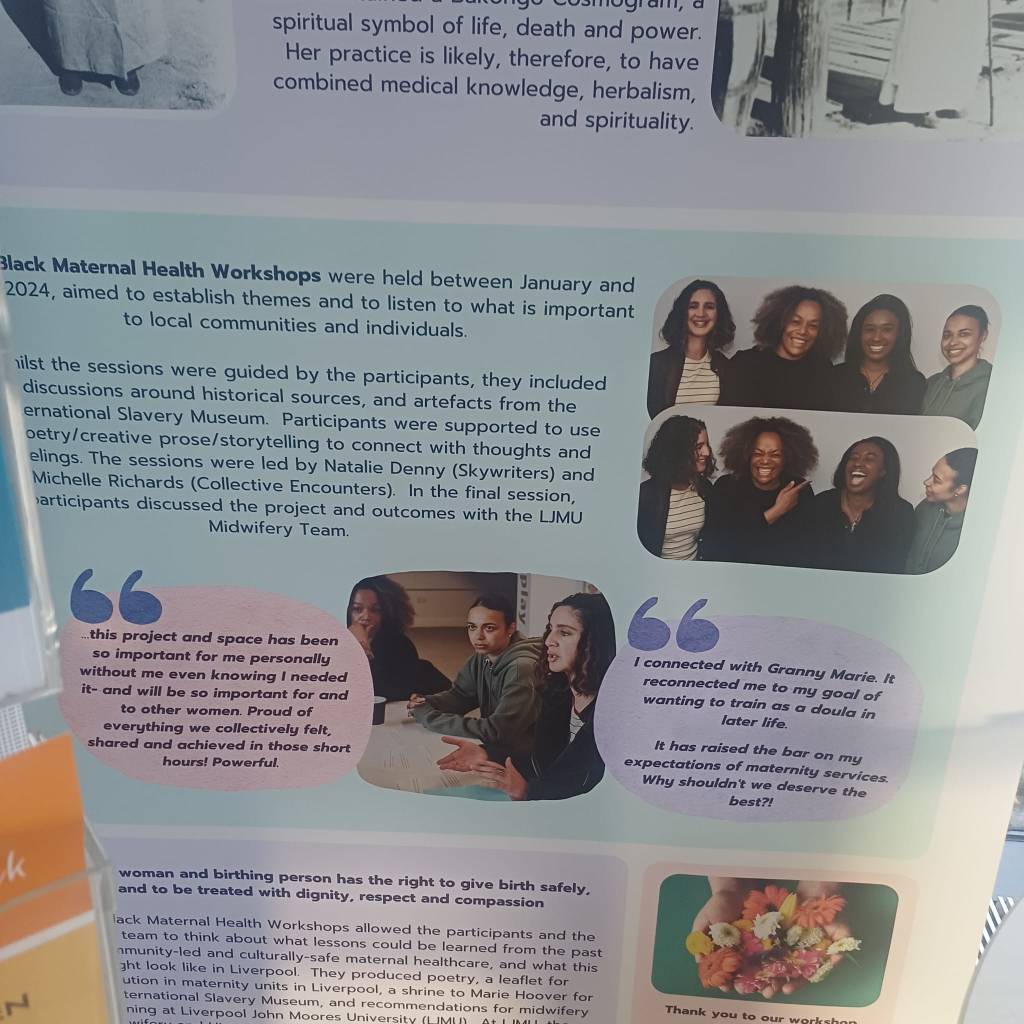
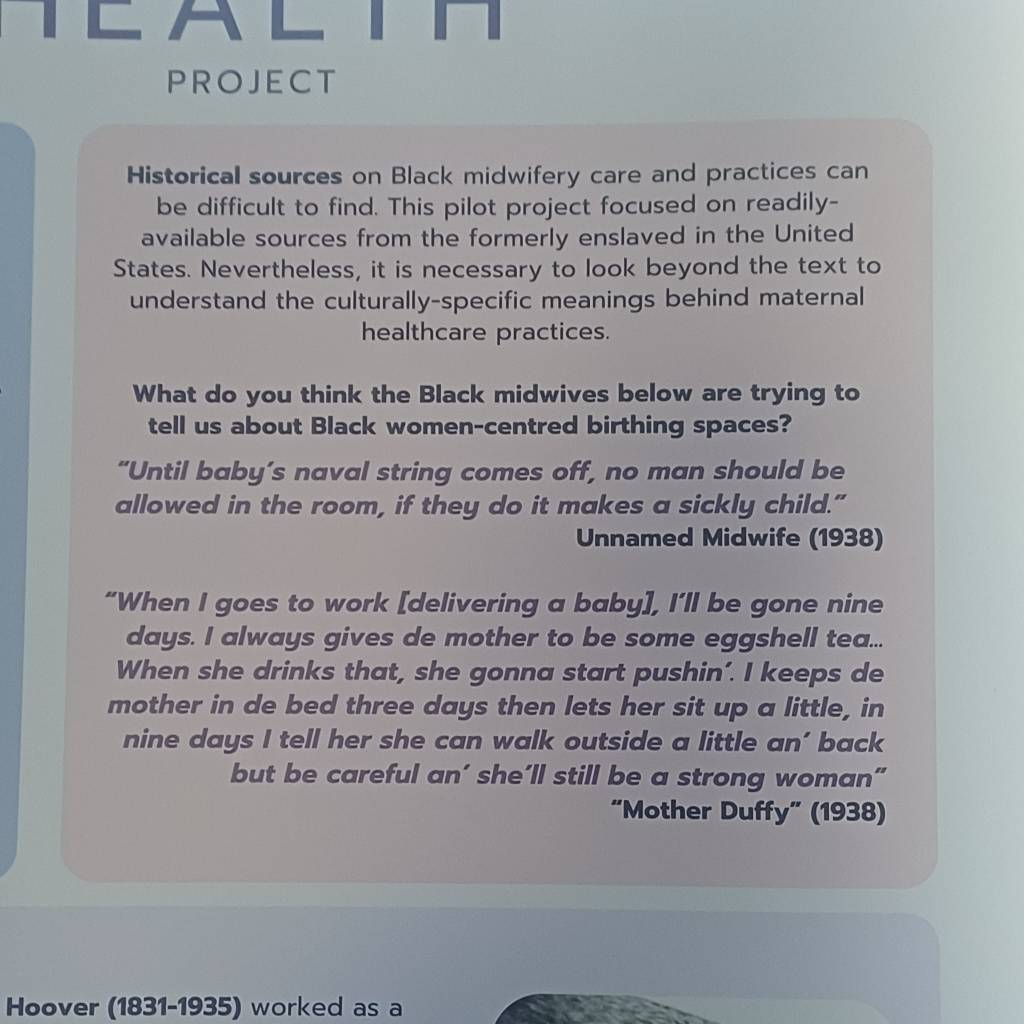
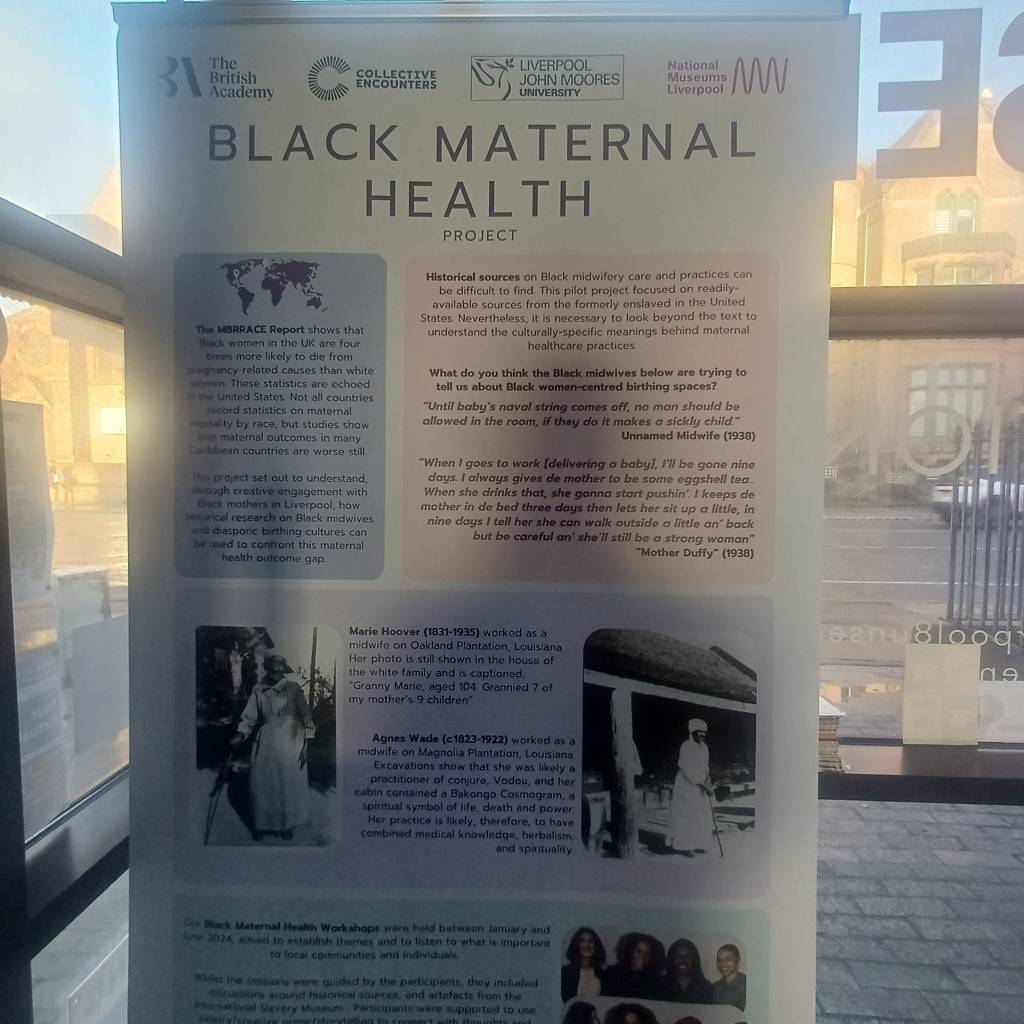
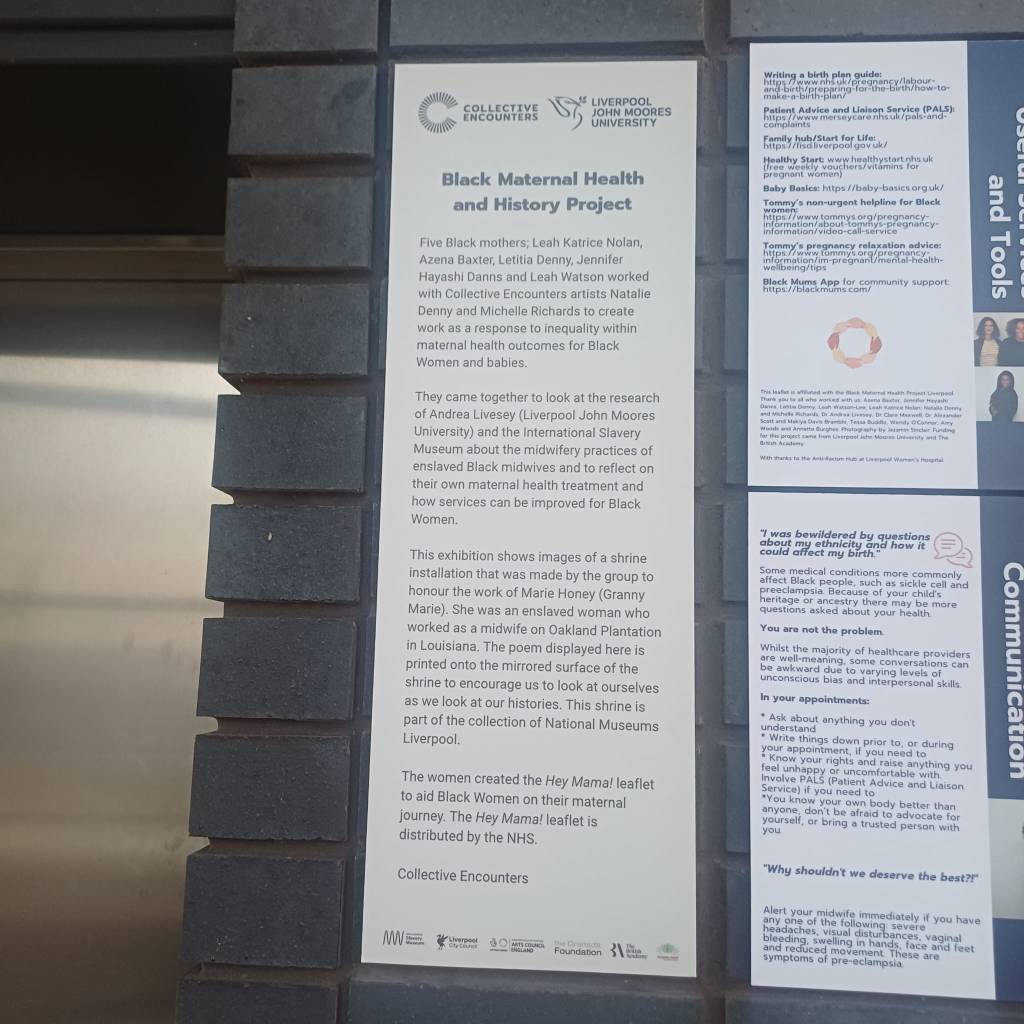
There has been excellent work done in the community about Black Maternal Health, not least the recent exhibition at Kuumba Imani Millennium Centre. Thanks to Creative Encounters for the work shown here. Photos by Teresa Williamson. There is more on this at the end of this post.

This week, a memorial, “a quiet reflective remembrance space to recognise the lives of women lost in care at the hospital”, is being opened in Liverpool Women’s Hospital. We are therefore devoting a post to this issue.

Our campaign to Save Liverpool Women’s Hospital received this message from the Hospital.

” When we last met, we discussed the development of a quiet reflective remembrance space to recognise the lives of women lost in care at the Hospital. We are delighted that this has now been completed, and we are planning to open the garden on Thursday, 6 November at 1.30 pm. There is a wider event planned with some reflective presentation from 12.30, with refreshments also in the Blair Bell, it would be lovely to see you and your other colleagues at the event.

Outcomes in Maternity have worsened nationally, and there has been no improvement for Black and Asian women, as all services have suffered.

Black women in England face disproportionately poor outcomes in Maternity care, shaped by systemic failings in leadership, training, data collection and accountability, according to a new report from the Health and Social Care Committee, Black Maternal Health. The inquiry heard repeatedly that racism is ‘one of the core drivers’ of poor maternal outcomes for Black women, as MPs heard from clinical experts and women about cases where racist assumptions had directly harmed Black women’s care. Black women are 2.3 times more likely to die in pregnancy, childbirth, or the postnatal period than White women, according to recent figures. 

The report (from Parliament) “acknowledges that failings in care for Black women are taking place in the context of a Maternity system that is failing women more broadly, with the NHS in England having paid £27.4 billion in Maternity negligence since 2019, estimated at a figure greater than the total Maternity budget for the same period. 

The most hard-up women also suffer significantly; the women using Liverpool Women’s Hospital come from some of the most deprived areas in the UK.”Women from deprived areas of the UK are more likely than those in less deprived areas to die during or shortly after pregnancy, and this disparity has increased in recent years.

This country has disrespected birth and women’s health to such an extent that we have lost twenty years of progress. Women have had enough. Join the fightback.

Charging migrant women for Maternity care at 150% of the NHS costs is cruel, harmful, and does not recoup the costs of the system.

Asylum-seeking women can be moved around the country on the whim of the Home Office, disrupting antenatal care and costing the lives of babies and mothers.

MBBRACE-UK 2019 report “that women born outside the UK represent nearly a quarter of maternal deaths. Refugee and asylum-seeking women, despite contributing 0.29% of the population, make up 6% of this group.”

Women as a whole have seen worsening conditions.

Professor Marian Knight, Director of the National Perinatal Epidemiology Unit and MBRRACE-UK maternal reporting lead, said: data show that the UK maternal death rate has returned to levels that we have not seen for the past 20 years.”

Maternal deaths are not common, but still too high. Over the last century, the death rate has fallen dramatically, especially since the NHS was introduced. It is because of years of campaigning by staff and the public that maternal deaths have been reduced, but we need to do much better. The UK still has four times the maternal death rate of Norway and Denmark.

“Overall, 284 women died in 2021-23 during pregnancy or within 42 days of the end of pregnancy in the UK. The deaths of 27 women were classified as coincidental. Thus in this triennium 257 women died from direct and indirect causes, classified using ICD-MM (World Health Organisation 2012), among 2,004,184 maternities, a maternal death rate of 12.82 per 100,000 maternities (95% CI 11.30-14.49).”

In 2021, we campaigned about how babies born to Black mothers were twice as likely to suffer a stillbirth. The situation for Black mothers came into awful focus in 2024 with a terrible death at Liverpool Women’s Hospital. We wrote;

“We join with others in demanding action to make it safer for all mothers to give birth and demand action to reduce the particular risk to Black, Asian, and poor women of all races. In the UK, the rates of baby death and stillbirth among Black and Asian mothers are double those for white women. We have written about the higher number of deaths among Black babies.”

In one of these maternal deaths, investigators from the national body, Maternity and Newborn Safety Investigations (MSNI), were called in after the woman died. They reported that “The investigation into her death found hospital staff had not taken some observations because the patient was ‘being difficult'( our emphasis), according to comments in her medical notes.”…ethnicity and health inequalities impacted the care provided to the patient, suggesting that an unconscious cultural bias delayed the timing of diagnosis and response to her clinical deterioration.

Another black woman died shortly after, and we have not seen the final report, which will have been covered in the MBRRACE report this year. Such reports are confidential and focus on system issues, not on individual hospital issues

Each death is reviewed by assessors in four main areas: pathology, obstetrics, midwifery and anaesthetics. Where appropriate, care is also examined by speciality assessors such as psychiatrists, general practitioners and emergency medicine specialists. All reviews have a primary assessor from each speciality and, if specific issues are identified, a second assessor may also review the woman’s care.

Hospitals report each death to the Maternity and Newborn Safety Investigations programme, which reports to the families and hospitals.

Between January 2014 and November 2023, 17 maternal deaths were recorded for patients who received care at Liverpool Women’s Hospital. We do not know the ethnic breakdown. There will have been about 70,000 births in that time, with a mortality rate of about 0.02 per cent. So deaths are quite rare.

Our campaigners were able to comment at the board meeting when the first death was announced, because the public could, at that time, attend the full board meetings of Liverpool Women’s Hospital. We knew in advance because we had read the board papers. We could then make this situation well-known. Public attendance is no longer allowed. Many times, in the early years, our campaigner, Teresa Williamson, was the only Black person in the room at these meetings, and she was not always treated with respect.

In a recent webinar about migrant women giving birth, Liverpool was highly praised for the support midwives gave to one of the speakers, who gave her experience of giving birth in total poverty. This contrasted with other women’s experiences in different parts of the country. The specialist teams at Liverpool Women’s Hospital, supporting vulnerable women in the community, do great work.

The Hospital has run a comprehensive anti-racism in service training for all staff since these deaths, together with the Anthony Walker Foundation. There is a detailed newspaper report here.

Anti-racism action, though, is like housework. It must be done again, and again, and again- even more so because there has been a rise of public racism in the politics of both the UK and the USA. This is against the decades-long trend of racism receding. Crazy ideas that Black women suffer less pain than white women are still commonly believed. One study (in the USA) found that 50% of healthcare professionals believed this. This is why anti-racism must be included in professional education.

Together with Refugee Women Connect, we met with senior members of the board of Liverpool Women’s Hospital to express our concerns. We asked for a memorial in the gardens and a pamphlet that could be reproduced in each woman’s language with illustrations, each page being available to the midwife in English to aid communication and discussion when a full translator was not available.

The memorial garden is being opened for all women who have died, and we were told that an online version of the multi-language information is being developed.

Giving birth far from home is hard for every woman. Children suffer when their mum dies. Many of the women who die in childbirth, or in the year after giving birth, would not have died had the Maternity service been appropriately staffed.

The blame for the state of Maternity lies squarely with the politicians. They have made the decisions on funding and staffing. They brought in austerity. Midwives are overworked. Obstetricians are overworked, as are other linked professionals and the ancillary staff. They are too overworked to give the quality of healthcare women need. This harms midwives and mothers. Staff need time to think, reflect, and discuss. We will continue to demand fundamental improvements in funding, staffing, and NHS management.

Maternity staff carry huge responsibilities and deliver an excellent service when they can, but no one can be perfect when there are too few staff and poor organisation. Neither can they be expected to fight for improvements alone. The public must take a major part.

The management systems of the NHS (especially since 2012, and then 2022, with the appalling Health and Care Acts that treated the NHS as a business, not a public service) have made staff feel they cannot raise concerns or that those concerns will be ignored. This has been reflected in many of the Maternity enquiries, including the Kirkup enquiry into the Maternity tragedies in Morecombe Bay.

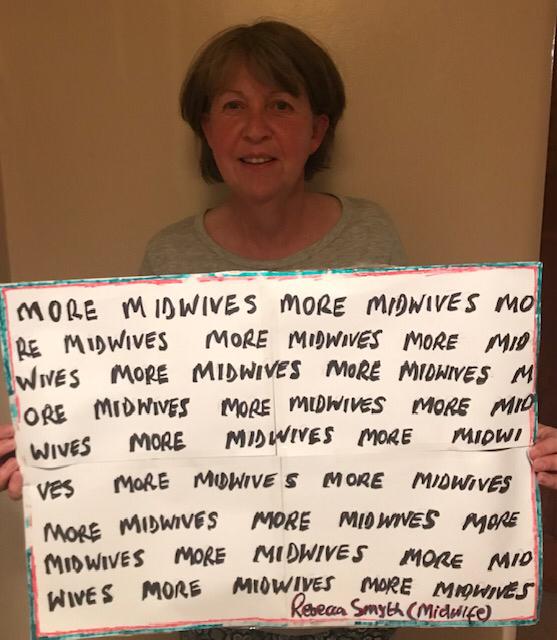
This country can and must afford a good Maternity service; we currently rank 17th out of 19 wealthy countries for the safety of our Maternity services. In the first twenty years of this century, everywhere but the UK and the USA improved their Maternity care. We need more midwives. We need more midwives.

Please keep fighting for all our mothers, sisters, daughters, friends, lovers, and every precious baby.