What has Liverpool’s “Place” NHS and Cheshire and Merseyside ICB done whilst maternity care nationally is in a well-publicised crisis and thousands of women are furious about the level of care they and their babies received? While the public enquiry into baby deaths at Countess of Chester has just opened? While Alderhey is at the centre of the Physician Associates scandal? While they can’t stop the next winter crisis, already upon our hospitals?
They announce the intention to fundamentally change Liverpool Women’s Hospital. This was without even a meeting with the organisations that have campaigned for a decade to keep the hospital and collected 75,000 signatures to keep the hospital on the Crown Street site as a women’s hospital for all our mothers, daughters, friends, lovers and for every precious baby.
The whole ICB is facing huge problems and does not have the resources to deliver safe A and E in the coming months. Yet, they think launching a discussion about merging Liverpool Women’s Hospital into one conglomerate of hospitals is sane and responsible.
This is the state of the Integrated Care Board, which is the controlling body for the NHS in Cheshire and Merseyside. It is from page 110 in the Board papers. A score of 20 in black means it is at the highest risk possible. They also said:
“There are currently no known plans for any additional funding to be allocated ahead of winter to support additional capacity and the expectation is that maintaining system flow through winter will need to be achieved through the delivery of these improvement plans.“
The document about Liverpool Women’s Hospital’s future can be found here. We will produce a detailed critique next week.
Maternity and women’s health need urgent changes, but they don’t include dispersing services and absorbing Liverpool Women’s Hospital into one giant conglomerate. We want to see the following changes nationally and locally.
Far better funding and staffing for maternity and an end to birth traumas.
More respect must be given to women giving birth and the women tending them in giving birth.
The funding currently given to insurance for maternity damages should be invested in the service to reduce those damages.
Women who need induction of labour should get that intervention in a safe and timely manner.
Fertility services must be fully available on the NHS, not the prerogative of the well-off.
Gynaecology services must be drastically improved, nationally and locally.
The NHS workforce must be given more respect, their workload improved, and the service must once more become a good place to work.
The whole NHS must be returned to being a national, fully publicly provided service, fully funded, repaired, and restored after all the damages of more than ten years of austerity and many forms of privatisation.
The public’s views must be respected – most women likely to use the hospital will be at work when this first meeting happens.
The research conducted at Liverpool Women’s Hospital must continue into key areas like endometriosis, menopause, and working to ensure our prem babies live and thrive despite being born very early.
Midwifery training must be made available to all without incurring huge debts.
Women’s health and healthcare must be given far more resources and respect.
Our petition, which is available on-line is at 44,656 signatures and more than 30,000 signatures on paper, says “Save the Liverpool Women’s Hospital. No closure. No privatisation. No cuts. No merger. Reorganise the funding structures not the hospital. Our babies and mothers, our sick women, deserve the very best”
It has over seventy-five thousand signatures. The people of Liverpool have attended three big demonstrations to save the hospital. Campaigners have attended every board meeting of Liverpool Women’s Hospital since the petition was launched and every ICB meeting since that was formed. Yet we have never been invited to present our views. Promises of consultation made in public clearly meant nothing.
Twenty thousand signatures were presented to the ICB in January 2023
Liverpool Women’s Hospital is a tertiary centre, which means patients are referred there from other hospitals from the rest of Merseyside and Cheshire, the Isle of Man and parts of Wales. Keeping that provision and the reputation that goes with it is important. The provision for the babies in the neonatal unit, near their mums, matters too.
We have said for years that the NHS must change the maternity tariff, the amount of money paid to hospitals for delivering maternity care. Liverpool Women’s Hospital is the largest provider of maternity care and is badly hit by how low the tariff is. Liverpool Women’s Hospital runs a deficit because of this, and over the years appears to have made some bad decisions on staffing because of the financial problems. Many midwives left. Yet somehow,the document from the ICB says:
“The case for change is focussed solely on the clinical risks, issues and outcomes for people using hospital-based gynaecology and maternity services. It does not consider productivity or value for money.”
The ICB is in serious financial trouble yet it claims not to be considering money in this situation.
We say that right from the beginning, it has been about money. It was about the decision made nearly a decade ago to close one of the Liverpool Hospitals to save money at the cost of our health. It is also about disrespecting women’s health and women’s opinions.
“We’ve known for some time that the poorest households and women have shouldered the greatest burden of austerity measures.” Women’s health has suffered particularly in this time. Liverpool has seen some of the worst overall loss of healthcare. Yet we still kept Liverpool Women’s as a treasured service, where most of Liverpool’s babies are born and where great steps have been made in research. We said before and say it again “In these hard times. what we have we hold.”
Should we leave structural issues in our health care to “the professionals”? No way. The big managers of the NHS have caused havoc in the last ten years, implementing austerity, privatisation, and the move towards an American model. We have seen more than a decade of damage.
Remember the chaos of the building of Liverpool Royal, with fewer beds than the old one and now needing more, with chaos in the financing, construction, and demolition?
We call on the city of Liverpool to defend what we have in the NHS and to fight to improve the rest. No closures, no loss of services, no more mergers, no more outsourcing, no more overworked staff.
“Do not appeal, do not beg, do not grovel. Take courage, join hands, stand beside us, fight with us”!
The Suffragettes knew how to campaign and so do we.
This post is being written just two weeks after the General Election which saw the Conservatives, who had so very severely damaged our healthcare, thrown out. (Hurray!)The new Labour Government has a massive majority but lacks a clear plan to restore and repair the NHS, and talks of more privatisation. They also have form in bringing in privatisation in earlier governments. So, we need to review the situation and renew our campaign.
We are far from alone. There are campaigns like ours dotted around the country. The NHS is immensely important to people in the UK.
Our online petition says Save the Liverpool Women’s Hospital. No closure. No privatisation. No cuts. No merger. Reorganise the funding structures, not the hospital. Our babies and mothers our sick women deserve the best.
We fight too for the whole NHS; the issues are inseparable. Maternity is one of many issues, including the overall reduction in healthcare capacity in this country as seen in the many hospital closures, shortage of doctors, multiple kinds of privatisation, the use of the business model, and the influence of big US “health” corporations. We, though, focus on maternity and our local issues (as well as the big national and international healthcare, women’s rights and children’s rights issues.)
From the start we said
For all our mothers, sisters, daughters, friends, lovers and every precious baby save Liverpool Women’s Hospital and the NHS.
In the years we have been campaigning we have seen severe damage to maternity care nationally, and to the whole NHS. Mothers and precious babies have paid a heavy price. Highly qualified people have conducted report after report into the situation and the last government gave lip service and let the situation deteriorate. These are heartbreaking and infuriating descriptions of some maternity in the UK.
The most useful definition of birth trauma we have found is this.
“A traumatic childbirth experience refers to a woman’s experience of interactions and/or events directly related to childbirth that caused overwhelming distressing emotions and reactions; leading to short and/ or long-term negative impacts on a woman’s health and wellbeing.”
There is support in issues around Birth if you contact the Birth Trauma Association, and sometimes through the maternity hospital. Liverpool Women’s Hospital has a service called the Rainbow Clinic for women having a baby after an earlier traumatic experience, normally involving the death of a baby but it is not advertised on their website.
Some mothers thankfully do have great experiences of birth but the numbers reporting far from good experiences is heartbreaking. The racial and class divides in Maternity outcomes are scandalous. Maternity is grossly underfunded and understaffed. The staff are overworked.
Continuity of Carer where pregnant women are cared for by a known small team of midwives from the pregnancy through birth and the post-natal period would help if it were fully staffed and funded would help. Without funding and staffing, the attempt to introduce continuity of care caused chaos. Donna Ockendon’s report called for it to be halted until full funding and resources.
We are concerned about women’s experience of delayed induction of labour and its link to emergency caesarean sections.
Staff in our hospitals and community teams work hard with inadequate resources and inadequate staffing. We will shout from the rooftops”We need more midwives.”
We have seen NHS managers looking for all kinds of magical thinking solutions to the problem but Liverpool Women’s Hospital does not need a new building, we do not need new fashions in childbirth, we need women’s choices to be heeded, we need more midwives, more obstetricians, more anaesthetists, more natal nurses, more health visitors, more infant feeding specialists. We need better blood services, well-maintained buildings, better food for staff at night, we need bursaries and we need to retain the staff we have. Above all, we need more midwives.
It would be nice if NHS managers were prepared to speak truth to power but we know that bullying is endemic in the NHS.
Many reports, especially in the right-wing press criticise “NHS Maternity Care”. However, the US model of maternity care is the worst in the developed world so no lectures from American Health Corporations or their UK offshoots or employees or political servants, please.
We must make the politicians listen. Our campaign must become deafening.
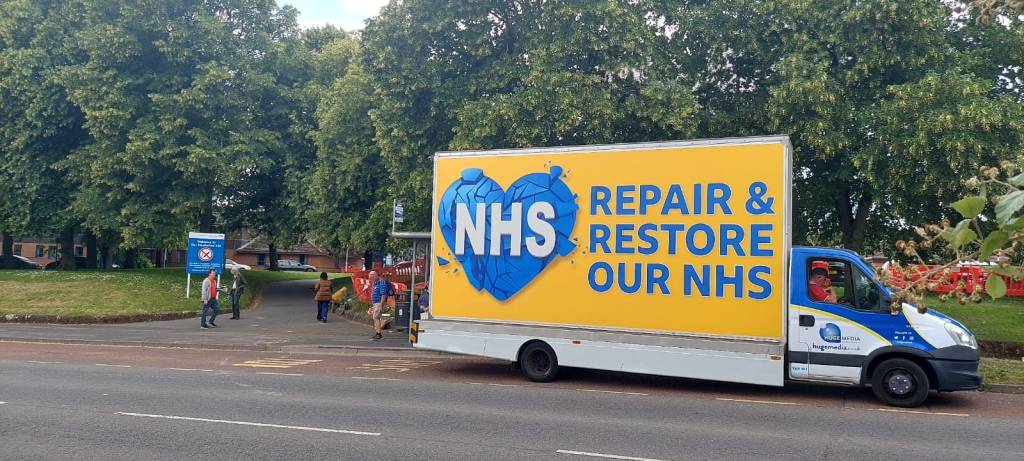
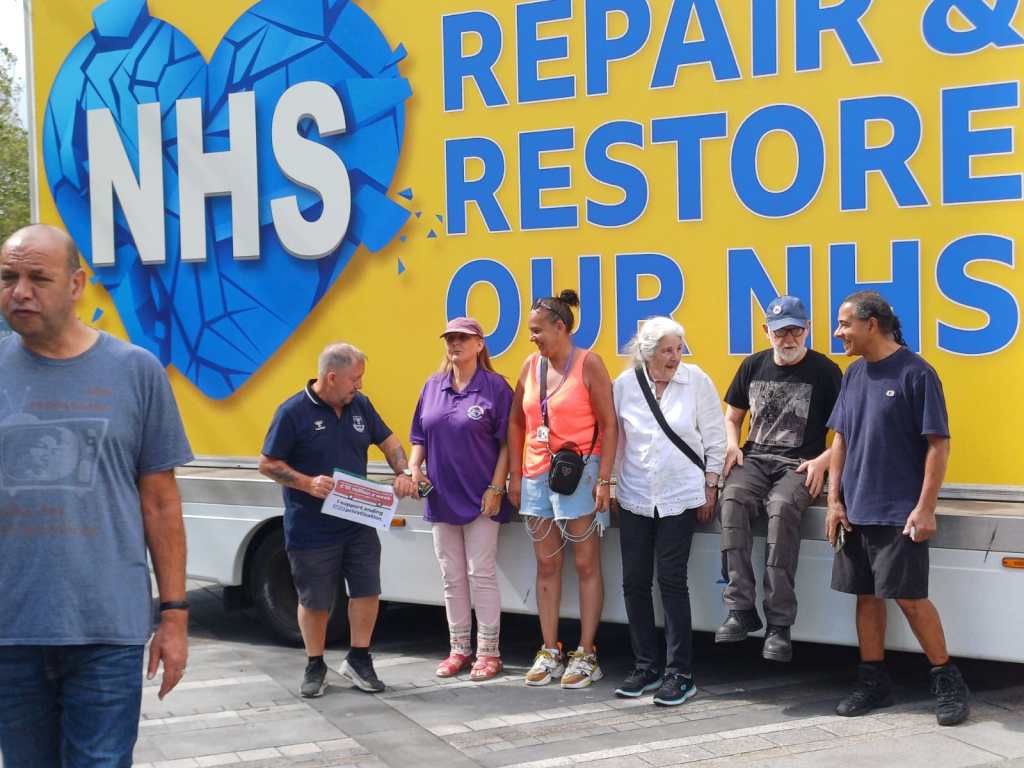
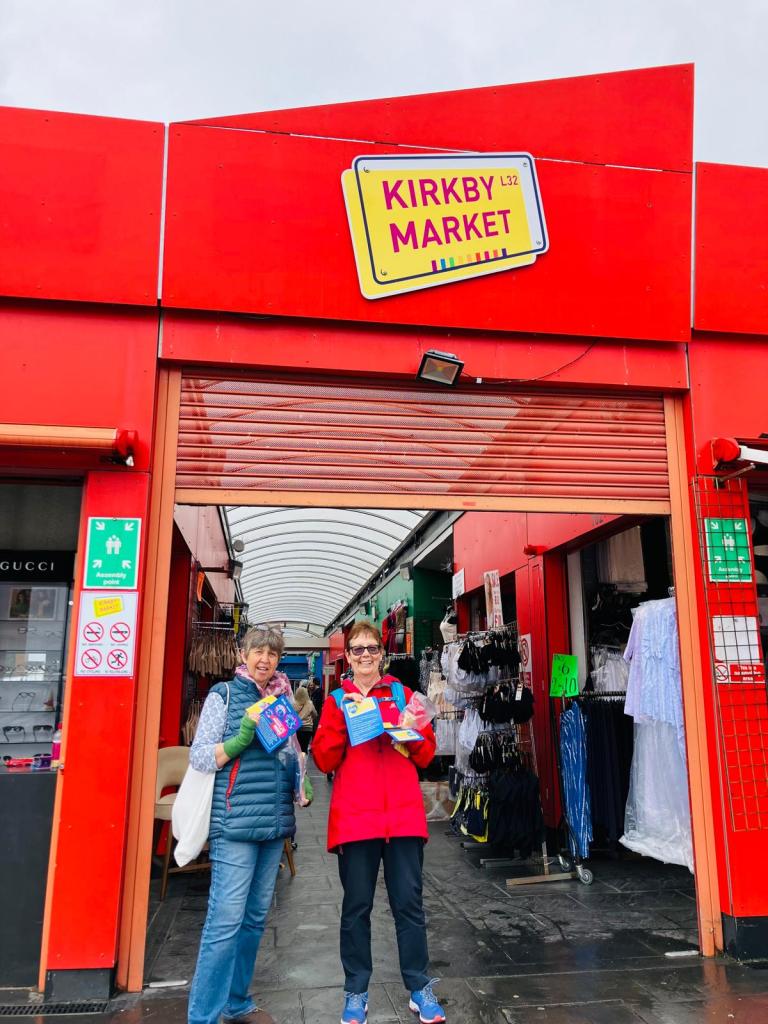
We took a big Restore and Repair the NHS campaign van around Cheshire and Merseyside in the week before the election. We went to Leighton Hospital near Crewe and up to Southport, to Ellesmere Port, to Chester, to Neston, to Warrington, to Kirkby, Whiston, Birkenhead, West Kirby and Liverpool. The van was met by campaigners in many places and had good support from the public. We heard stories of gratitude to the NHS and stories of long waits and being unable to access treatment.
We were not supporting a particular political party but we were opposing the last government and all the previous ones that had damaged our healthcare in the name of austerity or the discredited idea that private companies could run public services better than public services.
The NHS was one of the biggest issues in that election but too many people felt there was nothing they could do about it. We saw the lowest turnout in the election, the lowest since ordinary people had the vote.
One conversation comes to mind, one in Ellesmere Port Market(a great place!). A woman said there was nothing they could do about it however bad it was. We said that the suffragettes managed to change things, without even having the vote, that slaves got slavery abolished, that we do not send kids up the chimney anymore, and that the fight for the NHS was from the people not from political parties.
We also want to do a shout-out to the Lodge Lane food pantry, a great crowd of people who gave our van a real welcome.
It would be so much better if Repairing and Restoring the NHS was once again a serious commitment from one of the political parties but it still is not. We must make the issue of restoring and repairing the NHS such a big campaign that politicians must listen.
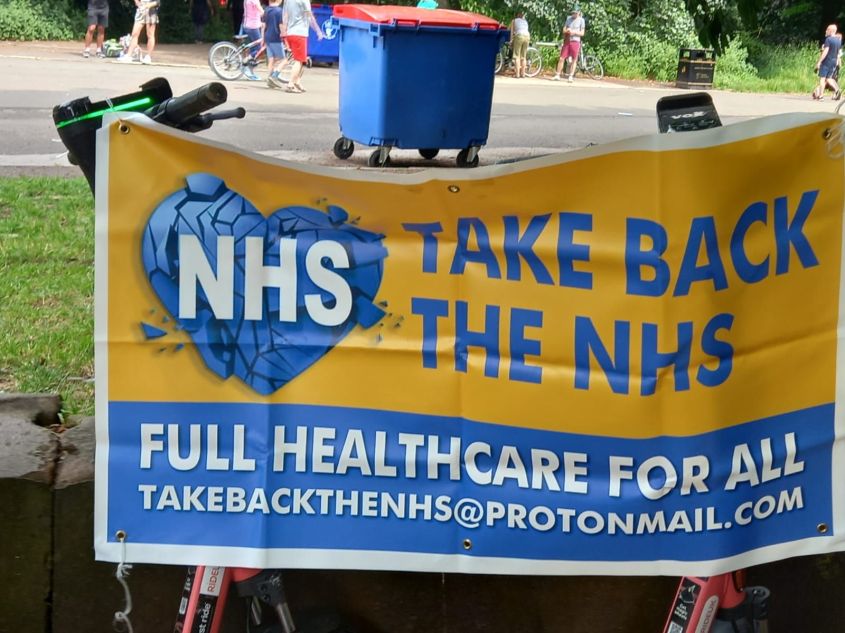
The NHS needs proper investment NOT “reform” and privatisation. This campaign joins with NHS workers Say No in saying #Wes change your plans #no to NHS privatisation.
Our campaign is part of a wider campaign in Cheshire and Merseyside to restore and repair the NHS. The local ICB we know is short of funds but now has been told to bring in a private company to look at how it can reduce costs. This is ridiculous. Liverpool Women’s Hospital requires additional funding to keep safe. Funding comes through the ICB. We are far from the only hospital or service in that situation. It is an intolerable situation and we call for public support to stop this dangerous nonsense. The lives and health of our precious babies and the health and at times lives of their mothers depend on improving the healthcare.
We warned the ICB that last winter would be dreadful in the NHS and dreadful it was. We need urgent action now to prevent another set of winter problems in this area.
Our hearts go out to the women and children of Gaza, especially to the pregnant and new mums. Cry justice for the dead and injured. We weep and rage with the patients whose doctors and health workers who have been willfully killed by Israel or tortured in Israeli prisons in this terrible onslaught. We mourn too the dead of Ukraine and those in all the other conflict zones.#CeasefireNow#StopGenocide#SavetheChildren.
With your help, in person or through donations, we will grow our NHS maternity campaign so it cannot be missed. Remember every campaign requires people to talk to their friends about the issue. These little conversations are the seeds of success.
What can you do?
1 Talk to your friends and workmates about the need for a fully funded publicly owned NHS.
2. Get involved with the campaign personally.
3. Tell us about your experiences and suggestions
4. Make formal complaints about poor service to the hospital and to your MPs and councillors. We can help.
4. Get your union branch or other organisation involved in the campaign. Ask us to send a speaker.
5 Give out leaflets in your street.
6 Put up posters.
7 Come to our events. Look out for events when the Labour Conference comes to Liverpool at the end of September.
Save Liverpool Women’s Hospital, the national maternity service, and women’s and babies’ healthcare. While we fight for Liverpool Women’s Hospital, we fight also for the whole NHS.
“As we go marching, marching We battle too for men For they are women’s children And we mother them again.”
Together ordinary women and men can make a difference, and can put huge pressure on the government to improve our services and maintain that improvement. We cannot leave it to election promises, especially as neither main party at present is supporting the full restoration of the NHS.
Our campaign focuses on Liverpool Women’s Hospital. So, we asked local pregnant women for their thoughts.
“I think the most basic thing that women giving birth need is to feel safe, and to be able to have confidence and trust in the people who care for them before, during and after the birth of their baby. Continuity of care is so important, and while this is challenging to deliver, this should be the goal wherever possible. The Women’s has suffered some serious problems in the recent past, and work needs to be done to restore trust and confidence for the women and families who rely on this vital service. Women need to be able to access midwifery-led care, and be supported in their choices around birth and beyond. I want to feel secure that I will be offered treatments that will be beneficial (nothing unnecessary), that the midwives and doctors will listen to me and answer my questions, that they will seek my consent before they intervene, and that the quality of care and communication will be consistently of a high standard. I have experienced both excellent care and coercive and traumatic care at the Women’s in the past. I understand that there are serious system pressures that affect staff throughout the trust, but no woman should leave the postnatal ward feeling traumatised and vulnerable. Staff need all the support and training necessary to ensure this does not happen. Research demonstrates that birth trauma is a national problem, and I would like to see the Women’s taking a leading role in addressing this silent epidemic. As a tertiary centre and leader in obstetrics and foetal maternal medicine, the Women’s should be setting standards, not struggling to meet them.”
Another comment was:
“We need more focus on women with complex social needs as they have terrible experiences once they go in to deliver.”
We agree and say.
Fight to save and improve Liverpool Women’s Hospital.
Restore and Repair the whole NHS.
We need a national health service, funded at least as well as other European Countries, publicly provided, not for profit, available to all humans in the country, free at the point of need. This model is the safest and most economical model of healthcare. The US have a dog’s dinner of a healthcare model but it costs much more than the NHS and has many more preventable deaths.
The UK does not spend enough on our healthcare and wastes billions on private profits.
Governments know this and choose to involve big US corporations in the NHS so they can make a fortune, as our service runs on empty. The years of closures and mergers have done great harm and the last thing we need is more health care corporations to rip us off.
The U.S. has the lowest life expectancy at birth, the highest death rates for avoidable or treatable conditions, the highest maternal and infant mortality, and among the highest suicide rates. The U.S. has the highest rate of people with multiple chronic conditions and an obesity rate nearly twice the OECD average.
Liverpool Women’s Hospital requires about 25% more funding. This is because eighty per cent of its work is maternity, and maternity is badly funded nationally. However, funding for the whole ICB (NHS) in Merseyside and Cheshire is also a problem. One of the hospitals that cannot safely work within the given budget is Liverpool Women’s Hospital. The Board of Liverpool Women’s Hospital has set a budget for safety and must be supported in this.
The Cheshire and Merseyside Integrated Care Board provides the bulk of funds to the hospital with a small amount coming nationally from funding for specialist services. The ICB in turn gets its funding from NHS England. NHS England funds maternity through what they call the maternity tariff. This maternity tariff is inadequate for safe care. NHS England gets its funding from the Government. The buck stops with the Government.
The ICB said it has serious funding issues in its most recent report;
“Colleagues will be aware that the financial planning round for 2024-2025 has yet to be concluded. This is largely because provider financial plans [providers are the Hospitals and non-hospital trusts our comment] exceed the level of funding available and we remain in an iterative process [iterative means going back and forth] with NHS England as we seek to find the right balance between further cost improvements [cost improvements means cuts] and maintaining the core quality of services. 5.2 At the time of writing this report we were forecasting a deficit for the year in the order of c£150million (2.24% of turnover). We will be able to report back to Board verbally at its meeting in May [This meeting was cancelled].”
Sadly, Maternity does not feature in the priorities of the ICB despite reporting that many more women experienced a delay in induction of labour. This means that a woman has been told that her baby needs to be born soon and has come into hospital, to have the baby and then is kept waiting (and worrying) for more than 12 hours.
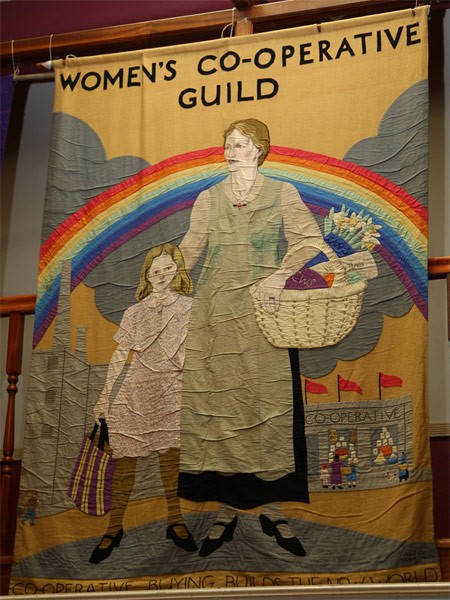
The NHS came from campaigns over many years from ordinary people, from trade unions in mining towns and working-class women’s organisations especially the Cooperative Women’s Guild who left behind a great record of their work in 1916 in the book ‘Maternity: Letters from Working Women, Collected by the Women’s Co-operative Guild’. Eventually, Nye Bevan founded the NHS as part of the 1945 Labour Government. It dramatically improved women’s survival giving birth, and the survival of babies.
Linked problems.
Women and children have been hardest hit by austerity and this has affected our health The prospects are grim indeed. In Liverpool “The life expectancy of women will fall by one year, and they will be in good health for 4.1 fewer years than they are currently. Although they are starting from a lower base, men will live 6 months longer than currently, and more of that time – 1.8 years – will be spent in good health.
Tell everyone who wants your vote to commit to real improvements in maternity services, a real commitment to the NHS. But do not leave it to MPs, get involved in the campaign to restore the full NHS and Maternity care. Suffragettes did not have a voice in parliament but they made themselves heard. We can campaign as well as our great-grandmothers.
Save Liverpool Women’s Hospital. No mergers, no dispersal of services. We need more midwives. Fund all the maternity hospitals well. Staff them well. Staff should not be pulled from ward to ward just to manage day-to-day demands. Each ward should be well-staffed. Fund postnatal support. Fund safety-critical improvements. Fund and staff the specialist work of Liverpool Women’s Hospital. Make treatment timely and safe, without long waits for induction of labour. Make maternity services improve women’s mental health not damage it.
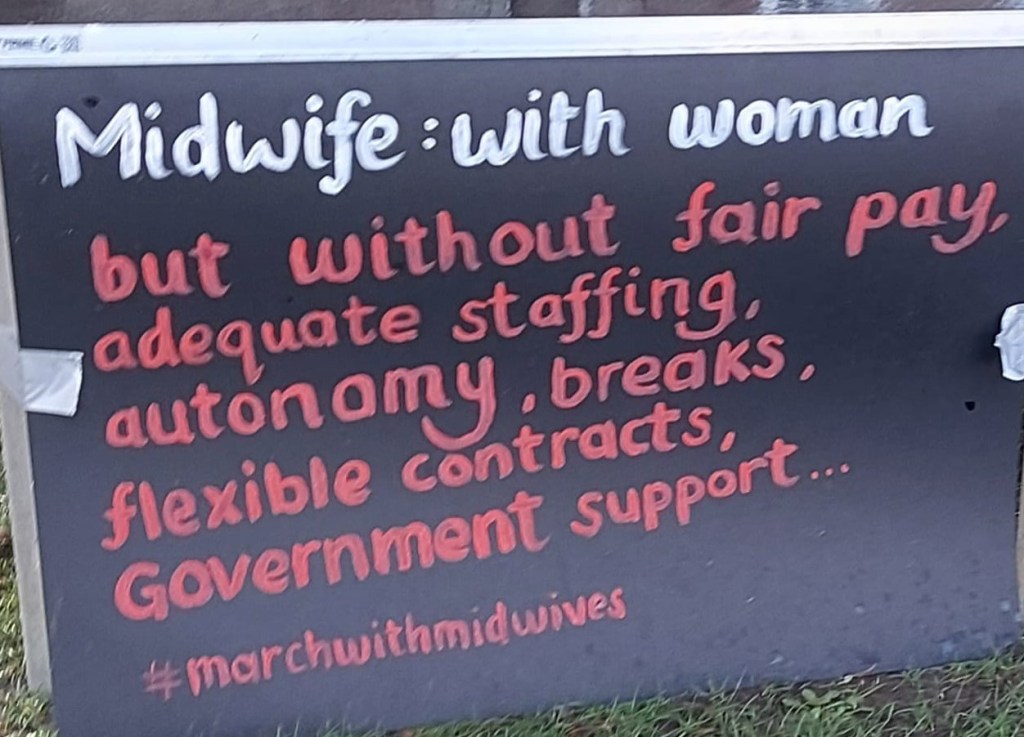
We need more midwives, and midwives need a professionally safe workload and good pay. It is hard to stay focused professionally if you are not sure where the next meal or heating bill is coming from or if you are working extra shifts to make ends meet.
“Do not appeal, do not beg, do not grovel. Take courage, join hands, stand beside us, fight with us.”
It takes a weird level of cruelty to cut services for the birth of a baby but that is what has happened. Our campaign is far from alone in raising these issues. The government knows quite well what is happening in maternity. Multiple national reports have shown the crisis in maternity services for mothers and babies. These are some of the reports, all reported to Parliament.
The government responded with endless cuts to the NHS budgets. This year’s funding allocation for the NHS in real terms, taking into account inflation, is the worst in many years.
Improving maternity outcomes needs to be everyone’s business. Let us make it our business.
There are other NHS problems. Mental health care has been sliced, diced and privatised. Dentistry is simply unavailable to many people; GP services are in serious trouble through underfunding and crazy schemes to reduce our contact with a GP. Meanwhile, reports show that having contact with the same GP adds years to our lives
The service must respect and work with mothers. There should be continuity of care, not an impersonal production line.
This blog post comes from a speech at a meeting held at the Quaker Meeting House Liverpool on Monday 11th March, 2024, for International Women’s Day. Other speeches were about child poverty, NHS privatisation, the situation in the big hospitals in Liverpool, and the situation for Hospitals in Gaza. We will publish those speeches too.
Mrs Pankhurst ended a famous meeting with the words “I incite this meeting to Rebellion!”. We follow in the footsteps of campaigning women over the years as we fight for maternity care, for the NHS, for women’s rights and against poverty.
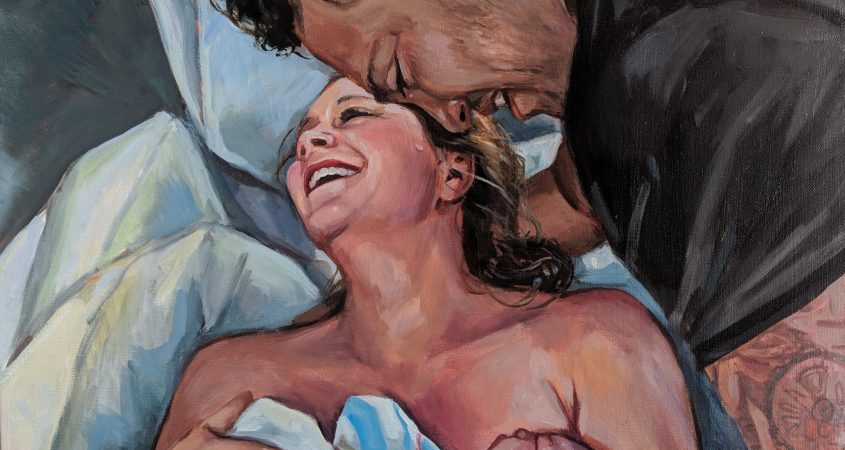
We are campaigning for safe, respectful healthcare and maternity care for all women and babies. Giving birth can be a truly wonderful experience.
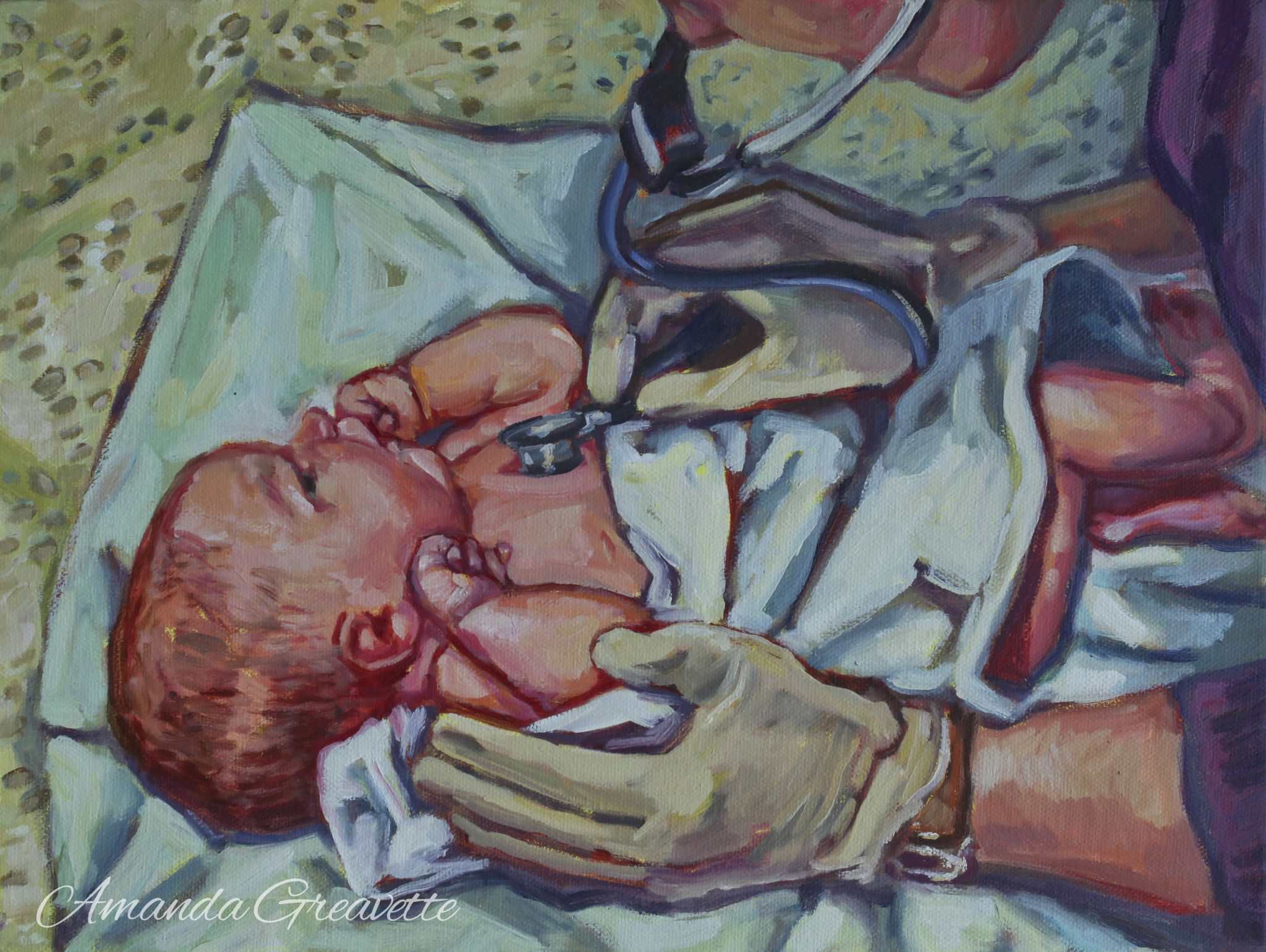
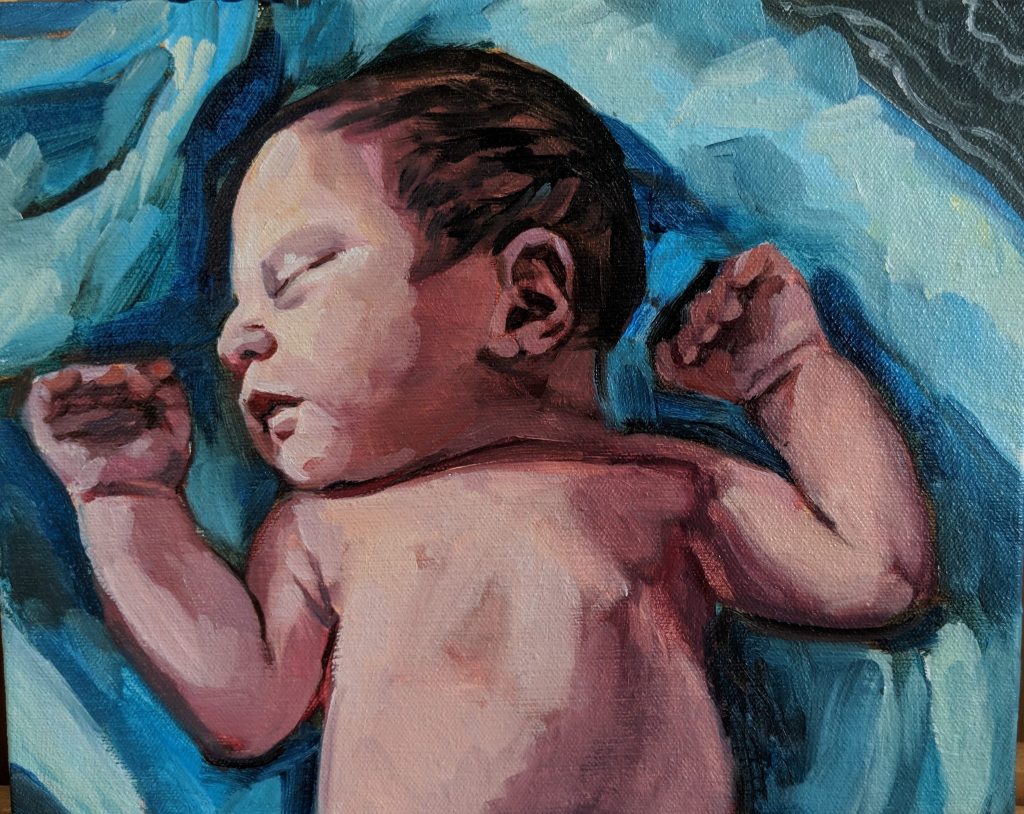
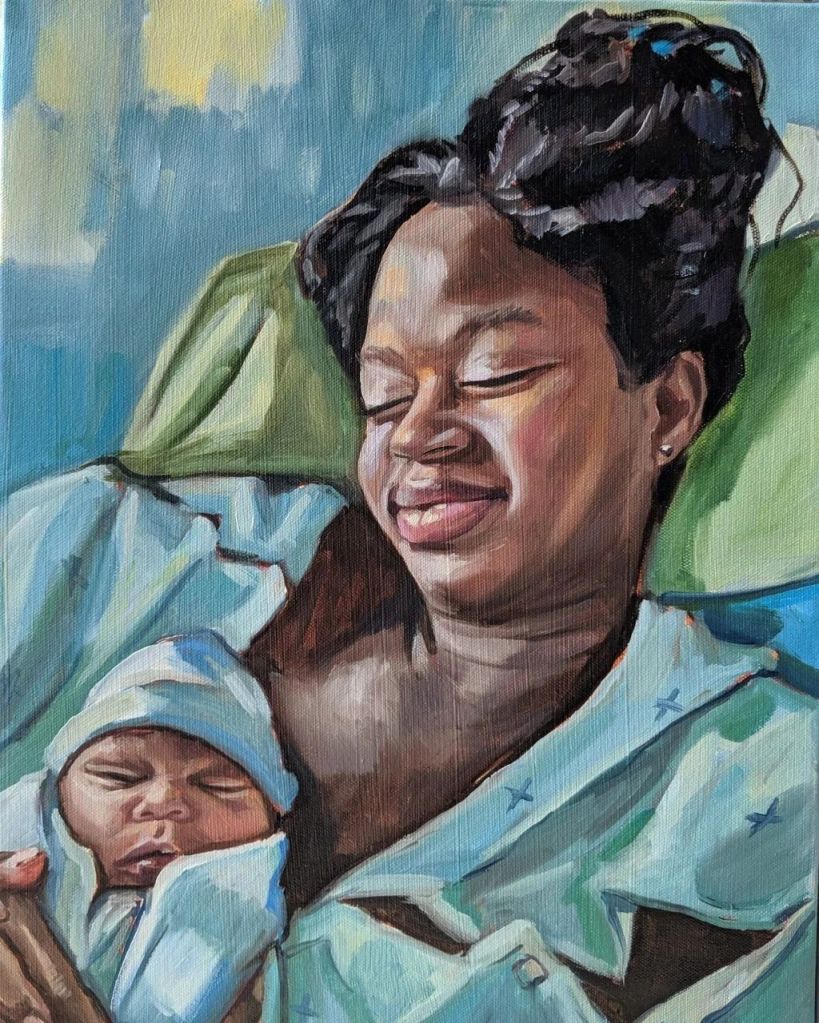
The wonderful artist amandagreavette shows us how wonderful birth can be.
“We meet here in Liverpool to mark International Working Women’s Day 2024. We meet to salute the women who have fought and won much in the past, to send sisterly greetings to all women around the world especially to those in struggle, those in war, and those damaged by the climate crises.
I want to talk about women’s health and maternity, locally, nationally and internationally. No one is safe until we all are safe. Change is possible. In living memory, we have seen huge improvements nationally and globally. In more recent memory we have seen significant damage done to these services again both nationally and globally, but the damage is most severe where government policies of Austerity or “Restructuring” have been imposed. Restructuring is what Austerity is called in the Global South when countries are forced by the IMF to cut services because economic problems drive them to turn to it for aid.
“Between 2014-18 resources spent on public services dropped by more than 18 per cent in Latin America and the Caribbean, and by 15 per cent in Sub-Saharan Africa. Looking ahead, the International Monetary Fund (IMF) predicts that this trend will continue in all regions.”
It is always the women who carry the weight of such cuts and this is reflected in maternal deaths and infant mortality. Sadly, for the UK, we have experienced some of the worst damage amongst the richest countries. But as Governments imposed that damage, governments could repair and restore that damage. Meanwhile, it is our babies, our women who pay the price.
I will look in a minute at the most damning figures, those showing the deaths of mothers and of babies. We mark these deaths with respect and will both mourn and organise to improve this situation.
Our World in Data says “For most of human history, around 1 in 2 newborns died before reaching the age of fifteen. By 1950, that figure had declined to around one-quarter globally. By 2020, it had fallen to 4%. But while humanity has made much progress, there is still a lot of work to do.”
Look at the figures for infant mortality at birth. Twenty-seven other countries have better figures than ours, yet ours is one of the richest countries globally.
“The UK is fifth from the bottom among 27 European countries for infant mortality. The rate stalled in the UK between 2013 and 2018 at 3.9 per one thousand live births. In England and Wales, the rate is more than twice as high in the most deprived areas (5 per one thousand) compared with the least deprived areas (2.7 per one thousand).” (4 Mar 2020)
The latest figures from MBRRACE-UK (who report on maternal and baby deaths in the UK over time) show that the number of women dying in the UK during or soon after pregnancy has increased to levels not seen since 2003-05.
In 2020-22 there were 13.41 deaths in every 100 000 maternities, significantly higher than the maternal death rate of 8.79 deaths per 100 000 in 2017-19 and similar to 2003-05 (13.95 per 100 000).
We do not accept the term “cultural bias.” It is racism and it must end. We recognise the increased risk for Black and Asian women in the maternity services as they are working today. We mourn these sisters and we will fight on to repair these terrible damages. We will be difficult to the government and to the NHS bosses in their names.
Internationally
Globally, every day in 2020, approximately eight hundred women died from preventable causes related to pregnancy and childbirth – meaning that a woman dies around every two minutes.
South Sudan had 1223 deaths per 100,000 women giving birth.
Belarus has 1.1 deaths per 100,000 women giving birth.
The UK has 13.41 deaths in every 100,000 women giving birth.
“In 2020-22 there were 13.41 deaths in every 100,000 maternities, significantly higher than the maternal death rate of 8.79 deaths per 100,000 in 2017-19 and similar to 2003-05 (13.95 per 100,000).”
Statistics released by MBRRACE-UK show that the maternal death rate in the UK has increased significantly over the past few years. Between January 2020 and December 2022, the rate was 13.41 per 100,000 maternities, up 53% from 8.79 per 100,000 in the previous three-year period from 2017-2019. This rate is the highest it has been in almost 20 years.
The situation is so serious that parents of babies who died or who were injured in maternity care are demanding a public enquiry. There have been many detailed and authoritative reports, often commissioned by the Government or by Parliament, on maternity services, but the government response has been appalling.
Maternity safety matters; building national links.
We are working with other campaigns including Keep our NHS Public with whom we have produced this fact sheet. We would be delighted to hear from other campaigns with whom we have not yet made contact.
We say that this government does not care about maternity deaths, does not care about the poor experience of giving birth, that poor funding and poor staffing numbers inflict on women. The government does not care about, indeed prides itself, on women’s poverty. Let me emphasise that. This is not governmental ignorance. The government are not ignorant of the damage they have done and are doing. It is a conscious choice. The Government have all the reports, they commissioned some of the reports, they have the evidence and they choose not to act to ameliorate the situation. It prefers to serve the very rich. It would rather pay damages for babies damaged at birth than sort the situation out. The cost of compensating mothers and their families for harm caused by NHS maternity services is more than double what the health service spends on such care each year, analysis shows.
This situation is manageable, and it could be changed. Money invested in patient care and staffing leads to a richer economy, not a poorer economy.
Change is possible and change is necessary.
While we mourn our dead, it is also important to consider the lesser injuries, and the other bad experiences women and babies are enduring because of the state of the service and because of poverty inflicted by Austerity. These damages are real and important whether we are talking of physical or mental injury. This situation could be repaired. Neither deaths nor lesser injuries are inevitable.
Save Liverpool Women’s Hospital Camapign is far from alone in calling out the damage being done. There are a host of charities and the Royal College of Midwives making the same point.
Birte Harlev-Lam, Executive Director, Midwife at the RCM said: “Women and their safety are still not being put at the centre of care. If this were the case, we would see significant amounts of additional funding and real efforts to support, retain and recruit staff, and we are not. There is a black hole in the centre of our maternity services where more money and staff should be. I have no doubt this is undermining maternity staff efforts to deliver the safest and best possible care for women and their babies.
Some avoidable maternal deaths and maternal injuries are due to NHS understaffing, under equipment and understaffing. There is another factor in these deaths. The extreme inequality in the UK, and the cruel impact of austerity on women and on women’s health, on children and on children’s health arising from government policies and priorities, also affect maternal and infant mortality. Poverty causes extreme stress, poor nutrition, poor housing and poor health. Poor mental health after birth leads to deaths, especially amongst the poor, and Black women, yet maternal mental health services are badly damaged, and health visitor numbers have not recovered from the pandemic.
The impact on staff wellbeing, on workload and staff retention is also important. Working under constant pressure is extremely damaging to the health of staff. Neither giving birth, nor having treatment for Gynaecological issues, is routine or ordinary. It is staff vigilance that leads to safety. How someone can be vigilant at the end of a very busy 13-hour shift is beyond me. Many people working in the NHS do not feel free to speak out, and those running the show, plod on making the cuts or CIPS without informing the public of the damage being done, nor describing the damage done in earlier years of austerity.
“This is all having an impact on the safety and quality of care for women and also means many women with more complex needs such as mental health problems are not getting the care they need and deserve. This is also leaving staff exhausted, overwhelmed, fragile and feeling massively undervalued” warns the Royal College of Midwives.
Maternity is underfunded and hospitals are not even spending what the government allocate to maternity (according to the RCN) because they can’t balance their books without using that money for other things.
There is an ongoing shortage of midwives. The BBC reports a shortage of about 2,500 midwives on the ratios that the Government describes as safe for maternity care. We would say that these Government figures for provision of midwives are themselves too low for what is required. So, 2,500 is the minimum extra required.
Our struggle is part of the campaign to restore the NHS, to renationalise it, to turn it once again into a publicly delivered, comprehensive, national service, to make it safer for women and babies. Our campaign is part of the campaign for safety in maternity, part of the campaign for better pay and conditions for staff. It is also part of the campaign for women’s rights, and intrinsic to the rights of women are the rights of the child.
Inequality and poverty affect women’s health and the health of their children.
Campaigning in the street
There are fourteen million children (aged up to 18) in the UK. Reports this week drew out the terrible extent of childhood poverty in the UK. Meghan Meek-O’Connor, senior child poverty policy adviser at Save the Children UK, said: “Today 4.3 million children are being failed. It is an outrage that 100,000 more children are in poverty – they are being forgotten.
Britain in the 1970s was one of the most equal of rich countries. Today, it is the second most unequal, after the US (27 Nov 2023).
Stewart Lansley, the author of The Richer, the Poorer and The Cost of Inequality, said it was “an acute paradox of contemporary capitalism that as societies get more prosperous, rising numbers are unable to afford the most basic of material and social needs.”He also said: “In Britain, child poverty has doubled in 40 years. Yet few modern tycoons go without private jets, luxury yachts, even private islands.”
“Inequality has no more powerful expression than in children’s health, and children in our region get a particularly bad deal,” before pointing out that Liverpool’s infant mortality rate remains above the national average and that, every year, around twenty-six infants in the city do not reach their first birthday.
They reveal how poor health in mothers of the next generation can lead to ingrained health inequalities, adding: “Babies born small or early because of poor maternal health have the worst possible start to life and a health trajectory which culminates in a shorter life expectancy and more years lived in ill health.”
For those babies who survive, there is an uncertain future ahead with current trends predicting that by 2040, Liverpudlians will live more than a quarter of their lives in ill health.”
Keeping kids in uniform and shoes is hard enough.
Our campaign will fight on about this as well as fighting for the restoration of the NHS.
Poverty amongst women.
“Women living on low incomes in England are at increased risk of experiencing poor health during pregnancy. Our recent review of the evidence found that women and babies living with socioeconomic disadvantages had a 40% increased risk of worse pregnancy outcomes including stillbirth, low birth weight and babies being born early. Women may also experience mental health issues following pregnancy, birth or in the first year after birth. Women with lower access to financial, educational, social and health resources engage less in care during pregnancy – called antenatal or maternity care.”
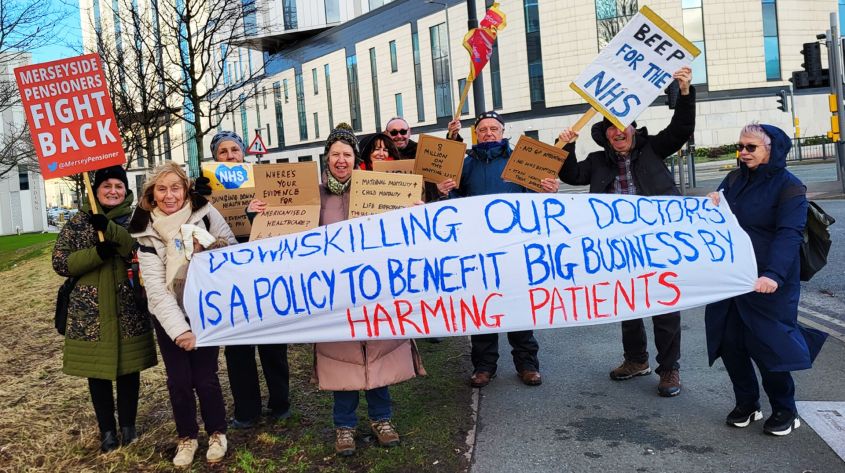
Mersey Pensionersfighting for fully qualified staff for all.
Save Liverpool Women’s Hospital Campaign started in 2015 to try to stop the closure of Liverpool Women’s Hospital. The assault on the NHS and on working class living standards was well under way by 2015 and closing one more hospital was small beer to the bureaucrats of the NHS and our city council at the time. We had already seen the scandal of Prince’s Park Medical Centre (See this article or this book for the history) and the fight to stop PFI in this city, so we were able to mobilise for Liverpool Women’s Hospital and to build our petition and awareness in the city.
Liverpool Women’s Hospital is still here, still short of money and staff, and still threatened with merger, dispersal, and de facto closure. We will publish a more detailed report on the situation for Liverpool Women’s Hospital shortly.
We saw enormous improvements in infant mortality and maternal mortality following the introduction of the NHS. We can see such improvements once again if the NHS is reinstated.
So, we will persist, as women do.
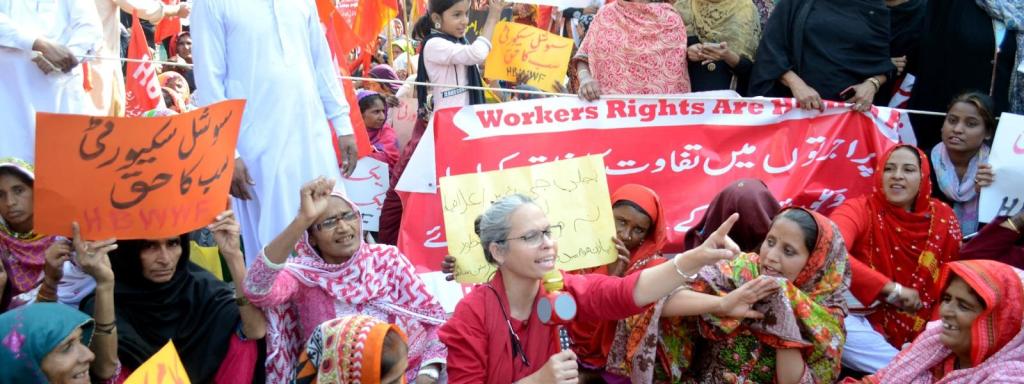
We send special greetings to the Home Based Women Workers’ Trade Union of Pakistan with whom we have exchanged greetings each year of our campaign. They have built a powerful trade union amongst women who work at home in various trades. They inspire us to continue in our campaign. We send greetings to the women working to unionise the uranium mines in Namibia. We send greetings to women around the world fighting for better maternity care.
As always we look to how women in the past have won gains in rights and services, we remember the women who fought for the vote, the women who fought for baby clinics and maternity care and contraception here in Liverpool, the women of the sixties and seventies who fought for women’s rights in childbirth, for those who fought for women to be able to choose contraception without their husbands permission, for abortion rights, for equal pay, with a special shout out to the machinists in Fords In Speke, for women’s economic independence, for the end to the marriage bar in teaching and other jobs for the fight for the Women’s Hospital in London and many more
We campaign, we organise, we agitate, we consult, we build links, we challenge and we demand. We can win but only as we grow ever bigger.
Save Liverpool Women’s Hospital for all our mothers, sisters, daughters, friends, and lovers and for every baby.
Please support our campaign Please sign our petition ( unless you have already signed)
Campaigning works. The campaign to Save Liverpool Women’s Hospital has marked International Women’s Day for eight years now. We have fought hard to save the hospital in a time of great damage to the NHS and damage to the maternity services nationally.
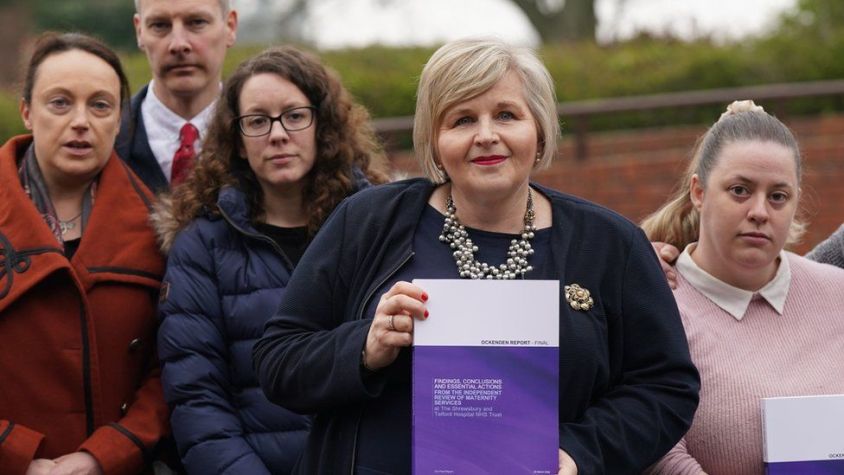
Donna Ockendon with just one of her damning reports on maternity care.
These damages have been described in prestigious reports yet still the government closes its ears. The hospital has been damaged by cuts, poor staffing, and bad policy decisions, but the hospital is still there, still under threat, still underfunded and understaffed, but still there. Campaigning works. We have miles to go before we have the hospital we need but at least what we have has not (yet) been taken away
Grief in Gaza
On this International Women’s Day, our hearts break and our voices are raised for the plight of pregnant women and their babies in Gaza, giving birth now without any medical attention being available as every hospital is destroyed. Food and water are in very short supply. This damage to mothers and babies is sickening. We share the feeling of dread as the horrid Israeli threat of an attack at the start of the holy month of Ramadan approaches. We demand a ceasefire and a just peace where the children of Palestine and Israel can grow up in peace justice and harmony.
Retired midwife Rebecca speaking in Liverpool about the plight of women giving birth in Gaza
Our thoughts go to the women of Ukraine, and those from Ukraine now living in this city. Our thoughts to the women of Yemen, Sudan, and Haiti all caught in the maelstrom of crises and war. We send solidarity to the women of Russia organizing against the odds for peace, and to all the women of the peace movement across the world
We celebrate the victory of women in France who now see the right to abortion written into the constitution.
We send greetings to all the US women who are fighting a terrible reaction in politics generally, but especially in their rights to control their fertility. This is in a country that does not provide decent maternity leave, and with ten times the maternal death rate of Australia, Austria, Israel, Japan, and Spain. Eighty-four percent of reviewed maternal deaths were described as preventable.
We send greetings to the women of the Kurdish community here in Liverpool and to the Kurds fighting for respect and peace in their homelands.
Picture from the camp in Cox’s Bazaar in Bangladesh
Our hearts go out to the women and girls of the Rohingya community, driven from their homeland and living now in a million-strong refugee camp in Bangladesh.
We live in a time of genocide and war. We look to the generations of women who have worked for peace, including those from Greenham Common
Liverpool, once the second city of the British “Empire”( and all the racism that involved), and because of the trade links, is home to a black community dating back hundreds of years and one of the oldest Chinese communities outside of China.
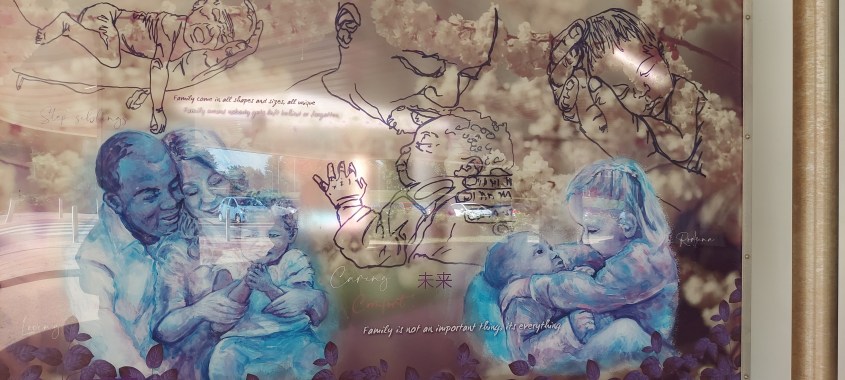
From a mural outisde Liverpool Women’s Hospital entrance.
Sadly though we now mourn two black women who have died at Liverpool Women’s Hospital from complications in pregnancy or birth. In their honour, we rejoin our efforts to campaign for better safer maternity services, better staffing ratios, and well-paid staff with more time to think and plan, with more support top-down, to tackle blame culture & reduce tensions. This must be accompanied by more investment in staff. Managed decline has led to half the staff with double the workload. Paperwork is now all online so more admin and less time with patient contact. The culture needs to change. This will take a lot of work as there is still also a massive issue with hierarchy and bullying. More investment, and more support, will ultimately improve the work environment which will subsequently give women better experiences as tensions lessen.
Liverpool Women’s Hospital has a history of anti-racism but that, like many other great provisions, can be severely damaged by austerity cuts. This tradition of anti racism needs to be enthusiastically revived but overworked burnt out staff are hardly in a good position for this. A good indicator of a safe environment for Black and Ethnic Minority patients is ethnic minority staff reporting that they do not experience racism and discrimination. Sadly, a report to the board described the opposite. However, in a recent webinar about migrant women giving birth, Liverpool was highly praised for the support midwives gave to one of the speakers. The specialist teams supporting vulnerable women do great work.
Image from MBBRACE
We join with others in demanding action to make it safer for all mothers to give birth and demand action to reduce the particular risk to Black Asian and poor women of all races. In the UK, the rates of baby death and stillbirth among Black and Asian mothers are double those for white women. We have written about the higher number of deaths among black babies.
In one of these maternal deaths, investigators from the national body the Maternity and Newborn Safety Investigations (MSNI) were called in after the woman died. They reported that “Theinvestigation into her death found hospital staff had not taken some observations because the patient was “being difficult”,( our emphasis) according to comments in her medical notes.“…ethnicity and health inequalities impacted on the care provided to the patient, suggesting that an unconscious cultural bias delayed the timing of diagnosis and response to her clinical deterioration”. “This was evident in discussions with staff involved in the direct care of the patient“.
“She was being difficult”. These words have sparked fear and anger in many women. This sister would have been in a strange environment, far from home, with people speaking a language she did not speak. She would have been full of hormones from her miscarriage. She had had babies before and would have known what she was feeling was not right. And she was ill and in pain. Because she was being “difficult” she was not monitored as she should have been and this cost her the chance of life. Now two babies are motherless and a family bereft.
The wider impact of this death.
In the aftermath of this death, and the publicity it gained, Melissa Sigodo (@melissasigodo), a Zimbabwean and British community reporter from the Daily Mirror, held a Twitter (X)Space meeting with 90 mainly black women, from across the country, discussing the case. The experiences of these women were heartbreaking. This case had reawakened their fears.
There is no room for racism in maternity care.
The safety of women giving birth is the responsibility of the service, not the individual. Every woman matters. Liverpool Women’s has had a good reputation for anti-racism. This reputation must be regained. Most midwives, health care assistants, and obstetricians would agree. Developing a safe place for every woman to be treated and to work takes time and effort. We echo the words and determination of the suffragettes, in saying “There must be deeds, not words” on this matter.
The hospital is changing its systems to support patients who are rapidly deteriorating and we welcome this.
Liverpool Women’s Hospital was built on Crown Street site as part of Project Rosemary, to help heal the injustices which had led to the uprising in Toxteth in 1981. Black building workers were employed in the construction of the hospital. The hospital now serves a great ethnic mix of people, for example in Princes Park Ward non-White English/ British resident population range is 59%, and in nearby Picton is 52%. Racism at this Hospital would be particularly offensive.
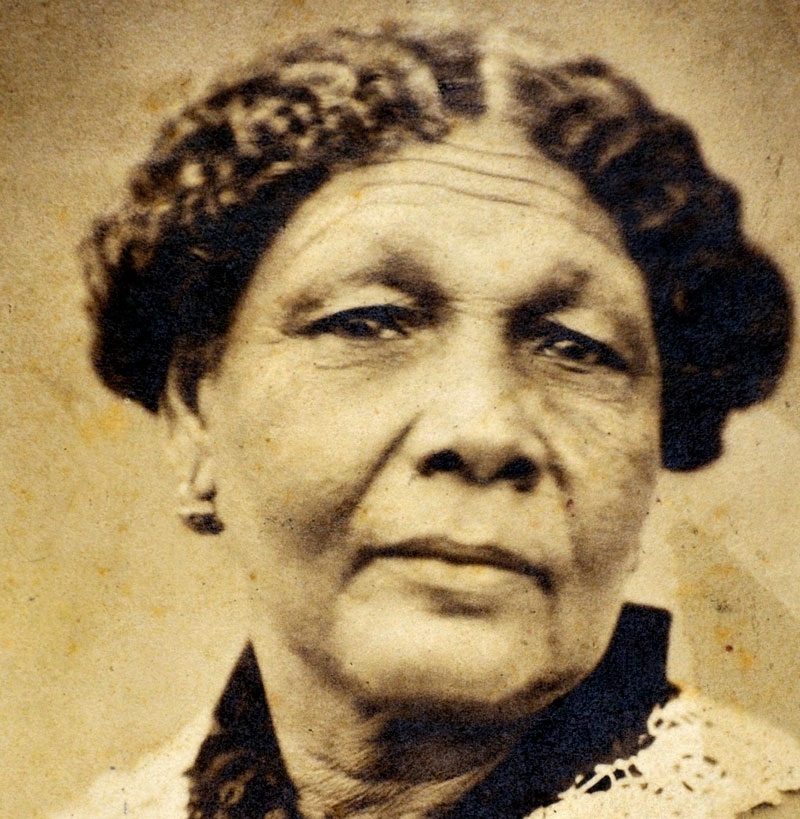
Mary Seacole Pioneering nurse and heroine of British soldiers inthe Crimean war
We can do it!
Let us remember the work of the great nurse Mary Seacole and all the women of the Windrush generation who so wonderfully staffed the early NHS. Liverpool Women’s Hospital must be a pioneer in antiracist women’s healthcare so no black woman fears using the service nor working in this or any other hospital.
We need to campaign – and the history of International Women’s Day reminds us that campaigns can win.
On March the 8th and the few weeks that follow it we celebrate International Women’s Day. Women’s lives have been improved and much has been achieved since the founding of International Working Women’s Day. The gains made for women over the last 150 years are significant. The Fawcett Society published a list of these gains a few years ago. The women who won these gains did so despite the difficulties they faced.
Women today are potentially much more powerful than previous generations. We too can organize to improve our lives. So many of us are in employment that we have real power there, that could be organized much more effectively through trade unions. We can more easily campaign across the world. Remember the Women’s Strike in Iceland.
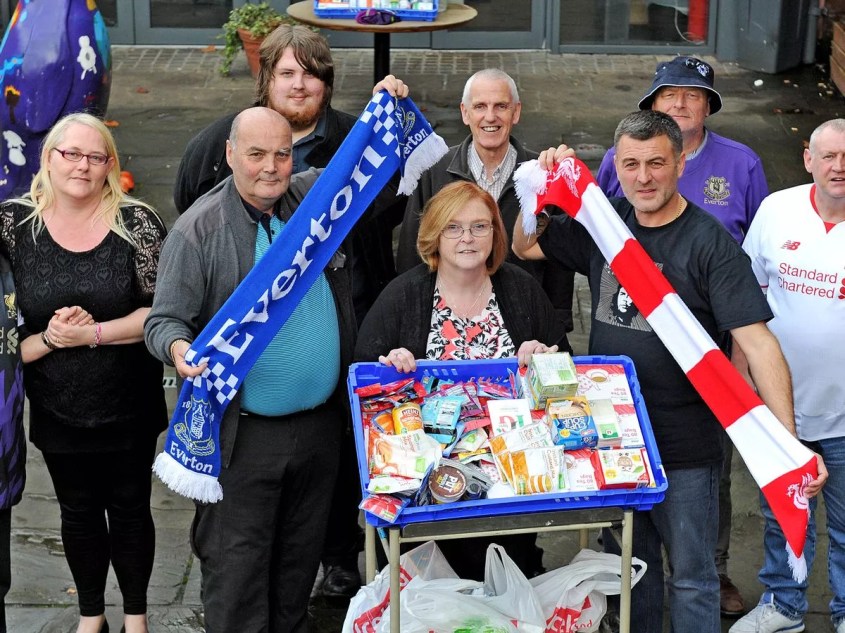
Fans supporting food banks provides practical help and campaigns against food poverty
Today we face real problems and worsening conditions so there is a greater need than ever for women to organise. We can take courage from the past for the very serious obstacles women face today. Those obstacles are serious and becoming ever more so.
Clinical support workers at Arrowe Park Hospital ion strike in the snow.
We salute all the NHS staff who have taken industrial action. We salute them also for working on in the terrible conditions imposed by this government. This shows the strength we have. War, austerity, climate, and economic crises make this era extremely dangerous but never have women been more equipped to demand and force change for the better.
“Whether they are older women suffering loneliness and isolation, single parents with additional caring responsibilities, or simply working mums trying to stretch household budgets to feed their families, the survey shows that women are significantly more likely to need food support from charities and community groups.”
There is much to do to improve women’s lives and many of the gains made are being eroded. The Cost-of-Living crisis hits women hardest. 75% of people accessing food support from Fare Shares a food charity are women.
It is great that women are in work but not good that male and female pay is far from equal. It’s great that sex discrimination is illegal but it still happens, less openly perhaps. It’s great that equal pay law exists but women still earn less than men and the gap widens over a working life.
Women are described as “the shock absorbers of poverty”, managing family bills and compensating for the government’s neglect and austerity policies.
Image credit to CADTM
What is happening in the UK is mirrored in other countries. Oxfam International’s report shows that while the richest 1 percent captured 54 percent of new global wealth over the past decade, this has accelerated to 63 percent in the past two years. $42 trillion of new wealth was created between December 2019 and December 2021.
Not one thing that women have gained has been won without organisation, agitation, campaigning and struggle. So, it is today. Let our inspiration be in how women have struggled for a better life in the past and in the great campaigns today.
“Inspire Inclusion” is 2024s International women’s Day slogan. We want to inspire women’s inclusion in the drive to improve the lives of working-class women and children.
It wasn’t wealthy women who led the earlier struggles of the women working in mills, tobacco factories, or as domestic servants. Our inspiration is with the women who fought for all women, and founded International Women’s Day
Bread
and Roses
In the words the women’s anthem Bread and Roses ( credit to Unison) we say
“As we go marching ,marching we battle too for men for they are women’s children and we mother them again”
In the tradition of the suffragettes,Let’s Inspire or incite women to rebellion, or even incite women to organise for a better life for locally nationally and internationally.
For all our sisters,mothers, daughters and babies.





















 Save Liverpool Women's Hospital