Tag: nhs

We can do it!

Thanks to Anjali027 for this picture.

Campaigning works. The campaign to Save Liverpool Women’s Hospital has marked International Women’s Day for eight years now. We have fought hard to save the hospital in a time of great damage to the NHS and damage to the maternity services nationally.
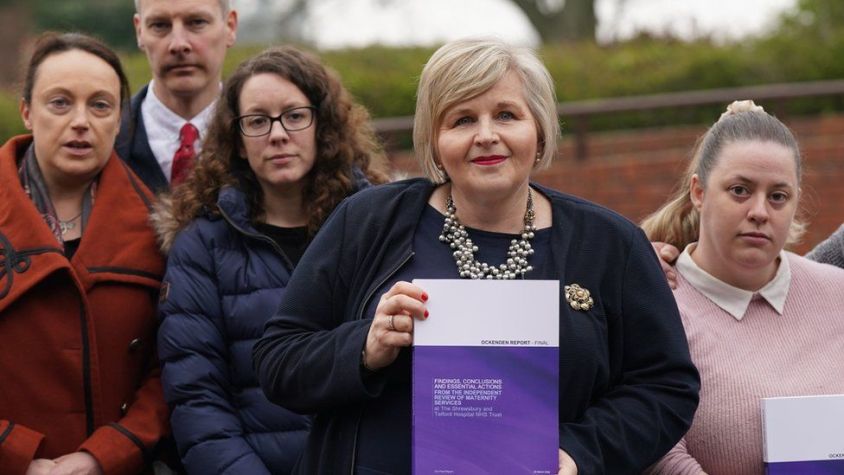
Donna Ockendon with just one of her damning reports on maternity care.

These damages have been described in prestigious reports yet still the government closes its ears. The hospital has been damaged by cuts, poor staffing, and bad policy decisions, but the hospital is still there, still under threat, still underfunded and understaffed, but still there. Campaigning works. We have miles to go before we have the hospital we need but at least what we have has not (yet) been taken away
Grief in Gaza

On this International Women’s Day, our hearts break and our voices are raised for the plight of pregnant women and their babies in Gaza, giving birth now without any medical attention being available as every hospital is destroyed. Food and water are in very short supply. This damage to mothers and babies is sickening. We share the feeling of dread as the horrid Israeli threat of an attack at the start of the holy month of Ramadan approaches. We demand a ceasefire and a just peace where the children of Palestine and Israel can grow up in peace justice and harmony.

Retired midwife Rebecca speaking in Liverpool about the plight of women giving birth in Gaza

Our thoughts go to the women of Ukraine, and those from Ukraine now living in this city. Our thoughts to the women of Yemen, Sudan, and Haiti all caught in the maelstrom of crises and war. We send solidarity to the women of Russia organizing against the odds for peace, and to all the women of the peace movement across the world

We celebrate the victory of women in France who now see the right to abortion written into the constitution.

We send greetings to all the US women who are fighting a terrible reaction in politics generally, but especially in their rights to control their fertility. This is in a country that does not provide decent maternity leave, and with ten times the maternal death rate of Australia, Austria, Israel, Japan, and Spain. Eighty-four percent of reviewed maternal deaths were described as preventable.

We send greetings to the women of the Kurdish community here in Liverpool and to the Kurds fighting for respect and peace in their homelands.

Picture from the camp in Cox’s Bazaar in Bangladesh

Our hearts go out to the women and girls of the Rohingya community, driven from their homeland and living now in a million-strong refugee camp in Bangladesh.

We live in a time of genocide and war. We look to the generations of women who have worked for peace, including those from Greenham Common

Liverpool, once the second city of the British “Empire”( and all the racism that involved), and because of the trade links, is home to a black community dating back hundreds of years and one of the oldest Chinese communities outside of China.
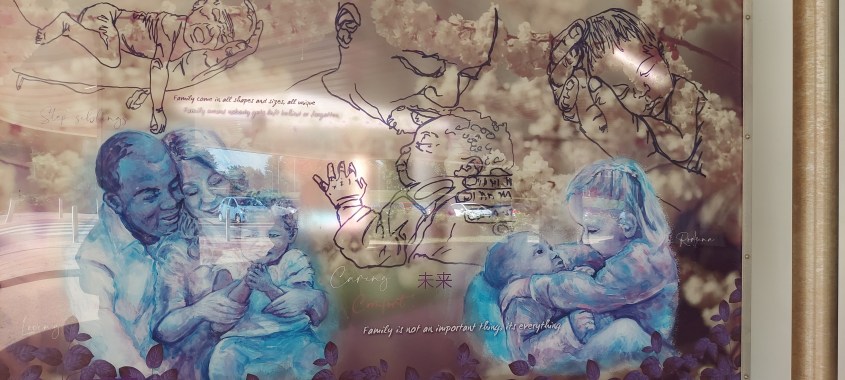
From a mural outisde Liverpool Women’s Hospital entrance.

Sadly though we now mourn two black women who have died at Liverpool Women’s Hospital from complications in pregnancy or birth. In their honour, we rejoin our efforts to campaign for better safer maternity services, better staffing ratios, and well-paid staff with more time to think and plan, with more support top-down, to tackle blame culture & reduce tensions. This must be accompanied by more investment in staff. Managed decline has led to half the staff with double the workload. Paperwork is now all online so more admin and less time with patient contact. The culture needs to change. This will take a lot of work as there is still also a massive issue with hierarchy and bullying. More investment, and more support, will ultimately improve the work environment which will subsequently give women better experiences as tensions lessen.

Liverpool Women’s Hospital has a history of anti-racism but that, like many other great provisions, can be severely damaged by austerity cuts. This tradition of anti racism needs to be enthusiastically revived but overworked burnt out staff are hardly in a good position for this. A good indicator of a safe environment for Black and Ethnic Minority patients is ethnic minority staff reporting that they do not experience racism and discrimination. Sadly, a report to the board described the opposite. However, in a recent webinar about migrant women giving birth, Liverpool was highly praised for the support midwives gave to one of the speakers. The specialist teams supporting vulnerable women do great work.

Image from MBBRACE

We join with others in demanding action to make it safer for all mothers to give birth and demand action to reduce the particular risk to Black Asian and poor women of all races. In the UK, the rates of baby death and stillbirth among Black and Asian mothers are double those for white women. We have written about the higher number of deaths among black babies.
In one of these maternal deaths, investigators from the national body the Maternity and Newborn Safety Investigations (MSNI) were called in after the woman died. They reported that “The investigation into her death found hospital staff had not taken some observations because the patient was “being difficult”,( our emphasis) according to comments in her medical notes. “…ethnicity and health inequalities impacted on the care provided to the patient, suggesting that an unconscious cultural bias delayed the timing of diagnosis and response to her clinical deterioration”. “This was evident in discussions with staff involved in the direct care of the patient“.

“She was being difficult”. These words have sparked fear and anger in many women. This sister would have been in a strange environment, far from home, with people speaking a language she did not speak. She would have been full of hormones from her miscarriage. She had had babies before and would have known what she was feeling was not right. And she was ill and in pain. Because she was being “difficult” she was not monitored as she should have been and this cost her the chance of life. Now two babies are motherless and a family bereft.

The wider impact of this death.

In the aftermath of this death, and the publicity it gained, Melissa Sigodo (@melissasigodo), a Zimbabwean and British community reporter from the Daily Mirror, held a Twitter (X)Space meeting with 90 mainly black women, from across the country, discussing the case. The experiences of these women were heartbreaking. This case had reawakened their fears.

There is no room for racism in maternity care.  

The safety of women giving birth is the responsibility of the service, not the individual. Every woman matters. Liverpool Women’s has had a good reputation for anti-racism. This reputation must be regained. Most midwives, health care assistants, and obstetricians would agree. Developing a safe place for every woman to be treated and to work takes time and effort. We echo the words and determination of the suffragettes, in saying “There must be deeds, not words” on this matter.

The hospital is changing its systems to support patients who are rapidly deteriorating and we welcome this.

Liverpool Women’s Hospital was built on Crown Street site as part of Project Rosemary, to help heal the injustices which had led to the uprising in Toxteth in 1981. Black building workers were employed in the construction of the hospital. The hospital now serves a great ethnic mix of people, for example in Princes Park Ward non-White English/ British resident population range is 59%, and in nearby Picton is 52%. Racism at this Hospital would be particularly offensive.
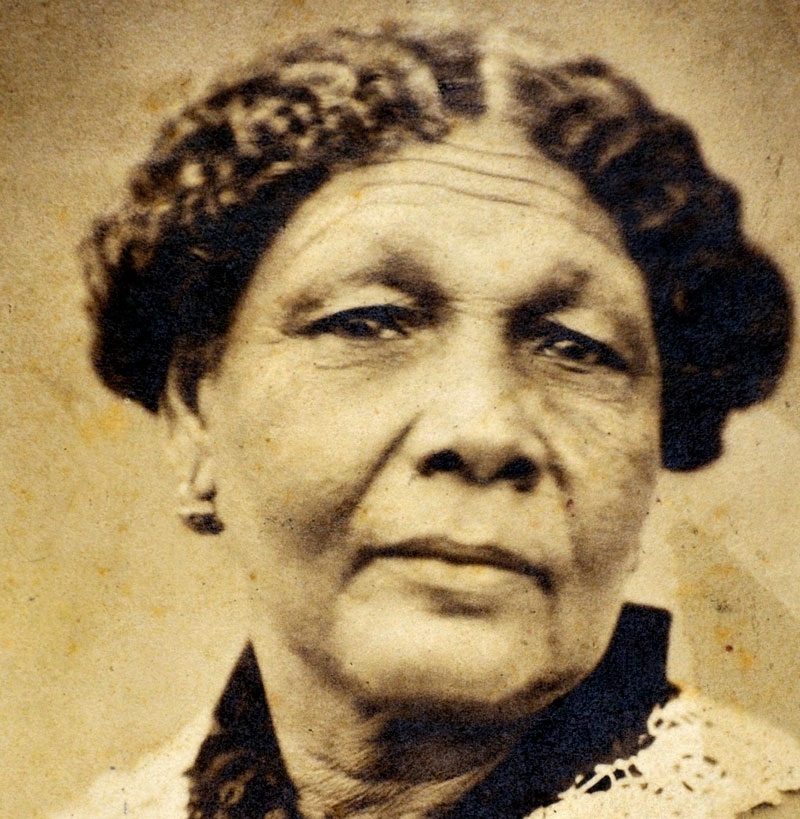
Mary Seacole Pioneering nurse and heroine of British soldiers inthe Crimean war

We can do it!

Let us remember the work of the great nurse Mary Seacole and all the women of the Windrush generation who so wonderfully staffed the early NHS. Liverpool Women’s Hospital must be a pioneer in antiracist women’s healthcare so no black woman fears using the service nor working in this or any other hospital.
We need to campaign – and the history of International Women’s Day reminds us that campaigns can win. 

On March the 8th and the few weeks that follow it we celebrate International Women’s Day. Women’s lives have been improved and much has been achieved since the founding of International Working Women’s Day. The gains made for women over the last 150 years are significant. The Fawcett Society published a list of these gains a few years ago. The women who won these gains did so despite the difficulties they faced.

Women today are potentially much more powerful than previous generations. We too can organize to improve our lives. So many of us are in employment that we have real power there, that could be organized much more effectively through trade unions. We can more easily campaign across the world. Remember the Women’s Strike in Iceland.
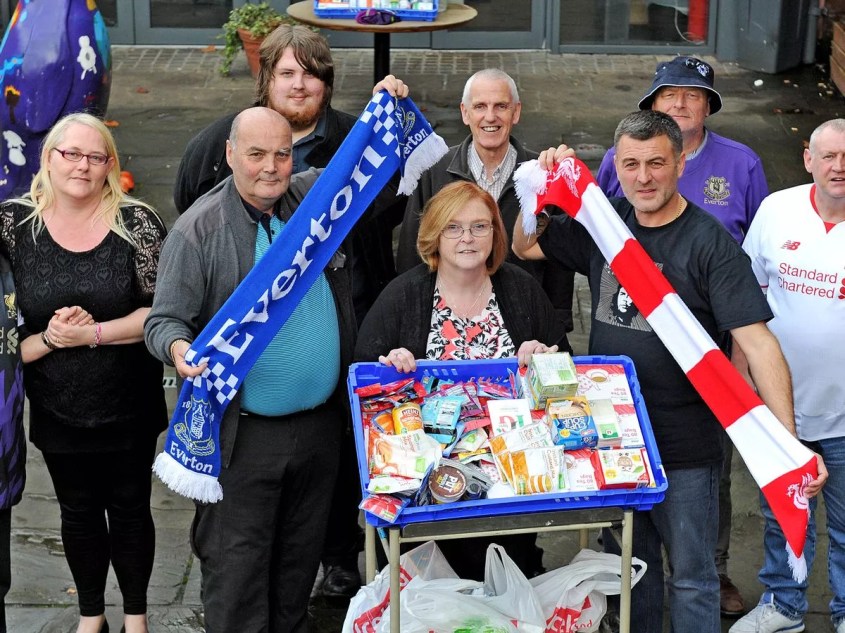
Fans supporting food banks provides practical help and campaigns against food poverty

Today we face real problems and worsening conditions so there is a greater need than ever for women to organise. We can take courage from the past for the very serious obstacles women face today. Those obstacles are serious and becoming ever more so.

Clinical support workers at Arrowe Park Hospital ion strike in the snow.

We salute all the NHS staff who have taken industrial action. We salute them also for working on in the terrible conditions imposed by this government. This shows the strength we have. War, austerity, climate, and economic crises make this era extremely dangerous but never have women been more equipped to demand and force change for the better.

Whether they are older women suffering loneliness and isolation, single parents with additional caring responsibilities, or simply working mums trying to stretch household budgets to feed their families, the survey shows that women are significantly more likely to need food support from charities and community groups.”

There is much to do to improve women’s lives and many of the gains made are being eroded. The Cost-of-Living crisis hits women hardest. 75% of people accessing food support from Fare Shares a food charity are women.
It is great that women are in work but not good that male and female pay is far from equal. It’s great that sex discrimination is illegal but it still happens, less openly perhaps. It’s great that equal pay law exists but women still earn less than men and the gap widens over a working life.

The motherhood penalty kicks in.  Forty-four percent of women are earning less now than they were before they had children. The employment rate was higher for mothers than either women or men without dependent children and has been since 2017.

Women are described as “the shock absorbers of poverty”, managing family bills and compensating for the government’s neglect and austerity policies.

Image credit to CADTM

What is happening in the UK is mirrored in other countries. Oxfam International’s report shows that while the richest 1 percent captured 54 percent of new global wealth over the past decade, this has accelerated to 63 percent in the past two years. $42 trillion of new wealth was created between December 2019 and December 2021.

While ordinary people are making daily sacrifices on essentials like food, the super-rich have outdone even their wildest dreams. Just two years in, this decade is shaping up to be the best yet for billionaires —a roaring ‘20s boom for the world’s richest,” said Gabriela Bucher, Executive Director of Oxfam International 2021

Not one thing that women have gained has been won without organisation, agitation, campaigning and struggle. So, it is today. Let our inspiration be in how women  have  struggled for a better life in the past and  in the great campaigns today.

“Inspire Inclusion” is 2024s International women’s Day slogan. We want to inspire women’s inclusion in the drive to improve the lives of working-class women and children.

It wasn’t wealthy women who led the earlier struggles of the women working in mills, tobacco factories, or  as domestic servants. Our inspiration is with the women who fought for all women,  and founded International Women’s Day

Bread
and Roses

In the words  the women’s anthem  Bread and Roses ( credit to Unison) we say

“As we go marching ,marching we battle too for men for they are women’s children and we mother them again”

In the tradition of the suffragettes,Let’s Inspire or incite women to rebellion, or even incite women to organise for a better life for locally nationally and internationally.

What Is Happening in Health Care in Cheshire and Merseyside in January 2024?

Save Liverpool Women’s Hospital is part of a coalition of campaigns fighting to Restore and Repair the NHS, and to win full staffing (with good pay, conditions, and qualifications) to improve the health of our largely working-class communities in Cheshire and Merseyside. One of the tasks we do together is to monitor the activities of the ICB, the so-called Integrated Care Board which replaced the NHS in the 2022 Health and Care Act. We have to resist the vicious cuts being made and challenge the damage being done.

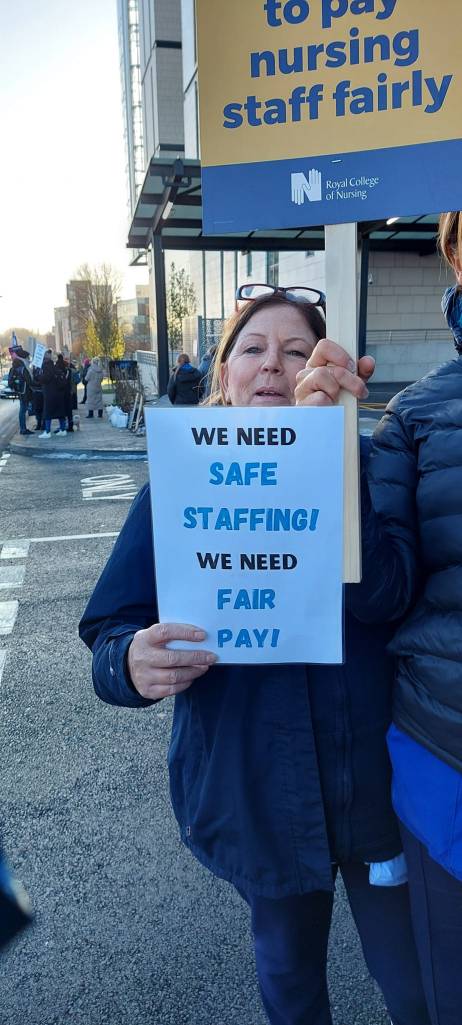
Arrowe Park Hospital Clinical Support Workers on strike for fair pay and equality with other hospitals

The Cheshire and Merseyside ICS  is meeting in New Brighton on 25th January, from 9.00am to midday. People can ask questions from 9 until 9.30

Location: Tower Room, Floral Pavilion Theatre & Conference Centre, Marine Promenade, New Brighton, Wallasey CH45 2JS.Free parking opposite the Fort Perch car park.

https://www.cheshireandmerseyside.nhs.uk/get-involved/upcoming-meetings-and-events/nhs-cheshire-and-merseyside-integrated-care-board-january-2024/

Even before we read the paperwork for the ICB meeting, ( It should be published this week) we know patients and staff face serious issues and we will not sit back and let our services be reorganized out of existence. We will though post a comment about the issues when the paperwork is published on their website.

These problems are all solvable if privatization is withdrawn and we revert to a public service healthcare model based on publicly funded and publicly delivered care as the NHS was founded. Fortunately, the original NHS model of healthcare happens to be the most cost-efficient model of care. The privatization and cuts that have plagued our NHS for two decades have robbed us of what was judged the best healthcare in the world in 2014 by the Commonwealth Fund, a US charity that surveys health systems each year.

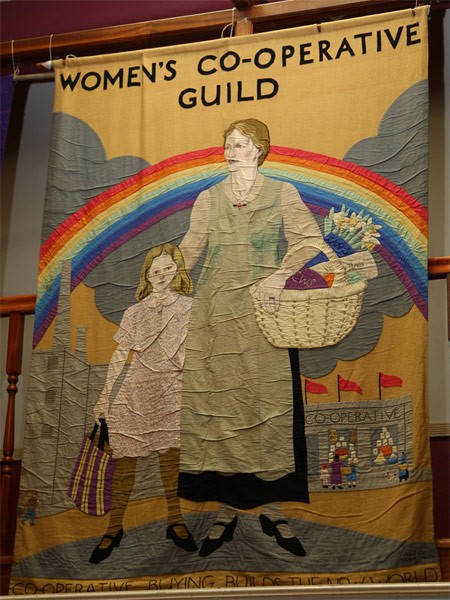
We work to restore the NHS like the Women’s Cooperative Guild fought to found universal healthcare a century ago. Remember that they won!

Yes, it will require investment to Repair and Restore the NHS. However, that investment will repay itself in the health of the population and in enriching the economy.

“… spending on the NHS should be regarded as an investment, not a cost. Improving population health can drive higher levels of economic growth across the country.” https://www.nhsconfed.org/publications/analysis-link-between-investing-health-and-economic-growth

Even the World Bank a leading light in the world of global capitalism agrees. It said good population health, nutrition, and education create the foundation for sustainable economic growth. It is now much better understood that a well-educated, healthy, and well-nourished workforce pays bigger dividends to the economy than simply building new roads and bridges

Please tell us what the key issues in healthcare are for you. These are some issues we want to highlight ahead of the ICB meeting., but you may have issues we don’t yet know about.

Do come along if you are free on the 25th of January to this meeting with your questions and /or to support the campaign.

These are healthcare issues that we know are facing us in Cheshire and Merseyside healthcare.

  1. Deeper privatization and structural change to allow such privatization. It is now even easier for the ICB to give contracts to private companies without going through public procedures. GP practices can be bought and sold. See below. NHS campaigners are monitoring how much ICB spends is given to big corporations. For more information on just two companies see this. Privatization means not only does our healthcare have to pay profit on top of cost but the companies are, by law, aiming to make the the highest profit, not providing the highest care, and each company is likely to be taken over by another company particularly hedge funds or the huge US health corporations. Privatization of public services is a disaster.
  2. Reduction of services. The NHS /ICB has fewer beds and fewer doctors per head of population than comparable countries. The Kings Fund wrote in a comparison study of health care in advanced economies”The UK also has fewer hospital beds; 2.5 beds per 1,000 people, compared to an average of 3.2 beds per 1,000 in our basket. Again, fewer beds are not necessarily bad – this could reflect shorter hospital stays – but the high occupancy rates of beds in the UK (88 percent in 2022/23, above recommended levels, and third highest in our basket) implies there is a shortage.” Local hospitals have been way above 88 percent bed occupancy this year. The Royal College of Emergency Medicine said the huge loss of beds since 2010-11 was causing “real patient harm” and a “serious patient safety crisis”.“Since 2010-11 the NHS has lost 25,000 beds across the UK, as a result, bed occupancy has risen, ambulance response times have risen, A&E waiting times have increased, cancelled elective care operations have increased.
  3.  Greater problems with underfunding. The extent of Cuts ( CIPs) is dreadful, especially in this time of high inflation. Hospitals are given a budget by the ICB and have to show where they are going to make”Cost Improvements”. Reducing the service, though, is part and parcel of the ICS model imported from the USA. Each hospital is expected to make CIPs/cuts of about 5%. These are utterly unrealistic without causing still more preventable deaths, and the rules are saying the cuts must be replicable next year too with more cuts again. The NHS is underfunded and the strikes have cost money. The government could have settled the disputes for much less than the disputes have cost, but still refused to settlethe disputes or to fund the costs to the hospitals. This all means longer waiting lists longer queues in Accident and Emergency and longer waits for ambulances. The BMA said last year Between 2009/10 and 2021/22, the cumulative underspend – the difference between what funding would have been if historical growth rates had been maintained, and what was actually provided – reached £322 billion in real terms.
  4. The introduction of physician associates and other less qualified roles to replace doctors’ roles. https://www.bma.org.uk/bma-media-centre/bma-calls-for-immediate-pause-on-recruitment-of-physician-associates Although some PAs have been in place for some time the government is bringing in more lower-skilled staff rather than train and pay doctors.  We have seen the growth of other roles in General Practice. but this has not solved the problems. Pharmacists have proven useful but even The safest system is for patients first to see a qualified physician and then to be referred to a nurse or other health professional.  When we go for treatment we need to know how qualified the member of staff is. There is a consultation from the British Medical Association that you can take part in here. Margaret Greenwood MP for Wirral West spoke in Parliament about this. Her contribution can be found here.
  5. Our people in our working-class communities already die too young as shown in this report from Liverpool City Council. This class divide in health care is replicated across Cheshire and Merseyside with huge differences in life expectancy and life expectancy in good health between the rich and poor. The differences in health between different areas across Cheshire and Merseyside are stark and heartbreaking but we want better services for people in Walton and Woolton, for Crewe and Macclesfield the poorer and better-off areas of Cheshire and Merseyside. This country can provide far better healthcare for all. Our Government chooses not to do so. The slightly better-off communities are not the cause of the extreme poverty that has returned to this country.
  6. NHS Staff pay and conditions. Our area has had the greatest involvement of healthcare workers in industrial action. They deserve our full solidarity and they still have not got a fair deal. Fair pay and good working conditions for staff at every level are requirements of an effective health service. nationally 112,000 vacancies are unfilled. For more details on staffing see this.
  7. A separate dispute at Arrowe Parke Hospital over back pay and grading is dragging on, with 100 or more pickets out in the cold winter. This strike is making history. The courage and determination are a model for others to follow.
  8. The proportion of the NHS budget spent on General Practice is due to fall to its lowest point in at least eight years. We need better GP services.
  9. Meanwhile, Centene the US health corporation is selling  60 GP practices to another company! HCRG is the entity that replaced Virgin Health when 75% of the shares were bought out in 2021 by Twenty20 Capital, which is a British-owned private equity group. So our GP practices are now at the mercy of the market! ( Thanks to research from Note by Carol Saunders (Tower Hamlets KONP & NELSON)
  10. The situation at Liverpool Women’s Hospital continues to cause concern. It is part of the national maternity scandal, although Liverpool Women’s is fortunate to have a full staff of midwives, albeit as measured by the government’s meager staffing levels. We need more midwives but are very pleased to see the new young midwives arrive at the hospital and we hope that they stay for many years. Midwives need respect, good pay, good working conditions, and access to ongoing professional education. The new Chief Executive of Liverpool Women’s Hospital said “.. the organization was well organized, and there were limited opportunities for further internally driven efficiencies to reduce the financial deficit position. Work would therefore need to continue to influence the national maternity tariff and the CNST premium – both significant cost pressures to the Trust.” He also said, according to the December Trust Board minutes, “The RQR meeting had also provided an opportunity for the Trust to outline significant safety issues that required immediate action. This included 24/7 obstetric cover, development of a Medical Emergency Team (MET), blood bank availability, anesthetic cover, and ongoing work on the antiracism agenda.” despite this, the hospital is expected to make significant CIPs( cuts)
  11. Money given for dentistry cannot be spent because of changes to the service contracts for dentists, yet thousands go without. The NHS  is on course for  £400m underspend on its dental contract!!
  12. Waiting lists. The waiting lists for hospital treatment rose to a record of 7.8 million in November 2023 and this winter has not made things better.
  13. Allowing Palantir access to our most personal data. We are told it is not yet happening here but that train is rolling. NHS is paying the company a huge sum of £480 million for this service which will give the company access to data worth billions and which will further enrich the health insurance conglomerates and big Pharma. They will administer a key system for the NHS, and the Post Office Horizon scandal tells us just how important it is that such systems work well for the users, not those who want to make a profit. For further details on this issue see https://www.foxglove.org.uk/2024/01/11/nhs-federated-data-platform-need-to-know/
  14. Stress and pain for patients and staff are caused by the deliberate policies of this government and all who support NHS restructuring for profit rather than care. We thank the staff who have been the best protectors of our care and point the blame squarely on this and earlier governments.
  15. Pharmaceuticals. Too many patients cannot get the medication they need. Chasing around different chemists has become familiar.” Multinational health corporations are raking in huge profits while demanding the UK’s National Health Service pay high prices for their products. The excessive power wielded by these firms needs curbing if UK health policy is to truly work in the public interest.” says author Nick Deardon. The NHS once had, and could have again, a powerful position in buying from big companies as the world’s biggest single purchaser. The scale of big pharma gives them huge power. There is a powerful campaign being run on this issue which you can contact here
  16. The use of and cost of agency staff is a waste of money. We know that staff sometimes need flexible working especially with the poor level of NHS pay and the huge cost of childcare. The shortage of staff has become another way for big businesses to rip off the health service. In 2017 the government sold off NHS Professionals. The Canary paper wrote at the time“The DoH owns NHS Professionals (NHSP), a private limited company created to supply a bank of over 90,000 medical staff across different NHS Trusts. The flexible arrangements apparently save the government £70m a year in costs while non-government-owned private staffing agencies can be around 30% more expensive.” HCRG, remember them from the private sale of GP practices earlier in the article ( point 8 )? Well, they are one of the agencies cashing in in NHS funds through agency staff.
  17. The Royal College of Nurses reported “Findings from a Freedom of Information (FOI) request to NHS trusts in England expose a total of £3.2bn spent on agency staff by hospitals between 2020 and 2022.…..According to RCN analysis, three-quarters of nursing vacancies in the NHS in England could be filled if the money had been redirected to hiring permanent staff. Cash spent on agencies could cover the salaries of 30,956 permanent full-time equivalent nurses paid at the top of a Band 5 salary (£34,581).
Last time we lobbied the ICB in New Brighton
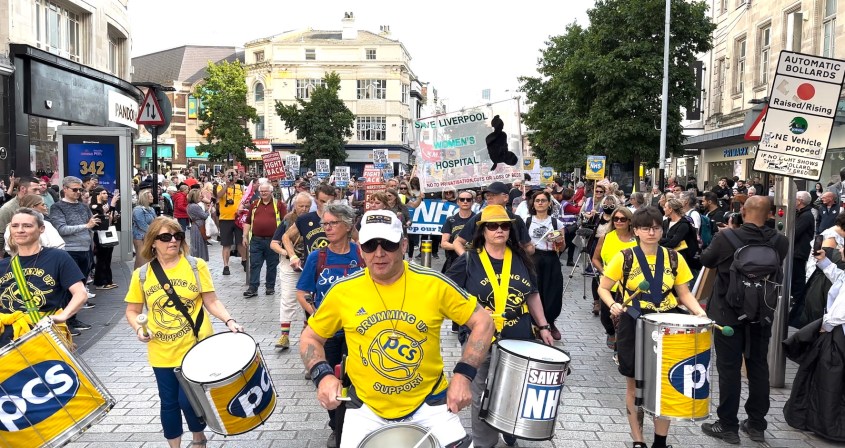
The October 2023 Demonstration for the Liverpool Women’s Hospital and to Repair and Restore the NHS.
Additional staff in GP practices since 2019https://www.nuffieldtrust.org.uk/news-item/more-staff-in-general-practice-but-is-the-emerging-mix-of-roles-what-s-needed

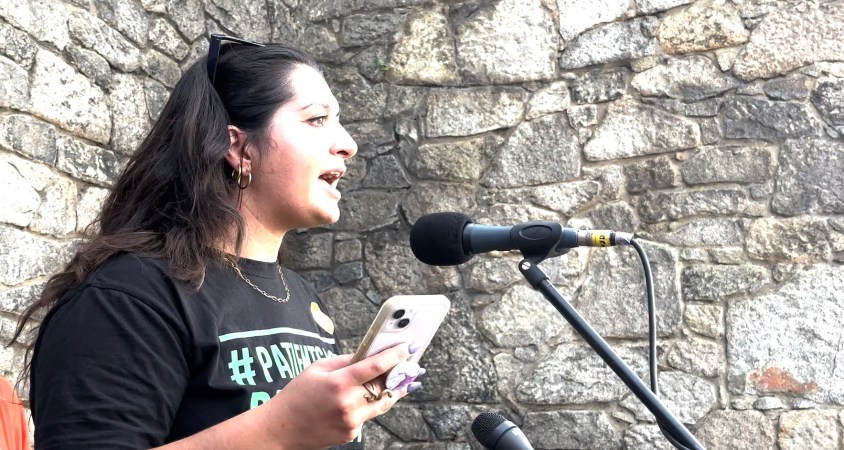
Aliya Yule speaks at the end of the demonstration to save Liverpool Women’s Hospital and to restore the NHS. October 7th 2023.

I’m Aliya from the Patients Not Passports campaign and it’s an honour to be here today, joining this fight to save Liverpool Women’s Hospital. 

The Government is waging war on us, on our public services, and on our migrant & refugee communities. They tell us that migrants are to blame for overstretched schools and hospitals. But that is a lie.

It is the government that underfunds our NHS, and tells health workers to work harder for less. This is a crisis they have created. 

They tell us it’s people seeking safety on our shores that are the problem.  But again – that is a lie: Our enemy doesn’t travel by migrant dinghy. They travel by private jet. 

And it’s a dangerous lie. Because it has created more than a decade of the racist… violent Hostile Environment immigration controls, Which has forced health workers to become border guards… deterred patients from seeking care…and caused delays in life-saving treatment…  while saddling sick people with debts they can never pay, and sending debt collectors after them. 

The hostile environment is racist and sexist at its core. It disproportionately hits black and brown migrant women and pregnant people — we see how border policies of charging migrants for maternity treatment – routinely up to £10,000 – means that some people are too afraid to get the care they need. 

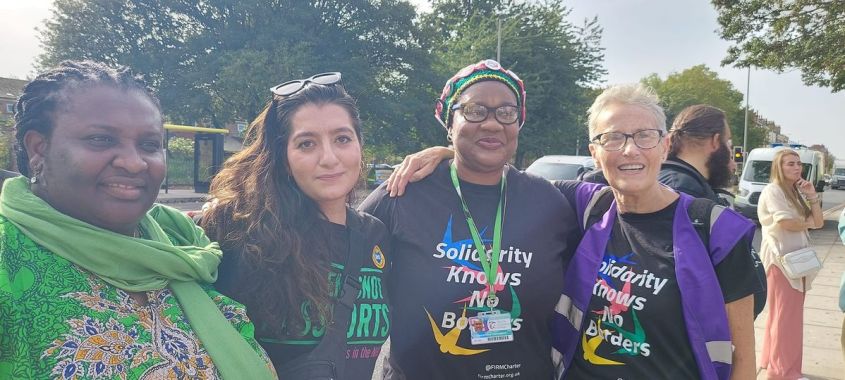
Alyia is second from left

Today, it’s an honour to be here with you in Liverpool, where we are standing up and fighting back. Today not only are we marching to save Liverpool Women’s hospital, we’re also marching for people like Omisha… a four-year-old girl who was charged £76,000 pounds for her cancer treatment.

Photo from the Change petition

We are patients not passports! 

We’re marching in solidarity with her family as they fight for justice. We’re marching for an NHS that is free for all, forever – no matter your immigration status… no matter where you are from… and no matter your ability to pay… Free at the point of use… for anyone in need. This is the socialist principle upon which it was founded, and which we must fight for. 

We must stand shoulder to shoulder… bringing our struggles together… against all attempts to divide us.  When we show up in solidarity and connect us our struggles, we know that we will win.

Save Liverpool Women’s Hospital. 

Save the NHS. 

Please see also Comfort’s speech at the start of the demonstration