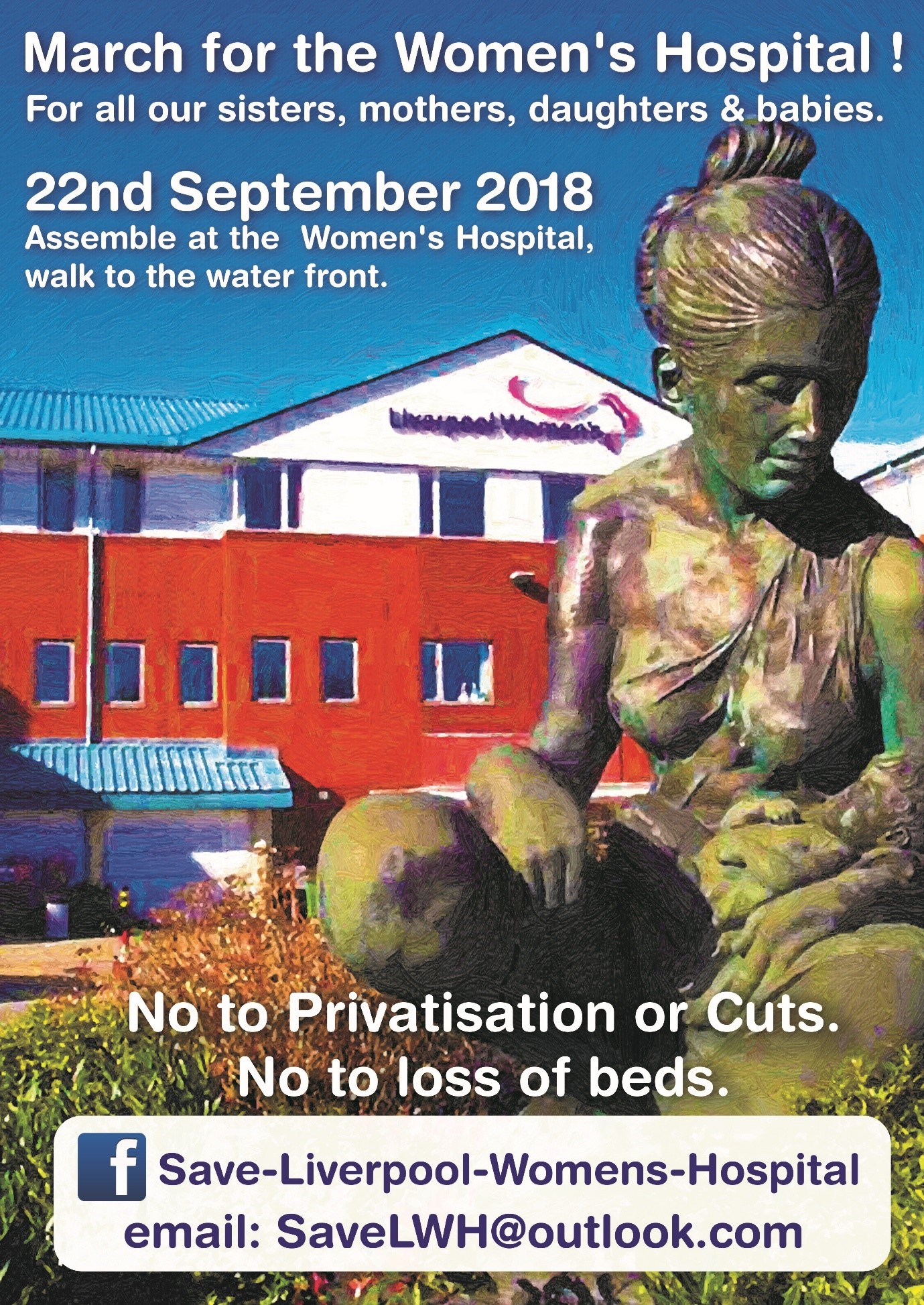
Liverpool Women’s Hospital will not get a new building on the Royal Site. This announcement has been expected for some time. The BBC covered the story this week. On Radio Merseyside our campaign was asked to comment. We said that we were not surprised . The Hospital should stay on the Crown Street site and that what matters is proper funding, staffing, and resources because our babies deserve the best.
Reorganise the funding structures, not the hospital.
Our babies and mothers, our sick women, deserve the best.
What’s happening with the Liverpool Women’s Hospital?
There has been a press announcement that there will be no new women’s hospital built on the Royal site in the near future.
This announcement does not mean the future of Liverpool Women’s Hospital is safe, far from it. Public consultation about its future will be launched shortly.
The announcement is not a surprise to anyone who has followed the story of Liverpool Women’s Hospital or the story of broken promises from the Government about building new hospitals, even those in dire physical conditions.
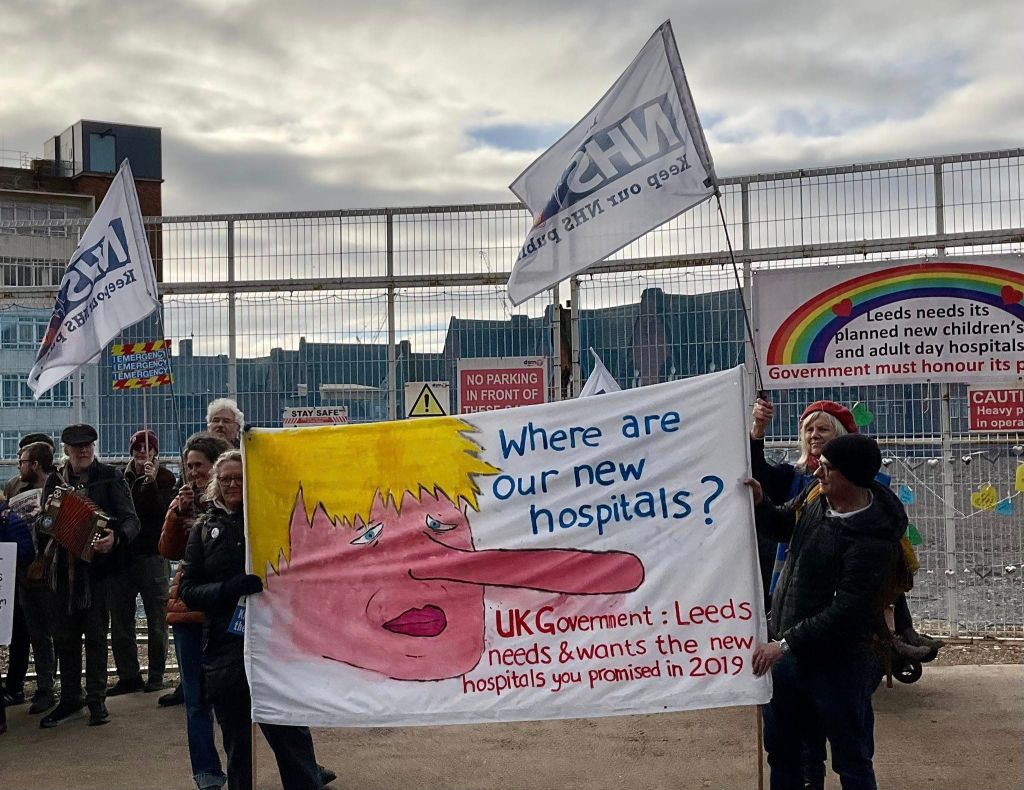
For example in Leeds, the people were promised a new Children’s Hospital. In the meantime, services were dispersed to different hospitals to allow demolition. Now the new Hospital is not going to happen.
Nationally, maternity is underfunded and understaffed and has seen terrible scandals. We have written much about this in other posts. Just this week there was a report about delayed induction of labour across the country (and this also has been seen in Liverpool Women’s Hospital). The Care Quality Commission reported “The quality of maternity, mental health and ambulance services has seen a “notable decline” over the last year, which is contributing to “unfair care” and worsening health inequalities,”
“families whose babies died and whose mothers were harmed – in some cases dying – in the East Kent maternity scandal were still having to prove legal liability to get any compensation. This is despite Bill Kirkup’s report, published around 18 months ago, having already looked at their cases in detail and reached conclusions on whether better care could have led to different outcomes.
But NHS Resolution, which handles the NHS’s clinical negligence claims, says causation and a breach of duty of care will need to be proved in each case. This may mean families have to engage not just lawyers but also experts in midwifery, obstetrics, and neonatal care.”
In such a national maternity crisis we must protect the services we have in the area. We say women and babies will be harmed if the Liverpool Women’s Hospital is forced into a merger with the huge general hospital. The focus on women and babies will be lost. The great maternity scandals of our age have happened where there was no real focus on women and babies.
The government and the NHS bureaucracy have wanted to close one hospital in Liverpool since 2015. Liverpool Women’s Hospital was chosen. This is to do with saving money not patient care.
Liverpool Women’s Hospital sits on a great site on Crown Street. The official opening was on 7th November 1995 and the building is in good condition. A £20million pound neonatal unit was recently added to the hospital. It does not need a rebuild.
Liverpool Women’s Hospital does need more staff and additional resources like a proper blood service, an improved emergency medicine service, a 24/7 consultant obstetric presence. It needs to tackle the long waiting list for Gynaecology treatment, and improved intensive care. All of this requires funding and support from the national health service and government funding but without that funding our babies and mothers will suffer. The money must be provided.
Our Saturday stall n Bold Street
All hospitals should be run in a cooperative system with other hospitals but specialisms should be protected.
Liverpool Women’s Hospital, along with the whole of the UK, needs to improve infant mortality, maternal mortality and injuries to women and babies and to tackle gross inequalities.
Serious damage has been done to our health care. We see it in the terrible waiting times in Accident and Emergency, in the 14,000 preventable deaths caused by those A and E problems, we see it in dentistry, in the GP service, in mental health and in maternity. We see it in the eight million people on waiting lists. We see it in the exhausted staff.
The experience women have giving birth is getting worse because of these underlying, national problems and the day-to-day stress this brings into the hospital.
Liverpool Women’s Hospital is damaged too by the business model imposed on the hospitals. The drive to privatise and to move away from a service model in the NHS has caused problems all this century.
The new Chief Executive (James Sumner) and Chair of Liverpool Women’s Hospital (David Flory) are also the Chief Executive and Chair of the Royal, Aintree and Broadgreen Hospitals (Liverpool University Hospitals Foundation Trust). Neither man is a specialist in maternal or infant health. The Health Service Journal has said these joint appointments are likely to lead to a merger of Liverpool Women’s with the big hospital. We say no to a merger, and a big yes to cooperation between all the hospitals in the area. Such cooperation is anathema to the privatisers. We need continued support from the people of Liverpool to win this fight and we need to link up with other maternity campaigners.
Please help Save Liverpool Women’s Hospital. Sign the petition, talk to friends family and workplaces about this, join the discussion, and help with leafleting and social media.
Invite us to speak to your organisation.
Send us a donation.
For all our mothers, sisters, daughters, friends, and lovers and for every baby
The future of Liverpool Women’s Hospital has been under threat for nine years now. The petition which is at the heart of the Save Liverpool Women’s Hospital Campaign says “No closure. No privatisation. No cuts. No merger. Reorganise the funding structures not the hospital. Our babies and mothers our sick women deserve the very best.
In the Liverpool Women’s Hospital Board papers 11.04. 2024, it was announced that “An indicative programme plan had been developed and this reflected the unlikelihood that a new hospital building, co-located with an adult acute site, would be built within a five-to-ten-year timescale.
( In plain English this means they will not get a new Hospital)
And that
“… discussions were held on alternative solutions for citywide women’s healthcare.
Our opponents promised the public that a new smaller hospital on the Royal site would improve services. We always said that such a plan was magical thinking and that even if they got the money for a new building the existing problems would still be there. We said moving the Liverpool Women’s Hospital from the Crown Street site would be bad for women and babies.
Now we are in the horrible position that the bribe of a new hospital has evaporated but the core financial and organisational problems remain. We well remember the Panorama programme many years ago when it was announced that they wanted to close one hospital in Liverpool, and that clearly was Liverpool Women’s Hospital.
There are serious problems for Liverpool Women’s Hospital not to do with the Hospital site.
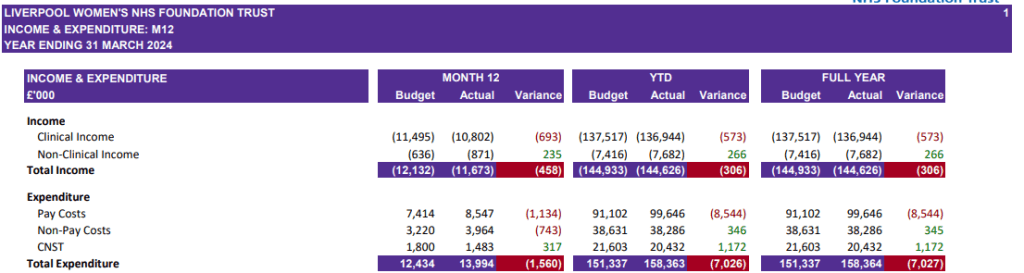
The Board of Liverpool Women’s Hospital has made it clear that safe services require extra funding. We demand that this money be provided.
Liverpool Women’s Hospital has a grave shortage of funds for crucial services. The fault for this lies with the last four governments but especially the current government who are very much aware of the damage they are doing to maternity care. There have been numerous high-profile reports on this, not least of these reports, being the work of Donna Ockendon. Donna Ockendon is now working on another maternity report, this time from Nottingham.
There are five reasons this national problem impacts on Liverpool Women’s Hospital
Healthcare in the UK is badly funded and badly organised, wasting money and resources on privatisation.
Eighty per cent of Liverpool Women’s Hospital’s budget comes through maternity funding, mainly the Maternity Tariff. The maternity tariff nationally is inadequate. No other hospital relies quite as much on maternity funding as the Liverpool Women’s Hospital does.
The hospital is a Foundation Trust, which is an expensive management model for a small hospital.
The model of healthcare from this, and some earlier governments, saw hospitals as competing businesses rather than a cooperating system. A small hospital could not thrive in such a scenario. This model is changing but the new ICB model also poses serious problems. We call for a return to the original Bevan model of the NHS, where a fully funded national, publicly owned and delivered health system based on cooperation not competition, sees ongoing improvement in maternity services.
Liverpool Women’s Hospital lacks crucial services because of these funding issues.
Our petition, now with more than 40,000 signatures online and more than 20,000 on paper, says “Save the Liverpool Women’s Hospital. No closure. No privatisation. No cuts. No merger. Reorganise the funding structures not the hospital. Our babies and mothers our sick women deserve the very best.”
Our campaign wants to improve the whole maternity journey for women and babies, every aspect of it, safety, respect and celebration of birth. We campaign for maternity everywhere in the UK. It is not possible to solve the fundamental problems of Liverpool Women’s Hospital without solving national funding and staffing issues but we can stop projects that make things worse. There are many and detailed reports about how the experience of maternity has worsened in recent years.
Our campaign wants midwives, nurses, obstetricians, CSWs and other staff to feel safe, and respected at work, free from undue stress, with access to ongoing education and training and with the opportunity to eat well, go to the toilet and have proper breaks at work, both day and night.
Our campaign wants to see maternity well-funded and protected from privatisation and protected from trendy, untried innovations.
We want those running maternity services to remember that as medics they have a duty of candour, to tell the truth about funding and staffing issues.
Since 2010 there has been damage done to all maternity and women’s health services nationally, and Liverpool Women’s Hospital has not escaped that damage. Underfunding, understaffing, and lack of key equipment and services have all had an effect.
We campaign for the whole of the NHS, not just maternity
Why do we want a women’s hospital?
We want excellent healthcare for women and babies. Our babies, our mothers, deserve the best. It is that simple.
However, that is not what this and previous governments have provided. We want to keep the focus on the needs of women and their babies. The scale and depth of the maternity scandals in other big multi-site, multi-specialism hospitals is a testament to how important this is. There have been many prestigious reports published about how bad the damage has been to Maternity and to women’s health. One in seven maternity units have closed during the period of cuts and this wave of closures has not stopped.
Cuts in NHS funding are part of the Austerity project. Austerity cuts have hit women and children and the working class very badly whilst the rich get ever richer. In this situation, we must protect what we have and not let it go. Maternity in England has suffered grievously under austerity. Maternal deaths are the highest in 20 years.
Ockendon’s reports have painted a grim picture of the failings of the system. Our campaign has fought hard for national as well as local funding and held two conferences on this matter. None of these hospitals involved in the big maternity scandals were standalone Women’s Hospitals like Liverpool Women’s Hospital and their failings were not blamed on being a standalone Women’s Hospital. Yet the standalone character of Liverpool Women’s Hospital was what all the case for change was based on.
When Donna Ockendon did her first report on the Shrewsbury baby deaths it was revealed that many hospitals providing maternity care did not even have a member of their board charged with Maternity care, so board papers could go with nary a mention of maternity. Bad Care Quality reports were not given due consideration by the Shrewsbury board.
“The Trust board did not have oversightor a full understanding of issues and concerns within the maternity service, resulting in neither strategic direction and effective change, nor the development of accountable implementation plans.“
Most of Liverpool’s babies are delivered at Liverpool Women’s Hospital. The hospital delivers roughly 8,000 births per year. The Hospital also provides maternity care from a wider region for complex pregnancies and very premature or very sick newborn babies. It is a Maternal Medicine Centre, one of three within the Northwest Maternal Medicine Network. The Hospital also provides Gynaecological treatments, Fertility services, Genetics services, Cancer care and termination of pregnancy, when that requires surgical intervention. The hospital also has a reputation as being a safe and caring place for women (though that has faltered a little in recent years). For all these reasons, Liverpool Women’s Hospital is considered to be especially important by the people of Liverpool and beyond, but not considered so important by the Government or NHS England. For the last nine years, the future of Liverpool Women’s Hospital has been under ongoing threat.
We ask the people of Liverpool to continue to support our campaign for a fully funded, fully staffed, fully equipped hospital on the Liverpool Women’s Hospital Crown Street Site and for a fully funded, fully staffed, publicly owned and delivered national health service.
The National Theatre is showing Nye, a play about the founder of the NHS, seventy-five years ago. The play is being live-streamed to many cinemas. So it’s appropriate for us to republish a local leaflet written advocating a return to the system of healthcare designed by Nye Bevan.
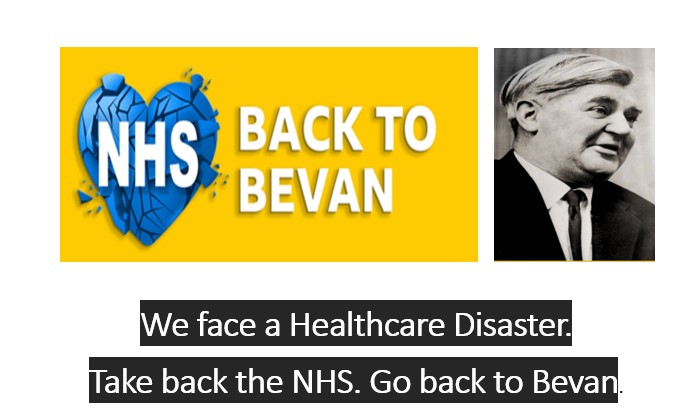
We face a Healthcare Disaster.
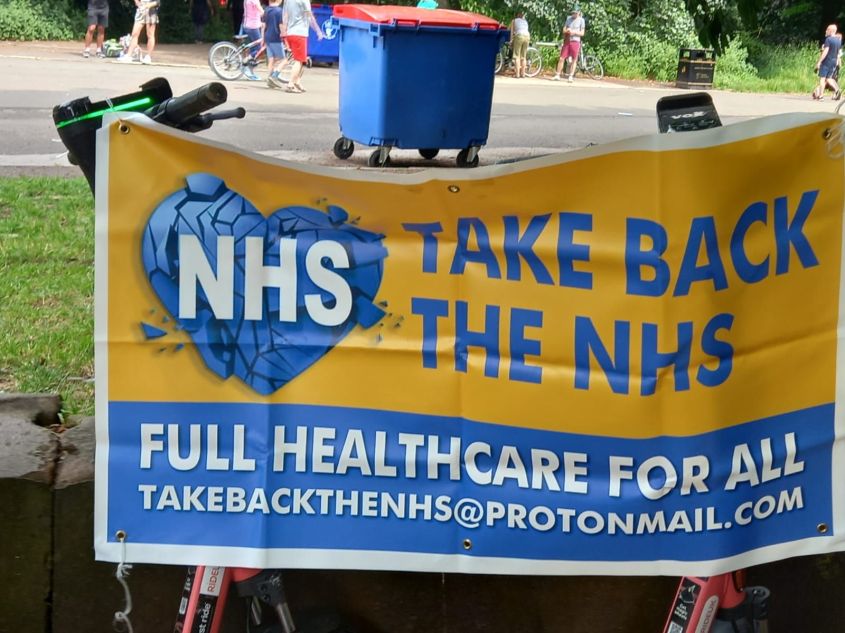
Take back the NHS. Go back to Bevan.
We cannot wait as the damage in healthcare escalates still further.
Nye Bevan, in the post-war Labour Government, set up a world-beating healthcare system that served us well for decades.
It was a national service – not a business. It was publicly provided by the nationally owned service – it responded to need not profit.
It provided all the treatments when we needed them – including GPs, mental health, elder care and dentistry. No to waiting lists! No to profits for private providers. It was a Health Service open to every human in the country – no migrant charges. The Health Secretary then was legally obliged to provide health care but no longer. It was free at the point of need – no charging.
Bevan’s system had capacity; it did not run at a panic level like today.
The Bevan Model of Universal Public Health care is cheaper, more cost-effective and more equitable than the vandalised service we now have. The for-profit business model costs more and delivers less.
We need immediate action on maternity, mental health, the GP service and dentistry. Action in hospitals, sort out budgets. More beds in the NHS not fewer. Invest, do not cut.
Restore the Public Health System. Plan effectively for epidemics and natural disasters
Address Women’s Healthcare needs. When the NHS started, women’s health improved; now under the semi-private system, it is declining. Even Maternity is unsafe.
Everyone working in health should be employed by the NHS on proper terms and conditions – no outsourcing, no commissioning. Demand good pay for all NHS staff – an immediate pay rise. Respect the staff. End bullying and lying to them. Win back staff who have left in disgust. Plan the workforce training.
We do not want and cannot afford the big corporations’ involvement in our NHS. Abolish the so-called Integrated Care System where all sectors are incentivised to cut and deny care. Bring back national, publicly owned and provided, comprehensive healthcare, free at the point of need.
Beware the corporate health lobby groups in all the political parties. Human needs should dictate our level of care, not Big Business and its failed ideology. The NHS privatisers are like vandals smashing and grabbing profit, albeit hidden behind a veil of lies and public relations gobbledegook.
End all privatisations: outsourcing, commissioning, reliance on private companies’ reports, staffing agencies, population health management, the rationing and denying of services, running down services, and using charities as substitutes for real NHS capacity.
Power concedes nothing without a demand. The NHS was a great social victory won by the generation that defeated Hitler. Let us make our demands as loud and long as those of our grandparents. No one else will save the NHS. It must be a mass campaign.
If the reader wants to read more about Bevan please read, a chapter from Nye Bevan’s book.
Organise in each ICS area to challenge the cuts, challenge the syphoning-off of our healthcare finances by private companies. Mobilise the unions and the communities. Demand world-class publicly owned and provided social care. Renationalise the NHS! Lobby all MPs and Councillors
This leaflet was produced by Cheshire and Merseyside Coordinated Healthcare Campaign, which involves local Trades Councils, Union branches, Health Campaign Groups, including Save Liverpool Women’s Hospital, Defend our NHS, Keep our NHS Public, (both Merseyside and Cheshire) and individuals. We work with many other campaigns nationally.
This blog post comes from a speech at a meeting held at the Quaker Meeting House Liverpool on Monday 11th March, 2024, for International Women’s Day. Other speeches were about child poverty, NHS privatisation, the situation in the big hospitals in Liverpool, and the situation for Hospitals in Gaza. We will publish those speeches too.
Mrs Pankhurst ended a famous meeting with the words “I incite this meeting to Rebellion!”. We follow in the footsteps of campaigning women over the years as we fight for maternity care, for the NHS, for women’s rights and against poverty.
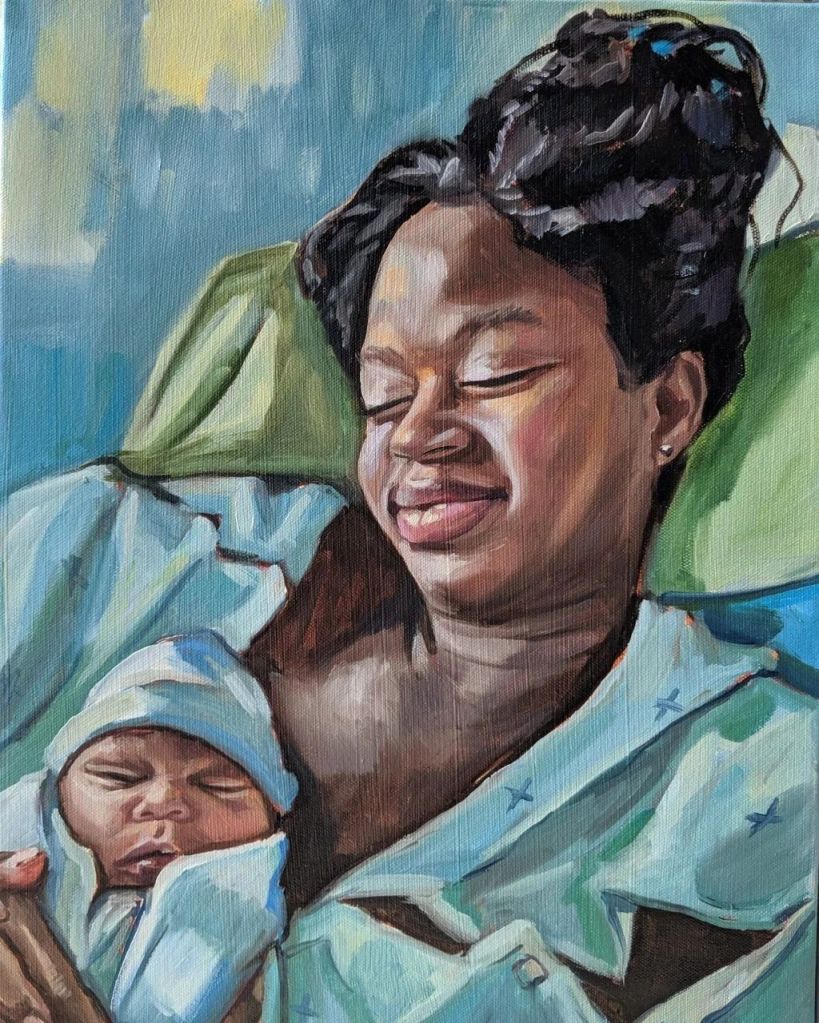
We are campaigning for safe, respectful healthcare and maternity care for all women and babies. Giving birth can be a truly wonderful experience.
The wonderful artist amandagreavette shows us how wonderful birth can be.
“We meet here in Liverpool to mark International Working Women’s Day 2024. We meet to salute the women who have fought and won much in the past, to send sisterly greetings to all women around the world especially to those in struggle, those in war, and those damaged by the climate crises.
I want to talk about women’s health and maternity, locally, nationally and internationally. No one is safe until we all are safe. Change is possible. In living memory, we have seen huge improvements nationally and globally. In more recent memory we have seen significant damage done to these services again both nationally and globally, but the damage is most severe where government policies of Austerity or “Restructuring” have been imposed. Restructuring is what Austerity is called in the Global South when countries are forced by the IMF to cut services because economic problems drive them to turn to it for aid.
“Between 2014-18 resources spent on public services dropped by more than 18 per cent in Latin America and the Caribbean, and by 15 per cent in Sub-Saharan Africa. Looking ahead, the International Monetary Fund (IMF) predicts that this trend will continue in all regions.”
It is always the women who carry the weight of such cuts and this is reflected in maternal deaths and infant mortality. Sadly, for the UK, we have experienced some of the worst damage amongst the richest countries. But as Governments imposed that damage, governments could repair and restore that damage. Meanwhile, it is our babies, our women who pay the price.
I will look in a minute at the most damning figures, those showing the deaths of mothers and of babies. We mark these deaths with respect and will both mourn and organise to improve this situation.
Our World in Data says “For most of human history, around 1 in 2 newborns died before reaching the age of fifteen. By 1950, that figure had declined to around one-quarter globally. By 2020, it had fallen to 4%. But while humanity has made much progress, there is still a lot of work to do.”
Look at the figures for infant mortality at birth. Twenty-seven other countries have better figures than ours, yet ours is one of the richest countries globally.
“The UK is fifth from the bottom among 27 European countries for infant mortality. The rate stalled in the UK between 2013 and 2018 at 3.9 per one thousand live births. In England and Wales, the rate is more than twice as high in the most deprived areas (5 per one thousand) compared with the least deprived areas (2.7 per one thousand).” (4 Mar 2020)
The latest figures from MBRRACE-UK (who report on maternal and baby deaths in the UK over time) show that the number of women dying in the UK during or soon after pregnancy has increased to levels not seen since 2003-05.
In 2020-22 there were 13.41 deaths in every 100 000 maternities, significantly higher than the maternal death rate of 8.79 deaths per 100 000 in 2017-19 and similar to 2003-05 (13.95 per 100 000).
We do not accept the term “cultural bias.” It is racism and it must end. We recognise the increased risk for Black and Asian women in the maternity services as they are working today. We mourn these sisters and we will fight on to repair these terrible damages. We will be difficult to the government and to the NHS bosses in their names.
Internationally
Globally, every day in 2020, approximately eight hundred women died from preventable causes related to pregnancy and childbirth – meaning that a woman dies around every two minutes.
South Sudan had 1223 deaths per 100,000 women giving birth.
Belarus has 1.1 deaths per 100,000 women giving birth.
The UK has 13.41 deaths in every 100,000 women giving birth.
“In 2020-22 there were 13.41 deaths in every 100,000 maternities, significantly higher than the maternal death rate of 8.79 deaths per 100,000 in 2017-19 and similar to 2003-05 (13.95 per 100,000).”
Statistics released by MBRRACE-UK show that the maternal death rate in the UK has increased significantly over the past few years. Between January 2020 and December 2022, the rate was 13.41 per 100,000 maternities, up 53% from 8.79 per 100,000 in the previous three-year period from 2017-2019. This rate is the highest it has been in almost 20 years.
The situation is so serious that parents of babies who died or who were injured in maternity care are demanding a public enquiry. There have been many detailed and authoritative reports, often commissioned by the Government or by Parliament, on maternity services, but the government response has been appalling.
Maternity safety matters; building national links.
We are working with other campaigns including Keep our NHS Public with whom we have produced this fact sheet. We would be delighted to hear from other campaigns with whom we have not yet made contact.
We say that this government does not care about maternity deaths, does not care about the poor experience of giving birth, that poor funding and poor staffing numbers inflict on women. The government does not care about, indeed prides itself, on women’s poverty. Let me emphasise that. This is not governmental ignorance. The government are not ignorant of the damage they have done and are doing. It is a conscious choice. The Government have all the reports, they commissioned some of the reports, they have the evidence and they choose not to act to ameliorate the situation. It prefers to serve the very rich. It would rather pay damages for babies damaged at birth than sort the situation out. The cost of compensating mothers and their families for harm caused by NHS maternity services is more than double what the health service spends on such care each year, analysis shows.
This situation is manageable, and it could be changed. Money invested in patient care and staffing leads to a richer economy, not a poorer economy.
Change is possible and change is necessary.
While we mourn our dead, it is also important to consider the lesser injuries, and the other bad experiences women and babies are enduring because of the state of the service and because of poverty inflicted by Austerity. These damages are real and important whether we are talking of physical or mental injury. This situation could be repaired. Neither deaths nor lesser injuries are inevitable.
Save Liverpool Women’s Hospital Camapign is far from alone in calling out the damage being done. There are a host of charities and the Royal College of Midwives making the same point.
Birte Harlev-Lam, Executive Director, Midwife at the RCM said: “Women and their safety are still not being put at the centre of care. If this were the case, we would see significant amounts of additional funding and real efforts to support, retain and recruit staff, and we are not. There is a black hole in the centre of our maternity services where more money and staff should be. I have no doubt this is undermining maternity staff efforts to deliver the safest and best possible care for women and their babies.
Some avoidable maternal deaths and maternal injuries are due to NHS understaffing, under equipment and understaffing. There is another factor in these deaths. The extreme inequality in the UK, and the cruel impact of austerity on women and on women’s health, on children and on children’s health arising from government policies and priorities, also affect maternal and infant mortality. Poverty causes extreme stress, poor nutrition, poor housing and poor health. Poor mental health after birth leads to deaths, especially amongst the poor, and Black women, yet maternal mental health services are badly damaged, and health visitor numbers have not recovered from the pandemic.
The impact on staff wellbeing, on workload and staff retention is also important. Working under constant pressure is extremely damaging to the health of staff. Neither giving birth, nor having treatment for Gynaecological issues, is routine or ordinary. It is staff vigilance that leads to safety. How someone can be vigilant at the end of a very busy 13-hour shift is beyond me. Many people working in the NHS do not feel free to speak out, and those running the show, plod on making the cuts or CIPS without informing the public of the damage being done, nor describing the damage done in earlier years of austerity.
“This is all having an impact on the safety and quality of care for women and also means many women with more complex needs such as mental health problems are not getting the care they need and deserve. This is also leaving staff exhausted, overwhelmed, fragile and feeling massively undervalued” warns the Royal College of Midwives.
Maternity is underfunded and hospitals are not even spending what the government allocate to maternity (according to the RCN) because they can’t balance their books without using that money for other things.
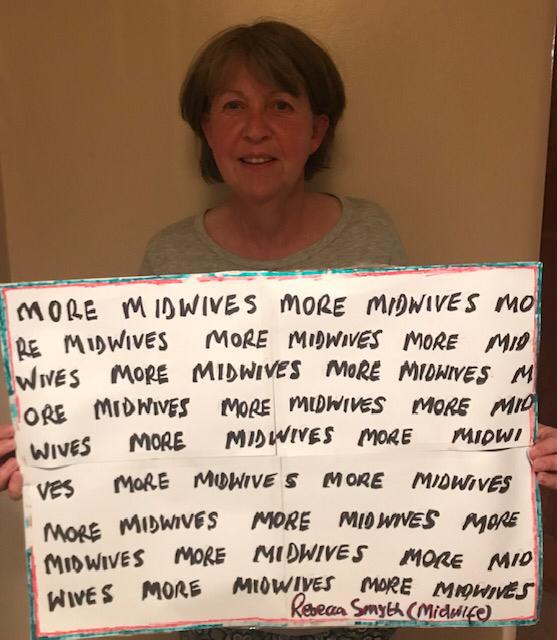
There is an ongoing shortage of midwives. The BBC reports a shortage of about 2,500 midwives on the ratios that the Government describes as safe for maternity care. We would say that these Government figures for provision of midwives are themselves too low for what is required. So, 2,500 is the minimum extra required.
Our struggle is part of the campaign to restore the NHS, to renationalise it, to turn it once again into a publicly delivered, comprehensive, national service, to make it safer for women and babies. Our campaign is part of the campaign for safety in maternity, part of the campaign for better pay and conditions for staff. It is also part of the campaign for women’s rights, and intrinsic to the rights of women are the rights of the child.
Inequality and poverty affect women’s health and the health of their children.
Campaigning in the street
There are fourteen million children (aged up to 18) in the UK. Reports this week drew out the terrible extent of childhood poverty in the UK. Meghan Meek-O’Connor, senior child poverty policy adviser at Save the Children UK, said: “Today 4.3 million children are being failed. It is an outrage that 100,000 more children are in poverty – they are being forgotten.
Britain in the 1970s was one of the most equal of rich countries. Today, it is the second most unequal, after the US (27 Nov 2023).
Stewart Lansley, the author of The Richer, the Poorer and The Cost of Inequality, said it was “an acute paradox of contemporary capitalism that as societies get more prosperous, rising numbers are unable to afford the most basic of material and social needs.”He also said: “In Britain, child poverty has doubled in 40 years. Yet few modern tycoons go without private jets, luxury yachts, even private islands.”
“Inequality has no more powerful expression than in children’s health, and children in our region get a particularly bad deal,” before pointing out that Liverpool’s infant mortality rate remains above the national average and that, every year, around twenty-six infants in the city do not reach their first birthday.
They reveal how poor health in mothers of the next generation can lead to ingrained health inequalities, adding: “Babies born small or early because of poor maternal health have the worst possible start to life and a health trajectory which culminates in a shorter life expectancy and more years lived in ill health.”
For those babies who survive, there is an uncertain future ahead with current trends predicting that by 2040, Liverpudlians will live more than a quarter of their lives in ill health.”
Keeping kids in uniform and shoes is hard enough.
Our campaign will fight on about this as well as fighting for the restoration of the NHS.
Poverty amongst women.
“Women living on low incomes in England are at increased risk of experiencing poor health during pregnancy. Our recent review of the evidence found that women and babies living with socioeconomic disadvantages had a 40% increased risk of worse pregnancy outcomes including stillbirth, low birth weight and babies being born early. Women may also experience mental health issues following pregnancy, birth or in the first year after birth. Women with lower access to financial, educational, social and health resources engage less in care during pregnancy – called antenatal or maternity care.”
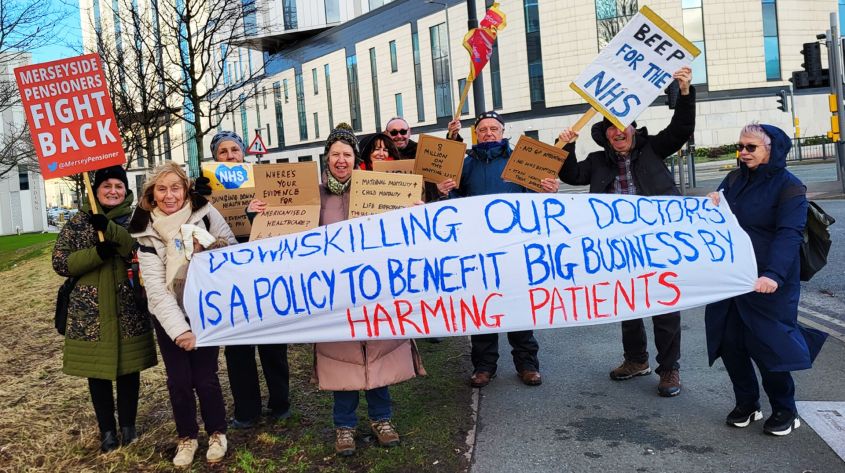
Mersey Pensionersfighting for fully qualified staff for all.
Save Liverpool Women’s Hospital Campaign started in 2015 to try to stop the closure of Liverpool Women’s Hospital. The assault on the NHS and on working class living standards was well under way by 2015 and closing one more hospital was small beer to the bureaucrats of the NHS and our city council at the time. We had already seen the scandal of Prince’s Park Medical Centre (See this article or this book for the history) and the fight to stop PFI in this city, so we were able to mobilise for Liverpool Women’s Hospital and to build our petition and awareness in the city.
Liverpool Women’s Hospital is still here, still short of money and staff, and still threatened with merger, dispersal, and de facto closure. We will publish a more detailed report on the situation for Liverpool Women’s Hospital shortly.
We saw enormous improvements in infant mortality and maternal mortality following the introduction of the NHS. We can see such improvements once again if the NHS is reinstated.
So, we will persist, as women do.
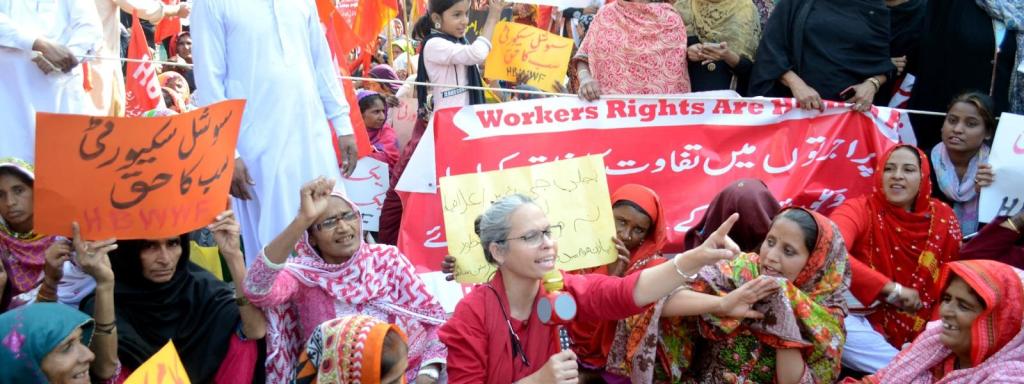
We send special greetings to the Home Based Women Workers’ Trade Union of Pakistan with whom we have exchanged greetings each year of our campaign. They have built a powerful trade union amongst women who work at home in various trades. They inspire us to continue in our campaign. We send greetings to the women working to unionise the uranium mines in Namibia. We send greetings to women around the world fighting for better maternity care.
As always we look to how women in the past have won gains in rights and services, we remember the women who fought for the vote, the women who fought for baby clinics and maternity care and contraception here in Liverpool, the women of the sixties and seventies who fought for women’s rights in childbirth, for those who fought for women to be able to choose contraception without their husbands permission, for abortion rights, for equal pay, with a special shout out to the machinists in Fords In Speke, for women’s economic independence, for the end to the marriage bar in teaching and other jobs for the fight for the Women’s Hospital in London and many more
We campaign, we organise, we agitate, we consult, we build links, we challenge and we demand. We can win but only as we grow ever bigger.
Save Liverpool Women’s Hospital for all our mothers, sisters, daughters, friends, and lovers and for every baby.
Please support our campaign Please sign our petition ( unless you have already signed)
Save Liverpool Women’s Hospital is part of a coalition of campaigns fighting to Restore and Repair the NHS, and to win full staffing (with good pay, conditions, and qualifications) to improve the health of our largely working-class communities in Cheshire and Merseyside. One of the tasks we do together is to monitor the activities of the ICB, the so-called Integrated Care Board which replaced the NHS in the 2022 Health and Care Act. We have to resist the vicious cuts being made and challenge the damage being done.
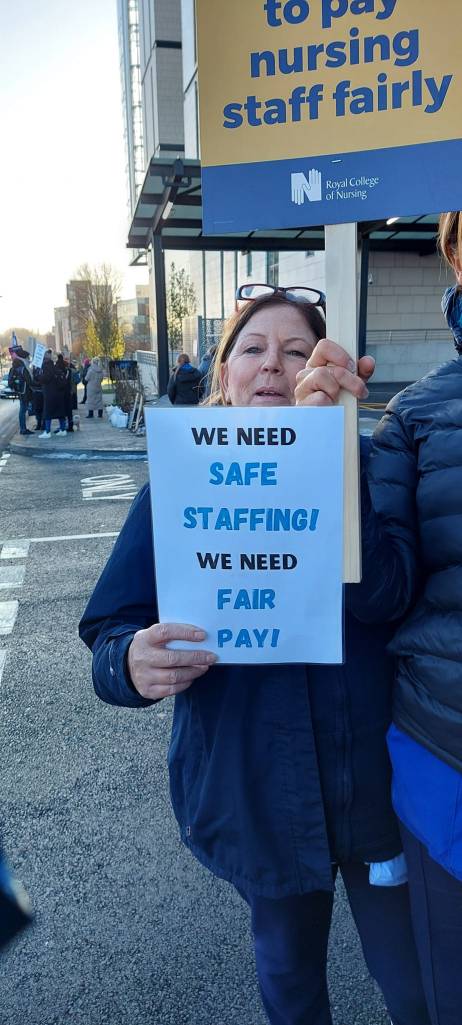
Arrowe Park Hospital Clinical Support Workers on strike for fair pay and equality with other hospitals
The Cheshire and Merseyside ICS is meeting in New Brighton on 25th January, from 9.00am to midday. People can ask questions from 9 until 9.30
Location: Tower Room, Floral Pavilion Theatre & Conference Centre, Marine Promenade, New Brighton, Wallasey CH45 2JS.Free parking opposite the Fort Perch car park.
Even before we read the paperwork for the ICB meeting, ( It should be published this week) we know patients and staff face serious issues and we will not sit back and let our services be reorganized out of existence. We will though post a comment about the issues when the paperwork is published on their website.
These problems are all solvable if privatization is withdrawn and we revert to a public service healthcare model based on publicly funded and publicly delivered care as the NHS was founded. Fortunately, the original NHS model of healthcare happens to be the most cost-efficient model of care. The privatization and cuts that have plagued our NHS for two decades have robbed us of what was judged the best healthcare in the world in 2014 by the Commonwealth Fund, a US charity that surveys health systems each year.
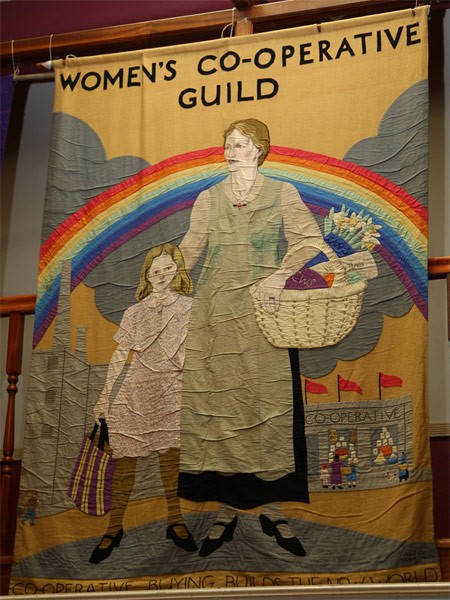
We work to restore the NHS like the Women’s Cooperative Guild fought to found universal healthcarea century ago. Remember that they won!
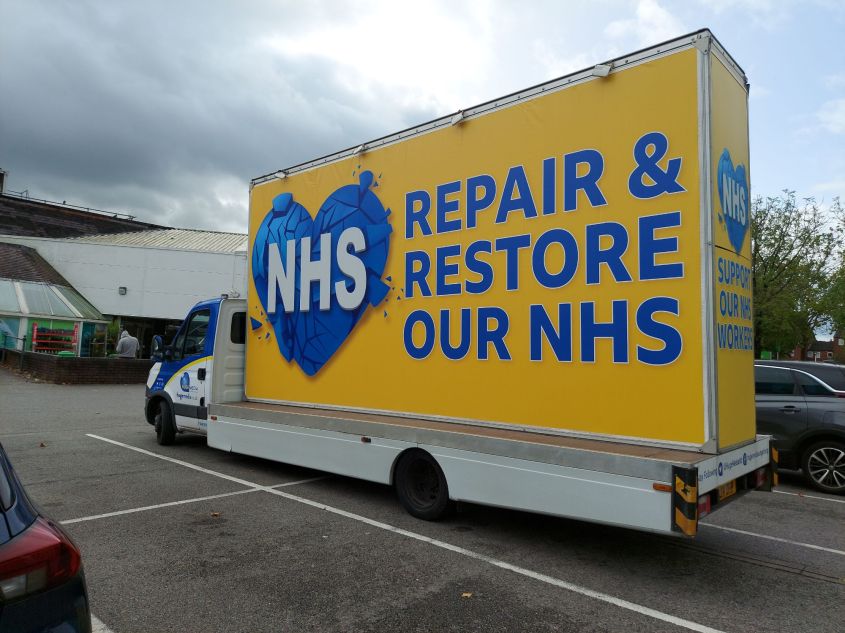
Yes, it will require investment to Repair and Restore the NHS. However, that investment will repay itself in the health of the population and in enriching the economy.
Please tell us what the key issues in healthcare are for you. These are some issues we want to highlight ahead of the ICB meeting., but you may have issues we don’t yet know about.
Do come along if you are free on the 25th of January to this meeting with your questions and /or to support the campaign.
These are healthcare issues that we know are facing us in Cheshire and Merseyside healthcare.
Deeper privatization and structural change to allow such privatization. It is now even easier for the ICB to give contracts to private companies without going through public procedures. GP practices can be bought and sold. See below. NHS campaigners are monitoring how much ICB spends is given to big corporations. For more information on just two companies see this. Privatization means not only does our healthcare have to pay profit on top of cost but the companies are, by law, aiming to make the the highest profit, not providing the highest care, and each company is likely to be taken over by another company particularly hedge funds or the huge US health corporations. Privatization of public services is a disaster.
Reduction of services. The NHS /ICB has fewer beds and fewer doctors per head of population than comparable countries. The Kings Fund wrote in a comparison study of health care in advanced economies”The UK also has fewer hospital beds; 2.5 beds per 1,000 people, compared to an average of 3.2 beds per 1,000 in our basket. Again, fewer beds are not necessarily bad – this could reflect shorter hospital stays – but the high occupancy rates of beds in the UK (88 percent in 2022/23, above recommended levels, and third highest in our basket) implies there is a shortage.” Local hospitals have been way above 88 percent bed occupancy this year. The Royal College of Emergency Medicine said the huge loss of beds since 2010-11 was causing “real patient harm” and a “serious patient safety crisis”.“Since 2010-11 the NHS has lost 25,000 beds across the UK, as a result, bed occupancy has risen, ambulance response times have risen, A&E waiting times have increased, cancelled elective care operations have increased.“
Greater problems with underfunding. The extent of Cuts ( CIPs) is dreadful, especially in this time of high inflation. Hospitals are given a budget by the ICB and have to show where they are going to make”Cost Improvements”. Reducing the service, though, is part and parcel of the ICS model imported from the USA. Each hospital is expected to make CIPs/cuts of about 5%. These are utterly unrealistic without causing still more preventable deaths, and the rules are saying the cuts must be replicable next year too with more cuts again. The NHS is underfunded and the strikes have cost money. The government could have settled the disputes for much less than the disputes have cost, but still refused to settlethe disputes or to fund the costs to the hospitals. This all means longer waiting lists longer queues in Accident and Emergency and longer waits for ambulances. The BMA said last year“ Between 2009/10 and 2021/22, the cumulative underspend – the difference between what funding would have been if historical growth rates had been maintained, and what was actually provided – reached £322 billion in real terms.“
The introduction of physician associates and other less qualified roles to replace doctors’ roles. https://www.bma.org.uk/bma-media-centre/bma-calls-for-immediate-pause-on-recruitment-of-physician-associates Although some PAs have been in place for some time the government is bringing in more lower-skilled staff rather than train and pay doctors. We have seen the growth of other roles in General Practice. but this has not solved the problems. Pharmacists have proven useful but even The safest system is for patients first to see a qualified physician and then to be referred to a nurse or other health professional. When we go for treatment we need to know how qualified the member of staff is. There is a consultation from the British Medical Association that you can take part in here. Margaret Greenwood MP for Wirral West spoke in Parliament about this. Her contribution can be found here.
Our people in our working-class communities already die too young as shown in this report from Liverpool City Council. This class divide in health care is replicated across Cheshire and Merseyside with huge differences in life expectancy and life expectancy in good health between the rich and poor. The differences in health between different areas across Cheshire and Merseyside are stark and heartbreaking but we want better services for people in Walton and Woolton, for Crewe and Macclesfield the poorer and better-off areas of Cheshire and Merseyside. This country can provide far better healthcare for all. Our Government chooses not to do so. The slightly better-off communities are not the cause of the extreme poverty that has returned to this country.
NHS Staff pay and conditions. Our area has had the greatest involvement of healthcare workers in industrial action. They deserve our full solidarity and they still have not got a fair deal. Fair pay and good working conditions for staff at every level are requirements of an effective health service. nationally 112,000 vacancies are unfilled. For more details on staffing see this.
A separate dispute at Arrowe Parke Hospital over back pay and grading is dragging on, with 100 or more pickets out in the cold winter. This strike is making history. The courage and determination are a model for others to follow.
Meanwhile, Centene the US health corporation is selling 60 GP practices to another company! HCRG is the entity that replaced Virgin Health when 75% of the shares were bought out in 2021 by Twenty20 Capital, which is a British-owned private equity group. So our GP practices are now at the mercy of the market! ( Thanks to research from Note by Carol Saunders (Tower Hamlets KONP & NELSON)
The situation at Liverpool Women’s Hospital continues to cause concern. It is part of the national maternity scandal, although Liverpool Women’s is fortunate to have a full staff of midwives, albeit as measured by the government’s meager staffing levels. We need more midwives but are very pleased to see the new young midwives arrive at the hospital and we hope that they stay for many years. Midwives need respect, good pay, good working conditions, and access to ongoing professional education. The new Chief Executive of Liverpool Women’s Hospital said “.. the organization was well organized, and there were limited opportunities for further internally driven efficiencies to reduce the financial deficit position. Work would therefore need to continue to influence the national maternity tariff and the CNST premium – both significant cost pressures to the Trust.” He also said, according to the December Trust Board minutes, “The RQR meeting had also provided an opportunity for the Trust to outline significant safety issues that required immediate action. This included 24/7 obstetric cover, development of a Medical Emergency Team (MET), blood bank availability, anesthetic cover, and ongoing work on the antiracism agenda.” despite this, the hospital is expected to make significant CIPs( cuts)
Money given for dentistry cannot be spent because of changes to the service contracts for dentists, yet thousands go without. The NHS is on course for £400m underspend on its dental contract!!
Waiting lists. The waiting lists for hospital treatment rose to a record of 7.8 million in November 2023 and this winter has not made things better.
Allowing Palantir access to our most personal data. We are told it is not yet happening here but that train is rolling. NHS is paying the company a huge sum of £480 million for this service which will give the company access to data worth billions and which will further enrich the health insurance conglomerates and big Pharma. They will administer a key system for the NHS, and the Post Office Horizon scandal tells us just how important it is that such systems work well for the users, not those who want to make a profit. For further details on this issue see https://www.foxglove.org.uk/2024/01/11/nhs-federated-data-platform-need-to-know/
Stress and pain for patients and staff are caused by the deliberate policies of this government and all who support NHS restructuring for profit rather than care. We thank the staff who have been the best protectors of our care and point the blame squarely on this and earlier governments.
Pharmaceuticals. Too many patients cannot get the medication they need. Chasing around different chemists has become familiar.” Multinational health corporations are raking in huge profits while demanding the UK’s National Health Service pay high prices for their products. The excessive power wielded by these firms needs curbing if UK health policy is to truly work in the public interest.” says author Nick Deardon. The NHS once had, and could have again, a powerful position in buying from big companies as the world’s biggest single purchaser. The scale of big pharma gives them huge power. There is a powerful campaign being run on this issue which you can contact here
The use of and cost of agency staff is a waste of money. We know that staff sometimes need flexible working especially with the poor level of NHS pay and the huge cost of childcare. The shortage of staff has become another way for big businesses to rip off the health service. In 2017 the government sold off NHS Professionals. The Canary paper wrote at the time“The DoH owns NHS Professionals (NHSP), a private limited company created to supply a bank of over 90,000 medical staff across different NHS Trusts. The flexible arrangements apparently save the government £70m a year in costs while non-government-owned private staffing agencies can be around 30% more expensive.” HCRG, remember them from the private sale of GP practices earlier in the article ( point 8 )? Well, they are one of the agencies cashing in in NHS funds through agency staff.
The Royal College of Nurses reported “Findings from a Freedom of Information (FOI) request to NHS trusts in England expose a total of £3.2bn spent on agency staff by hospitals between 2020 and 2022.…..According to RCN analysis, three-quarters of nursing vacancies in the NHS in England could be filled if the money had been redirected to hiring permanent staff. Cash spent on agencies could cover the salaries of 30,956 permanent full-time equivalent nurses paid at the top of a Band 5 salary (£34,581).