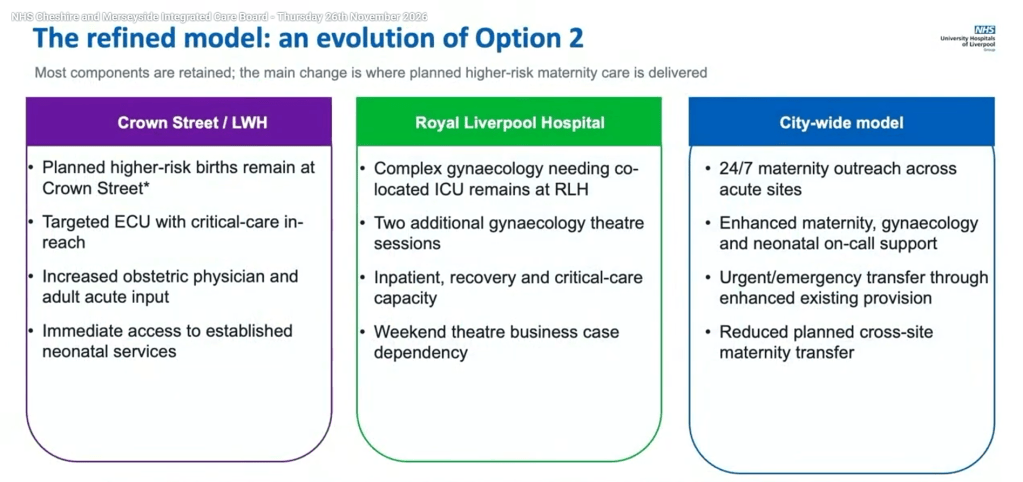
There are new plans for the future of the Liverpool Women’s Hospital (enlarged below for viewing on mobiles)
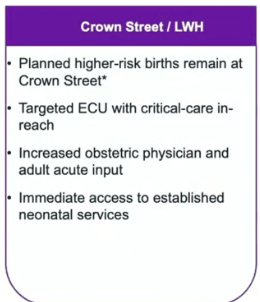
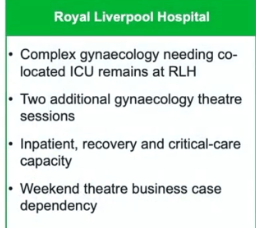
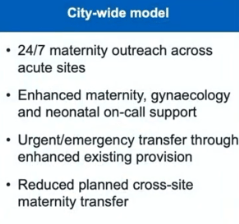
At the November 2026 meeting of the Cheshire and Merseyside NHS Integrated Care Board (ICB), a revised Option 2 for the future of Liverpool Women’s Hospital was proposed. Doctors from Liverpool Women’s and the Liverpool Royal Hospital developed this plan.
The campaigners who were at the meeting (as members of the public) think this is a significant improvement, if it is fully funded and implemented. What do you think? We will organise a meeting to discuss this.
This is the previous Option 2 from January 2026, with Maternity services split between the two sites. We said it was unworkable and campaigned against it.
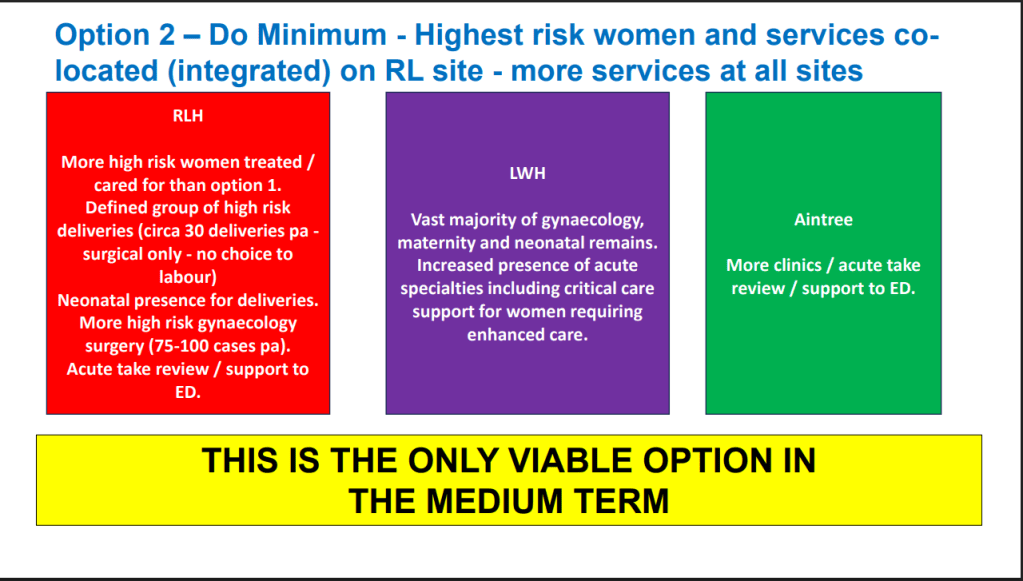
Option 6 (see below) was even worse.
You can see the video of the proceedings at the November 2026 ICB meeting here. The new plan is about one hour into the video. You can see the slide presentation here. If you watch the whole video, the initial discussion is around the earlier plans and the engagement exercise that followed the January plans.
In the questions at the start of the meeting, you will see we challenged the engagement exercise findings and demanded much more effective action on Maternity safety. In a question, we said, “We cite Norway’s record as opposed to the UK. UK women were more than three times as likely to die up to 42 days postpartum as women in Norway, despite the UK having a much larger economy. MBRRACE reports said,
“For every 1 woman who dies, MBRRACE-UK estimates that 100 women experience a severe maternal morbidity or “near miss” event. Based on the 252 maternal deaths recorded during pregnancy or within six weeks after birth in 2022–2024, this equates to roughly 25,200 women experiencing life-threatening complications over those three years.“
An hour into the meeting, doctors from the Royal and the Women’s present a very different, and we think much safer, option.
The New Plans: our summary
This new Option 2 will keep births, neonatal care, and most gynaecology at Liverpool Women’s Hospital Crown Street site, providing better intensive care and better care for deteriorating patients, improved blood services, and more. This, of course, is if the money is provided and promises kept.
There will be no births at the Royal except in a handful of emergency cases.
The plan keeps the long-term aim of co-location. We do not support that. The hundreds of millions of pounds required for a new-build hospital would be better spent on staffing and equipment at the Crown Street Site and providing more operating theatres at Liverpool Royal. The low-rise green site at Crown Street is far better than a high-rise in one of the city’s most traffic-dense areas.
The hospital has also recruited twenty-seven new midwives, which is definitely something to celebrate. We wish every one of those midwives a long and happy career at Liverpool Women’s Hospital. We need you.
The report says that the 24/7 medical emergency team is in place, as is the strengthened anaesthetic team, 24/7 resident obstetric consultant cover, and additional emergency theatre capacity. Blood transfusion improvements are underway, and systems are now in place to recognise patient deterioration.
The Enhanced Care Unit is not yet complete, nor are the enhanced city-wide medical on-call for Gynaecology and Obstetrics, or city-wide Maternity support to other hospitals, but the plans are in place. The full programme will take until 2027/28 to complete, if funds are provided.
Additional Operating Theatre capacity at Royal Liverpool is required, especially weekend theatres. Transfers are still required, though hopefully far fewer.
They say these plans also need public support.
We say that the government must agree to pay for this plan. Given the terrible financial pressure on Liverpool University Hospital, this is not yet guaranteed.
Gynaecology is a crucial Women’s Hospital service and requires serious attention to reduce waiting times and provide additional robotic services. We are pleased to see it has not been separated from Obstetrics.
We would like to hear our readers’ views. We would also like to hear from midwives new and old.
Background Issues
For forty years, the government has said that “Liverpool has too many hospitals” and we have seen many closures. Intense poverty, dangerous work, poor housing, and the needs of the large port drove the need for hospitals. There has been a large push for mergers. Recently, Merseyside and Cheshire have seen more cuts than many other areas. The British Medical Association said earlier this year that “Doctors in Cheshire and Merseyside believe targets imposed on trusts to save money are putting patients at risk and destabilising services”. Of these hospitals, Liverpool University Hospitals NHS Foundation Trust is hit hardest, but these improvements are vital to the plan.
The original proposals
Proposals suggested moving Liverpool Women’s Hospital to the Royal Liverpool Hospital site. The proposals initially implied a new build on the Royal site. New-build hospitals are rare and usually happen only when a hospital is falling down, as at Leighton Hospital. More recently, they proposed moving Liverpool Women’s Maternity to the Royal’s ninth floor. This was the infamous option six.
In January 2026, the ICB published their options for the future of Liverpool Women’s Hospital. They said it was on safety grounds, but the damage that Donna Ockendon’s Shrewsbury report, the MBRRACE report last year, and the many other reports we have collated have described in big general hospitals made us sceptical that safety would improve. We said that the services at Liverpool Women’s Hospital should be improved and that the two hospitals should cooperate where needed.
Their preferred option was a new build next to the Royal Hospital, but they acknowledged that was highly unlikely. So they produced Option 6. They said, “There is no going back from Option 6“; however, the only viable option immediately available, they said, was Option 2.
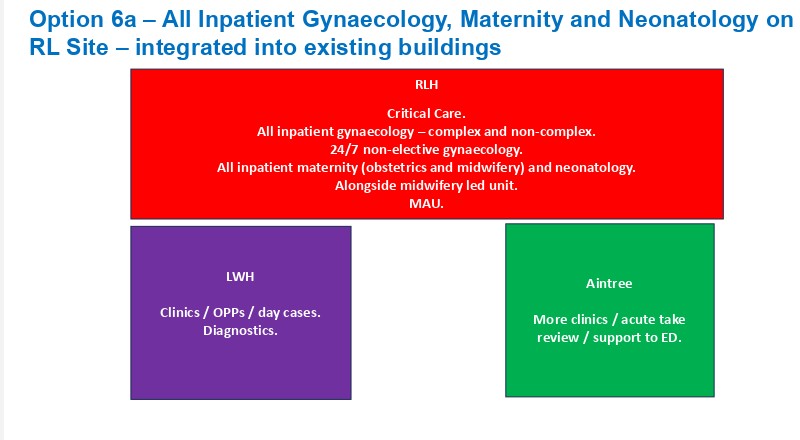
January 2026 options for the future of Liverpool Women’s Hospital
We opposed these proposals and tens of thousands of people agreed with us.
More than 96,000 people signed the petition, with tens of thousands more since January.
Save Liverpool Women’s Hospital Campaign asked people to sign a petition saying.
Save the Liverpool Women’s Hospital. No closure. No privatisation. No cuts. No merger. Reorganise the funding structures, not the hospital. Our babies and mothers, our sick women deserve the very best.
Why is this important?
All the Maternity and women’s health provision of Liverpool was pulled into this one site. It’s a much-loved hospital. It provides crucial specialised care and the daily joy of new babies. #one born. The driving force for closure is a clumsy funding structure, not the needs of women and babies. The wards in the new Royal are not an equivalent.
This is a modern hospital on a good site. Our taxes built it for our babies and for our women.

More than ninety-six thousand people have signed this either online or in hard copy.

Liverpool Royal has great staff, who, like the staff at Liverpool Women’s, we value immensely. We want the NHS to be a great place to work. However, the new building has fewer beds than the hospital it replaced. It does not have enough beds. It has dreadful and increasing problems with corridor care, and long waits to be admitted to a bed. This is particularly harsh on very old patients. Corridor care costs many lives. The hospital has chronic finance problems, thanks to Government cuts, and serves the most deprived catchment area in England.
So, there is no room at the Royal. The campaign to Save Liverpool Women’s Hospital was also concerned that Maternity and Gynaecology would receive less consideration in a busy, overcrowded acute hospital. Ockendon and Amos report such neglect in detail.

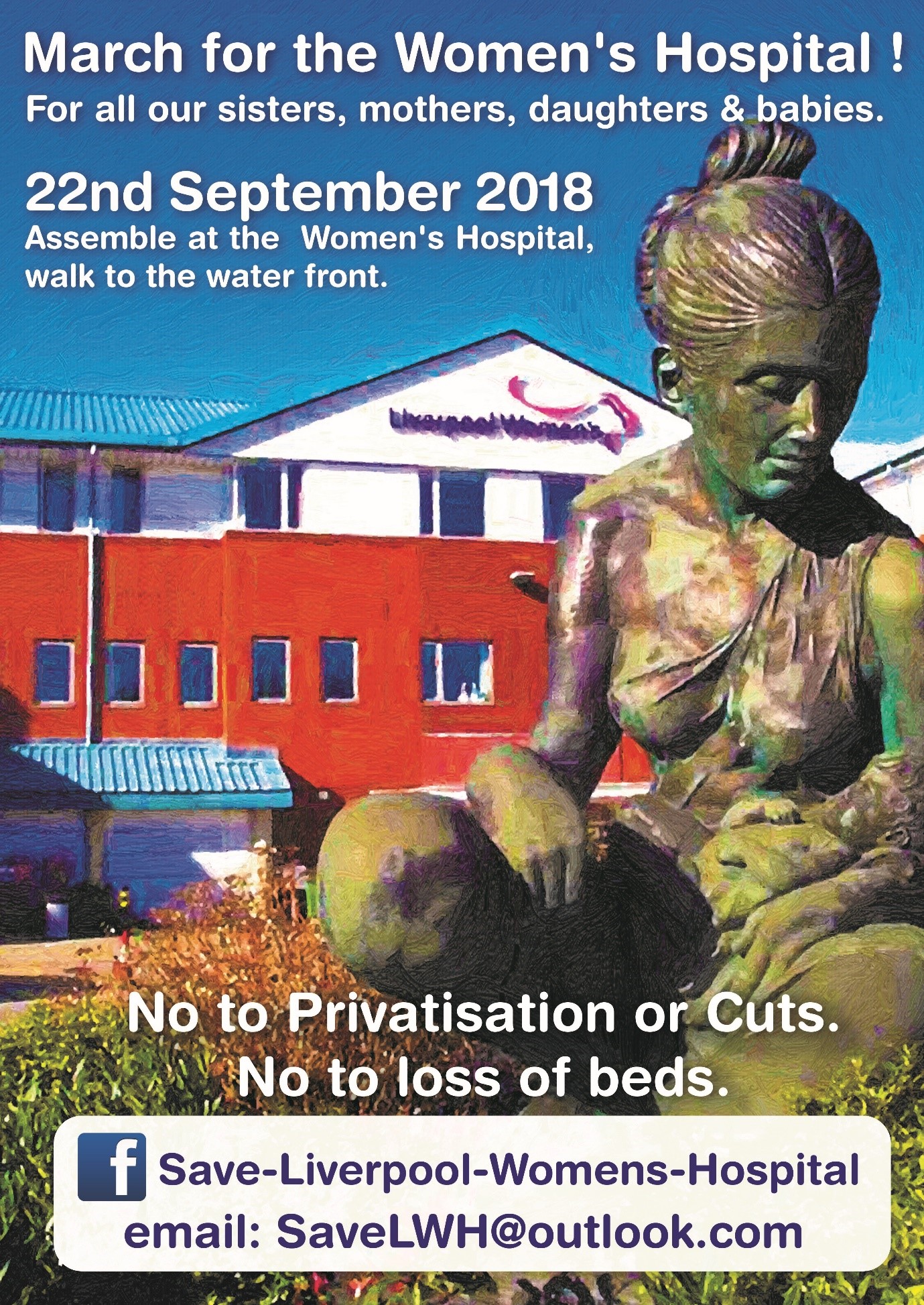
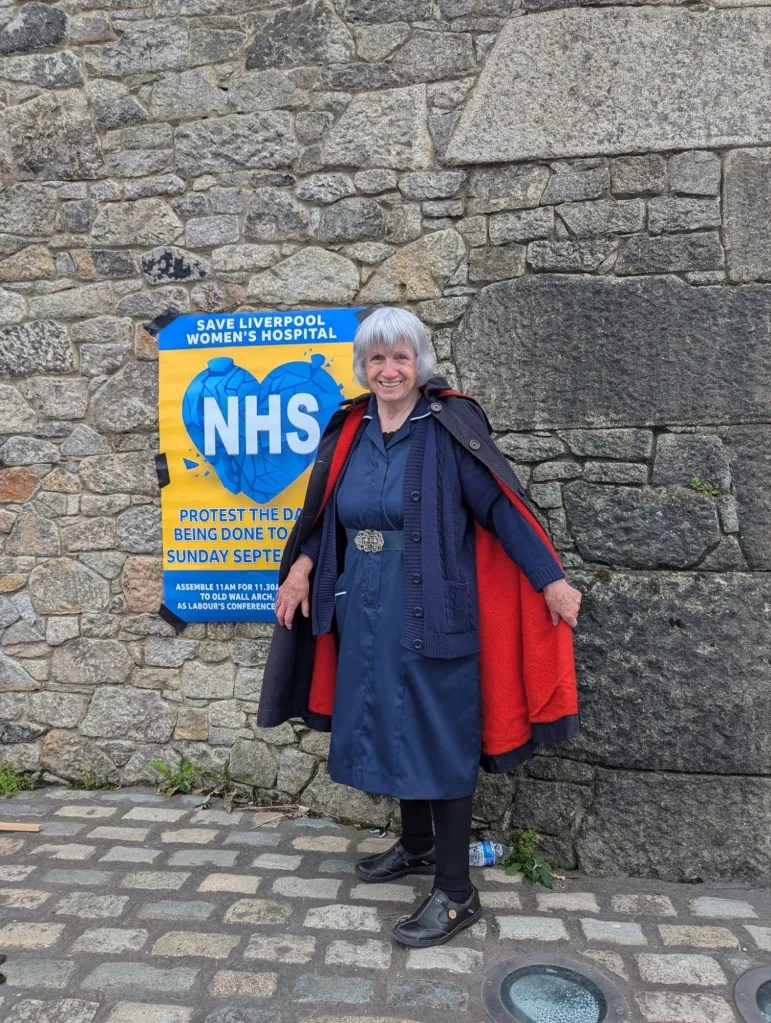
The public campaign. The Save Liverpool Women’s Hospital campaign has included detailed commentary on the situation, stalls, meetings and conferences, leaflets, day schools, speaking at union meetings, and attending every available board meeting for more than a decade. We have also held 4 big demonstrations in Liverpool.
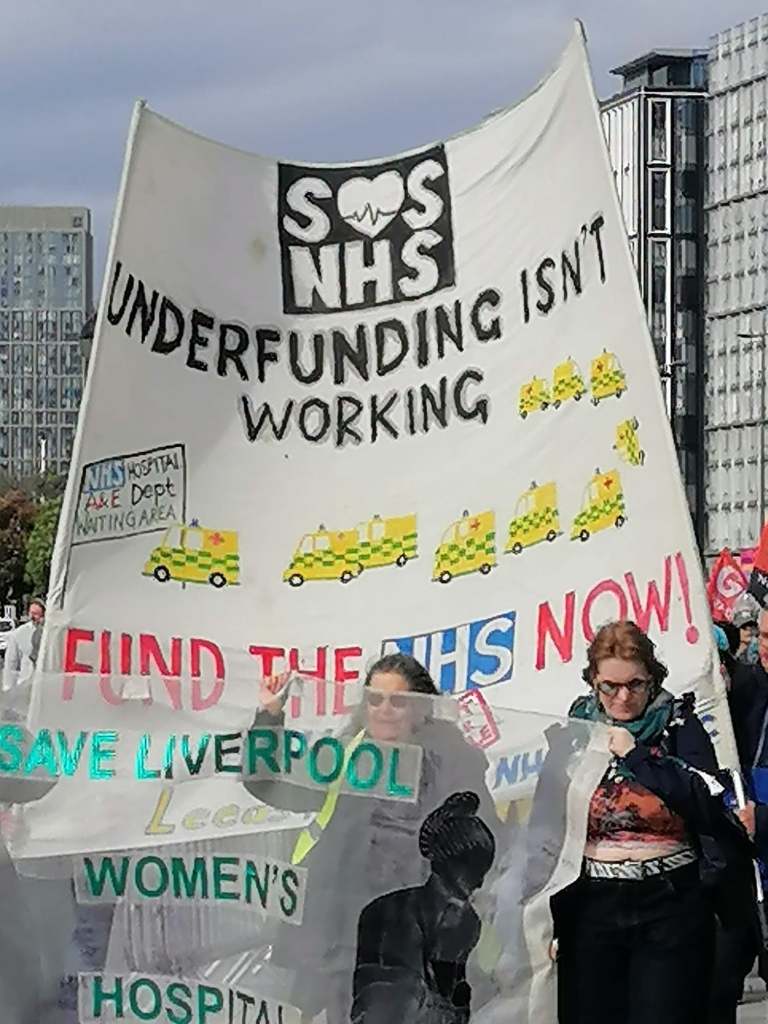
Cuts, Austerity, and privatisation are damaging everyone’s health, but especially that of women. For more than 20 years, the NHS has been run on policies that favour the business model. At a strategic level, the NHS has been advised and run by people trained in the American healthcare model, a model hated in the US and beyond. Huge profits have been taken from NHS contracts and services, and outcomes have deteriorated. The UK has fewer beds and fewer doctors per head of population than other wealthy countries. The 2012 and 2022 Health Care Acts made hospitals function as separate organisations, even competing organisations, “a calamity without international precedent” rather than as a full service, as the NHS was first designed.
The COVID pandemic forced the hospitals to work together in cooperation.
The Liverpool Hospitals group
In 2019, Aintree University Hospital NHS Foundation Trust and the Royal Liverpool and Broadgreen University Hospitals NHS Trust merged to form a single trust.
Later, other trusts agreed to work as a group, which now includes hospitals on 6 sites. Without any public consultation, the Liverpool Women’s Hospital became part of the group. Our campaign was concerned that Maternity and women’s health would be ignored, and indeed at first there was little focus on Maternity or Gynaecology on the joint board. Later in 2026, following the Ockendon and MBRRACE reports, this situation improved.
Ockendon, Amos and MBRRACE
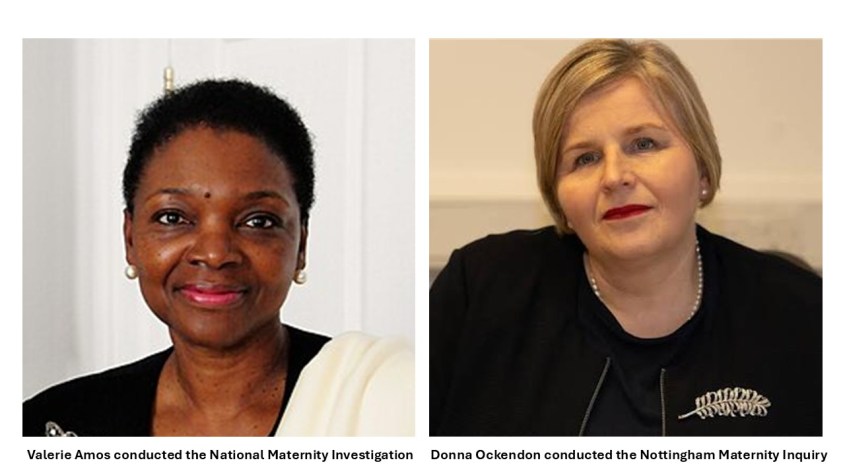
The Ockendon, Amos and MBRRACE reports published this year all make clear the damage to the Maternity service and the urgent need to improve all Maternity care. They demanded that the service should listen to women during pregnancy, at birth and in postnatal services, with stronger accountability, safer staffing, and listening to families.
The government has started some work on this with a ten-point plan including national triage standards. “An additional £41 million was committed to fix urgent physical safety risks – such as ventilation and fire safety – in Maternity and neonatal units.”
This money is not enough to make a significant difference. Funding Maternity well could well save money from the huge damages the NHS pays out for Maternity failings.
“Analysis of NHS figures shows the potential bill for Maternity negligence in England since 2019 has reached £27.4bn – far more than the health service’s roughly £18bn budget for newborns in that time” (Guardian 2025).
Please help us. We need to know what people think about this alternative plan, and how we can put pressure on the government to fund our NHS well. But the fight for women’s health care, for safe Maternity care, and the health of all our babies is far from won.
The future of the Countess of Chester Maternity service and East Cheshire Maternity was raised in the context of a list of Maternity hospitals serving less than 2000 births a year that should be closed. We asked for reassurance on their futures but were told they would be considered in a review of all Cheshire and Merseyside Maternity services shortly. Please help us follow this issue and make it clear we will not accept such closures.