Author: Mary

Encouraging and collating discussion about workers' struggles and struggles for socialism locally, nationally and internationally

The impact of Corona Virus on women

The pandemic has been very hard on all of our families. We will touch on the impact of the pandemic and the many specific ways it has affected women. This includes women as patients, as healthcare workers, as the bereaved, as pregnant women, as mothers and carers, as workers on the front line, as disbled people, as young women, as students We have written earlier about the need to make the UK a safer place to be born and to give birth.

More than 124,000 people have died in the UK from Covid 19 since the pandemic began and 4.21 million have suffered from the disease. Internationally the death rate stands at 2.59 million whilst 11.7million are recorded as having suffered from the disease. Staff have developed better ways of treating the disease, and scientists have worked hard to produce vaccines.

The experience of dying in hospital cut off from family is frightening and heart breaking. Untimely and unnecessary death is dreadful. Even when death is inevitable the manner of our passing matters. Thankyou to all the staff have done their very best. The staff who have helped families say virtual good byes, holding i-pads and phones for the very ill patients. and those who have held people’s hands as they died, all are owed a huge debt of gratitude. We thank also those who have laid out the dead and pushed the trolleys to the mortuary. We mourn all our dead and recognize the suffering of many more. We offer condolences to friends and family of those who have died.

Some of the healthcare staff who we have lost to Covid

We send our heartfelt thanks to all the doctors, midwives, nurses, linked professions, healthcare assistants, cleaners and porters, and admin staff who are working through this pandemic, under paid, and under protected. Our NHS staff have stood like a bulwark against the pandemic, at great personal cost.

We mourn our many dead. We thank all the undertakers and the women of the churches who conducted funerals when no priests were available.

We send our best wishes to those still suffering from the virus, men and women, young and old, Black, Asian, Filipina and White. We send condolences to the very many bereaved, to those who have lost partners, children, brothers, sisters, parents, grandparents, family, friends and workmates.

Each of the men who have died are  some mother’s son, many beloved partners, fathers, brothers, friends, neighbours, colleagues, work mates, neighbours. We fight for them too, for all in our communities.

We share the fury at the insulting pay deal offerred to nurses and the even worse one offerred to other NHS workers

We protest that it did not have to be this way. Effective, publicly owned, locally delivered, Find, Test, Track, Trace, and Support  would have significantly limited the impact of this pandemic. Effective PPE for staff would have saved lives  In the UK this responsibility rests squarely on the shoulders of the government. these essentials of public health are still not in place.

It is important to look at the impact of the pandemic, specifically on women. Although coronavirus physically affects men worse than women, women are being affected by the pandemic in multiple ways .We write as campaigners not academics, but only quote credible sources.

Women hold up half the sky  but hold up more than three quarters of the NHS workforce. The NHS workforce are owed a huge debt of gratitude for their dedication,  courage and sheer hard work. Sickness stress and death directly from Covid, and from the  overwhelming workload  have weighed heavily on the staff. We mourn the many NHS deaths.

We protest, however, that lack of decent PPE,  equipment, of high quality building ventilation, the lack of truly reliable testing and ineffective tracing, and of the chronic and long term shortage of staff  has led to many staff catching the virus in the hospital. We protest at attempts to gag staff from talking about these issues to the extent that we, the people, still do not know all of what happened.

WOMEN HOLD UP HALF THE SKY BUT HOLD UP SO MUCH MORE OF THE NHS

Our campaign shares the demand that the NHS be built back better after this pandemic. The pandemic must not be used as an example of best practice, nor an exemplar for the private sector as it is described in the White Paper The huge and expensive waste of money on Serco testing cost our people’s lives.

We salute the women who have worked to keep their communities fed and a deal saner than they would have been without the Mutual Aid. Providing food, school eqiupment, online support, phone calls and even passing chats whilst exercising has all helped. It has all knit our communities together and helped our mental and physical health

Even before the pandemic women’s life expectancy in good health was falling. Life expectancy in good health means how long a woman can expect to live in good health. Even though the government expects us to work until 68, but it is expected that by the age of  63.3 years on average women will no longer be in good health. “In 2017 to 2019, disability free life expectancy (DFLE) in the UK was 62.3 years for males and 61.0 years for females; there was a significant decrease of more than a year in DFLE since 2014 to 2016 for females, but no significant change was observed for males.” There are of course huge regional differences in this The wealthier you are the more likely to have an old age in good health. Austerity has taken a toll on women, and on the poorest people.

In the pandemic the infection rates of women and men seem to be similar, but women have lower death rate. Older people, women and men are more at risk. There are fewer older men than women so the death rate differences may reflect larger differences than at first appears. It is possible that estrogen may be protective factor. Underlying conditions have been used as an excuse for the deaths from Covid. Most women over 60 have underlying conditions and#s do many younger people.

We need to know how the pandemic has affected women, all women.

Many of our readers are users of Liverpool Women’s Hospital. The following two resources are worth using in pregnancy: https://your-healthy-pregnancy-tool.tommys.org/ and https://www.publichealth.hscni.net/publications/pregnancy-book-0. Also, this is the general advice from the NHS. Do not hesitate to ask for advice from your midwife during this pandemic, now more so than ever.

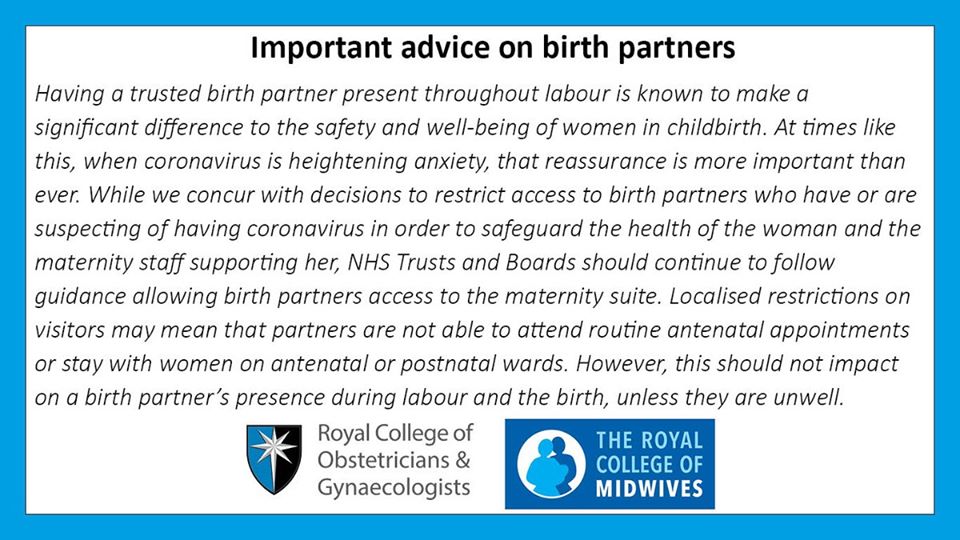
Advice on partners at the birth, now advises that partners be allowed at delivery and at key antenatal appointments.

You can find some information on pregnancy and the virus eight minutes into our meeting shown in this video

Fertility services have continued but have been limited by the pandemic. However, cuts and rationing had affected fertility services before the pandemic. That is another campaign we need to mount. Abortion services have continued with some disruption. The availability of medical abortion has been a usefule develpment in this pandemic. Please don’t hesitate to contact if you need help

Most pregnancies during the pandemic seem to have followed normal patterns. We could see no obvious problems (in a lay person’s reading) on Liverpool Women’s Hospital Board reports this month. We will continue to monitor this. The experience of birth has been more difficult especially for those women who were not allowed a partner at key appointments and the birth. Partners are now generally allowed. The latest research from Tommy’s found seven in ten pregnant women felt overwhelmed while pregnant, or during the early stages of motherhood, with 14 per cent saying they found it difficult throughout the duration. Stress does not help pregnancy and poorer women are the most vulnerable to stress. Worries about food, housing and heating are significant. The impact of stress in pregnancy can last for years.

The most recently published research from America indicates that Covid has been a risk for pregnant women.”Although data were initially unclear as to whether pregnant individuals are at increased risk of severe complications from COVID-19, a large study from the Centers for Disease Control and Prevention (CDC) provided data suggesting an increased risk. Among more than 450 000 symptomatic women of reproductive age with COVID-19 for whom pregnancy status was known, admission to an intensive care unit, invasive ventilation, extracorporeal membrane oxygenation, and death were all more likely among pregnant individuals than among nonpregnant women of reproductive age.3 Non-Hispanic Black individuals accounted for a disproportionate number of deaths. Symptoms in pregnant individuals (eg, cough, headache, muscle aches, and fever) were similar to those in nonpregnant women, although most symptoms were reported less often among pregnant individuals than nonpregnant women.3https://jamanetwork.com/journals/jama/fullarticle/2776447

Vaccine

The safety of the vaccines have not been specifically tested on preganat women but other vaccines have been shown to be safe, The general opinion appears to be that the risk of the disease is severe and best avoided, including possibly by using the vaccine. Please do check with your doctor

The Royal College of Obstetricians and Gynaecologists, the senior body on obstetrics posted these key points in March 2021

  • The latest advice from the Joint Committee on Vaccination and Immunisation (JCVI) is that COVID-19 vaccines should be considered for pregnant women when their risk of exposure to the virus is high and cannot be avoided, or if the woman has underlying conditions that place her at a very high risk of complications of COVID-19.
  • COVID-19 vaccines should only be considered for use in pregnancy when the potential benefits outweigh any potential risks for the woman and her baby.
  • Women should discuss the benefits and risks of having the vaccine with their healthcare professional and reach a joint decision based on individual circumstances. (our emphasis)
  • Breastfeeding women may be offered vaccination following consideration of their clinical need for immunisation against COVID-19.
  • Women trying to become pregnant do not need to avoid pregnancy after vaccination and there is no evidence to suggest that COVID-19 vaccines will affect fertility.
  • Having a COVID-19 vaccine will not remove the requirement for employers to carry out a risk assessment for pregnant employees, which should follow the rules set out in this government guidance.

Giving birth in the pandemic

Black and Asian women have worse outcomes in giving birth, even before the pandemic We don’t fully know the details of why, but as studies are published, we’ll share them. We have written about this before. Even with this awful discrepancy, the vast majority women, of every ethnicity, are safe. Some migrant women are subjected to high levels of charging for NHS services at 150% of cost. This has cost the lives of at least three women. We have long campaigned against any NHS charges.

“The MBRRACE-UK Confidential Enquiries into Maternal Deaths and Morbidity have highlighted before the disparities in outcomes for women from different ethnic minority groups. This year’s coronavirus pandemic has brought this disparity even more starkly to the fore, and we must not lose sight of the actions that are required to address systemic biases that impact on the care we provide for ethnic minority women…Pregnant women who are recent migrants, asylum seekers or refugees, or who have difficulty reading or speaking English, may not make full use of antenatal care services. This may be because of unfamiliarity with the health service, or because they find it hard to communicate with healthcare staff. Healthcare professionals should help support these women’s uptake of antenatal care services.”

Maternity Action reported in What price Motherhood.
Maternity care is undermined by charging, there will inevitably be poor health outcomes for mothers and babies. These are real people, not pawns in a game of political point scoring. It is difficult to see in the UK’s deliberately ‘hostile environment’ anything other than the inhumanity of bureaucracy flagged by Kafka. Charging guidance is deeply problematic, implementation is woeful and the research that informed these policies was flawed. Billing pregnant women at 150% of tariff cannot generate income from the destitute.

It is good to hear that the vast majority of pregnancies appear to have proceeded normally. However, during the pandemic some pregnant women did have virus issues.

Pregnant women who get ill with Covid. The NEJM reports that, internationally, ‘Although data on Covid-19–related risks to pregnant women and new-borns are limited, a recent study found that pregnant women with Covid-19 have 1.5 times the risk of being admitted to an intensive care unit (ICU) and 1.7 times the risk of requiring mechanical ventilation faced by non-pregnant women of childbearing age with Covid-19 but that pregnant women aren’t at increased risk for death.2Information on adverse pregnancy outcomes associated with Covid-19 is also limited. Intrauterine transmission of SARS-CoV-2 appears to occur rarely,3and no evidence has suggested an association between Covid-19 and birth defects; however, data suggest that preterm birth and admission to a neonatal ICU are common among infants born to SARS-CoV-2–infected women.’4

Women who must struggle to make ends meet are also at risk from the virus, from worse health and from problems in pregnancy.

Even without the pandemic post-natal mental illness has been a feature for some women. It has been estimated that, across the UK, up to 1 in 5 women develop some form of mental health problem during their pregnancy or in the year after birth. The majority (81%) of women who responded to this survey experienced at least one perinatal mental health condition during or after their pregnancy.‘ (RCOG2017). Suicide is a risk. Mental health has been badly damged by austerity cuts and privatisation The Government need to provide better mental health support for women in pregnancy and for the year afterwards

Health visitors were diverted from their roles as support for new mums art the start of the pandemic, and have struggled to be returned An increase in perinatal mental illness and poverty was reported by 81% of health visitors surveyed, while 45% had experienced more families struggling with issues related to substance abuse.. We must insist that health visters numbers are increased immediately.

Women are more likely to work in the most affected sectors and more women have been furloughed.

According to the Institute for Fiscal Studies, by May 2020, mothers were 1.5 times more likely than fathers to have either lost their job or quit since March, and were more likely to have been furloughed. The Fawcett Society also found 35% of working mothers have lost work or hours due to a lack of childcare support during the pandemic.The Fawcett Society found that half of employed women from minority ethnic groups and 43% of employed women from White ethnic groups are worried about job or promotion prospects due to the pandemic. This compared with 35% of employed White men. The data does not state if White minority ethnic groups are included in the 43%.

Mothers, especially those with young children have been particularly impacted by the pandemic. Women from black and minority ethnic group have been very badly affected. The full reasons for this have yet to be understood but we know that racism, poverty, housing and frontline jobs, issues childcare are all part of the equation. We are working to understand this and have discussed it in our meetings. This article, though grim reading, gives some explanation at least inthe London context.

The TUC reported that 70% of mothers who applied for furlough were rejected. 80% ot those people who applied for financial support for self isolation were rejected. People have to choose between having the money to eat or self isolation. Consequently it has been in the poorest areas where take up of testing has been lowest, and where the virus has persisted longest. Heartbreakingly infections have spread through families many of whom have lost multiple members inflrcting incredible pain on the surviving family members. Liverpool has worked hard to get the testing and the vaccine out to the communities. We were pleased to see a win for the campaign ( of which we were part) to make sure everyone living in the UK had access to the vaccine.No one is safe until we are all safe. Thankfully the government has offerred a vaccine amnesty to all. Please let us know if there are problems with this. We still camapign for everyone to access the NHS free of charge a free of fear of the Home Office and the Hostile environment.

The lockdowns have had a disproportionate effect on women’s workload, especially on women who are heads of households .Managing on lower pay whilst facing higher bills for heating and food and wifi for education has bee na real strain. Women in paid employment who are able to work from home are more likely to see an increase in unpaid care work due to school closures and often caring for older dependents. Compared with men, women perform on average 3 times as much unpaid care and domestic work even though this is rarely classed as work (International Labour Organization 2018). The pressure of supervising home schooling and directly teaching children of different ages has been difficult for many. The problems of having the necessary tech and even paper and pencils has caused stress. For some families it has been a lovely time, one children will always remember.

Poverty has been shown to be appalling in this wealthy country. Mothers, we know, face the worst wages in the country. Our child care is a disgrace. Individual providers do their best but we need a universal well funded national system of child care, and shorter hours of work so parents can spend time with their children in the precious years when they are young. The UK comes 27th out of 48 countires in how well our children are provided for. This in a very wealthy country. Good childcare easy to afford would make life better for children and parents.

It is also a scandal that so many children do not have enough good food..UN data showed at least 8.4 million people in the UK struggle to afford the food they need.Official statistics from March 2019 showed that the number of children in absolute poverty had risen to 3.7 million, up by 200,000 in 12 months. Government support for children fell dramatically once austerity began. Poverty affects children even during pregnancy and affects outcomes at birth. Low wages for mothers is a major factor.

As well as being responsible for the bulk of domestic duties women are also providing most of the Covid-19 care in hospitals. Approximately 77% of health care workers are women and they also make up the majority of health service work such as cleaning, laundry, catering and admin work, so are more likely to be exposed to the virus. The women who keep our  day to day life going, without whom all wheels stand still are often at greatest risk and lowest paid. According to a study by the think tank, Autonomy, and reported in The Guardian, there are about 3.2 million workers employed in the highest risk roles. Approximately 2.5 million are women and as many as one million of them will be among the lowest paid, many of them not entitled to statutory sick pay, putting them at greater risk as they choose between putting food on the table for their families or protecting their own health.

Mental health in the pandemic

The pandemic obviously increases the risk through stress and anxiety. The redeployment of health visitors away from new mums has not been helpful at all. We need more information on this. We would like to collaborate with those with experience of this and can share their insight.

The birth-rate has fallen in the pandemic, a situation seen at Liverpool Women’s Hospital and across the country.It is expected that the number of births in 2021 will fall further, for financial and social reasons.

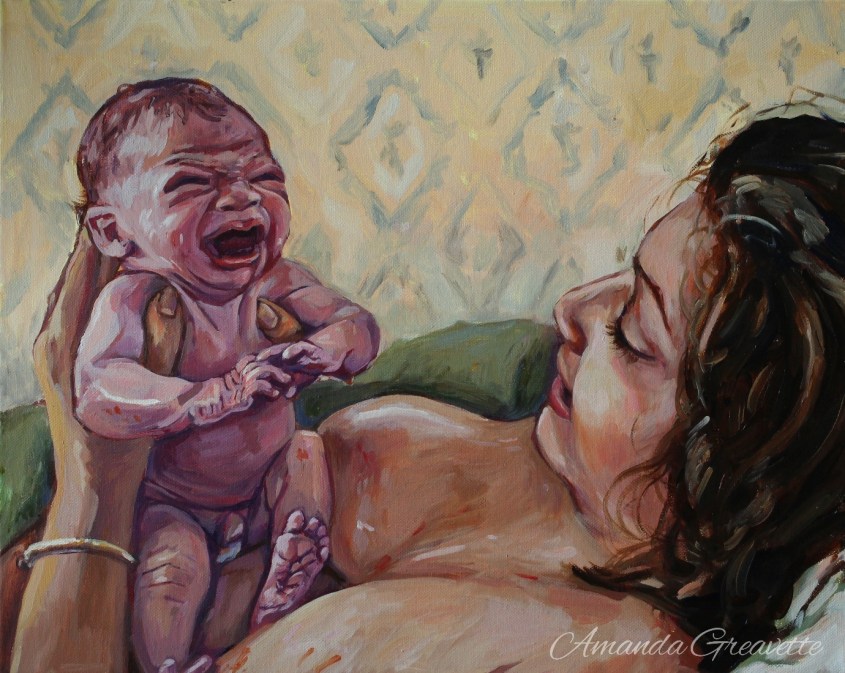
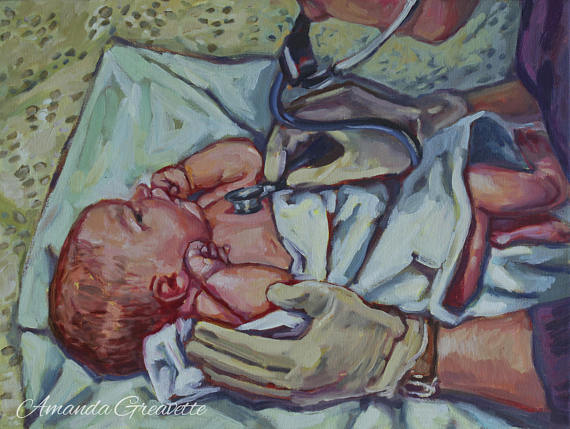
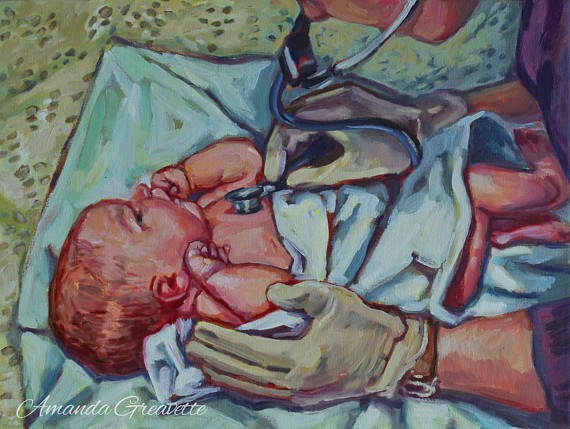
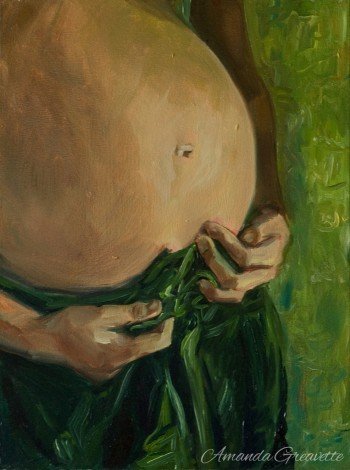
Amanda Greavette

In the first quarter (Jan. to Mar.) of 2020, there were 152,521 live births, 153,464 in Quarter 2 (Apr to June) and 158,452 in Quarter 3 (July to Sept). Or on average, approximately 52,000 live births per month).

Women have been impacted by reduced service from other health services affected by the pandemic. Breast Cancer Now estimates that a total of 986,000 women across the UK missed their mammograms due to breast screening programmes being paused.

Men and women have different responses to the virus as the table below shows.

These two tables show cases of the virus and deaths from the virus by age and by sex.
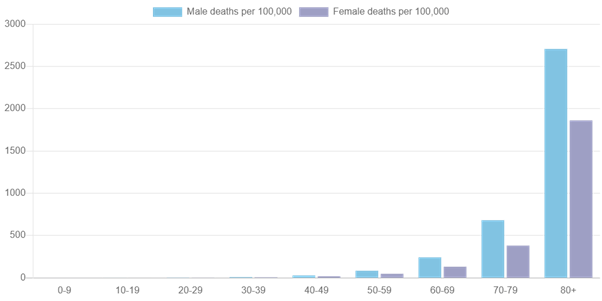
Women are already suffering from poverty in the UK, whether from low pay, inadequate childcare, or from inadequate welfare payments, including the two-child limit on benefits.

We join the demand that support for people to isolate must be improved. We need much better sick pay for everyone. The virus can affect whole families because there is not room to isolate in small homes. We demand the kind of support made available in other countries. New York for example set up isolation hotelsThe aim of the isolation hotel program was to provide a safe and supportive environment for individuals who are homeless, living in crowded or congregate housing, or whose family and/or landlords did not want them to return home out of fear of potential exposure to COVID-19. https://www.liebertpub.com/doi/10.1089/HS.2020.0123

Domestic Violence

Lockdowns are putting women at higher risk of physical and sexual violence. The incidence of domestic violence in the UK has increased dramatically since the lockdown. Refuge, the UK’s largest domestic abuse charity, has reported a 700% increase in calls to its helpline in a single day (The Guardian). This at a time when the funding for women’s refuges has been drastically reduced. The Women’s Aid Annual Audit (28/01/20) showed that 64% of refuge referrals were declined last year. The number of bed spaces is now 30% below the number recommended by the Council of Europe. The key problems cited were all to do with inadequate funding. Only 5% of refuge vacancies listed last year could accommodate women with no recourse to public funds and less than a half had the capacity to accept women with more than two children.

Access to healthcare

Access to essential health services has decreased for the public during the pandemic. The consequences of reduced access to sexual and reproductive healthcare are particularly severe for some vulnerable women. The World Health Organisation has identified care during pregnancy and childbirth as a high priority essential service and all countries should prioritise to maintain this service (Geneva 2020). Women should have access to contraception, safe abortion and post abortion care to avoid unwanted pregnancies and sexually transmitted diseases.

https://www.who.int/teams/sexual-and-reproductive-health-and-research/areas-of-work/sexual-reproductive-health-and-rights-in-health-emergencies/covid-19

Sexual and reproductive health care should be the right of all women. Women who use drugs, are sex workers or who live in poverty are at particular risk of contracting Covid-19, as are asylum seekers living in overcrowded accommodation and immigrants of insecure status. Yet they may lack access to healthcare due to fear of discrimination, deportation or health care charges.

When a pandemic strikes women must be consulted about the response. There are five basic demands published by the Women in Global Health Security Summit.

  • Include women in global health security decision making structures and public discourse,
  • Provide health workers, most of whom are women, with safe and decent working conditions,
  • Recognize the value of women’s unpaid care work by including it in the formal labour market and redistributing unpaid family care equally,
  • adopt a gender-sensitive approach to health security data collection/analysis and response management and to
  • Adopt a gender-sensitive approach to health security data collection/analysis and response management

Marginalised and vulnerable women must be included in the response to the pandemic. Health care is a basic human right and should not depend on where you were born or the colour of your skin. We all deserve protection and to be treated with dignity. The cleaner needs PPE just as the doctor does.
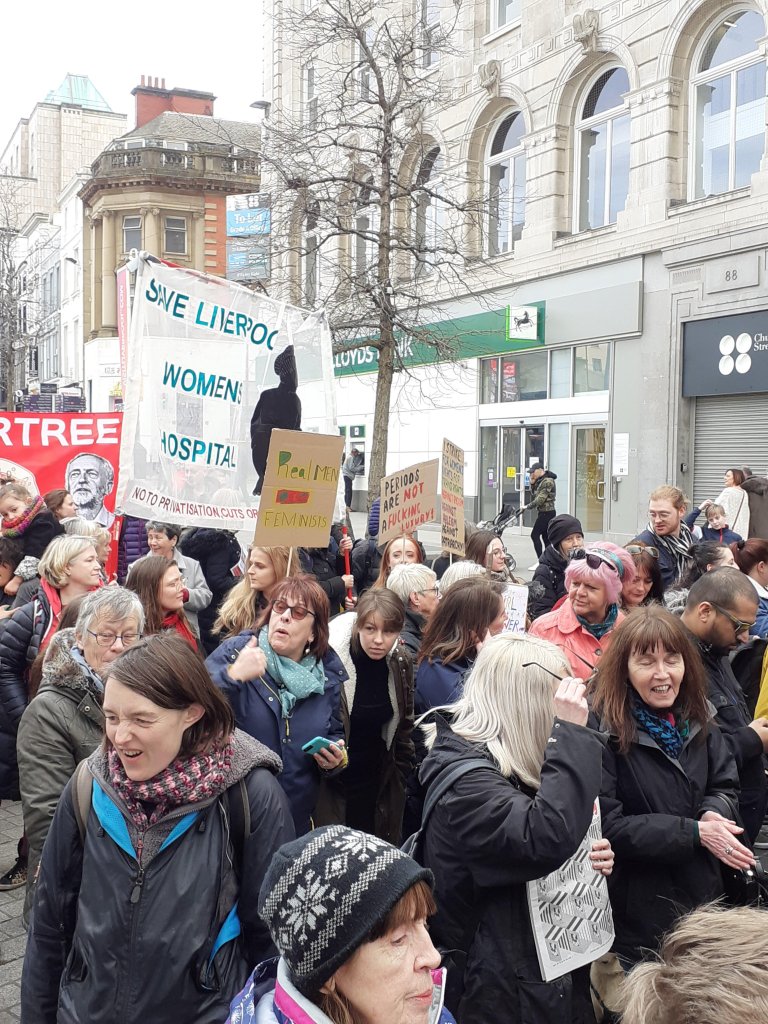
Liverpool Women on the march in better times.

The impact has been on wealth as well as on health. The Parliamentary subcommittee reported that “Evidence shows that the economic impact has been experienced differentially by women – and in many respects, more severely. Women are more likely to have primary responsibility for childcare. They are more likely to work in the service sector, and to be in insecure or zero hours work. And more likely to be more dependent on social security, and in insecure housing. They are over-represented in jobs which are not eligible for statutory sick pay.

We also know that the gendered impact may vary by ethnic group and that in some BAME communities, it is men who are most likely to work in shut-down sectors. We must consider what needs to change in the short and long term as the country emerges from the pandemic.”

Poverty is a crime committed on our children by the Government and by the lie of Austerity.  Poverty kills children, and beyond childhood Fifteen years on Merseyrail takes fifteen years off your life”For half the people who have COPD, the condition is a reflection of childhood poverty.More than two in three children in some areas of the city of Liverpool are in poverty. Meanwhile the rich get quantitative easing with no means test, no demeaning questions about their sexual partners, no sanctions. The rich get huge amounts of money because the government says it will help the economy. We say putting food in kid’s bellies is much more important.

The Child Poverty Action Group reported before the pandemic “Even families with two parents currently working full time on the ‘national living wage’ are 11% (£49 per week) short of the income the public defines as an acceptable, no-frills living standard.

For lone parents, even a reasonably paid job (on median earnings) will leave them 15% (£56 per week) short of an adequate income because of the high cost of childcare. A lone parent working full-time on the ‘national living wage’ will be 20% (£74 per week) short of what they need to achieve a minimum standard of living.

Professor Ian Sinha, from Liverpool University and Alder Hey Hospital reported that “poverty hits children the hardest. Getting a job is not a solution. Most children in poverty have at least one working parent”.

During childhood, we are especially vulnerable to the main determinants of health: living conditions, family income, employment, education, access to health services. The pandemic can be conceived as an additional systemic shock to these determinants. In the shorter term, with the focus squarely on adults with covid-19, child health and social care services are being side lined. These include acute services for life threatening illnesses, outpatient services for chronic conditions, child protection services guarding against abuse and neglect, and preventive services that support early years development, routine checks, and immunisations. Global modelling predicts a stark increase in child mortality as a result of diversion of care.6 As soon and as seamlessly as possible, we must restore these services to full, and greater, capacity.5

Infants in more deprived areas are most likely to die. Listen to Ian Sinha here.

We must campaign to end child poverty and to improve the pay of mothers. Excellent family Allowances paid to the mother would really help.Wonderful people run food banks. However, the food available from food banks is not always nutritionally adequate. The pandemic is hitting children. Many children do not have access to food, let alone good, tasty food.   

Pregnant women have been shown little respect by many employers in this pandemic. Maternity Action and Pregnant then screwed have reported in detail. At our “Let’s Get Rid of the Virus” meeting Roz from maternity action said how difficult it is to enforce our rights at work. Women in trade unions fared much better. because they were not alone in making requests . However the scale of responses to petitions aboout maternity leave has been such that parliament( as opposed to the government0 have had to respond
Women have joined trade unions and become more active in trade unions during the pandemic.TUC general secretary Frances O’Grady said: “…. figures show that union membership was growing before the coronavirus crisis hit. And we know that in the last few months, thousands of workers have been turning to unions to protect their jobs, defend their rights and keep their workplaces safe”

Young women are in the eye of the storm

The Young Woman’s Trust reports that

  • an estimated 750,000 young women have had to go to work despite fears for their safety and protection against the virus.
  • half of young women who are parents (51%) said they were unable to apply for or left a job because they could not cover childcare costs, up from a third of young women when the same question was asked last year
  • a significant number of young women across England and Wales (43%) reported they had been offered a zero-hour contract (compared to 35% of young men) and
  • over half of young women (57%) said they were worried about their mental health up from 51% last year. [2]
  • Almost a quarter of young women with children said they had been discriminated against because of being pregnant, on maternity leave or returning to work after maternity leave (23%).

LGBT issues

A section of older lesbians and transwomen, who never married, socialise outside the home. This has been shut off during lockdown. Some have limited family support because of prejudice.  Some younger LGBT people are stuck at home, sometimes with less than supportive families. The pro-tem closures of fertility services impact the LGBT community too, as they tend to be older approaching services for help in conception. Many more issues are discussed here.

Disabled people Among women, the risk of death involving coronavirus was 3.5 times greater for more-disabled women – defined as having their day-to-day activities “limited a lot” by their health – compared with non-disabled women.For less-disabled women, defined as having their day-to-day activities “limited a little”, the risk was two times greater.

Disabled people are 3 to 4 times more likely to die of Corona Virus.  Disabled people account for 6 out of 10 deaths in the UK in 2020.Laws protecting disabled people were put at risk by Corona Virus legislation. 20% of men and 23% of women are disabled. The women’s budget group report that “Disabled Lone mothers lose out the most from tax and benefit changes since 2010; by 2021 they will lose 21% of their net income if they do not have a disabled child and 32 % if they do. A third of this loss is due to shift to UC.” During the pandemic disabled people have had services stripped away, services essential to their normal day to day lives. The pandemic has further disabled people. Similarly with disabled children. Pandemic legislation allowed these reduction of services. They must be restored

COVID-19 death rates of people with learning disabilities have been between four and six times higher than for the general population.” The government reported that  451 per 100,000 people registered as having a learning disability died with COVID-19 between 21 March and 5 June, a death rate 4.1 times higher than the general population after adjusting for other factors such as age and sex.

But as not all deaths in people with learning difficulties are registered on these databases, researchers estimated the real rate may have been as high as 692 per 100,000, 6.3 times higher.

Deaths were also spread much more widely across the age spectrum among people with learning disabilities, with far greater mortality rates in younger adults, compared to the general population. The death rate for people aged 18 to 34 with learning disabilities was 30 times higher than the rate in the same age group without disabilities, researchers found.

People who need social care 1.4 million people who need social care do not have access to it even before the pandemic. “Social care has been a victim of unprecedented cuts to public services since 2010, which have seen local authorities reduce their spending on social care for older people in real terms by 17% despite rising demand“.

Women are having to work late into their 60s thanks to the pensions heist at the start of Austerity. Retiring at 68 women can expect limited years of good health, men even less. Forcing older people into work in this pandemic is cruel in the extreme.

The Independent reported in July 2019 that “Women’s pensions £100,000 less than men’s due to gender pay gap and childcare commitments.1.2 million women approaching retirement age have no savings at all.

Just this week the government announced that many women had been under paid their pensions. other women working till 68to get a pension have been hard hit by the sheer weight of the manual work they have had to under take during the pandemic. We support reducingthe pension age for women down to 60 once again. The WASI women are correct. We would be quite happy for that to be available to men too.

Older women, after retirement ,provide a great deal of unpaid care within the family and community. Many organisations would be lost without them. Many care both for their elders and their grandchildren. The pandemic means that they have not been able to do this work, a loss for the community and to themselves as they have been much more shut in by the pandemic. Older women, especially grandparents, provide a great deal of childcare. Eighty percent of grandparents have provided childcare and many support the families financially as well. Grandparents very much value the chance to spend time with their grandchildren. The pandemic has broken many of these precious close family relationships. Hopefully, they will be rebuilt.

Older women have featured in care homes during the pandemic, others suffered by being cut off from family in the care homes, by being alone for exceptionally long periods and being cut off from family friends, cut off from their grandchildren and from the community, and from being out having fun with their friends, cut off from live music theatre, the cinema and more.

We will continue to look at how the pandemic affects women. Please send us any information or experiences you have.
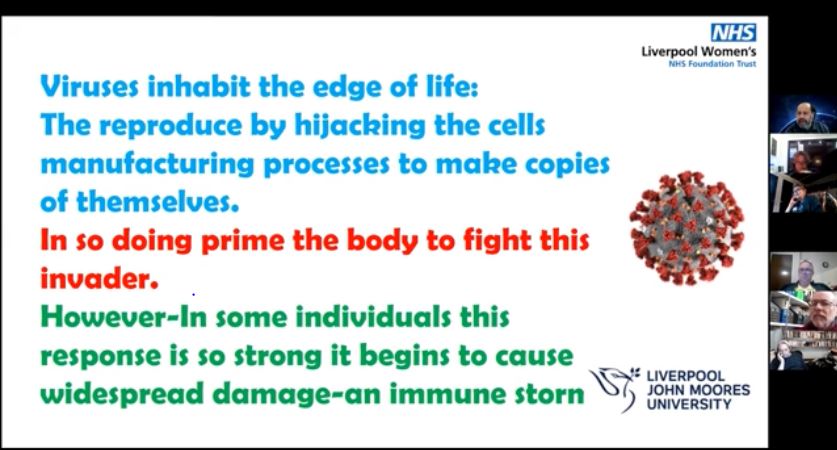
Getting rid of the virus (meeting number 2)

At our second meeting in the series Getting Rid of the Virus we heard from Dr Fyaz Ismail, a scientist working at a local university, Karen, a nurse from Nurses United, Greg Dropkin from Keep Our NHS Public on the local figures for virus present, Peter Glover, a teacher and NEU Executive member, and Janet Newsham from Hazards Campaign and Sarah Morton from the PCS union. Sarah is a councillor for Clubmoor and works to support mutual aid in the neighbourhoods.

Public meeting on March 3rd 2021

 Fyaz started the discussion on the virus, how it works and why we have a Covid Vaccine when we still do not have a Malaria one. Fyaz gave a detailed explanation and encouraged people to have the vaccine.

It will take all of us to drive down and eliminate the virus, but the Government must act too, in increased support for people to isolate if they have symptoms, or live with someone who has tested positive. They must improve the track and trace, and open free hotel rooms up for self-isolating. Test Track and trace must come back into local public health and the council. Serco are not doing well at all.

The schools need better ventilation, smaller classes, extra classrooms, extra teachers, outdoor teaching, time for the children to play and to talk, and facilities to work ay home if needs be. Proper internet kit for all the children. The children need good food too to build their health and strength

If you would like a similar meeting in your community or area please do get in touch

Getting Rid of the Virus Public Meeting

Our speakers were

Dr Jess Potter: a respiratory consultant and clinical lead for tuberculosis at a busy district general hospital in London. Jess works with EveryDoctor – an organisation which campaigns for the working rights of doctors. Jess also campaigns for healthcare rights of migrants with Docs Not Cops and Medact.

Rebecca Smyth: Rebecca is a member of SLWH and SHA and works as a Senior Lecturer in Midwifery at The University of Manchester. As part of her work Rebecca has collaborated with the World Health Organization in producing international clinical guidelines and is an active member of ALLOUT (LGBT Staff network group)

Maternity Action: Ross Bragg works for Maternity Action, the UK’s leading charity committed to ending inequality and improving the health and wellbeing of pregnant women, partners and young children – from conception through to the child’s early years.

Dr  Hassan Burhan: Dr Hassan Burhan is a Respiratory Consultant at the Royal and have been treating patients with Covid since March last year. He is the North West Coast Clinical Research Network Co-Lead for Respiratory Medicine and is involved in Research to look for new treatments at Liverpool University Hospitals NHS Trust. Dr Hassan also has an honorary LSTM contract and was part of the management committee of the Oxford Astra Zeneca Vaccine Study at LSTM.

Part 2:

Comfort Etim:

Comfort is an Advocacy and Policy Officer at Refugee Women Connect, a Liverpool-based, women-only charity set up to support women asylum-seekers, refugees and survivors of trafficking. Refugee Women Connect works together to build a safe life in the UK for all women in the asylum seeker and refugee community.

Philomène Uwamaliya:

Since 2011, Philomène has been working as a Senior Lecturer at the Liverpool John Moores University in the school of Nursing and Allied Health. As a refugee herself, Philomène is highly committed to ensuring that support services and commissioners provide the appropriate care to asylum seekers.

Our next meeting, the second one in the series “Getting Rid of the Virus” is on March 3rd will look at getting the science working in the workplaces and for the workforce, with speaker from nurses’ organisations, teachers, and those working in the community. We want to look at why our communities are suffering so badly and what we can do to make them safer. The rich can live with the virus but it will kill our people.

We want to be rid of this virus, not to tolerate it and accept a certain level of ongoing deaths and disability. It is difficult indeed but possible to be rid of this virus.

We want every human to be able access NHS care in this country. Listen to Comfort Etim speaking of the damage charging and exclusions from care are causing in Liverpool.

We support Vaccines for all . Over 230 organisations have signed up to the call on the Department of Health and Social Care to ensure that everyone can access the coronavirus vaccine, regardless of immigration status, ID or proof of address.

The lockdown is horrible but is driving down the number of cases and number of deaths, but how bad would it be to face another surge, still more heartbreak, grief and suffering because basic public health procedures are ignored by the government?

We know most people are doing their absolute best to suppress the virus, if they can, and the scientists have worked wonders. We are forever in debt to the health care and social care workers. Sadly we depend too on the Government to put decent policies in place and that has been sadly lacking, especially on Track Trace Isolate and Support.. Individual effort has not, and cannot keep us safe.

We want Vaccines and excellent, efficient, local publicly run Find, Test, Trace, Isolate and Support systems where people who need support financially to isolate get it, unlike the current situation., where people cannot afford to stay home from work if they have symptoms because they would have no money at all, and maybe lose their jobs.(Being in a union has saved many jobs in this poandemic)

We want safer schools with real investment in buildings safety, ventilation and staff, smaller safer class sizes. We want fully equipped elder care; we want women to be safe at work especially in pregnancy. No one is safe until we all are safe. We want our children to have ample good quality food and shelter. We want employers forced to make their workplaces safe. All of this is quite affordable and would make the country wealthier and safer.

We don’t remember Polio, you and me.

Public meeting Wednesday 17th February 2021

We don’t remember Polio, you and me. When we look at our little ones running around, playing, making a mess of freshly tidied rooms, it’s about the furthest thing from our minds.

Maybe some of us older mums will have heard snippets of stories from our parents. “Jackie’s friend had it” or “Some lad who used to knock around with your Uncle.” But that’s all they are, stories from a time gone by that soon become vague memories. We never have to retell them ourselves.

Leg braces are a rare sight these days and Iron Lungs you only see in history books.The fight against Polio is still there with vaccines and vaccines that need updating. None of our kids will ever have to wake up alone and afraid on a ward encased in a machine that breathes for them because of Polio.

The fight against polio is still going on in Pakistan and Afghanistan

Polio won’t ever paralyse our babies or snatch their little lives from them too soon, because our parents and grandparents didn’t stand for it. And when it comes to Covid, neither should we.

There was no cure for Polio back in the day and even now with how far we have come, there still isn’t. The reason you don’t hear about it anymore is because our Parents and Grandparents got rid of it the same way we’re trying to get rid of Covid, by vaccinating us against it. Their bravery to take the first step made sure that disease today is only talked about in history books.

People are starting to see the long-term effects of Covid now and it’s easier to see in children. Up to 100 children a week end up in hospital, many in Intensive Care, with what’s being called Long Covid. 75% of the worst cases are in kids from Black, Asian and Ethnic Minority backgrounds. Doctors still don’t know if there’ll ever be a cure.

We have the chance to be as brave as they were and save hundreds of our kids . So lets take it.

Let’s get rid of Covid.

Come to our community meeting about getting rid of the virus. Its on Zoom but we hope to put it on facebool live too.

Speakers will discuss the virus, vaccines, public health measures, how to reach all sections of our communities , pregnant women and new mothers, long Covid and the effects of the pandemic on the NHS.

There will be plenty of time for Questions & Answer sessions and public discussion

Please respond to this reorganisation of the NHS

Act to save our NHS

During the pandemic, the upper echelons of the NHS and the Government haver been implementing a structural reorganisation. The reorganisation breaks the national part of the NHS and integrates private companies into the reorganisation. It is being done without laws going through parliament.

The deadline for the response is 8th January, and the link to the consultation is https://www.engage.england.nhs.uk/survey/building-a-strong-integrated-care-system/

We have joined with other organisations to try to raise awareness of what is happening. Many people will be aghast that this is happening at all, but during the pandemic, when all eyes should be on the virus, is doubly scandalous.

We are reproduce here the letter from Keep Our NHS Public. Other organisations are circulating in essence the same message. What follows is from the material produced by Keep our NHS Public

Integrating Care: Why NHS England is getting it wrong

NHS England (NHSE) is consulting on their latest plans for ‘integrating care’, including changes to legislation.

The proposals include a top-down re-organisation of the NHS in England abolishing CCGs, replacing them with 42 Integrated Care Systems (ICSs), statutory bodies under tight financial control from the centre and with even less public accountability. The result will be massive new opportunities for the private sector through the ‘Health Systems Support Framework’ (HSSF). While ICSs will find it difficult to work in real partnership with others such as local authorities in addressing health inequalities, proposals will allow private companies representation on an ICS Board.

Despite the short notice we hope you can respond to the consultation, which has a deadline of 8th January.

We attach a template response to the consultation giving a range of possible answers for you to adapt.

We also attach background papers from Keep Our NHS Public:

     * Our summary of what lies behind the “Integrating Care” proposals

ICSs are an organisational form adapted from the US health insurance market, and the HSSF is central to their development. This Framework has 83 NHSE-accredited companies, 22 of which are US-based. We expect legislation will result in a flood of contracts, much as the government has dished out thousands of Covid contracts, bypassing proper procurement.

     * KONP’s response to the legislative proposals

These include a deregulated market economy in healthcare where even the existing, limited safeguards to protect social, environmental and labour standards are removed, and where a bidder’s track record is not taken into account.

Further detailed critiques of Integrating Care are available on the KONP website. These include a critique of the proposed structure and management of ICSs as revealed in NHSE’s Health Service Support Framework; critique of NHSE’s proposal to bring social care under NHS management; and proposals for real democratic accountability in the planning and oversight of NHS services as well as links to recent articles on ICSs in OurNHS/Open Democracy and The Lowdown (see https://keepournhspublic.com).

The Government has yet to publish a BillOnce it has, we look forward to your involvement in resisting this drive to disintegrate the NHS through financial mechanisms and increased corporate influence.

To reiterate, the deadline for the response is 8th January, and the link to the consultation is https://www.engage.england.nhs.uk/survey/building-a-strong-integrated-care-system/

Please do not worry about creating a long academic response. Please just respond. Try to keep a copy of your response and send it to  savelwh@outlook.com

Respond even if it is late.

Please write to your MP and please try to make sure your members know about this

Dear —

Integrating Care: Why NHS England is getting it wrong

NHS England (NHSE) is consulting on their latest plans for ‘integrating care’, including changes to legislation.

The proposals include a top-down re-organisation of the NHS in England abolishing CCGs, replacing them with 42 Integrated Care Systems (ICSs), statutory bodies under tight financial control from the centre and with even less public accountability. The result will be massive new opportunities for the private sector through the ‘Health Systems Support Framework’ (HSSF). While ICSs will find it difficult to work in real partnership with others such as local authorities in addressing health inequalities, proposals will allow private companies representation on an ICS Board.

Despite the short notice we hope you can respond to the consultation, which has a deadline of 8th January.

We attach a template response to the consultation giving a range of possible answers for you to adapt.

     * Our summary of what lies behind the “Integrating Care” proposals

ICSs are an organisational form adapted from the US health insurance market, and the HSSF is central to their development. This Framework has 83 NHSE-accredited companies, 22 of which are US-based. We expect legislation will result in a flood of contracts, much as the government has dished out thousands of Covid contracts, bypassing proper procurement.

     * KONP’s response to the legislative proposals

These include a deregulated market economy in healthcare where even the existing, limited safeguards to protect social, environmental and labour standards are removed, and where a bidder’s track record is not taken into account.

Further detailed critiques of Integrating Care are available on the KONP website. These include a critique of the proposed structure and management of ICSs as revealed in NHSE’s Health Service Support Framework; critique of NHSE’s proposal to bring social care under NHS management; and proposals for real democratic accountability in the planning and oversight of NHS services as well as links to recent articles on ICSs in OurNHS/Open Democracy and The Lowdown (see https://keepournhspublic.com).

The Government has yet to publish a Bill. Once it has, we look forward to your involvement in resisting this drive to disintegrate the NHS through financial mechanisms and increased corporate influence.

To reiterate, the deadline for the response is 8th January, and the link to the consultation is https://www.engage.england.nhs.uk/survey/building-a-strong-integrated-care-system/

In solidarity,

Keep Our NHS Public

NHSE CONSULTATION: building a strong, integrated care system across England

Please amend and adapt the wording below in your response to avoid any batch rejection of critical responses

 What is your name?  
 In what capacity are you responding?  
 Are you responding on behalf of an organisation?  
 Do you agree that giving ICSs a statutory footing from 2022, alongside other legislative proposals, provides the right foundation for the NHS over the next decade?
 Strongly disagree   comments or additional information: a)This is a very ‘top down’ exercise with little justification other than the hope it will allow tighter controls on spending. b) Claims that functioning ICSs have already demonstrated significant improvements in patient care are only wishful thinking and not evidence based. c) The plan for ICSs is not focussed on improving care for patients but on binding NHS organisations by financial controls and plans written by the ICS with advice from companies accredited under the Health Systems Support Framework. d) The NHS needs re-integration by abolishing the 2012 H&SC Act altogether and removing the competitive market and the purchaser-provider split. e) Facilitating even more contracting out of services and management structures including the private sector is not ‘integration’ but ‘dis-integration’. f) NHSE/I legislative proposals include the removal of Public Contracts Regulation safeguards over social, environmental and labour standards, and the ability to rule out bidders on the basis of their track record. It will expand the scope for scandals like the PPE contracts awarded without procurement to firms with no relevant experience. g) Other legislative proposals would embed “population health management” as a binding aim for all NHS organisations, without evidence that this will improve patient access to universal, comprehensive healthcare, free at the point of need, publicly provided and publicly accountable, funded through general taxation.  
 Do you agree that option 2 offers a model that provides greater incentive for collaboration alongside clarity of accountability across systems, to Parliament and most importantly, to patients?  
 Strongly disagree   comments or additional information: a) By “collaboration”, the plan includes collaboration with the private sector, which we oppose. b)  There is very little accountability built into the system and large organisations are inevitably far removed from the needs and concerns of local communities. CCG mergers reduce the opportunity for local public involvement; Option 2 goes even further. c) Any reorganisation of the NHS should be looking at increasing accountability and democratic control rather than weakening it.  
 Do you agree that, other than mandatory participation of NHS bodies and Local Authorities, membership should be sufficiently permissive to allow systems to shape their own governance arrangements to best suit their populations needs?  
 Strongly disagree   comments or additional information a) Allowing management consultants and private sector representatives to sit on governing bodies undermines the public sector ethos which is key to the NHS. b) ICSs as proposed will only facilitate top down control. c) The NHSE Health Systems Support Framework (HSSF) strongly prioritises financial savings over patient need. The HSSF is designed to implement systems of patient and data management needed for insurance-based systems rather than clinical priorities and local need. The majority of companies accredited through the HSSF are major corporates, including many involved in health insurance in the US and elsewhere. d) This approach is incompatible with what patients and communities want and need and with NHS founding principles and values.  
 Do you agree, subject to appropriate safeguards and where appropriate, that services currently commissioned by NHSE should be either transferred or delegated to ICS bodies?  
 Strongly disagree   comments or additional information Specialist services require national commissioning in order to ensure consistent standards across the country  

Keep Our NHS Public (KONP) Overview Response to Integrating Care – The next steps to building strong and effective integrated care systems across England1

Introduction In the midst of a massive Covid epidemic, NHS England (NHSE) is driving through a far-reaching topdown reorganisation of the NHS, based on proposals in the Long Term Plan (2019). They are consulting until January 8 on the details of new legislation which they expect the government to enact early this year to give legal legitimacy to changes which are already under way. We are concerned that the implications of these changes for the accountability, availability and access to services and values underpinning the management of services have been barely noted within a tumultuous 2020. Noting the serious concerns that have been raised by the Local Government Association and others, including NHS Providers, we are asking all politicians, from every party, to take a stand against these damaging proposals.

Restructuring of the NHS in England .

At the core of the re-organisation are Integrated Care Systems (ICSs), bodies described by NHS England (NHSE) as NHS organisations that work in partnership with local councils and others to take collective responsibility for managing resources and delivering NHS care. ICSs have been driven from the top by NHS England, and in many areas resisted at local level by councils, GPs and campaigners.

However a 39-page NHSE document “Integrating Care,” seeking new legislation allowing the whole of England’s NHS to be run through ICSs by 2022, claims they are “a bottom-up response.” The proposals reduce the number of commissioning organisations from almost 200 to just 42 new “Integrated Care Systems” (ICSs). This has required merging (and eventually abolishing) local Clinical Commissioning Groups (established as public bodies by the Health & Social Care Act 2012), and replacing the 44 ‘Sustainability and Transformation Partnerships’ (STPs) set up in 2016.

The mergers inevitably result in larger bodies, more remote from the needs and concerns of any local community, and therefore a loss of local accountability. This point has been powerfully argued by the all-party Local Government Association (LGA), which represents the leaders of 335 of England’s 339 local authorities. Their response states: “We are concerned that the changes may result in a delegation of functions within a tight framework determined at the national level, where ICSs effectively bypass or replace existing accountable, place-based partnerships for health and wellbeing…. 1

https://www.england.nhs.uk/integratedcare/integrated-care-systems/ 2

Calling this body an integrated care system is to us a misnomer because it is primarily an NHS body, integrating the local NHS, not the whole health, wellbeing and social care system.”

The Health Service Journal, aimed at NHS managers, has also shown how vague the proposals are: “ICSs will be given a single pot of money from which to manage spending priorities. But there is no framework for how this will be spent that assures fairness, value for money and quality outcomes.”

29 of the proposed 42 ICSs have already been approved by NHS England – even though they lack any legal status, and almost all are functioning behind closed doors with no public accountability. The remaining 13 STPs2 are required to become ICSs by April, or face the intervention of an “intensive recovery support programme.”

The LGA calls for the establishment of alternative structures involving genuine partnership with local authorities and, through them, links to local authority services and responsibilities that are vital components of the wider determinants of health.

Keep Our NHS Public (KONP) has issued a response to the lack of public accountability inherent in ICS structures, and set out proposals for developing genuine public accountability. The Report is on the KONP website here. KONP also rejects the assumption, repeated frequently throughout ‘Integrating Care’, that social care might be managed through NHS ICS structures. KONP campaigns for a publicly provided national care, support and independent living service.

At local level, we argue it is essential that social care continues to be managed by local authorities, retaining essential links to wider local authority responsibilities such as housing, education and leisure. KONP’s critique of the approach to social care set out in Integrating Care is here.

New legislative proposals Integrating Care seeks new legislation that would provide the formal legal basis for ICSs that they currently lack, as well as changes to existing procurement requirements. KONP argues for the abolition of the commissioner-provider split, believing the NHS should be provided and managed directly as a public service, not through commercial contracts. However we argue that what is worse than a managed market in health is an unmanaged and unregulated market.

The failed £multi-billion Covid-related contracts, including those for PPE or Test and Trace, dished out with no proper procurement procedures, have revealed what this can mean in reality.

NHSE wants to scrap Section 75 of the 2012 Health & Social Care Act which requires significant contracts to be put out to competitive tender, and to remove contracts from Public Contracts Regulations.

The prospect of changing the law so that more and more large NHS contracts could be awarded without any due process or public scrutiny is seriously worrying. KONP’s detailed response to the legislative proposals in Integrating Care is here.

Values underpinning the management and direction of ICSs Under proposals for ICSs, all providers will be bound by a plan written by the ICS Board and financial controls linked to that plan. Private companies may support the Board and potentially have a place on the Board, as well as being contracted for services.

NHS England has established a Health Systems Support Framework (HSSF) to facilitate easy contracting by ICSs. The Framework consists of organisations accredited by NHS England to support the development of internal structure and management of ICSs, and, potentially, also to play a longterm role in direct management of ICSs. A quarter of the 83 organisations approved by NHSE to take on contracts with ICSs, and potentially also take seats on decision-making Boards of ICSs (as has happened in North East London) are American-based, offering expensive data-based systems designed to benefit US insurance companies and private hospital chains.

Research in the USA and experience in England has exposed the lack of evidence that data-led attempts at “population health management,” or targeting the small number of patients with complex medical and social needs, can either reduce demand or cut costs. However, such approaches do facilitate the development of private insurance pathways running alongside NHS care.

Digital technology and number-crunching are among the more lucrative areas in which private companies are seeking profitable NHS contracts, and this is a strong theme running through the HSSF. However digital and data are also areas of notorious recent private sector failures – including the Covid-tracking app, the privately-run test and trace system, Capita’s long delays in contacting professional staff offering to return to fight the pandemic, and the £10 billion saga of the NHS Programme for IT.

And while Integrating Care argues for the need to establish ICSs as “statutory bodies” with real powers, notably “the capacity to … direct resources to improve service provision,” there are real fears that NHS England sees ICSs and ‘system-wide’ policing of finances as a way of more ruthlessly enforcing cash limits and “control totals” limiting spending across each ICS, with growing lists of excluded “procedures of limited clinical value”. These approaches to structure and management of ICSs pose a major threat to the NHS, distorting and undermining the core values and ethos of the NHS.

Conclusion Integrating Care raises serious concerns for the future of the NHS and social care services, concerns that we set out in detail in papers available on the KONP website, along with proposals for alternative structures and why social care should remain the responsibility of local authorities. Our concerns, based on hard facts, are widely shared by councillors, senior NHS management, GPs and seasoned analysts. NHS England’s proposed changes threaten to make the NHS less locally responsive, less accountable, more dominated by US and other management consultants and contractors, and more focused on policing cash limits than meeting the needs of patients. NHS England’s priorities should be on strengthening the NHS in alliance with local government and communities, not creating new remote bodies or adopting systems meant to maximise profits of private health insurance. Keep Our NHS Public (KONP) January 2021 https://keepournhspublic.com/

Changes are being made to the NHS, without publicity.

Our camapign has been working to understand and publicise changes that are happening in the NHS. This started out as a powerpoint used in meetings but grew as we learned more.

Cheshire and Merseyside NHS funding and many decisions have been moved to the Cheshire and Merseyside STP. There are instructions to merge the CCGs, and all 4 Cheshire CCGs have indeed merged. Merseyside’s CCGs have been told to merge with them. Ahead of this merger many decisions are now being made, without democratic oversight at this system level. It is hard enough to monitor what is happening at Liverpool CCG without trying to monitor a meeting covering all of Merseyside and Cheshire.  There have been articles in the press talking about setting a statutory framework for this move which means that right now they have no statutory footing, no basis in law.  However, it is through this “system” that funding is channelled to our hospitals, and decisions normally made by CCGs must fit into this framework.

 Our campaign first became acquainted with the Merseyside and Cheshire STP because it runs the big maternity vanguard for this area. We have our concerns about the level of resources given to maternity but that is covered in other blog posts

 The NHS faces a difficult winter with the pandemic not controlled, the vaccine in its infancy, tired and overworked staff and uncertain supply of key equipment. The pandemic should be the focus of attention, but instead fundamental changes are underway.  We believe these changes threaten the Bevan model of universal treatment free at the point of need. Big companies are making a fortune from the pandemic funding, funding that should have gone to the NHS.

 One of our aims, together with other campaigns and trade unions is to gather a conference of those who wish to defend the NHS across Merseyside and Cheshire. Please get in touch if you can help or would like to help in any way. The NHS will last whilst there are people prepared to fight for it. We are, are you?

If any group wants the power point, with or without commentary, we can let you have it but its too big to share by email. Contact us and we will find a way. Or one of our camapign will present it on a zoom meeting for you and answer questions and gather your information.

Please do feed back to us with your experience, your knowledge. Meanwhile Defend the NHS now more than ever

Not sufficient at all

Hello fellow midwives,

Have any of you seen the message to RCM members by CEO Gill Walton. Here is the link for you if need: https://www.rcm.org.uk/news-views/rcm-opinion/2020/april/we-will-ride-through-this-storm-together/

I find it hard to put into words how this makes me feel, but utterly disgusted and outraged by the attitude of GW is a start.

Where is the support from our union? Other unions including the BMA and Unison are asking their members to let them know about COVID related issues in the workplace – PPE for example. These discussions need to be had out loud in the public arena not stifled by our union or our hospitals with fear of reprisal. Let’s speak out. Together we are strong. Let’s support those staff members that do.

If any of you want to tell me anything in confidence please private message me. Some know me already and I hope trust me, others who don’t please message and talk with me.

We need to do this to protect each other, our families, the women and patients we look after.

Thankyou

R.

If midwives wish to contact R we will forward your message

Issues from the maternity services front line. Protect maternity in the virus crisis

Since we posted our last blog we have been hearing from people directly involved with maternity care locally. Merseyside camapigners for good maternity care are not alone in sharing concerns about how maternity should be treated during the crisis. The Royal College of Midwives has published its concerns, saying “Help us deliver safe care for Pregnant Women.

This is the link to Liverpool Women’s Hospital public information as on 31st March 2020

Even without the crisis, too many babies nationally die at birth or shortly afterwards or sustain brain injury. It is right that we raise concerns at a time when staff are under great pressure.

Here are some of the issues raised locally during this crisis which is still in its early stages. We have raised these issues directly through questions to the board of the Liverpool Women’s Hospital. The Board is not meeting in public but we have submitted questions.

  1. Discharging babies

Delivery suite are needing to discharge women as soon as ossible after birth, for obvious reasons. However, each baby is required to have an Examination of the New-born prior to discharge. Pre the COVID-19 outbreak this was always performed in the community but that is now not possible, therefore it is now the responsibility of delivery suite midwives. However, most midwives are not trained in this. Delivery suite midwives are also needing to complete all the discharge paperwork. It would help the situation if staff who were trained in the Examination of the New-born were allocated to the delivery suite to do all the discharge work. Questions are being asked as to how can delivery suite (d/s) midwives be supported with this extra workload? For mums discharged home before having their baby examination completed they are bringing their babies back to LWH clinic to do this examination, but more staff are needed to do this.

2. Infants who would usually go to SCBU/NICU; because they need 3 hourly feeds / true blood glucose checks are now staying on the delivery suite and therefore the responsibility of the staff there. However, there is not the workforce on the delivery suite to do.

3. COVID-19 / COVID-19 suspected women are cared for on the delivery suite and looked after by the 1 clinician, this ensures social distancing as much as possible. Staff are to care for the women in 4hrly intervals but in reality, staff are working their full 12.5hr shifts with no break/relief. This ensures as few clinicians as possible are coming into contact with the women, however, this way of working is not sustainable long-term.

4 Personal Protective Equipment (PPE) is needed for staff looking after COVID-19 / COVID-19 suspected women. At present only flimsy plastic aprons, paper face marks and the usual plastic gloves are being provided. Staff are to remove all ‘PPE’ when they come out of a clinical room and return with a fresh lot of on. However there is not enough stock, particularly the paper masks, so the same face masks are being re-used when re-entering rooms and used for hours on end. Staff are not getting measured up for the proper COVID-19 protected masks, at present only for theatre staff where a woman/patient is COVID-19 positive are wearing them.

5. On Delivery at present, there is only 1 COVID-19 designated/converted room, a second one is getting sorted. It is important to know how many is the hospital planning on converting? Staff need to know how many pregnant COVID-19 women are they expecting over the next coming months based on Public Health England data.

6. The Clinical staff need to know how many babies are contracting COVID-19 from their mothers in the immediate post-natal period? What are the UK / local stats?

7. For women undergoing a general anaesthetic for a caesarean section when COVID-19 positive – what additional care is provided? Will it always be a consultant who anaesthetises the woman? Are consultant anaesthetists required to be on-site out of hours throughout the pandemic?

8. Staff until recently went home in their ‘dirty’ uniforms. Now this being stopped (thankfully) but not adequate changing room space/showers are available at LWH. There is 1 small locker room (far away from the delivery suite entrance) that staff are required to use, which means they have to walk the full length of the delivery suite in their ‘clean’ outdoor clothes to access the room. Only 1 shower is available, so staff cannot shower before leaving work. Also, the room is far too small for 13 or so members of staff to change all at once. More locker/changing room space needs to be provided for clinical staff.

9. Are Trust cleaning staff available to deep clean the clinical area/consultations rooms after a suspected/confirmed COVID-19 pregnant woman has attended? This is particularly problematic in clinic situations as the cleaning staff only usually attend after hours. Midwives at one Trust have been instructed to leave these rooms free for 20 minutes ‘let the dust die down’ (!), then perform 20 minutes of cleaning, then allow 20 minutes for the room to dry, other Trusts are instructing staff to leave rooms vacant for 4 hours.

Has there been any increase in cleaning staff and what training regarding the cleaning of clinical areas have Sodexo staff had re COVID-19? Particularly, given the long period that the virus is thought to remain active on plastics/wood/cloth. What are the procedures in place to reassure the public this is happening?

10. We hear that LWH is planning on suspending the home birth team, This would mean more women will be coming into the hospital, which is not a good move in this climate. Additionally, ambulances are under pressure but we are also hearing of other maternity units in the northwest being closed and the premises given over to Corvid treatment. Where possible home births should continue.  

11. Staff  are not clear who is eligible for COVID-19 testing – is it all staff or only those in contact with a confirmed COVID-19 patient? When will staff testing begin? And in what order of staff? Will it include ancillary staff?

12. At present, 60 staff (midwives/doctors)  are off – mostly related to COVID. Last week it was 42.

13. Regarding staff; what are LWH numbers of COVID-19 confirmed cases, suspected cases, staff returned to work cases, self-isolating because of a high-risk group, and come into contact with COVID-19 person?  

14. For patients what are numbers of confirmed/suspected cases?

15. How is patient crockery/cutlery being dealt with for COVID-19 patients?  There need to be disposable versions used. Midwives are taking responsibility for the cleaning of this.

16. Student midwives are remaining in clinical practice: Why?

a. There is mounting evidence that the clinical area is not a safe place i.e. not the required standard PPE for all staff or the optimum (even by pre-COVID-19 standards) staff: patient ratio, already the workforce is down / out of practice (self-isolating).

b. Medical students have been pulled from practice, why not student midwives (& nurses)

c. How is the Trust dealing with mentoring/ supporting students? We are hearing from the students that they are not getting adequately supported/mentored in practice, even already.  It has always been the case that students are taken out of clinical areas where this is happening. Why is this now not happening? The situation will worsen regarding supervision/mentorship. We are not yet at the peak of the crisis

d. Most midwives find mentoring students an extra responsibility. Is this necessary now? Is it not possible to pause all clinical learning and focus on theory only, this would be a far better option than putting students in an at-risk environment. Universities could front-load their learning with theory. Have the Trust considered this? In particular to ‘save’ the future workforce

17. Birth partners are essential for patients emotional and mental health support for every mum in labour. We know from the MBRRACE Report and our BAME community that given the raised risk for BME women the presence of support is essential. Yes, partners too might carry COVID-19. This is another reason to make maternity a key area for staff, patient (and partner) testing. It’s not a reason to leave a woman on her own giving birth in this high-stress time. The RCM supports birth partners being present. However severely restricting other visitors seems semsible and appropriate to keep everyone safe.

18.  Children seem  to be less susceptible to the coronavirus than older people There  is a detailed article on this here,  It is interesting that this work is being led in Liverpool.

There is only one chance at birth. Each birth involves two human lives. Defend maternity services, defend maternity staff, defend all our mothers, sisters, daughters, friends, and lovers during this crisis.


One chance at birth. Protect maternity services in the crisis.

Maternity care and women’s health require an excellent response to the Coronavirus outbreak. Virus or no virus, there is only one chance of birth. Two human lives are involved in each birth. There should be no short cuts during this crisis. Services for women and babies were already in trouble before the virus. The Royal College of Midwives has called on NHS leaders to ”protect the safety of pregnant women by ring fencing maternity services in the current crisis

While other areas of the health service can postpone and cancel procedures, there is still an ongoing need for maternity services. Women are still pregnant, still having babies, and they need the care and support of properly resourced maternity services. We have to ensure that midwives and maternity support workers are ringfenced from any redeployment to ensure that women continue to receive safe care.

Over a fifth (22 per cent) of survey respondents also reported that local midwife-led maternity units had been closed, with more than a third (36 per cent) of areas also either stopping (32 per cent) or restricting (four per cent) homebirths. In 11 cases the midwife-led unit has been closed to provide facilities to assess or care for coronavirus patients.

We need careful professional responses, careful supervision of new and inexperienced staff, and good supplies of personal protective equipment and good supplies of ventilators and we need testing of staff and patients for the virus. We need meticulous recordkeeping so long term effects can be traced

The response of NHS front line staff, of volunteers and returnees to the professions has been outstanding. They are saving thousands of lives by their response. It is right that the nation clapped them on Thursday!

NHS staff kept the NHS afloat through years of cuts. Staff worked a million hours per week of unpaid overtime. Their last pay deal was such a disaster that the RCN apologised for advising staff to accept it. More than a million volunteers also helped out in the NHS even before the recent call-out

Even before the virus there was a dire shortage of midwives. The Guardian is reporting that the midwife shortage has doubled as NHS staff are diverted to tend to Corvid patients.

Reports have come in of the first deaths from the virus working surgeons in the NHS. The NHS staff are putting themselves on the line for all of us. We must protect them too, by demanding better equipment and more testing.

Sadly, the main organisation of the NHS, in contrast to the workforce, has been found seriously wanting. “When this is all over, the NHS England board should resign in their entirety.Lancet  The culture of doublespeak and the use of soundbites has not changed. Staff still fear to disagree with management, whistleblowing procedures are poor. Annual surveys show staff unsure of their managements. In some hospitals, we hear of bullying by management happening even as the virus rages

The most up to date advice for pregnant women found whilst writing this article for pregnant women and pregnant NHS professionals are found here for professionals and here for parents. “ Our advice remains that if you feel your symptoms are worsening or if you are not getting better you should contact your maternity care team or use the NHS 111 online service / NHS 24 for further information and advice.”

The Lancet voice has a useful podcast on Corvid Virus and pregnancy. In this podcast doctors dealing with pregnant women and new babies speak from the virus outbreaks in China, Italy, Spain and other counties sharing their experiences.

In Italy, Spain and France numbers of the dead are growing and medics are amongst the dead. We send our solidarity and sympathy but know we are not far behind if the virus continues in the same way here.

Current research shows that Pregnant women are not more severely affected by the virus. There is no evidence of vertical transmission from other to baby, so far. Mothers in labour are still advised to bring a birth partner but only one. Visiting has been restricted to reduce the amount of virus coming into the hospital Advice from Liverpool Women’s hospital is to be found here

Pregnant women over 28 weeks are advised to self-isolate

Save Liverpool Women’s Hospital is a campaigning organisation trying to save Liverpool Women’s Hospital, to campaign for better health care for women and babies and to defend and win back the NHS. We have been campaigning for five years and learned a lot about how the NHS works now, how it used to work before 2012 Act, how the NHS was originally designed to work, and how it has been damaged.

At the last local CCG meeting, one of our campaigners tried to persuade them to take more time to plan the Corona Virus crisis but was unable to do so. They discussed the reorganisation of the CCG instead. When our campaigner raised the issue of migrant access, she was told there was no problem with people being afraid of charging. She then raised the example of the three mums dead from fear of migrant charges. Still, no action was suggested. You can hear a detailed report in the second part of this podcast here

The role of CCGs seems to change quickly. All commissioning for the crisis was taken off the last week but now some claim to be trying to source PPE. And some are gaining praise for their efforts. What is happening?

Fundamental changes in the CCG network have been underway with mergers and changes to adapt to the new STP/ Integrated Care networks 44 areas of the NHS. A summary of changes can be found here

A huge amount of money is allocated each year to the NHS. That pipeline of money is siphoned off by business and financial consultants who are restructuring the NHS on US models The process of making the NHS reflect the US model is well underway and must be reversed. Infant and maternal mortality in the USA is dreadful

Testing, Testing, Testing .In this crisis, we need testing for mothers and staff. A gaping hole in the UK response is the lack of testing, mapping, tracking and isolation.Maternity is the largest reason for healthy people to use hospital facilities, yet neither staff nor patients are tested for the virus. Personal protective equipment is as short in maternity hospitals as anywhere else. It is impossible to know who carries the virus in the non-testing environment.

The experience of giving birth safely and happily is a human right and one our campaign will always defend.

Different parts of the country are experiencing different levels of infection. The most up to date figures are here Liverpool is still not a leader in the infection but the Northwest is a growing hotspot behind London and the West Midlands. The public good, not private profit must drive this response.

Public good and public service is the best way to provide health care. It is more efficient and efficacious than for-profit companies. PFI was and is a disaster.  It is important to remind people of Carillion’s nonsense, remind people how campaigners fought to prevent the PFI and the contract being given to Carillion. Liverpool faces this crisis with a broken half-built hospital because those who run the local NHS allowed PFI and then let contractors work unchecked. Remember all the outsourcing nonsense? Carillion, Interserve etc.? All the reduced wages and reduced service levels, reduced sick pay rights? Remember companies who took on services they failed to effectively deliver, remember the cut wages and sick pay?  Remember the companies like Carillion who either went bankrupt or restructured their debt

An Interserve Executive is being given the task of organising mass testing for Corvid 19, the Corona Virus. Interserve! Not public health, not even the NHS, Interserve. In this current Corona Crisis, who would you want to administer widespread testing when it finally is ready? Would you give it to a skilled, well educated public health service, or would you give it to an outsourcing company recently in dire financial trouble

We welcome any increase in testing but it has to be conducted well under rigorous conditions. The CV of the woman chosen, comes from Interserve? Really? Not a professor of public health? Not a public health practitioner? Not an epidemiologist?

 Women are at the heart of this crisis in the communities.

Women are at the heart of the social crisis around this virus. Most key workers are women, many of whom have young children and are many single parents. Many have caring responsibilities for older family members too. Contact out in the community is going to increase the key workers viral loading as they meet more people. Only the most obviously ill patients are being treated in hospital, so most of the virus is in the community, including in care homes and mental health facilities.

 Most of the additional informal care at home is falling to women in the community. With one in five workers expected to get sick, the pressure on women will be immense. Domestic violence  is increasing under the lockdown internationally. Pregnancy sadly is a peak time for domestic violence, All services must be aware of this and the government should intervene as the Spanish government has done. Disgustingly a UK boxer even filmed a tutorial telling men how  to hit their girlfriends during the lockdown

The Coronavirus is an equal opportunity killer but men are slightly more likely to die from Corona. Most people who have died are older rather than younger and most have other illnesses. Multiple illnesses amongst older people are itself a result of poverty and inadequate health care. People who live in poor areas have 19 years more ill-health than those in poorer areas and this is reflected in maternity outcomes too

The building sites across the country who are still working, not respecting safe distancing, are not going to help the figures for male illnesses. These men by and large will go home taking their acquired virus load with them.

Our concerns around the virus extend to babies and young children. Babies and young children seem to resist the virus better than older people but many children are already weakened by poverty. Liverpool has far too many underweight babies born reflecting the poverty of the area. Child poverty in Liverpool is a scandal but one that will get worse in this crisis Far too many babies in Liverpool are dying under one year old with at least one in three directly attributable to poverty

Mothers and babies in the UK have not had the best possible service from the NHS and life expectancy and healthy life expectancy for women have been falling

The worsening of Infant mortality over the last number of years is spelt out, in detail, by Danny Dorling

These developments mean that the UK as a whole now has one of the worst IMRs in Western Europe, falling behind the EU average of 3.6 per 1000, and ranking 25th of the 42 countries with available data for 2017.16 This is a marked change since 1990 when the UK had the seventh best neonatal mortality record in Europe and was even better, relatively, before that.17

Women are at the heart of the  family money issues in this crisis.

 “Making the household budget stretch even further when there is less money and more mouths to feed more hours of the day”

Many women are caught in low pay in the economy at large and in the low paid end of self-employment.  Women comprise 34% of self-employed workers, most of them on the low paid end of the pay structures and will be dealing with all the complications of this.

We heard (Shock! Horror!) that in Italy, such is the extent of the epidemic that patients are being treated in corridors. We were in this situation even before Corona fully hit us. A situation caused by policies like closing beds and hospitals, like diverting much-needed funds to for-profit companies, like not training enough doctors, nurses, and midwives and making the burn out rate soar in the NHS.

The NHS was woefully underprepared for this crisis. All the years of cuts, understaffing, burnt-out staff, bed closures and post-2012 reorganisations were bad enough.

The lack of preparation for a pandemic was even more unacceptable The Lancet, the doctors’ paper agrees with us “The NHS could have prevented “chaos and panic” had the system not been left “wholly unprepared for this pandemic”, the editor of a British medical journal has said.

The shortage of materials for NHS staff is directly down to political and financial decisions the Guardian reported here.

The NHS used to have a national procurement body but it was outsourced and run in some way by DHL, who has since lost the contract despite the boasts in this posting. Jobs the national health service could do, the private sector failed. A new supply chain body was set up in April 2018, making grand claims of new efficiencies but somehow its got this crisis all wrong.

The NHS was woefully short of beds and staff

The Kings Fund reports that

The total number of NHS hospital beds in England, including general and acute, mental illness, learning disability, maternity and day-only beds, has more than halved over the past 30 years, from around 299,000 in 1987/88 to 141,000 in 2018/9, while the number of patients treated has increased significantly.

We need old fashioned public health services. Dr. John Ashton, a Liverpool based  public health expert has gained publicity for his challenge to the government over this crisis. He  wrote in 2016 ” The state of public health services in England – why hospital physicians should be worried”

In this Coronavirus Crisis, we urgently need (but are being denied) old fashioned public health measures deliver by skilled experts. Much of public health has been decimated by local government cuts in this era of Austerity.  In 2017 John Middleton wrote” There is a high burden of preventable disease and unacceptable inequalities in England” Across the world, and for two centuries it has been recognised that humans living in close proximity to each other, need well organised public health services.

In Liverpool, we rightly commemorate the work of Kitty Wilkinson who set up the first wash house during the 1832 Cholera epidemic in the city. Similar solidarity action today, across the area, is providing formal and informal support within our communities in the crisis of hunger and poverty and this new  virus crisis. If Kitty could intervene all those years ago should not pandemic precautions have been in place today?

Picture from Liverpool Express

Our campaign calls for testing in the population. We agree with the WHO. The World Health Organisation, (WHO) say “Test, Test, Test”. Using the WHO recommendations, some countries have defeated the virus at least in its early presentation. What happens when the virus crops up again we still do not know, we do not know how long immunity to the virus will last or how the virus will react in different seasons. But for now, China, South Korea and Singapore appear to have defeated the virus .unlike the UK and Europe.

Maternity services need widespread coordinated public testing as much if not more than any other section of the NHS. Public testing could dramatically reduce the number of infected cases and let staff know when they are dealing with someone with the virus, even if they are  symptom-free. Testing and isolating reduces the number of infections

Aggregating across all individuals and under the optimistic assumption that all the contact tracing can be performed rapidly, we expect contact tracing to reduce the basic reproductive ratio from 3.11 to 0.21—enabling the outbreak to be contained,” they write. “Rapid and effective contact tracing can, therefore, be highly effective in the early control of covid-19, but places substantial demands on the local public health authorities.”

Professor Allyson Pollock quotes this in this article where she argues for widespread testing

Universal healthcare for all .As well as calling for testing we call for universal access to healthcare. For the NHS to be safe for all it needs to be available to all.

Think of the three mums who, thinking they could not afford NHS treatment for maternity, died last year from lack of care. Even today across Merseyside hospitals posters warn patients they might not be eligible for free NHS treatment

Will everyone who fears the virus dare to go for treatment? Mum and baby and everyone they meet are at risk, unless healthcare is universal.

The Government have said all Covid treatment has to be available to all

This means, as, for any other infectious disease in Schedule 1, there can be no charge made to an overseas visitor for the diagnosis, or, if positive, treatment, of this coronavirus.

  • No charge applies to a diagnostic test even if the result is negative. No charge can apply to any treatment provided for suspected COVID-19 up to the point that it is negatively diagnosed. t is very important, for public health protection, that overseas visitors are not deterred from seeking treatment for COVID-19. Please ensure that overseas visitors are not charged, or informed that charges may apply, for the diagnosis or treatment of the coronavirus
  • : patients that are known to be undergoing testing and treatment for coronavirus only are not subject to Home Office status checks

Portugal has offered to treat all migrants as residents during the crisis. The UK should do the same

Can we keep maternity hospitals free of the virus?

In Italy, doctors have described key tasks for the hospitals

Over the last fortnight, Italian hospitals rapidly restructured to achieve complete segregation of covid-19 positive and negative patients. Using designated “clean” and “contaminated” areas, this flow is maintained from presentation to discharge.

It is hard to see how this Italian model can work in maternity without testing of staff and patients. The assumption is that the maternity hospital is a “clean” area and the Corvid will be kept out as much as possible, but while Corvid in the population, corvid is in the maternity wards.

The nation clapped the NHS workers who are struggling to prevent both huge numbers of deaths and to stop the NHS being overwhelmed. The NHS is, just about weathering the storm of Corona (as this is written) but at a dire cost Crucial life-improving, pain-relieving, surgery, like that for endometriosis, and in some cases even cancer treatment are being postponed or cancelled to allow the NHS to manage a pandemic, that was well predicted and whose numbers could have been far better managed..

This pandemic was not a bolt from the blue. Serious scientists, who should have been heeded, predicted it. The literature showing that the pandemic was predicted and that proposals to address it were prepared is extensive but this is a useful summary This also gives detail on international discussions

Nor is this pandemic non-political. It was political choices that landed us in this situation. We had six weeks lost in preparation thanks to this inept government. Testing, mapping, tracing and an earlier lockdown of the population could have saved many lives.

The issue of understaffing in maternity and other areas of the NHS had caused political uproar. Many different enquiries in to maternal and infant deaths have been held See our detailed article here. It is good that more NHS staff were beginning to be recruited even before the crisis and great that that thousands of doctors and nurses have come back to the NHS to help.

The NHS met this pandemic under-funded, understaffed and under-equipped Basic commissioning of equipment and services has failed in the current NHS structure

Personal Protective Equipment is lacking so our NHS staff are at risk from, and present a risk to, patients Personal protective equipment should have been both stockpiled and immediately recommissioned once the WHO warning came out 6 weeks ago. There are small clothes making factories even in Merseyside who could have been commissioned to produce materials

Midwives too have reported shortages of PPE. One report was of midwives being told at what stage of Labour they are to use PPE. The nursing and midwifery council have added their voices calling for PPE for nurses and midwives.

The futile palaver over the shortage of ventilators, over losing an email offering EU cooperation, and getting newly designed ones created from Dyson is more public schoolboys playing games. There is an existing model. Reproduce that at scale or make minor improvements if necessary.

The decision not to buy in advance, not to stockpile was political. It was a political decision coming out of a political context of shaping the NHS as a commercial operation designed for the well being of big corporations.

Each huge accountancy and consultancy organisation in the UK “advised” the NHS and was well paid to do so in the run-up to the car crash that is pandemic preparedness. Breaking the NHS into 44 areas, into local CCG areas has all contributed to the mess.

Reports from China showed no enhanced risk to pregnant women or their babies from the virus, though there were slightly more premature births. There are some reports from the US  who are now reporting larger numbers of virus sufferers, of women giving birth in unusual rooms and of inductions to free up space.

Those with existing family responsibilities are more likely to have exposure to the virus. Women present in the hospital to have babies as the largest cohort of healthy people to use the NHS.

Personal distancing between staff and delivering mum is not possible in the Labour Ward or the delivery suite. All the virus that staff carry can be transferred to the mum, all that the mum carries to the staff. In normal times no one wants a midwife dressed as a spaceman with huge PPE but right now PPE is needed.

Staff and patients in maternity should be tested for the virus, and records should be kept.

Student midwives in their final year are being brought into hospitals to help with staffing levels. The shortage of midwives, of course, predates this crisis and will remain after it. Our campaign has long called for, full bursaries, and full pay whilst training, more training place for midwives. We want no reduction in the quality or quantity of midwife training and education, but a steady ramping up of provision. Student midwives and inexperienced midwives need supervision as they practice, as they work with the mums. That is how the skills are honed. We need too to retain the young obstetricians and gynaecologists. Up to 40% of young doctors were “taking a break at the end of foundation training”

It will be tough for everyone coping through this virus.

Let’s build an NHS without the privatisation, without the financial consultants, one fit for all our babies. One where what NHS administrators say is not from a spin-doctor but from reality,  An NHS without bullying. An NHS were young and old midwives are happy to work, one where young doctors feel valued and well cared for.

For all our mothers, daughters friends and lovers and for every baby. Let’s build the NHS afresh from this crisis.

Campaigning for Women’s Rights.International Women’s Day 2020

Fighting for excellent healthcare for all our mothers, sisters, daughters, friends and lovers and for each and every baby

Women need healthcare at every stage of our lives. Too many babies die at birth, too many babies in Liverpool are dying before they are one year old. Still mothers die giving birth, or shortly afterwards. Many more Black mothers and babies die.

Too many older women have complex health issues. Mental health support for women and men is stripped to the bone. Every mother in the UK must get access to free maternity care in the UK! Stop the migrant charges that killed three women last year. Stop all migrant charges. The Windrush scandal killed people through denial of care.

Women’s illnesses are not adequately researched, nor treated. Life expectancy, and healthy life expectancy are falling, especially for poor women. Our right to control our fertility is still under threat from the right.

The NHS is starved of resources. Only the efforts of its staff keep it afloat. We need many more midwives, and more doctors specialising in women’s health. The NHS must be fully funded, and the private companies dismissed. Bursaries and grants must come back. The NHS must become an excellent employer for women, with workload and pay improved. The NHS must be funded sufficiently to be able to respond well to crises; no more corridor treatment! No more rationing! Stop cutting public health programs that helps keep us from falling ill.

fromhttps://www.rapecrisisscotland.org.uk/10-top-tips-to-end-rape/

 We call for the right to live free from rape and to organise against rape and sexual assault.

Rape prosecutions are at their lowest in a decade, yet more rapes are being reported. Together we can change this. We must organise on the streets and in the communities to eradicate violence against women. But don’t think it will be easy.

We need fully funded health care support for sexual crisis. Women need fully funded support for those who wish to leave abusive relationships.

Whatever we wear, wherever we go, yes means yes, and no means no!

Women must speak out against rape culture. Men must stop it.

The right to control our own fertility and the right to abortion are at risk across the world. Those who oppose abortion don’t have to have one, but the decision must always be that of the mother. Liverpool Women’s Hospital provides both safe terminations and fertility treatments in a women friendly environment. Both these services need to be protected. LWH provides support to Gay and Trans people’s fertility and sexual health in very practical ways.

The NHS publications frequently places the blame for ill health on the patient rather on the causes of ill health in society. We are all for taking care of ourselves, but the issues are much bigger than the individual.

You can make a difference by joining our campaigns. Power never conceded anything without a demand. We demand great healthcare for all. Healthy people make the country wealthier and happier. Ill health make us all poorer. Invest in health!

International Women’s Day in Liverpool 2020

The right to breathe clean air and to live in a viable climate

Good health requires air we can breathe, food that is free from contamination, and a planet with a viable future, for all humanity.


>
https://time.com/5669038/women-climate-change-leaders/

The right to clean air for all is essential for good health. Liverpool youngsters have been out on the streets asking us to take notice and to save the planet. Climate and environmental health are all essential to women’s health.Save Liverpool Women’s Hospital Campaign calls for Liverpool Women’s hospital to remain on its green site on Crown Street away from the heavy traffic of the Prescott Street site by the Liverpool Royal Hospital. Babies in the womb are very susceptible to damage from traffic fumes. We should not be sending babies into heavily polluted areas. Liverpool already has an issue with lung diseases like asthma in young children. Thousands of babies every year are born at Liverpool

Join the Save Liverpool Women’s Hospital Campaign, and fighting the NHS free at the  point of need, fully funded and not for profit, nationally provided and planned, and available to everyone. We have fought for five years to Save Liverpool Women’s Hospital so the hospital is still there – but it’s not safe yet. It is a tough fight to win back a decent NHS, but one that must be won. Each extra campaigner helps. Sign our petition on line Follow us on facebook or come to our meetings and get involved

The coronavirus means we need the NHS still more. The NHS has been cut to the bone by Government policy. Big companies have made fortunes from the NHS, while staff go short. We all need our NHS staff. Let’s roll up our sleeves, wash our hands, and fight for the NHS, for Liverpool Women’s Hospital, for excellent maternity care, and for vast improvements in women’s health!

Fighting internationally for women’s rights at work and for health care.

Across the globe, women are fighting for our rights at work. Good health requires good living and working conditions, decent wages, and decent housing.

The right to decent wages, secure employment in safe conditions, and trade union rights are important to improving the health of women and children across the globe.

  • We support the right to welfare support where women (or men) need to care for children or other people.
  • We demand the right to support in raising all our children and excellent affordable childcare. We demand the right to decent pension at 60 years old.
  • We demand an end to austerity and deliberately created poverty. Kick out Universal Credit. End the third child block on benefits. Give us our rights!
  • Women need control over their own reproductive rights and the right to their own income.
  • The right to access support for their children from the community at large is crucial. It takes a village to raise a child.
  • Poverty wages must go both in the UK and across the globe.
  • Global supply chains should mean global rights for women workers.

The Fedration of Home Based workers of Pakistan send greetings each year to Liverpool’s International Women’s Day.

This year they faced threats to their right to match but marched anyhow.

International women’s day was founded as a day when working class women fought for their rights, demanding Bread (meaning decent wages to pay for food and necessities) and Roses (meaning the good things in life) too. Bread and Roses is now an anthem of workingclass women That fight has spread across the world.

 Paying women well makes healthier women. Poverty must end. Girl babies must be cherished, girls must be educated.. Women workers across of the world should support each other. Fight femicide! Fight for education for all girls! End patriarchy . Young women today can change the world

The Fedration of Home Based workers of Pakistan send greetings each year to Liverpool’s International Women’s Day.
Our two new women MPs Kim Johnson and Paula Barker speaking at IWD really in Liverpool 2020 speaking