We fight for Liverpool Women’s Hospital and to Restore and Repair the NHS.
Day by day, the NHS provides services for patients often with great skill and good humour. Despite years of cuts, the NHS survives but it cannot provide all services we need because of austerity and the privatisation agenda.
We are in grim times, but the fightback is growing. Our petition has reached 76,000 signatures. We have had support to pay for our leaflets and meetings. People who spoke at the engagement meetings unanimously supported keeping Liverpool Women’s Hospital. Not a single member of the public spoke in favour of closing it, or dispersing its services. We have great support from the public, and two Liverpool MPs, Kim Johnson and Ian Byrne, have helped this week. The same day as the ICB meeting and the first joint board meeting of LUHFT and Liverpool Women’s Hospital, Kim Johnson raised the issue in Parliament. Ian Byrne sent a great letter to the Engagement Team, saying “NO!”.
However, the process decided by NHS bureaucrats rolls on. We can stop it if we organise.
The many people who have said “that will never happen” should join the fight back.
Two quotes show the seriousness of the threat we face
At the October 9th meeting of the ICB Fiona Lemens, leading the process said, introducing the engagement, “It’s too early in the process to speculate about how services might look, in the future at the Crown St. site and across the city, because we’ve not started that design work yet, but what we can say is that we need that hospital at Crown St. The things that we could consider that we currently need space for would be out patients, day case procedures. We’ve invested in a CDC, we need that diagnostic capacity for the patients in Liverpool, and this is an excellent building to provide that from and we are absolutely committed to NHS delivered services being delivered from that site, and there are no plans to discuss any other forms of services going in there.”
So, Fiona, where will our babies be born? Where will the women of Liverpool receive their gynaecology care? Where will fertility go? Where will genetics go?Where will the Bradford clinic go?
The website for Liverpool Women’s Hospital says about the second strand in this threat to the integrity of the Women’s Hospital, the largest maternity facility in the country :
“From 1 November 2024, Liverpool Women’s NHS Foundation Trust became part of NHS University Hospitals of Liverpool Group (UHLG). UHLG has been created through the coming together of Liverpool University Hospitals NHS Foundation Trust (LUHFT) and Liverpool Women’s NHS Foundation Trust (LWH).
Please note, Liverpool Women’s Hospital is now represented on the Group Board of Directors of NHS University Hospitals of Liverpool Group (UHLG). Details of past Liverpool Women’s NHS Foundation Trust public board meetings can still be accessed via the links below.“
On Thursday 28th November 2024, two crucial meetings happened. These meetings were:
1) The ICB meeting which received the first report of the Engagement process to decide the future of the Liverpool Women’s Hospital, discussed the winter crisis, and how to handle their lack of adequate funds. We, as members of the public, asked questions. We were told that the first response to the engagement would be reported in February or March. They are paying £24,000 to a company called Hood and Woolf to produce the report on the engagement.
We also learned of the grim financial position, and the situation regarding the terrible winter crisis, likely to be worse than last year. There will be a full report on this in a later post.
2) The inaugural meeting of a new joint committee, which has the delegated powers of the boards of Liverpool Women’s Hospital and the Liverpool University Hospital Foundation Trust (which covers the Royal, Aintree and Broadgreen). We fear that maternity will be treated as badly as maternity has been treated in so many other big acute hospitals, leading to major problems and major enquiries.
This joint committee of LUHT and LWH, also reported that the winter crisis is starting (staff tell us it started a while ago). They also discussed services that might be moved to, or from, the Crown Street site although such moves were already a fait acomplis, and the integrity of a Women’s Hospital seemed to be already lost.
We think it’s wrong that while the ICB follows a protocol to consult on service changes, the merging of the hospitals had no consultation whatsoever, and precious little discussion at the Liverpool Women’s Hospital Board. We were told at the engagement meetings, that merging hospitals does not need public consultation. This huge change was just ‘steamrollered’ through. Merging the Women’s is just the start. The intention is that the specialist hospitals in Liverpool, the Clatterbridge Centre, the Walton Centre and Broadgreen Heart and Chest, will be pulled into an even bigger merger. In contrast to LUHFT, the specialist hospitals have been funded nationally and do not share the financial crises facing LUHFT. It seems odd to us that such major reconfigurations are not considered to require public consultation, while (albeit cruel) changes to such things as celiac prescriptions do. At the ICB it was announced that they are going out to public consultation on whether prescriptions should still be available for gluten-free products for celiacs (A Gluten-free loaf can cost as much as £3.99.) We think this cut is terribly wrong for people already hard up, and struggling for enough food. Many celiacs don’t ask for prescriptions but the damage of this policy will hit the poorest hardest. The Celiac prescriptions cut is yet another cut amongst many – but surely, if this merits consultation, so must merging hospitals?).
Our campaign wants a well-staffed, well-funded Women’s Hospital on the Crown Street site. We want maternity to be funded and staffed well across the UK. We say enough of maternity scandals, enough of birth trauma, and enough of closures and cuts. We say this for all our mothers, daughters, sisters, friends, lovers, and babies. So many other countries do so much better than the UK in maternity and infant mortality. Once we were up with the best but austerity has damaged the service costing many of our babies’ and mothers’ lives, and women’s health.
We have 76,000 signatures on our petition to save Liverpool Women’s Hospital. People sent in many postcards opposing the idea of closure, or dispersal of services as set out in the engagement.
You can read more about the “engagement” process here from Greg Dropkin of Keep Our NHS Public.
We want to restore and repair the whole NHS, and to stop the relentless”Winter Crises”.
The NHS was founded to provide:
A national public service providing healthcare for all, free at the point of need, government-funded, publicly run, and publicly delivered, with well-qualified staff. For decades it worked very well, being declared the best health service in the world. Now it is seriously damaged and must be repaired.
The NHS came from decades of campaigning by working-class women, like the Cooperative Women’s Guild, and the Trade Unions, not from the rich and powerful. If we want to keep it we too fight for it.
The NHS has seen reorganisation after reorganisation in favour of the American model, most recently the Integrated Care Model. The ICB for our area is called Merseyside and Cheshire ICB. This body controls the allocation of money to the hospitals and policy over cuts. Cheshire and Merseyside ICB, and other ICBs simply do not have enough money to function properly. They were conceived as part of a hospital closure project, to reduce the costs of the service and make it more acceptable to US health corporations take-overs. There are other hospital closure plans still going on, as well as the threat to Liverpool Women’s Hospital.
The ICB conducted an “engagement” with the public about the future of Liverpool Women’s Hospital. It was not well publicised but did include four in-person meetings for which they asked people to register. In all four meetings, their proposals were roundly rejected, but the attendance was small, very little effort was put into getting real engagement. We will write more about this in another post. None of the meetings were at a time suitable for working mothers to attend.
What you can do to help
Help with the campaign distribute leaflets and help getting the petition signed.
Raise it with your trade union, or other organisation
Tell your MP and councillor Liverpool Women’s Hospital must stay at Crown Street as a full women’s service run by experts in women’s health, in maternity and related services. Tell your MP that hospitals must cooperate not compete or merge.
Tell them that the winter crisis is unacceptable. Tell them that problems including finance, staffing, buildings and equipment must be sorted and the drain into private companies must stop.
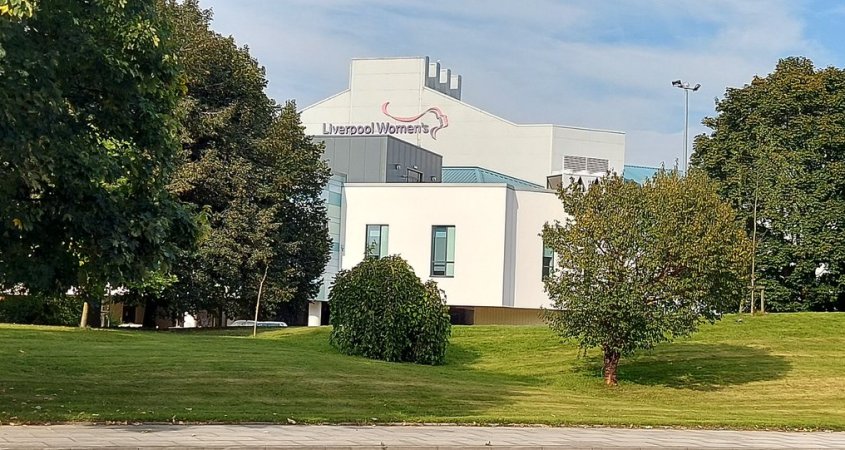
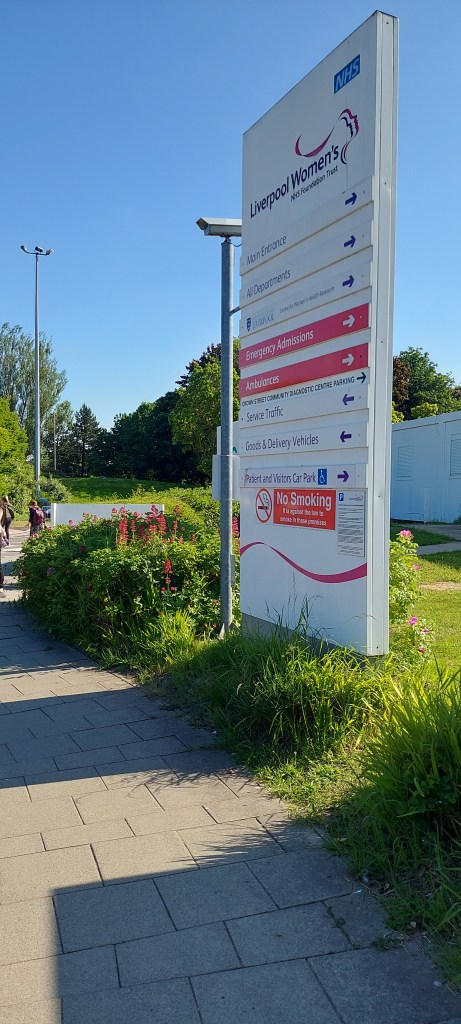
Liverpool Women’s Hospital on the corner of Crown Street and Upper Parliament Street
Campaigners from many organisations say Save Liverpool Women’s Hospital, Restore and Repair the NHS. There are huge problems in the NHS. Maternity and women’s health are just two areas of great concern. In this situation, we say fight for better services, kick out the many privatisation projects, and restore our lost services. Poor, underfunded, fragmented healthcare wrecks a country’s economy, costs lives, and damages individuals and the staff of the service.
This is a quick-fire post responding to questions people have asked about the proposals for the future of Liverpool Women’s Hospital.
Is there really a threat to the future of Liverpool Women’s Hospital? Yes the ICB “engagement” is about Liverpool’s Hospitals’ Maternity and Gynaecological services. There are no other Maternity and Gynaecological services except those at Liverpool Women’s Hospital, so it is about the Women’s Hospital. At the ICB board on the 9th of October, when this “Engagement” was launched, moving all the services from the current site was discussed. This is the link to the “Public Engagement” about the future of Liverpool’s Hospital maternity and gynaecology services. After the “engagement” they will move on to “consultation”. This is part of the closure process and rarely stops, but a big campaign can still stop it.
Where will our babies be born? This plan does not say, but it does discuss moving services from the current hospital. We say “No!!! Save Liverpool Women’s Hospital on the Crown Street site and improve the services there.”
Why do we need women’s health care? Because women’s bodies are different from men’s bodies, because some (but not all) women give birth, because in the UK women’s health has been made worse by austerity, poverty, workplace stress, and pollution. There is a gender health gap. We live longer than men but have more years of ill health, and things are getting worse. It is crucial that women’s health is not subject to more cuts, but rather has massive investment. There is a Liverpool City Council report on women’s health deteriorating in Liverpool up to 2040 here. We campaign for women’s health and for health care for men too.
Where is the money coming from to reorganise women’s health care in Liverpool? There is no mention in the report, nor in the ICB paperwork. Without funding, this is a cut. Liverpool Women’s Hospital has, like other hospitals, been forced to make cuts, they are called ‘cost improvement plans’ but cuts they are, and cannot be made safely. How a massive reorganisation makes sense in this situation of underfunded semi-privatised health care, we do not know. This country can afford world-class healthcare. It is a political choice not to fund healthcare and leave it for the wolves of privatisation who take £10 million a week in profits from our NHS.
Is there money for these plans? No. None has been identified. Both the ICB and Liverpool Women’s Hospitals are underfunded to a serious degree. This is a problem across the NHS but acute for maternity services. For detail see here. Page 56 of the September board meeting gives more detail.
These plans are being led by the ICB. What is the ICB? The ICB is the Cheshire and Merseyside Integrated Care Board. It makes the financial and policy decisions for the NHS in the Cheshire and Merseyside area. The Conservative Health and Care Act 2022 set up forty-two such ICB areas covering the country. Originally they were called Accountable Care organisations. Accountable Care Organisations are an American system. They are intended to cut costs and services, particularly by reducing hospital services. Already this ICB has spent considerably in the private sector.
Is the ICB the same as the Trust? No, but the ICB decides how much money a hospital gets each year and can make policy decisions. A Trust runs hospitals. A trust is the legal body that makes decisions about the hospitals, or in some cases the out-of-hospital services, that it runs. Trusts started in 1991. Then Foundation trusts were brought in in 2004. The idea was that hospitals should run like competing operations. It was a system designed for the private sector to make money. It caused chaos. Lord Darzi’s report has been described as a fig leaf for the government. It describes how bad the situation is so few can now deny the problems. This outright competition is no longer expected, but the laws have not been fully changed. The Government tells National Health Service England what to do, and what it can spend, NHSE then tells the ICBs, and the ICBs tell the hospitals.
What will happen to the site if they take away babies and women? They do not say.
Why do these papers not explain the benefits of Liverpool Women’s Hospital being on a single site? We do not know, but it is a very odd procedure not to include the benefits and costs. The papers do not say what will happen to the Women’s Hospital’s role as a maternal medicine centre for the region, or as a tertiary hospital, which takes complex patients babies and women from other hospitals.
We used to have maternity services available in Fazackerley, Mill Road and Oxford Street. Why close Liverpool Women’s when these services were closed to make way for Liverpool Women’s? We don’t know, and the information published in this report does not make that clear. There were and are advantages to having one maternity hospital and Liverpool Women’s has been good not just for Liverpool women and babies, but as a point of reference for good practice for other Maternity services.
Why the focus on some extremely sick women and not on the thousands of babies born in Liverpool? We do not know. Obviously, sick women and babies are both important.
Staff working at the women’s do not seem to know about this. This is in the public domain. It is not a secret. The plans started ten years ago when the then-head of the CCG (a kind of forerunner of the ICB) announced on Panorama that there were too many hospitals in Liverpool. The next day the Echo said the Liverpool Women’s Hospital was to close. The current documents are similar to the documents produced previously. The original document “Future Generations” formed the basis of the (ridiculously expensive) Carnall Farrar report in 2022, and in turn, this document follows Carnall Farrar.
What’s this about a merger with the Royal, Aintree and Broadgreen? The Royal, Aintree, and Broadgreen formed the Liverpool Universities Hospital Foundation Trust (LUFHT)in October 2019. Liverpool Women’s is now working closely with the LUFT, and sharing a board. That has happened without any public consultation and little discussion at the public meetings of the board. It has not been led by the ICB but by the two trusts. The first joint board meeting is to be this month (November 2024). Legally, the two trusts still exist but have delegated their responsibilities. There was no public consultation on this. The hospitals plan to form a similar committee with the specialist hospitals, Clatterbridge, The Walton Centre and the Liverpool Heart and Chest. For now, it looks like the funding for the specialist hospitals will be ring-fenced, but eventually will be part of the ICB funding system“Today’s NHSE board paper says it will “ringfence” specialised commissioning allocations to ICBs which have the most severe financial problems, including “reserves and discretionary growth funding meaning they could not use it to support other services.” HSJ 7th Dec 2023. However, the joint committee of the hospitals in Liverpool will control finance and staffing for all the hospitals. Where will women’s health stand then? What about our babies? There is a real danger of funding meant for maternity and women’s health being pushed to the background as has happened for a decade nationally.
Can the services just go to the Royal? The Royal has had many problems, not least the loss of beds, ongoing building problems with the new building and the demolition of the old building. There is no room for 7,000 plus babies a year, nor thousands of Gynaecological treatments.
Is there going to be a new building? Highly unlikely, and we think not required. The NHS has a huge problem with building maintenance. Money for buildings is referred to as “capital” to distinguish it from day-to-day spending There is a £13.8 billion backlog, more than the whole capital budget for the year. Darzi’s report said there is a shortfall of £37billion in capital requirements. Some hospitals are practically falling down. Capital spending covers not just buildings but the most expensive equipment, such as intensive care beds (where the UK falls way behind Europe), and robotic surgery, which has excellent results in pain management and length of stay in hospital. Liverpool Women’s Hospital is a good building on a good site.
It is hard to get to Liverpool Women’s Hospital on the bus. What happened to the round the hospitals’ bus service? It was supposed to be every half hour. We are trying to find out. This will be updated when we find out.
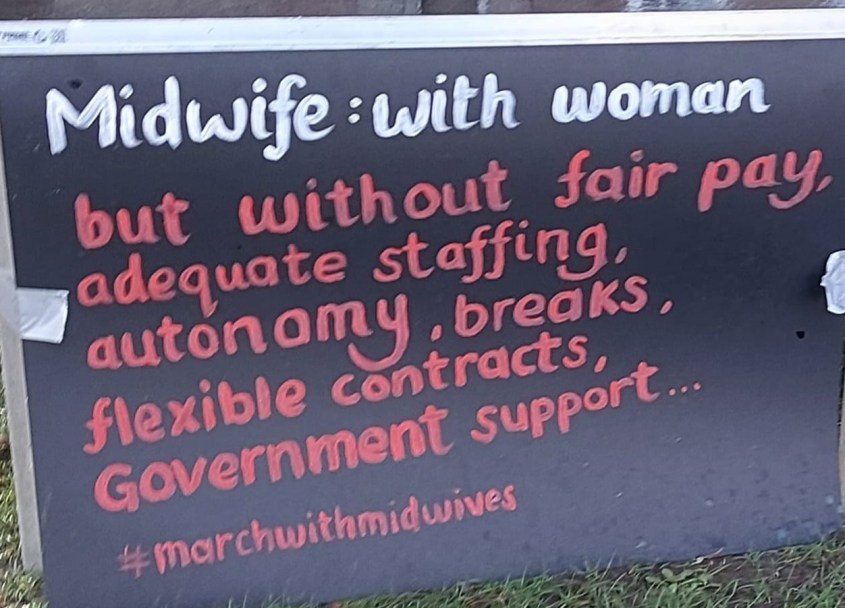
How does this address the national maternity crisis? It does not address these issues, which are preventable baby deaths, harm to mothers giving birth and postnatally, funding of staffing, birth trauma for mums and babies, and immense stress for staff. Midwives have made their complaints loud and clear, but despite the many formal hearings into the issues, little progress has been made. Please see here for the list of reports on maternity. None of the hospitals mentioned in these tragic reports were standalone maternity hospitals. The UK does not get into the top twenty countries worldwide for the lowest infant mortality. One in seven maternity units have been closed in the last ten years despite fine talk about choice. The pressure in maternity wards is clear to see.
Is it worse to give birth now than a few decades ago? Yes. Maternal mortality has worsened in the UK. It is now more dangerous to give birth in the UK than it was in in1985 “In the United Kingdom of Great Britain And Northern Ireland, the maternal mortality ratio (per 100 000 live births) has worsened by 1.41 deaths per 100 000 live births from 8.43 [7.66 – 9.26] in 1985 to 9.84 [7.89 – 12.2] in 2020.” (see the link above for details).
Does the report on Liverpool’s hospital maternity and gynaecological services have data or comparators? No comparators, no impact assessment, no equalities assessment, no concrete data, no mention of the dreadful state of maternity finance or the state of the ICB finances. All we are given is unsupported assertions and broad generalisations.
Is the Liverpool Women’s Hospital really “isolated”? No, it is closer, by far, to the Royal,(just one mile down the road) than Broadgreen and Aintree are to the Royal Building or the other two hospitals, even though technically they are one hospital. Liverpool Women’s Hospital has worked as a system with other Cheshire and Merseyside hospitals since the Pandemic through CMAST and has mutual arrangements with other hospitals to operate or collaborate in other buildings, as they should. It is “isolated” in that it is a separate Foundation trust, not part of a bigger hospital but being part of a bigger hospital has far from protected maternity across the country.
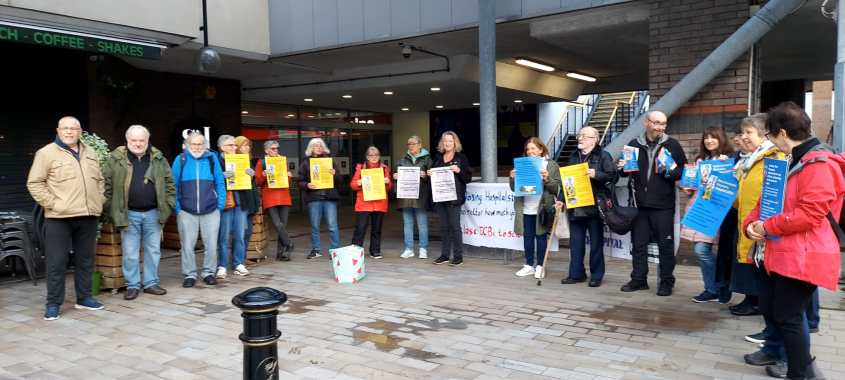
Evidence of the financial problems in the ICBLobbying the ICB meeting on the 9th of October2024
Save Liverpool Women’s Hospital campaign was set up after the first attempt to close Liverpool Women’s Hospital nine years ago. We have attended all the public board meetings of the Women’s Hospital and board meetings of the ICB and studied their papers. We have attended conferences, run stalls, produced leaflets, run workshops, and produced this blog. We work closely with other NHS campaigns in Cheshire and Merseyside and nationally. Our campaigners include a range of ages, occupations, women and men, trade union members and pensioners.
The ICB ( integrated Care Board), which organises funding and policy for healthcare in Cheshire and Merseyside, announced the first stage of closing Liverpool Women’s Hospital on October 9th. In the past, we have won the battle to keep Liverpool Women’s Hospital open; we can win it again!
Who are we? We are a group of campaigners who have followed this issue since the first attempt to close Liverpool Women’s Hospital. We attend all the Liverpool Women’s Hospital Board and ICB meetings, ask questions, and read all their paperwork. We work with the other campaign groups for the NHS and with local trade unions. We are not a section of any political party.
This presentation was given at the Save Liverpool Women’s Hospital Workshop a few days after the ICB announced its plans for Liverpool Women’s Hospital. We hope it can now be seen by those who could not attend the meeting.
Please help save our hospital by talking to people about the women’s hospital and the NHS, signing our petition, writing to the ICB, talking to your MP, and raising it at your union or campaign organisation. Also, help give out our leaflets, posters, and banners.
Please send us your comments, and help us hear what people think.
Please send donations to the campaign!
Other important issues face us as patients and staff in our health services in Cheshire and Merseyside and nationally, not least the so-called Winter Crisis, access to GPs and Dentists, the use of PAs under and unqualified staff, staff workload, and more.
We have too few beds, too few doctors, and a population made sicker by the denial of timely treatment.
The government has the power to change all this. Investment in healthcare, (when that investment reaches the patient and the staff, not some big corporation), is the best investment a government can make, with huge returns financially and socially.
I am writing to you as my MP. I support keeping Liverpool Women’s Hospital at Crown Street. Please intervene to keep Liverpool Women’s Hospital fully functioning on Crown Street. I don’t care how much Spire wants the site.
As an MP, you will know about the many reports on the problems in Maternity nationally and the issues with women’s health in these years of austerity. You know about the increased risk babies face at birth in areas of poverty like Liverpool. Surely you do not support cuts to Maternity services?
The hospital needs much better funding, and all hospitals should work together cooperatively. We have a national Maternity crisis. Closing Crown Street will make things worse for all our mothers, daughters, sisters, friends, lovers, and babies.
The NHS faces an appalling winter crisis in winter 24-25. Make sure the NHS is funded and equipped to save lives, not cost lives.
Hospitals should be organised as Nye Bevan intended, a cheaper more effective system than any the Thatcherites designed.
I oppose racism. In the year we have seen the worst race riots this century, closing Liverpool Women’s Hospital at Crown Street is a slap in the face for all anti-racists. That hospital is seen as a safe space. It was built not so long ago as part of the reparations for the racism of the past.
I would like an appointment to discuss this with you.
I am writing to tell you, as my MP, just how worried I and many others, are about the situation in the NHS in Cheshire and Merseyside. We ask that you intervene.
Lord Darzi said, “The British people rely on it ( the NHS) for the moments of greatest joy – when a new life comes into beingand those of deepest sorrow.”
The current plans and lack of plans for operating with this lack of resources in Cheshire and Merseyside will damage the moments of joy and increase those of deepest sorrow.
I draw your attention to the threat to Liverpool Women’s Hospital.
I have followed the meetings of the ICB and of Liverpool Women’s Hospital. The financial situation for both organisations is unacceptable. It is wrong that the place where so many babies are born is so short of the money required to operate day to day.
The start of the process of closing Liverpool Women’s hospital, from the meeting on October 9th, is very worrying and cannot be isolated from the general crisis in the NHS. Please consider the following points
Liverpool Women’s Hospital is valued by the women of Liverpool and the public, with seventy-five thousand people signing the petition to save Liverpool Women’s Hospital. There have been three big rallies on this topic. The closure of this hospital will further damage the health of women and babies in Liverpool and the wider area. It is a regional maternal medicine centre. It is a tertiary referral centre for gynaecology, performing approximately 10,000 procedures per year. Liverpool Women’s Hospital is seen by the women of Liverpool and beyond as a safe place in an era of growing violence against women and in the context of declining health amongst women, as the parliamentary report showed
The CQC describes Liverpool Women’s Hospital as safe. Despite several recent visits, the CQC did not raise any of the issues raised by the ICB report of 9 October. Other issues related to staffing and safety in maternity were raised, but this is one of the safer maternity units in the country.
The document presented to the ICB on October 9th technically started the pre-consultation engagement about moving Liverpool Women’s Hospital services from Crown Street. Yet it gives no explanation of where our babies will be born, where gynaecology or all the other services will move to, or the indication of capital to provide alternative premises. There is no risk assessment or impact assessment.
Nationally and locally, the experience of women giving birth has deteriorated and this has done much damage. There is a maternity crisis in the UK following years of underfunding, understaffing and the disastrous outcomes of the 2012 Health and Care Act, as described in the Darzi report. It is widely anticipated that another heart-breaking report on Maternity services from Donna Ockendon will be published next month, this time about Nottingham. No one working in or around Maternity can deny the existence of this crisis. In this situation, women are angry. The CQC’s September 2024 report on the maternity service nationally said https://www.cqc.org.uk/press-release/action-needed-now-prevent-harm-maternity-services-becoming-normalised
The staffing system at Liverpool Women’s Hospital and other NHS maternity services rests on Birthrate Plus, which urgently needs review. We need better services for the babies, the mothers and the staff. Mothers and babies need more attention, and only increased staff can deliver this.
Liverpool Women’s Hospital has serious financial problems, with a deficit of 19% recently reported. The Maternity tariff on which much of their income rests is inadequate, nationally and locally. This tariff level is a core driver of the national Maternity crisis. Liverpool Women’s Hospital is currently fully staffed with midwives, at least according to Birthrate Plus, thanks to the recruitment of newly qualified staff. As with the national service, the loss of older staff who left in disgust at the safety of the whole Maternity service leaves intense pressure on these new midwives.
The health of Liverpool’s babies must have priority, especially as childhood health in Liverpool, already damaged by poverty and pollution, is not mentioned.
Liverpool Women’s Hospital is based in Crown Street Liverpool 8. It was built as part of Project Rosemary, a gesture of reparation for the terrible racism that the area has suffered. To remove the hospital in the same year as the worst race riots in Liverpool since Charles Wooton was killed is truly a slap in the face for all anti-racists.
Liverpool Women’s Hospital is one mile from Liverpool Royal Hospital; it is not “isolated.” Other branches of Liverpool Universities Hospital Foundation Trust are much further away from each other, and patients move between these buildings. The 2012 and related legislation introduced the business model, making each hospital a competing entity with other hospitals. This must change. Hospitals must work cooperatively.
One risk mentioned in the ICB document is that deteriorating women cannot be managed at Liverpool Women’s Hospital, yet the trust board has reported major improvements in this. No hospital can guarantee never having to move a patient to another hospital. About 10,000 such moves happen annually in the NHS. At present there is not a critical care unit (CCU) available at LWH. There is a high dependency unit (HDU) at Crown Street and staff working on the gynaecology HDU have undertaken training for critical care.
Another risk mentioned in the document is that other hospitals in Liverpool do not have staff to deal with pregnancy or other gynaecological conditions. This must be addressed, but not by closing Liverpool Women’s Hospital.
Another risk mentioned is that services might be moved out of Liverpool if certain specifications are not met. But this report does not say where Liverpool’s babies will be born. Will that, too, be sent out of Liverpool?
Risk 4 discusses recruitment and retention difficulties. Midwives at LWH face no recruitment problems. The problems with other specialities are national, not local.
In the weirdest contradiction, Risk 5 says, “Women receiving care from hospital services, their families and the staff delivering care may be more at risk of psychological harm due to the current configuration of services.” Closing Liverpool Women’s Hospital will definitely risk psychological harm, as the place we see as safe is taken from us against huge popular opposition.
The engagement events are inadequate. Only two of these events are not in working hours, none are in North Liverpool or locally in central Liverpool. It requires time and some computer skills to register for them.
I also have serious concerns about the NHS winter crisis 2023-24, which the ICB has been clear will not be better than last year. The ICB is underfunded ( but spends too much on financial consultants and contracts, driven to do so by NHSE.) It is also under pressure to get the Liverpool Specialist Hospitals, Liverpool Heart and Chest, Liverpool Walton Centre and Clatterbridge Cancer Centre firmly into the cash-strapped ICB control. Liverpool Women’s Hospital is also partially funded through the specialist hospitals programme and is affected by this move from national to local funding.
I recall the announcement nine years ago that one Liverpool Hospital must close, and then it was announced that Liverpool Women’s Hospital was the one they had chosen. The chaos over Liverpool Royal New build and PFI, plus the pandemic, gave some breathing space, but the coming of the ICB and NHSE’s determination to reduce the number of hospitals in Liverpool have brought this back to the table.
I would like to discuss this with you personally.
For all our mothers, daughters, sisters, friends, lovers and babies, Save Liverpool Women’s Hospital
These are notes from Lesley Mahmood and Sheila Altes, who gave the first responses to the proposals from the public presented at the ICB meeting on October 9th 2024. A more detailed response is being prepared. The ICB is the “Integrated Care Board” the big bosses of the NHS in Cheshire and Merseyside. You can find their papers here. The recording does not show the questions and contributions from the public but you can see some of those contributions on another post on this blog.
Points & questions for the ICB’s public meetings
(ALWAYS SAY YOU WANT YOUR COMMENTS NOTED IN DETAIL)
HOW & WHEN HAVE THESE PUBLIC MEETINGS BEEN ADVERTISED TO THE PUBLIC?
“I want to question the whole basis of this meeting, this process and the nature of this ‘consultation.’
“Losing LWH at Crown St has been the ambition of NHS decision makers since March 2015 when the then chair of the CCG on Panorama stated Liverpool has too many hospitals & 1 has to go. The Echo had a story about it the day before. The day after the Panorama programme, the Echo’s lead story was the Women’s Hospital to close. That’s when our campaign started.
This 2024 ‘proposal’ is against the backdrop of closures of hospitals, A & Es, 1,000s of beds up & down the country. Some of these same decision makers told us that the Royal PFI/Carillion build with PFI & 300 fewer beds, a smaller A& E would meet the needs of Liverpool. Instead, we had massive debt, delays, A& E overwhelmed, 12-hour waits, and corridor care.
Why avoid saying what’s to become of the Crown St site (on p.109 of the ICB document)?
In the last 12 months the ICB has indicated that £150m+ for an equivalent new build on the site of the old Royal is ‘unlikely’ ‘n the next 10 years. £150m is the deficit of the ICB. In Cheshire & Merseyside, Leighton is the only likely new hospital, which is falling in due to its crumbling concrete.
So where’s the capital ( the money for buildings and costly equipment), or will we have 1 or 2 small Maternity wards tacked on somewhere? This will cause the ethos of the Women’s Hospital to be lost.
What will replace LWH at Crown St? It’s not good enough to say it will be used by the NHS; who will provide them, private companies like Spire/ Spa Medica? Under the Naylor Report, surplus’ and not fit for purpose NHS buildings or land is to go up for sale. We have been told by staff in Spire that Spire is very interested in Crown St.
Why should a £15m new neonatal unit & a new scanning unit of several £m be scrapped?
Women in Liverpool 8 & beyond regard LWH at Crown St as a safe space, a green space (good for recovery & mental health), a low rise, easy to get into in an emergency, especially valued by the L8 community, who regarded the LWH being developed at Crown St as part of Project Rosemary after the Toxteth Uprising of 1981 as some compensation. The wife of the Dean of Liverpool signing our petition recently said -he was 1 of the people responsible for Project Rosemary. The LWH is also valued by the other 75,000 people who have signed our petition.
There’s no mention of the positive impact of LWH being based at Crown St. On p.107, it is claimed that Crown St means worse gender inequality. Where is the evidence for this? On p.63, for instance, the maternal mortality is in line with national data and where is the equality impact assessment referred to on p.110?
The ICB document talks about 5 risks at Crown St, I want to question these.
RISK 1. Acutely deteriorating women cannot be managed onsite at Crown Street reliably, which has resulted in adverse consequences and harm.
( We know this experience can be horrible for the women involved)
The paper cites the cause as a lack of onsite services and specialist staff, e.g. critical care, medical and surgical specialities and 24/7 blood transfusion labs. At present, there is not a critical care unit (CCU) available at LWH, but there is a high dependency unit (HDU) at Crown Street and staff at the gynaecology HDU have undertaken training for critical care.
The Core Standards for Intensive Care Units (2013) state that it is preferable to have an intensive care unit on site, but units without such a provision must have an arrangement with a level 3 CCU and a policy for the safe transfer of patients when required. LWH has such an arrangement with the Royal Liverpool University Hospital (RLUH) which is situated 1.3 miles away.
A lack of medical and surgical specialities was also cited. A Medical Emergency Care Team is being recruited to enable optimal care and transfers if necessary. LWH is also participating in the “deteriorating patient collaborative” to improve earlier recognition of clinical deterioration. There are clinical pathways in place for the acutely unwell/critically ill pregnant or recently pregnant woman. Women with complex needs are seen at specialist clinics, where a consultant obstetrician and consultant in the relevant specialism will plan the treatment necessary to ensure optimal care. LWH is the recognised provider of high-risk Maternity care and complex gynaecology procedures in Cheshire and Merseyside. Emergencies will inevitably occur, and a transfer to a CCU will be needed. Inter hospital transfers of critically ill adults take place frequently, it is estimated that 10,000 of such transfers take place annually in the UK (BJN 22/04/21).
A 24/7 Blood Transfusion lab is to be developed at the Crown Street site. As well as the extension of some laboratory services.
Given all of these developments and the small number of patients being transferred to CCU (see page 46 of the Case for Change), why does the ICB consider co-location necessary, especially in a time of financial restraint?
RISK 2: When presenting at other acute sites (e.g. A&E), being taken to other acute sites by ambulance or being treated for conditions unrelated to their pregnancy or gynaecological condition on other sites, women do not receive the holistic care they need.
Board papers state that the risk is caused by a lack of women’s services and specialist staff at other sites in Liverpool. However, it is difficult to see how re-location would solve this if LWH is re-located to the RLUH; women are still likely to turn up at the Aintree site and vice versa.
Is the ICB looking at Maternity and gynaecology services at 2 different sites? How will this fit with LWH as a Maternal Medicine Centre (MMC)?
LWH has its own Emergency Department with much shorter waits than the Royal/Aintree A&Es, if LWH is moved, will its Emergency Department close and women have to queue up in the general A&Es?
This dispersal of services would not fit with the ethos of a specialist hospital for women, and that surely would be a gender inequality, as women’s health differs from that of men in many unique ways. It is influenced by biology and conditions such as poverty, employment and family responsibilities. Women’s reproductive and sexual health have a distinct difference compared to men’s health. (Cardiovascular disease, common to men and women, can lead to pre-eclampsia in a pregnant woman. Sexually transmitted infections can cause such outcomes as stillbirth or neonatal death. Other issues impacting women’s health include unplanned pregnancy, non-consensual sexual activity, domestic violence and female genital mutilation). Centres of excellence in women’s health, such as LWH, can advance research and large-scale clinical trials to address these issues, but the dispersal of services cannot.
RISK 3: Risk 3: Failure to meet service specifications and clinical quality standards in the medium term could result in a loss of some women’s services from Liverpool.
Maternal Medical Centres (MMC) are responsible for ensuring that all women on the network’s footprint with significant medical problems will receive timely specialist care and advice before, during, and after pregnancy. LWH has been selected as one of 3 MMCs within the North West, along with St. Mary’s Hospital in Manchester and the Royal Preston Hospital in Lancashire. The model of care ensures that the highest risk and most complex women will have most of their care delivered by the MMC.
No hospital in the UK is equipped to deal with every eventuality. Therefore, it is inevitable that patients sometimes have to travel outside their area.
At present, women with complex congenital heart conditions are sometimes treated in Manchester. The RLUH cannot deal with some complex bowel surgery, and patients sometimes have to travel to the Christie Hospital also in Manchester. Yet, there are no questions about relocating the Royal, so why the Women’s Hospital?
Risk 4: Recruitment and retention difficulties in key clinical specialities are exacerbated by the current configuration of adult and women’s services in Liverpool.
Recruitment and retention of staff is a national crisis in the NHS as a whole and not just in Maternity services.
There has been a 9-year threat to reconfigure services at LWH, which may have hurt recruitment.
As a teaching hospital, LWH is a centre of excellence in the provision of undergraduate and postgraduate medical education and training. LWH has a highly active multidisciplinary research programme that includes research into Maternity studies, gynaecology studies, fertility studies, genetics, oncology and neonatal studies.
The claim that the difficulties in recruitment are caused by an inability to provide comprehensive multidisciplinary team working and training on acute sites makes Liverpool Women’s Hospital a less attractive place to work is hard to believe. We favour joint appointments and joint working to provide comprehensive training and development opportunities.
Governments have deliberately reorganised and underfunded the NHS. There is a national Maternity crisis. Maternity nationally has historically been underfunded through the Maternity tariff. This affects LWH particularly. So, fund it, don’t lose it!
RISK 5: Women receiving care from hospital services, their families and the staff delivering care may be more at risk of psychological harm due to the current configuration of services.
In a time of increased misogyny, violence towards women and austerity policies that disproportionately affect women, LWH is seen by all women of all ethnicities, as a safe place for women.
For the last 14 years, NHS staff have been underpaid, overworked, and undervalued, conditions exacerbated by the pandemic that still continue. The Ockenden review highlighted these issues throughout the country, so psychological problems are not exclusive to the Women’s Hospital.
In a recent staff survey for the LWH Board, 49% of staff feeling negative about their work said they felt overworked. (p.24 People Pulse report, LWH Board papers 10.10.24)
Ockenden called for more staff, more midwives, and more Maternity funding. We need more midwives & we need to keep experienced midwives to support newer midwives.
On the 9th and 10th of October, there were two developments about Liverpool Women’s Hospital.
The Integrated Care Board, the funding and organising body for Cheshire and Merseyside NHS, agreed to start the process that can lead to the closure of Liverpool Women’s Hospital. We think this will damage care for women and babies. We have had enough of hospital closures and shortages of hospital beds.
The final meeting of the Liverpool Women’s Hospital Board was held. In future, the decisions about LWH will be made at a joint meeting of the board of Liverpool Women’s Hospital Trust and the board of Liverpool Universities Hospital Trust. Behind this is the appalling state of finances for maternity care nationally, especially for Liverpool Women’s Hospital, the largest Maternity provider in the country.
While these changes are being debated, the Women’s Hospital stays on the Crown Street site and continues functioning.
You have a right to say “No.” Never forget that right to say NO!
The NHS must listen to the people. We need your voice. These proposals do not discuss finances, nor do they discuss where our babies will be born in future or what will happen to the current Liverpool Women’s Hospital site on Crown Street. They just legally clear the way to close Liverpool Women’s Hospital.
Liverpool Women’s Hospital is where most of Liverpool’s babies are born. It is the largest centre for Cheshire and Merseyside for gynaecology and women’s health. It also provides other services in a good building on a pleasant green site. Liverpool Women’s Hospital has far less traffic around it than does the new Royal. One of the reasons given for closing Liverpool Women’s is that other hospitals don’t provide safely for women who happen to be pregnant. Those hospitals should be improved, not used as an excuse for closing Liverpool Women’s Hospital.
NHS England wants all hospitals in the envelope of the ICB system rather than having specialist hospitals with favourable specialist funding given nationally. This affects The Heart and Chest Hospital at Broadgreen, the Walton Centre and the Clatterbridge Cancer Centre. This follows the US Accountable Care Model.”Accountable care organizations (ACOs) were created to promote health care value by improving health outcomeswhile curbing healthcare expenditures” They were designed for healthcare provided by private for-profit corporations, not for a public service system like the NHS.
Within Cheshire and Merseyside ICB, there are “Places” These places are the groups of NHS services within each local government area. Liverpool Place is responsible for all these hospital reconfigurations even though each hospital serves an area wider than Liverpool.
According to many different reports and our own experiences, we have a Maternity crisis and a crisis in women’s healthcare. NHS problems, though extreme for women, are not exclusive to Maternity and women’s health care but extend to A&E, the GPs, dentistry, mental health, the considerable waiting lists for treatment and much more.
We are holding a workshop at 7pm on Monday 14th October at the Quaker Meeting House School Lane Liverpool behind Primark in the city centre. It will also be available via Zoom. Please register here. You do not need to be an expert to come to this workshop; you just need to be a human who cares about safe healthcare as public service or is interested in the issues.
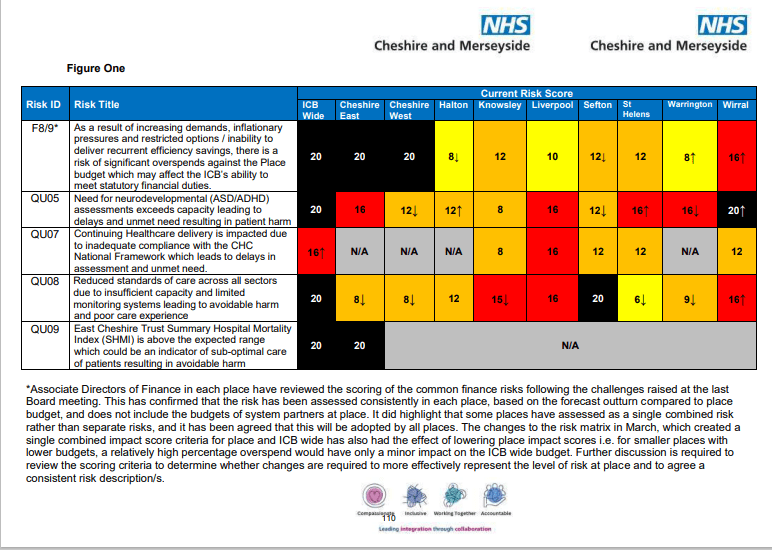
The ICB is in financial difficulty caused by underfunding and by money sucked out through privatisation. Below is the ‘heat map’ of risks facing the Cheshire and Merseyside ICBs. Black 20 is the highest risk level. This is from the ICB public papers for the September meeting.
Maternity and women’s health have been underfunded and under-staffed for the whole time the Conservatives were in office. This must change. We did kick that government out. Remember?
We need improvements at Liverpool Women’s Hospital and the other hospitals in Merseyside and Cheshire. We need funding for the winter crisis. The prospects for the winter crisis look bleak. The ICB should be spending money on the winter crisis and improving our services, not closing services.
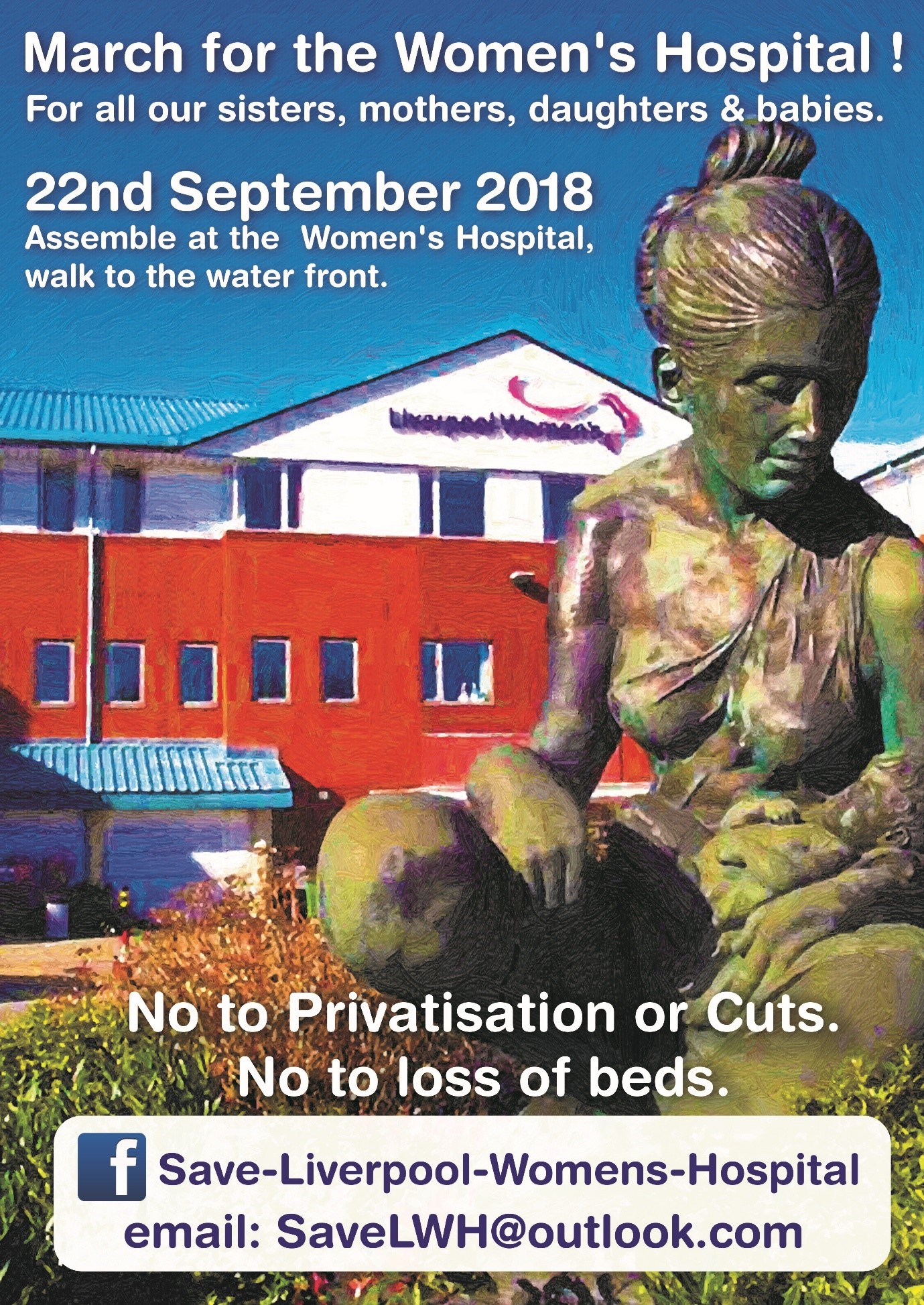
The ICB will hold public engagement meetings in the next six weeks about the ICB’s plans to close Liverpool Women’s Hospital. As we write this, we have no idea where or when the meeting will be held. Please do go to these meetings if you can. Do not be afraid to say NO!
The whole NHS is in crisis. The general election has not (yet!?)solved this situation for the NHS. It is still underfunded and still being restructured toward final privatisation.
The winter crisis is set to be worse than last year’s estimated 300 excess deaths per week. People will have more pain and more time being unwell. More people who would not otherwise die will do so unnecessarily. Yet all of Liverpool, Merseyside and most of Cheshire voted Labour. Tell your MP to solve this situation to stop the damage to the NHS. They have the power to do so if they have the political will.
There is a significant difference between the management of the NHS nationally and at the Integrated Care Board level and the work of NHS staff who treat us as patients. We can disagree with NHS bosses and national, regional, and ICB managers without disrespecting the NHS workforce, doctors, midwives, nurses and all the other roles in the NHS who do great work under challenging conditions.
Do not wait until the winter or Maternity crises hit your loved ones.
Join us in the campaign to Restore and Repair the NHS.
What you can do
Talk to your friends, family and workmates about the NHS. Every powerful campaign starts with talk.
Remind people that health care strengthens an economy and makes people healthier and happier. No economy can be strong with millions unable to work while they wait for treatment. We must afford good health care for all our mothers, daughters, sisters, friends, lovers and all the babies. Each person is born just once. We have to make birth as safe as humanly possible, which is safer than the UK currently manages. The UK are 18th in the safety ranks. Once we were up at the top.
Go to the so-called public engagement meeting the NHS is organising to sweet talk you into agreeing with their cuts and tell them what you think; don’t just be disgusted; tell them so!
Raise the state of the NHS with your union. This can be powerful.
Email your MP or get an appointment to see them.
Talk to your councillor. They have a role in this through the Place Partnership board.
Sign our petition.
Help our campaign! Help distribute leaflets, posters, banners, and social media posts.
Today, October 9th 2024, the ICB started the legal process that will allow them to close Liverpool Women’s Hospital. The papers for this meeting can be found here. Campaigners opposed the plans. We include videos of some of the contributions in this post.
Protestors outside the ICB meeting discussing the future of Liverpool Women’s Hospital.
The document did not discuss the financial situation or alternative provisions, nor did it include an assessment of the benefits of having a stand-alone Women’s Hospital.
After decades of cuts in healthcare and growing crises in women’s health and Maternity, there is naturally great concern about these plans. Similar plans have been put forward before. Seventy-five thousand people have signed our petitions to keep Liverpool Women’s Hospital open, and we have held three large demonstrations over its future.
Act now to avoid the winter crisis, with patients dying because of the long waits.
Keep Liverpool Women’s on the Crown Street Site and staff it well, with all the specialisms required to improve care and minimise transfers out of LWH. Give it long-term security.
Improve the intensive care at Liverpool Women’s Hospital.
Make all hospitals work cooperatively, not as competing organisations.
Protect the Emergency Departments at Liverpool Women’s Hospital.
Provide emergency Obstetric and Gynaecological care at the A and E at the Royal and Aintree.
Nationally, address the workforce training issues that have resulted in shortages of key roles, like anaesthetists.
Make the NHS a great place to work.
Act against the racism that damages the health of women and babies health.
Protestors holding a small sample of our petitions.
Liverpool Women’s Hospital opened in 1995. It is a modern low-rise hospital on a garden site in good condition. It provides maternity care and gynaecology for most of Liverpool’s women. About seven thousand babies are born there each year. It has a new large neo-natal unit and provides other linked services. It is just over a mile from the Liverpool Royal Hospital site.
Lesley Mahmood for Save Liverpool Women’s Hospital.Part one
The second half of Lesley’s speech
The ICB (Integrated Care Board) now runs finance and planning for the Cheshire and Merseyside area of the National Health Service, one of 42 such areas in the country, following the 2024 Health and Care Act. The aim is to bring all health spending for the area into this body and to restrict that spending. This mimics the Accountable Care boards that operate in some US States or cities. In the US, these organisations comprise one big or several small private healthcare corporations providing healthcare for profit. The Government provides funding, and the corporation profits by restricting the service. There has been a revolving door between the leaders of the NHS and the big US health corporations for some time, and there are close links between the governments and those big US health corporations. For details, see here.
This is an American definition of ACOs. “Accountable care organisations (ACOs) are defined as groups of clinicians, hospitals, and other healthcare providers who work together to provide high-quality, coordinated care to a defined population. If an ACO meets quality standards, achieves savings, and meets or exceeds a Minimum Savings Rate, the ACO will share in savings based on the ACO quality score.“
Felicity Dowling speaking for Save Liverpool Women’s Hospital Campaign.
The very grave financial difficulties of the NHS, this ICB, and Liverpool Women’s Hospital were not discussed. It was presented as a purely clinical case – as though such an idea is possible in such a funding crisis for the NHS. The Liverpool Women’s Hospital has been structurally underfunded for many years. The Maternity tariff and Birth rate + are inadequate. This funding problem affects all Maternity units nationally. Still, the impact is starker at Liverpool Women’s because it is such a large Maternity unit and does not share its budget with a general hospital. The Government made up some of the difference until the ICB was formed two years ago, but that has ceased. Many of the very real problems at Liverpool Women’s over the last few years stem from this chronic underfunding.
Greg Dropkin speaking at the ICB meeting. Greg is from Keep Our NHS Public.
Today’s meeting will be followed by a public engagement period, during which the public might be allowed to contribute to the discussion.
We believe Maternity is massively underfunded, and that is at the core of the national maternity and birth trauma crisis.
There were no alternative plans put forward as to where our babies will be born or where women’s health care will be delivered.
The core case made was that the most severely ill patients have to be transferred to the Royal, one mile away, and that women with obstetric and Gynaecological issues who present at the big A & E do not have on-site obstetric or gynaecological care available at those big sites.
Protestors reminded the board that the plans to close one hospital in Liverpool date back to 2015 when the then-head of the Clinical Commissioning Group announced them on a panorama programme.
Sheila Altes responded about some of the risks in the document.
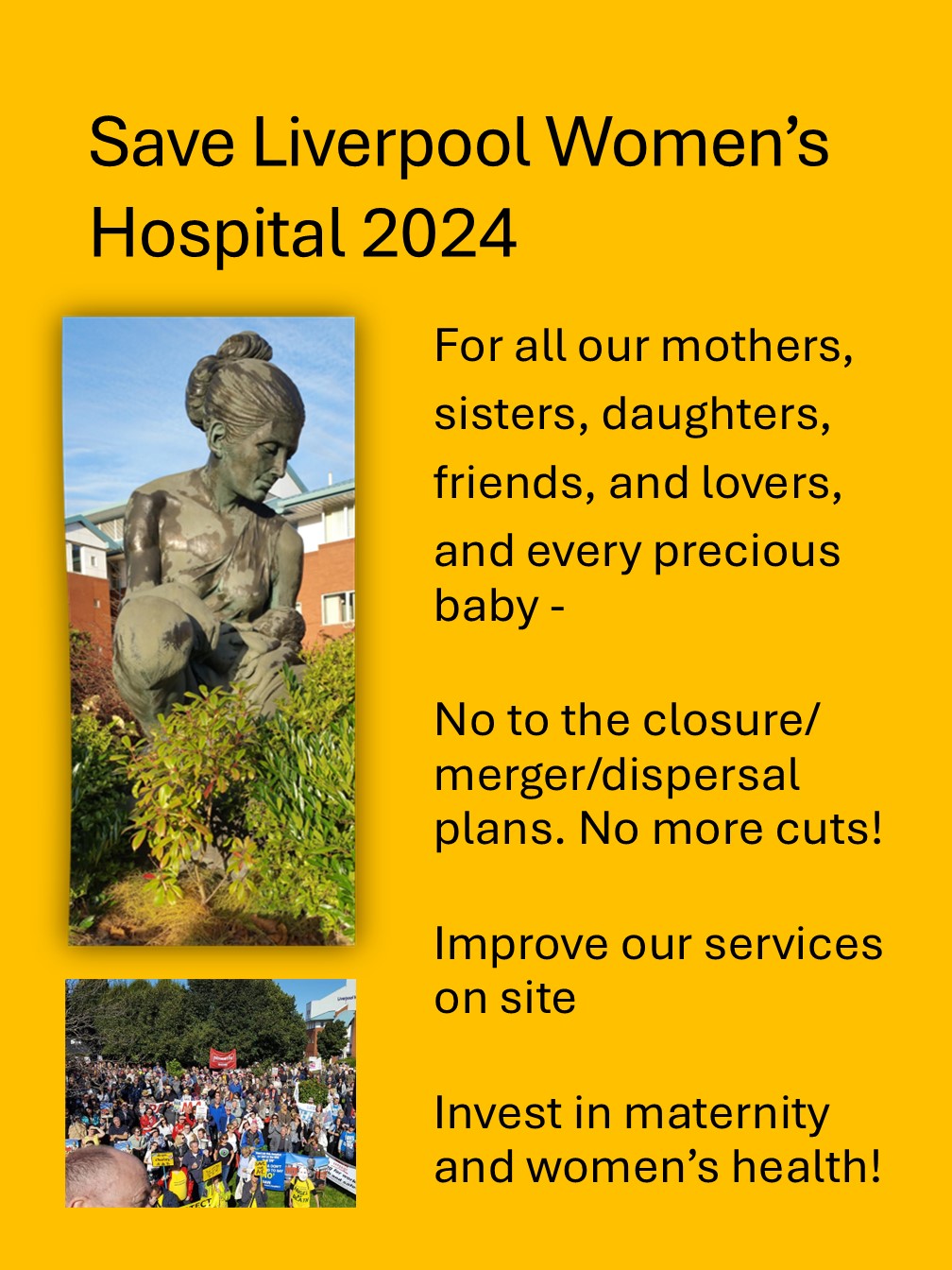
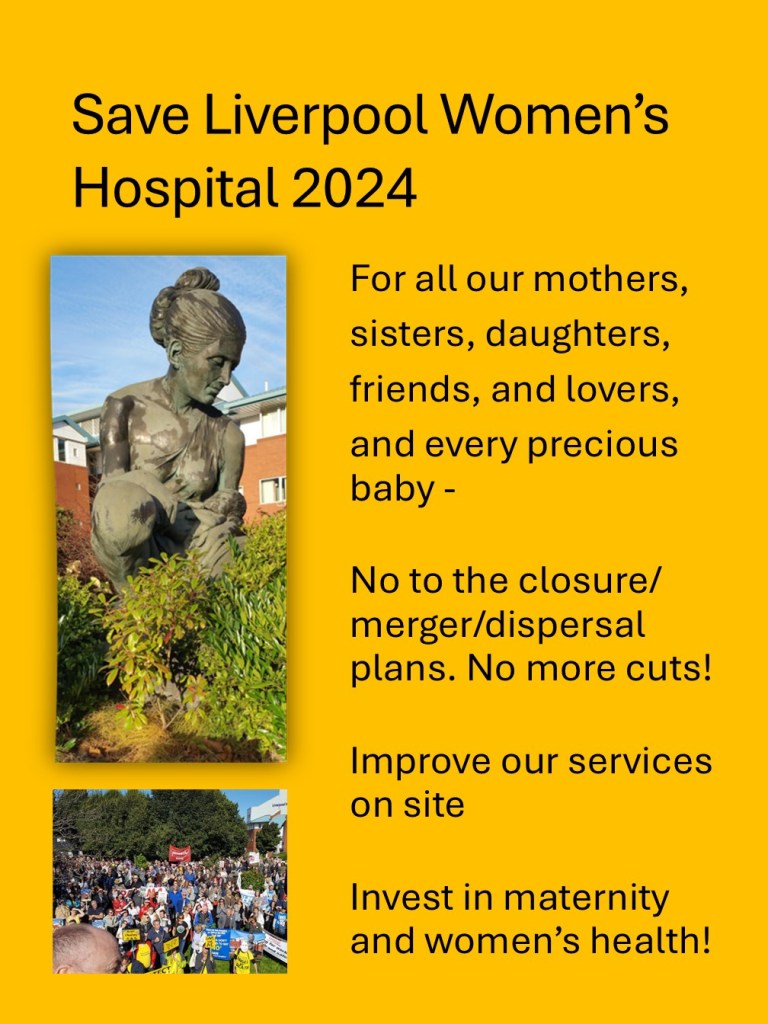
Save Liverpool Women’s Hospital 2024 for all our mothers, sisters, daughters, friends, and lovers and for all the babies.
The ICB meets on Wednesday, October 9th, to put forward its latest attempt to close Liverpool Women’s Hospital.
Without the long and publicly promised consultation, before proposals were made, the ICB is determined to close our much-needed hospital.
Our campaign rejects any attempts to close, merge, disperse or cut services for the women and babies of the whole area. None of the half-suggestions in the papers will improve anything for women or babies.
Such papers are impossible to evaluate without a financial statement, research background, and impact assessment, all of which are missing from the proposals.
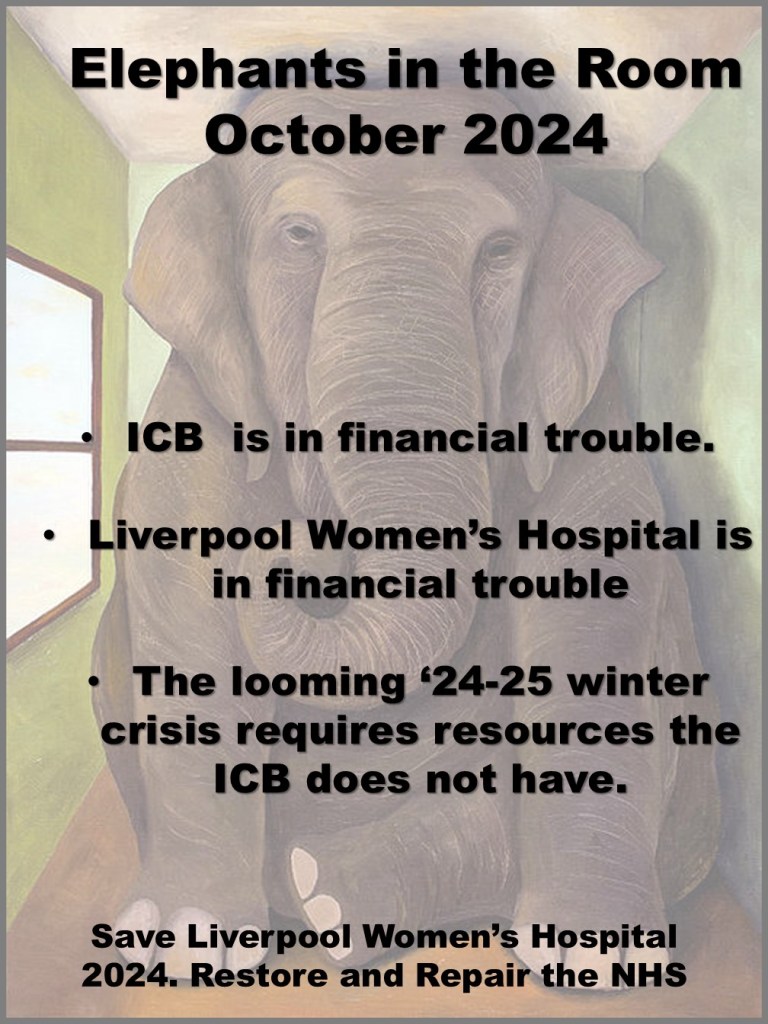
The financial background for the whole NHS is grim. The last government’s financial plans and policies are still in place. The ICB in Cheshire and Merseyside is in severe financial trouble. There is a looming winter crisis. NHS England has said that the trusts must squeeze staff costs, and there is no chance to surge extra beds and social care resources as they did last year. We have consistently challenged the ICB on this.
Liverpool Women’s has structural financial problems. The largest maternity service in the country is most impacted by the inadequate Maternity tariff. Financial problems are not mentioned in the paperwork. No other hospital can improve on the Liverpool Women’s Hospital maternity service without improved funding.
Proposing to close our hospital in the traditionally Black area of Liverpool, in an area of hardship, just weeks after the worst examples of racism the city has seen in decades is disgusting.
Save Liverpool Women’s Hospital 2024 for all our mothers, sisters, daughters, friends, and lovers and for all the babies.
The ICB meets on Wednesday, October 9th, to discuss its latest attempt to close Liverpool Women’s Hospital.
Without the long and publicly promised consultation, the ICB has gone ahead, determined to close our much-needed hospital.
Our campaign rejects any attempts to close, merge, disperse or cut services for the women and babies of the whole area. None of the half-suggestions in the papers will improve anything for women or babies.
Papers such as those published for the meeting on October 9th are impossible to evaluate without a financial statement, research background, and impact assessment, all missing from the proposals.
The financial background for the whole NHS is grim. The last government’s financial plans and policies are still in place. The ICB in Liverpool is in serious financial trouble. There is a looming winter crisis. NHS England has said that the trusts must squeeze staff costs, and there is no chance to surge extra beds and social care resources as they did last year. We have consistently challenged the ICB on this.
Liverpool Women’s has structural financial problems. The largest maternity service in the country is most impacted by the inadequate Maternity tariff. Financial problems are not mentioned in the paperwork. No other hospital can improve on the Liverpool Women’s Hospital maternity service without improved funding.
Liverpool Women’s Hospital needs a level 3 high dependency unit added to its Intensive Care provisions, and it needs some more specialist staff, all of which would be more efficient and equitable than the current semi-proposals.
We will not stand by and see women’s services sacrificed again.
In 2015, plans were set out to close one Hospital in Liverpool, and they chose to damage services to women.
Liverpool Women’s Hospital’s financial problems are caused by the poor funding of maternity nationally, and the cost of the foundation trust system.
Maternity and women’s health need urgent changes, but these don’t include dispersing services and absorbing Liverpool Women’s Hospital into one giant conglomerate. Should we leave structural issues in our health care to “the professionals”? No way. The big managers of the NHS have caused havoc in the last ten years, implementing austerity, privatisation, the chaos of the building of the new Royal, and the move towards an American healthcare model. We have seen more than a decade of damage.
The priority must be the health and well-being of the women and babies of Liverpool. For too long, women and babies have paid the brutal price of austerity and poverty.
The ICB say they think it will help poor and black women to move a hospital from Crown Street, in one of the most hard-up areas of the city, and the traditional Black centre of the city! This within weeks of the most serious organised racist attacks in the city in decades.
We have always said hospitals should work cooperatively, rejecting the 2012 Health and Social Care Act competition model.
75,000 people have signed the petition to save Liverpool Women’s Hospital. There have been three large rallies, and countless meetings and street stalls on this issue.
Only the hard and skilled work of NHS workers and in this case especially, midwives, have kept a service afloat.
Restore and repair the NHS! Save Liverpool Women’s Hospital!
Liverpool Women’s Hospital is a much valued service for women and babies. The history of the building and the site are important, especially as racism has reared it head in Liverpool in a way unseen for decades. It is a modern low-rise building in good condition. No wonder the private sector lusts after it. The Crown Street site is, importantly, a green site, which helps sick women and babies heal, which is good for babies’ lungs, and is a good place to be born.
Nationally, Maternity is badly funded and badly organised. The Government spend more on payouts from the insurance than for the whole service. There has been a flight of older, more experienced midwives from the service, making the work of our much-valued younger midwives harder. Midwives nationally have been clear about the dangers, and a slew of reports have shown the damage done to women and babies. All these cases have been in co-located maternity systems.
NHS workforce planning has been appalling in the last decade. Blaming a standalone site for workforce shortage is ridiculous. The situation for anaesthetist training is a national scandal.
We call on the city of Liverpool, Merseyside, and beyond to defend what we have in the NHS, and to fight to improve the rest. No closures, no loss of services, no more mergers, no more outsourcing, no more overworked staff.
For all our sisters,mothers, daughters and babies.























.jpg)